



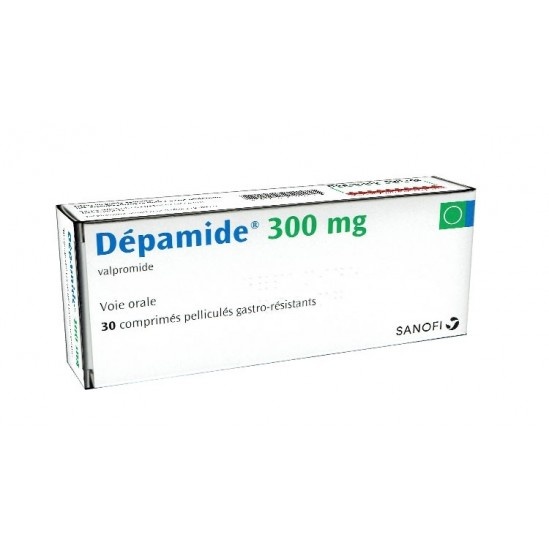
DEPAMIDE 300 mg Enteric-Coated Tablet

Рассмотрение рецепта онлайн
Врач рассмотрит ваш случай и примет решение о назначении рецепта, если это медицински оправдано.

Поговорите с врачом об этом лекарстве
Обсудите симптомы и возможные дальнейшие шаги на онлайн-консультации.



Инструкция по применению DEPAMIDE
Содержание инструкции
DEPAMIDE 300 mg gastro-resistant tablets
valpromide
Medicinal product subject to additional monitoring. This will allow the rapid
identification of new safety information. You can contribute by reporting any
adverse effects experienced during the use of this medicine. See the end of
section 4 for information on how to report adverse effects.
WARNING
Depamide, valpromide if taken during pregnancy can seriously harm the fetus. If you are
a woman of childbearing potential, you must use an effective method of birth control
(contraceptive), without interruption, for the entire duration of treatment with Depamide. Your
doctor will discuss this with you, but you must also follow the recommendations in section 2 of
this leaflet.
If you want to plan a pregnancy or think you may be pregnant, request an urgent
appointment with your doctor.
Do not stop taking Depamide unless your doctor has instructed you to, as your
condition may worsen.
Read all of this leaflet carefully before you start taking this medicine, as it contains
important information for you.
- Keep this leaflet. You may need to read it again.
- If you have any questions, ask your doctor or pharmacist.
- This medicine has been prescribed for you only. Do not pass it on to others, even if their symptoms are the same as yours, as it could be harmful.
- If you get any side effects, see your doctor or pharmacist. See section 4.
Contents of this leaflet:
- 1. What Depamide is and what it is used for
- 2. What you need to know before you take Depamide
- 3. How to take Depamide
- 4. Possible side effects
- 5. How to store Depamide
- 6. Contents of the pack and other information
1. What is Depamide and what is it used for
Depamide contains the active ingredient valpromide which belongs to the category of medicines
called “fatty acid derived antiepileptics”.
Depamide is indicated for:
- In the treatment of: generalized and focal epilepsy, absence petit mal, myoclonic petit mal, psychomotor epilepsy, behavioral disorders (character disorders).
- In the treatment of episodes of states of excitement (mania), due to an illness that causes alternating states of excitement and depression (bipolar disorder), when lithium is contraindicated or not tolerated. Continuation of therapy after the episode of excitement (mania) may be considered in patients who have responded positively to valproate in attacks of excitement (acute mania).
2. Cosa deve sapere prima di prendere Depamide
Non prenda Depamide
- se è allergico alla valpromide o ad uno qualsiasi degli altri componenti di questo medicinale (elencati al paragrafo 6)
- se ha un’infiammazione acuta del fegato (epatite acuta)
- se ha un’infiammazione cronica del fegato (epatite cronica)
- se lei o i suoi familiari avete o avete mai avuto gravi problemi al fegato (grave epatopatia), soprattutto se provocati da medicinali
- se ha una malattia rara chiamata porfiria epatica
- se ha delle perdite di sangue (emorragie)
- nei bambini di età inferiore ai tre anni Depamide non deve essere somministrata (salvo situazioni eccezionali, decise dal medico)
- se soffre di problemi genetici che causano una malattia a carico di specifici organi cellulari chiamati mitocondri (per esempio, la sindrome di Alpers-Huttenlocher)
- se soffre di disturbi di origine genetica causati da una diminuzione di un enzima coinvolto nel ciclo dell’urea, che si manifestano con alterazioni, in genere gravi, del sistema nervoso (vedere “Avvertenze e precauzioni”)
- se ha una carenza di carnitina (una malattia metabolica molto rara) che non è trattata.
Disturbo bipolare
- Se lei è incinta, non deve utilizzare Depamide per il disturbo bipolare.
- Per il disturbo bipolare, se lei è una donna in età fertile non deve prendere Depamide, a meno che non stia utilizzando un efficace metodo di controllo delle nascite (contraccettivo) durante l’intero trattamento con Depamide. Non smetta di prendere Depamide né il suo contraccettivo, a meno che non ne abbia discusso con il suo medico. Il suo medico la consiglierà ulteriormente (vedere sotto in “Gravidanza, allattamento e fertilità - Avviso importante per le donne”). Epilessia
- Se lei è incinta, non deve utilizzare Depamide per l’epilessia, a meno che niente altro sia efficace per lei.
- Per l’epilessia, se lei è una donna in età fertile non deve prendere Depamide, a meno che non stia utilizzando un efficace metodo di controllo delle nascite (contraccettivo) durante l’intero trattamento con Depamide. Non smetta di assumere Depamide né il suo contraccettivo, a meno che non ne abbia discusso con il suo medico. Il suo medico la consiglierà ulteriormente (vedere sotto in “Gravidanza, allattamento e fertilità - Avviso importante per le donne”).
Avvertenze e precauzioni
CONTACT YOUR DOCTOR IMMEDIATELY:
- Se presenta disturbi al fegato. See the paragraph “ LIVER PROBLEMS (HEPATOPATHIES)” The risk of liver damage increases if Depamide is taken by children under 3 years of age, in people who are taking other antiepileptic drugs at the same time or who suffer from other neurological or metabolic diseases and severe forms of epilepsy. If you or your child are taking Depamide and develop problems with balance and coordination, feel sleepy or less alert, vomit, inform your doctor immediately. This may be due to an increase in the amount of ammonia in the blood.
- Serious skin reactions including Stevens-Johnson syndrome, toxic epidermal necrolysis, drug reaction with eosinophilia and systemic symptoms (DRESS), erythema multiforme and angioedema have been reported in association with valproate treatment. Contact your doctor immediately if you notice any of the symptoms related to these serious skin reactions described in paragraph 4.
Si rivolga al medico prima di prendere Depamide:
- Prima di assumere Depamide perché il medico potrebbe richiedere degli esami per verificare la funzionalità del suo fegato, sia prima dell'inizio della terapia (vedere "Non prenda Depamide") che ad intervalli ripetuti durante i primi 6 mesi. Se il suo stato di
salute è simile a quelli presenti nel paragrafo “Non prenda Depamide” e “Avvertenze
speciali” avrà più probabilità che il medico la sottoponga ad esami di controllo. In
funzione delle analisi e del suo stato di salute il medico potrà decidere di modificare la
dose di Depamide o di sottoporla ad ulteriori analisi.
- Se è un bambino di età inferiore ai 3 anni non deve prendere Depamide con altri medicinali ed il medico valuterà il rapporto rischio-beneficio (problemi al fegato ed al pancreas) prima di iniziare la terapia. Se è un bambino con meno di 3 anni di età, non prenda Depamide se sta assumendo farmaci che contengono acido salicilico o suoi derivati perché potrebbe aumentare la possibilità di avere tossicità a livello del fegato (epatotossicità).
- Se nella sua famiglia sono presenti problemi genetici che causano una malattia a carico di specifici organi cellulari chiamati mitocondri, per un possibile rischio di danno al suo fegato.
- Se ha una elevata quantità di ammoniaca nel sangue (iperammoniemia) perché valproato può aumentare la quantità di ammoniaca nel sangue (vedere “Non prenda Depamide” e “Possibili effetti indesiderati”).
- Se si sospetta che lei soffra di disturbi metabolici, in particolare di disturbi ereditari da carenza di enzimi come il “disturbo del ciclo dell'urea”, per un possibile rischio di aumento del livello di ammoniaca nel sangue.
- Se soffre di una malattia che riduce la quantità di un enzima chiamato carnitina palmitoiltransferasi (CPT) di tipo II, perché valproato potrebbe aumentare la possibilità di avere una malattia delle cellule dei muscoli chiamata rabdomiolisi.
- Se ha un apporto dietetico ridotto di carnitina, presente nella carne e nei latticini, specialmente nei bambini di età inferiore a 10 anni.
- Se ha una carenza di carnitina e sta assumendo carnitina.
- Se ha una riduzione dell’attività dei reni (insufficienza renale) o riduzione della quantità di proteine nel sangue (ipoproteinemia) il medico potrà decidere di modificare la terapia in funzione degli esiti del controllo clinico.
- Se soffre di una malattia a carico della pelle e dei tessuti chiamata “lupus eritematoso sistemico”, perché il medico dovrà valutare il rapporto rischio-beneficio durante l’assunzione di valproato, per la possibilità di provocare malattie chiamate immunitarie.
- Se ha mai sviluppato una grave eruzione cutanea o desquamazione della pelle, vescicole e/o afte in bocca dopo aver assunto valproato.
- Se ha un improvviso dolore addominale, perché il medico potrebbe sospendere l’assunzione della terapia e sottoporla a dei controlli per escludere la possibilità che lei abbia un’infiammazione al pancreas (pancreatite).
- Se sta seguendo delle diete alimentari, perché Depamide potrebbe darle un aumento del peso all’inizio della terapia (vedere “Possibili effetti indesiderati”).
- Se sta assumendo antibiotici appartenenti ad una classe chiamata carbapenemi perché l’assunzione contemporanea di valpromide non è consigliata (vedere “Altri medicinali e Depamide”).
- Se è una donna in età fertile (vedere “Gravidanza, allattamento e fertilità”).
- Se ha delle malattie a carico del sangue perché il medico potrebbe sottoporla a degli esami prima di un intervento chirurgico o del dentista ed in caso di ematomi spontanei o perdite di sangue improvvise (emorragie) (vedere “Possibili effetti indesiderati”); il medico la sottoporrà comunque ad analisi del sangue prima dell'inizio della terapia o prima di un intervento chirurgico e nel caso di ematomi o sanguinamenti spontanei.
Se prende questo medicinale per l’epilessia, così come con altri farmaci antiepilettici, può
avere un peggioramento reversibile nella frequenza e nella gravità delle convulsioni (fino allo
stato epilettico) oppure può manifestare nuovi tipi di convulsioni (vedere “Possibili effetti
indesiderati”). In questo caso deve avvertire immediatamente il medico.
Se durante il trattamento con Depamide ha pensieri che la portano a desiderare di farsi del
male o a togliersi la vita, avverta immediatamente il medico, perché questo tipo di disturbi
sono stati osservati in una classe di medicinali chiamati “antiepilettici”, come ad esempio
valpromide.
L’assunzione di alcol è fortemente sconsigliata durante il trattamento con valpromide perché
si può avere un aumento degli effetti dell’alcol.
Se soffre di una malattia chiamata diabete, perché se deve fare delle analisi per la ricerca dei
corpi chetonici, Depamide potrebbe alterare i risultati.
I pazienti anziani e i pazienti con malattie gravi possono presentare scarsa tollerabilità a
valpromide. Pertanto in queste condizioni il medico la sottoporrà a controlli adeguati, in
particolare quando valpromide viene somministrata a dosi relativamente alte o in
associazione con alte dosi di altri medicinali per trattare malattie della mente o epilessia
(psicotropi o antiepilettici).
LIVER PROBLEMS (HEPATOPATHIES)
- How it manifests The administration of Depamide has exceptionally led to severe liver damage (liver damage), which has sometimes proven fatal. If you are a newborn or a child under 3 years of age with severe forms of a disease called epilepsy, especially if you have brain damage (cerebral), mental (psychic) developmental delay and/or a congenital (congenital) metabolic or degenerative disease and are undergoing treatment with multiple medications, you will have a greater chance of having serious liver problems. If the child is over 3 years old, they will have less chance of having these complications, because the probability decreases with increasing age. In most cases, liver (hepatic) damage occurred during the first 6 months of therapy.
- Symptoms
Especially if you are a high-risk patient, clinical symptoms are essential for early
diagnosis. In particular, two types of disturbances that can precede jaundice (jaundice: see “How it manifests”) must be taken into consideration:
- if you suffer from epilepsy, the epileptic seizures will reappear
- non-specific disturbances of epilepsy, which appear rapidly, such as fatigue (asthenia), severe loss of appetite (anorexia), excessive sleepiness (lethargy), excessive tiredness (drowsiness), sometimes associated with repeated vomiting and abdominal pain (abdominal). If you experience any of the symptoms reported above during therapy, immediately inform your doctor who will have you undergo tests.
- Checks during treatment If you are taking Depamide, your doctor will perform liver tests, including bilirubin and transaminases (liver function), before starting therapy and at established intervals for the first 6 months, and other blood tests called prothrombin time and fibrinogen, to check blood coagulation. An increase in some of these tests may require discontinuation of valproate therapy and, as a precaution, they should also be discontinued if they are taken at the same time, salicylates.
PANCREATITIS (PANCREATITIS)
Severe inflammation of the pancreas (pancreatitis) is possible, although very rare,
which can be fatal.
Other medicines and Depamide
Inform your doctor or pharmacist if you are taking, have recently taken, or might take any other medicines, including those available without a prescription. Some
medicines can affect the effect of valproate and vice versa.
Some of the valpromide taken is converted into a substance called valproic
acid, which has a therapeutic effect (active metabolite). For this reason, valpromide
may present the same interactions as those with valproic acid or valproates.
Effects of valproate on other drugs
Neuroleptics, MAO inhibitors, antidepressants and benzodiazepines
If you take valpromide with medicines used for behavioral disorders and
belonging to classes called neuroleptics, MAO inhibitors, antidepressants and benzodiazepines
the effect may be increased. For this reason, your doctor will subject you to
checks and, when necessary, will modify your therapy.
Phenobarbital
If you take a medicine called phenobarbital you must inform your doctor because the
valproate increases the amount of phenobarbital in the blood and excessive
sedation may occur, especially in children. The doctor will perform checks during the first 15 days of
combined treatment and may reduce the doses of phenobarbital, in case of sedation, and
may check the amount of phenobarbital in the blood.
Primidone
If you take a medicine called primidone, valproate may increase its amount in the
blood, with a possible increase in its undesirable effects (such as sedation); this
interaction ceases with long-term treatment, for this reason the doctor will perform
checks, especially at the beginning of therapy, with adjustments to the dose of primidone
when necessary.
Phenytoin
If you take valproate in conjunction with a phenytoin-based drug, your doctor
will arrange for checks because valproate changes the amount of phenytoin
in the blood, with possible overdose disorders.
Carbamazepine
If you take valproate with a carbamazepine-based medicine, your doctor will arrange to
perform checks, especially at the beginning of therapy. These checks are carried out
because valpromide increases the toxicity of carbamazepine.
Lamotrigine
If you take Depamide in conjunction with lamotrigine-based medicines, you may
have an increased possibility of having adverse effects from increased lamotrigine toxicity (serious skin disorders). The doctor will subject you to checks and
reduce the dose of lamotrigine, if necessary.
Ethosuccimide
If you take valpromide with a medicine containing ethosuccimide, it may increase the
amount of the latter in the blood.
Zidovudine
Be careful to take valproate with zidovudine-based medicines because
the association can lead to an increase in the amount of the latter in the blood and related
toxicity phenomena.
Felbamate
Valproic acid can decrease the metabolism of felbamate.
Olanzapine
If you take Depamide with olanzapine-based medicines (used in some mental
illnesses), it may increase the amount of the latter in the blood.
Rufinamide
If you take Depamide with medicines containing rufinamide (used in epilepsy), it may
increase the amount of the latter in the blood. The increased amount of rufinamide in the
blood depends on the dose of Depamide used. This effect is greater in children.
Propofol
If you take valproate together with propofol (used for anesthesia), your doctor will take
into consideration a reduction in the dose of propofol because valproate can increase its
amount in the blood.
Nimodipine
Depamide may increase the effects of nimodipine.
Clozapine(for treating mental health problems).
Effects of other drugs on valpromide
If you take medicines for the treatment of epilepsy (in particular phenytoin, phenobarbital and
carbamazepine) in conjunction with valproic acid, your doctor may subject you to checks
because the amount of valproic acid in the blood may be decreased. Therapy
will be modified based on the results.
The association of felbamate and valproate increases the amount of valproic acid in the blood. The amount of valproate in the blood must therefore be checked.
If you take Depamide with phenytoin- or phenobarbital-based medicines, you should pay
particular attention to the symptoms of hyperammonemia (nausea, vomiting, agitation,
confusion, convulsions, drowsiness, disturbances in muscle coordination).
If you take a medicine used to treat malaria called mefloquine in
conjunction with valproic acid, your doctor may subject you to checks because you may
have seizures.
In case of concomitant use of valpromide and substances that bind highly to
proteins (acetylsalicylic acid), the amount of valproic acid in the blood may increase.
Your doctor will perform blood coagulation checks if you are taking Depamide with
medicines to make the blood more fluid and belonging to the class of “vitamin K
dependent”.
If you take Depamide with cimetidine, erythromycin, rifampicin-based medicines, your doctor
will have you undergo checks because the amount of valproic acid in the blood may be
modified.
Do not take Depamide in conjunction with antibiotics belonging to the class of
carbapenems (used to treat bacterial infections) (see “Warnings and
precautions”).
Protease inhibitors
If you take Depamide with medicines such as lopinavir and ritonavir (medicines used in serious
viral diseases), the amount of Depamide in the blood decreases.
Cholestyramine
If you take Depamide with cholestyramine-based medicines (used to lower
blood cholesterol), the amount of Depamide in the blood may decrease.
Metamizole
If you take Depamide with metamizole, used to treat pain and fever, the amount of
Depamide in the blood may decrease.
Methotrexate (used to treat tumors and inflammatory diseases).
Other interactions
Some anti-infective drugs that contain pivalate (e.g. pivampicillin, adefovir dipivoxil).
If you take medicines containing valproic acid in conjunction with medicines for the treatment
of seizures containing topiramate or in conjunction with acetazolamide
(used against high blood pressure), your doctor will subject you to checks because it increases
the probability of an increase in the amount of ammonia in the blood and/or
inflammation of the brain (hyperammonemic encephalopathy).
Products containing estrogens
Products containing estrogens (including some birth control pills) can
decrease levels of valproate in the blood. Talk to your doctor about the most
appropriate method of contraception (birth control) for you.
Valproate generally does not have an enzyme-inducing effect; consequently, it does
not reduce the effectiveness of estrogen-progestin in hormonal contraception.
Quetiapine
If you take valproate in association with an antipsychotic medicine called quetiapine,
it may increase the possibility of having a decrease in certain blood cells
(neutropenia/leukopenia).
Cannabidiol(used to treat epilepsy and other conditions).
Depamide with food, drinks and alcohol
Taking alcohol is strongly discouraged during treatment with valpromide because
an increase in the effects of alcohol may occur.
Pregnancy, breastfeeding and fertility
If you are pregnant, suspect you are pregnant, or are planning a pregnancy, or if you are
breastfeeding, ask your doctor or pharmacist for advice before taking
this medicine.
Important warning for women
Bipolar disorder
- If you are pregnant, you should not use Depamide for bipolar disorder.
- For bipolar disorder, if you are a woman of childbearing potential, you should not take Depamide unless you are using an effective method of birth control (contraceptive) during the entire treatment with Depamide. Do not stop taking Depamide or your contraceptive unless you have discussed it with your doctor. Your doctor will advise you further.
Epilepsy
- If you are pregnant, you should not use Depamide for epilepsy unless nothing else is effective for you.
- For epilepsy, if you are a woman of childbearing potential, you should not take Depamide unless you are using an effective method of birth control (contraceptive) during the entire treatment with Depamide. Do not stop taking Depamide or your contraceptive unless you have discussed it with your doctor. Your doctor will advise you further.
Risks of taking valproate during pregnancy (regardless of the disease for which
it is used)
- Talk to your doctor immediately if you are planning to become pregnant or are pregnant.
- Valproate carries risks if taken during pregnancy. The risk is greater for higher doses, but all doses carry a risk, including the use of valproate in combination with other medicines that treat epilepsy.
- It can cause serious birth defects and can have consequences for the physical and mental development and growth of the child after birth. The most frequently reported birth defects include: spina bifida(incomplete development of some bones of the spine); malformations of the face and skull; malformations of the heart, kidneys, urinary tract and genitals; limb defects and multiple malformations affecting different organs and parts of the body. Birth defects can lead to disabilities that can be severe.
- Hearing problems or deafness have been reported in children exposed to valproate during pregnancy.
- Eye malformations have been reported in children exposed to valproate during pregnancy in association with other congenital malformations. These eye malformations can affect vision.
- Women who take valproate during pregnancy, compared to other women, have a higher risk of having a baby with birth defects requiring medical treatment. Because valproate has been used for many years, we know that in women who take valproate, about 11 babies out of 100 have birth defects, compared to 2-3 babies out of 100 born to women who do not suffer from epilepsy.
- It is estimated that up to 30-40% of preschool children whose mothers took valproate during pregnancy may experience developmental problems in early childhood. These children may start walking and talking late, be intellectually disadvantaged compared to other children, and have language and memory difficulties.
- Autism spectrum disorders are more often diagnosed in children exposed to valproate during pregnancy and there is some evidence that children exposed to valproate during pregnancy have a higher risk of developing attention deficit hyperactivity disorder (ADHD).
- Before prescribing this medicine, your doctor will explain to you what could happen to your baby if you become pregnant while taking valproate. If you later decide you want to become pregnant, do not stop taking the medicine or the contraceptive method before discussing it with your doctor.
- If you are the parent or caregiver of a girl treated with valproate, you should contact the doctor as soon as the girl has her first menstrual period.
- Some birth control pills (birth control pills containing estrogens) can decrease levels of valproate in the blood. Be sure to talk to your doctor about the most appropriate method of contraception (birth control) for you.
- Consult your doctor about taking folic acid while trying to get pregnant. Folic acid can reduce the overall risk of spina bifidaand miscarriage, possible in all pregnancies. However, it is unlikely to reduce the risk of birth defects associated with the use of valproate.
Read and choose the situations that apply to you from those described below:
I AM STARTING TREATMENT WITH DEPAMIDE
I AM TAKING DEPAMIDE AND DO NOT PLAN TO BECOME PREGNANT
I AM TAKING DEPAMIDE AND PLAN TO BECOME PREGNANT
I AM PREGNANT AND TAKING DEPAMIDE
I AM STARTING TREATMENT WITH DEPAMIDE
If Depamide is prescribed to you for the first time, your doctor will explain the risks to the
fetus in case of pregnancy. If you are of childbearing potential, you must ensure that you use an effective method
contraceptive, without interruption, for the entire duration of treatment with
Depamide. Talk to your doctor or visit a family planning clinic if you need
advice on contraception.
Key Messages:
- before starting treatment with Depamide, a pregnancy test confirmed by your doctor must be performed to rule out pregnancy;
- during the entire treatment with Depamide, you must use an effective method of birth control;
- you must discuss appropriate methods of birth control (contraceptives) with your doctor. Your doctor will explain how to prevent pregnancy and may refer you to a specialist for advice on birth control;
- you must have regular appointments (at least once a year) with a specialist experienced in managing bipolar disorder or epilepsy .During this visit, your doctor will ensure that you are fully aware of and understand all the risks and advice regarding the use of valproate during pregnancy;
- tell your doctor if you wish to become pregnant;
- immediately inform your doctor if you are pregnant or believe you may be.
I AM TAKING DEPAMIDE AND DO NOT PLAN TO HAVE A CHILD.
If you are continuing treatment with Depamide but do not plan to have a
child, make sure to use an effective method of contraception, without interruption, for
the entire duration of treatment with Depamide. Talk to your doctor or a family planning
clinic if you need advice on contraception.
Key Messages:
- you must use an effective method of birth control during the entire treatment with Depamide;
- you must discuss contraception (birth control) with your doctor. Your doctor will explain how to prevent pregnancy and may refer you to a specialist for advice on birth control;
- you must have regular appointments (at least once a year) with a specialist experienced in managing bipolar disorder or epilepsy .During
this visit, your doctor will ensure that you are fully aware and
understand all the risks and advice regarding the use of valproate in pregnancy;
- tell your doctor if you wish to become pregnant;
- immediately inform your doctor if you are pregnant or think you may be.
I AM TAKING DEPAMIDE AND PLAN TO HAVE A CHILD
If you are planning to have a child, first make an appointment with your doctor.
Do not stop taking Depamide or your contraception unless you have discussed it with your
doctor. Your doctor will advise you further.
Children born to mothers treated with valproate have a high risk of birth defects and developmental problems that can be severely disabling. Your doctor will
refer you to a specialist experienced in managing bipolar disorder or epilepsy, in
order to evaluate alternative treatment options as soon as possible. The specialist may take
various measures to facilitate the course of pregnancy as much as possible and minimize the
risks for you and the baby.
The specialist may decide to adjust the dose of Depamide or switch to another
medicine, or to stop treatment with Depamide well before
pregnancy, to ensure that the illness is stable.
Ask your doctor about taking folic acid when planning to have a
child. Folic acid can reduce the overall risk of spina bifidaand miscarriage, which are possible in
all pregnancies. However, it is unlikely to reduce the risk of birth defects associated
Key Messages:
- do not stop taking Depamide unless your doctor has told you to;
- do not stop using birth control methods (contraceptives) before discussing it with your doctor and agreeing on a plan to ensure control of your illness and reduce risks to the baby;
- first make an appointment with your doctor. During this visit, the doctor will ensure that you are fully aware of and understand all the risks and advice related to the use of valproate in pregnancy;
- your doctor will try to change your medication or stop treatment with Depamide well before pregnancy;
- request an urgent appointment with your doctor if you are pregnant or think you may be.
I AM PREGNANT AND TAKING DEPAMIDE
Do not stop taking Depamide unless your doctor has established it, because
your illness may worsen. Request an urgent appointment with your doctor if you
are pregnant or believe you may be. Your doctor will advise you further.
Children born to mothers treated with valproate have a high risk of birth defects and developmental problems that can be severely disabling.
You will be referred to a specialist experienced in managing bipolar disorder or
epilepsy, in order to evaluate alternative treatment options.
In exceptional circumstances, if Depamide is the only treatment option available in
pregnancy, you will be closely monitored both for the management of your
underlying illness and to monitor the development of the fetus. You and your partner
may receive advice and support regarding exposure to valproate during pregnancy.
Ask your doctor about taking folic acid. Folic acid can reduce
the overall risk of spina bifidaand miscarriage, which are possible in all pregnancies. However, it is
unlikely to reduce the risk of birth defects associated with the use of valproate.
Key Messages:
- request an urgent appointment with your doctor if you are pregnant or think you may be;
- do not stop taking Depamide unless your doctor has told you to;
- make sure you are referred to a specialist experienced in the treatment of epilepsy, bipolar disorder, to assess the need for alternative treatment options;
- you must receive detailed advice on the risks of Depamide in pregnancy, including teratogenicity (birth defects) and disorders of physical and mental development in children;
- make sure you are referred to a specialist in prenatal monitoring, to identify possible cases of malformation.
Make sure to read the patient guide you will receive from your doctor. Your doctor
will discuss the Annual Risk Acceptance Form with you and ask you to sign and
keep it. You will also be given the Patient Card by the pharmacist to
remind you of the risks of valproate in pregnancy.
Further risks to the newborn
- If you take valproate during pregnancy, the newborn may have, even rarely, serious bleeding (hemorrhagic syndrome) due to a reduction in several coagulation factors. These reductions in coagulation factors can sometimes be fatal, and that is why your doctor will subject you to several checks.
- If you take valproate in the third trimester of pregnancy, the newborn may have a reduction in blood sugar (hypoglycemia).
- If you take valproate during pregnancy, the newborn may have disorders caused by a reduction in the amount of thyroid hormone in the blood (hypothyroidism).
- If you take valproate during the last trimester of pregnancy, the newborn may have disorders caused by “withdrawal syndrome” (e.g., agitation, irritability, hyperactivity, nervousness, increased movements (hyperkinesia), muscle activity disorders (tonicity), tremors, and feeding disorders).
Important warning for male patients
Potential risk associated with taking valproate in the 3 months before
conception
One study suggests a possible risk of movement and mental development disorders
(problems affecting development in early childhood) in children born to fathers treated
with valproate in the 3 months before conception. In this study, approximately 5 out of
100 children had these disorders when born to fathers treated with valproate, compared to approximately 3
children out of 100 born to fathers treated with lamotrigine or levetiracetam (other medicines that
can be used to treat your illness). The risk for children born to fathers who
stopped treatment with valproate 3 months (the time needed to form
new sperm) or more before conception is not known. The study has
limitations and therefore it is not entirely clear whether the increased risk of movement and mental development disorders suggested by this study is caused by valproate. The
study was not large enough to show what specific type of movement and mental development disorder children may be at risk of developing.
As a precaution, your doctor will discuss with you:
- The potential risk to children born to fathers taking valproate
- The need to consider effective contraception (birth control) for you and your partner during treatment and for 3 months after stopping therapy
- The need to consult the specialist if you are planning to conceive a child and before stopping contraception (birth control)
- The possibility of other treatments that can be used to treat your illness, depending on your individual situation
Do not donate sperm while taking valproate and for 3 months after stopping
valproate.
Talk to your doctor if you are thinking about having a child.
If your partner becomes pregnant while you have taken valproate in the 3 months before
conception and has questions, contact your doctor. Do not stop treatment without
talking to your doctor. If you stop treatment, your symptoms may
worsen.
You should schedule regular appointments with your prescribing doctor. During this visit,
your doctor will discuss with you the precautions associated with the use of valproate and the possibility of
other treatments that can be used to treat your illness, depending on
your individual situation.
Make sure to read the patient guide you will receive from your doctor. You will also be
given the Patient Card by the pharmacist to remind you of the potential risks of
valproate.
Breastfeeding
If you are taking valproate during breastfeeding, the doctor will assess whether to stop or
not to stop treatment because the medicine is released into the milk and because it can cause
blood disorders (hematological) (see “Possible side effects”).
The doctor will carefully assess whether to stop breastfeeding or stop the
therapy or abstain from therapy with Depamide, taking into account the benefit of
breastfeeding for the baby and the benefit of therapy for the woman.
Fertility
If you are a woman of childbearing age, the medicine may increase the possibility that you have a
cessation of menstruation (amenorrhea), the presence of many cysts on the ovary (polycystic
ovary) and an increase in the amount of testosterone in the blood (see “Possible side effects”). If you are a man, the administration of valproate may compromise your
fertility (see “Possible side effects”). These fertility disorders are reversible
after stopping treatment.
Driving and operating machinery
If you take Depamide with a class of drugs called “barbiturates” or other drugs that
cause a reduction in the activity of the central nervous system, manifestations of fatigue (asthenia) and drowsiness may occur in some subjects.
The same manifestations can be observed after drinking alcoholic beverages. The
doctor will illustrate the problems you may have driving vehicles or performing those operations that require a normal state of attention.
Depamide contains sodium
This medicine contains less than 1 mmol (23 mg) of sodium per gastro-resistant tablet,
i.e. essentially ‘sodium-free’.
3. How to take Depamide
Take this medicine following exactly the instructions of your doctor or pharmacist. If you have any doubts, ask your doctor or pharmacist.
Girls and women of childbearing potential
Treatment with Depamide must be initiated and supervised by a doctor
specialized in the treatment of epilepsy or bipolar disorders.
Male patients
It is recommended that treatment with Depamide be initiated and supervised by a
specialist with experience in the management of epilepsy or bipolar disorder – see paragraph
- 2. Important warning for male patients.
- Epilepsy and mood disorders
The recommended dose is:
2 to 6 tablets per day, as prescribed by your doctor.
Before starting treatment with Depamide, keep in mind that:
- If you are a patient not treated with other medicines for the treatment of epilepsy (antiepileptics), your doctor will increase the dose at intervals of 2-3 days, to reach the indicated one in about a week.
- If you are a patient taking medicines for mental disorders (psychotropics), your doctor will gradually increase the dose of Depamide, reaching the best dose in about two weeks, reducing the dose of other treatments if necessary.
Depamide, due to its presentation in 300 mg coated tablets, is essentially indicated
in the treatment of adolescents and adults. It is not recommended in
children.
- Manic episodes related to bipolar disorder
Adults
The recommended dose is:
that which the doctor deems appropriate for each individual patient.
The recommended initial daily dose is 750 mg.
The dose should be increased as quickly as possible in order to reach the lowest therapeutic dose with which the desired clinical effect is obtained. The daily dose should
be adjusted to the clinical response to establish the minimum effective dose for the individual
patient.
The average daily dose usually ranges from 1000 to 2000 mg of valproate. Patients who
receive a daily dose greater than 45 mg/kg of body weight must be
carefully monitored.
If you suffer from a disease that causes you severe mood changes (manic
episodes related to bipolar disorder), your doctor will assess the minimum effective dose.
Patients with kidney problems
The doctor may decide to adjust the dose.
Use in children and adolescents
Children and adolescents under 18 years of age:
Depamide should not be used in children and adolescents under 18 years of age for the
treatment of mania.
If you take more Depamide than you should
In case of ingestion/taking an excessive dose of Depamide, immediately warn
your doctor or go to the nearest hospital.
Signs and symptoms of overdose
The signs of severe acute overdose generally include: coma, with reduced
muscle tone (hypotonia), reduced reflexes (hyporeflexia), decreased pupil diameter (miosis), impaired respiratory function, changes in blood acidity (metabolic acidosis), decreased blood pressure (hypotension), heart problems, circulatory collapse/shock and increased sodium levels in the blood
(hypernatremia).
Following a severe overdose, patient death has occurred, even though the outcome
of poisoning is generally favorable.
Symptoms can still be variable and epileptic seizures have been reported in
the presence of very high blood valpromide levels.
Cases of high pressure inside the head (intracranial hypertension) have been reported.
If you forget to take Depamide
Do not take a double dose to make up for a missed dose.
If you have any doubts about the use of Depamide, ask your doctor or pharmacist.
4. Possible side effects
Like all medicines, DEPAMIDE can cause side effects, although not everyone gets them.
If you experience any side effect, including those not listed in this leaflet,
contact your doctor or pharmacist.
Immediately inform your doctor if you notice any of the following serious side effects.
You may need urgent medical attention:
- Problems with balance and coordination, feeling drowsy or less alert, associated with vomiting. This may be due to an increase in the amount of ammonia in the blood.
- Kidney disease (renal failure, tubulointerstitial nephritis) which can manifest as reduced urine output.
- Uncommon: difficulty breathing, chest pain or pressure (especially during inspiration), shortness of breath and dry cough due to fluid accumulation around the lungs (pleural effusion).
Inform your doctor or pharmacist if any of the following side effects worsen
or lasts more than a few days; you may need medical attention:
Rare: frequent urination and thirst (Fanconi syndrome).
Frequency not known: decrease in carnitine levels (highlighted by blood or
muscle tests).
Frequency not known: darker areas of the skin and mucous membranes (hyperpigmentation).
Very common side effects(may affect more than 1 in 10 people):
- Nausea.
- Tremor.
Common side effects(may affect up to 1 in 10 people):
- A malfunction of the liver (hepatic dysfunction): you may have a slight increase in liver blood tests (liver enzymes), especially at the beginning of treatment; this increase is temporary and does not cause discomfort (without clinical evidence). Cases of liver inflammation (hepatitis) have been reported (see “Warnings and precautions”).
- Vomiting, gum disorders, mainly gum swelling (gingival hyperplasia), inflammation of the oral mucosa (stomatitis), pain in the upper abdomen, diarrhea; these effects occur frequently in some patients at the beginning of treatment, but generally disappear after a few days without interrupting treatment.
- Disorders of a part of the nervous system called extrapyramidal (inability to stand still, rigidity, tremors, slow movements, involuntary movements, muscle contractions), confusion, tremor when trying to maintain a fixed position (postural tremor), drowsiness, seizures, insufficient memory, headache, involuntary eye movements (nystagmus), dizziness a few minutes after intravenous injection, which resolves spontaneously within a few minutes.
- Confusion, hallucinations, aggression*, agitation*, attention disorders* (* These side effects have been observed mainly in children).
- Reduction of hemoglobin in the blood (anemia), reduced amount of platelets in the blood (thrombocytopenia).
- Weight gain that is dose-dependent or weight loss, increase or loss of appetite.
Since weight gain is a risk factor for a disease affecting
the ovary called “polycystic ovary syndrome” it must be carefully monitored
(see “What you need to know before taking Depamide”).
- Hypersensitivity ,transient hair loss (transient alopecia) and (or) dose-related.
- Painful menstrual cycle (dysmenorrhea).
- Bleeding (hemorrhage) (see “What you need to know before taking Depamide” and “Warnings and precautions”).
- Deafness.
- Reduction of sodium levels in the blood (hyponatremia).
- Nail disorders.
- Involuntary loss of urine (urinary incontinence).
Uncommon side effects(may affect up to 1 in 1,000 people):
- Inflammation of the pancreas (pancreatitis), sometimes fatal (see "Warnings and precautions" and "What you need to know before taking Depamide”).
- Syndrome of inappropriate secretion of ADH (SIADH), increased production of male hormones (hyperandrogenism) characterized by increased hair growth (hirsutism), presence of male characteristics in women (virilization), acne, male pattern hair loss and/or increased male hormones (androgens).
- Difficulty performing voluntary movements (ataxia), state of confusion (encephalopathy), coma, increased sleepiness (lethargy), Parkinson's-like symptoms that can be resolved or eliminated (reversible parkinsonism), altered sensitivity of limbs or other parts of the body (paresthesia). Worsening of seizures (see “Warnings and precautions”).
- Irritability, (occasionally aggression, hyperactivity and behavioral disorders).
- Alteration of the number or shape of blood cells (leukopenia or pancytopenia, red blood cell hypoplasia).
- Swelling of the face, hands and feet, lips, tongue or throat (angioedema), skin redness (rash), changes in hair (such as abnormal hair structure, changes in hair color, abnormal hair growth).
- Absence of menstruation (amenorrhea) and irregular menstruation.
- Inflammation of blood vessels (vasculitis).
- Decreased body temperature (hypothermia).
- Reduced kidney function (renal insufficiency).
- Mild fluid collection in the periphery (non-severe peripheral edema).
Rare side effects(may affect up to 1 in 10,000 people):
- Reduced production of thyroid hormones (hypothyroidism) (see “Warnings and precautions”).
- Increased amount of ammonia in the blood (hyperammonemia). A moderate and isolated increase in the amount of ammonia in the blood (isolated hyperammonemia) may occur, without alteration of liver tests (liver function) and this should not
be a reason to stop treatment. However, during monotherapy or therapy
with other drugs (with: phenobarbital, carbamazepine, phenytoin, topiramate) an alteration of consciousness due to increased amount of ammonia in the blood
(hyperammonemic encephalopathy) may occur, with normal liver function and
absence of cell damage (cytolysis). The syndrome of altered consciousness due to
increased amount of ammonia in the blood (hyperammonemic encephalopathy)
induced by valproate manifests in an acute form and is characterized by loss of
consciousness, and nervous system disorders with increased frequency of
seizures. It may appear after a few days or weeks from the start of therapy and
regresses with the suspension of valproate. Confusion (encephalopathy) is not
dose-dependent. - Blood disease due to problems in the bone marrow (myelodysplastic syndrome).
- Reversible dementia associated with changes in the brain (cerebral atrophy), learning disorders (cognitive disorders), confused states, a particular state of unconsciousness called "stupor" and increased sleepiness "lethargy" which sometimes led to transient coma (encephalopathy): these effects are rare or associated with an increase in the number of seizures during therapy and have regressed with the interruption of treatment or with the reduction of the dose. These cases have been reported mainly during therapy with other drugs (in particular with phenobarbital) or after a sudden increase in the doses of valproate. Decreased muscle tone (hypotonia) and sedation have been reported.
- Abnormal behavior*, psychomotor hyperactivity*, learning disorders* (* These side effects have been observed mainly in children).
- Reduced bone marrow function (bone marrow failure including pure red cell aplasia). Alteration of the number or shape of blood cells (agranulocytosis, macrocytic anemia, macrocytosis).
- Decreased coagulation factors, abnormal coagulation tests (such as prolonged prothrombin time, prolonged activated partial thromboplastin time, prolonged thrombin time, prolonged INR) (see also “Pregnancy, breastfeeding and fertility”). Isolated cases of fibrinogen reduction have been reported. Deficiency of vitamin H (biotin) and an enzyme called biotinidase.
- Severe skin disorders (toxic epidermal necrolysis, Stevens-Johnson syndrome, erythema multiforme). Allergic reactions, in particular those typical of drugs (DRESS) with increased levels of certain types of white blood cells (eosinophilia) and general disorders throughout the body.
- Male infertility, which is generally reversible after discontinuation of treatment and may be reversible after dose reduction. Do not stop treatment without first talking to your doctor. Polycystic ovary.
- Nighttime urinary leakage (enuresis), kidney diseases (tubulointerstitial nephritis, reversible Fanconi syndrome).
- Disease affecting the skin and tissues, such as systemic lupus erythematosus, muscle disorders (rhabdomyolysis); (see “what you need to know before taking Depamide”).
- Obesity.
- Double vision.
Side effects with unknown frequency(frequency cannot be estimated on the basis
of available data)
- Birth defects (congenital) and developmental disorders (see "Warnings and precautions - Pregnancy, breastfeeding and fertility").
- Decreased bone mineral density (osteopenia and osteoporosis) and fractures in patients undergoing long-term therapy with Depamide.
- Allergic reactions.
Further side effects in children
Some side effects of valproate occur more frequently in children or are
more severe compared to adults. These include liver damage, inflammation of the pancreas
(pancreatitis), aggression, agitation, attention disorders, abnormal behavior,
hyperactivity and learning disorders.
Reporting of side effects
If you experience any side effect, including those not listed in this leaflet,
contact your doctor or pharmacist. You can also report side effects directly
through the national reporting system at
https://www.aifa.gov.it/content/segnalazioni-reazioni-avverse. Reporting side effects can help provide more information on the safety of this
medicine.
5. How to store Depamide
Do not store at a temperature above 30°C.
Store in the original container.
Do not use this medicine after the expiry date which is reported on the pack after
“Exp.”. The expiry date refers to the last day of that month.
Keep this medicine out of the sight and reach of children.
Do not dispose of any medicine in wastewater or household waste. Ask your pharmacist
how to dispose of medicines you no longer use. This will help protect the environment.
6. Contents of the pack and other information
What Depamide contains
The active ingredient is: valpromide. One gastro-resistant tablet contains 300 mg of
valpromide.
The other ingredients are: sodium docusate, sodium carboxymethylcellulose (Type A), anhydrous
colloidal silica, talc, magnesium stearate, methacrylic acid/ethyl acrylate copolymer
(1:1), sodium hydroxide, triethyl citrate, titanium dioxide, yellow iron oxide.
Description of the appearance of Depamide and contents of the pack
Depamide is presented in the form of gastro-resistant tablets.
One pack contains 30 gastro-resistant tablets of 300 mg.
Marketing Authorisation Holder
Sanofi S.r.l. – Viale L. Bodio, 37/B - Milan
Manufacturer
SANOFI WINTHROP INDUSTRIE - 1, rue de la Vierge - 33440 Ambares (F)
SANOFI-AVENTIS S.A. - Carretera de la Batlloria a Hostalric - Riells - (E)
Detailed and updated information on this medicinal product is available by pointing the QR
The same information is also available at the following URL:
https://qr.Ioevalproato.it/it-IT/depamide


Не уверены, подходит ли вам это лекарство?
Обсудите симптомы и варианты лечения с врачом онлайн.

Уже начали прием и появились вопросы?
Обсудите свое состояние и дальнейшие шаги с врачом онлайн.
- Страна регистрации
- Форма выпускаEnteric-coated tablet, 300 MG
- Код АТХN03AG02
- Действующее вещество
- Отпускается по рецептуДа
- Производитель
- Информация на этой странице носит справочный характер и не является медицинской консультацией. Перед началом приема лекарства обязательно проконсультируйтесь с врачом.
- Аналоги DEPAMIDEФорма выпуска: Extended-release tablet, 300 MGДействующее вещество: вальпроевая кислотаПроизводитель: EG S.P.A.Отпускается по рецептуФорма выпуска: Extended-release tablet, 300 MGДействующее вещество: вальпроевая кислотаПроизводитель: RATIOPHARM GMBHОтпускается по рецептуФорма выпуска: Extended-release tablet, 300 MGДействующее вещество: вальпроевая кислотаПроизводитель: SANDOZ S.P.A.Отпускается по рецепту
Аналоги DEPAMIDE в других странах
Лекарства с тем же действующим веществом, доступные в других странах.
Аналог DEPAMIDE в Испания
Врачи онлайн по DEPAMIDE
Обсудите применение DEPAMIDE и возможные следующие шаги — по оценке врача.



Получите рецепт на DEPAMIDE онлайн
Заполните форму за 2 минуты
Расскажите о симптомах, истории болезни и нужном препарате.
Выберите врача или мы назначим
Выберите специалиста или мы подберём ближайшего доступного врача.
Врач рассматривает ваш случай
Обычно в течение 30 минут. Может задать уточняющие вопросы в чате.
Получите в любой аптеке
Электронный рецепт отправляется на вашу почту — действителен по всей Польше.
Часто задаваемые вопросы
DEPAMIDE требует рецепта в Италия. Вы можете уточнить у врача онлайн, подходит ли это лекарство для вашей ситуации.
Действующее вещество DEPAMIDE — valpromide. Эта информация помогает определить лекарства с тем же составом под другими торговыми названиями.
DEPAMIDE производится компанией SANOFI S.R.L.. Упаковка и торговое название могут отличаться в зависимости от дистрибьютора.
Врачи, включая Семейные врачи, Психиатры, Дерматологи, Кардиологи, Эндокринологи, Гастроэнтерологи, Пульмонологи, Нефрологи, Ревматологи, Гематологи, Инфекционисты, Аллергологи, Гериатры, Педиатры, Онкологи, могут оценить целесообразность применения DEPAMIDE с учетом вашей ситуации и местных правил. Вы можете записаться на онлайн-консультацию, чтобы обсудить возможные варианты.
Польша имеет хорошо развитую систему здравоохранения в крупных городах, таких как Варшава, Краков, Вроцлав и Гданьск. Аптеки широко доступны и работают в соответствии с действующим законодательством, обеспечивая доступ к рецептурным препаратам.
Вы можете купить DEPAMIDE в Варшаве, Кракове, Вроцлаве или Гданьске в любой аптеке при наличии действующего рецепта.
Чтобы получить рецепт, вы можете воспользоваться Oladoctor:
Другие лекарства с тем же действующим веществом (valpromide) включают AKIDO VALPROIKO E SODIO VALPROATO EG, AKIDO VALPROIKO E SODIO VALPROATO RATIOPARM, AKIDO VALPROIKO SANDOTS. Они могут отличаться торговым названием или формой выпуска, но содержат одинаковый терапевтический компонент. Перед изменением лечения рекомендуется проконсультироваться с врачом.
