



CORDARONE 200 mg Таблетка

Рассмотрение рецепта онлайн
Врач рассмотрит ваш случай и примет решение о назначении рецепта, если это медицински оправдано.

Поговорите с врачом об этом лекарстве
Обсудите симптомы и возможные дальнейшие шаги на онлайн-консультации.



Инструкция по применению KORDARONE
Содержание инструкции
- Cordarone 150 mg/3 ml injectable solution for intravenous use
- Cordarone must be administered with caution to children up to 3 years of age, as the
- Cordarone 200 mg tablets
Cordarone 150 mg/3 ml injectable solution for intravenous use
amiodarone hydrochloride
Read this leaflet carefully before you start to use this medicine as it contains important information for you.
- Keep this leaflet. You may need to read it again.
- If you have any questions, ask your doctor, pharmacist or nurse.
- This medicine has been prescribed for you only. Do not pass it on to others, even if they have the same symptoms as you, as it could be harmful.
- If you get any side effects, even those not listed in this leaflet, tell your doctor, pharmacist or nurse. See section 4.
Contents of this leaflet:
- 1. What Cordarone is and what it is used for
- 2. What you need to know before you use Cordarone
- 3. How to use Cordarone
- 4. Possible side effects
- 5. How to store Cordarone
- 6. Contents of the pack and other information
1. What Cordarone is and what it is used for
Cordarone contains the active ingredient amiodarone hydrochloride which belongs to a class of
medicines called “antiarrhythmics, class III” that work by regulating the heartbeat.
Cordarone for intravenous use, that is administered into a vein, is used when a
fast response is needed or when oral administration is not possible.
Cordarone is indicated for:
- the therapy and prevention of severe heart rhythm disorders when other medicines have not worked: excessive increase in heart rate, sometimes characterized by sudden stops and starts (paroxysmal and non-paroxysmal supraventricular tachycardias), alteration of the heartbeat characterized by a contraction of the heart muscle that occurs prematurely and alters the regular sequence of beats (atrial extrasystoles), alteration of the heartbeat that becomes irregular and excessively fast (atrial flutter) and alteration of the heartbeat characterized by an irregular and accelerated heartbeat (atrial fibrillation);
- sudden and abrupt alterations of the heartbeat with an increase in frequency (reciprocating paroxysmal supraventricular tachycardias) in subjects affected by diseases such as Wolff-Parkinson-White syndrome, a condition characterized by a rapid heartbeat, dizziness, loss of consciousness, easy fatigue, anxiety. Alterations
of the heartbeat in which excess beats alter the normal heartbeat and which can sometimes cause, at
chest level, the sensation of having missed a beat
(ventricular extrasystoles) and alterations of the heartbeat from a very
accelerated heartbeat (ventricular tachycardias).
2. What you need to know before taking Cordarone
Do not take Cordarone:
- if you are allergic to amiodarone or to iodine or to any of the other ingredients of this medicine (listed in section 6);
- if you have a slower than normal heartbeat (sinus bradycardia), if you suffer from a condition known as sinoatrial block, characterized by a delay in the formation of heartbeats, or if you suffer from sinus node disease, characterized by an alteration of the heartbeat and do not have a pacemaker with a risk of heart block (sinus arrest);
- if you suffer from severe disturbances in the formation of heartbeats and do not have a pacemaker (severe atrioventricular blocks, bi- or trifascicular blocks). In this case, Cordarone injectable may be given to you in specialized hospital units via a probe into a vein leading to the heart (electrosystolic stimulator);
- if you have a severe reduction in blood circulation (cardiovascular collapse) or a severe reduction in blood pressure (severe arterial hypotension);
- if you are taking medicines that can cause heart rhythm abnormalities (torsade de pointes) (see “Other medicines and Cordarone”);
- if you suffer from or have suffered from thyroid disorders (thyroid dysfunction). In case of doubt, your doctor will have you undergo a thyroid function test before starting treatment with this medicine;
- if you are pregnant, unless in exceptional cases, because this medicine can cause harm to the fetus (see “Pregnancy and breastfeeding”);
- if you are breastfeeding because this medicine passes into breast milk;
- if you suffer from low blood pressure (hypotension) and severe heart problems (cardiomyopathy and heart failure) or if you have severe difficulty breathing, your doctor will not administer Cordarone intravenously, as your condition may worsen.
Warnings and precautions
Talk to your doctor, pharmacist or nurse before taking Cordarone:
- if you have severe heart problems (cardiomyopathies and severe coronary artery disease) and during treatment you develop a productive cough (with phlegm), difficulty breathing, fever, weight loss;
- if you suffer from low blood pressure (hypotension), severe difficulty breathing (severe respiratory failure) and severe heart problems (severe and uncompensated heart failure);
- if you are going to have surgery under general anesthesia;
- if you have liver problems; your doctor will subject you to careful checks of liver function, both at the beginning of therapy and during treatment. In case of severe alterations in liver function, your doctor will suspend the administration of the medicine and
subject you to adequate therapy;
- if you suffer from vision problems, particularly reduced blood supply and inflammation of the optic nerve (optic neuropathy and neuritis). In this case, your doctor will suspend the administration of the medicine;
- if you have thyroid problems;
- if you are currently taking a medicine containing sofosbuvir, for the treatment of hepatitis C, as it may cause a dangerously slow heartbeat. Your doctor may consider alternative treatments. If treatment with amiodarone and sofosbuvir is necessary, it may require additional cardiac monitoring;
- if you are taking other medicines (see section “Other medicines and Cordarone”).
Cordarone via intravenous route will only be administered to you in specialized hospital units and
under continuous monitoring (electrocardiogram and blood pressure).
To avoid reactions at the injection site, the medicine will be
administered to you, if possible, in a large vein (see also “Possible side effects”):
If during therapy with Cordarone you develop a dry cough, fever, difficulty breathing
associated with severe general malaise, your doctor will subject you to a chest X-ray and other tests to verify the functionality of your lungs. This is because during
therapy with Cordarone, toxicity at the lung level can occur, which if not
diagnosed in time can be life-threatening. If necessary, your doctor will reduce the dose
or discontinue the medicine and set up appropriate therapy. In some cases, lung toxicity may manifest itself even weeks after discontinuation of the medicine.
Skin disorders (cutaneous reactions) can also occur, even very severe and fatal, due to
diseases called Stevens Johnson syndrome and Toxic epidermal necrolysis (see: Possible
side effects) which manifest with progressive skin redness (rash),
often accompanied by blisters, blisters and which can also affect the mucous membranes. In these
cases, stop treatment with amiodarone and consult a doctor immediately.
If new heart rhythm disturbances occur or if those you suffer from worsen, the doctor will determine if this is due to a loss of efficacy of the medicine or to
a worsening of the underlying disease.
Immediately informyour doctor if you are taking a medicine containing sofosbuvir,
for the treatment of hepatitis C, and during treatment you experience:
- slow or irregular heartbeat, or heart rhythm disturbances;
- shortness of breath or worsening of existing shortness of breath;
- chest pain;
- dizziness;
- palpitations;
- near-fainting or fainting.
If you are on the waiting list for a heart transplant, your doctor may modify the treatment. The
reason is because taking amiodarone before a heart transplant has shown an
increased risk of potentially fatal complications (primary transplant dysfunction),
in which the transplanted heart stops working correctly within the first 24 hours after
surgery.
Children
Cordarone must be administered with caution to children up to 3 years of age, as the
formulation for intravenous administration contains benzyl alcohol, and it is also not
recommended even in children of older age (see also “Cordarone contains benzyl
alcohol”).
Other medicines and Cordarone
Tell your doctor or pharmacist if you are taking, have recently taken, or might
take any other medicine.
The association between Cordarone and the following medicines is contraindicated:
- medicines that can cause a particular type of heart rhythm disturbance (torsade de pointes), such as medicines indicated for preventing and controlling heart rhythm alterations (Class IA antiarrhythmics, sotalol, bepridil), vincamycin (an antibiotic), medicines for the treatment of mental illnesses (such as sultopride), cisapride (a medicine used for the treatment of stomach contents reflux into the esophagus), erythromycin for intravenous use (an antibiotic); pentamidine for intravenous use (used for some types of pneumonia);
- antibiotics called fluoroquinolones.
The association between Cordarone and the following medicines is not recommended:
- medicines that slow down the heart rate (beta-blockers and calcium channel blockers) such as verapamil and diltiazem;
- medicines that can cause a reduction in potassium levels in the blood (hypokalaemia) such as medicines that increase intestinal motility and bowel evacuation (stimulant laxatives);
- sofosbuvir, a medicine used in association with other medicines for the treatment of chronic hepatitis C.
The association between Cordarone and the following medicines requires caution:
- medicines that can cause a particular type of heart rhythm alteration known as QT prolongation;
- medicines that promote urine production (diuretics), alone or in combination;
- medicines for controlling inflammation and allergies (systemic glucocorticoids and mineralcorticoids);
- tetracosactide, used to study some hormonal problems;
- amphotericin B administered intravenously, used to treat infections caused by fungi.
The effects of Cordarone may be influenced by or influence the following medicines:
- general anesthesia and high doses of oxygen during surgical procedures;
- digoxin, used to increase the force of heart contraction;
- dabigatran and warfarin, anticoagulants used to thin the blood;
- phenytoin, a medicine for the treatment of epilepsy;
- flecainide, a medicine for controlling irregular heartbeats;
- statins, used to reduce the amount of cholesterol in the blood, such as simvastatin, atorvastatin and lovastatin, the association of which increases the risk of muscle disorders (for example: rhabdomyolysis). Your doctor will prescribe you to use the appropriate statin to be taken with amiodarone;
- cyclosporine, tacrolimus and sirolimus, used to lower the body's defenses and to help prevent transplant rejection;
- fentanyl and ergotamine, medicines for pain control;
- lidocaine, used as an anesthetic;
- sildenafil, used for the treatment of impotence;
- midazolam and triazolam, used to treat anxiety or to help relax;
- dihydroergotamine, used for the treatment of some types of headache (migraine);
- colchicine, used for the treatment of an inflammation of the joints that causes pain and swelling (gout).
Cordarone with food and drink
Do not drink grapefruit juice while taking this medicine as it may increase the
likelihood of having undesirable effects.
Pregnancy and breastfeeding
If you are pregnant, suspect you are pregnant, or are planning a pregnancy, or if you are
breastfeeding, ask your doctor or pharmacist for advice before taking this
medicine.
Pregnancy
Do not take Cordarone during pregnancy unless your doctor considers it necessary,
as it may cause harm to the fetus.
Breastfeeding
Do not take Cordarone if you are breastfeeding. Cordarone passes into breast milk and may
harm your baby.
Driving and using machines
Not applicable.
Cordarone contains benzyl alcohol
This medicine contains 60 mg of benzyl alcohol per 3 ml vial.
Benzyl alcohol can cause allergic reactions.
Benzyl alcohol has been associated with the risk of serious adverse effects including respiratory problems (“respiratory distress syndrome”) in young children.
This medicine should not be administered to infants under 4 weeks of age unless
otherwise recommended by the doctor.
This medicine should not be used for more than one week in young children (under
3 years of age) unless otherwise recommended by the doctor or pharmacist.
Ask your doctor or pharmacist if you are pregnant or breastfeeding. This is because
large amounts of benzyl alcohol can accumulate in the body and cause adverse effects
(such as metabolic acidosis).
Ask your doctor or pharmacist if you have a liver or kidney disease. This is because
large amounts of benzyl alcohol can accumulate in the body and cause adverse effects
(such as metabolic acidosis).
3. How to take Cordarone
The doctor will establish the route of administration, the initial dose and the maintenance dose based on
the severity of your illness and your response to treatment.
The medicine will be administered to you by slow intravenous injection or infusion, by medical
personnel or nursing staff.
Concomitant therapy with statins
If you are taking statins during therapy with Cordarone, to reduce the amount of
cholesterol in the blood, your doctor will prescribe a particular statin (see also “Other
medicines and Cordarone”).
Use in children
The use of Cordarone is not recommended in children.
Medicines administered by intravenous route containing benzyl alcohol must be
administered with caution to children up to 3 years of age (see also “Cordarone contains
benzyl alcohol”).
If you take more Cordarone than you should
No data are available regarding the intake of an excessive dose of Cordarone. The possible
undesirable effects due to taking an excessive dose of this medicine are:
slowed heartbeat (sinus bradycardia), cardiac arrest, accelerated heartbeat (ventricular
tachycardia), heart rhythm abnormalities (torsade de pointes), blood circulation disorders
(circulatory failure) and liver damage (hepatic damage).
If you forget to take Cordarone
Do not take a double dose to make up for a missed dose.
If you have any doubts about the use of this medicine, consult your doctor, pharmacist or
nurse.
4. Possible side effects
Like all medicines, this medicine can cause side effects, although not everybody gets them.
The following side effects may occur with the following frequency:
Common (may affect up to 1 in 10 people):
- slowed heartbeat (bradycardia). This effect is generally mild;
- reactions at the injection site such as pain, redness of the skin (erythema), fluid accumulation (edema), localized tissue destruction (necrosis), leakage of the medicine from the blood vessel (extravasation), accumulation of fluid in the skin and tissues (infiltration), inflammation, hardening of the areas where the medicine was injected, inflammation of the blood vessels with or without blood clot formation (thrombophlebitis and phlebitis), inflammation of the tissues under the skin (cellulitis), infection, alteration of skin color (pigmentation changes);
- reduction of blood pressure, usually mild and transient. Following an excessive dose (overdose) or too fast an injection, cases of severe reduction of blood pressure (hypotension) and sudden reduction of blood pressure, accelerated heartbeat, paleness and bluish discoloration of the skin and mucous membranes (collapse) may occur;
- itching, red skin rash (eczema);
- decreased sexual desire.
Very rare (may affect up to 1 in 10,000 people):
- severe slowing of the heartbeat (marked bradycardia) which may require discontinuation of treatment, especially in patients with impaired heartbeat and in elderly patients;
- onset or worsening of heart rhythm disorders, up to blockage of heart activity (see also “Warnings and precautions”);
- nausea;
- mild alteration of specific liver function tests (transaminases) which returns to normal with dose reduction or without any specific intervention;
- liver disorders (hepatopathy) with alteration of specific liver function tests and yellowing of the skin and whites of the eyes. These disorders can be severe (liver failure) and sometimes life-threatening and require discontinuation of therapy;
- severe allergic reaction (anaphylactic shock);
- increased pressure inside the head (benign intracranial hypertension, pseudotumor cerebri);
- headache;
- inflammation of the lungs with cough and difficulty breathing (interstitial pneumonia), which resolves with discontinuation of therapy;
- severe lung disease manifested by scarring of the tissue lining the lungs, cough, difficulty breathing, weight loss and fatigue, sometimes life-threatening (pulmonary fibrosis);
- severe lung disease in which the lungs are unable to function properly (“acute respiratory distress” syndrome in adults), sometimes life-threatening;
- narrowing of the bronchi and worsening of difficulty breathing (bronchospasm) in patients with difficulty breathing (severe respiratory failure) and especially in patients with asthma;
- sweating and hot flushes;
- excessive secretion of the antidiuretic hormone (syndrome of inappropriate antidiuretic hormone secretion), with fluid retention in the body.
Frequency not known (the frequency cannot be estimated from the available data):
- heart rhythm abnormalities (torsade de pointes) (see “Other medicines and Cordarone”);
- thyroid disorders (hyperthyroidism);
- swelling of the face, hands and feet, lips, tongue or throat (angioedema);
- back pain;
- sudden inflammation of the pancreas (pancreatitis (acute));
- confusion (delirium);
- itching (urticaria), life-threatening skin reactions characterized by rashes, blisters, skin peeling and pain (toxic epidermal necrolysis (TEN), Stevens-Johnson syndrome (SJS), bullous dermatitis, drug reaction with eosinophilia and systemic symptoms (DRESS));
- reduced blood supply and inflammation of the optic nerve (optic neuropathy and neuritis), up to loss of vision (see “Warnings and precautions”);
- potentially fatal complication after heart transplantation (primary graft dysfunction) in which the transplanted heart stops functioning properly (see section 2, Warnings and precautions);
- seeing, hearing or perceiving things that are not there (hallucinations);
- may contract more infections than usual. This may be caused by a decrease in the number of white blood cells (neutropenia);
- severe reduction in the number of white blood cells that makes infections more likely (agranulocytosis).
In approximately 10% of patients, lung toxicity may occur, sometimes life-threatening: inflammation of the lungs (pneumonia) characterized by fever, cough, chest pain and difficulty breathing; severe lung disease manifested by scarring of the lung tissue, cough, difficulty breathing, weight loss and fatigue (pulmonary fibrosis); inflammation of the membrane covering the outer part of the lungs (pleurisy); inflammatory lung disease with symptoms such as fever, cough, general malaise, and weight loss and difficulty breathing (obliterating bronchiolitis with organizing pneumonia). The doctor may discontinue therapy and initiate appropriate therapy.
Reporting of side effects
If you get any side effects, even those not listed in this leaflet, tell your doctor or pharmacist. You can also report side effects directly through the national reporting system at
http://www.aifa.gov.it/content/segnalazioni reazioni avverse.
By reporting side effects you can help provide more information on the safety of this medicine.
5. How to store Cordarone
Keep this medicine out of the sight and reach of children.
Do not store at a temperature above 25°C.
Do not use this medicine after the expiry date which is stated on the package and on the blister
after Exp. The expiry date refers to the last day of that month.
Do not dispose of any medicine in wastewater or household waste. Ask your pharmacist
how to dispose of medicines you no longer use. This will help protect the environment.
6. Contents of the pack and other information
What Cordarone contains
The active ingredient is amiodarone hydrochloride. 1 vial of Cordarone contains 150 mg of amiodarone
hydrochloride.
The other ingredients are: benzyl alcohol, polysorbate and water for injections.
Description of the appearance of Cordarone and contents of the pack
Cordarone is presented in the form of an injectable solution.
- Box with 5 vials of 150 mg/3 ml
- Box with 6 vials of 150 mg/3 ml.
Marketing Authorisation Holder
Sanofi S.r.l. - Viale L. Bodio, 37/B – Milan
Manufacturer
SANOFI WINTHROP INDUSTRIE - 1, rue de la Vierge - Ambarès & Lagrave F - 33565 Carbon Blanc
Cedex - France
Delpharm Dijon – 6 Boulevard de L’Europe – 21800 Quétigny – France
The following information is intended exclusively for doctors or healthcare professionals
DOSAGE, METHOD AND DURATION OF ADMINISTRATION
In relation to the pharmaceutical characteristics, concentrations lower than
600 mg/l should not be used. Use only isotonic 5% dextrose (glucose) solution. Do not add
any other product to the infusion solution.
Intravenous infusion:
- Loading dose: the average dosage is 5 mg/kg exclusively in 250 ml of 5% dextrose (glucose) solution, administered over a time interval between 20 minutes and 2 hours, this dose is repeatable 2 to 3 times within 24 hours. The infusion rate must be
adjusted to the clinical response.
The therapeutic effect appears within the first few minutes and then gradually decreases,
therefore a subsequent infusion should be performed.
- Maintenance dose: from 10 to 20 mg/kg in 24 hours (generally 600-800 mg/24 hours and up to 1200 mg/24 hours) in 250 ml of 5% dextrose (glucose) solution for a few days. Switch to oral administration from the first day of infusion.
Intravenous injection
(see also “Special warnings”)
The dosage is 5 mg/kg, the duration of the injection must be no less than 3 minutes. Do not
add any other product to the syringe.
Paediatric population
The safety and efficacy of amiodarone in children have not been established.
Given the presence of benzyl alcohol in the formulation, intravenous administration of
amiodarone should be administered with caution in children up to 3 years of age.
PRECAUTIONS FOR USE
The administration of amiodarone by intravenous route must be carried out only in specialized hospital Units
and under continuous monitoring (ECG, blood pressure).
To avoid reactions at the injection site, amiodarone should be administered, when
possible, through a central venous line.
Use caution in case of hypotension, severe respiratory failure, severe and uncompensated heart failure.
Anaesthesia.Before a surgical intervention the anaesthetist must be informed that the patient
is undergoing treatment with amiodarone.
SPECIAL WARNINGS
- Administration by intravenous injection is generally not recommended due to haemodynamic risks (severe hypotension, cardiocirculatory collapse); therefore, intravenous infusion is preferred whenever possible.
- Intravenous injection should be limited to emergency situations, and in cases where other alternative therapies have failed and should be used only in cardiac resuscitation units and under continuous monitoring (ECG, blood pressure).
- The dosage is approximately 5 mg/kg body weight over a period of no less than 3 minutes. The intravenous injection should not be repeated within the 15 minutes following the first injection even if the latter was only 1 vial (risk of irreversible collapse).
- Do not add any other product to the same syringe. Do not inject other products into the same line. If treatment needs to be continued, the intravenous infusion should be used.
- The product is incompatible with aminophylline, heparin and sodium chloride solutions.
- The use of equipment and medical devices containing plasticizers such as DEHP (di- 2-ethylhexyl phthalate) may cause its release in the presence of amiodarone. To minimize patient exposure to DEHP, the final dilution of amiodarone for infusion should preferably be administered via supports that do not contain DEHP.

Не уверены, подходит ли вам это лекарство?
Обсудите симптомы и варианты лечения с врачом онлайн.
Cordarone 200 mg tablets
amiodarone hydrochloride
Read this leaflet carefully before taking this medicine because it contains important information for you.
- Keep this leaflet. You may need to read it again.
- If you have any questions, ask your doctor or pharmacist.
- This medicine has been prescribed for you only. Do not pass it on to others, even if they have the same symptoms as you, as it could be harmful.
- If you get any side effects, even those not listed in this leaflet, tell your doctor or pharmacist. See section 4.
Contents of this leaflet:
- 1. What Cordarone is and what it is used for
- 2. What you need to know before you take Cordarone
- 3. How to take Cordarone
- 4. Possible side effects
- 5. How to store Cordarone
- 6. Contents of the pack and other information
1. What is Cordarone and what is it used for
Cordarone contains the active ingredient amiodarone hydrochloride, which belongs to a class of
medicines called “antiarrhythmics, class III” that work by regulating the heartbeat.
Cordarone is indicated for:
- the therapy and prevention of serious heart rhythm disorders when other medicines have not worked: excessive increase in heart rate, sometimes characterized by sudden starts and stops (paroxysmal and non-paroxysmal supraventricular tachycardias), alteration of the heartbeat characterized by a contraction of the heart muscle that occurs prematurely and alters the regular sequence of beats (atrial extrasystoles), alteration of the heartbeat that becomes irregular and excessively fast (atrial flutter) and alteration of the heartbeat characterized by an irregular and accelerated heartbeat (atrial fibrillation);
- sudden and abrupt alterations of the heartbeat, with an increase in frequency (reciprocating paroxysmal supraventricular tachycardias) in subjects affected by diseases such as Wolff-Parkinson-White syndrome, a condition characterized by a fast heartbeat, dizziness, loss of consciousness, easy fatigue, anxiety. Alterations of the heartbeat in which excess beats alter the normal heartbeat and which can sometimes cause, at the chest level, the sensation of having missed a beat (ventricular extrasystoles) and alterations of the heartbeat characterized by a
very accelerated heartbeat (ventricular tachycardias);
- the preventive treatment of angina pectoris crises, a heart disease caused by reduced blood flow to the heart that mainly manifests with chest pain.
2. What you need to know before taking Cordarone
Do not take Cordarone
- if you are allergic to amiodarone or to iodine or to any of the other ingredients of this medicine (listed in section 6);
- if you have a slower than normal heartbeat (sinus bradycardia) or a condition known as sino-atrial block, characterized by a delay in the formation of heartbeats;
- if you suffer from severe disturbances in the formation of heartbeats and do not have a pacemaker (severe atrio-ventricular blocks, bi- or trifascicular blocks);
- if you suffer from a condition characterized by alteration of the heartbeat and do not have a pacemaker, with a risk of abnormal heartbeats (sinus arrest);
- if you are taking medicines that can cause abnormalities in the heartbeat (torsade de pointes) (see “Other medicines and Cordarone”);
- if you suffer from or have suffered from thyroid disorders (thyroid dysfunction). In case of doubt (previous disorders not certain, family history of thyroid disorders) your doctor will have your thyroid checked before starting treatment with this medicine;
- if you are pregnant, unless in exceptional cases for which your doctor will prescribe the medicine (see “Pregnancy and breastfeeding”); if you are breastfeeding (see “Pregnancy and breastfeeding”).
Warnings and precautions
Talk to your doctor or pharmacist before taking Cordarone:
- if you have a pacemaker or an “implantable cardioverter-defibrillator”. In these cases, the doctor will check that the device is working correctly before and during treatment;
- if you are elderly. The doctor will monitor you more closely;
- if you have severe heart problems (cardiomyopathies and severe coronary artery disease) and during treatment you experience a productive cough (with phlegm), difficulty breathing, fever, weight loss;
- if you are going to have surgery under general anesthesia;
- if you have liver problems; the doctor will subject you to careful checks of liver function, both at the beginning of therapy and during treatment. In case of severe alterations of liver function, the doctor will suspend the administration of the medicine and subject you to appropriate therapy;
- if you have eye problems, particularly reduced blood flow and inflammation of the optic nerve (optic neuropathy and neuritis). In this case, the doctor will suspend the administration of the medicine;
- if you have muscle problems;
- if you have thyroid problems;
- if you are currently taking a medicine containing sofosbuvir, for the treatment of hepatitis C, as it may cause a dangerous slowing of the heartbeat. The doctor may consider alternative treatments. If treatment with amiodarone and
sofosbuvir is necessary, it may require additional cardiac monitoring;
Cordarone will only be given to you after your doctor has carefully assessed your
health conditions. The doctor will subject you to careful checks during treatment.
Before starting treatment with Cordarone, the doctor will perform an electrocardiogram
(ECG), an examination with which it is possible to analyze the activity of the heart, and will check your
potassium levels in the blood. During treatment with this medicine, you will be subjected to
some blood tests for the liver (transaminases) and ECG.
Because the possibility of occurring undesirable effects (see “Possible side effects”)
is greater with increasing dose of the medicine (dose-dependent), the doctor will
administer you the lowest effective dose for controlling the heartbeat. In case of
worsening of the heartbeat alterations or the appearance of new alterations, the
doctor will establish if this is due to a loss of efficacy of the medicine or to a
worsening of the underlying disease.
Immediately inform your doctorif you are taking a medicine containing sofosbuvir,
for the treatment of hepatitis C, and during treatment you experience:
- slow or irregular heartbeat, or heart rhythm disturbances;
- shortness of breath or worsening of existing shortness of breath;
- chest pain;
- dizziness;
- palpitations;
- near-fainting or fainting.
If you are on the waiting list for a heart transplant, your doctor may modify the treatment. The
reason is because taking amiodarone before a heart transplant has shown an
increased risk of potentially fatal complications (primary graft dysfunction),
where the transplanted heart stops working correctly within the first 24 hours after
surgery.
During therapy with Cordarone or even a long time after stopping therapy,
you may experience an increase in thyroid function with disorders such as weight loss,
changes in heartbeat and chest pain. The doctor will subject you to careful checks and
if necessary will interrupt the administration of the medicine.
Cordarone can cause serious muscle problems (sensory-motor peripheral neuropathy and
myopathy). In this case, the doctor will suspend the administration of the medicine.
Skin disorders (cutaneous reactions) even very serious and fatal due to
diseases called Stevens Johnson syndrome and toxic epidermal necrolysis may occur (see:
Possible side effects) which manifest with progressive skin redness (rash)
often accompanied by blisters, blisters and which may also affect the mucous membranes.
In these cases, stop treatment with amiodarone and consult your doctor immediately.
If during therapy with Cordarone you experience dry cough, fever, difficulty breathing
associated with severe general malaise, the doctor will perform a chest X-ray
and other tests to check the functionality of your lungs. This is because during
therapy with Cordarone, lung toxicity may occur which, if not
diagnosed in time, may be life-threatening. If necessary, the doctor will reduce the dose
or discontinue the medicine and set appropriate therapy.
Avoid exposure to the sun and use protective measures (use a sunscreen with a high protection factor, wear a hat and wear clothing that covers arms and legs) during
treatment with this medicine (see “Possible side effects”).
Children
The use of Cordarone is not recommended in children.
Other medicines and Cordarone
Tell your doctor or pharmacist if you are taking, have recently taken or might
take any other medicines.
The association between Cordarone and the following medicines is contraindicated:
- medicines that can cause a particular type of heart rhythm disorder (torsade de pointes), such as medicines used to prevent and control heartbeat alterations (Class IA antiarrhythmics, sotalol, bepridil), vincamycine (an antibiotic), medicines for the treatment of mental illnesses (such as sultopride), cisapride (a medicine used for the treatment of gastroesophageal reflux, i.e. the return of stomach contents into the esophagus), erythromycin for intravenous use (an antibiotic); pentamidine for intravenous use (used for some types of pneumonia);
- antibiotics called fluoroquinolones;
- medicines for the treatment of depression (MAO inhibitors).
The association between Cordarone and the following medicines is not recommended:
- medicines that slow down the heartbeat (beta-blockers and calcium antagonists) such as verapamil and diltiazem;
- medicines that can cause a reduction in potassium levels in the blood (hypokalaemia) such as medicines that increase intestinal motility and bowel evacuation (stimulant laxatives);
- sofosbuvir, a medicine used in association with other medicines for the treatment of chronic hepatitis C.
The association between Cordarone and the following medicines requires caution:
- medicines that can cause a particular type of heartbeat alteration known as QT prolongation;
- medicines that promote urine production (diuretics), alone or in combination;
- anti-inflammatory and anti-allergic medicines (systemic glucocorticoids and
mineralcorticoids);
- tetracosactide, used to study some hormonal problems;
- amphotericin B administered intravenously, used to treat infections caused by fungi.
The effects of Cordarone may be influenced by or influence the following medicines:
- general anesthesia and high doses of oxygen during surgical procedures;
- digoxin, used to increase the force of heart contraction;
- dabigatran and warfarin, anticoagulants used to thin the blood;
- phenytoin, a medicine for the treatment of epilepsy;
- flecainide, a medicine for controlling the heartbeat;
- statins, used to reduce cholesterol levels in the blood, such as simvastatin, atorvastatin and lovastatin, the association of which increases the risk of muscle disorders (e.g. rhabdomyolysis). The doctor will prescribe the appropriate statin to take with amiodarone;
- cyclosporine, tacrolimus and sirolimus, used to lower the body's defenses and to help prevent transplant rejection;
- fentanyl and ergotamine, medicines for pain control;
- lidocaine, used as an anesthetic;
- sildenafil, used for the treatment of impotence;
- midazolam and triazolam, used to treat anxiety or to help relax;
- dihydroergotamine, used to treat certain types of headaches (migraine);
- colchicine, used to treat an inflammation of the joints that causes pain and swelling (gout).
Cordarone with food and drink
Do not drink grapefruit juice while taking this medicine as it may increase the
likelihood of having undesirable effects.
Pregnancy and breastfeeding
If you are pregnant, suspect you may be pregnant or are planning to become
pregnant, ask your doctor or pharmacist for advice before taking this
medicine.
Pregnancy
Do not take Cordarone during pregnancy, unless your doctor considers it necessary,
because it can cause harm to the fetus.
Breastfeeding
Do not take Cordarone if you are breastfeeding. Cordarone passes into breast milk and can
harm your baby.
Driving and using machines
Cordarone does not impair the ability to drive vehicles or operate machinery.
Cordarone contains lactose
If you have been diagnosed with lactose intolerance by your doctor, contact him before taking
this medicine.
3. How to take Cordarone
Take this medicine following exactly the instructions of your doctor or pharmacist. If you have any doubts, ask your doctor or pharmacist.
The doctor will establish the route of administration, the initial dose and the maintenance dose based on
the severity of your illness and your response to treatment.
The recommended doses are:
For the treatment of heart rhythm disorders
The initial dose is 600 mg (3 tablets) per day for at least two weeks. Afterwards, the
doctor will reduce the dose to establish a maintenance dose of 100-400 mg per day (from ½
tablet to 2 tablets) or establish a non-continuous therapy (for example, taking
Cordarone for 2 or 3 weeks per month or for 5 days a week).
For the preventive treatment of heart pain crises
Initial dose: 600 mg (3 tablets) per day for about 7 days.
Maintenance dose: 100-400 mg per day (from ½ tablet to 2 tablets per day) or
non-continuous therapy (5 days a week or 2 or 3 weeks per month).
Concomitant therapy with statins
If you are taking statins while undergoing therapy with Cordarone, to reduce the amount of
cholesterol in the blood, your doctor will prescribe a particular statin (see also “Other
medicines and Cordarone”).
Use in children
The use of Cordarone is not recommended in children.
If you take more Cordarone than you should
There is no data available regarding the intake of an excessive dose of Cordarone. The possible
undesirable effects due to taking an excessive dose of this medicine are:
slowed heartbeat (sinus bradycardia), cardiac arrest, accelerated heartbeat (ventricular
tachycardia), heart rhythm abnormalities (torsade de pointes), blood circulation disorders
(circulatory failure) and liver damage (hepatic damage).
In case of accidental ingestion/intake of an excessive dose of Cordarone, immediately inform
your doctor or go to the nearest hospital.
If you forget to take Cordarone
Do not take a double dose to make up for the missed tablet.
If you have any doubts about the use of this medicine, ask your doctor or pharmacist.
4. Possible side effects
Like all medicines, this medicine can cause side effects, although not everyone will experience them.
The following side effects may occur with the following frequency:
Very common (may affect more than 1 in 10 people):
- visual disturbances such as blurred vision or seeing halos around lights, due to small fat deposits in the eye; this side effect resolves upon discontinuation of treatment;
- allergic reactions to light (photosensitisation). See also “Warnings and precautions”;
- at the beginning of therapy, changes in blood tests specific for liver function (increased transaminases) may occur. The tests return to normal with dose reduction or spontaneously, i.e. without any specific intervention;
- nausea, vomiting and altered sense of taste (dysgeusia) which generally resolve with dose reduction.
Common (may affect up to 1 in 10 people):
- slowed heartbeat (bradycardia); this side effect is generally mild and caused by increasing the dose;
- greyish or bluish discoloration of the skin, especially after prolonged treatment or taking high daily doses. These side effects resolve upon discontinuation of treatment;
- thyroid disorders (hypothyroidism and hyperthyroidism) sometimes life-threatening;
- liver disorders with changes in specific liver function tests and yellowing of the skin and whites of the eyes. These disorders can be severe (liver failure) and sometimes life-threatening;
- sleep disturbances and nightmares;
- tremor of the hands;
- constipation;
- itching, red skin rash (eczema);
- pulmonary toxicity: inflammation of the lungs (pneumonia) characterised by fever, cough, chest pain and difficulty breathing; severe lung disease manifesting with scarring of the tissue lining the lungs, cough, difficulty breathing, weight loss and fatigue (pulmonary fibrosis); inflammation of the membrane covering the outer part of the lungs (pleuritis); inflammatory lung disease with symptoms such as fever, cough, general malaise, loss of appetite, weight loss and difficulty breathing (obliterating bronchiolitis with organising pneumonia);
- decreased sexual desire.
Uncommon (may affect up to 1 in 100 people):
- serious heart rhythm disturbances (sino-atrial block, AV block of varying degree) (see also “Warnings and precautions”);
- onset or worsening of heart rhythm disturbances, up to cardiac arrest (see also “Warnings and precautions” and “Other medicines and Cordarone”);
- deterioration or malfunction of peripheral nerves manifesting with: tingling, prickling, reduced ability to feel pain and numbness of hands and feet (sensory-motor peripheral neuropathy) and/or muscle disorders with symptoms such as loss of strength, fatigue, pain, cramps and muscle stiffness (myopathy), which generally resolve upon discontinuation of the medicine (“Warnings and precautions”);
- dry mouth.
Very rare (may affect up to 1 in 10,000 people):
- breakdown of red blood cells (haemolytic anaemia);
- reduced ability of the bone marrow to produce red blood cells (aplastic anaemia);
- reduction in the number of platelets in the blood (thrombocytopenia);
- severe slowing of the heartbeat, especially in elderly patients (bradycardia);
- reduced blood supply and inflammation of the optic nerve (optic neuropathy and neuritis), up to loss of vision (see “Warnings and precautions”);
- redness and irritation of the skin following radiotherapy;
- skin irritations;
- inflammation of the skin with scaling (exfoliative dermatitis);
- hair loss (alopecia);
- prolonged liver disorders (chronic liver diseases such as pseudo-alcoholic hepatitis and cirrhosis), sometimes life-threatening;
- narrowing of the bronchi and worsening of difficulty breathing (bronchospasm) in patients with difficulty breathing (severe respiratory failure) and especially in patients with asthma, severe lung disease in which the lungs are unable to function properly (acute respiratory distress syndrome in adults), sometimes life-threatening, which is usually observed immediately after surgery (possible interaction with a high concentration of oxygen) (see “Warnings and precautions”);
- increased creatinine levels in the blood (a blood test);
- brain disorders such as loss of balance, tremor, difficulty controlling the movements of the limbs and eyes, difficulty speaking and writing (cerebellar ataxia);
- increased pressure inside the head (benign intracranial hypertension, pseudo-tumor cerebri);
- headache;
- inflammation of the epididymis, the tube located behind the testicles that stores and allows the passage of sperm (epididymitis);
- inability of the male subject to achieve and/or maintain an erection sufficient to conduct a satisfactory sexual relationship (impotence);
- inflammation of blood vessels (vasculitis);
- excessive secretion of the antidiuretic hormone (syndrome of inappropriate antidiuretic hormone secretion), with fluid retention in the body.
Frequency not known (the frequency cannot be estimated from the available data):
- alterations of the bone marrow (granulomas);
- heart rhythm abnormalities (torsade de pointes) (see also “Other medicines and Cordarone”);
- alterations (granulomas) of the liver;
- severe bleeding in the lungs (pulmonary haemorrhage);
- swelling of the face, hands and feet, lips, tongue or throat (angioedema);
- itching (urticaria), life-threatening skin reactions characterised by rashes, blisters, skin peeling and pain (toxic epidermal necrolysis (TEN), Stevens-Johnson syndrome (SJS), bullous dermatitis, drug reaction with eosinophilia and systemic symptoms (DRESS));
- severe allergic reaction (anaphylactic reaction/ anaphylactic shock);
- decreased appetite;
- sudden inflammation of the pancreas (pancreatitis (acute));
- unusual muscle movements, rigidity, agitation and restlessness (parkinsonism);
- altered sense of smell (parosmia);
- confusion (delirium);
- lupus-like syndrome (a disease in which the immune system attacks various parts of the body and leads to pain, stiffness and swelling of the joints and redness of the skin, sometimes in the form of butterfly wings on the face);
- potentially fatal complication after heart transplantation (primary graft dysfunction) in which the transplanted heart stops functioning properly (see section 2, Warnings and precautions).
- seeing, hearing or perceiving things that are not there (hallucinations);
- may contract more infections than usual. This may be caused by a decrease in the number of white blood cells (neutropenia);
- severe reduction in the number of white blood cells that makes infections more likely (agranulocytosis).
Reporting of side effects
If you experience any side effects, including those not listed in this leaflet, please
tell your doctor or pharmacist. You can also report side effects directly
through the national reporting system at
http://www.aifa.gov.it/content/segnalazioni-reazioni-avverse.
By reporting side effects you can help provide more information on the
safety of this medicine.
5. How to store Cordarone
Keep this medicine out of the sight and reach of children.
This medicine does not require any particular storage conditions.
Do not use this medicine after the expiry date which is stated on the package and on the blister
after Exp. The expiry date refers to the last day of that month.
Do not dispose of any medicine in wastewater or household waste. Ask your pharmacist
how to dispose of medicines you no longer use. This will help protect the environment.
6. Contents of the pack and other information
What Cordarone contains
The active ingredient is amiodarone hydrochloride. 1 Cordarone tablet contains 200 mg of
amiodarone hydrochloride.
The other ingredients are: lactose monohydrate, corn starch, povidone, colloidal anhydrous
silica, magnesium stearate.
Description of the appearance of Cordarone and contents of the pack
Cordarone is available in tablet form.
- Pack with 2 blisters of 10 tablets of 200 mg each
- Pack with 1 blister of 20 tablets of 200 mg.
Marketing Authorisation Holder
Sanofi S.r.l. - Viale L. Bodio, 37/B – Milan
Manufacturer
SANOFI WINTHROP Industrie, 1-rue de la Vierge - Ambares (France)
SANOFI-AVENTIS S.A. – Riells Y Viabrea – Girona (Spain)
Opella Healthcare Hungary Limited Liability Company (Opella Healthcare Hungary Ltd.) - Lévai
u.5 2112 Veresegyház (Hungary)
Sanofi S.r.l. - S.S. n. 17, km. 22 – 67019 Scoppito (AQ)

Уже начали прием и появились вопросы?
Обсудите свое состояние и дальнейшие шаги с врачом онлайн.
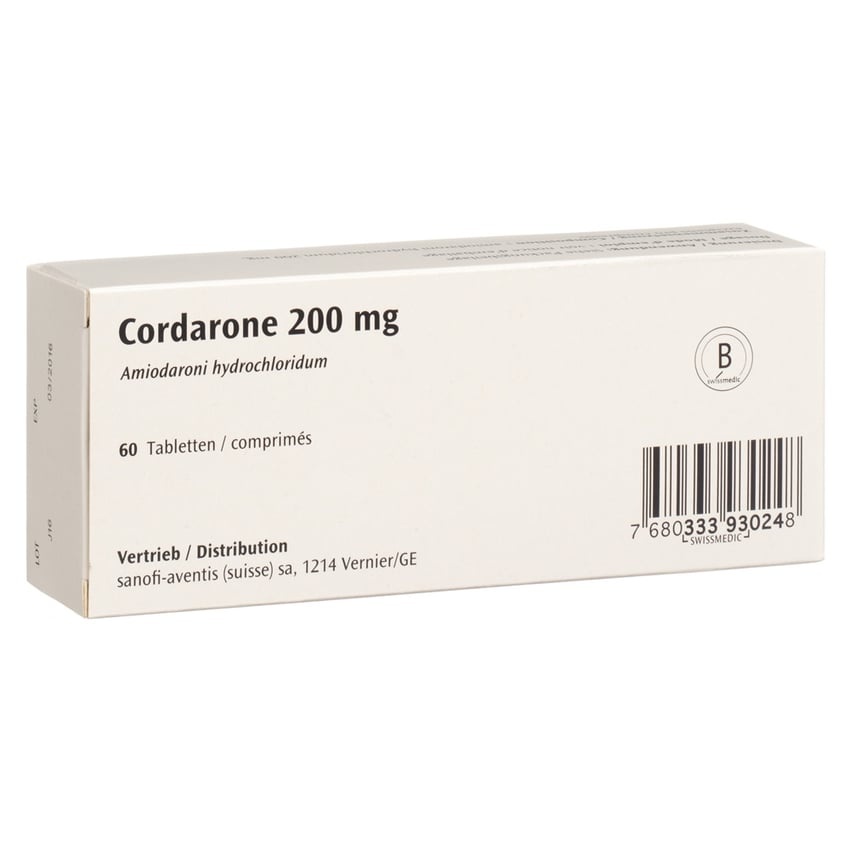
- Страна регистрации
- Форма выпускаTablet, 200MG
- Код АТХC01BD01
- Действующее вещество
- Отпускается по рецептуДа
- Производитель
- Информация на этой странице носит справочный характер и не является медицинской консультацией. Перед началом приема лекарства обязательно проконсультируйтесь с врачом.
- Аналоги KORDARONEФорма выпуска: Injectable solution, 150 MG/3 MLДействующее вещество: amiodaroneПроизводитель: ALFASIGMA S.P.A.Отпускается по рецептуФорма выпуска: Tablet, 200 MGДействующее вещество: amiodaroneПроизводитель: AUROBINDO PHARMA (ITALIA) S.R.L.Отпускается по рецептуФорма выпуска: Injectable solution, 150 MG/3 MLДействующее вещество: amiodaroneПроизводитель: BIOINDUSTRIA LABORATORIO ITALIANO MEDICINALI S.P.A.Отпускается по рецепту
Аналоги KORDARONE в других странах
Лекарства с тем же действующим веществом, доступные в других странах.
Аналог KORDARONE в Польша
Аналог KORDARONE в Украина
Аналог KORDARONE в Испания
Врачи онлайн по KORDARONE
Обсудите применение KORDARONE и возможные следующие шаги — по оценке врача.
Получите рецепт на KORDARONE онлайн
Заполните форму за 2 минуты
Расскажите о симптомах, истории болезни и нужном препарате.
Выберите врача или мы назначим
Выберите специалиста или мы подберём ближайшего доступного врача.
Врач рассматривает ваш случай
Обычно в течение 30 минут. Может задать уточняющие вопросы в чате.
Получите в любой аптеке
Электронный рецепт отправляется на вашу почту — действителен по всей Польше.
Часто задаваемые вопросы
KORDARONE требует рецепта в Италия. Вы можете уточнить у врача онлайн, подходит ли это лекарство для вашей ситуации.
Действующее вещество KORDARONE — amiodarone. Эта информация помогает определить лекарства с тем же составом под другими торговыми названиями.
KORDARONE производится компанией SANOFI S.R.L.. Упаковка и торговое название могут отличаться в зависимости от дистрибьютора.
Врачи, включая Семейные врачи, Психиатры, Дерматологи, Кардиологи, Эндокринологи, Гастроэнтерологи, Пульмонологи, Нефрологи, Ревматологи, Гематологи, Инфекционисты, Аллергологи, Гериатры, Педиатры, Онкологи, могут оценить целесообразность применения KORDARONE с учетом вашей ситуации и местных правил. Вы можете записаться на онлайн-консультацию, чтобы обсудить возможные варианты.
Польша имеет хорошо развитую систему здравоохранения в крупных городах, таких как Варшава, Краков, Вроцлав и Гданьск. Аптеки широко доступны и работают в соответствии с действующим законодательством, обеспечивая доступ к рецептурным препаратам.
Вы можете купить KORDARONE в Варшаве, Кракове, Вроцлаве или Гданьске в любой аптеке при наличии действующего рецепта.
Чтобы получить рецепт, вы можете воспользоваться Oladoctor:
Другие лекарства с тем же действующим веществом (amiodarone) включают AMIODAR, AMIODARONE AUROBINDO, AMIODARONE KLORIDRATO BIOINDUSTRIA LIM. Они могут отличаться торговым названием или формой выпуска, но содержат одинаковый терапевтический компонент. Перед изменением лечения рекомендуется проконсультироваться с врачом.
