



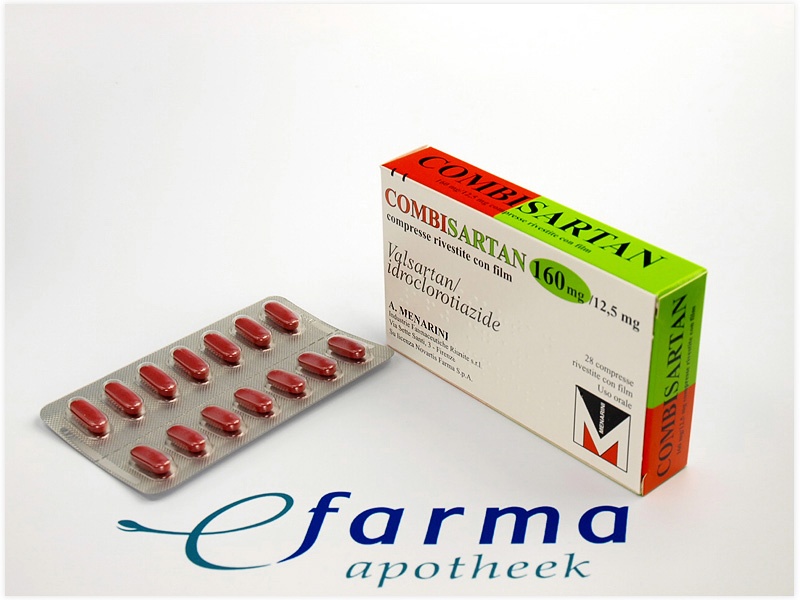
КОНБИСАРТАН 80 мг/12,5 мг Coated tablet

Рассмотрение рецепта онлайн
Врач рассмотрит ваш случай и примет решение о назначении рецепта, если это медицински оправдано.

Поговорите с врачом об этом лекарстве
Обсудите симптомы и возможные дальнейшие шаги на онлайн-консультации.



Инструкция по применению KOMBISARTAN
Содержание инструкции
Combisartan 80 mg/12,5 mg film-coated tablets, 160 mg/12,5 mg film-coated tablets, 160 mg/25 mg film-coated tablets, 320 mg/12,5 mg film-coated tablets, 320 mg/25 mg film-coated tablets
Valsartan/hydrochlorothiazide
Read this leaflet carefully before taking this medicine as it contains important information for you.
- Keep this leaflet. You may need to read it again.
- If you have any questions, ask your doctor or pharmacist.
- This medicine has been prescribed for you. Do not give it to others, even if they have the same symptoms as you, as it could be harmful.
- If any side effects occur, including those not listed in this leaflet, tell your doctor or pharmacist. See section 4.
Contents of this leaflet:
- 1. What Combisartan is and what it is used for
- 2. What you need to know before you take Combisartan
- 3. How to take Combisartan
- 4. Possible side effects
- 5. How to store Combisartan
- 6. Contents of the pack and other information
1. WHAT IS COMBISARTAN AND WHAT IT IS USED FOR
Combisartan film-coated tablets contain two active ingredients called valsartan and
hydrochlorothiazide. Both of these substances help to control high blood pressure (hypertension).
- Valsartanbelongs to a class of medicines known as “angiotensin II receptor antagonists”, which help to control high blood pressure. Angiotensin II is a substance in the body that causes the narrowing of blood vessels, thereby increasing blood pressure. Valsartan works by blocking the effect of angiotensin II. The result is that blood vessels relax and blood pressure decreases.
- Hydrochlorothiazidebelongs to a group of medicines called thiazide diuretics.
- Hydrochlorothiazide increases the amount of urine eliminated and, in doing so, reduces blood pressure.
Combisartan is used in the treatment of high blood pressure when blood pressure is not
sufficiently controlled by a single medicine.
When blood pressure is high, the workload on the heart and arteries increases. If not
treated, it can damage the blood vessels of the brain, heart and kidneys and can lead to stroke, heart
failure or kidney failure. High blood pressure increases the risk of heart attack. Bringing blood
pressure back to normal values reduces the risk of developing these diseases.
2. WHAT YOU NEED TO KNOW BEFORE TAKING COMBISARTAN
Do not take Combisartan:
- if you are allergic to the active ingredients valsartan and hydrochlorothiazide, to sulfonamide derivatives (chemically related substances to hydrochlorothiazide) or to any of the other ingredients of this medicine (listed in section 6)
- if you are pregnant for more than3 months(it is best to avoid taking Combisartan even in the early stages of pregnancy - see the Pregnancy section)
- if you have severeliver problems, destruction of the small bile ducts within the liver (biliary cirrhosis) leading to bile accumulation in the liver (cholestasis)
- if you have severekidney problems
- if you are unable to urinate (anuria)
- if you are undergoing treatment with an artificial kidney
- if your potassium or sodium levels in the blood are lower than normal or if your calcium levels in the blood are higher than normal despite treatment
- if you have gout
- if you suffer from diabetes or your kidney function is impaired and you are being treated with a medicine that lowers blood pressure containing aliskiren.
If any of these applies to you, do not take this medicine and consult your doctor.
Warnings and precautions
Talk to your doctor or pharmacist before taking Combisartan.
Take special care with Combisartan:
- if you are taking potassium-sparing medicines, potassium supplements, salt substitutes containing potassium or other medicines that increase potassium levels in the blood, such as heparin. Your doctor may need to check your potassium level in the blood at regular intervals
- if your potassium levels in the blood are low
- if you have diarrhea or severe vomiting
- if you are taking high doses of medicines that increase fluid elimination (diuretics)
- if you have serious heart problems
- if you suffer from heart failure or have had a heart attack. Carefully follow your doctor's instructions on the starting dose of therapy. Your doctor will also check your kidney function.
- if you suffer from a narrowing of the renal artery
- if you have recently received a new kidney
- if you suffer from hyperaldosteronism, a disease in which the adrenal glands produce too much aldosterone hormone. If this applies to you, the use of Combisartan is not recommended
- if you have liver or kidney disease
- if you have previously experienced swelling of the tongue and face caused by an allergic reaction called angioedema when you took other medicines (including ACE inhibitors), tell your doctor. If these symptoms occur when you take Combisartan, stop taking Combisartan immediately and never take it again. See section 4, “Possible side effects”
- if you have fever, rash and joint pain, which may be a sign of systemic lupus erythematosus (SLE, an autoimmune disease)
- if you have diabetes, gout, high cholesterol or triglyceride levels in the blood
- if you have had allergic reactions with the use of other medicines that lower blood pressure belonging to the same class (angiotensin II receptor antagonists) or if you suffer from allergies or asthma.
- if you experience a decrease in vision or eye pain. These may be symptoms of fluid accumulation in the vascular layer of the eye (choroidal effusion) or increased intraocular pressure and may occur from a few hours to a few weeks after taking Combisartan. If left untreated, this can lead to permanent vision loss. If you have previously had an allergy to penicillins or sulfonamides, you are at greater risk of developing this disorder
- it may cause increased skin sensitivity to the sun
- if you are taking any of the following medicines used to treat high blood pressure:
- an “ACE inhibitor” (e.g. enalapril, lisinopril, ramipril), especially if you have kidney problems related to diabetes.
- aliskiren
- if you are being treated with an ACE inhibitor together with other medicines used to treat heart failure, known as mineralocorticoid receptor antagonists (MRAs) (e.g. spironolactone, eplerenone) or beta-blockers (e.g. metoprolol).
- if you have had skin cancer in the past or if you are developing an unexpected skin lesion during treatment. Treatment with hydrochlorothiazide, especially long-term use with high doses, may increase the risk of certain types of skin cancer and lip cancer (non-melanoma skin cancer). Protect your skin from exposure to the sun and UV rays while taking Combisartan.
Your doctor may check your kidney function, blood pressure and the amount of electrolytes
(e.g. potassium) in the blood at regular intervals.
See also what is stated under “Do not take Combisartan”.
If any of these applies to you, consult your doctor.
Children and adolescents
The use of Combisartan is not recommended in children and adolescents (under 18 years of age).
You should tell your doctor if you think you may be pregnant (or if there is a possibility of becoming
pregnant). Combisartan is not recommended in early pregnancy and should not be
taken if you are pregnant for more than 3 months, as it can cause serious harm to the baby if
taken during this period (see the Pregnancy, breastfeeding and fertility section).
Other medicines and Combisartan
Tell your doctor or pharmacist if you are taking, have recently taken or might take
any other medicines, including those available without a prescription.
The effect of the treatment may be affected if Combisartan is taken with certain other medicines.
It may be necessary to change the dose, take other precautions or, in some cases, stop
taking one of the medicines. This applies particularly to the following medicines:
- lithium, a medicine used to treat some mental disorders
- medicines or substances that can increase the amount of potassium in the blood. These include potassium supplements or salt substitutes containing potassium, potassium-sparing medicines and heparin
- medicines that can decrease the amount of potassium in the blood, such as diuretics (medicines that increase fluid elimination), corticosteroids, laxatives, carbenoxolone, amphotericin or penicillin G.
- some antibiotics (rifampicin group), a drug used against rejection in transplantation (cyclosporine) and an antiretroviral drug used to treat HIV/AIDS infections (ritonavir). These drugs may increase the effect of Combisartan
- medicines that can induce torsades de pointes (irregular heartbeat), such as antiarrhythmics (medicines used to treat heart disorders) and some antipsychotics.
- medicines that can reduce the amount of sodium in the blood, such as antidepressants, antipsychotics, antiepileptics
- medicines for the treatment of gout, such as allopurinol, probenecid, sulfinpyrazone
- therapeutic vitamin D and calcium supplements,
- medicines used to treat diabetes (oral use such as metformin or insulins)
- other medicines that lower blood pressure, including methyldopa, ACE inhibitors (such as enalapril, lisinopril, etc.) or aliskiren (see also what is stated under: “Do not take Combisartan” and “Take special care with Combisartan”).
- medicines that increase blood pressure, such as norepinephrine and epinephrine
- digoxin or other cardiac glycosides (medicines used to treat heart problems)
- medicines that can increase blood sugar levels, such as diazoxide or beta-blockers
- cytotoxic medicines (used for cancer treatment), such as methotrexate or cyclophosphamide
- pain relievers such as non-steroidal anti-inflammatory drugs (NSAIDs), including selective cyclooxygenase-2 (Cox-2) inhibitors and acetylsalicylic acid > 3 g
- muscle relaxants, such as tubocurarine
- anti-cholinergic medicines, (medicines used to treat various disorders such as gastrointestinal cramps, bladder spasm, asthma, motion sickness, muscle spasms, Parkinson's disease and to facilitate anesthesia)
- amantadine (a medicine used to treat Parkinson's disease and also to treat or prevent some viral diseases)
- cholestyramine and colestipol (medicines used mainly in the treatment of high lipid levels in the blood)
- cyclosporine, a medicine used in organ transplantation to prevent organ rejection
- alcohol, hypnotics and anesthetics (medicines with a narcotic or analgesic effect used, for example, during surgery)
- iodinated contrast agents (used for radiological examinations)
Combisartan with food, beverages and alcohol
Combisartan can be taken with or without food.
Avoid drinking alcohol unless you have discussed it with your doctor. Alcohol can further
reduce blood pressure and/or increase the risk of dizziness or fainting.
Pregnancy and breastfeeding
Ask your doctor or pharmacist for advice before taking any medicine.
- You should tell your doctor if you think you may be pregnant (or if there is a possibilityof becoming pregnant)Usually, your doctor will advise you to stop taking Combisartan before becoming pregnant or as soon as you find out you are pregnant and will advise you to take another medicine instead of Combisartan. Combisartan is not recommended in early pregnancy and should not be taken if you are pregnant for more than 3 months as it can cause serious harm to the baby if taken after the third month of pregnancy.
- Tell your doctor if you are breastfeeding, or are planning to start breastfeedingCombisartan is not recommended for women who are breastfeeding and your doctor may choose another treatment for you if you wish to breastfeed, especially if the baby is newborn or premature.
Driving and operating machinery
Before driving a vehicle, operating machinery or performing other activities that require
concentration, you should know how you react to Combisartan. Like many other medicines
used to treat high blood pressure, Combisartan can rarely cause dizziness and affect
your ability to concentrate.
For those who play sports: the use of the drug without a therapeutic need constitutes doping and may
still result in positive doping tests.
3HOW TO TAKE COMBISARTAN
Take this medicine exactly as your doctor has told you. If you have doubts, consult
your doctor or pharmacist.
People who suffer from high blood pressure often do not notice any signs of this problem and many feel as
usual. For this reason, it is very important that you keep regular
appointments with your doctor, even when you feel well.
Your doctor will tell you exactly how many tablets of Combisartan you should take. Based on your
response to treatment, your doctor may suggest a higher or lower dose.
- The usual dose of Combisartan is one tablet a day.
- Do not change the dose and do not stop taking the tablets without first consulting your
doctor.
- This medicine should be taken every day at the same time, usually in the morning.
- You can take Combisartan with or without food.
- Swallow the tablet with a glass of water.
If you take more Combisartan than you should
In case of severe dizziness and/or fainting, it is advisable to lie down and contact your doctor immediately.
If you have inadvertently taken too many tablets, contact your doctor, pharmacist or hospital.
If you forget to take Combisartan
If you forget to take a dose, take it as soon as you remember. However, if it is almost time for the
next dose, skip the missed dose.
Do not take a double dose to make up for the missed dose.
If you stop taking Combisartan
Stopping treatment with Combisartan can worsen high blood pressure.
Do not stop using the medicine unless you have been told to do so by your doctor.
If you have any further questions on this product, ask your doctor or pharmacist.
4POSSIBLE SIDE EFFECTS
Like all medicines, this medicine can cause side effects, although not everyone
experiences them.
These side effects can occur with certain frequencies, defined as follows:
- very common: affects more than 1 in 10 users
- common: affects 1-10 users in 100
- uncommon: affects 1-10 users in 1,000
- rare: affects 1-10 users in 10,000
- very rare: affects less than 1 in 10,000
- not known: the frequency cannot be defined on the basis of available data.
Some side effects can be serious and require immediate medical attention.
Consult your doctor immediately if you have symptoms of angioedema, such as:
- swelling of the face, tongue or throat
- difficulty swallowing
- hives and difficulty breathing
If you experience any of these symptoms, stop taking Combisartan and contact your
doctor immediately (see also section 2 “Pay particular attention with
Combisartan”).
Other undesirable effects are:
Uncommon
- cough
- low blood pressure
- feeling of emptiness in the head
- dehydration (with symptoms such as thirst, dry mouth and tongue, infrequent urination, dark urine, dry skin)
- muscle pain
- fatigue
- tingling or numbness
- blurred vision
- ringing in the ears (e.g. buzzing, whistling) Very rare
- dizziness
- diarrhoea
- joint pain
Not known
- difficulty breathing
- significant decrease in the amount of urine
- low level of sodium in the blood (which can cause fatigue, confusion, muscle contractions and/or convulsions in severe cases)
- low level of potassium in the blood (sometimes with muscle weakness, muscle spasms, abnormal heart rhythm)
- low level of white blood cells in the blood (with symptoms such as fever, skin infections, sore throat or mouth ulcers due to infections, weakness)
- increased level of bilirubin in the blood (which can, in severe cases, cause yellowing of the skin and eyes)
- increased level of urea and creatinine in the blood (which may be an indication of kidney dysfunction)
- increased level of uric acid in the blood (which can, in severe cases, cause gout)
- syncope (fainting)
The following undesirable effects have been reported with medicines containing valsartan or
hydrochlorothiazide alone:
Valsartan
Uncommon
- feeling of dizziness
- abdominal pain
Not known
- appearance of blisters on the skin (sign of bullous dermatitis)
- rash with or without itching together with some of the following signs or symptoms: fever, joint pain, muscle pain, swollen lymph nodes and/or flu-like symptoms
- rash, reddish-purple spots, fever, itching (symptoms of inflammation of blood vessels)
- low level of platelets in the blood (sometimes with unusual bleeding or bruising)
- increased level of potassium in the blood (sometimes with muscle spasms, abnormal heart rhythm)
- allergic reactions (with symptoms such as rash, itching, hives, difficulty breathing or swallowing, dizziness)
- swelling especially of the face and throat, rash, itching
- increased liver function values
- decrease in levels of hemoglobin and percentage of red blood cells in the blood (which, in severe cases, can both cause anemia)
- kidney failure
- low level of sodium in the blood (which can cause fatigue, confusion, muscle contractions and/or convulsions in severe cases)
Hydrochlorothiazide
Very common
- low level of potassium in the blood
- increased lipids in the blood
Common
- low level of sodium in the blood
- low level of magnesium in the blood
- high level of uric acid in the blood
- skin rashes with itching or other types of rashes
- loss of appetite
- mild nausea and vomiting
- dizziness, fainting when getting up
- inability to achieve or maintain an erection
Rare
- swelling and blistering of the skin (due to increased sensitivity to the sun)
- high level of calcium in the blood
- high level of sugar in the blood
- sugar in the urine
- worsening of the metabolic state of diabetes
- constipation, diarrhoea, stomach or intestinal disorders, liver disorders that may manifest with yellow skin or eyes
- irregular heartbeat
- headache
- sleep disorders
- sadness (depression)
- low level of platelets in the blood (sometimes with bleeding or bruising under the skin)
- dizziness
- tingling or numbness
- vision disorders
Very rare
- inflammation of blood vessels with symptoms such as rashes, reddish-purple spots, fever (vasculitis)
- rash, itching, hives, difficulty breathing or swallowing, dizziness (hypersensitivity reactions)
- severe skin diseases that cause rash, redness of the skin, formation of blisters on lips, eyes or mouth, peeling of the skin, fever (toxic epidermal necrolysis)
- skin rashes, facial redness, joint pain, muscle pain, fever (lupus erythematosus)
- severe pain in the upper abdomen (pancreatitis)
- difficulty breathing with fever, cough, wheezing, shortness of breath (respiratory distress, including pneumonia and pulmonary edema)
- fever, sore throat, frequent infections (agranulocytosis)
- pallor, fatigue, shortness of breath, dark urine (hemolytic anemia)
- fever, sore throat or mouth ulcers due to infections (leukopenia)
- confusion, fatigue, tremor or muscle spasm, labored breathing (hypochloremic alkalosis)
Not known
- fatigue, bruising and frequent infections (aplastic anemia)
- severe decrease in the amount of urine (possible sign of a kidney disorder or kidney failure)
- decreased vision or eye pain due to high eye pressure (possible sign of fluid accumulation in the vascular layer of the eye (choroidal effusion) or acute angle-closure glaucoma)
- rash, redness of the skin, formation of blisters on lips, eyes or mouth,
desquamation of the skin, fever (possible signs of erythema multiforme)
- muscle spasm
- fever (pyrexia)
- weakness (asthenia)
- skin and lip cancer (non-melanoma skin cancer).
If any of these side effects gets serious, or if you notice any side effects not listed in this leaflet, please tell your doctor or pharmacist. You can also report side effects directly through the national reporting system at http://www.aifa.gov.it/content/segnalazioni-reazioni-avverse.
Reporting side effects can help provide more information on the safety of
this medicine.
5HOW TO STORE COMBISARTAN
- Keep this medicine out of the sight and reach of children.
- Do not use this medicine after the expiry date which is stated on the label. The expiry date refers to the last day of that month.
- Do not store above 30°C. Store in the original package to protect the medicine from moisture.
- Do not use Combisartan if you notice that the package is damaged or shows signs of tampering.
- Do not dispose of any medicine via water or household waste. Ask your pharmacist how to dispose of medicines you no longer use. This will help protect the environment.
6CONTENTS OF THE PACK AND OTHER INFORMATION
What Combisartan contains
- The active ingredients are valsartan and hydrochlorothiazide. Each film-coated tablet contains 80 mg, 160 mg or 320 mg of valsartan and 12.5 mg or 25 mg of hydrochlorothiazide respectively.
- The tablet core contains microcrystalline cellulose, crospovidone, anhydrous colloidal silica, magnesium stearate.
- The tablet coating contains hypromellose, macrogol 8000 (only 80 mg/12.5 mg and 160 mg/12.5 mg), macrogol 4000 (only 160 mg/25 mg, 320 mg/12.5 mg and 320 mg/25 mg), talc, iron oxide red (E172, except 320 mg/25 mg), iron oxide yellow (E172, only 80 mg/12.5 mg, 160 mg/12.5 mg and 320 mg/12.5 mg), iron oxide black (E172, only 160 mg/25 mg and 320 mg/12.5 mg), titanium dioxide (E171).
Description of Combisartan and contents of the pack
Combisartan 80 mg/12.5 mg film-coated tablets are light orange, ovoid, with
“HGH” imprinted on one side and “CG” on the opposite side or with “HGH” imprinted on one side only.
Combisartan 160 mg/12.5 mg film-coated tablets are dark red, ovoid, with
“HHH” imprinted on one side and “CG” on the opposite side or with “HHH” imprinted on one side only.
Combisartan 160 mg/25 mg film-coated tablets are brown, ovoid, with imprinted
“HXH” on one side and “NVR” on the opposite side or with “HXH” imprinted on one side only.
Combisartan 320 mg/12.5 mg film-coated tablets are pink, ovoid, with rounded
edges, with “NVR” imprinted on one side and “HIL” on the opposite side or with “HIL” imprinted on one side only.
Combisartan 320 mg/25 mg film-coated tablets are yellow, ovoid, with imprinted
“CTI” on one side and “NVR” on the opposite side or with “CTI” imprinted on one side only.
Combisartan 80 mg/12.5 mg tablets are available in calendar blisters, in packs of
14 or 28 tablets. Combisartan 160 mg/12.5 mg, 160 mg/25 mg, 320 mg/12.5 mg and
320 mg/25 mg tablets are available in calendar blisters, in packs of 7 (only 320 mg/12.5 and 320 mg/25
mg), 14, 28, 56, 98 or 280 tablets. Also available are divisible blisters for unit dosage, in
packs of 56x1 (only 320 mg/12.5 and 320 mg/25 mg), 98x1 (except 80 mg/12.5) or 280x1 (only 320
mg/12.5 and 320 mg/25 mg) tablets.
Not all pack sizes may be marketed.
Marketing Authorisation Holder and Manufacturer
Marketing Authorisation Holder
A.Menarini Industrie Farmaceutiche Riunite s.r.l., via Sette Santi, 3 - Florence
Manufacturer
FAMAR L'Aigle
Zone industrielle N°1, Route de Crulai
61303 L'Aigle
France

Не уверены, подходит ли вам это лекарство?
Обсудите симптомы и варианты лечения с врачом онлайн.

Уже начали прием и появились вопросы?
Обсудите свое состояние и дальнейшие шаги с врачом онлайн.
- Страна регистрации
- Форма выпускаCoated tablet, 80 MG/12,5 MG
- Код АТХC09DA03
- Действующее вещество
- Отпускается по рецептуДа
- Производитель
- Информация на этой странице носит справочный характер и не является медицинской консультацией. Перед началом приема лекарства обязательно проконсультируйтесь с врачом.
- Аналоги KOMBISARTANДействующее вещество: valsartan and diureticsПроизводитель: SANDOZ S.P.A.Отпускается по рецептуДействующее вещество: valsartan and diureticsПроизводитель: NOVARTIS FARMA S.P.A.Отпускается по рецептуФорма выпуска: Film-coated tablet, 80 MG/12,5 MGДействующее вещество: valsartan and diureticsОтпускается по рецепту
Аналоги KOMBISARTAN в других странах
Лекарства с тем же действующим веществом, доступные в других странах.
Аналог KOMBISARTAN в Испания
Аналог KOMBISARTAN в Польша
Аналог KOMBISARTAN в Украина
Врачи онлайн по KOMBISARTAN
Обсудите применение KOMBISARTAN и возможные следующие шаги — по оценке врача.
Получите рецепт на KOMBISARTAN онлайн
Заполните форму за 2 минуты
Расскажите о симптомах, истории болезни и нужном препарате.
Выберите врача или мы назначим
Выберите специалиста или мы подберём ближайшего доступного врача.
Врач рассматривает ваш случай
Обычно в течение 30 минут. Может задать уточняющие вопросы в чате.
Получите в любой аптеке
Электронный рецепт отправляется на вашу почту — действителен по всей Польше.
Часто задаваемые вопросы
KOMBISARTAN требует рецепта в Италия. Вы можете уточнить у врача онлайн, подходит ли это лекарство для вашей ситуации.
Действующее вещество KOMBISARTAN — valsartan and diuretics. Эта информация помогает определить лекарства с тем же составом под другими торговыми названиями.
KOMBISARTAN производится компанией A. MENARINI INDUSTRIE FARMACEUTICHE RIUNITE S.R.L.. Упаковка и торговое название могут отличаться в зависимости от дистрибьютора.
Врачи, включая Семейные врачи, Психиатры, Дерматологи, Кардиологи, Эндокринологи, Гастроэнтерологи, Пульмонологи, Нефрологи, Ревматологи, Гематологи, Инфекционисты, Аллергологи, Гериатры, Педиатры, Онкологи, могут оценить целесообразность применения KOMBISARTAN с учетом вашей ситуации и местных правил. Вы можете записаться на онлайн-консультацию, чтобы обсудить возможные варианты.
Польша имеет хорошо развитую систему здравоохранения в крупных городах, таких как Варшава, Краков, Вроцлав и Гданьск. Аптеки широко доступны и работают в соответствии с действующим законодательством, обеспечивая доступ к рецептурным препаратам.
Вы можете купить KOMBISARTAN в Варшаве, Кракове, Вроцлаве или Гданьске в любой аптеке при наличии действующего рецепта.
Чтобы получить рецепт, вы можете воспользоваться Oladoctor:
Другие лекарства с тем же действующим веществом (valsartan and diuretics) включают KORIXIL, KOTAREG, VALIDROK. Они могут отличаться торговым названием или формой выпуска, но содержат одинаковый терапевтический компонент. Перед изменением лечения рекомендуется проконсультироваться с врачом.
