



CLODRON 300 mg /10 Ml Концентрат Для Инфузионного Раствора

Рассмотрение рецепта онлайн
Врач рассмотрит ваш случай и примет решение о назначении рецепта, если это медицински оправдано.

Поговорите с врачом об этом лекарстве
Обсудите симптомы и возможные дальнейшие шаги на онлайн-консультации.



Инструкция по применению KLODRON
Содержание инструкции
- CLODRON 400 mg hard capsules
- CLODRON 300 mg/10 ml concentrate for solution for infusion
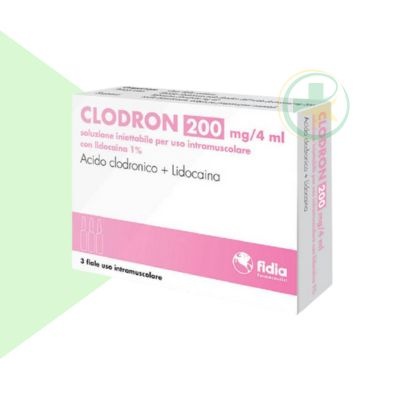
- CLODRON 100 mg + 33 mg injectable solution with lidocaine, 200 mg + 40 mg injectable solution with lidocaine
CLODRON 400 mg hard capsules
Clodronic acid
Read this leaflet carefully before taking this medicine as it contains important
information for you.
- Keep this leaflet. You may need to read it again.
- If you have any questions, ask your doctor or pharmacist.
- This medicine has been prescribed for you only. Do not pass it on to others, even if their symptoms are the same as yours, as it could be harmful.
- If you get any side effects, even those not listed in this leaflet, tell your doctor or pharmacist. See section 4.
Contents of this leaflet:
- 1. What CLODRON is and what it is used for
- 2. What you need to know before you take CLODRON
- 3. How to take CLODRON
- 4. Possible side effects
- 5. How to store CLODRON
- 6. Contents of the pack and other information
1. What is CLODRON and what is it used for
CLODRON is a medicine that contains clodronic acid, an active ingredient that belongs to a group
of drugs for the treatment of bone diseases, called bisphosphonates.
CLODRON is used in adults for the treatment:
- of loss of bone consistency following cancer (tumor osteolysis);
- of bone marrow cancer (multiple myeloma);
- of excessive functionality of the parathyroid glands (primary hyperparathyroidism). It is also used in women for the prevention and treatment of loss of bone consistency (osteoporosis) after menopause (period of permanent cessation of menstruation).
2. What you need to know before you take CLODRON
Do not take CLODRON
- If you are allergic to clodronic acid or any of the other ingredients of this medicine (listed in section 6).
- If you are taking other bisphosphonates, medicines similar to CLODRON.
Warnings and precautions
Talk to your doctor or pharmacist before taking CLODRON.
Before and during treatment your doctor will ask you to undergo blood tests to check the
functionality of the kidneys and liver (see section 4. Possible side effects). It is important that you take
an adequate amount of fluids during treatment with this medicine, especially if you have problems with your
kidneys (see section 3. How to use CLODRON).
In particular, tell your doctor:
- If you have high levels of calcium in your blood.
- If you suffer from a kidney disease (renal insufficiency).
- If you are being treated with CLODRON to treat cancer or osteoporosis and are undergoing dental treatment or need to undergo dental surgery. Also inform your dentist that you are
being treated with CLODRON (see section 4. Possible side effects), as preventive dental treatment may
be necessary.
- If you suffer from a liver disease.
- If you should experience weakness or pain in the thigh, hip or groin during treatment, as this could be an early symptom of a possible femur fracture (see section 4. Possible side effects).
- If you or someone in your family has or has had disorders of the esophagus (the tube connecting the pharynx to the stomach) that cause a delay in the passage of food and emptying of the stomach or if you suffer from stomach disorders. The doctor will ask you to pay attention to the instructions on administration and to be careful for any sign or symptom indicating a possible reaction to the esophagus. If you develop symptoms of esophageal irritation (e.g. difficulty swallowing (dysphagia), pain when swallowing, retrosternal pain or appearance/worsening of heartburn), contact your doctor immediately.
- If you have difficulty maintaining an upright posture for at least 30 minutes after taking the capsule.
Children and adolescents
The safety and efficacy of the drug in pediatric patients have not been established.
Other medicines and CLODRON
Tell your doctor or pharmacist if you are taking, have recently taken or might take any
other medicine.
This is particularly important if:
- You are taking other bisphosphonates, medicines used to treat bone diseases, as the concomitant use of CLODRON with other bisphosphonates is contraindicated (see section 2. Do not useCLODRON).
- You are taking non-steroidal anti-inflammatory drugs (NSAIDs), medicines used to treat inflammation (particularly diclofenac), as kidney problems may occur.
- You are taking aminoglycosides, medicines used to treat infections, as calcium levels in the blood may decrease (hypocalcemia).
- You are taking estramustine, a medicine used to treat prostate cancer (a gland in men that produces seminal fluid), as estramustine concentrations in the blood may increase.
- If you are taking medicines containing bivalent cations (e.g.: mineral supplements, antacids or iron preparations). In these cases, your doctor will tell you to take CLODRON 2-3 hours apart.
CLODRON with food and drink
Tell your doctor or pharmacist if you are taking foods or drinks containing bivalent cations (e.g.: foods or
drinks containing iron, magnesium, aluminum, calcium) (see section 3. How to take CLODRON).
CLODRON 400 mg hard capsules must be taken 2-3 hours apart from foods and/or drinks containing
bivalent cations.
Pregnancy, breastfeeding and fertility
If you are pregnant, suspect you are pregnant or are planning to become pregnant, or if you are breastfeeding,
ask your doctor or pharmacist for advice before taking this medicine.
Pregnancy
Avoid taking CLODRON during pregnancy and if you are of childbearing potential and are not using effective
contraception (medicines used to prevent pregnancy).
Breastfeeding
It is not known whether clodronic acid passes into breast milk. Therefore, during treatment with CLODRON,
stop breastfeeding.
Fertility
It is not known whether clodronic acid has effects on human fertility.
Driving and operating machinery
CLODRON can cause visual disturbances that can affect the ability to drive and operate
machinery.
If you experience one or more symptoms listed in section 4 or if you use more CLODRON than you should, avoid driving
vehicles and using machinery.
CLODRON contains sodium
CLODRON 400 mg hard capsules contain 64.13 mg of sodium (the main component of table salt)
per capsule. This is equivalent to 3.2% of the recommended maximum daily intake with the diet of an
adult.
Talk to your doctor or pharmacist if you need 7 or more capsules a day for a prolonged period,
especially if you have been advised to follow a low-sodium diet or if you suffer from a kidney
disease.
3. How to take CLODRON
Take this medicine following the doctor's instructions exactly, who will indicate the correct dose,
based on the severity of your condition, and the duration of treatment. If you have any doubts, consult your doctor or
pharmacist (see the section DOSE, METHOD AND TIME OF ADMINISTRATIONat the end of the Package
Leaflet).
Clodronic acid is eliminated predominantly by the kidneys. Therefore, during treatment with clodronic acid, it is necessary to take an adequate amount of fluids.
Tumoral osteolysis. Multiple myeloma. Primary hyperparathyroidism.
a) Attack phase
For the attack phase, the doctor will administer CLODRON 300 mg/10 ml concentrate for solution for
infusion, at a dose of 300 mg/ dayin a single administration intravenously slowly for 3-8 days in
relation to the trend of clinical and laboratory parameters (calcemia, hydroxyprolinuria, etc.).
For more information regarding CLODRON 300 mg/10 ml concentrate for solution for infusion
b) Maintenance phase
If the doctor prescribes you CLODRON capsules, the recommended dose is 4 capsules a day, to
be taken in a single administration. If the doctor has prescribed a higher dose, up to a maximum of
8 capsules a day, the dose exceeding 4 capsules must be taken separately (as a second
dose). The doses must be taken away from meals for the period established by the doctor depending
on the evolution of the disease. If necessary, the doctor will ask you to undergo tests to evaluate the
state of health of your bones.
Alternatively, the doctor may administer CLODRON 100 mg + 33 mg injectable solution with
lidocaineinto a muscle at a dose of 100 mg/ dayfor 2-3 weeks according to the methods described in
The doctor will reduce the dose of CLODRON if you suffer from a kidney disease.
Prevention and treatment of postmenopausal osteoporosis
The recommended dose is 1 capsule a day for 30 days, followed by 60 days of suspension (for multiple cycles),
up to 1 capsule a day continuously for 1 year or more as prescribed by your doctor.
Alternatively, the doctor may administer into a muscle CLODRON 100 mg + 33 mg solution
injectable with lidocaine(100 mg every 7-14 days) for 1 year or more depending on your conditions and
injectable with lidocaine(200 mg every 14-28 days) for 1 year or more depending on your conditions and
The doctor will reduce the dose of CLODRON if you suffer from a kidney disease.
How to take the capsules
Take the capsules by mouth with some water and swallow without chewing.
CLODRON 400 mg capsules must be swallowed whole, preferably in the morning, on an empty stomach
with a glass of water. Afterwards, do not eat or drink or take other medicines by mouth for one
hour after taking it.
Once the medicine has been taken, do not lie down for 30 minutes.
In no case should you take the capsules with milk, food, or medicines containing calcium or other divalent cations
(e.g., iron, magnesium, aluminum), as these substances interfere with the absorption of
clodronate. Some mineral waters may have a high calcium concentration and therefore should not
be used.
Exclusively for the treatment of tumoral osteolysis, multiple myeloma and primary hyperparathyroidism in
the case of multiple doses a day, you must take the other dose between meals, at least two hours after or one hour before
eating, drinking (if not natural water) or taking other medicines by mouth.
If you take more CLODRON than you should
In case of accidental intake of an excessive dose of CLODRON, immediately contact your doctor
or the nearest hospital.
The symptoms of overdose may consist of:
- increased levels of creatinine in the blood and kidney disease (renal dysfunction) (with high doses of clodronic acid administered intravenously)
- elevated levels of nitrogen in the blood (uremia),
- liver damage,
- lowering of calcium levels in the blood (hypocalcemia)
Treatment
The doctor will control the symptoms with specific therapies.
If you forget to take CLODRON
Do not take a double dose to make up for the forgotten capsule.
If you stop taking CLODRON
If you have any doubts about the use of this medicine, consult your doctor or pharmacist.
4. Possible side effects
Like all medicines, this medicine can cause side effects, although not everyone will experience them.
If you experience vision or eye disturbances during treatment, STOP therapy and consult an
ophthalmologist.
Immediately inform your doctor if you experience:
- pain or sores in the mouth or jaw and/or mandible (two bones of the face), as this may be the first signs of serious problems (death of the bone tissue of the jaw and/or mandible), generally associated with tooth extraction and/or local infection (see section 2. Warnings and precautions).
Possible side effects are listed below according to frequency:
common (may affect up to 1 in 10 people)
- lowering of calcium levels in the blood, without symptoms (asymptomatic hypocalcemia),
- diarrhea, nausea, vomiting (usually mild),
- increased levels of transaminases in the blood (test to assess liver function), usually within normal limits. rare (may affect up to 1 in 1,000)
- lowering of calcium levels in the blood, with symptoms (symptomatic hypocalcemia),
- increased levels of parathyroid hormone (hormone that regulates calcium levels in the blood) associated with reduced calcium in the blood,
- increased levels of alkaline phosphatase in the blood (test to assess the condition of the bones and liver),
- increased levels of transaminases in the blood (test to assess liver function) more than twice the normal values, without other abnormalities of liver function,
- allergic reactions that manifest as skin reactions,
- unusual fracture of the femur (long bone of the leg), especially in patients treated for a long time for osteoporosis. Contact your doctor if you experience pain or weakness in the thigh, hip or groin, as this could be an early sign of a possible femur fracture. very rare (may affect up to 1 in 10,000)
- consult your doctor in case of ear pain, ear discharge and/or ear infection. These episodes may be symptoms of bone damage to the ear. The following side effects may also occur, for which it is not possible to determine the frequency:
- effects on the eyes
- inflammation of the conjunctiva, the membrane that covers the eye and the inside of the eyelids (conjunctivitis);
- inflammation of the eye (episcleritis, scleritis and uveitis). Episcleritis and scleritis have been reported with other drugs belonging to the same class as clodronic acid (a class adverse reaction of bisphosphonates).
- effects on the lungs
- breathing difficulties in patients with asthma sensitive to acetylsalicylic acid (a medicine used to treat fever, pain and inflammation);
- allergic reactions that manifest as breathing difficulties
- effects on the kidneys and urinary tract
- kidney disease (renal failure), severe kidney damage. Rarely, and especially in association with the use of NSAIDs (medicines used to treat inflammation and pain), renal failure has led to death (more often with diclofenac). See section 2. Other medicines and CLODRON.
- effects on bones and muscles
- severe pain in bones, joints and muscles. The onset of symptoms varies from days to several months after starting therapy with CLODRON;
- pain or sore in the mouth or jaw and/or mandible (two bones of the face). This may be the first signs of serious problems (death of the bone tissue of the jaw and/or mandible), generally associated with tooth extraction and/or local infection (see section 2. Warnings and precautions). In most cases, this has occurred in patients with cancer.
- effects on the stomach and intestines
- inflammations or irritations of the esophagus, the tube that connects the pharynx to the stomach (esophagitis);
- inflammation of the stomach (gastritis);
- lesions of the esophagus (esophageal ulcers);
- lesions of the stomach and intestines (gastroduodenal ulcers).
Reporting of side effects
If you experience any side effects, including those not listed in this leaflet, please inform your
doctor or pharmacist. You can also report side effects directly through the national
reporting system at https://www.aifa.gov.it/content/segnalazioni-reazioni-avverse.
By reporting side effects you can help provide more information on the safety of this
medicine.
5. How to store CLODRON
This medicine does not require any particular storage conditions.
Keep this medicine out of the sight and reach of children.
Do not use this medicine after the expiry date that is reported on the pack after Scad.
The expiry date refers to the last day of that month.
Do not dispose of any medicine in wastewater or household waste. Ask your pharmacist how to eliminate
medicines that you no longer use. This will help protect the environment.
6. Package contents and other information
Contents of packCLODRON 400 mg hard capsules
- The active ingredient is Clodronate disodium (disodium salt of clodronic acid) 400 mg
- The other ingredients are sodium starch glycolate (Type A), corn starch, talc, magnesium stearate. Capsule shell components: gelatin, titanium dioxide (E 171), indigotin (E 132).
Description of the appearance of CLODRON and package contents
CLODRON 400 mg hard capsulesis available in packs containing blisters of 10 capsules.
Marketing Authorisation Holder and Manufacturer
Marketing Authorisation Holder
ABIOGEN PHARMA S.p.A. - Via Meucci, 36 - Ospedaletto – Pisa – Italy
Manufacturer
ABIOGEN PHARMA S.p.A. – Via Meucci 36 – Ospedaletto – Pisa
------------------------------------------------------------------------------------------------------------------------
The following information is intended exclusively for doctors or healthcare professionals:
DOSE, ADMINISTRATION METHOD AND DURATION OF TREATMENT
Tumour osteolysis. Multiple myeloma. Primary hyperparathyroidism.
The following dosage regimen should be considered as a guideline and can therefore be adapted to the
needs of the individual patient.
a) Attack phase
CLODRON 300 mg/10 ml concentrate for solution for infusion, 300 mg/ dayin a single administration
by slow intravenous route for 3-8 days depending on the trend of clinical and laboratory parameters
(calcaemia, hydroxyprolinuria, etc.).
For more information relating to CLODRON 300 mg/10 ml concentrate for solution for infusion
b) Maintenance phase
CLODRON 100 mg + 33 mg injectable solution with lidocaine100 mg/ dayby intramuscular route for 2-3
weeks. For more information relating to CLODRON 100 mg + 33 mg injectable solution with
Or, alternatively
CLODRON 400 mg hard capsules,4 capsules/ day(1600 mg of sodium clodronate). If necessary, the dose may
be increased, but it must not exceed a maximum of 8 capsules/ day(3200 mg of sodium clodronate). The daily
dose of 1600 mg should be taken as a single dose. When higher dosages are used, the dose exceeding 1600 mg
must be taken separately (as a second dose). The administrations of the doses must be spaced apart from meals.
The duration of treatment, usually long-term, depends on the evolution of the disease.
Periodic re-evaluation of bone resorption parameters is recommended as a guide to judging the
need for continued therapy.
Prevention and treatment of postmenopausal osteoporosis.
The dosage, depending on the clinical picture and mineralometric values, may vary as follows:
Oral therapy
CLODRON 400 mg hard capsules, 1 capsule/ day× 30 days, followed by 60 days of suspension (for multiple
cycles), up to 1 capsule/ daycontinuously for 1 year or more depending on the patient's condition.
Method of administration
CLODRON 400 mg capsules must be swallowed whole. The daily dose should be taken
preferably in the morning on an empty stomach with a glass of water. The patient must then refrain from
eating, drinking (if not natural water) or taking other drugs orally for one hour
after taking the medicine. Once the medicine has been taken, patients are advised not to lie down for 30 minutes.
Clodronate must never be taken with milk, food or drugs containing calcium or other divalent cations,
as these substances interfere with the absorption of clodronate. Some mineral waters
may have a high calcium concentration and therefore should not be used.
Exclusively for the treatment of tumour osteolysis, multiple myeloma and primary hyperparathyroidism in
the case of multiple doses per day, the other dose must be taken between meals, at least two hours after or one hour before
eating, drinking (if not natural water) or taking other drugs orally.
Parenteral therapy
CLODRON 100 mg + 33 mg injectable solution with lidocaine
by intramuscular route 100 mg every 7-14 days, for 1 year or more depending on the patient's condition.
CLODRON 200 mg + 40 mg injectable solution with lidocaine
by intramuscular route 200 mg every 14-28 days, for 1 year or more depending on the patient's condition.
For more information relating to CLODRON 100 mg + 33 mg injectable solution with lidocaineand to
CLODRON 200 mg + 40 mg injectable solution with lidocainesee the corresponding Summary of
The duration of treatment with bisphosphonates for osteoporosis has not been established. The need for
continuous treatment must be re-evaluated in each individual patient periodically in function of the
benefits and potential risks, in particular after 5 years or more of use.
- Children The safety and efficacy of the drug in paediatric patients have not been established.
- Elderly There are no specific dosage recommendations for the drug for the elderly. Clinical studies have included patients over 65 years of age and no specific adverse events have been reported for this age group.
- Patients with renal insufficiency Oral administrationClodronate is mainly eliminated by the renal route. Therefore, it must be used with caution in patients with renal insufficiency. Daily doses exceeding 1600 mg should not be used continuously. It is recommended to reduce the dosage of Clodronate as follows:
| Levels of renal insufficiency | Creatinine clearance, ml/min | Dose |
| Mild | 50-80 ml/min | 1600 mg/day |
| Moderate | 30-50 ml/min | 1200 mg/day |
| Severe * | < 30 ml/min | 800 mg/day |
CLODRON 300 mg/10 ml concentrate for solution for infusion
Clodronic acid
Read this leaflet carefully before you use this medicine because it contains important
information for you.
- Keep this leaflet. You may need to read it again.
- If you have any questions, ask your doctor, pharmacist or nurse.
- This medicine has been prescribed for you only. Do not pass it on to others, even if their symptoms are the same as yours, as it could be harmful.
- If you get any side effects, even those not listed in this leaflet, tell your doctor, pharmacist or nurse. See section 4.
Contents of this leaflet:
- 1. What CLODRON is and what it is used for
- 2. What you need to know before you use CLODRON
- 3. How to use CLODRON
- 4. Possible side effects
- 5. How to store CLODRON
- 6. Contents of the pack and other information
1. What is CLODRON and what it is used for
CLODRON is a medicine that contains clodronic acid, an active ingredient that belongs to a group
of drugs for the treatment of bone diseases, called bisphosphonates.
CLODRON is used in adults for the treatment of:
- loss of bone consistency following cancer (tumour osteolysis);
- bone marrow cancer (multiple myeloma);
- excessive functionality of the parathyroid glands (primary hyperparathyroidism).
2. What you need to know before using CLODRON
Do not use CLODRON
- If you are allergic to clodronic acid or any of the other ingredients of this medicine (listed in section 6).
- If you are taking other bisphosphonates, medicines similar to CLODRON.
Warnings and precautions
Talk to your doctor or pharmacist before using CLODRON.
Before and during treatment, your doctor will ask you to undergo blood tests to check the
function of your kidneys and liver (see section 4. Possible side effects). It is important that you take
an adequate amount of fluids during treatment with this medicine, especially if you have kidney problems
(see section 3. How to use CLODRON).
In particular, tell your doctor:
- If you have high levels of calcium in your blood.
- If you suffer from a kidney disease (renal insufficiency).
- If you are being treated with CLODRON to treat cancer and are undergoing dental treatment or need to undergo dental surgery. Also inform your dentist that you are being treated with CLODRON (see section 4. Possible side effects), as preventive dental treatment may be necessary.
- If you suffer from a liver disease.
- If you experience weakness or pain in the thigh, hip or groin during treatment, as this could be an early symptom of a possible femur fracture (see section 4. Possible side effects).
Children and adolescents
The safety and efficacy of the medicine in paediatric patients have not been established.
Other medicines and CLODRON
Tell your doctor or pharmacist if you are taking, have recently taken or might take any
other medicines.
This is particularly important if:
- You are taking other bisphosphonates, medicines used to treat bone diseases, as the concomitant use of CLODRON with other bisphosphonates is contraindicated (see section 2. Do not use CLODRON).
- You are taking non-steroidal anti-inflammatory drugs (NSAIDs), medicines used to treat inflammation (in particular diclofenac), as kidney problems may occur.
- You are taking aminoglycosides, medicines used to treat infections, as calcium levels in the blood may decrease (hypocalcaemia).
- You are taking estramustine, a medicine used to treat prostate cancer (a gland in men that produces seminal fluid), as estramustine concentrations in the blood may increase.
- You are receiving solutions containing bivalent cations through a vein (e.g. Ringer's solution).
Pregnancy, breastfeeding and fertility
If you are pregnant, suspect you may be pregnant, are planning a pregnancy, or are breastfeeding with
breast milk, ask your doctor or pharmacist for advice before this medicine is administered to you.
Pregnancy
Avoid using CLODRON during pregnancy and if you are of childbearing potential and not using effective
contraception (medicines used to prevent pregnancy).
Breastfeeding
It is not known whether clodronic acid passes into breast milk. Therefore, discontinue breastfeeding during treatment with CLODRON.
Fertility
It is not known whether clodronic acid has effects on human fertility.
Driving and using machines
CLODRON can cause visual disturbances that may affect your ability to drive vehicles and use
machinery.
If you experience one or more of the symptoms listed in section 4 or if you use more CLODRON than you should, avoid driving
vehicles and using machinery.
CLODRON contains sodium
This medicine contains 48.89 mg of sodium (the main component of table salt) per dose. This
is equivalent to 2.46% of the maximum recommended daily intake of sodium with the diet of an adult.
This should be taken into consideration if you suffer from a kidney disease or follow a low-sodium diet.
3. How to use CLODRON
Use this medicine following the doctor's instructions exactly, who will indicate the correct dose,
based on the severity of your condition, and the duration of treatment. This medicine will be administered to you
by the doctor or by a nurse (see the section DOSE, METHOD AND TIME OF ADMINISTRATION
Clodronic acid is predominantly eliminated through the kidneys. Therefore, during treatment with clodronic
acid, it is necessary to take an adequate amount of fluids.
This is particularly important when CLODRON is administered through a vein:
- if you have high levels of calcium in the blood
- if you have a kidney disease (renal insufficiency).
Method of administration
CLODRON 300 mg/10 ml concentrate for solution for infusionis for intravenous use onlyand must be
diluted before infusion. It will be administered directly into your veins slowly (2-3 hours).
If you use more CLODRON than you should
In case of accidental intake of an excessive dose of CLODRON, immediately contact your doctor
or the nearest hospital.
The symptoms of overdose may consist of:
- increased levels of creatinine in the blood and kidney disease (renal dysfunction) (with high doses of clodronic acid administered intravenously)
- elevated levels of nitrogen in the blood (uremia),
- liver damage,
- lowering of calcium levels in the blood (hypocalcemia) Treatment The doctor will control the symptoms with specific therapies.
If you forget to use CLODRON
Do not use a double dose to make up for a missed dose.
If you stop using CLODRON
If you have any doubts about the use of this medicine, contact your doctor or pharmacist.
4. Possible side effects
Like all medicines, this medicine can cause side effects, although not everybody gets them.
If you experience vision or eye disturbances during treatment, STOP therapy and consult an
ophthalmologist.
Immediately inform your doctor if you experience:
- pain or sores in the mouth or jaw and/or mandible (two bones of the face), as this may be the first sign of serious problems (death of the bone tissue of the jaw and/or mandible), usually associated with tooth extraction and/or local infection (see section 2. Warnings and precautions). The possible side effects are listed below according to frequency: common (may affect up to 1 in 10 people)
- lowering of calcium levels in the blood, without symptoms (asymptomatic hypocalcemia),
- diarrhea, nausea, vomiting (usually mild),
- increased levels of transaminases in the blood (test to evaluate liver function), usually within the normal range. rare (may affect up to 1 in 1,000)
- lowering of calcium levels in the blood, with symptoms (symptomatic hypocalcemia),
- increased levels of parathyroid hormone (hormone that regulates calcium levels in the blood) associated with reduced calcium in the blood,
- increased levels of alkaline phosphatase in the blood (test to evaluate the condition of the bones and liver),
- increased levels of transaminases in the blood (test to evaluate liver function) more than twice the normal values, without other abnormalities of liver function,
- allergic reactions that manifest as skin reactions,
- unusual fracture of the femur (long bone of the leg), particularly in patients treated for a long time for osteoporosis. Contact your doctor if you experience pain or weakness in the thigh, hip or groin, as this could be an early sign of a possible femur fracture.
very rare (may affect up to 1 in 10,000)
- consult your doctor in case of ear pain, ear discharge and/or ear infection. These episodes may be symptoms of bone damage to the ear.
The following side effects may also occur, for which it is not possible to determine the
frequency:
- effects that affect the eyes
- inflammation of the conjunctiva, the membrane that covers the eye and the inside of the eyelids (conjunctivitis);
- inflammation of the eye (episcleritis, scleritis and uveitis). Episcleritis and scleritis have been reported with other drugs belonging to the same class as clodronic acid (a class effect of bisphosphonates).
- effects that affect the lungs
- breathing difficulties in patients with asthma sensitive to acetylsalicylic acid (a medicine used to treat fever, pain and inflammation);
- allergic reactions that manifest as breathing difficulties.
- effects that affect the kidneys and urinary tract
- kidney disease (renal failure), severe kidney damage. Rarely, and especially in association with the use of NSAIDs (medicines used to treat inflammation and pain), renal failure has led to death (more often with diclofenac). See section 2. Other medicines and CLODRON.
- effects that affect the bones and muscles
- severe bone, joint and muscle pain. The onset of symptoms varies from days to several months after starting therapy with CLODRON;
- pain or sore in the mouth or jaw and/or mandible (two bones of the face). This may be the first sign of serious problems (death of the bone tissue of the jaw and/or mandible), usually associated with tooth extraction and/or local infection (see section 2. Warnings and precautions). In most cases, this has occurred in patients with cancer.
- effects that affect the injection site
- pain at the injection site, also considering the duration of therapy.
Reporting of side effects
If you get any side effects, talk to your doctor or pharmacist. You can also report side effects directly through the national
reporting system at https://www.aifa.gov.it/content/segnalazioni-reazioni-avverse .
By reporting side effects you can help provide more information on the safety of this
medicine.
5. How to store CLODRON
This medicine does not require any special storage conditions.
Keep this medicine out of the sight and reach of children.
Do not use this medicine after the expiry date which is stated on the pack after Scad.
The expiry date refers to the last day of that month.
Do not dispose of any medicine in waste water or household waste. Ask your pharmacist how to dispose of
medicines you no longer use. This will help protect the environment.
6. Package Contents and Other Information
What the package containsCLODRON 300 mg/10 ml concentrate for solution for infusion
- The active ingredient is Disodium clodronate (disodium salt of clodronic acid) 300 mg
- The other ingredients are: sodiumbicarbonate (see section 2. CLODRON contains sodium), water for injections.
Description of the appearance of CLODRON and contents of the package
CLODRON 300 mg/10 ml concentrate for solution for infusionis available in packs of 6 and 12 vials
for intravenous use.
Marketing Authorisation Holder and Manufacturer
Marketing Authorisation Holder
ABIOGEN PHARMA S.p.A. - Via Meucci, 36 – Ospedaletto – Pisa – Italy
Manufacturer
ABIOGEN PHARMA S.p.A. – Via Meucci 36 – Ospedaletto – Pisa
------------------------------------------------------------------------------------------------------------------------
The following information is intended exclusively for doctors or healthcare professionals:
This medicine is for intravenous use only.
Dilute before administration.
The solution is incompatible with alkaline or oxidizing solutions.
DOSAGE, ADMINISTRATION AND DURATION OF TREATMENT
Tumor osteolysis. Multiple myeloma. Primary hyperparathyroidism.
The following dosage regimen should be considered as a guideline and may therefore be adapted to the
needs of the individual patient.
a) Loading phase
CLODRON 300 mg/10 ml concentrate for solution for infusion, 300 mg/ dayin a single administration
by slow intravenous route for 3-8 days depending on the trend of clinical and laboratory parameters
(calcaemia, hydroxyprolinuria, etc.).
Clodronate is administered as an intravenous infusion of 300 mg (one 10 ml vial)/day diluted
in 500 ml of 0.9% physiological saline (sodium chloride 9 mg/ml) or in a 5% glucose solution
(50 mg/ml). This solution must be administered by slow intravenous infusion over a period
of at least two hours.
b) Maintenance phase
CLODRON 100 mg + 33 mg injectable solution with lidocaine, 100 mg/ dayintramuscularly for 2-3
weeks. For more information regarding CLODRON 100 mg + 33 mg injectable solution with
Alternatively,
CLODRON 400 mg hard capsules, 4 capsules/ day(1600 mg of sodium clodronate), if necessary the dose may
be increased, but it must not exceed a maximum of 8 capsules/ day(3200 mg of sodium clodronate). For
more information regarding CLODRON 400 mg hard capsulessee the corresponding Summary of
The duration of treatment, usually long-term, depends on the evolution of the disease.
Periodic re-evaluation of bone resorption parameters is recommended as a guide to judging the
need for continued therapy
Special populations
- Children The safety and efficacy of the drug in pediatric patients have not been established.
- Elderly There are no specific dosage recommendations for the drug for the elderly. Clinical studies conducted have included patients over 65 years of age and no specific adverse events have been reported for this age group.
- Patients with renal insufficiency Clodronate is eliminated primarily by the renal route. Therefore, it must be used with caution in patients with renal insufficiency.
Parenteral administration
It is recommended to reduce the dosage of clodronate as follows:
It is recommended to administer clodronate before hemodialysis, to reduce the dose by 50% on non-dialysis days,
and to limit the treatment regimen to 5 days. It should be noted that peritoneal dialysis removes
clodronate poorly from the circulation. Intravenous administration of doses markedly
higher than those recommended can cause severe kidney damage, especially if the infusion rate is
too high.
Dilute before administration.
Intravenous administration must be carried out by slow infusion (2-3 hours) in
0.9% physiological saline or 5% glucose solution.
Clodronate forms complexes with divalent cations that are poorly soluble in water. Therefore, clodronate should not
be administered intravenously with solutions containing divalent cations (e.g.: Ringer's solution).
| Degree of renal insufficiency: Creatinine clearance, ml/min | Dosage reduction, % |
| 50-80 | 25 |
| 12-50 | 25-50 |
| < 12 | 50 |

Не уверены, подходит ли вам это лекарство?
Обсудите симптомы и варианты лечения с врачом онлайн.
CLODRON 100 mg + 33 mg injectable solution with lidocaine, 200 mg + 40 mg injectable solution with lidocaine
Clodronic acid-Lidocaine
Read this leaflet carefully before you use this medicine as it contains important
information for you.
- Keep this leaflet. You may need to read it again.
- If you have any questions, ask your doctor or pharmacist.
- This medicine has been prescribed for you only. Do not pass it on to others, even if their symptoms are the same as yours, as it could be harmful.
- If any side effects occur, including those not listed in this leaflet, tell your doctor or pharmacist. See section 4.
Contents of this leaflet:
- 1. What CLODRON is and what it is used for
- 2. What you need to know before you use CLODRON
- 3. How to use CLODRON
- 4. Possible side effects
- 5. How to store CLODRON
- 6. Contents of the pack and other information
1. What is CLODRON and what is it used for
CLODRON is a medicine that contains clodronic acid, an active ingredient that belongs to a group
of drugs for the treatment of bone diseases, called bisphosphonates.
CLODRON is used in adults for the treatment:
- of loss of bone consistency following cancer (tumoral osteolysis);
- of bone marrow cancer (multiple myeloma);
- of excessive functionality of the parathyroid glands (primary hyperparathyroidism). It is also used in women for the prevention and treatment of loss of bone consistency (osteoporosis) after menopause (period of permanent cessation of menstruation).
2. What you need to know before using CLODRON
Do not use CLODRON
- If you are allergic to clodronic acid or any of the other ingredients of this medicine (listed in section 6).
- If you are taking other bisphosphonates, medicines similar to CLODRON.
- If you are allergic to lidocaine or other local anaesthetics of the amide type, such as: bupivacaine, mepivacaine, ropivacaine, levobupivacaine.
- If you suffer from a heart condition that causes loss of consciousness (Adam-Stokes syndrome).
- If you suffer from a heart rhythm disorder (Wolff-Parkinson-White syndrome, atrial fibrillation, sinoatrial or atrioventricular or intraventricular block).
- If you have a weak heart that cannot provide enough blood to the body (acute heart failure).
- If you suffer from a condition of decreased blood volume (hypovolemia)
The medicine is only for intramuscular use (i.e. to be injected into a muscle) and must not be
administered into a blood vessel (intravenously).Accidental injection into a
vein increases the risk of serious adverse reactions due to the high amount of the anaesthetic lidocaine in the blood
(see section 3. If you use more CLODRON than you should).
Warnings and precautions
Talk to your doctor or pharmacist before using CLODRON.
Before and during treatment, your doctor will ask you to undergo blood tests to check the
function of your kidneys and liver (see section 4. Possible side effects). It is important that you drink
an adequate amount of fluids during treatment with this medicine, especially if you have kidney problems
(see section 3. How to use CLODRON).
In particular, tell your doctor:
- If you have high levels of calcium in your blood.
- If you suffer from a kidney disease (renal insufficiency).
- If you are being treated with CLODRON to treat cancer or osteoporosis and are undergoing dental treatment or need to undergo dental surgery. Also inform your dentist that you are being treated with CLODRON (see section 4. Possible side effects), as preventative dental treatment may be necessary.
- If you suffer from heart disease (in particular heart rhythm disturbances with low frequency and heart failure) or if you have had heart surgery.
- If you suffer from a liver disease.
- If you, or someone in your family, suffers from a condition that causes a high increase in body temperature following the use of local anaesthetics such as lidocaine (malignant hyperthermia).
- If you experience weakness or pain in the thigh, hip or groin during treatment, as this may be an early symptom of a possible femur fracture (see section 4. Possible side effects).
- If you suffer from seizures (epilepsy). Your doctor will monitor you closely for any symptoms.
- If you suffer from respiratory and pulmonary disorders.
- If you suffer from a condition that causes muscle weakness (myasthenia gravis).
- If you have porphyria (a rare inherited blood cell disease that affects the skin and nervous system).
Children and adolescents
The safety and efficacy of the medicine in paediatric patients have not been established.
Other medicines and CLODRON
Tell your doctor or pharmacist if you are taking, have recently taken or might take any other
medicines.
This is particularly important if:
- You are taking other bisphosphonates, medicines used to treat bone diseases, as the concomitant use of CLODRON with other bisphosphonates is contraindicated (see section 2. Do not useCLODRON).
- You are taking non-steroidal anti-inflammatory drugs (NSAIDs), medicines used to treat inflammation (in particular diclofenac), as kidney problems may occur.
- You are taking aminoglycosides, medicines used to treat infections, as calcium levels in the blood may decrease (hypocalcaemia).
- You are taking estramustine, a medicine used to treat prostate cancer (a gland in men that produces seminal fluid), as estramustine concentrations in the blood may increase.
- You are taking medicines used to treat heart disorders including irregular heartbeats, such as beta-blockers (e.g. propranolol), or calcium channel blockers (e.g. amiodarone) or sodium channel blockers, as lidocaine may remain in circulation for longer.
- You are taking cimetidine, a medicine used mainly to treat gastritis and gastric ulcer (lesion of the stomach wall); fluvoxamine (a medicine used for depression); medicines for the treatment of viral infections such as ritonavir; medicines for the treatment of infections such as macrolide antibiotics (erythromycin) or other antibiotics such as ciprofloxacin; medicines for the treatment
of fungal infections such as ketoconazole, itraconazole, as this may cause an increase in
lidocaine levels in the blood.
- You are taking barbiturates such as phenobarbital; medicines used to treat epilepsy such as carbamazepine; phenytoin; primidone; oral contraceptives or hormone replacement therapy as this may cause a decrease in lidocaine levels in the blood.
- You are being treated with digitalis, medicines used to treat heart rhythm disorders, as this may increase the risk of heart rhythm disturbances.
- You are taking medicines used to relax the muscles during general anaesthesia, such as suxamethonium. The solution is incompatible with alkaline solutions or oxidizing solutions
Pregnancy, breastfeeding and fertility
If you are pregnant, suspect you may be pregnant or are planning to become pregnant, or if you are breastfeeding,
ask your doctor or pharmacist for advice before using this medicine.
Pregnancy
Avoid using CLODRON during pregnancy and if you are of childbearing potential and are not using effective
contraception (medicines used to prevent pregnancy).
Breastfeeding
It is not known whether clodronic acid passes into breast milk, while lidocaine is excreted in breast milk
in small amounts. Therefore, discontinue breastfeeding during treatment with CLODRON.
Fertility
It is not known whether clodronic acid and lidocaine have effects on human fertility.
Driving and using machines
CLODRON can cause visual disturbances that may affect your ability to drive and operate
machinery.
If you experience one or more of the symptoms listed in section 4 or if you use more CLODRON than you should, avoid driving
vehicles and using machinery.
CLODRON contains sodium
CLODRON 100 mg + 33 mg injectable solution with lidocainecontains 17.02 mg of sodium per dose. This
medicine contains less than 1 mmol (23 mg) of sodium per dose, i.e. essentially ‘sodium-free’.
CLODRON 200 mg + 40 mg injectable solution with lidocainecontains 32.92 mg of sodium (the main component
of table salt) per dose. This is equivalent to 2% of the maximum recommended daily intake with the diet of an adult.
This should be taken into consideration if you suffer from a kidney disease or follow a low-sodium diet.
3. How to use CLODRON
Use this medicine following the instructions of your doctor exactly, who will indicate the correct dose,
based on the severity of your condition, and the duration of treatment. If you have any doubts, consult your doctor or
pharmacist (see the section DOSE, METHOD AND TIME OF ADMINISTRATIONat the end of the Package
Leaflet).
Clodronic acid is eliminated predominantly by the kidneys. Therefore, during treatment with clodronic acid it is necessary to
take an adequate amount of fluids.
Method of administration
CLODRON 100 mg + 33 mg injectable solution with lidocaineand CLODRON 200 mg + 40 mg solution
injectable with lidocaineare only for intramuscular use(i.e. to be injected into a muscle). To avoid an
accidental injection into a blood vessel, it is recommended to aspirate before injecting the medicine.
Avoid massaging the injection site.
If you use more CLODRON than you should
In case of accidental intake of an excessive dose of CLODRON, seek immediate medical attention
or go to the nearest hospital.
Symptoms of overdose may include:
- increased levels of creatinine in the blood and kidney disease (renal dysfunction) (with high doses of clodronic acid administered intravenously)
- elevated levels of nitrogen in the blood (uremia),
- liver damage,
- lowering of calcium levels in the blood (hypocalcemia),
In case of accidental injection into a blood vessel, the following symptoms of lidocaine overdose may occur:
- drowsiness,
- intoxication (state of excessive excitement),
- sedation (physical and mental relaxation),
- loss of sensitivity in some parts of the body (paresthesia),
- muscle spasms (sudden and involuntary contraction of a muscle),
- uncontrolled body movements (convulsions),
- reduced blood flow to the body (cardiovascular collapse). Treatment The doctor will monitor the symptoms with specific therapies.
If you forget to use CLODRON
Do not use a double dose to make up for a missed dose.
If you stop using CLODRON
If you have any doubts about the use of this medicine, consult your doctor or pharmacist.
4. Possible side effects
Like all medicines, this medicine can cause side effects, although not everyone will experience them.
If you experience vision or eye problems during treatment, STOP therapy and consult an
ophthalmologist.
Immediately inform your doctor if you experience:
- pain or sores in the mouth or jaw and/or mandible (two bones of the face), as this may be the first signs of serious problems (death of the bone tissue of the jaw and/or mandible), generally associated with tooth extraction and/or local infection (see section 2. Warnings and precautions).
Possible side effects are listed below according to frequency:
common (may affect up to 1 in 10 people)
- lowering of calcium levels in the blood, without symptoms (asymptomatic hypocalcemia),
- diarrhea, nausea, vomiting (usually mild),
- increased levels of transaminases in the blood (test to assess liver function), usually within normal limits. rare (may affect up to 1 in 1,000 people)
- lowering of calcium levels in the blood, with symptoms (symptomatic hypocalcemia),
- increased levels of parathyroid hormone (hormone that regulates calcium levels in the blood) associated with reduced calcium in the blood,
- increased levels of alkaline phosphatase in the blood (test to assess the condition of the bones and liver),
- increased levels of transaminases in the blood (test to assess liver function) more than twice the normal values, without other abnormalities of liver function,
- allergic reactions that manifest as skin reactions,
- unusual fracture of the femur (long bone of the leg), especially in patients treated for a long time for osteoporosis. Contact your doctor if you experience pain or weakness in the thigh, hip or groin, as this could be an early sign of a possible femur fracture.
very rare (may affect up to 1 in 10,000 people)
- consult your doctor in case of ear pain, ear discharge and/or ear infection. These episodes may be symptoms of bone damage to the ear.
The following side effects may also occur, for which it is not possible to determine the
frequency:
- effects that affect the eyes
- inflammation of the conjunctiva, the membrane that covers the eye and the inside of the eyelids (conjunctivitis);
- inflammation of the eye (episcleritis, scleritis and uveitis). Episcleritis and scleritis have been reported with other drugs belonging to the same class of clodronic acid (adverse reaction class of bisphosphonates).
- effects that affect the lungs
- breathing difficulties in patients with asthma sensitive to acetylsalicylic acid (a medicine used to treat fever, pain and inflammation);
- allergic reactions that manifest as breathing problems.
- effects that affect the kidneys and urinary tract
- kidney disease (renal failure), severe kidney damage. Rarely, and especially in association with the use of NSAIDs (medicines used to treat inflammation and pain), renal failure has led to death (more often with concomitant use of diclofenac). See section 2. Othermedicines and CLODRON.
- effects that affect the bones and muscles
- severe pain in the bones, joints and muscles. The onset of symptoms varies from days to several months after starting therapy with CLODRON;
- pain or sore in the mouth or jaw and/or mandible (two bones of the face). This may be the first signs of serious problems (death of the bone tissue of the jaw and/or mandible), generally associated with tooth extraction and/or local infection (see section 2. Warnings and precautions). In most cases, this has occurred in patients with cancer.
- effects that affect the injection site
- painfulness at the injection site, also considering the duration of therapy.
- side effects specific to lidocaineThe following are side effects that occur with lidocaine, there is not enough data to establish the frequency of the individual effects listed. Side effects are generally due to allergic reactions or excessively high concentrations in the blood due to accidental injection into a blood vessel and/or overdose. This can occasionally cause excitatory effects of the central nervous system and occasional depressive cardiovascular effects (see section 2. Warnings and precautions). Immune system disordersSevere allergic reaction (anaphylactoid), swelling of the larynx up to difficulty breathing (bronchospasm), and a drop in blood pressure (cardiorespiratory collapse) from anaphylactic shock.
Nervous system disorders
Manifestations of excitation or depression associated with dizziness, drowsiness, visual disturbances, tremors
followed by changes in consciousness, convulsions, coma, prolonged contracture of the muscles of the
chewing that leads to tight closure of the mandible and jaw (trismus), alteration of the
sensitivity of the limbs or other parts of the body (paresthesia).
Psychiatric disorders
Anxiety, disorientation.
Cardiac disorders
slowing of the heart rate (bradycardia), alterations of the heart rate (arrhythmias), depression
myocardial to cardiac arrest.
Eye disorders
Pupil dilation (mydriasis), blurred vision, double vision of an image (diplopia).
Gastrointestinal disorders
Nausea, vomiting.
Respiratory, thoracic and mediastinal disorders
Difficulty breathing (dyspnea), reduced breathing rate (respiratory depression).
Vascular disorders
Low blood pressure (hypotension), high blood pressure (hypertension), interruption of normal
blood circulation due to cardiac arrest and decreased blood flow (circulatory collapse).
Skin and subcutaneous tissue disorders
Sudden redness of the skin (various types of skin rashes), skin rash with more or less
itchy blisters (urticaria), itching.
Ear and labyrinth disorders
Ringing in the ears (tinnitus), hypersensitivity to relatively weak noises (hyperacusis).
Reporting of side effects
If you experience any side effects, including those not listed in this leaflet, please tell your
doctor or pharmacist. You can also report side effects directly through the national
reporting system at https://www.aifa.gov.it/content/segnalazioni-reazioni-avverse .
By reporting side effects, you can help provide more information on the safety of this
medicine.
5. How to store CLODRON
This medicine does not require any particular storage conditions.
Keep this medicine out of the sight and reach of children.
Do not use this medicine after the expiry date which is stated on the pack after Scad.
The expiry date refers to the last day of that month.
Do not dispose of any medicine in waste water or household waste. Ask your pharmacist how to dispose of
medicines you no longer use. This will help protect the environment.
6. Contents of the pack and other information
What CLODRON contains
CLODRON 100 mg + 33 mg injectable solution with lidocaine
- The active ingredients are Disodium clodronate (disodium salt of clodronic acid) 100 mg and Lidocaine hydrochloride monohydrate 33 mg.
- The other ingredients are Sodiumbicarbonate (see section 2. CLODRON contains sodium), water for injections.
CLODRON 200 mg + 40 mg injectable solution with lidocaine
- The active ingredients are Disodium clodronate (disodium salt of clodronic acid) 200 mg and Lidocaine hydrochloride monohydrate 40 mg.
- The other ingredients are Sodiumbicarbonate (see section 2. CLODRON contains sodium), water for injections.
Description of the appearance of CLODRON and contents of the pack
CLODRON 100 mg + 33 mg injectable solution with lidocaineis available in packs of 6 and 12 vials of
clear colorless glass for intramuscular use.
CLODRON 200 mg + 40 mg injectable solution with lidocaineis available in packs of 3 and 6 vials of
clear colorless glass for intramuscular use.
Marketing Authorisation Holder and Manufacturer
Marketing Authorisation Holder
ABIOGEN PHARMA S.p.A. - Via Meucci, 36 – Ospedaletto – Pisa – Italy
Manufacturer
ABIOGEN PHARMA S.p.A. – Via Meucci 36 – Ospedaletto – Pisa
------------------------------------------------------------------------------------------------------------------------
The following information is intended exclusively for doctors or healthcare professionals:
DOSAGE, METHOD AND DURATION OF ADMINISTRATION
Tumour osteolysis. Multiple myeloma. Primary hyperparathyroidism.
The following dosage scheme should be considered as a guideline and can therefore be adapted to the
needs of the individual patient.
a) Attack phase
CLODRON 300 mg/10 ml concentrate for solution for infusion, 300 mg/ dayin a single administration
by slow intravenous route for 3-8 days in relation to the trend of clinical and laboratory parameters
(calcaemia, hydroxyprolinuria, etc.).
For more information relating to CLODRON 300 mg/10 ml concentrate for solution for infusion
b) Maintenance phase
CLODRON 100 mg + 33 mg injectable solution with lidocaine100 mg/ dayby intramuscular route for 2-3
weeks.
Or, alternatively,
CLODRON 400 mg hard capsules,4 capsules/ day(1600 mg of sodium clodronate). If necessary, the dose may
be increased, but it must not exceed a maximum of 8 capsules/ day(3200 mg of sodium clodronate). For
more information relating to CLODRON 400 mg hard capsulessee the corresponding Summary of
The duration of treatment, usually long-term, depends on the evolution of the disease.
Periodic re-evaluation of bone resorption parameters is recommended as a guide to judging the
need for continued therapy.
Prevention and treatment of postmenopausal osteoporosis.
The dosage, depending on the clinical picture and mineralometric values, may vary as follows:
Parenteral therapy
CLODRON 100 mg + 33 mg injectable solution with lidocaine
by intramuscular route 100 mg every 7-14 days, for 1 year or more depending on the patient's condition.
CLODRON 200 mg + 40 mg injectable solution with lidocaine
by intramuscular route 200 mg every 14-28 days, for 1 year or more depending on the patient's condition.
CLODRON 200 mg + 40 mg injectable solution with lidocainecan be used in patients who have never started
treatment with clodronate.
In case of switching from the administration of CLODRON 100 mg + 33 mg to CLODRON 200 mg + 40 mg,
the administration of a vial of CLODRON 200 mg + 40 mg every 14 days can be used as
an alternative dosage scheme in patients already treated with a 100 mg vial per week.
The administration of a vial of CLODRON 200 mg + 40 mg every 28 days can be used as
an alternative dosage scheme in patients already treated with a 100 mg vial every two weeks.
Oral therapy
CLODRON 400 mg hard capsules, 1 capsule/ day× 30 days, followed by 60 days of suspension (for more
cycles), up to 1 capsule/ daycontinuously for 1 year or more depending on the patient's condition. For
more information relating to CLODRON 400 mg hard capsules see the corresponding Summary of
The optimal duration of treatment with bisphosphonates for osteoporosis has not been established. The need for
continuous treatment must be re-evaluated in each individual patient periodically based on the
potential benefits and risks, in particular after 5 years or more of use.
- Children The safety and efficacy of the drug in pediatric patients have not been established.
- Elderly There are no specific dosage recommendations for the drug for the elderly. Clinical studies have included patients over 65 years of age and no specific adverse events have been reported for this age group.
- Patients with renal impairment Clodronate is mainly eliminated by the renal route. Therefore, it must be used with caution in patients with renal impairment. It is recommended to reduce the dosage of clodronate as follows:
It is recommended to administer clodronate before hemodialysis, to reduce the dose by 50% on non-dialysis days,
and to limit the treatment scheme to 5 days. It should be noted that peritoneal dialysis removes
only a small amount of clodronate from the circulation.
The solution is incompatible with alkaline solutions or oxidizing solutions.
| Degree of renal impairment: Creatinine clearance, ml/min | a Dosage reduction, % |
| 50-80 | i 25 |
| 12-50 | l 25-50 |
| < 12 | a 50 |

Уже начали прием и появились вопросы?
Обсудите свое состояние и дальнейшие шаги с врачом онлайн.
- Страна регистрации
- Форма выпускаConcentrate for infusion solution, 300 MG/10 ML
- Код АТХM05BA02
- Действующее вещество
- Отпускается по рецептуДа
- Производитель
- Информация на этой странице носит справочный характер и не является медицинской консультацией. Перед началом приема лекарства обязательно проконсультируйтесь с врачом.
- Аналоги KLODRONФорма выпуска: Injectable solution, 100 MG + 33 MGДействующее вещество: clodronic acidПроизводитель: DOC GENERICI SRLОтпускается по рецептуФорма выпуска: Concentrate for infusion solution, 300 MG/10MLДействующее вещество: clodronic acidПроизводитель: ABIOGEN PHARMA S.P.A.Отпускается по рецептуФорма выпуска: Injectable solution, 100 MG + 33 MGДействующее вещество: clodronic acidПроизводитель: ESSETI FARMACEUTICI S.R.L.Отпускается по рецепту
Аналоги KLODRON в других странах
Лекарства с тем же действующим веществом, доступные в других странах.
Аналог KLODRON в Испания
Врачи онлайн по KLODRON
Обсудите применение KLODRON и возможные следующие шаги — по оценке врача.



Получите рецепт на KLODRON онлайн
Заполните форму за 2 минуты
Расскажите о симптомах, истории болезни и нужном препарате.
Выберите врача или мы назначим
Выберите специалиста или мы подберём ближайшего доступного врача.
Врач рассматривает ваш случай
Обычно в течение 30 минут. Может задать уточняющие вопросы в чате.
Получите в любой аптеке
Электронный рецепт отправляется на вашу почту — действителен по всей Польше.
Часто задаваемые вопросы
KLODRON требует рецепта в Италия. Вы можете уточнить у врача онлайн, подходит ли это лекарство для вашей ситуации.
Действующее вещество KLODRON — clodronic acid. Эта информация помогает определить лекарства с тем же составом под другими торговыми названиями.
KLODRON производится компанией ABIOGEN PHARMA S.P.A.. Упаковка и торговое название могут отличаться в зависимости от дистрибьютора.
Врачи, включая Семейные врачи, Психиатры, Дерматологи, Кардиологи, Эндокринологи, Гастроэнтерологи, Пульмонологи, Нефрологи, Ревматологи, Гематологи, Инфекционисты, Аллергологи, Гериатры, Педиатры, Онкологи, могут оценить целесообразность применения KLODRON с учетом вашей ситуации и местных правил. Вы можете записаться на онлайн-консультацию, чтобы обсудить возможные варианты.
Польша имеет хорошо развитую систему здравоохранения в крупных городах, таких как Варшава, Краков, Вроцлав и Гданьск. Аптеки широко доступны и работают в соответствии с действующим законодательством, обеспечивая доступ к рецептурным препаратам.
Вы можете купить KLODRON в Варшаве, Кракове, Вроцлаве или Гданьске в любой аптеке при наличии действующего рецепта.
Чтобы получить рецепт, вы можете воспользоваться Oladoctor:
Другие лекарства с тем же действующим веществом (clodronic acid) включают AKIDO KLODRONIKO DOK JENERIKI, KLASTEON, KLOBIOX. Они могут отличаться торговым названием или формой выпуска, но содержат одинаковый терапевтический компонент. Перед изменением лечения рекомендуется проконсультироваться с врачом.
