



ASPAVELI 1080 mg Инфузионный Раствор

Рассмотрение рецепта онлайн
Врач рассмотрит ваш случай и примет решение о назначении рецепта, если это медицински оправдано.

Поговорите с врачом об этом лекарстве
Обсудите симптомы и возможные дальнейшие шаги на онлайн-консультации.



Инструкция по применению ASPAVELI
Содержание инструкции
ASPAVELI 1 080 mg solution for infusion
pegcetacoplan
Medicinal product subject to additional monitoring. This will allow the rapid identification of
new safety information. You can contribute by reporting any adverse effects
experienced during the use of this medicine. See the end of section 4 for
information on how to report adverse effects.
Read this leaflet carefully before using this medicine as it contains important
information for you.
- Keep this leaflet. You may need to read it again.
- If you have any questions, ask your doctor, pharmacist or nurse.
- This medicine has been prescribed for you only. Do not give it to other people, even if their symptoms are the same as yours, as it could be harmful.
- If any side effects occur, including those not listed in this leaflet, tell your doctor, pharmacist or nurse. See section 4.
Contents of this leaflet
- 1. What ASPAVELI is and what it is used for
- 2. What you need to know before you use ASPAVELI
- 3. How to use ASPAVELI
- 4. Possible side effects
- 5. How to store ASPAVELI
- 6. Contents of the pack and other information
1. What is ASPAVELI and what it is used for
What is ASPAVELI
ASPAVELI is a medicine containing the active substance pegcetacoplan. Pegcetacoplan was
designed to bind to complement protein C3, which is part of the body's defense
system called the “complement system”. Pegcetacoplan prevents the immune system from destroying red blood cells.
What is ASPAVELI used for
ASPAVELI is used to treat adult patients suffering from a disease called paroxysmal nocturnal hemoglobinuria (PNH) who experience anemia as a result of this disease.
In patients with PNH, the “complement system” becomes overactive and attacks red blood cells, which can lead to a decrease in the number of red blood cells (anemia), fatigue,
functional limitations, pain, abdominal pain, dark urine, shortness of breath, difficulty swallowing,
erectile dysfunction and blood clots. By binding to and blocking the C3 protein, this medicine
can prevent the complement system from attacking red blood cells, thereby controlling the symptoms of the
disease. This medicine has been shown to be effective in increasing the number of red blood cells (reducing
anemia), with possible improvement of the described symptoms.
2. What you need to know before you use ASPAVELI
Do not use ASPAVELI
- if you are allergic to pegcetacoplan or any of the other ingredients of this medicine (listed in section 6)
- if you have an infection caused by bacteria called encapsulated
- if you have not been vaccinated against Neisseria meningitidis, Streptococcus pneumoniaeand Haemophilus influenzae.
Warnings and precautions
Talk to your doctor, pharmacist or nurse before using ASPAVELI.
Symptoms of infection
Before starting treatment with ASPAVELI, tell your doctor if you have any ongoing infections.
Since the medicine works on the complement system, which is part of the body's defenses
against infections, its use exposes you to a higher risk of infections, including those caused
by bacteria called encapsulated, such as Streptococcus pneumoniae, Neisseria meningitidisand Haemophilus
influenzae. These are serious infections that affect the nose, throat and lungs or the membranes of
the lining of the brain and can spread to the blood and throughout the body.
Talk to your doctor before starting treatment with ASPAVELI to make sure you receive the
vaccination against Streptococcus pneumoniae, Neisseria meningitidisand Haemophilus influenzae,
if you have not been given these vaccines before. If you have received
these vaccines previously, you may still need further vaccinations before starting
treatment with this medicine. These vaccinations must be given at least
2 weeks before starting therapy. If you cannot be vaccinated 2 weeks before, your doctor will prescribe antibiotics to reduce the risk of infection to take for 2 weeks after being
vaccinated. Following vaccination, you may be subject to closer monitoring by
your doctor to identify any symptoms of infection.
Symptoms of infection
If you experience any of the following symptoms, tell your doctor immediately:
- headache and fever
- fever and rash
- fever with or without chills or feeling cold
- shortness of breath
- rapid heartbeat
- clammy skin
- headache with stiffness of the neck or back
- headache with nausea or vomiting
- sensitivity of the eyes to light
- muscle aches with flu-like symptoms
- confusion
- intense pain or discomfort
Make sure your vaccinations are up to date. You should also know that vaccines reduce the
risk of serious infections, but do not prevent them completely. In accordance with
national recommendations, your doctor may consider it necessary for you to take additional measures such as
antibacterial medicines to prevent the development of infections.
Allergic reactions
Some patients may experience allergic reactions. In case of a severe allergic reaction,
stop the ASPAVELI infusion and seek immediate medical attention. Severe allergic reactions can manifest with difficulty breathing, chest pain or a feeling of
tightness in the chest and/or dizziness/lightheadedness, severe skin itching or raised bumps on the skin, swelling of the face, lips, tongue and/or throat that can cause
difficulty swallowing or collapse.
Reactions at the injection site
Reactions at the injection site have been observed with the use of ASPAVELI. Before self-administering
the medicine, you must be adequately instructed on the correct injection technique.
Monitoring of laboratory tests
During treatment with ASPAVELI, your doctor will subject you to regular check-ups, including blood tests to measure lactate dehydrogenase (LDH) levels and tests to assess
renal function; if necessary, your doctor will adjust the dose.
Effects on laboratory tests
The use of silica-based reagents in coagulation tests should be avoided as it may
result in an artificially prolonged activated partial thromboplastin time (aPTT).
Children and adolescents
Do not give this medicine to children under 18 years of age, as there are
no data available on its safety and efficacy in this group.
Other medicines and ASPAVELI
Tell your doctor or pharmacist if you are taking, have recently taken or might take any other
medicines.
Pregnancy, breastfeeding and fertility
Women of childbearing potential
The effects of the medicine on the unborn child are unknown. It is recommended that women who may become
pregnant use effective contraceptive methods during treatment and for up to 8 weeks
after its end. Ask your doctor for advice before taking this medicine.
Pregnancy/breastfeeding
ASPAVELI is not recommended during pregnancy and breastfeeding. If you are pregnant,
suspect or are planning a pregnancy or if you are breastfeeding, ask your
doctor for advice before taking this medicine.
Driving and using machines
This medicine does not or negligibly alters the ability to drive vehicles and operate
machinery.
ASPAVELI contains sorbitol
Sorbitol is a source of fructose. If your doctor has told you that you are intolerant to some sugars, or
if you have a diagnosis of hereditary fructose intolerance, a rare genetic disease in which patients
cannot metabolize fructose, talk to your doctor before taking or receiving this
medicine.
ASPAVELI contains sodium
This medicine contains less than 1 mmol (23 mg) of sodium per dose, i.e. essentially “sodium-free”.
3. How to use ASPAVELI
Use this medicine following the doctor's instructions exactly. If you have any doubts, consult your
doctor.
At least 2 weeks before starting treatment with this medicine, the doctor will review your
medical history and may administer one or more vaccinations. If you cannot be vaccinated
at least 2 weeks before starting treatment with ASPAVELI, your doctor will prescribe
antibiotics to reduce the risk of infection to be taken for 2 weeks after vaccination.
Dose
The recommended initial dose for adults with PNH is 1 080 mg twice a week. You must
take the dose twice a week on Days 1 and 4 of each week of treatment.
If you are switching to ASPAVELI from another type of medicine for PNH, called a C5 inhibitor,
you will need to take ASPAVELI in addition to your current dose of C5 inhibitor as prescribed for
4 weeks. After 4 weeks, you must stop taking the C5 inhibitor.
The dose or dosage interval should not be changed without consulting your doctor. The doctor
may adjust the dose to 1 080 mg every three days (e.g., Day 1, Day 4, Day 7, Day 10,
Day 13, and so on) if appropriate. If you think you have forgotten a dose, contact your doctor as
soon as possible.
How and route of administration
ASPAVELI is intended for administration by subcutaneous infusion using an infusion pump.
The first doses of the medicine will be administered by healthcare professionals in a hospital or
care center. If the treatment is effective, the doctor may discuss with you the possibility of self-administering the medicine at home. If this is possible, a healthcare
professional will show you or your caregiver how to perform the infusion.
Infusion rate
The typical duration of the infusion is approximately 30 minutes if using two infusion sites or approximately
60 minutes if using a single site. The infusion must be started immediately after drawing this
medicine into the syringe (and completed within 2 hours of preparing the syringe).
Instructions for use
| Step 1 | Preparation of the infusion Before starting
| o c a m r a Figure 1: Example of necessary items F l e d a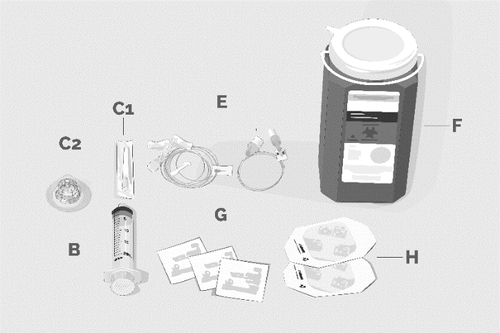 |
| i Thoroughly clean the work surface using an alcohol swab. | ||
| z Wash your hands thoroughly with water and soap. Dry your hands. |
| Step 2 | Vial and liquid check Remove the vial from the box. Carefully examine the liquid contained in the vial. ASPAVELI is a clear liquid, from colorless to slightly yellowish. Check for particles or color changes (Figure 2). Do not use the vial if
| Figure 2 o c a m r a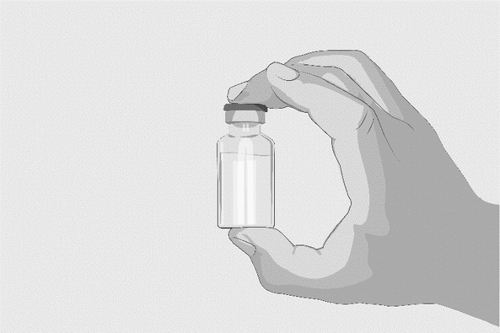 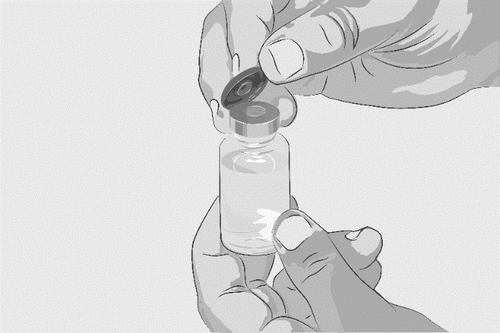 |
| Step 3 A | Preparing and filling the syringe Remove the protective closure cap (flip-off cap) from the vial to expose the gray rubber stopper (Figure 3). Dispose of the closure cap. Clean the stopper with a new alcohol swab and let it dry. Option 1: If using a needle-free transfer device (such as a vial adapter), follow the manufacturer's instructions. OR Option 2: If transferring using a transfer needle and syringe, follow the instructions below.
| F Figure 3 l e d a Figure 4 Figure 5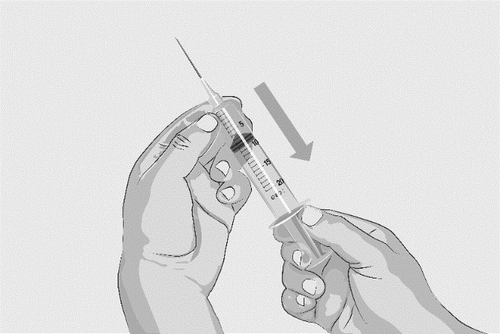 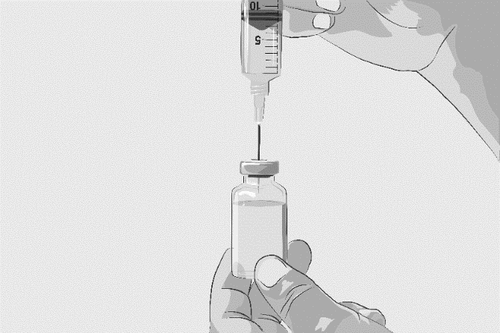 |
| Figura 6 o c a m r a Figura 7 F l e d a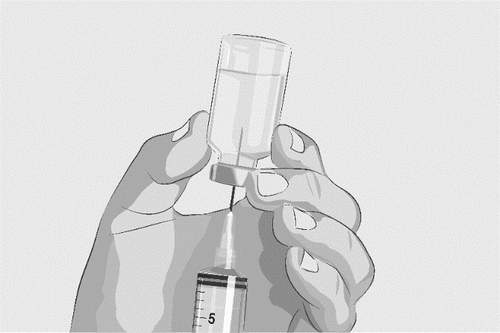 | |
| Step 4 | Preparing the syringe infusion pump and tubing Prepare the pump items and follow the manufacturer's instructions for the device to prepare the pump and tubing. | 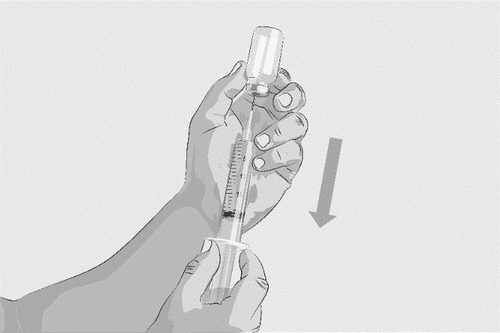 |
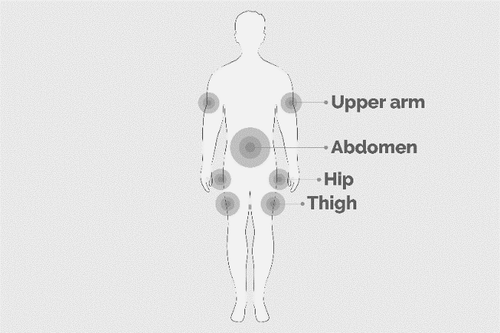
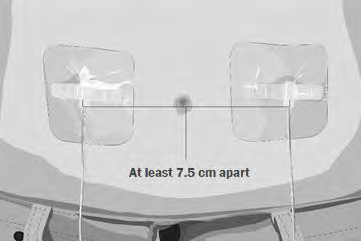
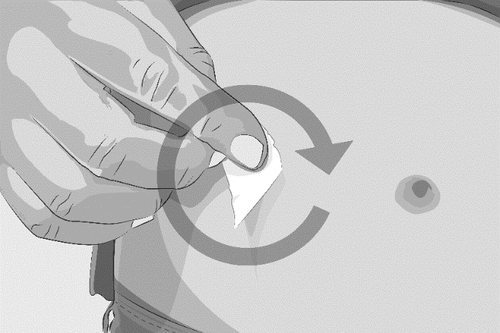
| Step 6 | Inserting and securing the infusion needle(s)
| Figura 11 o c a m r a F Figura 12 l e d a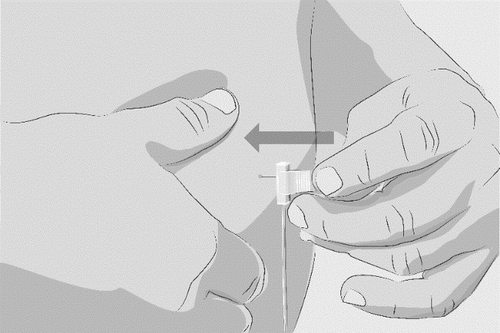 |
| Step 7 | n Starting the infusion a Follow the device manufacturer's instructions for how to start the infusion. Start the infusion immediately after drawing the solution into the syringe. | |
| Step 8 | l a Completing the infusion Follow the device manufacturer's instructions for how to complete the infusion. | 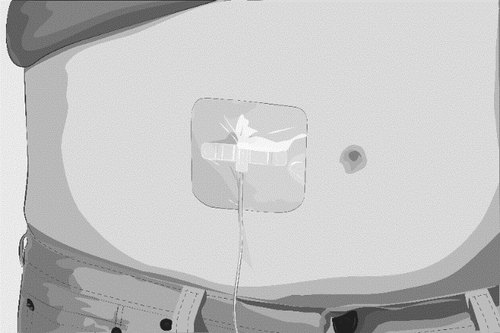 |
| Step 9 | I Documenting the infusion Document the treatment as directed by your healthcare professional. |
| Step 10 | Cleaning
| Figura 13 o c a m r a F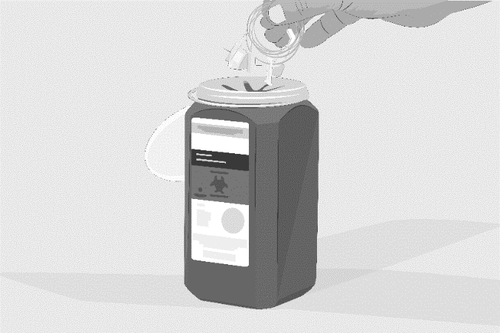 |
If you forget to use ASPAVELI
If you forget a dose, administer it as soon as you remember; take the
next dose as scheduled.
If you stop using ASPAVELI
PNH is a chronic disease, which means you will likely use this medicine for a long time.
If you want to stop using the medicine, talk to your doctor first. Suddenly stopping
treatment may worsen your symptoms.
If your doctor decides to stop treatment with this medicine, follow their
instructions on how to proceed. Your doctor will closely monitor you for at least
8 weeks after stopping treatment for any signs of red blood cell destruction (hemolysis) due to PNH. Symptoms or problems that may occur due to red blood cell
destruction include:
- fatigue
- shortness of breath
- blood in the urine
- stomach pain (abdomen)
- decreased number of red blood cells
- blood clots (thrombosis)
- difficulty swallowing
- erectile dysfunction in men
Contact your doctor if you experience any of these signs or symptoms.
4. Possible side effects
Like all medicines, this medicine can cause side effects, although not everyone will experience them.
Before treatment, your doctor will discuss possible side effects with you and explain the risks
and benefits associated with ASPAVELI.
The most serious side effect is the development of serious infections.
If you experience any symptoms of infection (see section 2 “Symptoms of infection”), inform
your doctor immediately.
If you have any doubts about the meaning of the side effects listed below, ask your
doctor for clarification.
Very common(may affect more than 1 in 10 people):
- reactions at the injection site: include redness (erythema), swelling, itching, bruising, and pain. These reactions usually disappear within a few days
- nasal, throat, or respiratory tract infection (upper respiratory tract infection)
- diarrhea
- destruction of red blood cells (hemolysis)
- stomach pain (abdominal pain)
- headache
- fatigue
- fever or high temperature (pyrexia)
- cough
- urinary tract infection
- complications related to mandatory vaccinations
- arm and leg pain (limb pain)
- dizziness
- joint pain (arthralgia)
- back pain
Common(may affect up to 1 in 10 people):
- reaction at the injection site, such as redness or skin hardening
- ear, mouth, or skin infection
- sore throat
- reduction in the number of platelets in the blood (thrombocytopenia) with a resulting increased predisposition to bleeding or bruising
- nausea
- decreased potassium levels in the blood (hypokalaemia)
- nosebleed (epistaxis)
- skin redness (erythema)
- muscle pain (myalgia)
- stomach and intestinal infection, with possible symptoms ranging from mild to severe nausea, vomiting, cramps, and diarrhea (gastrointestinal infection)
- increased liver values
- difficulty breathing (dyspnea)
- reduction in the number of white blood cells (neutropenia)
- impaired kidney function
- urine of a different color
- high blood pressure
- muscle spasms
- nasal congestion
- skin rash
- blood infection (sepsis)
- viral infection
- fungal infection
- respiratory tract infection
- eye infection
- hives
- COVID‑19
- bacterial infection
- vaginal infection
Uncommon(may affect up to 1 in 100 people):
- cervical inflammation
- groin infection
- nasal abscess
- pneumonia
- tuberculosis
- fungal infection of the esophagus
- anal abscess
Reporting of side effects
If you experience any side effects, including those not listed in this leaflet, please inform
your doctor, pharmacist, or nurse. You can also report side effects directly
through the national reporting system as detailed in Appendix V. By reporting side
effects, you can help provide more information on the safety of this medicine.
5. How to store ASPAVELI
- Keep this medicine out of the sight and reach of children.
- Do not use this medicine after the expiry date which is stated on the pack after “Scad.” and on the vial after “EXP”. The expiry date refers to the last day of that month.
- Store in a refrigerator (2 °C - 8 °C).
- Keep the vial in the original pack to protect the medicine from light.
- Do not dispose of any medicine in wastewater. Ask your pharmacist how to dispose of medicines you no longer use. This will help protect the environment.
6. Contents of the pack and other information
What ASPAVELI contains
The active ingredient is pegcetacoplan 1080 mg (54 mg/mL in a 20 mL vial).
The other ingredients are sorbitol (E 420) (see section 2 “ASPAVELI contains sorbitol”),
glacial acetic acid, sodium acetate trihydrate (see section 2 “ASPAVELI contains sodium”), sodium
hydroxide (see section 2 “ASPAVELI contains sodium”) and water for injections.
Description of the appearance of ASPAVELI and contents of the pack
ASPAVELI is a clear solution, from colourless to slightly yellowish, for subcutaneous infusion
(54 mg/mL in a 20 mL vial). Cloudy solutions, which contain particles or show
colour alteration, must not be used.
Packs
ASPAVELI is supplied in a single pack of 1 vial or in a multipack of
1 x 8 vials.
Please note that alcohol swabs, needles and other items or equipment are not
included in the pack.
Not all pack sizes may be marketed.
Marketing Authorisation Holder
Swedish Orphan Biovitrum AB (publ)
SE-112 76 Stockholm
Sweden
Manufacturer
Swedish Orphan Biovitrum AB (publ)
Norra Stationsgatan 93
113 64 Stockholm
Sweden
Other sources of information
More detailed information on this medicinal product is available on the European Medicines
Agency website: https://www.ema.europa.eu. Furthermore, links to other websites on rare diseases
and related therapeutic treatments are provided.

Не уверены, подходит ли вам это лекарство?
Обсудите симптомы и варианты лечения с врачом онлайн.

Уже начали прием и появились вопросы?
Обсудите свое состояние и дальнейшие шаги с врачом онлайн.

- Страна регистрации
- Форма выпускаInfusion solution, 1080 mg
- Код АТХL04AJ03
- Действующее вещество
- Отпускается по рецептуДа
- Производитель
- Информация на этой странице носит справочный характер и не является медицинской консультацией. Перед началом приема лекарства обязательно проконсультируйтесь с врачом.
- Аналоги ASPAVELIФорма выпуска: Concentrate for infusion solution, 300 mgДействующее вещество: ЭкулизумабПроизводитель: AMGEN TECHNOLOGY (IRELAND) UCОтпускается по рецептуФорма выпуска: Infusion solution, 50 mg / mlДействующее вещество: sutimlimabПроизводитель: RECORDATI RARE DISEASES SARLОтпускается по рецептуФорма выпуска: Concentrate for infusion solution, 300 mgДействующее вещество: ЭкулизумабПроизводитель: SAMSUNG BIOEPIS NL B.V.Отпускается по рецепту
Аналоги ASPAVELI в других странах
Лекарства с тем же действующим веществом, доступные в других странах.
Аналог ASPAVELI в Испания
Получите рецепт на ASPAVELI онлайн
Заполните форму за 2 минуты
Расскажите о симптомах, истории болезни и нужном препарате.
Выберите врача или мы назначим
Выберите специалиста или мы подберём ближайшего доступного врача.
Врач рассматривает ваш случай
Обычно в течение 30 минут. Может задать уточняющие вопросы в чате.
Получите в любой аптеке
Электронный рецепт отправляется на вашу почту — действителен по всей Польше.
Часто задаваемые вопросы
ASPAVELI требует рецепта в Италия. Вы можете уточнить у врача онлайн, подходит ли это лекарство для вашей ситуации.
Действующее вещество ASPAVELI — Пегцетакоплан. Эта информация помогает определить лекарства с тем же составом под другими торговыми названиями.
ASPAVELI производится компанией SWEDISH ORPHAN BIOVITRUM AB (PUBL). Упаковка и торговое название могут отличаться в зависимости от дистрибьютора.
Врачи, включая Семейные врачи, Психиатры, Дерматологи, Кардиологи, Эндокринологи, Гастроэнтерологи, Пульмонологи, Нефрологи, Ревматологи, Гематологи, Инфекционисты, Аллергологи, Гериатры, Педиатры, Онкологи, могут оценить целесообразность применения ASPAVELI с учетом вашей ситуации и местных правил. Вы можете записаться на онлайн-консультацию, чтобы обсудить возможные варианты.
Польша имеет хорошо развитую систему здравоохранения в крупных городах, таких как Варшава, Краков, Вроцлав и Гданьск. Аптеки широко доступны и работают в соответствии с действующим законодательством, обеспечивая доступ к рецептурным препаратам.
Вы можете купить ASPAVELI в Варшаве, Кракове, Вроцлаве или Гданьске в любой аптеке при наличии действующего рецепта.
Чтобы получить рецепт, вы можете воспользоваться Oladoctor:
Другие лекарства с тем же действующим веществом (Пегцетакоплан) включают BEKEMV, ENJAYMO, EPYSQLI. Они могут отличаться торговым названием или формой выпуска, но содержат одинаковый терапевтический компонент. Перед изменением лечения рекомендуется проконсультироваться с врачом.
