



ALABASTER 100/6 микрограммов Прессованный раствор для ингаляции

Рассмотрение рецепта онлайн
Врач рассмотрит ваш случай и примет решение о назначении рецепта, если это медицински оправдано.

Поговорите с врачом об этом лекарстве
Обсудите симптомы и возможные дальнейшие шаги на онлайн-консультации.



Инструкция по применению ALABASTER
Содержание инструкции
- ALABASTER 100/6 micrograms per actuation pressurised solution for inhalation
- ALABASTER 100/6 micrograms per actuation pressurised solution for inhalation
- ALABASTER 100 micrograms/6 micrograms powder for inhalation for inhalation
- What is ALABASTER and what is it used for
- What you need to know before using ALABASTER
- How to use ALABASTER
- Open the cap completely.
- Before inhalation, exhale as much as possible.
- Lift the inhaler, bring it to your mouth and close your lips around
- Breathe rapidly and deeply through your mouth.
- If you need to take another dose, repeat the operations from point E.1 to
- Possible side effects
- How to store ALABASTER
- Package Contents and Other Information
- ALABASTER 100 micrograms/6 micrograms for inhalation powder for inhalation
- What is ALABASTER and what is it used for
- What you need to know before using ALABASTER
- How to use ALABASTER
- Open the cap completely.
- Before inhalation, exhale as much as possible.
- Lift the inhaler, bring it to your mouth and close your lips around
- Breathe rapidly and deeply through your mouth.
- If you need to take another dose, repeat the operations from point E.1 to
- Possible side effects
- How to store ALABASTER
- Package Contents and Other Information
- ALABASTER 200/6 micrograms per actuation pressurised inhalation solution
- ALABASTER 200/6 micrograms per actuation pressurised inhalation solution
- ALABASTER 200 micrograms/6 micrograms for inhalation powder for inhalation
- What is ALABASTER and what is it used for
- What you need to know before using ALABASTER
- How to use ALABASTER
- Open the cap completely.
- Before inhalation, exhale as much as possible.
- Breathe rapidly and deeply through your mouth.
- If you need to take another dose, repeat the operations from point E.1 to point
- Possible side effects
- How to store ALABASTER
- Contents of the pack and other information
Information for the user
ALABASTER 100/6 micrograms per actuation pressurised solution for inhalation
1. What Alabaster is and what it is used for
2. What you need to know before you take Alabaster
Do not take Alabaster
Warnings and precautions
Talk to your doctor before taking Alabaster:
3. How to take Alabaster
.
™
4. Possible side effects
5. How to store Alabaster
6. Contents of the pack and other information
| Germany | Inuvair |
| Italy | Alabaster |
Information for the user
ALABASTER 100/6 micrograms per actuation pressurised solution for inhalation
1. What Alabaster is and what it is used for
2. What you need to know before you take Alabaster
Do not take Alabaster
1
Warnings and precautions
Talk to your doctor before taking Alabaster:
2
3. How to take Alabaster
3
.
4
5
™
6
5. Possible side effects
7
6. How to store Alabaster
7. Contents of the pack and other information
8
| Germany | i Inuvair |
| Italy | l Alabaster |
9

Не уверены, подходит ли вам это лекарство?
Обсудите симптомы и варианты лечения с врачом онлайн.
ALABASTER 100 micrograms/6 micrograms powder for inhalation for inhalation
For use in adults only
beclometasone dipropionate anhydrous/formoterol fumarate dihydrate
Read this leaflet carefully before you start to take this medicine because it contains
important information for you.
- Keep this leaflet. You may need to read it again.
- If you have any questions, ask your doctor, nurse or pharmacist.
- This medicine has been prescribed for you only. Do not pass it on to others, even if their symptoms are the same as yours, as it may be harmful.
- If you get any side effects, even those not listed in this leaflet, tell your doctor, nurse or pharmacist.
Contents of this leaflet:
- 1. What ALABASTER is and what it is used for
- 2. What you need to know before you use ALABASTER
- 3. How to use ALABASTER
- 4. Possible side effects
- 5. How to store ALABASTER
- 6. Contents of the pack and other information
1. What is ALABASTER and what is it used for
ALABASTER is a powder that is inhaled through the mouth and released directly into the
lungs. It contains two active ingredients: beclometasone dipropionate anhydrous and formoterol
fumarate dihydrate.
- Beclometasone dipropionate belongs to a group of medicines called corticosteroids (technically corticosteroids) which have an anti-inflammatory action, reducing swelling and irritation in the lungs
- Formoterol fumarate dihydrate belongs to a group of medicines called long-acting bronchodilators, which relax the muscles of the airways, widening them, and thus making it easier to inhale and exhale air from the lungs
These two active ingredients make breathing easier, providing relief from symptoms such as shortness of
breath, wheezing and coughing in patients with asthma or COPD and also help to prevent the
symptoms of asthma.
Asthma
ALABASTER is used for the treatment of asthma in adults.
If ALABASTER has been prescribed to you, it is likely that:
- your asthma is not adequately controlled using inhaled corticosteroids and short-acting bronchodilators “as needed” or
- your asthma responds well to treatment with both corticosteroids and long-acting bronchodilators.
COPD
ALABASTER can also be used to treat the symptoms of severe chronic obstructive pulmonary
disease (COPD) in adult patients. COPD is a chronic disease of the airways in the
lungs, mainly caused by cigarette smoking.
2. What you need to know before using ALABASTER
Do not use ALABASTER
If you are allergic to beclometasone dipropionate anhydrous or formoterol fumarate dihydrate or to
any of the other ingredients of this medicine (listed in section 6).
Warnings and precautions
Talk to your doctor before using ALABASTER if you have any of the following
conditions:
- heart problems, including any type of known heart disease and/or heart function
- irregular heartbeat, such as increased or irregular heart rate, fast pulse or palpitations, or if you have been told that your heart tracing is abnormal
- high blood pressure
- narrowing of the arteries (also known as arteriosclerosis), or if you are aware that you have an aneurysm (an abnormal dilation of blood vessel walls)
- overactive thyroid gland
- low levels of potassium in the blood
- any liver or kidney problems
- diabetes. If you inhale high doses of formoterol, blood glucose levels may increase and, as a result, you may need to undergo additional tests to monitor blood sugar levels both when you start using this inhaler and periodically throughout the duration of treatment.
- adrenal gland tumor (called pheochromocytoma)
- if you are to undergo anesthesia. Depending on the type of anesthesia, it may be necessary to stop treatment with ALABASTER at least 12 hours before anesthesia.
- If you are taking, or have taken, medicines to treat tuberculosis (TB), or if you suffer from known viral or fungal infections of the chest.
If you fall into any of the above cases, always inform your doctor before using
ALABASTER.
If you are unsure whether you can use ALABASTER, consult your doctor, an experienced nurse
in asthma problems or your pharmacist before using the inhaler.
The doctor may decide to measure your potassium levels in the blood periodically,
especially if your asthma is severe.Like many bronchodilators, ALABASTER
can cause a sudden drop in serum potassium levels (hypokalemia). This happens because a
reduction in oxygen in the blood associated with some other treatments taken together with
ALABASTER can worsen the reduction in potassium levels.
If you have taken high doses of inhaled corticosteroids for long periods of
time, you may have a greater need for corticosteroids in stressful situations. Stressful situations can include hospitalization following an accident, having suffered
serious injuries or the period before a surgical operation. In such cases, the doctor will decide
whether or not to increase your dose of corticosteroids and may prescribe
steroids in tablets or steroid injections.
If you need to be hospitalized, remember to bring all your
medicines and inhalers with you, including ALABASTER and any medicines or tablets purchased
without a prescription, in their original packaging, if possible.
Contact your doctor if you experience blurred vision or other visual disturbances
Children and adolescents
This medicine should not be given to children and adolescents under 18
years of age.
Other medicines and ALABASTER
Tell your doctor or pharmacist if you are taking, have recently taken or might
take any other medicines. This is necessary because ALABASTER can alter
the action of other medicines. Also, other medicines can have effects on the activity of
ALABASTER.
In particular, tell your doctor or pharmacist if you are taking any of the following
medicines:
- Some medicines can increase the effects of ALABASTER and your doctor may want to monitor you closely if you are taking these medicines (including some medicines for the treatment of HIV: ritonavir, cobicistat).
- Beta-blockers. Beta-blockers are medicines used to treat various conditions, including heart problems, high blood pressure or glaucoma (increased pressure in the eyes). If you use beta-blockers (including eye drops), the effect of formoterol may be reduced or canceled.
- Beta-adrenergic drugs (drugs with similar activity to formoterol) can increase the effects of formoterol.
- Medicines for the treatment of irregular heart rhythms (quinidine, disopyramide, procainamide).
- Medicines for treating allergic reactions (antihistamines, such as terfenadine).
- Medicines for the treatment of depression or mental disorders such as monoamine oxidase inhibitors (e.g. phenelzine and isocarboxazide,) or tricyclic antidepressants (e.g. amitriptyline and imipramine) or phenothiazines.
- Medicines for the treatment of Parkinson's disease (L-dopa).
- Medicines for the treatment of an underactive thyroid (L-thyroxine).
- Medicines containing oxytocin (which causes uterine contractions).
- Medicines for the treatment of mental disorders such as Monoamine Oxidase Inhibitors (MAOIs), including drugs with properties similar to furazolidone and procarbazine.
- Medicines for the treatment of heart disease (digoxin).
- Other medicines for the treatment of asthma (theophylline, aminophylline or steroids)
- Diuretics (water pills).
Also inform your doctor or pharmacist if you intend to use a general anesthetic
for an operation or dental procedure.
Pregnancy and breastfeeding
There are no clinical data on the use of ALABASTER during pregnancy.
If you are pregnant, suspect or are planning a pregnancy or if you are breastfeeding
with breast milk, ask your doctor for advice before using this medicine. ALABASTER
should only be used during pregnancy if your doctor advises you to do so. The doctor
will decide whether to stop taking ALABASTER during breastfeeding or whether to
take ALABASTER but abstain from breastfeeding. Always
strictly follow your doctor's advice.
Driving and operating machinery
It is unlikely that ALABASTER will affect your ability to drive vehicles or operate
machinery. However, if you experience side effects such as dizziness and/or tremor, your
ability to drive vehicles or operate machinery may be altered.
ALABASTER contains lactose monohydrateLactose monohydrate contains small amounts
of milk proteins, which can cause reactions in allergic patients. If your
doctor has diagnosed you with intolerance to certain sugars, contact him before taking this
medicine.
For those who engage in sports:
The use of the drug without therapeutic necessity constitutes doping and may result in positive anti-doping tests.
3. How to use ALABASTER
Use this medicine following the doctor's, nurse's, or pharmacist's instructions exactly. If you have any doubts, consult your doctor or pharmacist.
ALABASTER delivers an extrafine powder, which allows a greater amount of the drug
contained in the dose to reach the lungs. The doctor may, therefore, prescribe a lower dose
of this inhaler than those you were taking with other inhalers.
Asthma
The doctor will monitor you regularly to ensure you are taking the correct dose of ALABASTER. Once the asthma is well controlled, the doctor may deem it
appropriate to gradually reduce the dose of ALABASTER. Do not modify the dose in any case
without first consulting your doctor.
Foster can be prescribed by the doctor in two treatment modalities:
a) daily use of Foster for asthma treatment together with a specific inhaler
“as needed” to treat sudden worsening of asthma symptoms, such as shortness of
breath, wheezing, and cough
b) daily use of Foster for asthma treatment and further use of Foster for
treating sudden worsening of asthma symptoms, such as shortness of breath, wheezing and
cough
a) Use of Foster together with another “as needed” medicine:
Adults and the elderly:
The recommended dose is 1 or 2 inhalations twice a day.
The maximum daily dose is 4 inhalations.
Remember: You should always carry your “as needed” fast-acting inhaler with you to treat
a worsening of asthma symptoms or a sudden asthma attack.
b) Use of Foster as the only inhaler for asthma:
Adults and the elderly:
The recommended dose is one inhalation in the morning and one inhalation in the evening
You should also use Foster as an “as needed” inhaler to treat sudden symptoms
of asthma.
If you experience asthma symptoms, take one inhalation and wait a few minutes.
If you do not feel better, take another inhalation.
No more than 6 “as needed” inhalations should be taken per day.
The maximum daily dose of Foster is 8 inhalations.
If you feel you need a greater number of inhalations per day to control
asthma symptoms, ask your doctor for advice. It may be necessary to change the therapy.
Do not increase the dose.
If you believe the medicine is not effective, always consult your doctor before increasing
the dose.
Chronic Obstructive Pulmonary Disease (COPD)
Adults and the elderly:
The recommended dose is 2 inhalations in the morning and 2 inhalations in the evening.
How to use ALABASTER:
ALABASTER is for inhalation use.
If possible, stand or sit in an upright position when you take the inhalation.
If you use more ALABASTER than you should
- Contact your doctor or the nearest hospital emergency room immediately for advice. Bring the medicine with you, so that healthcare personnel can understand which medicine you have taken;
- Adverse effects may occur. Inform your doctor if you notice any unusual symptoms, as further investigations or any necessary therapeutic measures may be required.
If you forget to use ALABASTER
Take the dose as soon as you remember. If it is almost time to take the next dose, skip the
forgotten dose and take the next one at the correct time. Do not take a double dose.
If you stop treatment with ALABASTER:
Even if you feel better, do not stop using ALABASTER or reduce the dosage.
If you intend to do so, talk to your doctor. It is very important that ALABASTER is used
every day, as prescribed by your doctor, even in the absence of symptoms.
If your breathing remains unchanged:
If your symptoms do not improve after inhaling ALABASTER, it is possible that you are
using the device incorrectly. Therefore, check the instructions for proper use
of the device below and/or contact your doctor or nurse
to explain how to use it correctly.
If asthma worsens:
If your symptoms worsen or are difficult to control (for example, if you use a
“as needed” inhaler or Foster as a rescue inhaler more frequently), or if your
“as needed” inhaler or Foster does not improve your symptoms, you should continue to use
ALABASTER but contact your doctor as soon as possible. The doctor may decide to
change your dose of ALABASTER or prescribe further or
alternative treatment.
If you have any doubts about using this medicine, ask your doctor or pharmacist.
INSTRUCTIONS FOR USE OF THE NEXTHALER INHALER
- A.Package Contents
For information on the package contents, see section 6. If the package contents do not correspond to what is stated above, return the inhaler to the person who provided it (e.g., the pharmacist or doctor) and obtain a new one.
- B.General Warnings and Precautions
- Donot remove the inhaler from its bag unless you intend to use it immediately.
- Use the inhaler only as directed.
- Keep the inhaler cap closed until you are ready to take your dose.
- When not using the inhaler, store it in a clean and dry place.
- Donot attempt to disassemble the Nexthaler inhaler for any reason.
- C.Main features of the Nexthaler inhaler
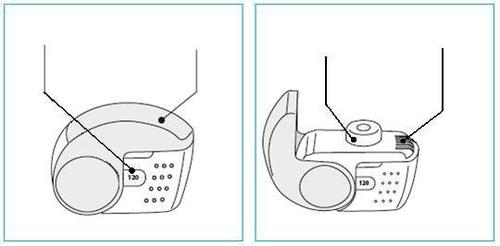
air
Taking a dose from the Nexthaler inhaler requires only three simple steps: Opening, Inhalation, Closing.
- D.Before using a new Nexthaler inhaler
- 1. Open the bag and remove the inhaler.o Donot use the inhaler if the bag is not sealed or is damaged – return it to the supplier and obtain a new one. o Use the adhesive label on the package to write the date of first opening of the bag.
- 2. Check the inhaler.o If the inhaler appears broken or damaged, return it to the supplier and obtain a new one.
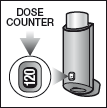
- 3. Check the dose window. If the inhaler is new, the number “120” appears in the dose window.o Donot use a new inhaler if the number indicated is less than “120” – return it to the supplier and obtain a new one.
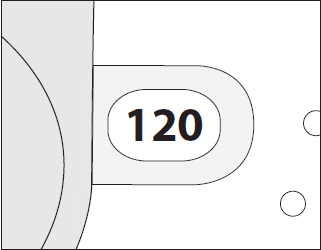
- E.How to use the Nexthaler inhaler
- 1. If you are unsure of receiving the dose correctly, contact your pharmacist or doctor.
- 2. If you are unsure whether the number indicated by the dose counter has decreased by one unit after inhalation, wait until the next scheduled dose and take it normally. Do not take a double dose.
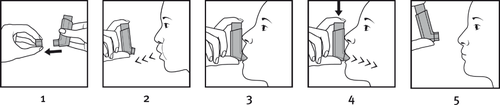
E.1Opening
1. Hold the inhaler firmly in a vertical position.
2. Check the number of doses remaining: any number between “1” and
“120” indicates that there are still doses.
o If the dose window indicates “0”, it means that there are no doses remaining – the inhaler must be disposed of and a new one obtained.
3. Open the cap completely.
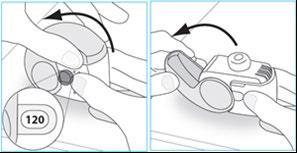
4. Before inhalation, exhale as much as possible.
o Do notbreathe through the inhaler.
E.2Inhalation
When possible, remain standing or sit in an upright position during
inhalation.
1. Lift the inhaler, bring it to your mouth and close your lips around
the mouthpiece.
o Do notcover the air intake while holding the inhaler.
o Do notinhale through the air intake.
2. Breathe rapidly and deeply through your mouth.
o You may perceive a certain taste in your mouth while taking the dose.
o You may feel or hear a “click” while taking the dose.
o Do notbreathe through your nose.
o Do notmove your lips from the inhaler during inhalation.
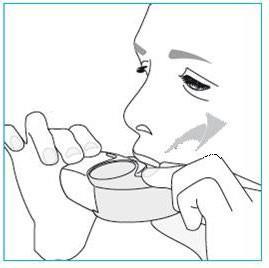
3. Remove the inhaler from your mouth.
4. Hold your breath for 5 or 10 seconds, or for as long as is comfortable for you.
5. Exhale slowly.
o Do notexhale through the inhaler.
E.3Closure
1. Return the inhaler to an upright position and completely close the cap.
2. Check that the dose counter has advanced by one number.
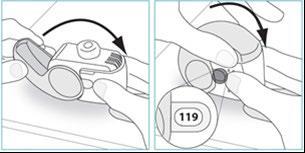
3. If you need to take another dose, repeat the operations from point E.1 to
point E.3.
- F.Cleaning
- Normally, it is not necessary to clean the inhaler.
- If necessary, you can keep the inhaler clean after use by wiping the device with a dry cloth or paper towel.
- Do notclean the inhaler with water or other liquids. Always keep the device dry.
- G.Storage and disposal
For information on storage conditions and disposal instructions,
see section 5.
4. Possible side effects
Like all medicines, this medicine can cause side effects, although not everyone will experience them.
As with other treatments via inhalation, there is a risk of worsening of breathlessness, cough and wheezing immediately after using ALABASTER, and
this event is called paradoxical bronchospasm. If this occurs, you must
STOP using ALABASTER immediatelyand use your “as needed” fast-acting inhaler as soon as possibleto treat the symptoms. You should contact
your doctor immediately.
Inform your doctor immediately if allergic reactions have appeared, including skin allergies, skin itching, skin rash, skin redness,
swelling of the skin or mucous membranes, especially of the eyes, face, lips and throat.
The following are further possible side effects of ALABASTER listed in
order of frequency.
Common(may affect up to 1 in 10 people):
- tremor.
- pneumonia (lung infection), in patients with COPD
Inform your doctor if you have any of the following symptoms while taking ALABASTER, these
could be symptoms of a lung infection:
- fever or chills.
- increased mucus production, changes in mucus color.
- increased cough or greater difficulty breathing.
Uncommon(may affect up to 1 in 100 people):
- cold symptoms, sore throat
- fungal infections (of the mouth and throat). Rinsing your mouth or gargling with water and brushing your teeth immediately after inhalation may help prevent these side effects.
- worsening of asthma symptoms, difficulty breathing
- hoarseness
- cough
- unusually rapid heartbeat
- unusually slow heartbeat
- oppressive chest pain
- headache
- feeling unwell
- feeling tired or nervous
- alteration in electrocardiogram (ECG)
- low cortisol levels in urine or blood
- high potassium levels in the blood
- high glucose levels in the blood
- high fat levels in the blood. Side effects observed with similar inhaled medicinescontaining beclometasone dipropionate and/or formoterol are:
- palpitations
- irregular heartbeat
- taste anomalies or alterations
- muscle pain and muscle cramps
- restlessness, dizziness
- feeling anxious
- sleep disturbances
- low potassium levels in the blood
- increased/decreased blood pressure.
Not known(frequency cannot be estimated from available data)
- blurred vision
The use of inhaled corticosteroids at high doses and for long periods of time
can cause systemic effects, including:
- disorders of adrenal gland function (adrenal suppression)
- thinning of the bones
- growth retardation in children and adolescents
- increased eye pressure (glaucoma), cataracts
- rapid weight gain, especially in the face and torso
- sleep disturbances, depression or feeling worried, agitated, nervous, overexcited or irritable. These effects are more likely to occur in children.
- Abnormal behavior.
Reporting of side effects
If you experience any side effects, including those not listed in this leaflet, tell your doctor or pharmacist.
You can also report side effects directly through the national reporting system at http://www.agenziafarmaco.gov.it/content/come-segnalare-una-
sospetta-reazione-avversa
By reporting side effects you can help provide more information on the
safety of this medicine.
5. How to store ALABASTER
Keep this medicine out of sight and reach of children.
Do not use this medicine after the expiry date which is stated on the package, on the sachet and
on the label after Exp. The expiry date refers to the last day of that month.
Store in the original package to protect the medicine from moisture. Remove
the inhaler from its protective sachet only immediately before its first use.
Before the first opening of the sachet:
This medicine does not require any particular storage temperature.
After the first opening of the sachet:
Do not store at a temperature above 25°C.
After the first opening of the sachet, the medicine must be used within 6 months.
Use the label on the package to write the date of opening the sachet.
Do not dispose of any medicine in wastewater or household waste. Ask your pharmacist
how to dispose of medicines you no longer use. This will help protect the environment.
6. Package Contents and Other Information
What ALABASTER contains
The active ingredients are: beclometasone dipropionate anhydrous and formoterol fumarate dihydrate.
Each pre-metered delivery contains 100 micrograms of beclometasone dipropionate anhydrous
and 6 micrograms of formoterol fumarate dihydrate. This corresponds to an inhaled dose,
delivered through the mouthpiece, of 81.9 micrograms of beclometasone dipropionate anhydrous and
5 micrograms of formoterol fumarate dihydrate.
The other ingredients are: lactose monohydrate (which contains small amounts of milk proteins) and magnesium stearate.
Description of the appearance of ALABASTER and package contents
This medicine is presented in the form of white or almost white inhalation powder contained in a plastic inhaler called Nexthaler.
Each pack contains one, two or three inhalers providing 120 inhalations each.
Each inhaler is packaged in a heat-sealed protective sachet (aluminium foil packaging).
Not all pack sizes may be marketed.
Marketing Authorisation Holder
MASTER PHARMA S.r.l.
Via Giacomo Chiesi 1
43122 Parma
Italy
Manufacturers
Chiesi Farmaceutici S.p.A.
Via San Leonardo 96
43122 Parma - Italy
Chiesi S.A.S.
2 rue des Docteurs Alberto et Paolo Chiesi
41260 La Chaussée Saint Victor - France
This medicinal product is authorised in the Member States of the European Economic Area under the
following denominations:
| G ermany | INUVAIR NEXThaler 100 Mikrogramm / 6 Mikrogramm pro Dosis Pulver zur Inhalation |
| I taly | ALABASTER. |
Up-to-date and detailed information on this product is available by scanning with
the outer packaging

The same information is also available at the following URL: https://qrco.de/Nexthaler100-6-
120 .
ALABASTER 100 micrograms/6 micrograms for inhalation powder for inhalation
For use in adults only
beclometasone dipropionate anhydrous/formoterol fumarate dihydrate
Read this leaflet carefully before you start to take this medicine as it contains
important information for you.
- Keep this leaflet. You may need to read it again.
- If you have any questions, ask your doctor, pharmacist or nurse.
- This medicine has been prescribed for you only. Do not pass it on to others, even if their symptoms are the same as yours, as it may be harmful.
- If you get any side effects, even those not listed in this leaflet, tell your doctor, pharmacist or nurse.
Contents of this leaflet:
- 1. What ALABASTER is and what it is used for
- 2. What you need to know before you use ALABASTER
- 3. How to use ALABASTER
- 4. Possible side effects
- 5. How to store ALABASTER
- 6. Contents of the pack and other information
1. What is ALABASTER and what is it used for
ALABASTER is a powder that is inhaled through the mouth and released directly into the
lungs. It contains two active ingredients: beclometasone dipropionate anhydrous and formoterol
fumarate dihydrate.
- Beclometasone dipropionate belongs to a group of medicines called corticosteroids (technically corticosteroids) which have an anti-inflammatory action, reducing swelling and irritation in the lungs
- Formoterol fumarate dihydrate belongs to a group of medicines called long-acting bronchodilators, which relax the muscles of the airways, widening them, and thus making it easier to inhale and exhale air from the lungs
These two active ingredients make breathing easier, providing relief from symptoms such as shortness of
breath, wheezing and coughing in patients with asthma or COPD and also help to prevent the
symptoms of asthma.
Asthma
ALABASTER is used for the treatment of asthma in adults.
If ALABASTER has been prescribed to you, it is likely that:
- your asthma is not adequately controlled using inhaled corticosteroids and short-acting bronchodilators “as needed” or
- your asthma responds well to treatment with both corticosteroids and long-acting bronchodilators.
COPD
ALABASTER can also be used to treat the symptoms of severe chronic obstructive pulmonary
disease (COPD) in adult patients. COPD is a chronic disease of the airways in the
lungs, mainly caused by cigarette smoking.
2. What you need to know before using ALABASTER
Do not use ALABASTER
If you are allergic to beclometasone dipropionate anhydrous or formoterol fumarate dihydrate or to
any of the other ingredients of this medicine (listed in section 6).
Warnings and precautions
Talk to your doctor before using ALABASTER if you have any of the following
conditions:
- heart problems, including any type of known heart disease and/or heart function
- irregular heartbeat, such as increased or irregular heart rate, rapid pulse or palpitations, or if you have been told that your heart tracing is abnormal
- high blood pressure
- narrowing of the arteries (also known as arteriosclerosis), or if you are aware that you have an aneurysm (an abnormal dilation of blood vessel walls)
- overactive thyroid gland
- low levels of potassium in the blood
- any liver or kidney problems
- diabetes. If you inhale high doses of formoterol, blood glucose levels may increase and, as a result, you may need to undergo additional tests to monitor blood sugar levels both when you start using this inhaler and periodically throughout the duration of treatment.
- adrenal gland tumor (called pheochromocytoma)
- if you are going to have anesthesia. Depending on the type of anesthesia, it may be necessary to stop treatment with ALABASTER at least 12 hours before anesthesia.
- If you are taking, or have taken, medicines to treat tuberculosis (TB), or if you suffer from known viral or fungal infections of the chest.
If you fall into any of the cases listed above, always inform your doctor before using
ALABASTER.
If you are not sure whether you can use ALABASTER, consult your doctor, an experienced nurse
in asthma problems or your pharmacist before using the inhaler.
The doctor may decide to measure your potassium levels in the blood periodically,
especially if your asthma is severe.Like many bronchodilators, ALABASTER
can cause a sudden drop in serum potassium levels (hypokalemia). This happens because a
reduction in blood oxygen associated with some other treatments taken together with
ALABASTER can worsen the reduction in potassium levels.
If you have taken high doses of inhaled corticosteroids for long periods of
time, you may have a greater need for corticosteroids in stressful situations. Stressful situations
may include hospitalization following an accident, having suffered serious injuries, or the period
before surgery. In such cases, the doctor will decide
whether or not to increase your dose of corticosteroids and may prescribe
steroids in tablets or steroid injections.
If you need to be hospitalized, remember to bring all your
medicines and inhalers with you, including ALABASTER and any medicines or tablets purchased
over the counter, in their original packaging, if possible.
Contact your doctor if you experience blurred vision or other visual disturbances
Children and adolescents
This medicine should not be administered to children and adolescents under 18
years of age.
Other medicines and ALABASTER
Tell your doctor or pharmacist if you are taking, have recently taken or may
take any other medicines. This is necessary because ALABASTER can alter
the action of other medicines. Also, other medicines can have effects on the activity of
ALABASTER.
In particular, tell your doctor or pharmacist if you are taking any of the following
medicines:
- Some medicines may increase the effects of ALABASTER and your doctor may want to keep you under close observation if you are taking these medicines (including some medicines for the treatment of HIV: ritonavir, cobicistat).
- Beta-blockers. Beta-blockers are medicines used to treat various conditions, including heart problems, high blood pressure or glaucoma (increased pressure in the eyes). If you use beta-blockers (including eye drops), the effect of formoterol may be reduced or canceled.
- Beta-adrenergic drugs (drugs with similar activity to that of formoterol) may increase the effects of formoterol.
- Medicines for the treatment of heart rhythm abnormalities (quinidine, disopyramide, procainamide).
- Medicines for treating allergic reactions (antihistamines, such as terfenadine).
- Medicines for the treatment of depression or mental disorders such as monoamine oxidase inhibitors (e.g., phenelzine and isocarboxazide,) or tricyclic antidepressants (e.g., amitriptyline and imipramine) or phenothiazines.
- Medicines for the treatment of Parkinson's disease (L-dopa).
- Medicines for the treatment of an underactive thyroid (L-thyroxine).
- Medicines containing oxytocin (which causes uterine contractions).
- Medicines for the treatment of mental disorders such as Monoamine Oxidase Inhibitors (MAOIs), including drugs with properties similar to furazolidone and procarbazine.
- Medicines for the treatment of heart disease (digoxin).
- Other medicines for the treatment of asthma (theophylline, aminophylline or steroids)
- Diuretics (water pills).
Also inform your doctor or pharmacist if you intend to use a general anesthetic
for an operation or dental procedure.
Pregnancy and breastfeeding
There is no clinical data available on the use of ALABASTER during pregnancy.
If you are pregnant, suspect or are planning a pregnancy, or if you are breastfeeding
with breast milk, ask your doctor for advice before using this medicine. ALABASTER
should only be used during pregnancy if your doctor recommends it. The doctor
will decide whether you should stop taking ALABASTER during breastfeeding or whether you should
take ALABASTER but refrain from breastfeeding. Always
strictly follow your doctor's advice.
Driving and operating machinery
It is unlikely that ALABASTER will affect your ability to drive vehicles or operate
machinery. However, if you experience side effects such as dizziness and/or tremor, your
ability to drive vehicles or operate machinery may be altered.
ALABASTER contains lactose monohydrateLactose contains small amounts of milk proteins
which can cause reactions in patients allergic to milk. If your doctor has diagnosed
you with an intolerance to certain sugars, contact him before taking this medicine.
For athletes:
The use of the drug without therapeutic necessity constitutes doping and may result in positive anti-doping tests.
3. How to use ALABASTER
Use this medicine following the doctor's, nurse's, or pharmacist's instructions exactly. If you have any doubts, consult your doctor or pharmacist.
ALABASTER delivers an extrafine powder, which allows a greater amount of the drug
contained in the dose to reach the lungs. The doctor may, therefore, prescribe a lower dose
of this inhaler than those you were taking with other inhalers.
Asthma
The doctor will monitor you regularly to ensure you are taking the correct dose of ALABASTER. Once the asthma is well controlled, the doctor may deem it
appropriate to gradually reduce the dose of ALABASTER. Do not change the dose in any case
without first consulting your doctor.
Foster can be prescribed by the doctor in two treatment modalities:
a) daily use of Foster for asthma treatment together with a suitable inhaler
"as needed" to treat sudden worsening of asthma symptoms, such as shortness
of breath, wheezing, and cough
b) daily use of Foster for asthma treatment and further use of Foster for
treating sudden worsening of asthma symptoms, such as shortness of breath,
wheezing, and cough
a) Use of Foster together with another "as needed" medication:
Adults and the elderly:
The recommended dose is 1 or 2 inhalations twice a day.
The maximum daily dose is 4 inhalations.
Remember: You should always carry your fast-acting "as needed" inhaler with you to treat
a worsening of asthma symptoms or a sudden asthma attack.
b) Use of Foster as the only inhaler for asthma:
Adults and the elderly:
The recommended dose is one inhalation in the morning and one inhalation in the evening
You should also use Foster as a "as needed" inhaler to treat sudden symptoms
of asthma.
If you experience asthma symptoms, take one inhalation and wait a few minutes.
If you do not feel better, take another inhalation.
No more than 6 "as needed" inhalations should be taken per day.
The maximum daily dose of Foster is 8 inhalations.
If you feel you need a greater number of inhalations per day to control
asthma symptoms, ask your doctor for advice. It may be necessary to change the therapy.
Do not increase the dose.
If you believe the medicine is not effective, always consult your doctor before increasing
the dose.
Chronic Obstructive Pulmonary Disease (COPD)
Adults and the elderly:
The recommended dose is 2 inhalations in the morning and 2 inhalations in the evening.
How to use ALABASTER:
ALABASTER is for inhalation use.
If possible, stand or sit in an upright position when taking the inhalation.
If you use more ALABASTER than you should
- Contact your doctor or the nearest hospital emergency room immediately for advice. Bring the medicine with you, so that healthcare personnel can understand which medicine you have taken;
- Adverse effects may occur. Inform your doctor if you notice any unusual symptoms, as further investigations or any necessary therapeutic measures may be required.
If you forget to use ALABASTER
Take the dose as soon as you remember. If it is almost time to take the next dose, skip the
forgotten dose and take the next one at the correct time. Do not take a double dose.
If you stop treatment with ALABASTER:
Even if you feel better, do not stop using ALABASTER or reduce the dosage.
If you intend to do so, talk to your doctor. It is very important that ALABASTER is used
every day, as prescribed by your doctor, even in the absence of symptoms.
If your breathing remains unchanged:
If your symptoms do not improve after inhaling ALABASTER, you may be
using the device incorrectly. Therefore, check the instructions for proper use
of the device below and/or contact your doctor or nurse
to explain how to use it correctly.
If asthma worsens:
If your symptoms worsen or are difficult to control (for example, if you use
another "as needed" inhaler or Foster as a "as needed" inhaler more frequently), or if your
"as needed" inhaler or Foster does not improve your symptoms, you should continue to use
ALABASTER but contact your doctor as soon as possible. The doctor may decide to
change your dose of ALABASTER or prescribe further or
alternative treatment.
If you have any doubts about the use of this medicine, consult your doctor or pharmacist.
INSTRUCTIONS FOR USE OF THE NEXTHALER INHALER
- A.Package Contents
For information on the package contents, see section 6. If the package contents do not correspond to what is stated above, return the inhaler to the person who provided it (e.g. the pharmacist or doctor) and obtain a new one.
- B.General Warnings and Precautions
- Donot remove the inhaler from its bag unless you intend to use it immediately.
- Use the inhaler only as directed.
- Keep the inhaler cap closed until you are about to take your dose.
- When not using the inhaler, store it in a clean and dry place.
- Donot attempt to disassemble the Nexthaler inhaler for any reason.
- C.Main features of the Nexthaler inhaler
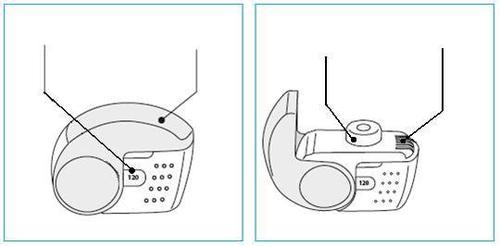
of air
Taking a dose from the Nexthaler inhaler requires only three simple steps: Opening, Inhalation, Closing.
- D.Before using a new Nexthaler inhaler
- 1. Open the bag and remove the inhaler.o Donot use the inhaler if the bag is not sealed or is damaged – return it to the supplier and obtain a new one. o Use the adhesive label on the package to write the date of first opening of the bag.
- 2. Check the inhaler.o If the inhaler appears broken or damaged, return it to the supplier and obtain a new one.
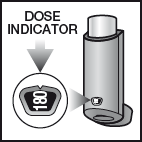
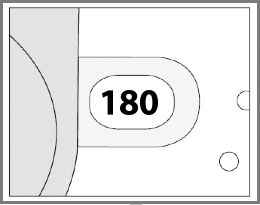
- 3. Check the dose window. If the inhaler is new, the number “180” appears in the dose window.o Donot use a new inhaler if the number indicated is less than “180” – return it to the supplier and obtain a new one.
- E.How to use the Nexthaler inhaler
- 1. If you are unsure of receiving the dose correctly, contact your pharmacist or doctor.
- 2. If you are unsure whether the number indicated by the dose counter has decreased by one unit after inhalation, wait until the next scheduled dose and take it normally. Do not take a double dose.
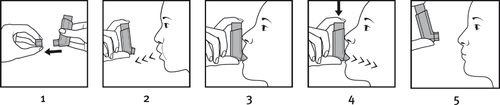
E.1Opening
1. Hold the inhaler firmly in a vertical position.
2. Check the number of doses remaining: any number between “1” and
“180” indicates that there are still doses.
o If the dose window indicates “0”, it means that there are no doses remaining – the inhaler must be disposed of and a new one obtained.
3. Open the cap completely.
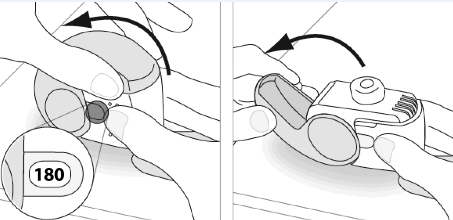
4. Before inhalation, exhale as much as possible.
o Do notbreathe through the inhaler.
E.2Inhalation
When possible, remain standing or sit in an upright position during
inhalation.
1. Lift the inhaler, bring it to your mouth and close your lips around
the mouthpiece.
o Do notcover the air intake while holding the inhaler.
o Do notinhale through the air intake.
2. Breathe rapidly and deeply through your mouth.
o You may perceive a certain taste in your mouth while taking the dose.
o You may feel or hear a “click” while taking the dose.
o Do notbreathe through your nose.
o Do notmove your lips from the inhaler during inhalation.
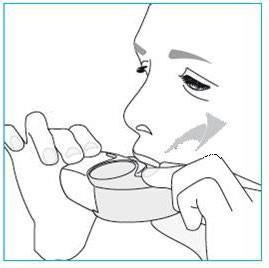
3. Remove the inhaler from your mouth.
4. Hold your breath for 5 or 10 seconds, or for as long as is comfortable for you.
5. Exhale slowly.
o Do notexhale through the inhaler.
E.3Closing
1. Return the inhaler to an upright position and close the cap completely.
2. Check that the dose counter has advanced by one number.
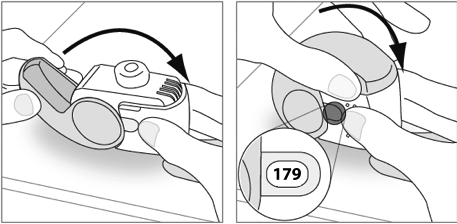
3. If you need to take another dose, repeat the operations from point E.1 to
point E.3.
- F.Cleaning
- Normally, it is not necessary to clean the inhaler.
- If necessary, you can keep the inhaler clean after use by wiping the device with a dry cloth or tissue.
- Do notclean the inhaler with water or other liquids. Keep the device always dry.
- G.Storage and disposal
For information on storage conditions and disposal instructions,
see section 5.
4. Possible side effects
Like all medicines, this medicine can cause side effects, although not everyone will experience them.
As with other treatments via inhalation, there is a risk of worsening of breathlessness, cough and wheezing immediately after using ALABASTER, and
this event is called paradoxical bronchospasm. If this occurs, you must
IMMEDIATELY STOP using ALABASTERand use your “as needed” fast-acting inhaler as soon as possibleto treat the symptoms. You should contact
your doctor immediately.
Immediately inform your doctor if allergic reactions have appeared, which
include skin allergies, skin itching, skin rash, skin redness,
swelling of the skin or mucous membranes, especially of the eyes, face, lips and
throat.
Below are listed further possible side effects of ALABASTER listed in
order of frequency.
Common(may affect up to 1 in 10 people):
- tremor.
- pneumonia (lung infection), in patients with COPD
Inform your doctor if you have any of the following symptoms while taking ALABASTER,
they may be symptoms of a lung infection:
- fever or chills.
- increased mucus production, changes in mucus color.
- increased cough or greater difficulty breathing.
Uncommon(may affect up to 1 in 100 people):
- cold symptoms, sore throat
- fungal infections (of the mouth and throat). Rinsing your mouth or gargling with water and brushing your teeth immediately after inhalation may help prevent these side effects.
- worsening of asthma symptoms, difficulty breathing
- hoarseness
- cough
- unusually fast heartbeat
- unusually slow heartbeat
- oppressive chest pain
- headache
- feeling unwell
- feeling tired or nervous
- alteration in electrocardiogram (ECG)
- low level of cortisol in urine or blood
- high level of potassium in the blood
- high level of glucose in the blood
- high level of fats in the blood. Side effects observed with similar inhaled medicinescontaining beclometasone dipropionate and/or formoterol are:
- palpitations
- irregular heartbeat
- taste anomalies or alterations
- muscle pain and muscle cramps
- restlessness, dizziness
- feeling of anxiety
- sleep disorders
- decrease in potassium level in the blood
- increase/decrease in blood pressure.
Not known(frequency cannot be estimated based on available data)
- blurred vision
The use of inhaled corticosteroids at high doses and for long periods of time
can cause systemic effects, including:
- disorders of the adrenal gland function (adrenal suppression)
- thinning of the bones
- delayed growth in children and adolescents
- increased pressure in the eye (glaucoma), cataracts
- rapid weight gain, especially in the face and torso
- sleep disorders, depression or feeling worried, agitation, nervousness, overexcitation or irritability. These effects are more likely to occur in children.
- Abnormal behavior.
Reporting of side effects
If you get any side effects, even those not listed in this leaflet, tell your doctor or pharmacist.
You can also report side effects directly through the national reporting system at http://www.agenziafarmaco.gov.it/content/come-segnalare-una-
sospetta-reazione-avversa
By reporting side effects you can help provide more information on the
safety of this medicine.
5. How to store ALABASTER
Keep this medicine out of sight and reach of children.
Do not use this medicine after the expiry date which is stated on the package, on the sachet and
on the label after Exp. The expiry date refers to the last day of that month.
Store in the original package to protect the medicine from moisture. Remove
the inhaler from its protective sachet only immediately before its first use.
Before the first opening of the sachet:
This medicine does not require any particular storage temperature.
After the first opening of the sachet:
Do not store at a temperature above 25°C.
After the first opening of the sachet, the medicine must be used within 6 months.
Use the label on the package to write the date of opening of the sachet.
Do not dispose of any medicine in wastewater or household waste. Ask your pharmacist
how to dispose of medicines you no longer use. This will help protect the environment.
6. Package Contents and Other Information
What ALABASTER contains
The active ingredients are: beclometasone dipropionate anhydrous and formoterol fumarate dihydrate.
Each pre-metered delivery contains 100 micrograms of beclometasone dipropionate anhydrous
and 6 micrograms of formoterol fumarate dihydrate. This corresponds to an inhaled dose,
delivered through the mouthpiece, of 81.9 micrograms of beclometasone dipropionate anhydrous and
5 micrograms of formoterol fumarate dihydrate.
The other ingredients are: lactose monohydrate (which contains small amounts of milk proteins) and magnesium stearate.
Description of the appearance of ALABASTER and package contents
This medicine is presented as a white or almost white powder for inhalation contained in a plastic inhaler called Nexthaler.
Each pack contains one, two or three inhalers providing 180 inhalations each.
Each inhaler is packaged in a heat-sealed protective sachet (aluminium foil packaging).
Not all pack sizes may be marketed.
Marketing Authorisation Holder
MASTER PHARMA S.r.l.
Via Giacomo Chiesi 1
43122 Parma
Italy
Manufacturers
Chiesi Farmaceutici S.p.A.
Via San Leonardo 96
43122 Parma - Italy
Chiesi S.A.S.
2 rue des Docteurs Alberto et Paolo Chiesi 41260 La Chaussée Saint Victor - France
This medicinal product is authorised in the Member States of the European Economic Area under the
following denominations:
| I Germany | INUVAIR NEXThaler 100 Mikrogramm / 6 Mikrogramm pro Dosis Pulver zur Inhalation |
| a Italy | ALABASTER. |
Updated and detailed information on this product is available by scanning with
the external packaging

The same information is also available at the following URL:
https://qrco.de/Nexthaler100-6-180

Уже начали прием и появились вопросы?
Обсудите свое состояние и дальнейшие шаги с врачом онлайн.
ALABASTER 200/6 micrograms per actuation pressurised inhalation solution
For use in adults only
beclometasone dipropionate/formoterol fumarate dihydrate
Read this leaflet carefully before you start to use this medicine as it contains important
information for you.
- Keep this leaflet. You may need to read it again.
- If you have any questions, ask your doctor, pharmacist or nurse.
- This medicine has been prescribed for you only. Do not pass it on to others, even if their symptoms are the same as yours, as it could be harmful.
- If you get any side effects, even those not listed in this leaflet, tell your doctor, pharmacist or nurse. See section 4.
Contents of this leaflet:
- 1. What ALABASTER is and what it is used for
- 2. What you need to know before you use ALABASTER
- 3. How to use ALABASTER
- 4. Possible side effects
- 5. How to store ALABASTER
- 6. Contents of the pack and other information
1. What is ALABASTER and what is it used for
ALABASTER is a pressurised inhalation solution containing two active ingredients that are inhaled through the mouth and released directly into the lungs.
The two active ingredients are:
Beclometasone dipropionate, which belongs to a group of medicines called corticosteroids, which have an anti-inflammatory action capable of reducing swelling and irritation in the lungs.
Formoterol fumarate dihydrate, which belongs to a group of medicines called long-acting bronchodilators, and which relaxes the muscles of the airways, making breathing easier.
These two active ingredients, together, facilitate breathing; they also help to prevent asthma symptoms, such as shortness of breath, wheezing and cough.
ALABASTER is used for the treatment of asthma in adults.
If you have been prescribed ALABASTER it is likely that:
- your asthma is not adequately controlled using inhaled corticosteroids and short-acting bronchodilators “as needed” or
- your asthma responds well to treatment with both corticosteroids and long-acting bronchodilators
2. What you need to know before using ALABASTER
Do not use ALABASTER:
- if you are allergic to beclometasone dipropionate or formoterol fumarate dihydrate or to any of the other ingredients of this medicine (listed in section 6).
Warnings and precautions
Talk to your doctor, pharmacist or nurse before using ALABASTER if
you have any of the following conditions:
- heart problems, such as angina (heart pain, chest pain), heart failure, narrowing of the arteries, problems with heart valves or other known heart abnormalities
- high blood pressure or if you know you have an aneurysm (an abnormal dilation of the blood vessel walls)
- heart rhythm disorders such as a fast or irregular heartbeat, rapid pulse or palpitations, or if you have been told that your heart tracing is abnormal
- excessive activity of the thyroid gland
- low levels of potassium in the blood
- any liver or kidney problems
- diabetes (if you inhale high doses of formoterol, blood glucose levels may increase. It may therefore be necessary to perform further blood tests to check your blood sugar levels when you start using this medicine and periodically during the entire duration of treatment)
- a tumor of the adrenal gland (called pheochromocytoma)
- if you are going to have anesthesia. Depending on the type of anesthetic, it may be necessary to stop treatment with ALABASTER at least 12 hours before anesthesia
- if you are taking, or have taken, medicines to treat tuberculosis (TB), or if you suffer from known viral or fungal infections of the chest
- if you need to avoid alcohol for any reason
If you fall into any of the cases listed above, always inform your doctor before using ALA-
BASTER.
If you have or have had any medical problem or allergies or if you are not sure you can use ALA-
BASTER, consult your doctor, asthma problem expert nurse or pharmacist before
using this medicine.
The doctor may decide to measure your blood potassium levels periodically,
especially if your asthma is severe.Like many bronchodilators, ALABASTER can
cause a sudden drop in serum potassium levels (hypokalemia). This happens because a reduction in
blood oxygen associated with some other treatments taken together with ALABASTER can
worsen the reduction of potassium levels.
If you take high doses of inhaled corticosteroids for long periods of time, you may
have a greater need for corticosteroids in stressful situations. Stressful situations can include
hospitalization following an accident, having suffered serious injuries, or the period prior to
surgery. In such cases, the doctor may decide whether or not to increase your
dose of corticosteroids and to prescribe steroid tablets or steroid injections.
If you need to be hospitalized, remember to bring all your medicines and
inhalers with you, including ALABASTER and any over-the-counter medicines or tablets, if
possible, in their original packaging.
Contact your doctor if you experience blurred vision or other visual disturbances.
Children and adolescents
ALABASTER should not be used in children and adolescents under 18 years of age.
Other medicines and ALABASTER
Tell your doctor, pharmacist or nurse if you are taking, have recently taken any
other medicines, including over-the-counter medicines. This is necessary because
ALABASTER can alter the action of other medicines. Also, other medicines can have some
effects on the activity of ALABASTER.
In particular, tell your doctor or pharmacist if you are taking any of the following medicines:
- Some medicines can increase the effects of ALABASTER and your doctor may want to keep you under close observation if you are taking these medicines (including some medicines for the treatment of HIV: ritonavir, cobicistat).
- Beta-blockers. Beta-blockers are medicines used to treat various conditions, including heart problems, high blood pressure or glaucoma (increased pressure in the eyes). If you use beta-blockers (including eye drops), the effect of formoterol may be reduced or canceled.
- Beta-adrenergic medicines (medicines with similar activity to that of formoterol) can increase the effects of formoterol.
- Medicines used to treat heart rhythm abnormalities (quinidine, disopyramide, procaina- mide).
- Medicines used to treat allergic reactions (antihistamines).
- Medicines used to treat symptoms of depression or mental disorders, such as monoamine oxidase inhibitors (e.g. phenelzine and isocarboxazide), tricyclic antidepressants (e.g. amitriptyline and imipramine), phenothiazines.
- Medicines for the treatment of Parkinson's disease (L-dopa).
- Medicines for the treatment of an underactive thyroid (L-thyroxine).
- Medicines containing oxytocin (which causes uterine contractions).
- Medicines for the treatment of mental disorders such as monoamine oxidase inhibitors (MAOIs), including drugs with similar properties such as furazolidone and procarbazine.
- Medicines for the treatment of heart disease (digoxin).
- Other medicines used to treat asthma (theophylline, aminophylline or steroids).
- Diuretics (water pills).
Also tell your doctor or pharmacist if you intend to use a general anesthetic for an
operation or dental procedure.
Pregnancy, breastfeeding and fertility
There are no clinical data on the use of ALABASTER during pregnancy.
ALABASTER should not be used if you are pregnant, suspect or are planning
a pregnancy or if you are breastfeeding, unless your doctor has told you that you can
do so.
Driving and using machines
It is unlikely that ALABASTER will affect your ability to drive vehicles or use machines.
ALABASTER contains alcohol
ALABASTER contains 9 mg of alcohol (ethanol) in each actuation, which is equivalent to 0.25 mg/kg per
dose of two actuations. The amount in two actuations of this medicine is equivalent to less than 1
ml of wine or beer. The small amount of alcohol in this medicine will not have noticeable effects.
For those who engage in sports:
The use of the drug without therapeutic necessity constitutes doping and may still result in
positive anti-doping tests.
3. How to use ALABASTER
Use this medicine following exactly the instructions of your doctor or pharmacist. If you have
doubts, consult your doctor or pharmacist.
Your doctor will monitor you regularly to ensure that you are taking the optimal dose
of ALABASTER. Your doctor will prescribe the lowest dose that provides optimal control of your
symptoms .
Dose:
Adults and the elderly
The recommended dose is 2 inhalations twice a day.
The maximum daily dose is 4 inhalations.
Remember: You should always carry your “as needed” fast-acting inhaler with you to treat
a worsening of asthma symptoms or a sudden asthma attack.
Patients at risk:
No dose adjustment is necessary if you are elderly. There is no information available on the use of
ALABASTER in patients with liver or kidney problems.
Use in children and adolescents under 18 years of age
Children and adolescents under 18 years of age should NOT take this medicine.
ALABASTER is effective in the treatment of asthma with a beclometasone dipropionate dosage that may be lower than that of other products for inhalation containing
this substance. If you have previously used a different medicine for inhalation based on
beclometasone dipropionate, your doctor will prescribe the exact dose of ALABASTER to
take to treat asthma.
Do not increase the dose
If you feel that the medicine is not very effective, always ask your doctor before increasing the dosage.
If asthma worsens
If your symptoms worsen or are difficult to control (for example, if you use your “as needed” inhaler more frequently), or if your “as needed” inhaler does not improve your symptoms, contact your doctor immediately. Asthma may be worsening and your doctor may
decide to change your dose of ALABASTER 200/6 micrograms per actuation pressurized solution for inhalation or prescribe alternative treatment.
Method of administration
ALABASTER is for inhalation use
This medicine is contained in a pressurized canister inserted into a plastic inhaler with a
mouthpiece. On the back of the inhaler there is a dose counter, which indicates the number of doses
remaining. Each time the canister is pressed, a dose of medicine is delivered and the counter
decreases by one number. Be careful not to drop the inhaler, as this may decrease
the number of doses reported by the counter.
Checking the inhaler’s operation
Before using the inhaler for the first time or if the inhaler has not been used for 14 days or more,
you must check the operation of the inhaler to ensure that it is working correctly.
- Remove the protective cap from the mouthpiece
- Hold the inhaler in a vertical position with the mouthpiece facing down
- Point the mouthpiece away and press the canister firmly to deliver a dose
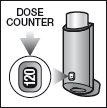
- Check the dose counter. If you are using the inhaler for the first time, the number 120 should appear in the counter window.
How to use the inhaler
When possible, remain standing or sit in an upright position while inhaling.
Before inhalation, check the dose counter window: any number between “1” and “120”
indicates that there are still doses. If the dose counter window indicates “0”, it means that there are
no doses left – the inhaler must be disposed of and a new one obtained.
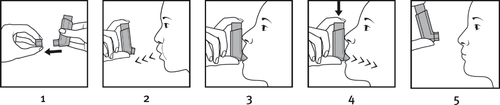
- 1. Remove the protective cap from the mouthpiece and check that the mouthpiece is clean and free of dust and dirt or any other foreign object.
- 2. Exhale as slowly and deeply as possible.
- 3. Hold the canister vertically, with the dispenser body upwards, and then place the mouthpiece between your closed lips. Do not bite the mouthpiece.
- 4. Inhale slowly and deeply through your mouth and immediately after starting to inhale press firmly on the top of the inhaler to release a dose. If you have a weak grip, it may be easier to hold the inhaler with both hands: position your index fingers on the top of the inhaler and both thumbs on the base of the inhaler.
- 5. Hold your breath as long as possible and at the end remove the inhaler from your mouth and exhale slowly. Do not breathe into the inhaler.
If another actuation is necessary, keep the inhaler in a vertical position for
about half a minute and repeat steps 2 to 5.
Important: Do not perform steps 2 to 5 too quickly.
After use, close with the protective cap and check the dose counter.
To reduce the risk of a fungal infection in the mouth or throat, rinse
your mouth or gargle with water or brush your teeth after each inhalation.
You need to get a new package of medicine when the dose counter indicates the number
20. Stop using the inhaler when the dose counter shows the number 0, as the amount
of medicine remaining in the device may not be sufficient to deliver a complete dose.
If you notice a “mist” escaping from the inhaler or from the sides of your mouth, it means that Alabaster has not reached your lungs as it should. Deliver another dose following the instructions repeating the
operations from point 2.
If you think that the effect of ALABASTER is too strong or not strong enough, consult your doctor or
pharmacist.
If you find it difficult to operate the inhaler while starting to inhale, you can use the spacer device
AeroChamber Plus. Ask your doctor, pharmacist or nurse for information about this device.
roChamber Plus and follow the instructions on how to use and clean it carefully.
Cleaning
The inhaler should be cleaned once a week.
During cleaning, do not remove the canister from the inhaler and do not use water or other liquids
to clean the inhaler.
To clean the inhaler:
- 1. Remove the protective cap from the mouthpiece by pulling it away from the inhaler.
- 2. Clean the inside and outside of the mouthpiece and the inhaler with a clean, dry cloth or handkerchief.
- 3. Reposition the protective cap on the mouthpiece.
If you use more ALABASTER than you should
- Taking more formoterol than you should may cause the following effects: feeling of nausea, nausea, rapid heartbeat, palpitations, irregular heartbeat, changes in the electrocardiogram (heart tracing), headache, tremor, drowsiness, excess acid in the blood, low levels of potassium in the blood, high glucose levels in the blood. The doctor may perform blood tests to check the level of potassium and glucose.
- Taking an excessive amount of beclometasone dipropionate may cause temporary disorders of the adrenal glands. These problems will resolve spontaneously within a few days, however, the doctor may decide to check the serum cortisol levels.
Contact your doctor if you experience any of these symptoms.
If you forget to use ALABASTER
Take it as soon as you remember. If it is almost time for the next dose, do not take the dose you
have forgotten, but take the next dose at the correct time.Do not take a double dose to
make up for the missed dose .
If you stop treatment with ALABASTER
Even if you feel better, do not stop taking ALABASTER or reduce the dose. If you intend to do so, talk to your doctor. It is very important that ALABASTER is used regularly,
even in the absence of symptoms.
If you have any doubts about the use of this medicine, ask your doctor or pharmacist.
4. Possible side effects
Like all medicines, this medicine can cause side effects, although not everyone will experience them.
As with other treatments via inhalation, there is a risk of worsening of breathlessness and
wheezing immediately after using ALABASTER, and this event is called paradoxical bronchospasm. If this occurs, you must STOP using ALABASTER immediately
and use your fast-acting “as needed” inhaler as soon as possible to
treat the symptoms of breathlessness and wheezing. You should contact your doctor immediately.
Inform your doctor immediatelyif hypersensitivity reactionsappear, such as
skin allergies, itching, rash, skin redness, swelling of the skin or mucous
membranes, especially of the eyes, face, lips and throat.
Below are listed other possible side effects listed in order of frequency.
Common(may affect up to 1 in 10 people):
- fungal infections (of the mouth and throat)
- headache
- hoarseness
- sore throat
Uncommon(may affect up to 1 in 100 people):
- palpitations, unusually fast heartbeat and heart rhythm disturbances
- alteration of the electrocardiogram (ECG)
- increased blood pressure
- flu-like symptoms
- inflammation of the paranasal sinuses
- rhinitis
- ear inflammation
- throat irritation
- cough and productive cough
- asthma attack
- vaginal fungal infections
- nausea
- taste anomalies or alteration
- burning of the lips
- dry mouth
- difficulty swallowing
- indigestion
- stomach discomfort
- diarrhea
- muscle pain and cramps
- redness of the face and throat
- increased blood flow to some tissues of the body
- excessive sweating
- tremor
- restlessness
- dizziness
- urticaria
- alteration of some blood components: a reduction in the number of white blood cells or an increase in the number of platelets in the blood or a reduction in potassium levels in the blood or an increase in blood sugar levels or increased levels of insulin, free fatty acids and ketones in the blood
The following side effects have been reported with “uncommon” frequency in patients with chronic
obstructive bronchopneumonia:
- lung infection; inform your doctor if you notice any of the following symptoms: increased sputum (phlegm) production, change in sputum color, fever, increased cough, increased breathing problems
- reduction in the amount of cortisol in the blood: this is caused by the effect of corticosteroids on the adrenal gland
- irregular heartbeat
Rare(may affect up to 1 in 1,000 people):
- feeling of tightness in the chest
- loss of heartbeat (caused by premature ventricular contractions)
- decreased blood pressure
- kidney inflammation
- swelling of the skin and mucous membranes lasting for several days
Very rare(may affect up to 1 in 10,000 people):
- shortness of breath
- worsening of asthma
- decreased number of platelets in the blood
- swelling of the hands and feet
The use of high-dose inhaled corticosteroids for long periods of time may, in very rare cases, cause
systemic effects, including:
- disorders of adrenal gland function (adrenal suppression)
- reduction in bone mineral density (thinning of the bones)
- growth retardation in children and adolescents
- increased pressure inside the eyes (glaucoma)
- cataract
Not known (frequency cannot be estimated on the basis of available data):
- sleep disturbances
- depression or anxiety
- nervousness
- feeling of overstimulation or irritability.
- Blurred vision These events are more likely in children, but their frequency is unknown.
Reporting of side effects
If you experience any side effects, including those not listed in this leaflet, please tell your
doctor or pharmacist. You can also report side effects directly through the national reporting system at
www.aifa.gov.it/content/segnalazioni-reazioni-avverse. By reporting side effects you can contribute to
providing more information on the safety of this medicine.
5. How to store ALABASTER
Keep this medicine out of the sight and reach of children.
For pharmacists:
Store in a refrigerator (2 °C – 8 °C) for a maximum of 18 months.
For patients:
Do not use this medicine for more than 3 months after the date of purchase from the pharmacy and do not use it after
the expiry date which is stated on the pack and label after EXP. The expiry date refers to the last day of that month.
Do not store the inhaler at a temperature above 25°C.
If the inhaler has been exposed to very low temperatures, warm it with your hands for a few minutes pri-
or to use. Never heat it with artificial methods.
Caution: The container contains liquid under pressure. Do not expose it to temperatures above
50°C. Do not puncture the container.
Do not dispose of any medicine in wastewater or household waste. Ask your pharmacist how to
dispose of medicines you no longer use. This will help protect the environment.
6. Contents of the pack and other information
What ALABASTER contains:
The active ingredients are: beclometasone dipropionate, formoterol fumarate dihydrate.
Each actuation from the metering valve contains 200 micrograms of beclometasone dipropionate and 6
micrograms of formoterol fumarate dihydrate. This is equivalent to an inhaled dose from the mouthpiece of
177.7 micrograms of beclometasone dipropionate and 5.1 micrograms of formoterol fumarate di-
hydrate.
The other ingredients are: norflurane (HFA 134-a), anhydrous ethanol, hydrochloric acid.
This medicine contains fluorinated greenhouse gases. Each inhaler contains 10.356 g of norflura-
ne (HFC-134a) which corresponds to 0.015 tonnes of CO2 equivalent (global warming potential = 1430).
valente (global warming potential = 1430).
Description of the appearance of ALABASTER and contents of the pack
ALABASTER is a pressurized solution for inhalation contained in an aluminum-coated canister with a
metering valve, inserted into a plastic actuator incorporating a dose counter (120
actuations) or a dose indicator (180 actuations) with a plastic protective cap.
Each pack contains:
1 pressure container (allowing 120 inhalations)
2 pressure containers (allowing 120 inhalations each)
1 pressure container (allowing 180 inhalations)
Not all pack sizes may be marketed.
Marketing Authorisation Holder
Master Pharma S.r.l.
Via G. Chiesi 1
43122 Parma- Italy
Manufacturer responsible for batch release
Chiesi Farmaceutici S.p.A.
Via San Leonardo, 96
43122 Parma - Italy
Alternative manufacturers responsible for batch release
Chiesi Pharmaceuticals GmbH
Gonzagagasse 16/16
1010 Vienna - Austria
CHIESI S.A.S
2 rue des Docteurs Alberto et Paolo Chiesi
41260 La Chaussee Saint Victor - France
This medicinal product is authorised in the Member States of the European Economic Area under the following
names:
| Germany | m Inuvair 200 Mikrogramm/6 Mikrogramm pro In- halation Druckgasinhalation, Lösung |
| Italy | r a Alabaster |
ALABASTER 200/6 micrograms per actuation pressurised inhalation solution
For use in adults only
beclometasone dipropionate/formoterol fumarate dihydrate
Read this leaflet carefully before you start to use this medicine as it contains important
information for you.
- Keep this leaflet. You may need to read it again.
- If you have any questions, ask your doctor, pharmacist or nurse.
- This medicine has been prescribed for you only. Do not pass it on to others, even if their symptoms are the same as yours, as it could be harmful.
- If you get any side effects, even those not listed in this leaflet, tell your doctor, pharmacist or nurse. See section 4.
Contents of this leaflet:
- 1. What ALABASTER is and what it is used for
- 2. What you need to know before you use ALABASTER
- 3. How to use ALABASTER
- 4. Possible side effects
- 5. How to store ALABASTER
- 6. Contents of the pack and other information
1. What is ALABASTER and what is it used for
ALABASTER is a pressurised inhalation solution containing two active ingredients that are inhaled through the mouth and released directly into the lungs.
The two active ingredients are:
Beclometasone dipropionate, which belongs to a group of medicines called corticosteroids, which have an anti-inflammatory action capable of reducing swelling and irritation in the lungs.
Formoterol fumarate dihydrate, which belongs to a group of medicines called long-acting bronchodilators, which relaxes the muscles of the airways, making breathing easier.
These two active ingredients, together, facilitate breathing; they also help to prevent the symptoms of asthma, such as shortness of breath, wheezing and coughing.
ALABASTER is used for the treatment of asthma in adults.
If ALABASTER has been prescribed to you, it is likely that:
- your asthma is not adequately controlled using inhaled corticosteroids and short-acting bronchodilators “as needed” or
- your asthma responds well to treatment with both corticosteroids and long-acting bronchodilators.
2. What you need to know before using ALABASTER
Do not use ALABASTER:
- if you are allergic to beclometasone dipropionate or formoterol fumarate dihydrate or to any of the other ingredients of this medicine (listed in section 6).
Warnings and precautions
Talk to your doctor, pharmacist or nurse before using ALABASTER if
you have any of the following conditions:
- heart problems, such as angina (heart pain, chest pain), heart failure, narrowing of the arteries, problems with heart valves or other known heart abnormalities
- high blood pressure or if you know you have an aneurysm (an abnormal dilation of the blood vessel walls)
- heart rhythm disorders such as a fast or irregular heartbeat, rapid pulse or palpitations, or if you have been told that your heart tracing is abnormal
- overactive thyroid gland
- low levels of potassium in the blood
- any liver or kidney problems
- diabetes (if you inhale high doses of formoterol, blood glucose levels may increase. It may therefore be necessary to perform further blood tests to check your blood sugar levels when you start using this medicine and periodically during the entire duration of treatment)
- tumour of the adrenal gland (called pheochromocytoma)
- if you are going to have anesthesia. Depending on the type of anesthetic, it may be necessary to stop treatment with ALABASTER at least 12 hours before anesthesia
- if you are taking, or have taken, medicines to treat tuberculosis (TB), or if you suffer from known viral or fungal infections of the chest
- if you need to avoid alcohol for any reason
If you fall into any of the cases listed above, always inform your doctor before using ALA-
BASTER.
If you have or have had any medical problem or allergies or if you are not sure you can use ALA-
BASTER, consult your doctor, the expert nurse for asthma problems or the pharmacist before
using this medicine.
The doctor may decide to measure your potassium levels in the blood periodically,
especially if your form of asthma is severe.Like many bronchodilators, ALABASTER can
cause a sudden drop in serum potassium levels (hypokalemia). This happens because a reduction in
oxygen in the blood associated with some other treatments taken together with ALABASTER can
worsen the reduction of potassium levels.
If you take high doses of inhaled corticosteroids for long periods of time, you may
need more corticosteroids in stressful situations. Stressful situations can include
hospitalization following an accident, having suffered serious injuries or the period before
surgery. In such cases, the doctor may decide whether or not to increase your
dose of corticosteroids and to prescribe steroid tablets or steroid injections.
If you need to be hospitalized, remember to bring all your medicines and
inhalers with you, including ALABASTER and any over-the-counter medicines or tablets, in their original packaging, if possible.
Contact your doctor if you experience blurred vision or other visual disturbances.
Children and adolescents
ALABASTER should not be used in children and adolescents under 18 years of age.
Other medicines and ALABASTER
Tell your doctor, pharmacist or nurse if you are taking, have recently taken any
other medicines, including over-the-counter medicines. This is necessary because
ALABASTER can alter the action of other medicines. Also, other medicines can have effects on the activity of ALABASTER.
In particular, tell your doctor or pharmacist if you are taking any of the following medicines:
- Some medicines may increase the effects of ALABASTER and your doctor may want to monitor you closely if you are taking these medicines (including some medicines for the treatment of HIV: ritonavir, cobicistat).
- Beta-blockers. Beta-blockers are medicines used to treat various conditions, including heart problems, high blood pressure or glaucoma (increased pressure in the eyes). If you use beta-blockers (including eye drops), the effect of formoterol may be reduced or canceled.
- Beta-adrenergic medicines (medicines with similar activity to that of formoterol) may increase the effects of formoterol.
- Medicines used to treat heart rhythm abnormalities (quinidine, disopyramide, procai- namide).
- Medicines used to treat allergic reactions (antihistamines).
- Medicines used to treat symptoms of depression or mental disorders, co- me monoamine oxidase inhibitors (for example phenelzine and isocarboxazide), tricyclic antidepressants (for example amitriptyline and imipramine), phenothiazines.
- Medicines for the treatment of Parkinson's disease (L-dopa)
- Medicines for the treatment of an underactive thyroid (L-thyroxine)
- Medicines containing oxytocin (which causes uterine contractions)
- Medicines for the treatment of mental disorders such as monoamine oxidase inhibitors (MAOIs), including drugs with similar properties such as furazolidone and procarbazine.
- Medicines for the treatment of heart disease (digoxin)
- Other medicines used to treat asthma (theophylline, aminophylline or steroids).
- Diuretics (water pills).
Also tell your doctor or pharmacist if you intend to use a general anesthetic for an
operation or for a dental procedure.
Pregnancy, breastfeeding and fertility
There are no clinical data on the use of ALABASTER during pregnancy.
ALABASTER should not be used if you are pregnant, suspect or are planning
a pregnancy or if you are breastfeeding, unless your doctor has told you that you can
do so.
Driving and using machines
It is unlikely that ALABASTER will affect your ability to drive vehicles or use machines.
ALABASTER contains alcohol
ALABASTER contains 9 mg of alcohol (ethanol) per actuation, which is equivalent to 0.25 mg/kg
per dose of two actuations. The amount of alcohol in two actuations of this medicine is equivalent to
less than 1 ml of wine or beer. The small amount of alcohol in this medicine will not have noticeable effects.
For those who play sports:
The use of the drug without therapeutic necessity constitutes doping and may still
result in positive doping tests.
3. How to use ALABASTER
Use this medicine following exactly the instructions of your doctor or pharmacist. If you have
any doubts, consult your doctor or pharmacist.
Your doctor will monitor you regularly to ensure that you are taking the optimal dose
of ALABASTER. Your doctor will prescribe the lowest dose that provides optimal control of your
symptoms .
Dose:
Adults and the elderly
The recommended dose is 2 inhalations twice a day.
The maximum daily dose is 4 inhalations.
Remember: You should always carry your “as needed” fast-acting inhaler with you to treat
a worsening of asthma symptoms or a sudden asthma attack.
Patients at risk:
No dose adjustment is necessary if you are elderly. No information is available on the use of
ALABASTER in patients with liver or kidney problems.
Use in children and adolescents under 18 years of age
Children and adolescents under 18 years of age should NOT take this medicine.
ALABASTER is effective in the treatment of asthma with a beclometasone dipropionate dosage that may be lower than that of other inhaler products containing this
substance. If you have previously used a different inhaler medicine based on
beclometasone dipropionate, your doctor will prescribe the exact dose of ALABASTER to
take to treat asthma.
Do not increase the dose
If you feel that the medicine is not very effective, always ask your doctor before increa-
sing the dosage.
If asthma worsens
If your symptoms worsen or are difficult to control (for example, if you use your “as needed” inha-
ler more frequently), or if your “as needed” inhaler does not improve your symptoms, contact your doctor immediately. Asthma may be worsening and your doctor may
decide to change your dose of ALABASTER 200/6 micrograms per actuation pressurized solution for inhalation or prescribe you alternative treatment.
Method of administration
ALABASTER is for inhalation use
This medicine is contained in a pressurized canister inserted into a plastic inhaler mou-
nted with a mouthpiece. On the back of the inhaler there is a dose indicator, which indicates the number of
doses remaining. Each time the canister is pressed, the dose indicator scales down by a small amount.
The number of doses remaining is displayed in intervals of 20.
Be careful not to drop the inhaler, as this may decrease the number of doses reported
by the counter.
Checking the inhaler’s operation
Before using the inhaler for the first time or if the inhaler has not been used for 14 days or more,
you must check the operation of the inhaler to ensure that it is working correctly.
- Remove the protective cap from the mouthpiece
- Hold the inhaler in a vertical position with the mouthpiece facing down
- Point the mouthpiece away and press the canister firmly to deliver a dose
- Check the dose indicator. If you are using the inhaler for the first time, the number 180 should appear in the dose indicator window.
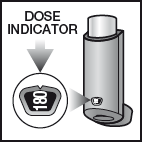
How to use the inhaler
When possible, remain standing or sitting upright while inhaling.
Before inhalation, check the dose window: any number between “1” and “180”
indicates that there are still doses. If the dose window indicates “0”, it means that there are
no doses left – the inhaler must be disposed of and a new one obtained.
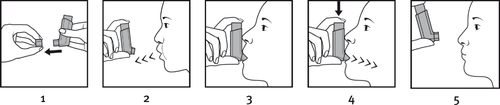
- 1. Remove the protective cap from the mouthpiece and check that the mouthpiece is clean and free of dust and dirt or any other foreign object.
- 2. Exhale as slowly and deeply as possible.
- 3. Hold the canister vertically, with the dispenser body facing upwards, and then place the mouthpiece between your closed lips. Do not bite the mouthpiece.
- 4. Inhale slowly and deeply through your mouth and immediately after starting to inhale, press firmly on the top of the inhaler to release a dose. If you have a weak grip, it may be easier to hold the inhaler with both hands: position your index fingers on the top of the inhaler and both thumbs on the base of the inhaler.
- 5. Hold your breath as long as possible and at the end remove the inhaler from your mouth and exhale slowly. Do not exhale into the inhaler.
If another actuation is necessary, keep the inhaler in a vertical position for
about half a minute and repeat steps 2 to 5.
Important: Do not perform steps 2 to 5 too quickly.
After use, close with the protective cap and check the dose indicator.
To reduce the risk of a fungal infection in the mouth or throat, rinse
your mouth or gargle with water or brush your teeth after each use of the inhaler.
You need to get a new package of medicine when the dose indicator shows
the number 20. Stop using the inhaler when the dose indicator shows the number 0, be-
cause the amount of medicine remaining in the device may not be sufficient to deliver
a full dose.
If a “mist” is observed coming out of the inhaler or from the sides of your mouth after inhalation, it means
that Alabaster has not reached your lungs as it should. Deliver another dose following the
instructions by repeating the operations from point 2.
If you think that the effect of ALABASTER is too strong or not enough, contact your doctor or
pharmacist.
If you find it difficult to operate the inhaler while starting to inhale, you can use the spacer device
AeroChamber Plus. Ask your doctor, pharmacist or nurse for information about this device.
roChamber Plus and follow the instructions on how to use and clean it carefully.
Cleaning
The inhaler should be cleaned once a week.
During cleaning, do not remove the canister from the inhaler and do not use water or other liquids
to clean the inhaler.
To clean the inhaler:
- 1. Remove the protective cap from the mouthpiece by pulling it away from the inhaler.
- 2. Clean the inside and outside of the mouthpiece and the inhaler with a clean, dry cloth or handkerchief.
- 3. Reposition the protective cap on the mouthpiece.
If you use more ALABASTER than you should
- Taking more formoterol than you should can cause the following effects: feeling of nausea, nausea, rapid heartbeat, palpitations, irregular heartbeat, changes in the electrocardiogram (heart tracing), headache, tremor, drowsiness, excess acid in the blood, low levels of potassium in the blood, high glucose levels in the blood. The doctor may perform blood tests to check the level of potassium and glucose.
- Taking an excessive amount of beclometasone dipropionate can lead to temporary disorders of the adrenal glands. These problems will resolve spontaneously within a few days, however, the doctor may decide to check the serum cortisol levels.
Contact your doctor if you experience any of these symptoms.
If you forget to use ALABASTER
Take it as soon as you remember. If it is almost time for the next dose, do not take the dose you have
forgotten, but take the next dose at the correct time. Do not take a double dose to make up for the forgotten dose.
If you stop taking ALABASTER
Even if you feel better, do not stop taking ALABASTER or reduce the dose. If you intend to do so, talk to your doctor. It is very important that ALABASTER is used regularly,
even in the absence of symptoms.
If you have any doubts about the use of this medicine, ask your doctor or pharmacist.
4. Possible side effects
Like all medicines, this medicine can cause side effects, although not everyone will experience them.
As with other inhaled treatments, there is a risk of worsening of breathlessness and
wheezing immediately after using ALABASTER, and this occurrence is called paradoxical bronchospasm. If this happens, you must STOP using ALABASTER immediately
and use your fast-acting “rescue” inhaler as soon as possible to
treat the symptoms of breathlessness and wheezing. You should contact your doctor immediately.
Tell your doctor immediatelyif you experience hypersensitivity reactions, such as
skin allergies, itching, rash, skin redness, swelling of the skin or mucous
membranes, especially of the eyes, face, lips and throat.
Below are listed other possible side effects listed in order of frequency.
Common(may affect up to 1 in 10 people):
- fungal infections (of the mouth and throat)
- headache
- hoarseness
- sore throat
Uncommon(may affect up to 1 in 100 people):
- palpitations, unusually fast heartbeat and heart rhythm disturbances
- changes in the electrocardiogram (ECG)
- increased blood pressure
- flu-like symptoms
- inflammation of the sinuses
- rhinitis
- ear inflammation
- throat irritation
- cough and productive cough
- asthma attack
- vaginal fungal infections
- nausea
- taste abnormalities or alterations
- burning of the lips
- dry mouth
- difficulty swallowing
- indigestion
- stomach discomfort
- diarrhea
- muscle pain and cramps
- redness of the face and throat
- increased blood flow to some tissues of the body
- excessive sweating
- tremor
- restlessness
- dizziness
- urticaria
- changes in some blood components: either a reduction in the number of white blood cells or an increase in the number of platelets in the blood or a reduction in potassium levels in the blood or an increase in blood sugar levels or increased levels of insulin, free fatty acids and ketones in the blood
The following side effects have been reported with “uncommon” frequency in patients with chronic
obstructive bronchopneumonia:
- lung infection; tell your doctor if you notice any of the following symptoms: increased sputum (phlegm) production, change in sputum color, fever, increased cough, increased breathing problems
- reduced amount of cortisol in the blood: this is caused by the effect of corticosteroids on the adrenal gland
- irregular heartbeat
Rare(may affect up to 1 in 1,000 people):
- feeling of tightness in the chest
- heartbeat interruption (caused by premature ventricular contractions)
- decreased blood pressure
- kidney inflammation
- swelling of the skin and mucous membranes lasting for several days
Very rare(may affect up to 1 in 10,000 people):
- shortness of breath
- worsening of asthma
- decreased number of platelets in the blood
- swelling of the hands and feet
The use of high doses of corticosteroids by inhalation for long periods of time may in very rare
cases cause systemic effects, including:
- disorders of adrenal gland function (adrenal suppression)
- reduced bone mineral density (thinning of the bones)
- growth retardation in children and adolescents
- increased pressure inside the eyes (glaucoma)
- cataract
Not known (frequency cannot be estimated based on available data):
- sleep disturbances
- depression or anxiety
- nervousness
- feeling of overstimulation or irritability
- Blurred vision. These events are more likely in children, but their frequency is unknown.
Reporting of side effects
If you experience any side effects, including those not listed in this leaflet, please tell your
doctor or pharmacist. You can also report side effects directly through the national reporting system at www.aifa.gov.it/content/segnalazioni-reazioni-avverse. By reporting side effects you can contribute to providing more information on the safety of this
medicine.
5. How to store ALABASTER
Keep this medicine out of the sight and reach of children.
For pharmacists:
Store in a refrigerator (2 °C – 8 °C) for a maximum of 18 months.
For patients:
Do not use this medicine for more than 3 months after the date of purchase from the pharmacy and do not use it after
the expiry date which is stated on the pack and label after EXP. The expiry date refers to the last day of that month.
Do not store the inhaler at a temperature above 25°C.
If the inhaler has been exposed to low temperatures, warm it with your hands for a few minutes before
use. Never heat it with artificial methods.
Caution: The container contains liquid under pressure. Do not expose it to temperatures above
50°C. Do not puncture the container.
Do not dispose of any medicine in wastewater or household waste. Ask your pharmacist how to
dispose of medicines you no longer use. This will help protect the environment.
6. Package contents and other information
What ALABASTER contains:
The active ingredients are: beclometasone dipropionate, formoterol fumarate dihydrate.
Each actuation from the metering valve contains 200 micrograms of beclometasone dipropionate and 6
micrograms of formoterol fumarate dihydrate. This is equivalent to an inhaled dose from the mouthpiece of
177.7 micrograms of beclometasone dipropionate and 5.1 micrograms of formoterol fumarate dihy-
drate.
The other ingredients are: norflurane (HFA 134-a), anhydrous ethanol, hydrochloric acid.
This medicine contains fluorinated greenhouse gases. Each inhaler contains 14.239 g of norflura-
ne (HFC-134a) which corresponds to 0.020 tonnes of CO2 equivalent (global warming potential
= 1430).
Description of the appearance of ALABASTER and package contents
ALABASTER is a pressurized solution for inhalation contained in an aluminum-coated canister with a
metering valve, inserted into a plastic actuator that incorporates a dose counter (120
actuations) or a dose indicator (180 actuations) with a plastic protective cap.
Each package contains:
1 pressurized container (allowing 120 inhalations)
2 pressurized containers (allowing 120 inhalations each)
1 pressurized container (allowing 180 inhalations)
Not all pack sizes may be marketed.
Marketing authorization holder
Master Pharma S.r.l.
Via G. Chiesi 1
43122 Parma- Italy
Manufacturer responsible for batch release
Chiesi Farmaceutici S.p.A.
Via San Leonardo, 96
43122 Parma - Italy
Alternative manufacturers responsible for batch release
Chiesi Pharmaceuticals GmbH
Gonzagagasse 16/16
1010 Vienna - Austria
CHIESI S.A.S.
2 rue des Docteurs Alberto et Paolo Chiesi 41260 La Chaussee Saint Victor - France
This medicinal product is authorised in the Member States of the European Economic Area under the following
denominations:
| Germany | a Inuvair 200 Mikrogramm/6 Mikrogramm pro m Inhalation Druckgasinhalation, Lösung |
| Italy | Alabaster |
ALABASTER 200 micrograms/6 micrograms for inhalation powder for inhalation
For use in adults only
beclometasone dipropionate anhydrous/formoterol fumarate dihydrate
Read this leaflet carefully before you start to use this medicine as it contains important
information for you.
- Keep this leaflet. You may need to read it again.
- If you have any questions, ask your doctor, nurse or pharmacist.
- This medicine has been prescribed for you only. Do not pass it on to others, even if their symptoms are the same as yours, as it could be harmful.
- If you get any side effects, even those not listed in this leaflet, tell your doctor, nurse or pharmacist. See section 4.
Contents of this leaflet
- 1. What ALABASTER is and what it is used for
- 2. What you need to know before you use ALABASTER
- 3. How to use ALABASTER
- 4. Possible side effects
- 5. How to store ALABASTER
- 6. Contents of the pack and other information
1. What is ALABASTER and what is it used for
ALABASTER is a powder that is inhaled through the mouth and released directly into the
lungs. It contains two active ingredients: beclometasone dipropionate anhydrous and formoterol fumarate
dihydrate.
- Beclometasone dipropionate belongs to a group of medicines called corticosteroids, which have an anti-inflammatory action, reducing swelling and irritation in the lungs.
- Formoterol fumarate dihydrate belongs to a group of medicines called long-acting bronchodilators. These drugs relax the muscles of the airways, widening them and thus making it easier to inhale and exhale air from the lungs .
These two active ingredients, together, facilitate breathing and also help to prevent the symptoms
of asthma, such as shortness of breath, wheezing and coughing.
ALABASTER is used for the treatment of asthma in adults.
If ALABASTER has been prescribed to you, it is likely that:
- your asthma is not adequately controlled using inhaled corticosteroids and short-acting bronchodilators “as needed”
1
or
- your asthma responds well to treatment with both corticosteroids and long-acting bronchodilators
2. What you need to know before using ALABASTER
Do not use ALABASTER
If you are allergic to beclometasone dipropionate anhydrous or formoterol fumarate dihydrate or to any
other component of this medicine (listed in section 6).
Warnings and precautions
Do not take this medicine if you experience acute asthma symptoms, such as shortness of breath,
wheezing and coughing, or if your asthma is getting worse or in the treatment of acute asthma
attacks. To treat the symptoms you should use your fast-acting “as needed” inhaler which you should
always carry with you.
Consult your doctor before using ALABASTER if you experience any of the following conditions:
- heart problems, including any type of known heart disease and/or cardiac function
- irregular heartbeat, such as increased or irregular heart rate, rapid pulse or palpitations, or if you have been told that your electrocardiogram is abnormal
- high blood pressure
- narrowing of the arteries (also known as arteriosclerosis), or if you are aware of having an aneurysm (an abnormal dilation of the blood vessel walls)
- excessive activity of the thyroid gland
- low levels of potassium in the blood
- any liver or kidney disorders
- diabetes. If you inhale high doses of formoterol, blood glucose levels may increase and, consequently, you may need to undergo further blood tests to monitor blood sugar levels both when you start using this medicine and periodically throughout the duration of treatment.
- tumor of the adrenal gland (called pheochromocytoma)
- if you are to undergo anesthesia. Depending on the type of anesthetic, it may be necessary to stop treatment with ALABASTER at least 12 hours before anesthesia.
2
- if you are taking, or have taken, medicines to treat tuberculosis (TB), or if you suffer from known viral or fungal infections of the chest.
If you fall into any of the cases listed above, always inform your doctor before using
ALABASTER.
If you are unsure whether you can use ALABASTER, consult your doctor, an experienced asthma nurse or
your pharmacist before using this medicine.
The doctor may decide to measure your blood potassium levels periodically,
especially if your asthma is severe.Like many bronchodilators, ALABASTER can
cause a sudden drop in serum potassium levels (hypokalemia). This happens because a reduction in
oxygen in the blood associated with other treatments taken together with ALABASTER may
worsen the reduction of potassium levels.
If you take high doses of inhaled corticosteroids for long periods of time, you may
have a greater need for corticosteroids in stressful situations. Stressful situations may include
hospitalization following an accident, having suffered serious injuries, or the period prior to
surgery. In such cases, the doctor will decide whether or not to increase your
dose of corticosteroids and may prescribe steroids in tablets or steroids for injection.
If you need to be hospitalized, remember to bring all your medicines and
inhalers with you, including ALABASTER, and any over-the-counter medicines or tablets, in their
original packaging, if possible.
Contact your doctor if you experience blurred vision or other visual disturbances.
Children and adolescents
This medicine should not be administered to children and adolescents under 18 years of age.
Other medicines and ALABASTER
Tell your doctor or pharmacist if you are taking, have recently taken or might take
any other medicine. This is necessary because ALABASTER can alter the action of other
medicines. Also, other medicines may have effects on the activity of ALABASTER.
In particular, tell your doctor or pharmacist if you are taking any of the following
medicines:
- Some medicines may increase the effects of ALABASTER and your doctor may want to monitor you closely if you are taking these medicines (including some medicines for the treatment of HIV: ritonavir, cobicistat).
- Beta-blockers. Do not use this medicine together with beta-blockers. Beta-blockers are medicines used to treat various conditions, including heart problems, high blood pressure or glaucoma (increased pressure in the eyes). If you use beta-blockers (including eye drops), the effect of formoterol may be reduced or canceled.
- Beta-adrenergic drugs (drugs with similar activity to that of formoterol) may increase the effects of formoterol.
- Medicines for the treatment of irregular heartbeats (quinidine, disopyramide, procainamide).
3
- Medicines to treat allergic reactions (antihistamines, such as terfenadine).
- Medicines for the treatment of depression or mental disorders such as monoamine oxidase inhibitors (e.g. phenelzine and isocarboxazide,) or tricyclic antidepressants (e.g. amitriptyline and imipramine) or phenothiazines.
- Medicines for the treatment of Parkinson's disease (L-dopa).
- Medicines for the treatment of an underactive thyroid (L-thyroxine).
- Medicines containing oxytocin (which causes uterine contractions).
- Medicines for the treatment of mental disorders such as Monoamine Oxidase Inhibitors (MAOIs), including drugs with properties similar to furazolidone and procarbazine.
- Medicines for the treatment of heart disease (digoxin).
- Other medicines for the treatment of asthma (theophylline, aminophylline or steroids)
- Diuretics (water pills).
Also inform your doctor or pharmacist if you intend to use a general anesthetic for an operation
or for dental work
Pregnancy, breastfeeding and fertility
There is no clinical data on the use of ALABASTER during pregnancy.
If you are pregnant, suspect you are pregnant, are planning a pregnancy or are breastfeeding, ask your
doctor for advice before using this medicine. ALABASTER should only be
used during pregnancy if your doctor advises you to do so. The doctor will decide whether you should
stop taking ALABASTER during breastfeeding or whether you should take ALABASTER
but refrain from breastfeeding. Always follow your doctor's advice carefully.
Driving and operating machinery
It is unlikely that ALABASTER will affect your ability to drive vehicles or operate machinery .
However, if you experience side effects such as dizziness and/or tremor, your ability to drive
vehicles or operate machinery may be altered.
ALABASTER contains lactose
Lactose contains small amounts of milk proteins, which can cause reactions in patients
allergic to milk. If your doctor has diagnosed you with intolerance to certain sugars, contact them before
taking this medicine.
For athletes:
The use of the drug without therapeutic necessity constitutes doping and may still result in positive
anti-doping tests.
3. How to use ALABASTER
Use this medicine following the doctor's instructions exactly. If you have any doubts, consult your
doctor, pharmacist, or nurse.
ALABASTER delivers an extrafine powder, which allows a greater amount of drug
contained in the dose to reach the lungs. The doctor may, therefore, prescribe a lower dose of
this inhaler than those you were taking with other inhalers.
4
The doctor will monitor you regularly to ensure that you are taking the correct dose of
ALABASTER. Once asthma is well controlled, the doctor may deem it appropriate to gradually reduce
the dose of ALABASTER. Do not modify the dose under any circumstanceswithout first
consulting your doctor.
How much ALABASTER to use:
Adults and the elderly:
The recommended dose of this medicine is 2 inhalations twice a day.
The maximum daily dose is 4 inhalations.
Do not increase the dose.
If you believe that the medicine is not effective, always consult your doctor before increasing the dose.
Remember: you should always carry your fast-acting “rescue” inhaler with you to
treat a worsening of symptoms or a sudden asthma attack.
How to use ALABASTER:
ALABASTER is for inhalation use.
If possible, stand or sit in an upright position when you inhale.
If you use more ALABASTER than you should:
- contact your doctor or the nearest hospital emergency room immediately for advice. Bring the medicine with you, so that healthcare personnel can understand which medicine you have taken;
- adverse effects may occur. Inform your doctor if you notice any unusual symptoms, as further investigations or any necessary therapeutic measures may be required.
If you forget to use ALABASTER:
Take the dose as soon as you remember. If it is almost time to take the next dose, skip the forgotten dose
and take the next one at the correct time. Do not take a double dose to make up for the
missed dose.
If you stop treatment with ALABASTER:
Even if you feel better, do not stop using ALABASTER or reduce the dosage. If you
intend to do so, talk to your doctor. It is very important that you use ALABASTER every day, as
prescribed by your doctor, even if you have no symptoms.
If your breathing remains unchanged:
If your symptoms do not improve after inhaling ALABASTER, you may be using
the device incorrectly. Therefore, check the instructions for proper use
of the device below and/or contact your doctor, nurse, or pharmacist to explain how to use it correctly.
If asthma worsens:
If your symptoms worsen or are difficult to control (for example, if you use your
“as needed” inhaler more frequently), or if your “as needed” inhaler does not improve your symptoms,
5
you must continue to use ALABASTER but contact your doctor as soon as possible. The doctor may
decide to change your dose of ALABASTER or prescribe further or
alternative treatment.
If you have any doubts about the use of this medicine, ask your doctor or pharmacist.
INSTRUCTIONS FOR USE OF THE NEXTHALER INHALER
- A.Package ContentsFor information on the package contents, see section 6. If the contents of the pack-age do not correspond to what is stated above, return the inhaler to the person who provided it to you(e.g. the pharmacist or doctor) and obtain a new one.
- B.General Warnings and Precautions
- Do notremove the inhaler from its bag unless you intend to use it immediately.
- Use the inhaler only as directed.
- Keep the inhaler cap closed until you are ready to take your dose.
- When not using the inhaler, store it in a clean, dry place.
- Do notattempt to disassemble the Nexthaler inhaler for any reason.
- C.Main features of the Nexthaler inhaler
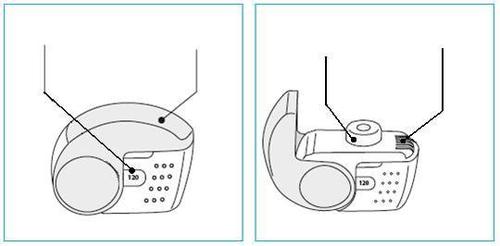
of air
Taking a dose from the Nexthaler inhaler requires only three simple steps: Opening, Inhala-
tion, Closing
- D.Before using a new Nexthaler inhaler
- 1. Open the bag and remove the inhaler.o Do notuse the inhaler if the bag is not sealed or is damaged – return it to the supplier and obtain a new one. o Use the adhesive label on the package to write the date of first opening of the bag
- 2. Check the inhaler.o If the inhaler appears broken or damaged, return it to the supplier and obtain a new one.
- 3. Check the dose window. If the inhaler is new, the number “120” appears in the dose window.o Do notuse a new inhaler if the number indicated is less than “120” – return it to the supplier and obtain a new one.
6
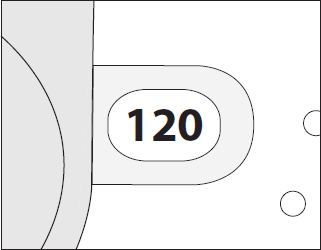
- E.How to use the Nexthaler inhaler
- 1. If you are unsure of receiving the dose correctly, contact your pharmacist or doctor.
- 2. If you are unsure that the number indicated by the dose counter has decreased by one unit after inhalation, wait until the next scheduled dose and take it normally. Do not take a double dose.
E.1Opening
1. Hold the inhaler firmly in a vertical position.
2. Check the number of doses remaining: any number between “1” and “120” indi-
cates that there are still doses.
o If the dose window indicates “0”, it means that there are no doses left –
the inhaler must be disposed of and a new one obtained.
o
3. Open the cap completely.
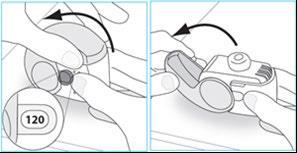
5. Before inhalation, exhale as much as possible.
o Do notbreathe through the inhaler.
E.2Inhalation
When possible, remain standing or sit in an upright position during inhalation.
- 1.Raise the inhaler, bring it to your mouth and close your lips around the mouth-piece.o Do notcover the air intake while holding the inhaler. o Do notinhale through the air intake.
2. Breathe rapidly and deeply through your mouth.
o You may perceive a certain taste in your mouth while taking the dose.
o You may feel or hear a “click” while taking the dose.
o Do notinhale through your nose.
o Do notmove your lips from the inhaler during inhalation.
7
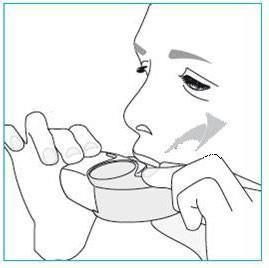
3. Remove the inhaler from your mouth.
4. Hold your breath for 5 or 10 seconds, or for as long as is comfortable for you.
5. Exhale slowly.
o Do notexhale through the inhaler.
E.3Closure
1. Return the inhaler to an upright position and close the cap completely.
2. Check that the dose counter has advanced by one number.
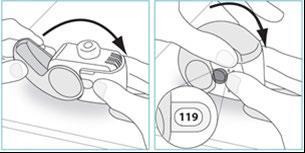
3. If you need to take another dose, repeat the operations from point E.1 to point
E.3.
- F.Cleaning
- Normally, it is not necessary to clean the inhaler.
- If necessary, you can keep the inhaler clean after use by wiping the device with a dry cloth or paper towel.
- Do notclean the inhaler with water or other liquids. Always keep the device dry.
- G.Storage and disposalFor information on storage conditions and disposal instructions, see section 5.
4. Possible side effects
Like all medicines, this medicine can cause side effects, although not everyone will experience them.
As with other treatments via inhalation, there is a risk of worsening of breathlessness,
cough and wheezing immediately after using ALABASTER, and this event
is called paradoxical bronchospasm. If this occurs, you must IMMEDIATELY
8
stop using ALABASTERand use your ‘rescue’ inhaler as soon as possible
for rapid actionto treat the symptoms. You should contact your doctor immediately.
Immediately inform your doctor if allergic reactions appear, including
skin allergies, skin itching, rash, skin redness, swelling of the skin or
mucous membranes, especially of the eyes, face, lips and throat.
Below are listed other possible side effects of ALABASTER, listed in order of
frequency.
Common(may affect up to 1 in 10 people):
- tremor
Uncommon(may affect up to 1 in 100 people):
- cold symptoms, sore throat
- fungal infections (of the mouth and throat). Rinsing your mouth or gargling with water and brushing your teeth immediately after inhalation may help prevent these side effects
- worsening of asthma symptoms, difficulty breathing
- hoarseness
- cough
- unusually fast heartbeat
- unusually slow heartbeat
- oppressive chest pain
- headache
- feeling unwell
- feeling tired or nervous
- alteration in electrocardiogram (ECG)
- low level of cortisol in urine or blood
- high level of potassium in the blood
- high level of glucose in the blood
- high level of fats in the blood Not known(frequency cannot be estimated based on available data)
- blurred vision
Side effects observed with similar inhaled medicinescontaining beclometasone
dipropionate and/or formoterol are as follows:
- palpitations
- irregular heartbeat
- taste anomalies or alterations
- muscle pain and muscle cramps
- restlessness, dizziness
- feeling of anxiety
- sleep disturbances
- low level of potassium in the blood
- increase/decrease in blood pressure
9
The use of inhaled corticosteroids at high doses and for long periods of time can
cause systemic effects, including:
- disorders of adrenal gland function (adrenal suppression)
- thinning of bones
- growth retardation in children and adolescents
- increased eye pressure (glaucoma), cataract
- rapid weight gain, especially in the face and torso
- sleep disturbances, depression or worry, agitation, nervousness, hyperactivity or irritability. These effects are more likely to occur in children
- abnormal behavior
Reporting of side effects
If you experience any side effects, including those not listed in this leaflet, please inform
your doctor, pharmacist or nurse. You can also report side effects directly
through the national reporting system at www.aifa.gov.it/content/segnalazioni-
reazioni-avverse.
By reporting side effects, you can help provide more information on the safety of
this medicine.
5. How to store ALABASTER
Keep this medicine out of the sight and reach of children.
Do not use this medicine after the expiry date which is stated on the package, on the sachet and
on the label after Exp. The expiry date refers to the last day of that month.
Store in the original package to protect the medicine from moisture. Remove the inhaler
from its protective sachet only immediately before its first use.
Before the first opening of the sachet:
This medicine does not require any particular storage temperature.
After the first opening of the sachet:
Do not store at a temperature above 25°C.
After the first opening of the sachet, the medicine must be used within 6 months.
Use the label on the package to write the date of opening the sachet.
Do not dispose of any medicine in the wastewater or household waste. Ask your pharmacist how
to dispose of medicines you no longer use. This will help protect the environment.
6. Contents of the pack and other information
What ALABASTER contains
The active ingredients are: beclometasone dipropionate anhydrous and formoterol fumarate dihydrate.
10
Each metered dose contains 200 micrograms of beclometasone dipropionate anhydrous and 6
micrograms of formoterol fumarate dihydrate. This corresponds to an inhaled dose, delivered
through the mouthpiece, of 158.8 micrograms of beclometasone dipropionate anhydrous and 4.9
micrograms of formoterol fumarate dihydrate.
The other ingredients are: lactose monohydrate and magnesium stearate.
Description of the appearance of ALABASTER and contents of the pack
ALABASTERis presented as a white or almost white inhalation powder
contained in a plastic inhaler called Nexthaler.
Each pack contains one, two or three inhalers providing 120 inhalations each.
Each inhaler is packaged in a heat-sealed protective sachet.
Not all pack sizes may be marketed.
Marketing Authorisation Holder
MASTER PHARMA S.r.l.
Via Giacomo Chiesi 1
43122 Parma
Italy
Manufacturer responsible for batch release:
Chiesi Farmaceutici S.p.A.
Via San Leonardo 96
43122 Parma - Italy
Alternative manufacturer responsible for batch release:
Chiesi S.A.S.
2 rue des Docteurs Alberto et Paolo Chiesi
41260 La Chaussée Saint Victor - France
Alternative manufacturer responsible for batch release:
Chiesi Pharmaceuticals GmbH
Gonzagagasse 16/16
1010 Vienna – Austria
This medicinal product is authorised in the Member States of the European Economic Area with the following
names:
| n Germany: INUVAIR NEXThaler e 200 Mikrogramm/6 Mikrogramm pro Inhalation Pulver zur Inhalation | Italy: ALABASTER |
11
Updated and detailed information on this product is available by scanning with
the outer packaging

The same information is also available at the following URL:
https://qrco.de/Nexthaler200-6-120.
12
- Страна регистрации
- Форма выпускаPressurized solution for inhalation, 100/6 micrograms
- Код АТХR03AK08
- Действующее вещество
- Отпускается по рецептуДа
- Производитель
- Информация на этой странице носит справочный характер и не является медицинской консультацией. Перед началом приема лекарства обязательно проконсультируйтесь с врачом.
- Аналоги ALABASTERФорма выпуска: Pressurized solution for inhalation, 100 MICROGRAMS/6 MICROGRAMSДействующее вещество: formoterol and beclometasoneПроизводитель: DOC GENERICI SRLОтпускается по рецептуФорма выпуска: Pressurized solution for inhalation, 100 MICROGRAMMI/6 MICROGRAMMIДействующее вещество: formoterol and beclometasoneПроизводитель: EG S.P.A.Отпускается по рецептуФорма выпуска: Pressurized solution for inhalation, 100 MICROGRAMS/6 MICROGRAMSДействующее вещество: formoterol and beclometasoneПроизводитель: ELPEN PHARMACEUTICAL CO. INC.Отпускается по рецепту
Аналоги ALABASTER в других странах
Лекарства с тем же действующим веществом, доступные в других странах.
Аналог ALABASTER в Испания
Аналог ALABASTER в Польша
Аналог ALABASTER в Украина
Врачи онлайн по ALABASTER
Обсудите применение ALABASTER и возможные следующие шаги — по оценке врача.









Получите рецепт на ALABASTER онлайн
Заполните форму за 2 минуты
Расскажите о симптомах, истории болезни и нужном препарате.
Выберите врача или мы назначим
Выберите специалиста или мы подберём ближайшего доступного врача.
Врач рассматривает ваш случай
Обычно в течение 30 минут. Может задать уточняющие вопросы в чате.
Получите в любой аптеке
Электронный рецепт отправляется на вашу почту — действителен по всей Польше.
Часто задаваемые вопросы
ALABASTER требует рецепта в Италия. Вы можете уточнить у врача онлайн, подходит ли это лекарство для вашей ситуации.
Действующее вещество ALABASTER — formoterol and beclometasone. Эта информация помогает определить лекарства с тем же составом под другими торговыми названиями.
ALABASTER производится компанией MASTER PHARMA S.R.L.. Упаковка и торговое название могут отличаться в зависимости от дистрибьютора.
Врачи, включая Семейные врачи, Психиатры, Дерматологи, Кардиологи, Эндокринологи, Гастроэнтерологи, Пульмонологи, Нефрологи, Ревматологи, Гематологи, Инфекционисты, Аллергологи, Гериатры, Педиатры, Онкологи, могут оценить целесообразность применения ALABASTER с учетом вашей ситуации и местных правил. Вы можете записаться на онлайн-консультацию, чтобы обсудить возможные варианты.
Польша имеет хорошо развитую систему здравоохранения в крупных городах, таких как Варшава, Краков, Вроцлав и Гданьск. Аптеки широко доступны и работают в соответствии с действующим законодательством, обеспечивая доступ к рецептурным препаратам.
Вы можете купить ALABASTER в Варшаве, Кракове, Вроцлаве или Гданьске в любой аптеке при наличии действующего рецепта.
Чтобы получить рецепт, вы можете воспользоваться Oladoctor:
Другие лекарства с тем же действующим веществом (formoterol and beclometasone) включают BEKLOMETASONE E FORMOTEROLO DOK JENERIKI, BEKLOMETASONE E FORMOTEROLO EG, BEKLOMETASONE E FORMOTEROLO ELPEN. Они могут отличаться торговым названием или формой выпуска, но содержат одинаковый терапевтический компонент. Перед изменением лечения рекомендуется проконсультироваться с врачом.
