



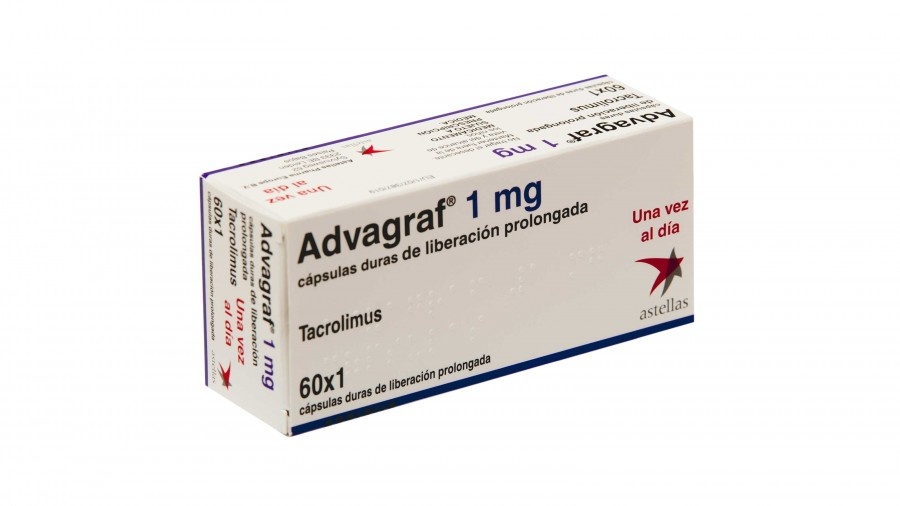
ADVAGRAF 0.5 MG Капсулы твердые, пролонгированного действия

Рассмотрение рецепта онлайн
Врач рассмотрит ваш случай и примет решение о назначении рецепта, если это медицински оправдано.

Поговорите с врачом об этом лекарстве
Обсудите симптомы и возможные дальнейшие шаги на онлайн-консультации.



Инструкция по применению ADVAGRAF
Содержание инструкции
Advagraf 0.5 mg prolonged-release hard capsules, 1 mg prolonged-release hard capsules, 3 mg prolonged-release hard capsules, 5 mg prolonged-release hard capsules
Tacrolimus
Read this leaflet carefully before you start taking this medicine because it contains important information for you.
- Keep this leaflet. You may need to read it again.
- If you have any questions, ask your doctor or pharmacist.
- This medicine has been prescribed for you only. Do not pass it on to others, even if their symptoms are the same as yours, as it could be harmful.
- If you get any side effects, even those not listed in this leaflet, tell your doctor or pharmacist. See section 4. Contents of this leaflet:
- 1. What Advagraf is and what it is used for
- 2. What you need to know before you take Advagraf
- 3. How to take Advagraf
- 4. Possible side effects
- 5. How to store Advagraf
- 6. Contents of the pack and other information
1. What is Advagraf and what is it used for
Advagraf contains the active ingredient tacrolimus. It is an immunosuppressant. Following organ transplantation (liver, kidney), the body's immune system will attempt to reject the new organ.
Advagraf is used to control the immune response by enabling the body to
accept the transplanted organ.
You may also receive Advagraf for an ongoing rejection of the liver, kidney, heart or other
transplanted organ when one of the treatments you were taking has not been able to control
this immune response after transplantation.
Advagraf is used in adult patients.
2. Cosa deve sapere prima di prendere Advagraf
Non prenda Advagraf
- se è allergico (ipersensibile) a tacrolimus o ad uno qualsiasi degli altri componenti di Advagraf (vedere paragrafo 6).
- se è allergico a sirolimus o a qualsiasi antibiotico macrolide (ad esempio eritromicina, claritromicina, josamicina). Avvertenze e precauzioniPrograf e Advagraf contengono entrambi il principio attivo tacrolimus. Tuttavia, Advagraf si deve prendere una volta al giorno, mentre Prograf si deve prendere due volte al giorno. Ciò deriva dal fatto che le capsule di Advagraf permettono un rilascio prolungato (rilascio più lento in un periodo di tempo più lungo) di tacrolimus. Advagraf e Prograf non sono intercambiabili.
Si rivolga al medico o al farmacista prima di prendere Advagraf:
- se sta assumendo qualsiasi medicinale citato sotto nel paragrafo “Altri medicinali e Advagraf’’
- se ha o ha avuto problemi al fegato
- se ha diarrea da più di un giorno
- se ha forti dolori addominali accompagnati o no da altri sintomi, quali brividi, febbre, nausea o vomito
- se ha un’alterazione dell’attività elettrica del cuore definita “prolungamento QT”
- se ha o ha avuto danni ai vasi sanguigni più piccoli, noti come microangiopatia trombotica/porpora trombotica trombocitopenica/sindrome emolitica uremica. Informi il medico se insorgono febbre, lividi sotto la pelle (che possono apparire come puntini rossi), stanchezza inspiegabile, confusione, ingiallimento della pelle o degli occhi, ridotta produzione di urina, perdita della vista e crisi convulsive (vedere paragrafo 4). Quando tacrolimus viene assunto insieme a sirolimus o everolimus, il rischio di sviluppare questi sintomi può aumentare.
Per favore eviti di assumere qualunque rimedio di origine vegetale, ad esempio l’ iperico (erba di San
Giovanni, Hypericum perforatum) o qualsiasi altro prodotto di origine vegetale dal momento che esso
può modificare l’efficacia e la dose di Advagraf che l ei necessita di ricevere. Se ha dei dubbi consulti
per favore il medico prima di assumere qualsiasi prodotto o rimedio di origine vegetale.
Il medico può avere necessità di aggiustare la sua dose di Advagraf.
Si deve tenere in contatto regolare con il medico. Di tanto in tanto, il medico può ritenere necessario
che lei faccia esami del sangue, delle urine, controlli al cuore o agli occhi per stabilire la dose corretta
di Advagraf.
Deve limitare l’esposizione al sole e ai raggi UV (ultravioletti) mentre sta prendendo Advagraf. Questo
perché le terapie immunosoppressive possono aumentare il rischio di tumori della pelle. Indossi vestiti
che la proteggono e utilizzi uno schermo solare con un fattore ad alta protezione.
Precauzioni per la manipolazione:
Durante la preparazione, si deve evitare il contatto diretto con qualsiasi parte del corpo come la cute o
gli occhi oppure l’inalazione delle soluzioni iniettabili, della polvere o dei granuli contenuti nei
prodotti a base di tacrolimus. In caso di contatto, lavi la cute e gli occhi.
Bambini e adolescenti
L’uso di Advagraf non è consigliato in bambini e adolescenti con meno di 18 anni.
Altri medicinali e Advagraf
Informi il medico o il farmacista se sta assumendo o ha recentemente assunto qualsiasi altro
medicinale, compresi quelli senza prescrizione medica e prodotti erboristici.
L’uso di Advagraf insieme a ciclosporina (altro farmaco utilizzato per la prevenzione del rigetto del
trapianto d’organo) non è consigliato.
In caso di visita da un medico diverso dallo specialista in trapianti, riferisca che sta prendendo
tacrolimus. Il medico potrebbe doversi consultare con lo specialista in trapianti nel caso in cui lei
debba usare un altro medicinale che può aumentare o diminuire le concentrazioni di tacrolimus
nel sangue.
Le concentrazioni di Advagraf nel sangue possono essere influenzate da altri farmaci che lei sta
prendendo e viceversa le concentrazioni nel sangue dei medicinali che sta prendendo possono essere
alterate dall’assunzione di Advagraf cosa che può richiedere l’interruzione, un aumento o una
diminuzione della dose di Advagraf.
Alcuni pazienti hanno manifestato aumenti delle concentrazioni di tacrolimus nel sangue mentre
prendevano altri medicinali. Ciò può causare gravi effetti indesiderati, quali problemi renali, problemi
del sistema nervoso e disturbi del ritmo cardiaco (vedere paragrafo 4).
Un effetto sulle concentrazioni di Advagraf nel sangue può verificarsi molto presto dopo l’inizio
dell’uso di un altro medicinale, pertanto può e ssere necessario un monitoraggio frequente e continuato
della concentrazione di Advagraf nel sangue nei primi giorni dopo aver iniziato l’altro medicinale e
frequentemente durante il trattamento con l’altro medicinale. Alcuni altri medicinali possono causa re
una diminuzione delle concentrazioni di tacrolimus nel sangue, che può aumentare il rischio di rigetto
dell’organo trapiantato. In particolare, deve informare il medico se assume o ha recentemente assunto
medicinali quali:
- medicinali antifungini e antibiotici, in particolare i cosiddetti antibiotici macrolidi, utilizzati per trattare le infezioni, ad esempio ketoconazolo, fluconazolo, itraconazolo, posaconazolo, voriconazolo, clotrimazolo, isavuconazolo, miconazolo, caspofungina, telitromicina, eritromicina, claritromicina, josamicina, azitromicina, rifampicina, rifabutina, isoniazide e flucloxacillina
- letermovir, usato per prevenire una malattia causata da CMV (citomegalovirus umano)
- inibitori della proteasi HIV (ad esempio ritonavir, nelfinavir, saquinavir), il medicinale potenziatore cobicistat, e le combinazioni in compresse o gli inibitori non-nucleosidici della trascrittasi inversa dell’HIV (efavirenz, etravirina, nevirapina) utilizzati per il trattamento del le infezioni da HIV
- inibitori delle proteasi HCV (ad esempio telaprevir, boceprevir, la combinazione ombitasvir/paritaprevir/ritonavir con o senza dasabuvir, elbasvir/grazoprevir e glecaprevir/pibrentasvir ) utilizzati per il trattamento dell’epatite C
- nilotinib e imatinib, idelalisib, ceritinib, crizotinib, apalutamide, enzalutamide o mitotano (utilizzati per il trattamento di determinati tipi di cancro)
- acido micofenolico, utilizzato per inibire il sistema immunitario e prevenire il rigetto del trapianto
- m edicinali per l’ulcera dello stomaco o il reflusso acido ( ad esempio omeprazolo, lansoprazolo o cimetidina)
- antiemetici utilizzati per trattare la nausea e il vomito (ad esempio metoclopramide)
- cisapride o l’antiacido magnesio -alluminio idrossido, utilizzato per trattare il bruciore di stomaco
- la pillola contraccettiva o altri trattamenti ormonali con etinilestradiolo, trattamenti ormonali con danazolo
- medicinali utilizzati per il trattamento della pressione alta o per problemi cardiaci (ad esempio nifedipina, nicardipina, diltiazem e verapamil)
- farmaci antiaritmici (amiodarone) usato per controllare l’aritmia (battito cardiaco irregolare),
- medicinali noti come “statine” utilizzati per trattare colesterolo e trigliceridi alti
- carbamazepina, fenitoina o fenob arbital, usati per curare l’epilessia
- metamizolo, utilizzato per il trattamento del dolore e della febbre
- i corticosteroidi prednisolone o metilprednisolone, appartenenti alla classe dei corticosteroidi utilizzati per trattare le infiammazioni o per sopprimere il sistema immunitario (per esempio nel rigetto d’organo)
- nefazodone, utilizzato per curare la depressione
- preparazioni di origine vegetale che contengano l’ iperico (erba di San Giovanni, Hypericumperforatum) o estratti di Schisandra sphenanthera
- cannabidiolo (gli usi includono, anche, il trattamento delle crisi convulsive).
Informi il medico se sta ricevendo un trattamento per l’epatite C. Il trattamento farmacologico per
l’epatite C può modificare la funzionalità del fegato e influire sulle concentrazioni di tacrolimus nel
sangue. Le concentrazioni di tacrolimus nel sangue possono diminuire o aumentare a seconda dei
medicinali prescritti per l’epatite C. Il medico potrebbe dover monitorare attentamente le
concentrazioni di tacrolimus nel sangue e apportare i necessari aggiustamenti della dose di Advagraf
dopo l’inizio del trattamento per l’epatite C.
Informi il medico se sta prendendo o se ha necessità di prendere ibuprofene (usato per trattare la
febbre, l’infiammazio ne e il dolore), antibiotici (cotrimossazolo, vancomicina o antibiotici
aminoglicosidici come gentamicina), amfotericina B (usato per trattare le infezioni fungine), farmaci
antivirali (usati per trattare le infezioni virali, ad esempio aciclovir, ganciclovir, cidofovir, foscarnet).
Questi possono aggravare problemi renali o del sistema nervoso quando assunti insieme ad Advagraf.
Informi il medico se sta assumendo sirolimus o everolimus. Quando tacrolimus viene assunto insieme
a sirolimus o everolimus, il rischio di sviluppare microangiopatia trombotica, porpora trombotica
trombocitopenica e sindrome emolitica uremica può aumentare (vedere paragrafo 4).
Il medico ha anche bisogno di sapere se lei, mentre sta prendendo Advagraf, sta assumendo integratori
di potassio oppure quei diuretici utilizzati per l’insufficienza cardiaca, l’ipertensione e patologie renali
(ad esempio amiloride, triamterene o spironolattone), o gli antibiotici trimetoprim o cotrimossazolo
che possono aumentare i livelli di potassio nel sangue, farmaci antinfiammatori non steroidei (FANS,
ad esempio ibuprofene), utilizzati contro la febbre, per trattare gli stati infiammatori e il dolore, gli
anticoagulanti (fluidificanti del sangue) o i farmaci per il diabete assunti per via orale.
Se deve vaccinarsi, ne parli prima con il medico.
Advagraf con cibi e bevande
Eviti il pompelmo (anche il succo) durante l’utilizzo di Advagraf dal momento che può variarne la
concentrazione nel sangue.
Gravidanza e allattamento
Se è in corso una gravidanza, se sospetta o sta pianificando una gravidanza, chieda consiglio al medico
prima di usare Advagraf. Nel corso di uno studio sono stati valutati gli esiti della gravidanza in donne
trattate con tacrolimus e in donne trattate con altri immunosoppressori. Sebbene le evidenze raccolte in
questo studio non siano sufficienti per trarre conclusioni, sono stati segnalati tassi più elevati di aborto
spontaneo tra le pazienti riceventi trapianto di fegato e di rene trattate con tacrolimus, come pure tassi
più elevati, tra le pazienti riceventi trapianto di rene, di ipertensione persistente associata a perdita di
proteine nelle urine, che si sviluppa durante la gravidanza o nel periodo post-parto (una condizione
chiamata pre-eclampsia). Non è stato rilevato un maggior rischio di difetti alla nascita importanti
associati all’uso di Advagraf.
Advagraf passa nel latte materno. È pertanto sconsigliato l’allattamento al seno durante la terapia con
Advagraf.
Guida di veicoli e utilizzo di macchinari
Non guidi e non usi strumenti o macchinari se avverte senso di perdita di equilibrio o sonnolenza,
oppure ha problemi a vedere in maniera chiara dopo aver preso Advagraf. Tali effetti sono stati
riscontrati in misura maggiore se assume anche alcool.
Advagraf contiene lattosio, sodio e lecitina (soia)
Advagraf contiene lattosio (lo zucchero del latte). Se i l medico le ha diagnosticato un’ intolleranza ad
alcuni zuccheri, lo contatti prima di prendere questo medicinale.
Questo medicinale contiene meno di 1 mmol di sodio (23 mg) per capsula, cioè è essenzialmente
‘senza sodio’.
L’inchiostro per stampa utilizzato sulle capsule di Advagraf contiene lecitina di soia. Se è allergico
alle arachidi o alla soia, ne parli con il medico per stabilire se deve assumere questo medicinale.
3. How to take Advagraf
Take Advagraf following exactly the instructions of your doctor. If you have any doubts, ask your doctor
or pharmacist. This medicine should only be prescribed by a doctor with experience in the
treatment of transplant patients.
Make sure you always receive the same formulation of tacrolimus when you refill your prescription, unless
your transplant specialist has agreed to a change in the tacrolimus formulation.
This medicine must be taken once a day. If the appearance of this medicine is not the
same as usual, or if the dosage instructions have changed, contact your doctor or pharmacist
as soon as possible to make sure you have received the correct medicine.
The initial dose to prevent organ rejection will be established by your doctor
and calculated based on your weight. The initial daily dose shortly after transplantation will generally
be within the following range:
0.10-0.30 mg per kg of body weight per day
depending on the transplanted organ. The same doses can be used for the treatment of rejection.
Your dose depends on your general condition and which other immunosuppressive medicine you
are taking.
Immediately after starting treatment with Advagraf, your doctor will ask you to undergo frequent
blood tests to determine the correct dose. Afterwards, you will be asked for blood tests on a
regular basis to be able to determine the correct dose and to adjust this dose from time to time.
Your doctor will generally reduce your dose of Advagraf once your condition has
stabilized. Your doctor will tell you exactly how many capsules to take.
It is essential that you take Advagraf every day as long as you need immunosuppression to
prevent rejection of your transplanted organ. You must maintain close contact with your doctor.
Advagraf must be taken once a day orally, in the morning. Take Advagraf on an empty stomach, or 2 or 3 hours after a meal. Wait at least one hour before taking your next meal.
Take the capsules immediately after removing them from the blister. The capsules must
be swallowed wholewith a glass of water. Do not swallow the desiccant contained in the aluminum packaging.
If you take more Advagraf than you should
If you have accidentally taken too much Advagraf, contact your doctor or the emergency room of your nearest hospital immediately.
If you forget to take Advagraf
If you forgot to take your Advagraf capsules in the morning, take them as soon as possible on the same
day. Do not take a double dose the next morning.
If you stop taking Advagraf
Stopping treatment with Advagraf may increase the risk of rejection of your transplanted organ. Do not stop treatment unless your doctor tells you to do so.
If you have any questions about the use of this medicine, ask your doctor or pharmacist.
4. Possible side effects
Like all medicines, Advagraf can cause side effects, although not everybody gets them.
Advagraf reduces the body's defenses (immune system) which will no longer be as
efficient at fighting infections. Therefore, you may be more likely to get infections while
taking Advagraf.
Some infections may be serious or fatal and can include infections caused by bacteria, viruses,
fungi, parasites or other infections.
Tell your doctor immediately if you experience signs of an infection, including:
- Fever, cough, sore throat, feeling weak or generally unwell
- Memory loss, difficulty thinking, difficulty walking or loss of vision - these may be due to a very rare and serious brain infection, which can be fatal (Progressive Multifocal Leukoencephalopathy or PML)
Serious side effects can occur, including allergic and anaphylactic reactions. Benign and malignant tumors have been
reported following treatment with Advagraf.
Tell your doctor immediately if you have or suspect you may have any of the following
serious side effects:
Common serious side effects (may affect up to 1 in 10 people):
- Gastrointestinal perforation: severe abdominal pain with or without other symptoms such as chills, fever, nausea or vomiting.
- Insufficient function of the transplanted organ.
- Blurred vision.
Uncommon serious side effects (may affect up to 1 in 100 people):
- Thrombotic microangiopathy (damage to the smallest blood vessels), including hemolytic uremic syndrome, a condition with the following symptoms: reduced or no urine output (acute kidney failure), extreme fatigue, yellowing of the skin or eyes (jaundice) and abnormal bruising (ecchymosis) or bleeding and signs of infection.
Rare serious side effects (may affect up to 1 in 1,000 people):
- Thrombotic thrombocytopenic purpura: a condition that includes damage to the smallest blood vessels and is characterized by fever and skin bruising that may appear as red spots, with or without extreme unjustified fatigue, confusion, yellowing of the skin or eyes (jaundice), with symptoms of acute kidney failure (reduced or absent urine output), loss of vision and seizures
- Toxic epidermal necrolysis: erosion and blistering of the skin or mucous membranes, reddened and swollen skin that may detach from large areas of the body.
- Blindness.
Very rare serious side effects (may affect up to 1 in 10,000 people):
- Stevens-Johnson syndrome: widespread unexplained skin pain, facial swelling, severe illness with blistering of the skin, mouth, eyes and genitals, hives, swelling of the tongue, red or purple skin rash that spreads, skin peeling.
- Torsades de pointes: change in heart rate that may or may not be accompanied by symptoms such as chest pain (angina), fainting, dizziness or nausea, palpitations (strong awareness of your heartbeat) and difficulty breathing.
Serious side effects – frequency not known (frequency cannot be estimated on the basis of the available
data):
- Opportunistic infections (bacterial, fungal, viral and protozoal): prolonged diarrhea, fever and sore throat.
- Following treatment, the occurrence of benign and malignant tumors has been reported, resulting from immunosuppression, including skin cancers and a rare type of cancer that can include skin lesions, called Kaposi's sarcoma. Symptoms include changes in the skin, such as new or changing discoloration, lesions or nodules.
- Cases of pure red cell aplasia (a very severe reduction in red blood cell count), hemolytic anemia (reduced number of red blood cells due to their abnormal destruction accompanied by fatigue) and febrile neutropenia (a decrease in the type of white blood cells that fight infection, accompanied by fever) have been reported. It is not known exactly how often these side effects occur. You may have no symptoms, or depending on the severity of the condition, you may experience: fatigue, apathy, abnormal paleness of the skin, shortness of breath, dizziness, headache, chest pain and cooling of the hands and feet.
- Cases of agranulocytosis (a strongly reduced number of white blood cells accompanied by ulcers in the mouth, fever and infection(s)) have been reported. You may have no symptoms or may experience sudden fevers, chills and sore throat.
- Allergic and anaphylactic reactions with the following symptoms: sudden itchy skin rash (hives), swelling of the hands, feet, ankles, face, lips, mouth or throat (which can cause difficulty swallowing or breathing) and may feel weak.
- Posterior reversible encephalopathy syndrome (PRES): headache, confusion, mood swings, seizures and visual disturbances. These may be signs of a condition called posterior reversible encephalopathy syndrome, which has been reported in some patients treated with tacrolimus.
- Optic neuropathy (abnormality of the optic nerve): vision problems, such as blurred vision, changes in color vision, difficulty seeing details or restriction of the visual field.
The following side effects can also occur after taking Advagraf and may
be serious:
Very common side effects (may affect more than 1 in 10 people):
Increased blood glucose, diabetes mellitus, increased potassium in the blood.
Difficulty sleeping.
Tremor, headache.
Increased blood pressure.
Abnormal liver function test results.
Diarrhea, nausea.
Kidney problems.
Common side effects (may affect up to 1 in 10 people):
Reduced number of blood cells (platelets, red blood cells or white blood cells),
increased number of white blood cells, abnormalities in the number of red blood cells (detected
in blood tests).
Decreased magnesium, phosphate, potassium, calcium or sodium in the blood, increased
fluids, increased uric acid or lipids in the blood, decreased appetite, increased
acidity in the blood, other changes in blood salt balance (detected in
blood tests).
Symptoms of anxiety, confusion and disorientation, depression, mood swings, nightmares,
hallucinations, mental disorders.
Seizures, altered consciousness, tingling and numbness in hands and feet (sometimes
painful), feeling of loss of balance, impaired ability to write, nervous system disorders.
Increased sensitivity to light, eye disorders.
Ringing in the ears.
Reduced blood flow in the heart vessels, increased heart rate.
Bleeding, complete or partial blockage of blood vessels, low blood pressure.
Shortness of breath, changes in lung tissue, fluid accumulation around the lung,
inflammation of the pharynx, cough, flu-like symptoms.
Inflammation or ulcers causing abdominal pain or diarrhea, bleeding in the
stomach, inflammation or ulcers in the mouth, accumulation of fluids in the stomach, vomiting, abdominal
pain, indigestion, constipation, flatulence, bloating, soft stools, stomach problems.
Bile duct disorders, yellowing of the skin due to liver problems, liver damage
and inflammation.
Itching, skin rash, hair loss, acne, increased sweating.
Joint pain, limb pain, back pain and foot pain, muscle cramps.
Impaired kidney function, reduced urine production, painful or reduced urination.
General weakness, fever, swelling (edema), pain and discomfort, increased alkaline phosphatase
in the blood, weight gain, feeling of altered temperature perception.
Uncommon side effects (may affect up to 1 in 100 people):
Alterations in blood clotting processes, reduction in the number of all types of blood cells
(detected in blood tests).
Dehydration.
Decreased proteins or sugar in the blood, increased phosphate in the blood.
Coma, brain hemorrhages, stroke, paralysis, brain disorders, alterations in language and
expression, memory problems.
Cataract opacity.
Hearing impairment.
Irregular heartbeat, heart stoppage, reduced heart output, thickening of the heart muscle,
increased heartbeat, abnormal electrocardiogram (ECG),
altered heart rate and rhythm.
Blood clot in a vein in the limbs, shock.
Difficulty breathing, respiratory disorders, asthma.
Intestinal blockage, increased levels of amylase in the blood, reflux of stomach contents into the
throat, delayed gastric emptying.
Skin inflammation, burning sensation during sun exposure.
Joint pain.
Inability to urinate, painful menstruation and abnormal menstrual bleeding.
Multiple organ failure, flu-like illness, increased sensitivity to heat and
cold, feeling of tightness in the chest, feeling of restlessness and discomfort,
increased lactate dehydrogenase in the blood, weight loss.
Rare side effects (may affect up to 1 in 1,000 people):
Small skin hemorrhages caused by blood clots.
Increased muscle stiffness.
Deafness.
Fluid accumulation around the heart.
Acute respiratory distress syndrome.
Cyst formation in the pancreas.
Problems with blood circulation in the liver.
Increased hair growth.
Thirst, fainting, feeling of chest constriction, decreased mobility, ulcer.
Very rare side effects (may affect up to 1 in 10,000 people):
Muscle weakness.
Abnormal echocardiogram.
Liver failure.
Painful urination with blood in the urine.
Increased adipose tissue.
Reporting of side effects
If you get any side effects, even those not listed in this leaflet, tell your
doctor or pharmacist. You can also report side effects directly through the
national reporting system detailed in Annex V. By reporting side effects you can
help provide more information on the safety of this medicine.
5. How to store Advagraf
Keep this medicine out of the sight and reach of children.
Do not use Advagraf after the expiry date which is stated on the pack after “Exp.”. The expiry date refers to the last day of that month.
Use all the prolonged-release capsules within 1 year of opening the aluminium blister pack.
Store in the original packaging to protect the medicine from moisture.
Do not dispose of any medicine in wastewater or household waste. Ask your pharmacist how to
dispose of medicines you no longer use. This will help protect the environment.
6. Package contents and other information
What Advagraf contains
- The active ingredient is tacrolimus. Each Advagraf 0.5 mg capsule contains 0.5 mg of tacrolimus (as monohydrate). Each Advagraf 1 mg capsule contains 1 mg of tacrolimus (as monohydrate). Each Advagraf 3 mg capsule contains 3 mg of tacrolimus (as monohydrate). Each Advagraf 5 mg capsule contains 5 mg of tacrolimus (as monohydrate).
- Other ingredients are: Capsule contents:hypromellose, ethylcellulose, lactose, magnesium stearate. Capsule shell:titanium dioxide (E 171), yellow iron oxide (E 172), red iron oxide (E 172), sodium lauryl sulfate, gelatin. Printing ink:shellac, lecithin (soy), simethicone, red iron oxide (E 172), hydroxypropylcellulose. Description ofAdvagraf and package contentsAdvagraf 0.5 mg prolonged-release hard capsules are hard gelatin capsules with ''0.5 mg'' imprinted in red on the light yellow upper part of the capsule and “ 647” on the orange body of the same, containing white powder. Advagraf 0.5 mg is supplied in blisters or unit-dose divisible blisters of 10 capsules, inside a protective packaging containing a desiccant. Packs of 30, 50 and 100 prolonged-release hard capsules in blisters and packs of 30×1, 50×1 and 100×1 prolonged-release hard capsules in unit-dose divisible blisters are available.
Advagraf 1 mg prolonged-release hard capsules are hard gelatin capsules with ''1 mg'' imprinted in red
on the white upper part of the capsule and “ 677” on the orange body of the same, containing
white powder.
Advagraf 1 mg is supplied in blisters or unit-dose divisible blisters of 10 capsules, inside a
protective packaging containing a desiccant. Packs of 30, 50, 60 and 100 prolonged-release
hard capsules in blisters and packs of 30×1, 50×1, 60×1 and 100×1 prolonged-release hard
capsules in unit-dose divisible blisters are available.
Advagraf 3 mg prolonged-release hard capsules are hard gelatin capsules with ''3 mg'' imprinted in red
on the orange upper part of the capsule and “ 637” on the orange body of the same,
containing white powder.
Advagraf 3 mg is supplied in blisters or unit-dose divisible blisters of 10 capsules, inside a
protective packaging containing a desiccant. Packs of 30, 50 and 100 prolonged-release
hard capsules in blisters and packs of 30×1, 50×1 and 100×1 prolonged-release hard
capsules in unit-dose divisible blisters are available.
Advagraf 5 mg prolonged-release hard capsules are hard gelatin capsules with ''5 mg'' imprinted in red
on the reddish-grey upper part of the capsule and “ 687” on the orange body of the same,
containing white powder.
Advagraf 5 mg is supplied in blisters or unit-dose divisible blisters of 10 capsules, inside a
protective packaging containing a desiccant. Packs of 30, 50 and 100 prolonged-release
hard capsules in blisters and packs of 30×1, 50×1 and 100×1 prolonged-release hard
capsules in unit-dose divisible blisters are available.
Not all pack sizes may be marketed.
Marketing Authorisation Holder and Manufacturer
Marketing Authorisation Holder:
Astellas Pharma Europe B.V.
Sylviusweg 62
2333 BE Leiden
Netherlands
Manufacturer:
Astellas Ireland Co., Ltd.
Killorglin, County Kerry, V93FC86
Ireland
For further information on this medicine, contact the local representative of the Marketing
Authorisation Holder:
België/Belgique/Belgien
Astellas Pharma B.V. Branch
Tél/Tel: + 32 (0)2 5580710
Lietuva
Astellas Pharma d.o.o.
Tel. +370 37 408 681
България
Астелас Фарма ЕООД
Te л.: + 359 2 862 53 72
Luxembourg/Luxemburg
Astellas Pharma B.V.Branch
Belgique/Belgien
Tél/Tel: + 32 (0)2 5580710
Česká republika
Astellas Pharma s.r.o.
Tel: +420 221 401 500
Magyarország
Astellas Pharma Kft.
Tel.: + 36 1 577 8200
Danmark
Astellas Pharma a/s
Tlf: + 45 43 430355
Malta
Astellas Pharmaceuticals AEBE
Tel.: +30 210 8189900
Deutschland
Astellas Pharma GmbH
Tel: + 49 (0)89 454401
Nederland
Astellas Pharma B.V.
Tel: + 31 (0)71 5455745
Eesti
Astellas Pharma d.o.o.
Tel: +372 6 056 014
Norge
Astellas Pharma
Tlf: + 47 66 76 46 00
Ελλάδα
Astellas Pharmaceuticals AEBE
Τηλ : +30 210 8189900
Österreich
Astellas Pharma Ges.m.b.H.
Tel: + 43 (0)1 8772668
España
Astellas Pharma S.A.
Tel: + 34 91 4952700
Polska
Astellas Pharma Sp.z.o.o.
Tel.: + 48 (0) 225451 111
France
Astellas Pharma S.A.S.
Tél: + 33 (0)1 55917500
Portugal
Astellas Farma, Lda.
Tel: + 351 21 4401320
Hrvatska
Astellas d.o.o.
Tel: +38516700102
România
S.C.Astellas Pharma SRL
Tel: +40 (0)21 361 0495
Ireland
Astellas Pharma Co. Ltd.
Tel: + 353 (0)1 4671555
Slovenija
Astellas Pharma d.o.o.
Tel: + 3864011400
Ísland
Vistor hf
Sími: + 354 535 7000
Slovenská republika
Astellas Pharma s.r.o.,
Tel: +421 2 4444 2157
Italia
Astellas Pharma S.p.A.
Tel: + 39 02 921381
Suomi/Finland
Astellas Pharma
Puh/Tel: + 358 (0)9 85606000
Κύπρος
Astellas Pharmaceuticals AEBE
Ελλάδα
Τηλ : +30 210 8189900
Sverige
Astellas Pharma AB
Tel: + 46 (0)40-650 15 00
Latvija
Astellas Pharma d.o.o.
Tel: + 371 67 619365
More detailed information on this medicine is available on the website of the European
Medicines Agency, https://www.ema.europa.eu.
Annex IV
Scientific conclusions and justification for the variation of the terms of the marketing
authorisation
Scientific conclusions
In light of the assessment of the Pharmacovigilance and Risk Assessment Committee
(PRAC) of the Periodic Safety Update Reports (PSUR) for tacrolimus (systemic formulations), the
PRAC’s scientific conclusions are as follows:
In light of the available data on cases of Kaposi’s sarcoma from clinical studies, the
literature and spontaneous reports, including cases with a close temporal association and a
number of fatal cases, and in light of a plausible mechanism of action, the PRAC considers that
a causal relationship between systemic tacrolimus and Kaposi’s sarcoma is at least a reasonable
possibility. The PRAC concluded that the product information for products containing systemic
tacrolimus should be amended accordingly.
Having examined the PRAC recommendation, the Committee for Human Medicinal Products
(CHMP) agrees with the related overall conclusions and with the justification for the recommendation.
Justification for the variation of the terms of the marketing authorisation
Based on the scientific conclusions on tacrolimus (systemic formulations), the CHMP considers that the
benefit-risk ratio of medicines containing tacrolimus (systemic formulations) remains unchanged
subject to the proposed changes to the product information.
The CHMP recommends the variation of the terms of the marketing authorisation.

Не уверены, подходит ли вам это лекарство?
Обсудите симптомы и варианты лечения с врачом онлайн.

Уже начали прием и появились вопросы?
Обсудите свое состояние и дальнейшие шаги с врачом онлайн.
- Страна регистрации
- Форма выпускаHard capsule, prolonged release, 0.5 MG
- Код АТХL04AD02
- Действующее вещество
- Отпускается по рецептуДа
- Производитель
- Информация на этой странице носит справочный характер и не является медицинской консультацией. Перед началом приема лекарства обязательно проконсультируйтесь с врачом.
- Аналоги ADVAGRAFФорма выпуска: Hard capsule, 0.5 MGДействующее вещество: ТакролимусПроизводитель: SANDOZ S.P.A.Отпускается по рецептуФорма выпуска: Extended-release tablet, 0.75 MGДействующее вещество: ТакролимусПроизводитель: CHIESI FARMACEUTICI S.P.A.Отпускается по рецептуФорма выпуска: Granules for oral suspension, 0.2 MGДействующее вещество: ТакролимусПроизводитель: ASTELLAS PHARMA EUROPE B.V.Отпускается без рецепта
Аналоги ADVAGRAF в других странах
Лекарства с тем же действующим веществом, доступные в других странах.
Аналог ADVAGRAF в Испания
Аналог ADVAGRAF в Польша
Аналог ADVAGRAF в Украина
Получите рецепт на ADVAGRAF онлайн
Заполните форму за 2 минуты
Расскажите о симптомах, истории болезни и нужном препарате.
Выберите врача или мы назначим
Выберите специалиста или мы подберём ближайшего доступного врача.
Врач рассматривает ваш случай
Обычно в течение 30 минут. Может задать уточняющие вопросы в чате.
Получите в любой аптеке
Электронный рецепт отправляется на вашу почту — действителен по всей Польше.
Часто задаваемые вопросы
ADVAGRAF требует рецепта в Италия. Вы можете уточнить у врача онлайн, подходит ли это лекарство для вашей ситуации.
Действующее вещество ADVAGRAF — Такролимус. Эта информация помогает определить лекарства с тем же составом под другими торговыми названиями.
ADVAGRAF производится компанией ASTELLAS PHARMA EUROPE B.V.. Упаковка и торговое название могут отличаться в зависимости от дистрибьютора.
Врачи, включая Семейные врачи, Психиатры, Дерматологи, Кардиологи, Эндокринологи, Гастроэнтерологи, Пульмонологи, Нефрологи, Ревматологи, Гематологи, Инфекционисты, Аллергологи, Гериатры, Педиатры, Онкологи, могут оценить целесообразность применения ADVAGRAF с учетом вашей ситуации и местных правил. Вы можете записаться на онлайн-консультацию, чтобы обсудить возможные варианты.
Польша имеет хорошо развитую систему здравоохранения в крупных городах, таких как Варшава, Краков, Вроцлав и Гданьск. Аптеки широко доступны и работают в соответствии с действующим законодательством, обеспечивая доступ к рецептурным препаратам.
Вы можете купить ADVAGRAF в Варшаве, Кракове, Вроцлаве или Гданьске в любой аптеке при наличии действующего рецепта.
Чтобы получить рецепт, вы можете воспользоваться Oladoctor:
Другие лекарства с тем же действующим веществом (Такролимус) включают ADOPORT, ENVARSUS, MODIGRAF. Они могут отличаться торговым названием или формой выпуска, но содержат одинаковый терапевтический компонент. Перед изменением лечения рекомендуется проконсультироваться с врачом.
