



ABRIFF 125 MICROGRAMS/5 MICROGRAMS Прессованная ингаляционная суспензия

Рассмотрение рецепта онлайн
Врач рассмотрит ваш случай и примет решение о назначении рецепта, если это медицински оправдано.

Поговорите с врачом об этом лекарстве
Обсудите симптомы и возможные дальнейшие шаги на онлайн-консультации.



Инструкция по применению ABRIFF
Содержание инструкции
- What is Abriff and what is it used for
- What you need to know before using Abriff
- How to use Abriff
- Possible side effects
- How to store Abriff
- Contents of the pack and other information
Abriff 50 micrograms/5 micrograms per actuation, pressurised suspension for inhalation
Abriff 125 micrograms/5 micrograms per actuation, pressurised suspension for inhalation
Abriff 250 micrograms/10 micrograms per actuation, pressurised suspension for inhalation
fluticasone propionate/formoterol fumarate dihydrate
Read this leaflet carefully before you start to use this medicine because it contains important
information for you.
- Keep this leaflet. You may need to read it again.
- If you have any questions, ask your doctor, pharmacist or nurse.
- This medicine has been prescribed for you only. Do not pass it on to others, even if their symptoms are the same as yours, as it may be harmful.
- If you get any side effects, even those not listed in this leaflet, tell your doctor, pharmacist or nurse. See section 4.
Contents of this leaflet:
- 1. What Abriff is and what it is used for
- 2. What you need to know before you use Abriff
- 3. How to use Abriff
- 4. Possible side effects
- 5. How to store Abriff
- 6. Contents of the pack and other information
1. What is Abriff and what is it used for
Please note that:
it is abbreviated to Abriff inhaler. In some cases it may refer to a specific dosage.
Abriff is an inhaler (a pressurized suspension for inhalation) that contains two active ingredients:
- fluticasone propionate, belonging to a group of medicines called steroids. Steroids help to reduce swelling and inflammation of the lungs;
- formoterol fumarate dihydrate, belonging to a group of drugs called long-acting beta-agonists. Long-acting beta-agonists are long-acting bronchodilators that help keep the airways open, making breathing easier. The combination of these two active ingredients helps to improve breathing. It is recommended to use the medicine every day as directed by your doctor.
This medicine helps to prevent breathing problems such as asthma and to avoid shortness of breath
and wheezing. However, it is not effective if an asthma attack is already in progress, i.e. if you are already
short of breath and wheezing. In this case you should use a 'rescue' medicine with rapid onset of action
such as salbutamol.
2. What you need to know before using Abriff
Do not use Abriff:
- if you are allergic to fluticasone propionate, formoterol fumarate or any of the other ingredients of this medicine (listed in section 6).
Warnings and precautions
Talk to your doctor, pharmacist or nurse before using this inhaler.
Before using this inhaler, tell your doctor, pharmacist or nurse if you have:
- currently or have had in the past tuberculosis (TB). Symptoms of tuberculosis include a persistent cough often accompanied by blood-streaked sputum, fever, fatigue, loss of appetite, weight loss and night sweats;
- a lung or chest infection;
- heart problems such as disturbances in blood flow to the heart or narrowing of one of the heart valves (the aortic valve), heart failure which can cause shortness of breath or swelling of the ankles, a condition that causes thickening of the heart muscle (hypertrophic obstructive cardiomyopathy), irregular heartbeat (cardiac arrhythmias) or changes in the heart's electrical activity (prolongation of the QTc interval);
- an abnormal swelling of the wall of a blood vessel (aneurysm);
- diabetes;
- high blood pressure;
- overactivity of the thyroid gland, which can cause increased appetite, weight loss or sweating (thyrotoxicosis);
- low levels of potassium in the blood, which can cause muscle weakness, cramps or changes in heart rhythm (hypokalaemia);
- adrenal insufficiency (a disorder of the adrenal gland function can cause symptoms such as headache, weakness, fatigue, abdominal pain, loss of appetite, weight loss, dizziness, very low blood pressure, diarrhea, nausea or vomiting, or seizures) or a tumor of the adrenal gland (pheochromocytoma);
- liver problems.
Contact your doctor if you experience blurred vision or other visual disturbances.
Tell your doctor if you are going to have surgery or are feeling very stressed as you may
need additional steroid treatment to control your asthma.
For those who play sports: the use of the drug without a therapeutic need constitutes doping and may
still result in a positive doping test.
Other medicines and Abriff
Tell your doctor or pharmacist if you are taking, have recently taken or might take any other medicines, including medicines you bought without a prescription. Using this inhaler with other
medicines can alter the effect of the inhaler or the other medicines.
Tell your doctor or pharmacist if you are taking:
- so-called beta-blockers (such as atenolol for the treatment of high blood pressure, sotalol for irregular heartbeat, metoprolol for fast heartbeat or timolol eye drops for glaucoma);
- other medicines for asthma or other respiratory problems (such as theophylline or aminophylline);
- medicines containing adrenaline or related substances (including other beta-agonists such as salbutamol or beta-antagonists such as atenolol, metoprolol, propranolol and timolol). Do not use other long-acting beta-agonists with this inhaler. If your asthma gets worse between doses of Abriff, use your ‘rescue’ inhaler that works quickly for immediate relief;
- medicines for the treatment of allergic reactions (antihistamines);
- medicines for the treatment of high blood pressure or fluid retention that work by increasing the amount of urine you produce (diuretics);
- medicines for heart failure (such as digoxin);
- medicines for heart rhythm disturbances (such as quinidine, disopyramide, procainamide);
- medicines for the treatment of symptoms of depression or other mental disorders such as monoamine oxidase inhibitors (e.g. phenelzine and isocarboxazide) and tricyclic antidepressants (e.g. amitriptyline and imipramine), or if you have taken any of these types of medicines in the last two weeks;
- medicines for the treatment of psychiatric or mental disorders (phenothiazines or antipsychotics);
- other medicines containing steroids;
- antifungal medicines (such as ketoconazole or itraconazole);
- some medicines that can increase the effects of Abriff and your doctor may want to monitor you closely if you are taking these medicines (including some medicines for HIV: ritonavir, atazanavir, indinavir, nelfinavir, saquinavir or cobicistat);
- antibiotics (such as clarithromycin, telithromycin or furazolidone);
- medicines for Parkinson's disease (levodopa);
- medicines for treating underactive thyroid (levothyroxine);
- medicines for Hodgkin's disease (procarbazine);
- medicines to induce labor (oxytocin).
If you are going to have general anesthesia, tell the hospital doctor that you are using
this inhaler.
Pregnancy and breastfeeding
If you are pregnant, suspect you may be pregnant or are planning to become pregnant, or if you are breastfeeding, ask
your doctor or pharmacist for advice before using this inhaler.
The doctor will advise you whether to take this medicine
Driving and using machines
It is unlikely that this medicine will affect your ability to drive or operate machinery.
Abriff contains ethanol (alcohol) and sodium cromoglicate
This medicine contains 2 mg of ethanol in each dose (2 inhalations). The amount in each dose is
equivalent to less than 1 ml of beer or wine.
The small amount of alcohol in this medicine will not have any noticeable effects (see section
“Warnings and precautions”).
It also contains a negligible amount of sodium cromoglicate: patients currently treated with
cromoglicate (used in the treatment of asthma, allergic rhinitis and allergic conjunctivitis) should
continue their treatment as normal.

Не уверены, подходит ли вам это лекарство?
Обсудите симптомы и варианты лечения с врачом онлайн.
3. How to use Abriff
Use this inhaler following the doctor's or pharmacist's instructions exactly. If you have doubts
consult your doctor or pharmacist. You must use it regularly, taking two puffs every day
in the morning and two puffs in the evening to get the most benefit from the therapy, unless your
doctor provides you with different instructions or advises you to stop the therapy. Do not take more
than the prescribed dose. Your doctor may have prescribed the inhaler for an indication other than asthma
or a different dose than the one normally prescribed and described in this leaflet. Use this
inhaler following the doctor's instructions exactly. If you have doubts about the dose to be taken and
the frequency of use, consult your doctor or pharmacist.
Adults, adolescents and children aged 5 years and over
The usual dose is two inhalations twice a day, i.e. two puffs in the morning and two in the evening.
Your doctor will prescribe the necessary dose for you to treat asthma. Only adults
should use the higher dosage inhaler (Abriff 250 micrograms/10 micrograms).
Only adults and adolescents over 12 years of age should use the medium dosage inhaler
(Abriff 125 micrograms/5 micrograms).
Abriff should not be used in children under 5 years of age.
Instructions for use
see the following figures. Your doctor or pharmacist will show you how to use the inhaler correctly. The
medicine is contained in an aerosol canister (see figure 1) inserted into a plastic actuator.
The actuator is equipped with a counter that indicates the doses (puffs) remaining after activation.
This counter is color-coded. When full it is green, then, when less than
50 puffs remain, it turns yellow and when less than 30 puffs remain
it turns red. When the number is approaching zero, you should contact your doctor to request a new
inhaler. Do not use the inhaler if the counter shows a ‘0’ (zero).
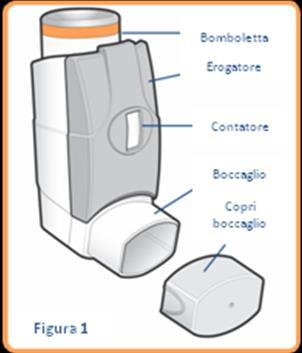
Before using the inhaler for the first time or if the inhaler has not been used for more than 3 days
or has been exposed to temperatures near zero
If the inhaler is new or has not been used for more than 3 days, it must be ‘activated’ to ensure
that it works correctly and delivers the exact dose.
If the inhaler has been exposed to temperatures near zero, it should be left at room temperature
for 30 minutes and then ‘activated’ to ensure that it works correctly and delivers the dose
exactly.
Activating the inhaler
- Remove the protective cap from the mouthpiece and shake the inhaler well.
- Hold the mouthpiece away from your face and release one dose (puff) by pressing the aerosol canister. This step must be repeated 4 times. Always shake the inhaler immediately before use.
Using the inhaler
If you develop shortness of breath or wheezing while using Abriff, continue to use Abriff but see your doctor as soon as
possible as you may need additional therapy. Once good control of asthma is achieved, your doctor may consider a gradual reduction in the dose of
Abriff .
Perform steps 2 to 5 slowly.
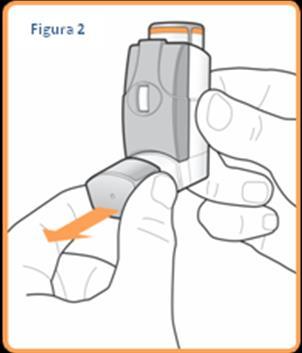
- 1. Remove the protective cap from the mouthpiece (see figure 2) and check that the inhaler is clean and dust-free.
- 2. Shake the inhaler immediately before each puff to ensure that the contents are evenly mixed.
- 3. Stand or sit upright. Exhale completely and as slowly and deeply as possible.
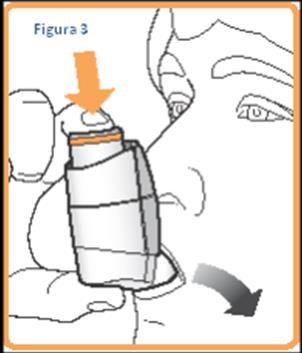
- 4. Hold the inhaler in a vertical position (figure 3) and place the mouthpiece between your lips. Hold the inhaler with your thumb/s on the base of the mouthpiece and your index finger/s on the top of the inhaler. Do not bite the mouthpiece.
- 5. Inhale slowly and deeply through your mouth and at the same time press the aerosol canister to release one puff. Continue to breathe regularly and deeply (ideally for 2-3 seconds in children or 4-5 seconds in adults).
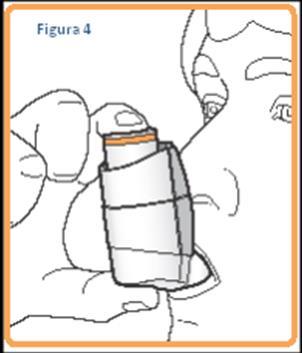
- 6. While holding your breath, remove the inhaler from your mouth. Continue to hold your breath for as long as possible without straining. Do not exhale into the inhaler.
- 7. For the second puff, hold the inhaler in a vertical position, then repeat steps 2 to 6.
- 8. Replace the protective cap on the mouthpiece. You can practice in front of a mirror. If you see a mist escaping from the top of the inhaler or from the sides of your mouth during inhalation, it is possible that you have not taken the medicine correctly. Repeat the procedure starting from step 2 to take another dose of medication.
After inhalation it is important to always rinse your mouth with water, gargle or brush your teeth
and expel any residue to avoid irritation of the mouth and throat or hoarseness.
If you have a weak grip, it may be easier for you to hold the inhaler with both hands, resting
your index fingers on the aerosol canister and both thumbs on the base of the inhaler.
If you have difficulty using the inhaler, your doctor may prescribe you a ‘spacer’ device AeroChamber
Plus Flow-Vu to make it easier for you to get the medicine into your lungs. Your doctor or pharmacist will
show you how to use the AeroChamber Plus Flow-Vu spacer with the inhaler. AeroChamber Plus
Flow-Vu is provided with instructions for use, maintenance and cleaning which must be read
carefully.
Maintaining the inhaler
It is important to follow these procedures carefully and clean the inhaler once a week. To clean
the inhaler:
- remove the protective cap from the mouthpiece
- do not remove the aerosol canister from the actuator
- clean the inside and outside of the mouthpiece and the actuator with a dry, clean cloth or tissue
- replace the protective cap on the mouthpiece
- do not immerse the metal canister in water
If you use more Abriff than you should
It is important that you take the dose indicated on the label or prescribed by your doctor. Do not increase
or reduce the dose without consulting a doctor.
If you take more medicine than you should, ask your doctor or pharmacist for advice. You may develop
severe chest pain (angina), hypo- or hypertension, headache, muscle cramps, sleep disturbances,
nervousness, dry mouth, loss of appetite, seizures, crises or epileptic fits. You may feel
dizzy, lightheaded, faint or experience a feeling of tiredness, nausea or general malaise. You may also notice changes in heart rate and may have
low levels of potassium or high blood sugar. You may also experience symptoms such as
abdominal pain, vomiting, weight loss, impaired consciousness (which may
cause drowsiness or confusion), hypoglycemia.
If you forget to use Abriff
If you forget to take a dose, take it as soon as possible. However, if it is almost time for the next dose,
do not take the missed dose. Do not take a double dose to make up for the missed dose.
If you stop using Abriff
It is very important that you use this inhaler every day as prescribed by your doctor, even if you feel
well, as it will help control your asthma. If you want to stop using the inhaler, consult
your doctor first, who will tell you how to do it, usually by gradually reducing the dose to avoid
triggering an asthma attack.
4. Possible side effects
Like all medicines, this inhaler can cause side effects, although not everybody gets them.
Your doctor will prescribe the lowest dose needed to control your asthma and in
order to reduce the possible occurrence of side effects.
All medicines can cause allergic reactions, although serious allergic reactions are rarely reported. Tell your doctor immediately if you experience sudden swelling of the face, throat,
tongue, eyelids or lips, rash or itching, especially widespread over the body, symptoms such as dizziness,
lightheadedness or fainting, or sudden changes in your breathing pattern such as increased wheezing or shortness of breath.
As with other inhalers, your breathing may worsen immediately after using it. You may
notice an increase in wheezing and shortness of breath. If this happens, stop using the Abriff inhaler
and switch to your ‘rescue’ inhaler which works quickly. Contact your doctor immediately who will examine you and may prescribe different therapy. You should always carry
your ‘rescue’ inhaler with you.
Uncommon(may affect up to 1 in 100 people)
- Worsening of asthma.
- Headache.
- Tremor.
- Irregular heartbeat or palpitations.
- Dizziness.
- Difficulty sleeping
- Changes in taste or hoarseness of voice.
- Dry mouth, sore throat or irritated throat.
- Skin rash
Rare(may affect up to 1 in 1000 people)
- Increased blood sugar levels. If you have diabetes, you may need to check your blood sugar levels more frequently and adjust your antidiabetic therapy. Your doctor may need to monitor you more closely.
- Thrush or other fungal infections of the mouth and throat.
- Inflammation of the sinuses (sinusitis).
- Fast heartbeat.
- Chest pain associated with heart disease.
- Muscle spasms.
- Cough or shortness of breath.
- Diarrhoea.
- Indigestion.
- Changes in taste
- A feeling of dizziness or ‘lightheadedness’.
- Strange dreams.
- Agitation.
- Itchy skin
- High blood pressure.
- A feeling of unusual tiredness.
- Swelling of hands, ankles or feet
Not known:frequency cannot be estimated from available data
- Blurred vision;
- Sleep disturbances, depression or feeling worried, aggression, anxiety, restlessness, nervousness, overexcitement or irritability. These effects are more likely to occur in children. The following side effects are associated with formoterol fumarate but have not been reported during clinical trials with this inhaler:
- low levels of potassium in the blood, which can cause muscle weakness, cramps or changes in heart rhythm;
- changes in the heart’s electrical activity that can potentially lead to an irregular heartbeat (prolongation of the QTc interval);
- high levels of lactic acid in the blood;
- feeling nauseous;
- muscle pain. Inhaled corticosteroids can interfere with the normal production of steroid hormones, particularly if taken in high doses for a prolonged period of time. Effects include:
- changes in bone mineral density (thinning of the bones);
- cataracts (clouding of the lens of the eye);
- glaucoma (increased pressure in the eye);
- bruising or thinning of the skin;
- increased chance of catching an infection;
- slowing of growth in children and adolescents;
- a rounded face (moon face);
- an effect on the adrenal gland (a small gland located next to the kidneys), with possible symptoms such as weakness, fatigue, inability to cope with stress, abdominal pain, loss of appetite, weight loss, headache, dizziness, very low blood pressure, diarrhoea, feeling sick or vomiting, or seizures.
These effects are much less likely with inhaled steroids than with steroids in
tablet form.
Reporting of side effects
If you get any side effects, talk to your doctor or pharmacist. You can also report side effects directly through the national reporting system at https://www.aifa.gov.it/content/segnalazioni-reazioni-avverse.
By reporting side effects you can help provide more information on the safety of
this medicine.

Уже начали прием и появились вопросы?
Обсудите свое состояние и дальнейшие шаги с врачом онлайн.
5. How to store Abriff
Keep out of sight and reach of children.
Do not use this inhaler after the expiry date stated on the label, the pouch and the
cardboard packaging after Exp. The expiry date refers to the last day of that month. Exp. 08-
2020 means that you should not use this inhaler after the last day of the month indicated, in this
case August 2020.
Store at a temperature not exceeding 25° C. Do not refrigerate or freeze. If the inhaler is exposed to
temperatures close to zero, it should be left at room temperature for 30 minutes and activated before
use (see section 3 ‘How to use Abriff‘). Do not use the inhaler if it has been removed from the
pouch for more than 3 months or if the dose indicator shows the number ‘0’.
Do not expose to temperatures above 50° C. The aerosol canister contains a pressurized liquid.
Do not puncture, break or burn the canister even if it appears empty. Do not dispose of any medicine
in wastewater or household waste. Ask your pharmacist how to dispose of medicines you no longer
use. This will help protect the environment.
6. Contents of the pack and other information
What Abriff contains
The active ingredients are fluticasone propionate and formoterol fumarate dihydrate. The inhaler is available in
three different dosages.
50 micrograms/5 micrograms per actuation, pressurised suspension for inhalation - only
Each actuation (puff) contains 50 micrograms of fluticasone propionate and 5 micrograms of
formoterol fumarate dihydrate
125 micrograms/5 micrograms per actuation, pressurised suspension for inhalation - only
Each actuation (puff) contains 125 micrograms of fluticasone propionate and 5 micrograms of
formoterol fumarate dihydrate
250 micrograms/10 micrograms per actuation, pressurised suspension for inhalation - only
Each actuation (puff) contains 250 micrograms of fluticasone propionate and 10 micrograms of
formoterol fumarate dihydrate
The other ingredients are:
- sodium cromoglycate
- ethanol
- heptafluoropropane HFA 227 (propellant)
Description of the appearance of Abriff and contents of the pack
These inhalers are small aerosol canisters equipped with a delivery valve containing a white-to-off-white
suspension. The aerosol canisters are inserted into plastic dispensers of grey and white colour with a light grey
mouthpiece protection cap. Each inhaler delivers 120 doses
(puffs). Each pack contains one inhaler.
Marketing Authorisation Holder
Mundipharma Pharmaceuticals S.r.l. – Via F. Turati 40, 20121 Milan, Italy
Manufacturer responsible for batch release
Mundipharma DC, Leusderend 16, 3832 RC, Leusden, Netherlands
This medicinal product is authorised in the Member States of the European Economic Area with the following
names:
Abriff
Italy
Sweden
- Страна регистрации
- Форма выпускаPressurized inhalation suspension, 125 MICROGRAMS/5 MICROGRAMS
- Код АТХR03AK11
- Действующее вещество
- Отпускается по рецептуНет
- Производитель
- Информация на этой странице носит справочный характер и не является медицинской консультацией. Перед началом приема лекарства обязательно проконсультируйтесь с врачом.
- Аналоги ABRIFFФорма выпуска: Pressurized suspension for inhalation, 50 MICROGRAMS/5 MICROGRAMSДействующее вещество: formoterol and fluticasoneПроизводитель: MUNDIPHARMA PHARMACEUTICALS S.R.L.Отпускается без рецептаФорма выпуска: Inhalation powder, 50 MICROGRAMS/500 MICROGRAMSДействующее вещество: salmeterol and fluticasoneПроизводитель: GLENMARK PHARMACEUTICALS S.R.O.Отпускается по рецептуФорма выпуска: Pressurized inhalation suspension, 25 MICROGRAMS/50 MICROGRAMSДействующее вещество: salmeterol and fluticasoneПроизводитель: ITALCHIMICI S.P.A.Отпускается без рецепта
Аналоги ABRIFF в других странах
Лекарства с тем же действующим веществом, доступные в других странах.
Аналог ABRIFF в Испания
Врачи онлайн по ABRIFF
Обсудите применение ABRIFF и возможные следующие шаги — по оценке врача.









Получите рецепт на ABRIFF онлайн
Заполните форму за 2 минуты
Расскажите о симптомах, истории болезни и нужном препарате.
Выберите врача или мы назначим
Выберите специалиста или мы подберём ближайшего доступного врача.
Врач рассматривает ваш случай
Обычно в течение 30 минут. Может задать уточняющие вопросы в чате.
Получите в любой аптеке
Электронный рецепт отправляется на вашу почту — действителен по всей Польше.
Часто задаваемые вопросы
ABRIFF не требует рецепта в Италия. Вы можете уточнить у врача онлайн, подходит ли это лекарство для вашей ситуации.
Действующее вещество ABRIFF — formoterol and fluticasone. Эта информация помогает определить лекарства с тем же составом под другими торговыми названиями.
ABRIFF производится компанией MUNDIPHARMA PHARMACEUTICALS S.R.L.. Упаковка и торговое название могут отличаться в зависимости от дистрибьютора.
Врачи, включая Семейные врачи, Психиатры, Дерматологи, Кардиологи, Эндокринологи, Гастроэнтерологи, Пульмонологи, Нефрологи, Ревматологи, Гематологи, Инфекционисты, Аллергологи, Гериатры, Педиатры, Онкологи, могут оценить целесообразность применения ABRIFF с учетом вашей ситуации и местных правил. Вы можете записаться на онлайн-консультацию, чтобы обсудить возможные варианты.
Польша имеет хорошо развитую систему здравоохранения в крупных городах, таких как Варшава, Краков, Вроцлав и Гданьск. Аптеки широко доступны и работают в соответствии с действующим законодательством, обеспечивая доступ к рецептурным препаратам.
Вы можете купить ABRIFF в Варшаве, Кракове, Вроцлаве или Гданьске в любой аптеке при наличии действующего рецепта.
Чтобы получить рецепт, вы можете воспользоваться Oladoctor:
Другие лекарства с тем же действующим веществом (formoterol and fluticasone) включают FLUTIFORMO, AEROMEX, AIRSALES. Они могут отличаться торговым названием или формой выпуска, но содержат одинаковый терапевтический компонент. Перед изменением лечения рекомендуется проконсультироваться с врачом.
