



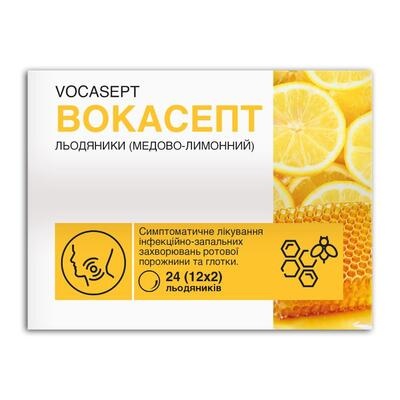
ВОКАСЕПТ ЛЬОДЯНИКИ 1 льодяник у пакетику

Запит на рецепт онлайн
Лікар розгляне ваш випадок і визначить, чи є рецепт медично доцільним.

Поговоріть з лікарем про ці ліки
Обговоріть симптоми та можливі подальші кроки під час короткої онлайн-консультації.



Інструкція із застосування VOKASEPT L'ODANIKI
Зміст інструкції
- ІНСТРУКЦІЯ для медичного застосування лікарського засобу АЛЕРГОДИЛ®(ALLERGODIL®)
- Склад
- Лікарська форма
- Основні фізико-хімічні властивості
- Фармакотерапевтична група
- Фармакологічні властивості
- Клінічні характеристики
- Спосіб застосування та дози
- Передозування
- Побічні реакції
- Термін придатності
- Умови зберігання
- Упаковка
- Категорія відпуску
- Виробник
- Місцезнаходження виробника та його адреса місця провадження діяльності
ІНСТРУКЦІЯ для медичного застосування лікарського засобу АЛЕРГОДИЛ®(ALLERGODIL®)
Склад
діюча речовина: азеластину гідрохлорид; 1 мл розчину містить азеластину гідрохлориду 1 мг; допоміжні речовини: гіпромелоза, динатрію едетат, кислота лимонна безводна, натрію гідрофосфат, додекагідрат, натрію хлорид, вода очищена.
Лікарська форма
Спрей назальний дозований.
Основні фізико-хімічні властивості
Прозорий безбарвний розчин.
Фармакотерапевтична група
Засоби, що застосовуються при захворюваннях порожнини носа. Антиалергічні засоби, за винятком кортикостероїдів. Код АТХ R01A C03.
Фармакологічні властивості
Фармакодинаміка
Азеластину гідрохлорид є антагоністом Н1-рецепторів та як наслідок є антиалергічною речовиною з відносно тривалим періодом напіввиведення (t1/2 @ 20 годин).
Крім того, дані досліджень in vivo на морських свинках показують, що при застосуванні в терапевтичних дозах для людини азеластину гідрохлорид пригнічує бронхіальний спазм, спричинений лейкотрієнами та інгібіторами тромбоцитоактивуючого фактора (PAF).
Завдяки цим властивостям в експериментах на тваринах азеластину гідрохлорид також здатен пригнічувати запалення у дихальних шляхах, спричинене реакціями гіперчутливості. Значення висновків, отриманих у дослідженнях на тваринах, не з’ясовано щодо терапевтичного застосування препарату людині.
Фармакокінетика
Азеластину гідрохлорид швидко і майже повністю абсорбується після перорального застосування і в основному розподіляється у периферичних органах, насамперед у легенях, шкірі, м’язах, печінці та нирках, і лише незначною мірою в головному мозку. Була продемонстрована дозозалежна лінійна кінетика. Азеластину гідрохлорид та його метаболіти виводяться приблизно на 75 % з калом та приблизно на 25 % нирками. Найбільш важливими метаболічними шляхами є гідроксилювання кільця, N-диметиляція та окисне відкриття азепінового кільця.
У хворих на алергічний риніт стійка середня концентрація азеластину гідрохлориду у плазмі крові, що спостерігалася через 2 години після застосування загальної добової дози 0,56 мг азеластину гідрохлориду (1 впорскування у кожну ніздрю 2 рази на добу), становила приблизно 0,65 нг/мл, але це не призвело до клінічно значущих системних побічних ефектів.
Як наслідок дозозалежного лінійного ефекту можна очікувати підвищення середніх плазмових рівнів при збільшенні добової дози.
Клінічні характеристики
Показання
Симптоматичне лікування сезонних алергічних ринітів (сінної лихоманки) та несезонних (цілорічних) алергічних ринітів.
Протипоказання
Підвищена чутливість до активної речовини, етилендіамінтетраоцтової кислоти (EDTA) чи до будь-якого іншого компонента препарату.
Препарат протипоказаний дітям віком до 6 років.
Взаємодія з іншими лікарськими засобами та інші види взаємодій
Дотепер взаємодія з іншими препаратами не виявлена.
Особливості застосування
Відсутні.
Застосування у період вагітності або годування груддю
Клінічні дані щодо застосування азеластину гідрохлориду жінкам у період вагітності або годування груддю відсутні. Дослідження на тваринах високих пероральних доз азеластину призводили до загибелі ембріона, затримки розвитку та вад розвитку скелета.
Тому не рекомендується застосовувати препарат у період вагітності або годування груддю.
Здатність впливати на швидкість реакції при керуванні автотранспортом або іншими механізмами
При застосуванні препарату у поодиноких випадках можуть виникати підвищена втомлюваність, виснаження, втома, запаморочення або слабкість, які також можуть бути спричинені самим захворюванням. У цих випадках швидкість реакцій при керуванні автотранспортом або роботі з іншими механізмами може бути знижена. Спеціальну увагу слід приділити тому факту, що ці симптоми можуть посилюватися при одночасному прийомі алкоголю та інших препаратів, що у свою чергу негативно впливають на швидкість реакції.
Спосіб застосування та дози
Для назального застосування.
Якщо не призначено інакше, спрей впорскувати по 1 дозі у кожну ніздрю 2 рази на добу (вранці та ввечері; відповідає добовій дозі азеластину гідрохлориду 0,56 мг/добу).
При застосуванні спрею голову необхідно тримати прямо.
Тривалість терапії залежить від типу, гостроти, розвитку симптомів та визначається лікарем індивідуально.
Препарат можна застосовувати для тривалої терапії.
Діти
Застосовувати дітям віком від 6 років.
Передозування
Немає досвіду застосування токсичних доз азеластину гідрохлориду людині. У разі передозування або інтоксикації очікуються порушення центральної нервової системи на підставі результатів експериментів на тваринах. Лікування цих розладів має бути симптоматичним. Відомого антидоту немає.
Побічні реакції
Побічні ефекти, що можуть виникнути під час прийому азеластину гідрохлориду, класифіковані за такою частотою: дуже часто (≥ 1/10), часто (≥ 1/100 – < 1/10), нечасто (≥ 1/1000 – <1/100), рідко (≥ 1/10000 – < 1/1000), дуже рідко (< 1/10000), невідомо (не можна визначити за наявними даними).
З боку імунної системи: дуже рідко – реакції гіперчутливості.
З боку нервової системи: часто – дисгевзія (у разі неправильного застосування (голова закинута назад) можуть виникнути прояви гіркого присмаку у роті, що може спричинити нудоту); дуже рідко – запаморочення.
З боку дихальної системи: нечасто – подразнення слизової оболонки носа із запаленням після впорскування (такі як печіння та свербіж), чхання та носова кровотеча.
З боку шлунково-кишкового тракту: рідко – нудота.
Загальні порушення: дуже рідко – підвищена втомлюваність (відчуття втоми та виснаження), запаморочення або слабкість, що також можуть бути спричинені самим захворюванням.
З боку шкіри: дуже рідко – висипання, свербіж, кропив’янка.
Також повідомлялося про появу сонливості, головний біль та сухість у роті у деяких пацієнтів.
Термін придатності
3 роки.
Після відкриття флакона препарат використати протягом 6 місяців.
Умови зберігання
Зберігати при температурі не вище 25 °С. Не охолоджувати. Препарат зберігати у недоступному для дітей місці.
Упаковка
По 10 мл у флаконі з нагвинченим розпилювачем; по 1 флакону в картонній упаковці.
Категорія відпуску
Без рецепта.
Виробник
Мадаус ГмбХ / Madaus GmbH.
Місцезнаходження виробника та його адреса місця провадження діяльності
Люттіхер штрассе 5, 53842 Тройсдорф, Німеччина / Lutticher Strasse 5, 53842 Troisdorf, Germany.

Не впевнені, чи підходить вам цей лікарський засіб?
Обговоріть симптоми та можливі варіанти лікування з лікарем онлайн.

Виникли питання під час прийому ліків?
Обговоріть свої симптоми та лікування з лікарем онлайн.
- Країна реєстрації
- Лікарська формальодяники, по 1 льодянику в конверті
- Код АТХR02AA20
- Діюча речовина
- Потрібен рецептНі
- Виробник
- Ця інформація надана лише для ознайомлення і не є медичною порадою. Рішення щодо лікування завжди приймає лікар.
- Альтернативи до VOKASEPT L'ODANIKIЛікарська форма: льодяники, по 12 льодяників у блістеріДіюча речовина: variousВиробник: Др. Тайсс Натурварен ГмбХРецепт не потрібенЛікарська форма: льодяники, по 12 льодяників у блістеріДіюча речовина: variousВиробник: Др. Тайсс Натурварен ГмбХРецепт не потрібенЛікарська форма: льодяники, по 12 льодяників у блістеріДіюча речовина: variousВиробник: Др. Тайсс Натурварен ГмбХРецепт не потрібен
Аналоги VOKASEPT L'ODANIKI в інших країнах
Препарати з тією самою діючою речовиною, доступні в інших країнах.
Аналог VOKASEPT L'ODANIKI у Італія
Аналог VOKASEPT L'ODANIKI у Іспанія
Аналог VOKASEPT L'ODANIKI у Польща
Лікарі онлайн щодо VOKASEPT L'ODANIKI
Застосування, безпека та можливість призначення рецепта — за результатами медичної оцінки.
Отримайте рецепт на VOKASEPT L'ODANIKI онлайн
Заповніть форму за 2 хвилини
Розкажіть про симптоми, історію хвороби та потрібний препарат.
Оберіть лікаря або ми призначимо
Оберіть спеціаліста або ми підберемо найближчого доступного лікаря.
Лікар розглядає ваш випадок
Зазвичай протягом 30 хвилин. Може ставити уточнювальні запитання в чаті.
Отримайте в будь-якій аптеці
Електронний рецепт надсилається на вашу пошту — дійсний по всій Польщі.
Часті запитання
VOKASEPT L'ODANIKI не потребує рецепта в Україна. Ви можете обговорити з лікарем онлайн, чи підходить цей лікарський засіб для вашої ситуації.
Діюча речовина у VOKASEPT L'ODANIKI — various. Це допомагає визначити препарати з тим самим складом, але під іншими торговими назвами.
VOKASEPT L'ODANIKI виробляється компанією Makson Heltker PVT. LTD.. Назва бренду та упаковка можуть відрізнятися залежно від дистрибʼютора.
Лікарі, зокрема Сімейні лікарі, Психіатри, Дерматологи, Кардіологи, Ендокринологи, Гастроентерологи, Пульмонологи, Нефрологи, Ревматологи, Гематологи, Інфекціоністи, Алергологи, Геріатри, Педіатри, Онкологи, можуть оцінити доцільність застосування VOKASEPT L'ODANIKI з урахуванням вашого стану та місцевих правил. Ви можете записатися на онлайн-консультацію, щоб обговорити симптоми та можливі подальші кроки.
Польща має добре розвинену систему охорони здоров'я у великих містах, таких як Варшава, Краків, Вроцлав і Гданськ. Аптеки широко доступні та працюють відповідно до чинного законодавства, забезпечуючи доступ до рецептурних препаратів.
Ви можете придбати VOKASEPT L'ODANIKI у Варшаві, Кракові, Вроцлаві або Гданську в будь-якій аптеці за наявності дійсного рецепта.
Щоб отримати рецепт, ви можете скористатися Oladoctor:
Інші препарати з тією самою діючою речовиною (various) включають АНГІ СЕПТ ДР. ТАЙСС, АНГІ СЕПТ ДР. ТАЙСС, АНГІ СЕПТ ДР. ТАЙСС. Вони можуть відрізнятися торговою назвою або формою випуску, але містять той самий терапевтичний компонент. Перед зміною або початком прийому нового препарату варто проконсультуватися з лікарем.
