



ZARZIO 30 MU Roztwór do wstrzykiwań

Ocena recepty online
Lekarz przeanalizuje Twój przypadek i zdecyduje, czy wystawienie recepty jest medycznie uzasadnione.

Porozmawiaj z lekarzem o tym leku
Omów swoje objawy i opcje leczenia podczas szybkiej konsultacji online.



Jak stosować TSARTSIO
Treść ulotki
Zarzio 30 MU/0.5 mL injectable solution or infusion in pre-filled syringe, 48 MU/0.5 mL injectable solution or infusion in pre-filled syringe
filgrastim
Read this leaflet carefully before you use this medicine as it contains important information for you.
- Keep this leaflet. You may need to read it again.
- If you have any questions, ask your doctor, pharmacist or nurse.
- This medicine has been prescribed for you only. Do not pass it on to others, even if their symptoms are the same as yours, as it could be harmful.
- If you get any side effects, even those not listed in this leaflet, tell your doctor, pharmacist or nurse. See section 4.
Contents of this leaflet
- 1. What Zarzio is and what it is used for
- 2. What you need to know before you use Zarzio
- 3. How to use Zarzio
- 4. Possible side effects
- 5. How to store Zarzio
- 6. Contents of the pack and other information
1. What is Zarzio and what is it used for
Zarzio is a white blood cell growth factor (granulocyte colony-stimulating factor) and
belongs to a group of proteins called cytokines. Growth factors are proteins normally synthesized
by the body, but which can also be produced using biotechnology and used
as a medicine. Zarzio stimulates the bone marrow to produce a greater number of white blood cells.
The number of white blood cells may decrease (neutropenia) for various reasons, making the body's defenses against infections less effective. Zarzio stimulates the bone marrow to rapidly produce
new white blood cells.
Zarzio can be used:
- to increase the number of white blood cells after chemotherapy and therefore improve the prevention of infections;
- to increase the number of white blood cells after a bone marrow transplant and therefore improve the prevention of infections;
- before high-dose chemotherapy to induce the bone marrow to produce a greater number of stem cells, which can be collected from it and re-administered after treatment. These cells can be collected from you or a donor. The re-infused stem cells arrive in the bone marrow and produce blood cells;
- to increase the number of white blood cells in cases of severe chronic neutropenia and therefore improve the prevention of infections;
- in patients with advanced stage HIV infection to reduce the risk of infections.
2. What you need to know before you use Zarzio
Do not use Zarzio
- if you are allergic to filgrastim or any of the other ingredients of this medicine (listed in section 6).
Warnings and precautions
Talk to your doctor, pharmacist or nurse before using Zarzio.
Tell your doctor before starting treatment if you suffer from:
- osteoporosis (a bone disease);
- sickle cell anemia, because Zarzio may trigger a sickle cell crisis.
Tell your doctor immediately during treatment with Zarzio if:
- you experience pain in the upper left side of your abdomen (abdominal pain), pain to the left under the ribs or at the tip of your left shoulder [these may be symptoms of an enlarged spleen (splenomegaly) or a possible rupture of the spleen].
- you notice unusual bleeding or bruising [these may be symptoms of a decrease in platelets in the blood (thrombocytopenia), with reduced ability of the blood to coagulate].
- you develop sudden signs of allergy such as rash, itching or hives on the skin, swelling of the face, lips, tongue or other parts of the body, shortness of breath, wheezing or difficulty breathing, as these may be signs of a severe allergic reaction (hypersensitivity).
- your face or ankles are swollen, you have blood in your urine or your urine is brown in color, or you notice that you are urinating less than usual (glomerulonephritis).
- you experience symptoms of inflammation of the aorta (the large blood vessel that carries blood from the heart to the rest of the body); this effect has been reported in rare cases in cancer patients and in healthy donors. Symptoms may include fever, abdominal pain, malaise, back pain, and increased markers of inflammation. Tell your doctor if you experience such symptoms.
Loss of response to filgrastim
If you experience a loss of response or inability to maintain the response with filgrastim treatment, your doctor will investigate the reasons, including the possibility that you have developed antibodies that neutralize the activity of filgrastim.
Your doctor may want to monitor you more closely, see section 4 of the package leaflet.
If you are a patient with severe chronic neutropenia, you may be at risk of developing a blood cancer (leukemia, myelodysplastic syndrome [MDS]). Talk to your doctor about the risk of developing blood cancers and the necessary tests. If you develop or are likely to develop blood cancers, you should not use Zarzio unless directed by your doctor.
If you are a stem cell donor, you must be between 16 and 60 years of age.
Pay particular attention to other products that stimulate white blood cells.
Zarzio belongs to a group of medicines that stimulate the production of white blood cells. The healthcare professional must always record the exact name of the medicine being used.
Other medicines and Zarzio
Tell your doctor or pharmacist if you are taking, have recently taken or might take any other medicines.
Pregnancy and breastfeeding
Zarzio has not been studied in pregnant or breastfeeding women.
Zarzio is not recommended during pregnancy.
It is important to tell your doctor if
- you are pregnant or breastfeeding;
- you suspect you may be pregnant; or
- you are planning to become pregnant.
If you become pregnant during treatment with Zarzio, tell your doctor.
Unless your doctor advises otherwise, if you are using Zarzio you should stop breastfeeding.
Driving and using machines
Zarzio may slightly impair your ability to drive or operate machinery. This medicine can cause dizziness. Before driving or operating machinery, it is advisable to wait and see how you feel after receiving Zarzio.
Zarzio contains sorbitol and sodium
Zarzio contains sorbitol (E420).
Sorbitol is a source of fructose. If your doctor has diagnosed you (or your child) with hereditary fructose intolerance, a rare genetic disease, you (or your child) should not take this medicine. Patients with hereditary fructose intolerance are unable to metabolize fructose, the accumulation of which can cause serious side effects.
Before taking this medicine, tell your doctor if you (or your child) suffer from hereditary fructose intolerance or if the child feels unwell, vomits or has unpleasant reactions such as bloating and stomach cramps or diarrhea when consuming sweet foods or drinks.
This medicine contains less than 1 mmol (23 mg) of sodium per dose, that is to say essentially ‘sodium-free’.
3. How to use Zarzio
Use this medicine following the instructions of your doctor exactly. If you have any doubts, consult your
doctor, nurse or pharmacist.
How is Zarzio administered and how much should I use?
Normally, Zarzio is administered via daily injection into the tissue located directly
under the skin (subcutaneous injection). It can also be administered via slow daily injection
into a vein (intravenous infusion). The usual dose depends on the disease you have and
your body weight. Your doctor will tell you what dose of Zarzio you should take.
Patients undergoing bone marrow transplantation after chemotherapy:
Normally you will receive the first dose of Zarzio at least 24 hours after chemotherapy and at least 24 hours
after bone marrow transplantation.
You or the people assisting you can be taught how to perform subcutaneous injections so
that you can continue treatment at home. However, do not attempt anything before you have
received adequate training from the healthcare professional.
For how long should I take Zarzio?
You should take Zarzio until your white blood cell count has returned to normal. At regular intervals
blood tests will be performed to check the number of white blood cells. Your doctor will tell you
how long you should take Zarzio.
Use in children
Zarzio is used for the treatment of children undergoing chemotherapy or suffering from a
severe reduction in white blood cell count (neutropenia). The dose to be used in children
undergoing chemotherapy is identical to that of adults.
If you use more Zarzio than you should
Do not increase the dose that your doctor has provided. If you believe you have injected more Zarzio than you should,
contact your doctor as soon as possible.
If you forget to use Zarzio
If you have missed an injection, or injected too little medicine, contact your doctor as soon as possible.
Do not take a double dose to make up for the missed dose.
If you have any doubts about the use of this medicine, ask your doctor, pharmacist or
nurse.
4. Possible side effects
Like all medicines, this medicine can cause side effects, although not everyone will experience them.
Immediately inform your doctorduring treatment
- if you experience an allergic reaction including weakness, low blood pressure, difficulty breathing, swelling of the face (anaphylaxis), skin rash, skin rash accompanied by itching (urticaria), swelling of the face, lips, mouth, tongue or throat (angioedema) and shortness of breath (dyspnea).
- if you experience cough, fever and difficulty breathing (dyspnea), as this may be a sign of acute respiratory distress syndrome (ARDS).
- if pain appears in the upper left side of the abdomen (abdominal pain), pain to the left under the ribs or pain at the tip of the shoulder, as there may be a problem with the spleen [enlargement of the spleen (splenomegaly) or rupture of the spleen].
- if you are being treated for severe chronic neutropenia and have blood in your urine (hematuria). If you experience this side effect or if you have protein in your urine (proteinuria), your doctor may perform urine tests at regular intervals.
- if you experience any or a combination of the following side effects:
- swelling or edema, which may be associated with less frequent passage of water, difficulty breathing, abdominal swelling and a feeling of fullness, and a general feeling of fatigue. These symptoms usually develop rapidly. These may be symptoms of a condition called "capillary leak syndrome," which causes blood to leak from small blood vessels inside the body and requires urgent medical attention.
- if you experience a combination of any of the following symptoms:
- fever or chills, or intense feeling of cold, rapid heart rate, confusion or disorientation, shortness of breath, severe pain or discomfort, and moist or sweaty skin. These may be symptoms of a condition called "sepsis" (also known as "blood poisoning"), a serious infection with an inflammatory response throughout the body, which can be life-threatening and requires urgent medical attention.
- if you experience kidney damage (glomerulonephritis). Kidney damage has been observed in patients receiving filgrastim. Seek immediate medical attention if you have swelling of the face or ankles, blood in your urine, or brown-colored urine, or if you notice that you urinate less than usual.
A common side effect due to the use of filgrastim is muscle or bone pain (musculoskeletal pain), which can be relieved by taking normal painkillers (analgesics).
In patients undergoing stem cell or bone marrow transplantation, graft-versus-host disease (GvHD) may occur, i.e. a reaction of the donor cells against the patient receiving the transplant; signs and symptoms include a rash on the palms of the hands or soles of the feet and ulcers and lesions in the mouth, intestines, liver, skin or eyes, lungs, vagina and joints. In healthy stem cell donors, a very common increase in white blood cells (leukocytosis) and a decrease in platelets, which reduces the blood's ability to clot (thrombocytopenia) are observed; the doctor will monitor these reactions.
Very common side effects(may affect more than 1 in 10 people)
- decrease in platelets which reduces the blood's ability to clot (thrombocytopenia)
- low red blood cell count (anemia)
- headache
- diarrhea
- vomiting
- nausea
- unusual hair loss or thinning (alopecia)
- fatigue (tiredness)
- lesions and inflammation of the lining of the digestive tract between the mouth and the anus (mucosal inflammation)
- fever (pyrexia)
Common side effects(may affect up to 1 in 10 people)
- lung inflammation (bronchitis)
- upper respiratory tract infection
- urinary tract infection
- loss of appetite
- difficulty sleeping (insomnia)
- dizziness
- decreased sensitivity, especially of the skin (hypoesthesia)
- tingling or numbness in the hands or feet (paresthesia)
- low blood pressure (hypotension)
- high blood pressure (hypertension)
- cough
- coughing up blood (hemoptysis)
- pain in the mouth and throat (oropharyngeal pain)
- nosebleeds (epistaxis)
- constipation
- oral pain
- enlargement of the liver (hepatomegaly)
- skin rash
- skin redness (erythema)
- muscle spasm
- pain when urinating (dysuria)
- chest pain
- pain
- general weakness (asthenia)
- general feeling of discomfort
- swelling of the hands and feet (peripheral edema)
- increase in certain enzymes in the blood
- changes in blood chemistry
- transfusion reaction
Uncommon side effects(may affect up to 1 in 100 people)
- increase in white blood cells (leukocytosis)
- allergic reaction (hypersensitivity)
- rejection of bone marrow transplant (graft-versus-host disease)
- high levels of uric acid in the blood, which can cause gout (hyperuricemia) (increased uric acid in the blood)
- liver damage caused by blockage of the small veins of the liver (veno-occlusive disease)
- insufficient lung function, causing shortness of breath (respiratory failure)
- swelling and/or fluid accumulation in the lungs (pulmonary edema)
- inflammation of the lungs (interstitial pneumopathy)
- abnormalities in the chest X-ray (pulmonary infiltration)
- bleeding from the lung (pulmonary hemorrhage)
- defect in oxygen absorption in the lung (hypoxia)
- skin rash with pustules (maculopapular rash)
- disease that makes bones less dense and therefore weaker, more fragile and prone to fractures (osteoporosis)
- reaction at the injection site
Rare side effects(may affect up to 1 in 1,000):
- severe bone, chest, intestinal or joint pain (sickle cell anemia with crisis)
- sudden allergic reaction that can be life-threatening (anaphylactic reaction)
- pain and swelling in the joints, similar to gout (pseudogout)
- an alteration in the regulation of fluids in the body, which can cause swelling (fluid balance disorders)
- inflammation of the blood vessels of the skin (cutaneous vasculitis)
- painful, violet, raised lesions on the limbs and sometimes on the face and neck, with fever (Sweet syndrome)
- worsening of rheumatoid arthritis
- unusual changes in urine
- reduced bone density
- inflammation of the aorta (the large blood vessel that carries blood from the heart to the rest of the body), see paragraph 2
- formation of blood cells outside the bone marrow (extramedullary hematopoiesis).
Reporting of side effects
If you get any side effects, even those not listed in this leaflet, tell your doctor, pharmacist or nurse. You can also report side effects directly through the national reporting system listed in Annex V. By reporting side effects you can help provide more information on the safety of this medicine.
5. How to store Zarzio
Keep this medicine out of the sight and reach of children.
Do not use this medicine after the expiry date which is stated on the package and on the label of the
syringe after Exp./EXP. The expiry date refers to the last day of that month.
Store in a refrigerator (2 °C - 8 °C).
Keep the prefilled syringe in the outer packaging to protect the medicine from light.
Accidental freezing will not damage Zarzio.
The syringe can be kept out of the refrigerator and left at room temperature for a single time and
for a maximum of 8 days (however, not above 25 °C). At the end of this period, the product must not
be returned to the refrigerator and must be discarded.
Do not use this medicine if you notice changes in colour, a cloudy appearance or the presence of particles;
the medicine must appear as a clear liquid from colourless to pale yellow.
Do not dispose of any medicine in wastewater or household waste. Ask your pharmacist how to
dispose of medicines you no longer use. This will help protect the environment.
6. Contents of the pack and other information
What Zarzio contains
- The active substance is filgrastim. Zarzio 30 MU/0.5 mL solution for injection or infusion in pre-filled syringe: each pre-filled syringe contains 30 MU of filgrastim in 0.5 mL, corresponding to 60 MU/mL. Zarzio 48 MU/0.5 mL solution for injection or infusion in pre-filled syringe: each pre-filled syringe contains 48 MU of filgrastim in 0.5 mL, corresponding to 96 MU/mL.
- The other ingredients are glutamic acid, sorbitol (E420), polysorbate 80, sodium hydroxide and water for injections. See section 2 “Zarzio contains sorbitol and sodium”.
Description of Zarzio and contents of the pack
Zarzio is a clear, colourless to pale yellow solution for injection or infusion in a pre-filled
syringe.
Zarzio is available in packs containing 1, 3, 5 or 10 pre-filled syringes with an injection needle and
a safety device for the needle.
Not all pack sizes may be marketed.
Marketing Authorisation Holder
Sandoz GmbH
Biochemiestr. 10
6250 Kundl
Austria
Manufacturer
Sandoz GmbH
Biochemiestr. 10
6336 Langkampfen
Austria
Novartis Pharmaceutical Manufacturing GmbH
Biochemiestrasse 10
6336 Langkampfen
Austria
For further information on this medicinal product, please contact the local representative of the Marketing
Authorisation Holder:
België/Belgique/Belgien
Sandoz nv/sa
Tél/Tel: +32 2 722 97 97
Lietuva
Sandoz Pharmaceuticals d.d filialas
Tel: +370 5 2636 037
България
Сандоз България КЧТ
Тел.: +359 2 970 47 47
Luxembourg/Luxemburg
Sandoz nv/sa
Tél/Tel.: +32 2 722 97 97
Magyarország
Sandoz Hungária Kft.
Tel.: +36 1 430 2890
Danmark/Norge/Ísland/Sverige
Sandoz A/S
Tlf: +45 63 95 10 00
Česká republika
Sandoz s.r.o.
Tel: +420 225 775 111
Malta
Sandoz Pharmaceuticals d.d.
Tel: +35699644126
Deutschland
Hexal AG
Tel: +49 8024 908 0
Nederland
Sandoz B.V.
Tel: +31 36 52 41 600
Eesti
Sandoz d.d. Eesti filiaal
Tel: +372 665 2400
Österreich
Sandoz GmbH
Tel: +43 5338 2000
Polska
Sandoz Polska Sp. z o.o.
Tel.: +48 22 209 70 00
España
Sandoz Farmacéutica, S.A.
Tel: +34 900 456 856
Ελλάδα
SANDOZ HELLAS ΜΟΝΟΠΡΟΣΩΠΗ Α.Ε.
Τηλ: +30 216 600 5000
Portugal
Sandoz Farmacêutica Lda.
Tel: +351 21 000 86 00
France
Sandoz SAS
Tél: +33 1 49 64 48 00
România
Sandoz Pharmaceuticals SRL
Tel: +40 21 407 51 60
Hrvatska
Sandoz d.o.o.
Tel: +385 1 23 53 111
Slovenija
Sandoz farmacevtska družba d.d.
Tel: +386 1 580 29 02
Ireland
Rowex Ltd.
Tel: + 353 27 50077
Slovenská republika
Sandoz d.d. - organizačná zložka
Tel: +421 2 48 20 0600
Italia
Sandoz S.p.A.
Tel: +39 02 96541
Suomi/Finland
Sandoz A/S
Puh/Tel: +358 10 6133 400
Κύπρος
SANDOZ HELLAS ΜΟΝΟΠΡΟΣΩΠΗ Α.Ε.
Τηλ: +30 216 600 5000
United Kingdom (Northern Ireland)
Sandoz GmbH
Tel: +43 5338 2000
Latvija
Sandoz d.d. Latvia filiāle
Tel: +371 67 892 006
More detailed information on this medicinal product is available on the website of the European
Medicines Agency, http://www.ema.europa.eu.
------------------------------------------------------------------------------------------------------------------------
Instructions for self-injection
This section contains information on how to self-inject Zarzio. It is important that you do not attempt
to self-inject the medicine before being specifically trained by your doctor or
nurse.Zarzio is supplied with a safety device for the needle: your doctor or nurse will
show you how to use it. If you have any doubts or questions about self-injection, ask your doctor or
nurse.
Caution: do not use if the syringe has fallen onto a hard surface or has fallen after removing the
needle cap.
- 1. Wash your hands.
- 2. Take a syringe from the pack and remove the protective cap from the injection needle. The syringes have a graduated scale printed on them, allowing you to use only part of the contents, if necessary. Each mark corresponds to a volume of 0.1 mL. If a partial use of the syringe is required, discard the unnecessary solution before performing the injection.
- 3. Disinfect the skin at the injection site with a cotton ball soaked in alcohol.
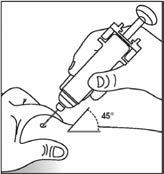
- 4. Pinch the skin between your thumb and index finger.
- 5. With a quick, firm movement, insert the needle into the skin pinch. Inject the Zarzio solution as shown by your doctor. If you have any doubts, consult your doctor or pharmacist.
- 6. Keeping the skin pinch between your fingers, press the plunger slowly and evenly until the entire dose is released and until the plunger can no longer be pressed. Do not release pressure on the plunger!
- 7. After injecting the liquid, withdraw the needle while maintaining pressure on the plunger and then release the skin.
- 8. Release the plunger. The safety device will quickly cover the needle.
- 9. Dispose of any remaining product or waste. Each syringe must be used for a single injection.
-------------------------------------------------------------------------------------------------------------------------
The following information is intended for healthcare professionals only:
The solution must be visually inspected before use. Only clear and particle-free solutions must be used.
Accidental exposure to freezing temperatures has no adverse effects on the stability of Zarzio.
Zarzio does not contain preservatives: due to the risk of bacterial contamination, Zarzio syringes
are for single use only.
Dilution before administration (optional)
If necessary, Zarzio can be diluted in 50 mg/mL (5%) glucose solution. Zarzio must not
be diluted with sodium chloride solutions.
Dilution to final concentrations < 0.2 MU/mL (2 micrograms/mL) is not recommended.
In patients treated with filgrastim diluted to concentrations < 1.5 MU/mL (15 micrograms/mL), human
serum albumin (HSA) must be added to a final concentration of 2 mg/mL.
Example: for a final volume of 20 mL, total doses of filgrastim less than
30 MU (300 micrograms) must be added with 0.2 mL of human serum albumin solution Ph. Eur 200 mg/mL (20%).
Diluted with 50 mg/mL (5%) glucose solution, filgrastim is compatible with glass and with various
plastic materials such as polyvinyl chloride, polyolefin (a copolymer of polypropylene and polyethylene) and
polypropylene.
After dilution: the chemical and physical stability in-useof the diluted infusion solution has been
demonstrated for 24 hours at a temperature between 2 °C - 8 °C. From a microbiological point of view, the
product must be used immediately. If the medicinal product is not used immediately,
the user is responsible for the duration and conditions of storage before use; the medicinal
product may be stored for a maximum of 24 hours at a temperature between 2 °C - 8 °C, unless the
dilution has been carried out under controlled and validated aseptic conditions.
Use of the pre-filled syringe with safety needle device
The safety needle device covers the needle after injection and prevents the operator from injuring themselves.
The device does not interfere with the normal use of the syringe. Press the plunger slowly and
evenly until the entire dose is released and until the plunger can no longer be
pressed. Remove the syringe from the patient while continuing to press the plunger. The
safety device covers the needle as soon as the plunger is released.
Disposal
Unused medicinal product and waste material derived from such medicinal product must be disposed of in
accordance with local regulations.

Nie jesteś pewien, czy ten lek jest odpowiedni dla ciebie?
Omów swoje objawy i leczenie z lekarzem online.

Zacząłeś przyjmować lek i masz pytania?
Omów swoje objawy i leczenie z lekarzem online.
- Kraj rejestracji
- Postać farmaceutycznaInjectable solution, 30MU
- Kod ATCL03AA02
- Substancja czynna
- Wymaga receptyTak
- Producent
- Te treści mają charakter wyłącznie informacyjny i nie zastępują konsultacji lekarskiej.
- Zamienniki TSARTSIOPostać farmaceutyczna: Injectable solution, 30 MU/0.5 MLSubstancja czynna: filgrastimProducent: ACCORD HEALTHCARE, S.L.U.Wymaga receptyPostać farmaceutyczna: Solution, 30 MU (0,3 MG/ML)Substancja czynna: filgrastimProducent: AMGEN EUROPE B.V.Wymaga receptyPostać farmaceutyczna: Injectable solution, 12 MUSubstancja czynna: filgrastimProducent: PFIZER EUROPE MA EEIGWymaga recepty
Odpowiedniki TSARTSIO w innych krajach
Leki z tą samą substancją czynną dostępne w innych krajach.
Odpowiednik TSARTSIO w Hiszpania
Odpowiednik TSARTSIO w Polska
Odpowiednik TSARTSIO w Ukraina
Uzyskaj receptę na TSARTSIO online
Wypełnij 2-minutowy formularz
Opisz swoje objawy, historię choroby i lek, o który prosisz.
Wybierz lekarza lub pozwól nam przydzielić
Wybierz specjalistę lub dopasujemy Cię do najbliższego dostępnego lekarza.
Lekarz analizuje Twój przypadek
Zazwyczaj w ciągu 30 minut. Może zadawać dodatkowe pytania przez czat.
Odbierz w dowolnej aptece
Recepta elektroniczna wysłana na Twój e-mail — ważna w całej Polsce.
Często zadawane pytania
TSARTSIO wymaga recepty w Włochy. Możesz skonsultować się z lekarzem online, aby sprawdzić, czy ten lek może być odpowiedni w Twojej sytuacji.
Substancją czynną w TSARTSIO jest filgrastim. Informacja ta pomaga rozpoznać leki o tym samym składzie, ale pod różnymi nazwami handlowymi.
TSARTSIO jest produkowany przez SANDOZ GMBH. Nazwy handlowe i opakowania mogą się różnić w zależności od dystrybutora.
Lekarze, tacy jak Lekarze rodzinni, Psychiatrzy, Dermatolodzy, Kardiolodzy, Endokrynolodzy, Gastroenterolodzy, Pulmonolodzy, Nefrolodzy, Reumatolodzy, Hematolodzy, Zakaźnicy, Alergolodzy, Geriatrzy, Pediatrzy, Onkolodzy, mogą ocenić, czy stosowanie TSARTSIO jest odpowiednie w Twoim przypadku, w zależności od sytuacji klinicznej i lokalnych przepisów. Możesz umówić konsultację online, aby omówić objawy i możliwe dalsze kroki.
Polska posiada dobrze rozwiniętą infrastrukturę ochrony zdrowia w dużych miastach, takich jak Warszawa, Kraków, Wrocław i Gdańsk. Apteki są łatwo dostępne i działają zgodnie z obowiązującymi przepisami, zapewniając dostęp do leków na receptę.
Możesz kupić TSARTSIO w Warszawie, Krakowie, Wrocławiu lub Gdańsku w każdej aptece, posiadając ważną receptę.
Aby uzyskać receptę, możesz skorzystać z Oladoctor:
Inne leki zawierające tę samą substancję czynną (filgrastim) to m.in. AKKOFIL, GRANULOKINE, NIVESTIM. Mogą one różnić się nazwą handlową lub postacią, ale zawierają ten sam składnik terapeutyczny. Przed zmianą lub rozpoczęciem nowego leku skonsultuj się z lekarzem.
