



YERVOY 5 mg /Ml Koncentrat Do Sporządzania Roztworu Do Infuzji

Ocena recepty online
Lekarz przeanalizuje Twój przypadek i zdecyduje, czy wystawienie recepty jest medycznie uzasadnione.

Porozmawiaj z lekarzem o tym leku
Omów swoje objawy i opcje leczenia podczas szybkiej konsultacji online.



Jak stosować YERVOY
Treść ulotki
YERVOY 5 mg/mL concentrate for solution for infusion
ipilimumab
Read this leaflet carefully before you use this medicine because it contains important
information for you.
- Keep this leaflet. You may need to read it again.
- If you have any questions, ask your doctor.
- If any side effects occur, including those not listed in this leaflet, tell your doctor. See section 4.
Contents of this leaflet
- 1. What YERVOY is and what it is used for
- 2. What you need to know before you use YERVOY
- 3. How to use YERVOY
- 4. Possible side effects
- 5. How to store YERVOY
- 6. Contents of the pack and other information
1. What is YERVOY and what is it used for
YERVOY contains the active substance ipilimumab, a protein that helps the immune system to
attack and destroy cancer cells through the action of immune cells.
Ipilimumab alone is used for the treatment of advanced melanoma (a type of skin cancer) in adults and adolescents aged 12 years and older.
Ipilimumab in combination with nivolumab is used for the treatment of
- advanced melanoma (a type of skin cancer) in adults and adolescents aged 12 years and older
- advanced renal cell carcinoma (advanced kidney cancer) in adults
- malignant pleural mesothelioma (a type of cancer that affects the lining of the lung) in adults
- advanced colorectal carcinoma (cancer of the colon or rectum) in adults
- advanced esophageal carcinoma (cancer of the esophagus) in adults
- unresectable or advanced hepatocellular carcinoma (liver cancer) in adults.
Ipilimumab in combination with nivolumab and chemotherapy is used for the treatment of advanced non-small cell lung cancer (a type of lung cancer) in adults.
Because YERVOY may be given in combination with other anti-cancer medicines, please refer to your doctor for these medicines.
2. Cosa deve sapere prima di usare YERVOY
Non deve esserle somministrato YERVOY
- se è allergicoad ipilimumab o ad uno qualsiasi degli altri componenti di questo medicinale (elencati al paragrafo 6 "Contenuto della confezione e altre informazioni"). Se non è sicuro, neparli con il medico.
Avvertenze e precauzioni
Si rivolga al medico prima di usare YERVOY poiché può causare:
- Problemi al cuoresuch as changes in rhythm or heart rate, or irregular heartbeat.
- Infiammazione dell'intestino (colite)which can worsen to bleeding or perforation of the intestine. Signs and symptoms of colitis may include diarrhea (watery, liquid or loose stools), an increased number of bowel movements compared to usual, blood in the stool or darker-colored stools, pain or tenderness in the stomach area.
- Problemi ai polmonisuch as difficulty breathing or cough. These may be signs of inflammation of the lungs (pneumonitis or interstitial lung disease).
- Infiammazione del fegato (epatite)which can lead to liver failure. Signs and symptoms of hepatitis may include yellowing of the eyes or skin (jaundice), pain in the upper right side of the stomach area, fatigue.
- Infiammazione della pellewhich can lead to a severe skin reaction (known as toxic epidermal necrolysis, Stevens-Johnson syndrome, and drug reaction with eosinophilia and systemic symptoms (DRESS)). Signs and symptoms of a severe skin reaction may include rash with or without itching, skin peeling, dry skin, fever, fatigue, swelling of the face or lymph nodes, increased eosinophils (a type of white blood cells), and effects on the liver, kidneys, or lungs. Please note that the reaction called DRESS can develop weeks or months after your last dose.
- Infiammazione dei nerviwhich can lead to paralysis. Symptoms of nerve problems may include muscle weakness, numbness or tingling in the hands or feet, loss of consciousness, or difficulty waking up.
- Infiammazione o problemi ai reni.Signs and symptoms may include changes in kidney function tests or reduced urine output.
- Infiammazione delle ghiandole che producono gli ormoni(especially pituitary, adrenal, and thyroid glands) which can affect how these glands work. Signs and symptoms that the glands are not working properly may include headache, double or blurred vision, fatigue, reduced sexual drive, changes in behavior.
- Diabete di tipo 1, inclusa chetoacidosi diabetica(acid in the blood caused by diabetes).
- Infiammazione dei muscolisuch as myocarditis (inflammation of the heart muscle), myositis (inflammation of the muscles), and rhabdomyolysis (stiffness in the muscles and joints, muscle spasm). Signs and symptoms may include muscle pain, stiffness, weakness, chest pain, or severe fatigue.
- Infiammazione oculare.Signs and symptoms may include redness of the eyes, eye pain, changes in vision, blurred vision, or temporary vision loss.
- Linfoistiocitosi emofagocitica.A rare disease in which the immune system produces an excessive amount of cells that fight infections, called histiocytes and lymphocytes. Symptoms may include: enlargement of the liver and/or spleen, rash, swollen lymph nodes, breathing problems, easy bruising, kidney problems, and heart problems.
- Rigetto del trapianto di organo.
Informi immediatamente il medicoif you have any of these signs or symptoms or if they
worsen. Do not try to treat these symptoms with other medicines.The doctor may prescribe
other medicines to prevent more serious complications and reduce your symptoms, may suspend the next
dose of YERVOY or may stop treatment with YERVOY altogether.
Please note that these signs and symptoms are sometimes delayedand may develop weeks or
months after the last administration. Before treatment, the doctor will check your overall health
status. During treatment you will also have to undergo blood tests.
Prima che le sia somministrato YERVOY, verifichi con il medico o l'infermiere
- se è affetto da una malattia autoimmune(a condition in which the body attacks its own cells);
- se ha, o ha avuto in precedenza, un'infezione virale cronica del fegato, including hepatitis B (HBV) or hepatitis C (HCV);
- se ha un'infezione da virus dell'immunodeficienza umana(HIV) or acquired immunodeficiency syndrome (AIDS).
- se ha previously reported a severe skin reaction during a previous cancer therapy.
- se ha avuto in passato un'infiammazione dei polmoni
Bambini ed adolescenti
YERVOY should not be given to children and adolescents under the age of 18 years
except for adolescents aged 12 years or older with melanoma.
Altri medicinali e YERVOY
Prima che le sia somministrato YERVOY, informi il medico
- se sta assumendo qualsiasi medicinale che sopprime il sistema immunitario, such as corticosteroids. These medicines may interfere with the effect of YERVOY. However, once you have been treated with YERVOY, your doctor may prescribe corticosteroids to reduce the side effects you may have with YERVOY.
- se sta assumendo qualsiasi medicinale che blocca la coagulazione del sangue (anticoagulants). These medicines may increase the risk of bleeding in the stomach or intestine, which is a side effect of YERVOY.
- se le è stato prescritto di recente Zelboraf (vemurafenib, another medicine for the treatment of skin cancer). When YERVOY is given after a previous administration of vemurafenib there may be an increased risk of skin side effects.
Informi inoltre il medico se sta assumendo o ha recentemente assunto qualsiasi altro medicinale.
Non prenda nessun altro medicinaleduring treatment without first talking to your doctor.
Based on preliminary data, the concomitant administration of YERVOY (ipilimumab) and
vemurafenib is not recommended due to increased liver toxicity.
Gravidanza e allattamento
Informi il medicoif you are pregnant, planning to become pregnant, or breastfeeding
with breast milk.
Non deve utilizzare YERVOY se è in corso una gravidanzaunless your doctor specifically recommends it.
The effects of YERVOY in pregnant women are unknown, but the active ingredient ipilimumab may
harm the unborn child.
- If you are a woman of childbearing potential, you should use an effective contraceptive methodduring treatment with YERVOY.
- If you become pregnant during treatment with YERVOY, inform your doctor.
It is not known whether ipilimumab passes into breast milk. However, significant exposure to
ipilimumab of the infant through breast milk is not expected and it is believed that there are no effects on
breastfed infants. Ask your doctor if you can breastfeed during or after
treatment with YERVOY.
Guida di veicoli e utilizzo di macchinari
Non guidi, non vada in bicicletta e non utilizzi macchinariafter the administration of YERVOY
if you are not sure you feel well. Feeling tired or weak is a very common side effect
of YERVOY. This may affect your ability to drive vehicles, ride a bicycle or
use machinery.
YERVOY contiene sodio
If you are following a low-sodium diet (a diet low in salt), inform your doctorbefore
administration of YERVOY.
This medicine contains 23 mg of sodium (the main component of table salt) per
10 mL vial. This is equivalent to 1.15% of the recommended daily intake
of salt with the diet of an adult.
This medicine contains 92 mg of sodium (the main component of table salt) per
40 mL vial. This is equivalent to 4.60% of the recommended daily intake with
the diet of an adult.
3. How to use YERVOY
How YERVOY is given
YERVOY will be given in a hospital or clinic, under the supervision of an experienced doctor.
When YERVOY is given alone for the treatment of skin cancer, YERVOY will be
given by infusion (a slow injection into a vein - intravenously) over 30 minutes.
When YERVOY is given in combination with nivolumab, for the treatment of skin cancer, you will
receive an infusion lasting 30 minutes every 3 weeks for the first 4 doses (combination phase).
Afterwards, nivolumab will be given by infusion lasting 30 or 60 minutes every 2 weeks or every 4
weeks, depending on the dose you are receiving (monotherapy phase).
When YERVOY is given in combination with nivolumab, for the treatment of advanced kidney
cancer, you will receive an infusion lasting 30 minutes every 3 weeks for the first 4 doses (combination
phase). Afterwards, nivolumab will be given by infusion lasting 30 or 60 minutes every 2 weeks or
every 4 weeks, depending on the dose you are receiving (monotherapy phase).
When YERVOY is given in combination with nivolumab, for the treatment of advanced colon or
rectal cancer in adults, you will receive an infusion lasting 30 minutes every 3 weeks for the first 4
doses (combination phase). Afterwards, nivolumab will be given by infusion lasting 30 minutes every
2 or 4 weeks, depending on the dose you are receiving (monotherapy phase).
When YERVOY is given in combination with nivolumab for the treatment of malignant pleural
mesothelioma or advanced esophageal cancer, you will receive an infusion lasting 30 minutes every
6 weeks.
When YERVOY is given in combination with nivolumab for the treatment of unresectable or
advanced liver cancer, you will receive an infusion lasting 30 minutes every 3 weeks for a maximum
of 4 doses (combination phase), depending on the treatment.
Afterwards, nivolumab will be given by infusion lasting 30 minutes every 2 or 4 weeks, depending on
the dose you are receiving (monotherapy phase).
When YERVOY is given in combination with nivolumab and chemotherapy for the treatment of
advanced non-small cell lung cancer, you will receive an infusion lasting 30 minutes every 6 weeks.
After completion of 2 cycles of chemotherapy, ipilimumab will be given in combination with nivolumab
by infusion lasting 30 minutes every 6 weeks.
How much YERVOY is given
When YERVOY is given alone for the treatment of skin cancer, the recommended dose is 3 mg of
ipilimumab per kilogram of body weight.
The amount of YERVOY to be given will be calculated based on your body weight. Depending on the
dose, before administration, the contents of the YERVOY vial may be diluted wholly or partially with
a sodium chloride 9 mg/mL (0.9%) injectable solution or a glucose 50 mg/mL (5%) injectable
solution. More than one vial may be needed to obtain the required dose.
Treatment with YERVOY will be given once every 3 weeks, for a total of 4 doses.
You may notice the appearance of new lesions or the growth of existing lesions on your skin, which
may be expected while you are being treated with YERVOY. Your doctor will continue to give you
YERVOY for a total of 4 doses, according to your tolerance to treatment.
When YERVOY is given in combination with nivolumab for the treatment of skin cancer in adults
and adolescents aged 12 years and older, the recommended dose of YERVOY is 3 mg of
ipilimumab per kilogram of body weight, every 3 weeks for the first 4 doses (combination phase).
Afterwards, the recommended dose of nivolumab (monotherapy phase) is 240 mg given every 2 weeks
or 480 mg given every 4 weeks in adults and adolescents aged 12 years and older and weighing at
least 50 kg, or 3 mg of nivolumab per kilogram of body weight given every 2 weeks or 6 mg of
nivolumab per kilogram of body weight given every 4 weeks for adolescents aged 12 years and older
and weighing less than 50 kg.
When YERVOY is given in combination with nivolumab for the treatment of advanced kidney
cancer, the recommended dose of YERVOY is 1 mg of ipilimumab per kilogram of body weight,
every 3 weeks for the first 4 doses (combination phase). Afterwards, the recommended dose of
nivolumab is 240 mg given every 2 weeks or 480 mg given every 4 weeks (monotherapy phase).
When YERVOY is given in combination with nivolumab for the treatment of advanced colon or
rectal cancer, the recommended dose of YERVOY is 1 mg of ipilimumab per kilogram of body
weight, every 3 weeks for the first 4 doses (combination phase).
Afterwards, the recommended dose of nivolumab is 240 mg given every 2 weeks or 480 mg every 4
weeks (monotherapy phase) depending on the treatment.
When YERVOY is given in combination with nivolumab for the treatment of malignant pleural
mesothelioma or advanced esophageal cancer, the recommended dose of YERVOY is 1 mg of
ipilimumab per kilogram of body weight every 6 weeks.
When YERVOY is given in combination with nivolumab for the treatment of unresectable or
advanced liver cancer, the recommended dose of YERVOY is 3 mg of ipilimumab per kilogram of
body weight for a maximum of 4 doses (combination phase) depending on the treatment. Afterwards,
the recommended dose of nivolumab is 240 mg every 2 weeks or 480 mg every 4 weeks
(monotherapy phase) depending on the treatment.
When YERVOY is given in combination with nivolumab and chemotherapy for the treatment of
advanced non-small cell lung cancer, the recommended dose of YERVOY is 1 mg of ipilimumab
per kilogram of body weight. You will receive an infusion lasting 30 minutes, every 6 weeks.
If you miss a YERVOY dose
It is very important that you keep all your appointments for YERVOY administration. If you miss an
appointment, ask your doctor when to schedule the next administration.
If you stop taking YERVOY
Stopping treatment may interrupt the effect of the medicine. Do not stop taking YERVOY before
talking to your doctor.
If you have any doubts about the treatment or use of this medicine, ask your doctor.
When YERVOY is given in combination with nivolumab or in combination with nivolumab and
chemotherapy, nivolumab must be given first, followed by YERVOY and then the chemotherapy.
these other medicines. If you have concerns about these medicines, ask your doctor.
4. Possible side effects
Like all medicines, this medicine can cause side effects, although not everybody gets them.
Your doctor will discuss these side effects with you and explain the risks and benefits of
treatment.
Be aware of important symptoms of inflammation
YERVOY acts on the immune system and can cause inflammationin some parts
of the body.
Inflammation can cause serious damage to the body and some inflammatory conditions can
be life-threatening.
The following side effects have been reported in patients who received 3 mg/kg of ipilimumab alone:
Very common (may affect more than 1 in 10 people)
- loss of appetite
- diarrhea (watery, loose or soft stools), vomiting or feeling sick (nausea), constipation, stomach pain
- skin rash, itching
- muscle pain, bone pain, ligament pain, tendon pain and nerve pain
- feeling tired or weak, reactions at the injection site, fever, edema (swelling), pain Tell your doctor immediatelyif any of these side effects occur. Do not try to treat these symptoms with other medicines.
Common (may affect up to 1 in 10 people)
- serious bacterial blood infection (sepsis), urinary tract infection, respiratory tract infection
- pain at the tumor site
- decreased number of red blood cells (that carry oxygen), white blood cells (important for fighting infections) or platelets (cells that help the blood to clot)
- underactive thyroid gland which can cause tiredness or weight gain, underactive pituitary gland (hypopituitarism) or inflammation (hypophysitis) of the pituitary gland located at the base of the brain
- dehydration
- confusion, depression
- excess fluid accumulation in the brain, nerve damage (causing pain, weakness and cramps), dizziness, headache
- blurred vision, eye pain
- irregular or abnormal heartbeat
- low blood pressure, temporary flushing of the face and neck, feeling of warmth with sweating and a fast heartbeat
- shortness of breath (dyspnea), cough, hay fever
- bleeding from the stomach or intestines, inflammation of the intestines (colitis), burning sensation in the stomach, mouth ulcers and cold sores (stomatitis)
- abnormal liver function
- inflammation of the inner lining of a particular organ
- skin inflammation and redness, changes in skin color with patches (vitiligo), hives (itchy rash with welts), hair loss or thinning, excessive night sweats, dry skin
- muscle and joint pain (arthralgia), muscle spasms, inflammation of the joints (arthritis)
- kidney failure
- tremor, lack of energy
- flu-like illness
- weight loss Tell your doctor immediatelyif any of these side effects occur. Do not try to treat these symptoms with other medicines.
Uncommon (may affect up to 1 in 100 people)
- serious bacterial blood infection (septic shock), inflammation around the brain or spinal cord, inflammation of the stomach and intestines, inflammation of the intestinal wall (causing fever, vomiting and stomach pain), lung infection (pneumonia)
- a group of symptoms caused by the presence of cancer in the body such as high levels of calcium and cholesterol in the blood, and low levels of sugar in the blood (paraneoplastic syndrome)
- increased eosinophils (a type of white blood cell)
- allergic reaction
- decreased secretion of hormones produced by the adrenal glands (located above the kidneys), overactive thyroid gland which can cause a faster heart rate, sweating and weight loss, deficiency of the glands that produce sex hormones
- reduced function of the adrenal glands caused by underactivity of the hypothalamus (part of the brain)
- a group of metabolic complications that occur after cancer treatment characterized by high levels of potassium and phosphate in the blood, and low levels of calcium (tumor lysis syndrome)
- changes in mental health, reduced sex drive
- severe and potentially life-threatening inflammation of the nerves causing pain, weakness or paralysis of the limbs (Guillain-Barré syndrome), fainting, inflammation of the cranial nerves, difficulty coordinating movements (ataxia), tremor, brief involuntary muscle contractions, difficulty speaking
- inflammation of the eye (conjunctivitis), eye bleeding, inflammation of the colored part of the eye, reduced vision, feeling of something in the eyes, swollen and watery eyes, eye swelling, inflammation of the eyelids
- inflammation of blood vessels, blood vessel disease, reduced blood supply to the limbs, decreased blood pressure when standing up
- extreme difficulty breathing, fluid accumulation in the lungs, inflammation of the lungs
- intestinal perforation, inflammation of the small intestine, inflammation of the intestine or pancreas (pancreatitis), peptic ulcer, inflammation of the esophagus, bowel obstruction, inflammation of the anus and the wall of the rectum (characterized by blood in the stool and frequent urge to defecate)
- liver failure, inflammation of the liver, enlarged liver, yellowing of the skin or eyes (jaundice)
- severe and potentially life-threatening skin peeling (toxic epidermal necrolysis)
- inflammation of the muscle causing pain or stiffness in the hip and shoulder
- inflammation of the kidney or central nervous system
- multiorgan inflammation
- inflammation of skeletal muscles
- muscle weakness
- kidney disease
- absence of menstrual periods
- multiple organ dysfunction, infusion-related reaction
- changes in hair color
- inflammation of the bladder, the signs and symptoms can include frequent and/or painful urination, urge to urinate, blood in the urine, pain or pressure in the lower abdomen Tell your doctor immediatelyif any of these side effects occur. Do not try to treat these symptoms with other medicines.
Rare (may affect up to 1 in 1,000 people)
- inflammatory disease of the blood vessels (most commonly of the arteries in the head)
- swelling of the thyroid gland (thyroiditis)
- skin disease characterized by dry, red patches covered with scales (psoriasis)
- inflammation and redness of the skin (erythema multiforme)
- a type of severe skin reaction characterized by a rash accompanied by one or more of the following features: fever, swelling of the face or lymph nodes, increased eosinophils (a type of white blood cell), effects on liver, kidneys or lungs (a reaction called DRESS).
- an inflammatory disorder (most commonly autoimmune) that affects the eyes, skin and membranes of the ears, brain and spinal cord (Vogt-Koyanagi-Harada syndrome), detachment of the membrane at the back of the eye (exudative retinal detachment)
- symptoms of type 1 diabetes or diabetic ketoacidosis including increased hunger or thirst, needing to urinate more often, weight loss, feeling tired, feeling sick, stomach pain, fast, deep breathing, confusion, unusual drowsiness, breath that has a sweet, fruity or metallic smell, or a different smell to your urine or sweat
- muscle weakness and fatigue without atrophy (myasthenia gravis)
- lack or reduction of digestive enzymes produced by the pancreas (pancreatic exocrine insufficiency)
- celiac disease (characterized by symptoms such as stomach pain, diarrhea and bloating after consuming foods containing gluten) Tell your doctor immediatelyif any of these side effects occur. Do not try to treat these symptoms with other medicines.
Very rare (may affect up to 1 in 10,000 people)
- severe allergic reaction, which can potentially be life-threatening Tell your doctor immediatelyif any of these side effects occur. Do not try to treat these symptoms with other medicines.
In addition, the following side effects uncommon (may affect up to 1 in 100 people) have
been reported in patients who received doses of YERVOY different from 3 mg/kg during clinical
trials:
- triad of symptoms (meningism): stiff neck, intolerance to bright light and headache, flu-like illness
- inflammation of the heart muscle, weakness of the heart muscle, fluid around the heart
- inflammation of the liver or pancreas, nodules of inflammatory cells in various organs of the body
- infection inside the abdomen
- painful skin lesions on the arms and legs and face (erythema nodosum)
- overactivity of the pituitary gland
- reduced function of the parathyroid glands
- inflammation of the eyes, inflammation of the eye muscle
- decreased hearing
- poor circulation of blood that makes the toes and fingers numb or pale Tell your doctor immediatelyif any of these side effects occur. Do not try to treat these symptoms with other medicines.
Other side effects that have been reported with unknown frequency (frequency cannot
be estimated based on available data):
- organ transplant rejection
- a type of disease characterized by blisters on the skin (called pemphigoid)
- a condition in which the immune system produces an excessive amount of cells that fight infections called histiocytes and lymphocytes which can cause various symptoms (called hemophagocytic lymphohistiocytosis). Symptoms can include: enlargement of the liver and/or spleen, rash, swollen lymph nodes, breathing problems, easy bruising, kidney problems, and heart problems.
- pain, numbness, tingling or weakness in the arms or legs; bladder or bowel problems, including needing to urinate more often, urinary incontinence, difficulty urinating and constipation (myelitis) Tell your doctor immediatelyif any of these side effects occur. Do not try to treat these symptoms with other medicines.
Changes in test results
YERVOY can cause changes in the results of tests performed by your doctor, such as:
- a change in the number of red blood cells (that carry oxygen), white blood cells (important for fighting infections) or platelets (cells that help the blood to clot)
- an abnormal change in hormones and liver enzyme levels in the blood
- abnormal liver function tests
- abnormal levels of calcium, sodium, phosphate or potassium in the blood
- presence of blood or protein in the urine
- an abnormal increase in the alkalinity of the blood and other body tissues
- kidneys that are unable to normally remove acids from the blood
- presence of antibodies against some of your own cells in the blood
The following side effects have been reported with ipilimumab in combination with other anticancer medicines
(the frequency and severity of side effects may vary with the combination of
cancer medicines received):
Very common (may affect more than 1 in 10 people)
- upper respiratory tract infection
- reduced thyroid function (which can cause tiredness or weight gain)
- decreased number of red blood cells (that carry oxygen), white blood cells (important for fighting infections) or platelets (cells that help the blood to clot)
- loss of appetite, high (hyperglycemia) or low (hypoglycemia) blood sugar levels
- headache
- shortness of breath (dyspnea), cough
- diarrhea (watery, loose or soft stools), vomiting or feeling sick (nausea), stomach pain, constipation
- skin rash sometimes with blisters, itching
- muscle and bone pain (musculoskeletal pain), joint pain (arthralgia)
- feeling tired or weak, fever, edema (swelling) Tell your doctor immediatelyif any of these side effects occur. Do not try to treat these symptoms with other medicines.
Common (may affect up to 1 in 10 people)
- lung infection (pneumonia), bronchitis, eye inflammation (conjunctivitis)
- increased eosinophils (a type of white blood cells)
- allergic reaction, infusion-related reactions
- increased thyroid function (which can cause a faster heart rate, sweating and weight loss), decreased secretion of hormones produced by the adrenal glands (glands located above the kidneys), reduced function (hypopituitarism) or inflammation (hypophysitis) of the pituitary gland located at the base of the brain, swelling of the thyroid gland, diabetes
- dehydration, reduced levels of albumin and phosphate in the blood, decreased body weight
- nerve inflammation (causing numbness, weakness, tingling or burning sensation in the arms and legs), dizziness
- blurred vision, dry eye
- fast heartbeat, changes in heart rate or rhythm, irregular or abnormal heartbeat
- high blood pressure (hypertension)
- lung inflammation (pneumonia characterized by coughing fits and difficulty breathing), fluid around the lungs
- intestinal inflammation (colitis), mouth ulcers and cold sores (stomatitis), inflammation of the pancreas (pancreatitis), dry mouth, inflammation of the stomach (gastritis)
- liver inflammation
- skin discoloration with patches (vitiligo), skin redness, unusual or thinning hair, hives (itchy rash with welts), dry skin
- joint inflammation (arthritis), muscle spasms, muscle weakness
- kidney failure (including a sudden loss of kidney function)
- pain, chest pain, chills Immediately inform your doctorif any of these side effects occur. Do not try to treat these symptoms with other medications.
Uncommon (may affect up to 1 in 100 people)
- reduction of neutrophils with fever
- acid in the blood produced by diabetes (diabetic ketoacidosis)
- increased levels of acid in the blood
- brain inflammation; nerve damage causing numbness and weakness (polyneuropathy); foot drop (paralysis of the peroneal nerve); nerve inflammation caused by the body attacking itself, causing numbness, weakness, tingling or burning sensation (autoimmune neuropathy); muscle weakness and fatigue without atrophy (myasthenia gravis)
- eye inflammation causing pain or redness
- irregular or abnormal heart rhythm, inflammation of the heart muscle, slow heart rate
- inflammation of the duodenum
- skin disease with thickened, red patches of skin, often with silvery scales (psoriasis), severe skin condition causing red spots, often itchy, similar to a measles rash, starting on the limbs and sometimes on the face and the rest of the body (erythema multiforme), severe and potentially fatal skin peeling (Stevens-Johnson syndrome), changes in any area of the skin and/or genital area associated with dryness, thinning, itching and pain (other types of lichen)
- muscle pain, tenderness or weakness not caused by exercise (myopathy), muscle inflammation (myositis), inflammation of the muscles causing pain or stiffness (polymyalgia rheumatica)
- kidney inflammation Immediately inform your doctorif any of these side effects occur. Do not try to treat these symptoms with other medications.
Rare (may affect up to 1 in 1,000 people)
- temporary and reversible non-infectious inflammation of the protective membranes surrounding the brain and spinal cord (aseptic meningitis)
- chronic diseases associated with an accumulation of inflammatory cells in various organs and tissues, most commonly the lungs (sarcoidosis)
- reduced function of the parathyroid glands
- temporary inflammation of the nerves causing pain, weakness and paralysis of the limbs (Guillain-Barré syndrome), nerve inflammation
- pain, numbness, tingling or weakness in the arms or legs; bladder or bowel problems, including needing to urinate more often, urinary incontinence, difficulty urinating and constipation (myelitis/transverse myelitis)
- intestinal perforation
- severe and potentially fatal skin peeling (toxic epidermal necrolysis), changes in any area of the skin and/or genital area associated with dryness, thinning, itching and pain (lichen sclerosus)
- chronic joint disease (spondyloarthropathy), disease in which the immune system attacks the glands that produce fluids for the body, such as tears and saliva (Sjögren's syndrome), stiffness in muscles and joints, muscle spasm (rhabdomyolysis)
- an inflammatory disorder (most commonly of autoimmune origin) that affects the eyes, skin and membranes of the ears, brain and spinal cord (Vogt-Koyanagi-Harada syndrome), detachment of the membrane in the back of the eye (exudative retinal detachment)
- bladder inflammation, signs and symptoms may include frequent and/or painful urination, urge to urinate, presence of blood in the urine, pain or pressure in the lower abdomen
- lack or reduction of digestive enzymes produced by the pancreas (pancreatic exocrine insufficiency)
- celiac disease (characterized by symptoms such as stomach pain, diarrhea and bloating after consuming foods containing gluten) Immediately inform your doctorif any of these side effects occur. Do not try to treat these symptoms with other medications.
Other side effects that have been reported with unknown frequency (frequency cannot
be defined based on available data):
- organ transplant rejection
- a group of metabolic complications that occur after cancer treatment characterized by high levels of potassium and phosphate in the blood, and low levels of calcium in the blood (tumor lysis syndrome)
- inflammation of the lining of the heart and fluid accumulation around the heart (diseases of the pericardium)
- a condition in which the immune system produces an excessive amount of cells that fight infections called histiocytes and lymphocytes which can cause various symptoms (called hemophagocytic lymphohistiocytosis). Symptoms may include: enlargement of the liver and/or spleen, rash, swollen lymph nodes, breathing problems, easy bruising, kidney abnormalities and heart problems.
Changes in test results
YERVOY in combination may cause changes in test results performed by your doctor, such as:
- abnormal liver function tests (increased liver enzymes aspartate aminotransferase, alanine aminotransferase, gamma-glutamyltransferase, or alkaline phosphatase in the blood, increased levels of waste product bilirubin in the blood)
- abnormal kidney function tests (increased creatinine in the blood)
- increased levels of the enzyme that breaks down fats and the enzyme that breaks down starch
- increase or decrease in the amount of calcium or potassium
- increase or decrease in the levels of magnesium or sodium in the blood
- increase in the amount of the hormone that stimulates the thyroid
Reporting of side effects
If you get any side effects, talk to your
doctor. You can also report side effects directly through the national reporting system reported in
Appendix V. By reporting side effects you can help provide
more information on the safety of this medicine.
5. How to store YERVOY
Keep this medicine out of the sight and reach of children.
Do not use this medicine after the expiry date that is stated on the pack and on the vial label after “Scad.” or “EXP”. The expiry date refers to the last day of that month.
Store in a refrigerator (2°C - 8°C).
Do not freeze.
Store in the original package to protect the medicine from light.
Do not store unused infusion solution for subsequent use. The unused medicine and waste derived from such medicine must be disposed of in accordance with current local regulations.
6. Package Contents and Other Information
What YERVOY contains
- The active ingredient is ipilimumab. Each mL of concentrate contains 5 mg of ipilimumab. Each vial of 10 mL contains 50 mg of ipilimumab. Each vial of 40 mL contains 200 mg of ipilimumab.
- The other ingredients are: Tris hydrochloride, sodium chloride (see section 2 "YERVOY contains sodium"), mannitol (E421), pentetic acid, polysorbate 80, sodium hydroxide, hydrochloric acid and water for injections.
Description of YERVOY and package contents
YERVOY concentrate for solution for infusion is from transparent to slightly opalescent, from
colorless to pale yellow, and may contain (few) light particles.
It is available in packs containing 1 glass vial of 10 mL or 1 glass vial
of 40 mL.
Not all pack sizes may be marketed.
Marketing Authorisation Holder
Bristol-Myers Squibb Pharma EEIG
Plaza 254
Blanchardstown Corporate Park 2
Dublin 15, D15 T867
Ireland
Manufacturer
CATALENT ANAGNI S.R.L.
Loc. Fontana del Ceraso snc
Strada Provinciale 12 Casilina, 41
03012 Anagni (FR)
Italy
Swords Laboratories Unlimited Company T/A Bristol-Myers Squibb Cruiserath Biologics
Cruiserath Road, Mulhuddart
Dublin 15, D15 H6EF
Ireland
More detailed information on this medicine is available on the website of the European
Medicines Agency, https://www.ema.europa.eu.
-------------------------------------------------------------------------------------------------------------------------
The following information is intended for healthcare professionals only:
Preparation must be carried out by trained personnel in compliance with good practice rules,
particularly with regard to aseptic procedures.
Dose calculation:
Ipilimumab as monotherapy or ipilimumab in combination with nivolumab:
The prescribed dosefor the patient is indicated in mg/kg. Based on the prescribed dose, calculate the
total dose to be administered. To administer the total dose to the patient, more than
one vial of YERVOY concentrate may be required.
- Each 10 mL vial of YERVOY concentrate provides 50 mg of ipilimumab; each 40 mL vial provides 200 mg of ipilimumab.
- Total ipilimumab dosein mg = patient weight in kg × prescribed dose in mg/kg.
- Volume of YERVOY concentrateto prepare the dose (mL) = total dose in mg, divided by 5 (the concentration of YERVOY concentrate is 5 mg/mL).
Preparation of the infusion:
Take care to use aseptic techniqueduring preparation of the infusion.
YERVOY can be used for intravenous administration:
- without dilution, after transfer to an infusion container using an appropriate sterile syringe; or
- after dilutionup to 5 times the original volume of the concentrate (up to 4 parts diluent for 1 part concentrate). The final concentration must be between 1 and 4 mg/mL. The following can be used to dilute YERVOY concentrate:
- a sodium chloride 9 mg/mL (0.9%) solution for injection; or
- a glucose 50 mg/mL (5%) solution for injection.
STEP 1
- Allow the required number of vials of YERVOY to stand at room temperature for approximately 5 minutes.
- Inspect YERVOY concentrate for the presence of particles or color change. YERVOY concentrate is a liquid with an appearance ranging from transparent to slightly opalescent, from colorless to pale yellow, which may contain (few) light particles. Do not use if there is an unusual amount of particles and signs of color change.
- Withdraw the required volume of YERVOY concentrate using an appropriate sterile syringe.
STEP 2
- Transfer the concentrate into a sterile glass vial under vacuum or into an IV bag (PVC or non-PVC).
- If necessary, dilute with the required volume of a sodium chloride 9 mg/mL (0.9%) solution for injection or a glucose 50 mg/mL (5%) solution for injection. For ease of preparation, the concentrate can also be transferred directly into a pre-filled bag containing the appropriate volume of a sodium chloride 9 mg/mL (0.9%) solution for injection or a glucose 50 mg/mL (5%) solution for injection. Gently mix the infusion by manual rotation.
Administration:
YERVOY infusion should not be administered by rapid intravenous injection or as a bolus.
Administer YERVOY infusion intravenously over a duration of
30 minutes.
YERVOY infusion should not be administered in the same intravenous line
concurrently with other medicines. Use a separate infusion line.
Use an infusion set and an in-line filter, sterile, pyrogen-free, with low protein binding
(pore size from 0.2 μm to 1.2 μm).
YERVOY infusion is compatible with:
- PVC infusion sets
- polyethersulfone (0.2 μm-1.2 μm) and nylon (0.2 μm) in-line filters
At the end of the infusion, flush the line with a sodium chloride 9 mg/mL (0.9%) solution
or a glucose 50 mg/mL (5%) solution for injection.
Storage conditions and shelf life:
Closed vial
YERVOY must be stored in a refrigerator(2°C - 8°C). The vials must be stored
in the original packaging to protect the medicine from light. YERVOY must not be
frozen.
Do not use YERVOY after the expiry date which is stated on the label and the carton after
“Exp.” or "EXP". The expiry date refers to the last day of that month.
YERVOY infusion
From a microbiological point of view, once opened, the medicine must be infused or diluted and
infused immediately. Chemical and physical stability in use of the undiluted or diluted solution (between 1 and 4 mg/mL) has been demonstrated for 24 hours at room temperature (20°C - 25°C) or
when refrigerated (2°C - 8°C). If not used immediately, the infusion solution (not
diluted or diluted) must be used within 24 hours if stored in a refrigerator (2°C - 8°C) or at
room temperature (20°C - 25°C). Use beyond these times and conditions is the responsibility of the user.
Disposal:
Do not retain unused infusion solution for subsequent use. Unused medicine and waste derived from this medicine must be disposed of in accordance with local regulations.

Nie jesteś pewien, czy ten lek jest odpowiedni dla ciebie?
Omów swoje objawy i leczenie z lekarzem online.

Zacząłeś przyjmować lek i masz pytania?
Omów swoje objawy i leczenie z lekarzem online.
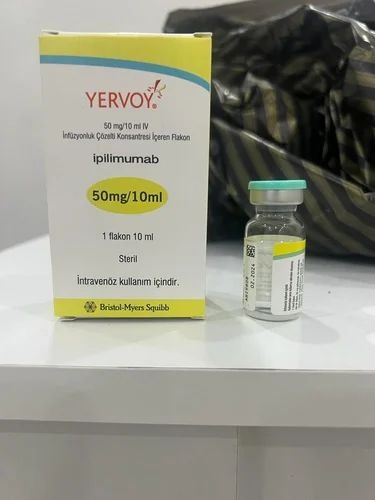
- Kraj rejestracji
- Postać farmaceutycznaConcentrate for infusion solution, 5 MG/ML
- Kod ATCL01FX04
- Substancja czynna
- Wymaga receptyTak
- Producent
- Te treści mają charakter wyłącznie informacyjny i nie zastępują konsultacji lekarskiej.
- Zamienniki YERVOYPostać farmaceutyczna: Concentrate for infusion solution, 50 MGSubstancja czynna: brentuximab vedotinProducent: TAKEDA PHARMA A/SWymaga receptyPostać farmaceutyczna: Powder for concentrate for infusion solution, 70 mgSubstancja czynna: belantamab mafodotinProducent: GLAXOSMITHKLINE TRADING SERVICES LIMITEDWymaga receptyPostać farmaceutyczna: Powder for concentrate and solution for infusion solution, 38.5 MICROGRAMSSubstancja czynna: blinatumomabProducent: AMGEN EUROPE B.V.Wymaga recepty
Odpowiedniki YERVOY w innych krajach
Leki z tą samą substancją czynną dostępne w innych krajach.
Odpowiednik YERVOY w Hiszpania
Uzyskaj receptę na YERVOY online
Wypełnij 2-minutowy formularz
Opisz swoje objawy, historię choroby i lek, o który prosisz.
Wybierz lekarza lub pozwól nam przydzielić
Wybierz specjalistę lub dopasujemy Cię do najbliższego dostępnego lekarza.
Lekarz analizuje Twój przypadek
Zazwyczaj w ciągu 30 minut. Może zadawać dodatkowe pytania przez czat.
Odbierz w dowolnej aptece
Recepta elektroniczna wysłana na Twój e-mail — ważna w całej Polsce.
Często zadawane pytania
YERVOY wymaga recepty w Włochy. Możesz skonsultować się z lekarzem online, aby sprawdzić, czy ten lek może być odpowiedni w Twojej sytuacji.
Substancją czynną w YERVOY jest ipilimumab. Informacja ta pomaga rozpoznać leki o tym samym składzie, ale pod różnymi nazwami handlowymi.
YERVOY jest produkowany przez BRISTOL-MYERS SQUIBB PHARMA EEIG. Nazwy handlowe i opakowania mogą się różnić w zależności od dystrybutora.
Lekarze, tacy jak Lekarze rodzinni, Psychiatrzy, Dermatolodzy, Kardiolodzy, Endokrynolodzy, Gastroenterolodzy, Pulmonolodzy, Nefrolodzy, Reumatolodzy, Hematolodzy, Zakaźnicy, Alergolodzy, Geriatrzy, Pediatrzy, Onkolodzy, mogą ocenić, czy stosowanie YERVOY jest odpowiednie w Twoim przypadku, w zależności od sytuacji klinicznej i lokalnych przepisów. Możesz umówić konsultację online, aby omówić objawy i możliwe dalsze kroki.
Polska posiada dobrze rozwiniętą infrastrukturę ochrony zdrowia w dużych miastach, takich jak Warszawa, Kraków, Wrocław i Gdańsk. Apteki są łatwo dostępne i działają zgodnie z obowiązującymi przepisami, zapewniając dostęp do leków na receptę.
Możesz kupić YERVOY w Warszawie, Krakowie, Wrocławiu lub Gdańsku w każdej aptece, posiadając ważną receptę.
Aby uzyskać receptę, możesz skorzystać z Oladoctor:
Inne leki zawierające tę samą substancję czynną (ipilimumab) to m.in. ADKETRIS, BLENREP, BLINKYTO. Mogą one różnić się nazwą handlową lub postacią, ale zawierają ten sam składnik terapeutyczny. Przed zmianą lub rozpoczęciem nowego leku skonsultuj się z lekarzem.
