



RATIOGRASTIM 30 MUI Injectable solution

Запит на рецепт онлайн
Лікар розгляне ваш випадок і визначить, чи є рецепт медично доцільним.

Поговоріть з лікарем про ці ліки
Обговоріть симптоми та можливі подальші кроки під час короткої онлайн-консультації.



Інструкція із застосування RATIOGRASTIM
Зміст інструкції
- Ratiograstim 30 MUI/0,5 mL solution for injection/infusion, 48 MUI/0,8 mL solution for injection/infusion
- What is Ratiograstim and what is it used for
- What you need to know before you use Ratiograstim
- How to use Ratiograstim
- Possible side effects
- How to store Ratiograstim
- Contents of the pack and other information
- Information for performing self-injection
- The following information is intended exclusively for healthcare professionals
- Ratiograstim 30 MUI/0,5 mL solution for injection/infusion, 48 MUI/0,8 mL solution for injection/infusion
- What is Ratiograstim and what is it used for
- What you need to know before you use Ratiograstim
- How to use Ratiograstim
- Possible side effects
- How to store Ratiograstim
- Package contents and other information
- Information for performing self-injection
- The following information is intended exclusively for healthcare professionals
Ratiograstim 30 MUI/0,5 mL solution for injection/infusion, 48 MUI/0,8 mL solution for injection/infusion
filgrastim
Read this leaflet carefully before you use this medicine as it contains important
information for you.
- Keep this leaflet. You may need to read it again.
- If you have any questions, ask your doctor, pharmacist or nurse.
- This medicine has been prescribed for you only. Do not pass it on to others, even if their symptoms are the same as yours, as it could be harmful.
- If you get any side effects, even those not listed in this leaflet, tell your doctor, pharmacist or nurse. See section 4.
Contents of this leaflet:
- 1. What Ratiograstim is and what it is used for
- 2. What you need to know before you use Ratiograstim
- 3. How to use Ratiograstim
- 4. Possible side effects
- 5. How to store Ratiograstim
- 6. Contents of the pack and other information
- 7. Information for performing self-injection
- 8. The following information is intended exclusively for healthcare professionals
1. What is Ratiograstim and what is it used for
What is Ratiograstim
Ratiograstim is a white blood cell growth factor (granulocyte colony-stimulating factor) and belongs to a group of medicines called cytokines. Growth factors are proteins produced naturally in the body, but they can be produced with the aid of biotechnology, to be used as medicines. Ratiograstim stimulates the bone marrow to produce a greater number of white blood cells.
What is Ratiograstim used for
A reduction in the number of white blood cells (neutropenia) can occur for various reasons, reducing the body's ability to defend itself against infections. Ratiograstim stimulates the bone marrow to produce new white blood cells quickly.
Ratiograstim can be used:
- to increase the number of white blood cells after chemotherapy treatment, thus helping to prevent infections;
- to increase the number of white blood cells after a bone marrow transplant, thus helping to prevent infections;
- before high-dose chemotherapy to induce the bone marrow to produce more stem cells that can be collected and re-infused after treatment. These cells can be taken from you or from a donor. The stem cells will then return to the bone marrow and produce blood cells;
- to increase the number of white blood cells if you have severe chronic neutropenia, thus helping to prevent infections;
- in patients with advanced stage HIV infection, to help reduce the risk of infections.
2. What you need to know before you use Ratiograstim
Do not use Ratiograstim
- if you are allergic to filgrastim or to any of the other ingredients of this medicine (listed in section 6).
Warnings and precautions
Talk to your doctor, pharmacist or nurse before using Ratiograstim.
Tell your doctor before starting treatment if you suffer from:
- sickle cell anemia, as Ratiograstim may cause sickle cell crises.
- osteoporosis (bone disease)
Contact your doctor immediately during treatment with Ratiograstim if:
- you have sudden signs of allergy, such as skin rash, itching or hives, swelling of the face, lips, tongue or other parts of the body, shortness of breath or wheezing or difficulty breathing, as these are signs of a severe allergic reaction (hypersensitivity).
- you experience swelling of the face or ankles, blood in your urine or brown-colored urine, or notice that you are urinating less than usual (glomerulonephritis).
- you feel pain in the upper left area of your abdomen (abdominal pain), pain under the left side of your rib cage or at the tip of your left shoulder (these may be symptoms of an enlarged spleen (splenomegaly), or possible rupture of the spleen).
- you notice unusual bleeding or bruising (these may be symptoms of a decreased number of platelets (thrombocytopenia), with a reduced ability of the blood to clot).
- you have symptoms of inflammation of the aorta (the large blood vessel that carries blood from the heart to the rest of the body), which has been reported rarely in cancer patients and healthy individuals. Symptoms may include fever, abdominal pain, malaise, back pain and increased inflammatory markers. Tell your doctor if you experience such symptoms.
Loss of response to filgrastim
If you have a decrease in response or failure to maintain a response to treatment
with filgrastim, your doctor will investigate the reasons, including the possibility that you have developed
antibodies that neutralize the activity of filgrastim.
If you are a patient with severe chronic neutropenia, you may be at risk of developing a blood
cancer (leukemia, myelodysplastic syndrome [MDS]). You should talk to your doctor about the risks of
developing blood cancers and about what tests should be performed. If you develop or are at risk of
developing blood cancers, you should not use Ratiograstim unless prescribed by your doctor.
If you are a stem cell donor, you must be between 16 and 60 years of age.
Pay particular attention to other medicines that stimulate white blood cells
Ratiograstim is part of a group of medicines that stimulate the production of white blood cells.
The healthcare professional must always record the exact medicine that you are using.
Other medicines and Ratiograstim
Tell your doctor or pharmacist if you are taking, have recently taken or might take any other
medicines.
Pregnancy and breastfeeding
Ratiograstim has not been studied in pregnant women or breastfeeding women.
Ratiograstim is not recommended during pregnancy.
It is important that you tell your doctor if:
- you are pregnant or breastfeeding
- you suspect you may be pregnant, or
- you are planning to become pregnant. If you become pregnant during treatment with Ratiograstim, tell your doctor. Unless otherwise indicated by your doctor, you should stop breastfeeding if you are using Ratiograstim.
Driving and using machines
Ratiograstim may slightly impair the ability to drive and operate machines. This
medicine may cause dizziness. It is recommended to wait and observe how you feel after
using this medicine and before driving or operating machinery.
Ratiograstim contains sorbitol
This medicine contains 50 mg of sorbitol per mL.
For intravenous use
Sorbitol is a source of fructose. If you (or your child) have hereditary fructose intolerance
(HFI), a rare genetic disorder, you (or your child) should not take this medicine. Patients
with HFI are unable to digest fructose, and this can cause serious side effects.
Tell your doctor before taking this medicine if you (or your child) have HFI or if your child
can no longer take sugary foods or drinks because they feel unwell, vomit or
experience unpleasant effects such as bloating, stomach cramps or diarrhea.
Ratiograstim contains sodium
This medicine contains less than 1 mmol (23 mg) of sodium per pre-filled syringe, i.e. it is
essentially “sodium-free”.
3. How to use Ratiograstim
Use this medicine following the instructions of your doctor or pharmacist exactly. If you have
any doubts, consult your doctor or pharmacist.
How is Ratiograstim administered and how much should I take?
Ratiograstim is generally administered by daily injection into the tissue just
below the skin (known as a subcutaneous injection). It can also be administered as a
slow-release daily injection into the vein (known as intravenous infusion). The usual dose varies depending
on your condition and your weight. Your doctor will tell you how much Ratiograstim you should take.
Patients receiving bone marrow transplant after chemotherapy:
You will normally receive the first dose of Ratiograstim at least 24 hours after chemotherapy and at least
24 hours after receiving the bone marrow transplant.
You or the people who care for you may be taught how to administer subcutaneous injections
so that you can continue treatment at home. However, do not attempt to give yourself
an injection unless you have first received appropriate instructions from your doctor.
How long will I have to take Ratiograstim?
You will need to take Ratiograstim until the number of white blood cells has returned to normal.
Blood tests will be performed to monitor the number of white blood cells in your blood.
Your doctor will tell you how long you will need to take Ratiograstim.
Use in children
Ratiograstim is used for the treatment of children undergoing chemotherapy or suffering from a
severe reduction in the number of white blood cells (neutropenia). The dosage in children
treated with chemotherapy is the same as that used in adults.
If you use more Ratiograstim than you should
Do not increase the dose prescribed by your doctor. If you use more Ratiograstim than you should, contact your
doctor or pharmacist as soon as possible.
If you forget to use Ratiograstim
If you have forgotten an injection, or the amount injected is too small, contact your
doctor as soon as possible. Do not take a double dose to make up for a missed dose.
If you have any doubts about using this medicine, ask your doctor, pharmacist or
nurse.
4. Possible side effects
Like all medicines, this medicine can cause side effects, although not everybody gets them.
Important side effects
It is important to contact your doctor immediately
- if you experience an allergic reaction including weakness, decreased blood pressure, difficulty breathing, swelling of the face (anaphylaxis), skin rash, itchy rash (urticaria), swelling of the face, lips, mouth, tongue or throat (angioedema) and shortness of breath (dyspnea).
- if you experience cough, fever and difficulty breathing (dyspnea), as these may be symptoms of acute respiratory distress syndrome (ARDS).
- if you experience kidney damage (glomerulonephritis). Kidney damage has been observed in patients receiving filgrastim. Contact your doctor immediately if you experience swelling of the face or ankles, blood in your urine, or brown-colored urine, or if you notice a decrease in the frequency of urination.
- if you experience any of the following side effects or a combination of them:
- swelling or fluid retention, which may be associated with less frequent urination, difficulty breathing, abdominal swelling and a feeling of fullness, and a general feeling of fatigue. These symptoms usually develop rapidly. These could be symptoms of a condition called “capillary leak syndrome”, which causes blood to leak from small blood vessels inside the body and requires urgent medical attention.
- if you experience a combination of the following symptoms:
- fever or chills, or a feeling of intense cold, rapid heart rate, confusion or disorientation, shortness of breath, severe pain or discomfort, and sweaty or clammy skin. These may be symptoms of a condition called “sepsis” (also known as “blood poisoning”), a serious infection with a whole-body inflammatory response that can be potentially fatal and requires urgent medical attention.
- if you experience pain in the upper left side of the abdomen (abdominal pain), pain under the left side of the rib cage, or pain at the tip of the shoulder, as there may be a problem with the spleen (splenomegaly - enlargement of the spleen - or splenic rupture);
- if you are being treated for severe chronic neutropenia and have blood in your urine (hematuria). Your doctor may regularly check your urine if this side effect occurs or if protein is found in your urine (proteinuria).
A common side effect associated with the use of Ratiograstim is muscle or bone pain
(musculoskeletal pain) which can be relieved by taking common pain relievers
(analgesics). In patients undergoing stem cell or bone marrow transplantation, graft-versus-host
disease (GvHD) may occur: this is a reaction of the donor cells against the patient receiving the
transplant; signs and symptoms include rash on the palms of the hands or soles of the feet and ulcers
and sores in the mouth, intestines, liver, skin or eyes, lungs, vagina and joints.
In healthy stem cell donors, an increase in white blood cells (leukocytosis) and a decrease in the
number of platelets may be detected. A decrease in the number of platelets reduces the blood's ability
to clot (thrombocytopenia). These events will be monitored by your doctor.
The following side effects may occur:
Very common(may affect more than 1 in 10 people):
- Decreased platelets, which reduces the blood's ability to clot (thrombocytopenia)
- Low red blood cell count (anemia)
- Headache
- Diarrhea
- Vomiting
- Nausea
- Unusual hair loss or thinning (alopecia)
- Fatigue (asthenia)
- Pain and inflammation of the lining of the digestive tract, from mouth to anus (mucosal inflammation)
- Fever (pyrexia)
Common(may affect up to 1 in 10 people):
- Lung inflammation (bronchitis)
- Inflammation of the upper respiratory tract
- Urinary tract infection
- Decreased appetite
- Difficulty sleeping (insomnia)
- Dizziness
- Reduced sensitivity, especially of the skin (hypoesthesia)
- Tingling or numbness of hands or feet (paresthesia)
- Low blood pressure (hypotension)
- High blood pressure (hypertension)
- Cough
- Coughing up blood (hemoptysis)
- Pain in mouth and throat (oropharyngeal pain)
- Nosebleeds (epistaxis)
- Constipation
- Mouth pain
- Enlarged liver (hepatomegaly)
- Skin rash
- Skin redness (erythema)
- Muscle spasm
- Pain during urination (dysuria)
- Chest pain
- Pain
- General weakness (asthenia)
- General feeling of discomfort (malaise)
- Swelling of hands and feet (peripheral edema)
- Increased levels of certain enzymes in the blood
- Changes in blood test values
- Transfusion reaction
Uncommon(may affect up to 1 in 100 people):
- Increased white blood cells (leukocytosis)
- Allergic reaction (hypersensitivity)
- Rejection of the transplanted bone marrow (graft-versus-host disease)
- High levels of uric acid in the blood, which can cause gout (hyperuricemia) (increased serum uric acid)
- Liver damage caused by blockage of the small veins inside the liver (veno-occlusive disease)
- The lungs do not function as they should, causing shortness of breath (respiratory failure)
- Fluid buildup and/or fluid in the lungs (pulmonary edema)
- Inflammation of the lungs (interstitial lung disease)
- Abnormalities on chest X-ray (pulmonary infiltrate)
- Bleeding from the lungs (pulmonary hemorrhage)
- Lack of oxygen absorption in the lung (hypoxia)
- Irregular skin rash (maculo-papular rash)
- Disease that reduces bone density, making them weaker, more fragile and prone to fractures (osteoporosis)
- Reaction at the injection site
Rare(may affect up to 1 in 1,000 people):
- Severe bone, chest, intestinal or joint pain (sickle cell crisis)
- Sudden, life-threatening allergic reaction (anaphylactic reaction)
- Pain and swelling of the joints, similar to gout (pseudogout)
- A change in the regulation of fluids in the body that can cause swelling (fluid volume disorder)
- Inflammation of blood vessels in the skin (cutaneous vasculitis)
- Purple-colored, raised and painful lesions on the limbs and sometimes on the face and neck, associated with fever (Sweet syndrome)
- Worsening of rheumatoid arthritis
- Unusual changes in urine
- Reduced bone density
- Inflammation of the aorta (the large blood vessel that carries blood from the heart to the rest of the body), see section 2
- Formation of blood cells outside the bone marrow (extramedullary hematopoiesis)
Reporting of side effects
If you get any side effects, talk to your doctor, pharmacist or nurse. This includes any side effects not listed
in this leaflet. You can also report side effects directly through the national reporting system listed in
Appendix V. By reporting side effects you can help provide more information on the safety of this medicine.
5. How to store Ratiograstim
Keep this medicine out of the sight and reach of children.
Do not use this medicine after the expiry date which is stated on the package and on the pre-filled syringe
after Exp. The expiry date refers to the last day of that month.
Store in a refrigerator (2 ° C – 8 ° C).
During the period of validity and for outpatient use, the medicine can be removed from the refrigerator
(2 ° C – 8 ° C) and stored at a temperature below 25 °C for a single period of up to 4 days. If
not used within 4 days, the medicine can be put back in the refrigerator
(2 ° C – 8 ° C) until the expiry date. Syringes stored at a temperature higher than 8 °C for more than
4 days must be discarded.
Do not use this medicine if you notice that the liquid appears cloudy or with visible particles.
Do not dispose of any medicine in wastewater or household waste. Ask your pharmacist how to
dispose of medicines you no longer use. This will help protect the environment.
6. Contents of the pack and other information
What Ratiograstim contains
- The active substance is filgrastim. Each mL of solution for injection/infusion contains 60 million international units [IU] (600 micrograms) of filgrastim. Ratiograstim 30 IU/0.5 mL: Each pre-filled syringe contains 30 million international units [IU] (300 micrograms) of filgrastim in 0.5 mL of solution. Ratiograstim 48 IU/0.8 mL: Each pre-filled syringe contains 48 million international units [IU] (480 micrograms) of filgrastim in 0.8 mL of solution.
- The other ingredients are: sodium hydroxide, glacial acetic acid, sorbitol, polysorbate 80, water for injections.
Description of the appearance of Ratiograstim and contents of the pack
Ratiograstim is an injectable/infusion solution contained in a pre-filled syringe with or without
safety device.
Ratiograstim is a clear and colourless solution. Each pre-filled syringe contains 0.5 mL or 0.8 mL of
solution.
Ratiograstim is available in packs of 1, 5 or 10 pre-filled syringes or multiple packs of 10
(2 packs of 5) pre-filled syringes.
Not all pack sizes may be marketed.
Marketing Authorisation Holder
ratiopharm GmbH
Graf-Arco-Straße 3
89079 Ulm
Germany
Manufacturer
Merckle GmbH
Graf-Arco-Straße 3
89079 Ulm
Germany
For further information on this medicinal product, contact the local representative of the marketing
authorisation holder:
België/Belgique/Belgien
Teva Pharma Belgium N.V./S.A./AG
Tél/Tel: +32 38207373
Lietuva
UAB Teva Baltics
Tel: +370 52660203
България
Тева Фарма ЕАД
Teл.: +359 24899585
Luxembourg/Luxemburg
ratiopharm GmbH
Allemagne/Deutschland
Tél/Tel: +49 73140202
Česká republika
Teva Pharmaceuticals CR, s.r.o.
Magyarország
Teva Gyógyszergyár Zrt.
Tel: +420 251007111 Tel.: +36 12886400
Danmark
Teva Denmark A/S
Tlf.: +45 44985511
Malta
Teva Pharmaceuticals Ireland
L-Irlanda
Tel: +44 2075407117
Deutschland
ratiopharm GmbH
Tel: +49 73140202
Nederland
Teva Nederland B.V.
Tel: +31 8000228400
Eesti
UAB Teva Baltics Eesti filiaal
Tel: +372 6610801
Norge
Teva Norway AS
Tlf: +47 66775590
Ελλάδα
TEVA HELLAS Α.Ε.
Τηλ: +30 2118805000
Österreich
ratiopharm Arzneimittel Vertriebs-GmbH
Tel: +43 1970070
España
Teva Pharma, S.L.U.
Tel: +34 913873280
Polska
Teva Pharmaceuticals Polska Sp. z o.o.
Tel.: +48 223459300
France
Laboratoires Biogaran
Tél: +33 800970109
Portugal
ratiopharm - Comércio e Indústria de Produtos
Farmacêuticos, Lda.
Tel: +351 214767550
Hrvatska
Pliva Hrvatska d.o.o.
Tel: +385 13720000
România
Teva Pharmaceuticals S.R.L.
Tel: +40 212306524
Ireland
Teva Pharmaceuticals Ireland
Tel: +44 2075407117
Slovenija
Pliva Ljubljana d.o.o.
Tel: +386 15890390
Ísland
Teva Pharma Iceland ehf.
Sími: +354 5503300
Slovenská republika
TEVA Pharmaceuticals Slovakia s.r.o.
Tel: +421 257267911
Italia
Teva Italia S.r.l.
Tel: +39 028917981
Suomi/Finland
Teva Finland Oy
Puh/Tel: +358 201805900
Κύπρος
TEVA HELLAS Α.Ε.
Ελλάδα
Τηλ: +30 2118805000
Sverige
Teva Sweden AB
Tel: +46 42121100
United Kingdom (Northern Ireland)
Teva Pharmaceuticals Ireland
Ireland
Tel: +44 2075407117
Latvija
UAB Teva Baltics filiāle Latvijā
Tel: +371 67323666
More detailed information on this medicinal product is available on the website of the European
Medicines Agency, https://www.ema.europa.eu.
7. Information for performing self-injection
This paragraph contains the information necessary to perform a self-injection of Ratiograstim.
It is important that you do not attempt to perform the injection yourself without first receiving adequate instructions from your doctor or
nurse. If you have any doubts about how to perform the injection or
would like further information, ask your doctor or pharmacist for advice.
It is important that you dispose of used syringes in a special puncture-proof container.
How to perform a self-injection of Ratiograstim
The injection must be administered into the tissue under the skin: this method is known as
subcutaneous injection. It is necessary that you perform the injection at approximately the same time each day.
Equipment required
To perform a subcutaneous injection, you must use:
- a pre-filled syringe of Ratiograstim;
- cotton wool soaked in alcohol or an equivalent disinfectant;
- a puncture-proof container (plastic container provided by the hospital or pharmacy) so that you can safely dispose of the used syringe.
What to do before performing a subcutaneous self-injection of Ratiograstim
- 1. Try to inject the medicine at approximately the same time each day.
- 2. Remove the pre-filled syringe of Ratiograstim from the refrigerator.
- 3. Check the expiry date (Exp.) printed on the syringe label. Do not use the syringe if the date exceeds the last day of the month indicated.
- 4. Check the appearance of Ratiograstim. It should appear as a clear and transparent liquid. If you notice particles inside, do not use the syringe.
- 5. To make the injection easier, remove the pre-filled syringe from the fridge and leave it exposed to room temperature for 30 minutes, or gently hold the syringe in your hand for a few minutes. Do not heat Ratiograstim in any other way (e.g. in a microwave oven or in hot water).
- 6. Do notremove the syringe cap until the time of injection.
- 7. Wash your hands thoroughly.
- 8. Find a comfortable and well-lit place and have everything you need within reach (the pre-filled syringe of Ratiograstim, cotton wool soaked in alcohol and the puncture-proof container).
How to prepare the Ratiograstim injection
Before performing the Ratiograstim injection, you must proceed as follows:
- 1. Hold the syringe with both hands and gently remove the cap from the needle without rotating it. Pull horizontally, as shown in figures 1 and 2. Do not touch the needle and do not push the plunger.
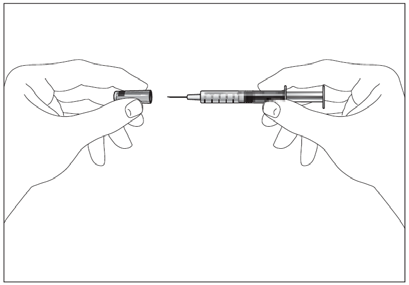
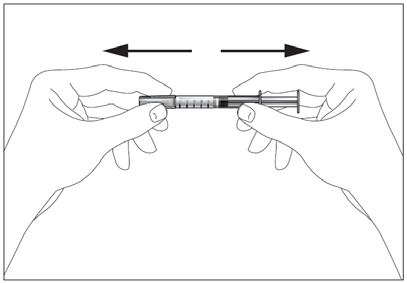
12
- 2. You may notice a small air bubble inside the pre-filled syringe. If there are air bubbles, gently tap the syringe with your fingers until the air bubbles rise to the surface towards the top of the syringe. Holding the syringe upright, expel the air from the syringe by pushing the plunger upwards.
- 3. There is a scale marked on the syringe. Push the plunger up to the number (mL) on the syringe that corresponds to the prescribed dose of Ratiograstim.
- 4. Check again to make sure that the syringe contains the correct dose of Ratiograstim.
- 5. The pre-filled syringe is now ready for use.
Where to perform the injection
The most suitable areas of the body for performing the injection are:
- the upper thighs; and
- the abdomen, except for the area around the navel (see figure 3).
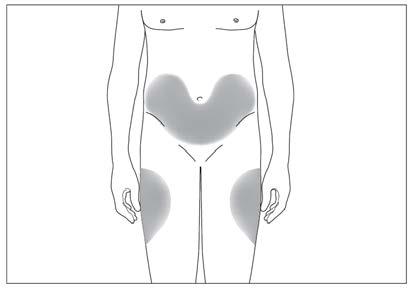
34
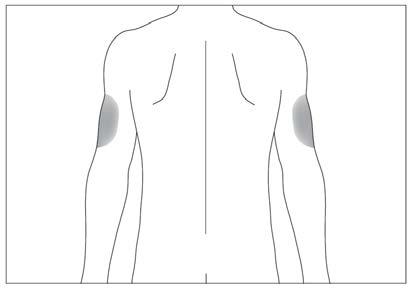
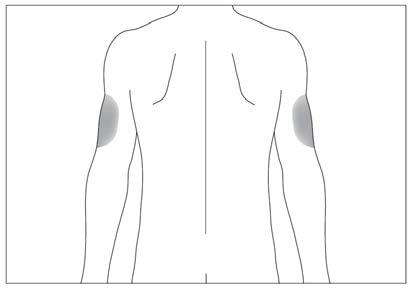
If the injection is performed by another person, the medicine can also be injected into the
back of the arms (see figure 4).
It is preferable to change the injection site every day to avoid the risk of hardening at the administration site.
How to perform the injection
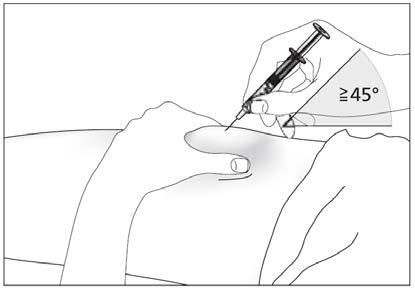
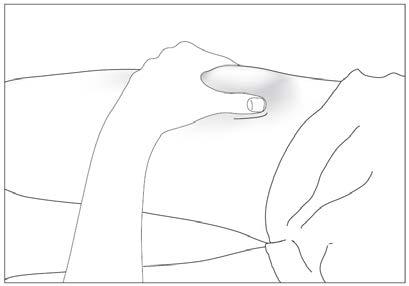
- 1. Disinfect the skin using a cotton wool ball soaked in alcohol and pinch the skin between your thumb and index finger, without compressing (see figure 5).
- 2. Insert the needle completely into the skin, as shown by the nurse or doctor (see figure 6).
- 3. Slowly pull the plunger to check that a blood vessel has not been punctured. If you notice blood in the syringe, remove the needle from the skin and reinsert it into another area.
- 4. Inject the liquid slowly and evenly, always keeping the skin pinched.
- 5. Inject only the dose indicated by your doctor.
- 6. After injecting the liquid, remove the needle and release the skin.
- 7. Use a syringe for each single injection. Do not use any Ratiograstim remaining in the syringe.
56
Remember
If you have any doubts or problems, do not hesitate to contact your doctor or nurse for help or
advice.
Disposal of used syringes
- Do not recap used needles.
- Place the used syringes inside the puncture-proof container and keep the container out of sight and reach of children.
- To dispose of the puncture-proof container full of used syringes, follow the instructions provided by your doctor, nurse or pharmacist.
- Never dispose of used syringes in ordinary household waste containers.
8. The following information is intended exclusively for healthcare professionals
Ratiograstim does not contain preservatives. To avoid potential risks of microbial contamination, Ratiograstim syringes are for single use only.
Accidental exposure to freezing temperatures does not produce adverse effects on the stability of
Ratiograstim.
Ratiograstim must not be diluted with sodium chloride solution. This medicinal product
must not be mixed with other medicinal products, except those indicated below. Diluted Filgrastim may
be adsorbed by glass and plastic materials, unless diluted as specified below.
If necessary, Ratiograstim may be diluted in 50 mg/mL (5%) glucose solution for infusion.
Dilution to a final concentration lower than
0.2 MUI (2 μg) per mL is not recommended under any circumstances. The solution must be visually inspected before use. Only clear solutions, without visible particles, may
be used. In the case of patients treated with filgrastim
diluted to concentrations lower than 1.5 MUI (15 μg) per mL, human serum albumin
(HSA) must be added to a final concentration of 2 mg/mL. Example: in a final injection volume of
20 mL, total filgrastim doses less than 30 MUI (300 μg) must be administered with
the addition of 0.2 mL of human serum albumin at 200 mg/mL (20%). When diluted in 50 mg/mL
(5%) glucose solution for infusion, Ratiograstim is compatible with glass and numerous
plastic materials, including PVC, polyolefin (a copolymer of polypropylene and polyethylene) and
polypropylene.
After dilution: the chemical and physical “in-use” stability of the diluted solution for infusion has been
demonstrated for 24 hours at temperatures between 2 °C and 8 °C. From a microbiological point of view, the
product must be used immediately. If not, the storage times and conditions
are the responsibility of the user and must not exceed 24 hours at a temperature between 2 °C and 8 °C,
unless the solution has been prepared in controlled and validated aseptic conditions.
Ratiograstim 30 MUI/0,5 mL solution for injection/infusion, 48 MUI/0,8 mL solution for injection/infusion
filgrastim
Read this leaflet carefully before using this medicine as it contains important information for you.
- Keep this leaflet. You may need to read it again.
- If you have any questions, ask your doctor, pharmacist or nurse.
- This medicine has been prescribed for you only. Do not pass it on to others, even if their symptoms are the same as yours, as it could be harmful.
- If you get any side effects, even those not listed in this leaflet, tell your doctor, pharmacist or nurse. See section 4.
Contents of this leaflet:
- 1. What Ratiograstim is and what it is used for
- 2. What you need to know before you use Ratiograstim
- 3. How to use Ratiograstim
- 4. Possible side effects
- 5. How to store Ratiograstim
- 6. Contents of the pack and other information
- 7. Information for performing self-injection
- 8. The following information is intended exclusively for healthcare professionals
1. What is Ratiograstim and what is it used for
What is Ratiograstim
Ratiograstim is a white blood cell growth factor (granulocyte colony-stimulating factor) and belongs to a group of medicines called cytokines. Growth factors are proteins produced naturally in the body, but they can be produced with the aid of biotechnology, to be used as medicines. Ratiograstim stimulates the bone marrow to produce a greater number of white blood cells.
What is Ratiograstim used for
A reduction in the number of white blood cells (neutropenia) can occur for various reasons, reducing the body's ability to defend itself against infections. Ratiograstim stimulates the bone marrow to rapidly produce new white blood cells.
Ratiograstim can be used:
- to increase the number of white blood cells after chemotherapy treatment, thus helping to prevent infections;
- to increase the number of white blood cells after a bone marrow transplant, thus helping to prevent infections;
- before high-dose chemotherapy to induce the bone marrow to produce more stem cells that can be collected and re-infused after treatment. These cells can be taken from you or from a donor. The stem cells will then return to the bone marrow and produce blood cells;
- to increase the number of white blood cells if you have severe chronic neutropenia, thus helping to prevent infections;
- in patients with advanced stage HIV infection, to help reduce the risk of infections.
2. What you need to know before you use Ratiograstim
Do not use Ratiograstim
- if you are allergic to filgrastim or any of the other ingredients of this medicine (listed in section 6).
Warnings and precautions
Talk to your doctor, pharmacist or nurse before you use Ratiograstim.
Tell your doctor before you start treatment if you suffer from:
- sickle cell anemia, as Ratiograstim may cause sickle cell crises.
- osteoporosis (bone disease)
Contact your doctor immediately during treatment with Ratiograstim if:
- you have sudden signs of allergy, such as skin rash, itching or hives, swelling of the face, lips, tongue or other parts of the body, shortness of breath or wheezing or difficulty breathing, as these are signs of a severe allergic reaction (hypersensitivity).
- you experience swelling of the face or ankles, blood in your urine or brown-colored urine, or notice that you are urinating less than usual (glomerulonephritis).
- you feel pain in the upper left area of your abdomen (abdominal pain), pain under the left side of your rib cage, or at the tip of your left shoulder (these may be symptoms of an enlarged spleen (splenomegaly), or possible rupture of the spleen).
- you notice unusual bleeding or bruising (these may be symptoms of a decreased number of platelets (thrombocytopenia), with a reduced ability of the blood to clot).
- you have symptoms of inflammation of the aorta (the large blood vessel that carries blood from the heart to the rest of the body), which has been reported rarely in cancer patients and healthy individuals. Symptoms may include fever, abdominal pain, malaise, back pain, and increased markers of inflammation. Tell your doctor if you experience such symptoms.
Loss of response to filgrastim
If you have a decrease in response or failure to maintain a response to treatment
with filgrastim, your doctor will investigate the reasons, including the possibility that you have developed
antibodies that neutralize the activity of filgrastim.
If you are a patient with severe chronic neutropenia, you may be at risk of developing a blood
cancer (leukemia, myelodysplastic syndrome [MDS]). You should talk to your doctor about the risks of
developing blood cancers and about what tests need to be performed. If you develop or are at risk of
developing blood cancers, you should not use Ratiograstim unless prescribed by your doctor.
If you are a stem cell donor, you must be between 16 and 60 years of age.
Pay particular attention to other medicines that stimulate white blood cells
Ratiograstim is part of a group of medicines that stimulate the production of white blood cells.
The healthcare professional should always record the exact medicine that you are using.
Other medicines and Ratiograstim
Tell your doctor or pharmacist if you are taking, have recently taken or might take any other
medicines.
Pregnancy and breastfeeding
Ratiograstim has not been studied in pregnant women or breastfeeding women.
Ratiograstim is not recommended during pregnancy.
It is important to tell your doctor if:
- you are pregnant or breastfeeding
- you suspect you are pregnant, or
- you are planning a pregnancy. If you become pregnant during treatment with Ratiograstim, tell your doctor. Unless otherwise indicated by your doctor, you should stop breastfeeding if you use Ratiograstim.
Driving and using machines
Ratiograstim may slightly impair the ability to drive and operate machinery. This
medicine may cause dizziness. It is recommended to wait and see how you feel after
using this medicine before driving or operating machinery.
Ratiograstim contains sorbitol
This medicine contains 50 mg of sorbitol per mL.
For intravenous use
Sorbitol is a source of fructose. If you (or your child) have hereditary fructose intolerance
(HFI), a rare genetic disorder, you (or your child) should not take this medicine. Patients with HFI are unable to digest fructose, and this can cause serious side effects.
Tell your doctor before taking this medicine if you (or your child) have HFI or if your child can no longer take sugary foods or drinks because they feel sick, vomit, or
experience unpleasant effects such as bloating, stomach cramps, or diarrhea.
Ratiograstim contains sodium
This medicine contains less than 1 mmol (23 mg) of sodium per pre-filled syringe, i.e. it is
essentially “sodium-free”.
3. How to use Ratiograstim
Use this medicine following the instructions of your doctor or pharmacist exactly. If you have
any doubts, consult your doctor or pharmacist.
How is Ratiograstim administered and how much should I take?
Ratiograstim is generally administered by daily injection into the tissue just
below the skin (known as a subcutaneous injection). It can also be administered as a slow-release daily injection
into the vein (known as intravenous infusion). The usual dose varies depending
on your condition and your weight. Your doctor will tell you how much Ratiograstim you should take.
Patients receiving bone marrow transplant after chemotherapy:
You will normally receive the first dose of Ratiograstim at least 24 hours after chemotherapy and at least
24 hours after receiving the bone marrow transplant.
You or the people who take care of you may be taught how to administer the injections
subcutaneously so that you can continue treatment at home. However, do not attempt to administer
an injection to yourself unless you have first received appropriate instructions from your doctor.
How long will I have to take Ratiograstim?
You will have to take Ratiograstim until the number of white blood cells has returned to normal.
Blood tests will be performed to monitor the number of white blood cells in your blood.
Your doctor will tell you how long you will have to take Ratiograstim.
Use in children
Ratiograstim is used for the treatment of children undergoing chemotherapy or suffering from a
severe reduction in the number of white blood cells (neutropenia). The dosage in children
treated with chemotherapy is the same as that used in adults.
If you use more Ratiograstim than you should
Do not increase the dose prescribed by your doctor. If you use more Ratiograstim than you should, contact your
doctor or pharmacist as soon as possible.
If you forget to use Ratiograstim
If you have forgotten an injection, or the amount injected is too small, contact your
doctor as soon as possible. Do not take a double dose to make up for a missed dose.
If you have any questions about the use of this medicine, ask your doctor, pharmacist or
nurse.
4. Possible side effects
Like all medicines, this medicine can cause side effects, although not everyone will experience them.
Important side effects
It is important to contact your doctor immediately
- if you experience an allergic reaction including weakness, decreased blood pressure, difficulty breathing, swelling of the face (anaphylaxis), skin rash, itchy rash (urticaria), swelling of the face, lips, mouth, tongue or throat (angioedema) and shortness of breath (dyspnea).
- if you experience cough, fever and difficulty breathing (dyspnea), as these may be symptoms of acute respiratory distress syndrome (ARDS).
- if you experience kidney damage (glomerulonephritis). Kidney damage has been observed in patients receiving filgrastim. Contact your doctor immediately if you experience swelling of the face or ankles, blood in your urine, or brown-colored urine, or if you notice a decrease in the frequency of urination.
- if you experience any of the following side effects or a combination of them:
- swelling or edema, which may be associated with less frequent urination, difficulty breathing, abdominal swelling and a feeling of fullness, and a general feeling of fatigue. These symptoms usually develop rapidly. These could be symptoms of a condition called “capillary leak syndrome”, which causes blood to leak from small blood vessels inside the body and requires urgent medical attention.
- if you experience a combination of the following symptoms:
- fever or chills, or a feeling of intense cold, rapid heart rate, confusion or disorientation, shortness of breath, severe pain or discomfort, and sweaty or clammy skin. These may be symptoms of a condition called “sepsis” (also known as “blood poisoning”), a serious infection with a whole-body inflammatory response that can be potentially fatal and requires urgent medical attention.
- if you experience pain in the upper left side of the abdomen (abdominal pain), pain under the left side of the rib cage, or pain at the tip of the shoulder, as there may be a problem with the spleen (splenomegaly (enlargement of the spleen) or splenic rupture);
- if you are being treated for severe chronic neutropenia and have blood in your urine (hematuria). Your doctor may regularly check your urine if this side effect occurs or if protein (proteinuria) has been found in your urine.
A common side effect associated with the use of Ratiograstim is muscle or bone pain
(musculoskeletal pain) which can be relieved by taking common pain relievers
(analgesics). In patients undergoing hematopoietic stem cell or bone marrow transplantation, graft-versus-host disease (GvHD) may occur: this is a reaction of the donor's cells against the patient receiving the transplant; signs and symptoms include rash on the palms
of the hands or soles of the feet and ulcers and sores in the mouth, intestines, liver, skin or
eyes, lungs, vagina and joints.
In healthy stem cell donors, an increase in white blood cells (leukocytosis) and a decrease in the number of platelets may be detected. A decrease in the number of platelets
reduces the blood's ability to clot (thrombocytopenia). These events will be monitored by
the doctor.
The following side effects may occur:
Very common(may affect more than 1 in 10 people):
- Decreased platelets, which reduces the blood's ability to clot (thrombocytopenia)
- Low red blood cell count (anemia)
- Headache
- Diarrhea
- Vomiting
- Nausea
- Unusual hair loss or thinning (alopecia)
- Fatigue (asthenia)
- Pain and inflammation of the lining of the digestive tract, from mouth to anus (mucosal inflammation)
- Fever (pyrexia)
Common(may affect up to 1 in 10 people):
- Inflammation of the lungs (bronchitis)
- Inflammation of the upper respiratory tract
- Urinary tract infection
- Decreased appetite
- Difficulty sleeping (insomnia)
- Dizziness
- Reduced sensitivity, especially of the skin (hypoesthesia)
- Tingling or numbness of hands or feet (paresthesia)
- Low blood pressure (hypotension)
- High blood pressure (hypertension)
- Cough
- Coughing up blood (hemoptysis)
- Pain in mouth and throat (oropharyngeal pain)
- Nosebleeds (epistaxis)
- Constipation
- Oral pain
- Enlarged liver (hepatomegaly)
- Skin rash
- Skin redness (erythema)
- Muscle spasm
- Pain during urination (dysuria)
- Chest pain
- Pain
- General weakness (asthenia)
- General feeling of discomfort (malaise)
- Swelling of hands and feet (peripheral edema)
- Increased levels of certain enzymes in the blood
- Changes in blood chemistry values
- Transfusion reaction
Uncommon(may affect up to 1 in 100 people):
- Increased white blood cells (leukocytosis)
- Allergic reaction (hypersensitivity)
- Rejection of the transplanted bone marrow (graft-versus-host disease)
- High levels of uric acid in the blood, which can cause gout (hyperuricemia) (increased blood uric acid)
- Liver damage caused by blockage of the small veins inside the liver (veno-occlusive disease)
- The lungs do not function as they should, causing shortness of breath (respiratory failure)
- Swelling and/or fluid in the lungs (pulmonary edema)
- Inflammation of the lungs (interstitial lung disease)
- Abnormalities on a chest X-ray (pulmonary infiltration)
- Bleeding from the lungs (pulmonary hemorrhage)
- Lack of oxygen absorption in the lung (hypoxia)
- Irregular skin rash (maculo-papular rash)
- Disease that reduces bone density, making them weaker, more fragile and prone to fractures (osteoporosis)
- Reaction at the injection site
Rare(may affect up to 1 in 1,000 people):
- Severe bone, chest, intestinal or joint pain (sickle cell crisis)
- Sudden, life-threatening allergic reaction (anaphylactic reaction)
- Pain and swelling of the joints, similar to gout (pseudogout)
- A change in the regulation of fluids in the body that can cause swelling (fluid volume disorder)
- Inflammation of the blood vessels in the skin (cutaneous vasculitis)
- Purple-colored, raised and painful lesions on the limbs and sometimes on the face and neck, associated with fever (Sweet syndrome)
- Worsening of rheumatoid arthritis
- Unusual changes in urine
- Reduced bone density
- Inflammation of the aorta (the large blood vessel that carries blood from the heart to the rest of the body), see section 2
- Formation of blood cells outside the bone marrow (extramedullary hematopoiesis)
Reporting of side effects
If you get any side effects, talk to your doctor, pharmacist or nurse. This includes any side effects not listed
in this leaflet. You can also report side effects directly through the national reporting system listed in
Appendix V. By reporting side effects you can help provide more information on the safety of this medicine.
5. How to store Ratiograstim
Keep this medicine out of the sight and reach of children.
Do not use this medicine after the expiry date which is stated on the package and on the pre-filled syringe
after Exp. The expiry date refers to the last day of that month.
Store in a refrigerator (2 ° C – 8 ° C).
During the period of validity and for outpatient use, the medicine can be removed from the refrigerator
(2 ° C – 8 ° C) and stored at a temperature below 25 °C for a single period of up to 4 days. If
not used within 4 days, the medicine can be put back in the refrigerator
(2 ° C – 8 ° C) until the expiry date. Syringes stored at a temperature higher than 8 °C for more
than 4 days must be discarded.
Do not use this medicine if you notice that the liquid appears cloudy or with visible particles.
Do not dispose of any medicine in wastewater or household waste. Ask your pharmacist how to
dispose of medicines that you no longer use. This will help protect the environment.
6. Package contents and other information
What Ratiograstim contains
- The active substance is filgrastim. Each mL of solution for injection/infusion contains 60 million international units [IU] (600 micrograms) of filgrastim. Ratiograstim 30 MUI/0.5 mL: Each pre-filled syringe contains 30 million international units [IU] (300 micrograms) of filgrastim in 0.5 mL of solution. Ratiograstim 48 MUI/0.8 mL: Each pre-filled syringe contains 48 million international units [IU] (480 micrograms) of filgrastim in 0.8 mL of solution.
- The other ingredients are: sodium hydroxide, glacial acetic acid, sorbitol, polysorbate 80, water for injections.
Description of Ratiograstim and package contents
Ratiograstim is an injectable/infusion solution contained in a pre-filled syringe with or without
safety device.
Ratiograstim is a clear and colourless solution. Each pre-filled syringe contains 0.5 mL or 0.8 mL of
solution.
Ratiograstim is available in packs of 1, 5 or 10 pre-filled syringes or multiple packs of 10
(2 packs of 5) pre-filled syringes.
Not all pack sizes may be marketed.
Marketing Authorisation Holder
ratiopharm GmbH
Graf-Arco-Straße 3
89079 Ulm
Germany
Manufacturer
Merckle GmbH
Graf-Arco-Straße 3
89079 Ulm
Germany
For further information on this medicinal product, contact the local representative of the marketing
authorisation holder:
België/Belgique/Belgien
Teva Pharma Belgium N.V./S.A./AG
Tél/Tel: +32 38207373
Lietuva
UAB Teva Baltics
Tel: +370 52660203
България
Тева Фарма ЕАД
Teл.: +359 24899585
Luxembourg/Luxemburg
ratiopharm GmbH
Allemagne/Deutschland
Tél/Tel: +49 73140202
Česká republika
Teva Pharmaceuticals CR, s.r.o.
Tel: +420 251007111
Magyarország
Teva Gyógyszergyár Zrt.
Tel.: +36 12886400
Danmark
Teva Denmark A/S
Tlf.: +45 44985511
Malta
Teva Pharmaceuticals Ireland
L-Irlanda
Tel: +44 2075407117
Deutschland
ratiopharm GmbH
Tel: +49 73140202
Nederland
Teva Nederland B.V.
Tel: +31 8000228400
Eesti
UAB Teva Baltics Eesti filiaal
Tel: +372 6610801
Norge
Teva Norway AS
Tlf: +47 66775590
Ελλάδα
TEVA HELLAS Α.Ε.
Τηλ: +30 2118805000
Österreich
ratiopharm Arzneimittel Vertriebs-GmbH
Tel: +43 1970070
España
Teva Pharma, S.L.U.
Tel: +34 913873280
Polska
Teva Pharmaceuticals Polska Sp. z o.o.
Tel.: +48 223459300
France
Laboratoires Biogaran
Tél: +33 800970109
Portugal
ratiopharm - Comércio e Indústria de Produtos
Farmacêuticos, Lda.
Tel: +351 214767550
Hrvatska
Pliva Hrvatska d.o.o.
Tel: +385 13720000
România
Teva Pharmaceuticals S.R.L.
Tel: +40 212306524
Ireland
Teva Pharmaceuticals Ireland
Tel: +44 2075407117
Slovenija
Pliva Ljubljana d.o.o.
Tel: +386 15890390
Ísland
Teva Pharma Iceland ehf.
Sími: +354 5503300
Slovenská republika
TEVA Pharmaceuticals Slovakia s.r.o.
Tel: +421 257267911
Italia
Teva Italia S.r.l.
Tel: +39 028917981
Suomi/Finland
Teva Finland Oy
Puh/Tel: +358 201805900
Κύπρος
TEVA HELLAS Α.Ε.
Ελλάδα
Τηλ: +30 2118805000
Sverige
Teva Sweden AB
Tel: +46 42121100
United Kingdom (Northern Ireland)
Teva Pharmaceuticals Ireland
Ireland
Tel: +44 2075407117
More detailed information on this medicinal product is available on the website of the European
Medicines Agency, https://www.ema.europa.eu.
7. Information for performing self-injection
This paragraph contains the information necessary to perform a self-injection of Ratiograstim.
It is important that you do not attempt to perform the injection yourself without first receiving adequate instructions from your doctor or
nurse. If you have any doubts about how to perform the injection or
would like further information, ask your doctor or pharmacist for advice.
How to perform a Ratiograstim self-injection
The injection must be administered into the tissue under the skin: this method is known as
subcutaneous injection. You must administer the injection at approximately the same time each day.
Equipment required
To perform a subcutaneous injection, you must use:
- a pre-filled syringe of Ratiograstim;
- cotton wool soaked in alcohol or an equivalent disinfectant;
What to do before performing a subcutaneous self-injection of Ratiograstim
- 1. Try to inject the medicine at approximately the same time each day.
- 2. Remove the pre-filled syringe of Ratiograstim from the refrigerator.
- 3. Check the expiry date (Exp.) printed on the syringe label. Do not use the syringe if the date exceeds the last day of the month indicated.
- 4. Check the appearance of Ratiograstim. It should appear as a clear and transparent liquid. If you notice particles inside, do not use the syringe.
- 5. To make the injection easier, remove the pre-filled syringe from the fridge and leave it exposed for 30 minutes at room temperature, or gently hold the syringe in your hand for a few minutes. Do not heat Ratiograstim in any other way (e.g. in the microwave or in hot water).
- 6. Do notremove the syringe cap until the time of injection.
- 7. Wash your hands thoroughly.
- 8. Find a comfortable and well-lit place and have everything you need within reach (the pre-filled syringe of Ratiograstim and the alcohol-soaked cotton wool).
How to prepare the Ratiograstim injection
Before administering the Ratiograstim injection, you must proceed as follows:
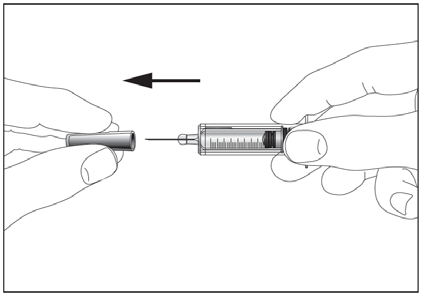
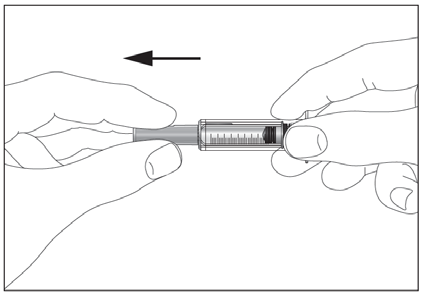
- 1. Hold the syringe with both hands and gently remove the cap from the needle without rotating it. Pull horizontally, as shown in figures 1 and 2. Do not touch the needle and do not push the plunger. LatvijaUAB Teva Baltics filiāle Latvijā Tel: +371 67323666
12
- 2. You may notice a small air bubble inside the pre-filled syringe. If air bubbles are present, gently tap the syringe with your fingers until the air bubbles rise to the surface towards the top of the syringe. Holding the syringe upright, expel the air from the syringe by pushing the plunger upwards.
- 3. There is a scale marked on the syringe. Push the plunger up to the number (mL) on the syringe that corresponds to the prescribed dose of Ratiograstim.
- 4. Check again to make sure the syringe contains the correct dose of Ratiograstim.
- 5. The pre-filled syringe is now ready for use.
Where to administer the injection
The most suitable areas of the body for administering the injection are:
- the upper thighs; and
- the abdomen, except for the area around the navel (see figure 3).
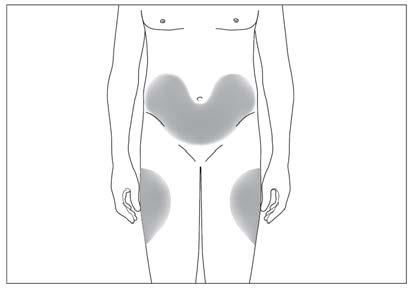
34
If the injection is administered by another person, the medicine can also be injected into the back of the arms (see figure 4).
It is preferable to change the injection site every day to avoid the risk of hardening at the administration site.
How to administer the injection
- 1. Disinfect the skin using a cotton wool ball soaked in alcohol and pinch the skin between your thumb and index finger, without compressing (see figure 5).
- 2. Insert the needle completely into the skin, as shown by the nurse or doctor (see figure 6).
- 3. Slowly pull the plunger to check that a blood vessel has not been punctured. If you notice blood in the syringe, remove the needle from the skin and reinsert it into another area.
- 4. Inject the liquid slowly and evenly, always keeping the skin pinched.
- 5. Inject only the dose indicated by your doctor.
- 6. Remove the syringe from the injection site while holding your fingers on the plunger (see figure 7). Point the needle away from yourself or others and activate the safety device by firmly pressing the plunger (see figure 8). You will feel a “click” which will confirm activation of the safety device. The needle will be covered by the protective cap so that you do not prick yourself.
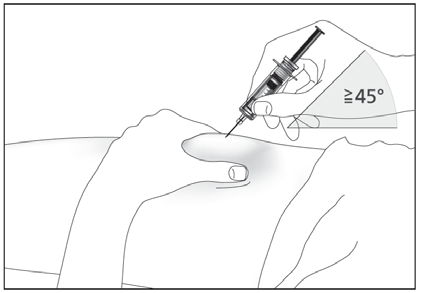
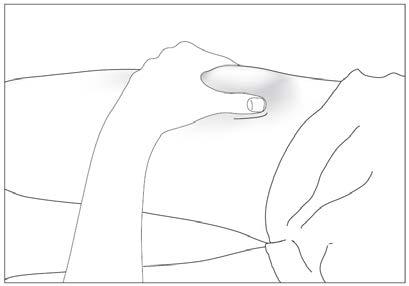
56
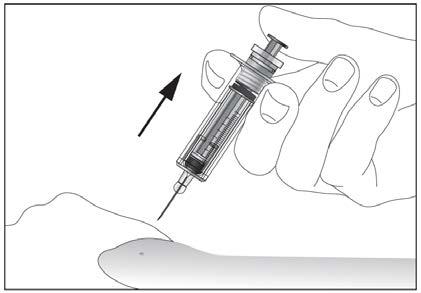
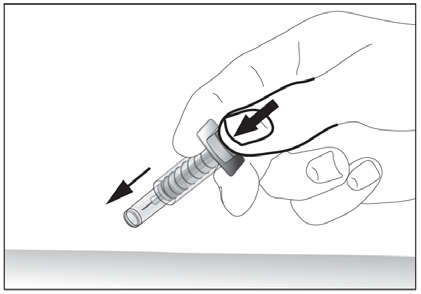
78
Remember
If you have any doubts or problems, do not hesitate to contact your doctor or nurse for help or
advice.
Disposal of used syringes
- The safety device prevents the risk of needle sticks after use, therefore no special precautions are necessary for disposal. Dispose of the syringes with safety device as shown by your doctor, nurse or pharmacist.
8. The following information is intended exclusively for healthcare professionals
Ratiograstim does not contain preservatives. To avoid potential risks of microbial contamination, Ratiograstim syringes are for single use only.
Accidental exposure to freezing temperatures does not produce adverse effects on the stability of
Ratiograstim.
Ratiograstim must not be diluted with sodium chloride solution. This medicinal product
must not be mixed with other medicines, except those indicated below. Diluted Filgrastim may
be adsorbed by glass and plastic materials, unless diluted as specified below.
If necessary, Ratiograstim may be diluted in 50 mg/mL (5%) glucose solution for infusion.
Dilution to a final concentration lower than
0.2 MUI (2 μg) per mL is not recommended under any circumstances. The solution must be visually inspected before use. Only clear solutions, without visible particles, can be used. In the case of patients treated with filgrastim
diluted to concentrations lower than 1.5 MUI (15 μg) per mL, human serum albumin
(HSA) must be added to a final concentration of 2 mg/mL. Example: in a final injection volume of
20 mL, total doses of filgrastim less than 30 MUI (300 μg) must be administered with
the addition of 0.2 mL of human serum albumin at 200 mg/mL (20%). When diluted in 50 mg/mL
(5%) glucose solution for infusion, Ratiograstim is compatible with glass and numerous
plastic materials, including PVC, polyolefin (a copolymer of polypropylene and polyethylene) and
polypropylene.
After dilution: the chemical and physical “in-use” stability of the diluted solution for infusion has been
demonstrated for 24 hours at temperatures between 2 °C and 8 °C. From a microbiological point of view, the
product must be used immediately. If not, the storage times and conditions
are the responsibility of the user and must not exceed 24 hours at a temperature between 2 °C and 8 °C,
unless the solution has been prepared in controlled and validated aseptic conditions.

Не впевнені, чи підходить вам цей лікарський засіб?
Обговоріть симптоми та можливі варіанти лікування з лікарем онлайн.

Виникли питання під час прийому ліків?
Обговоріть свої симптоми та лікування з лікарем онлайн.
- Країна реєстрації
- Лікарська формаInjectable solution, 30 MUI
- Код АТХL03AA02
- Діюча речовина
- Потрібен рецептТак
- Виробник
- Ця інформація надана лише для ознайомлення і не є медичною порадою. Рішення щодо лікування завжди приймає лікар.
- Альтернативи до RATIOGRASTIMЛікарська форма: Injectable solution, 30 MU/0.5 MLДіюча речовина: ФилграстимВиробник: ACCORD HEALTHCARE, S.L.U.Потрібен рецептЛікарська форма: Solution, 30 MU (0,3 MG/ML)Діюча речовина: ФилграстимВиробник: AMGEN EUROPE B.V.Потрібен рецептЛікарська форма: Injectable solution, 12 MUДіюча речовина: ФилграстимВиробник: PFIZER EUROPE MA EEIGПотрібен рецепт
Аналоги RATIOGRASTIM в інших країнах
Препарати з тією самою діючою речовиною, доступні в інших країнах.
Аналог RATIOGRASTIM у Іспанія
Аналог RATIOGRASTIM у Польща
Аналог RATIOGRASTIM у Україна
Отримайте рецепт на RATIOGRASTIM онлайн
Заповніть форму за 2 хвилини
Розкажіть про симптоми, історію хвороби та потрібний препарат.
Оберіть лікаря або ми призначимо
Оберіть спеціаліста або ми підберемо найближчого доступного лікаря.
Лікар розглядає ваш випадок
Зазвичай протягом 30 хвилин. Може ставити уточнювальні запитання в чаті.
Отримайте в будь-якій аптеці
Електронний рецепт надсилається на вашу пошту — дійсний по всій Польщі.
Часті запитання
RATIOGRASTIM потребує рецепта в Італія. Ви можете обговорити з лікарем онлайн, чи підходить цей лікарський засіб для вашої ситуації.
Діюча речовина у RATIOGRASTIM — Филграстим. Це допомагає визначити препарати з тим самим складом, але під іншими торговими назвами.
RATIOGRASTIM виробляється компанією RATIOPHARM GMBH. Назва бренду та упаковка можуть відрізнятися залежно від дистрибʼютора.
Лікарі, зокрема Сімейні лікарі, Психіатри, Дерматологи, Кардіологи, Ендокринологи, Гастроентерологи, Пульмонологи, Нефрологи, Ревматологи, Гематологи, Інфекціоністи, Алергологи, Геріатри, Педіатри, Онкологи, можуть оцінити доцільність застосування RATIOGRASTIM з урахуванням вашого стану та місцевих правил. Ви можете записатися на онлайн-консультацію, щоб обговорити симптоми та можливі подальші кроки.
Польща має добре розвинену систему охорони здоров'я у великих містах, таких як Варшава, Краків, Вроцлав і Гданськ. Аптеки широко доступні та працюють відповідно до чинного законодавства, забезпечуючи доступ до рецептурних препаратів.
Ви можете придбати RATIOGRASTIM у Варшаві, Кракові, Вроцлаві або Гданську в будь-якій аптеці за наявності дійсного рецепта.
Щоб отримати рецепт, ви можете скористатися Oladoctor:
Інші препарати з тією самою діючою речовиною (Филграстим) включають AKKOFIL, GRANULOKINE, NIVESTIM. Вони можуть відрізнятися торговою назвою або формою випуску, але містять той самий терапевтичний компонент. Перед зміною або початком прийому нового препарату варто проконсультуватися з лікарем.
