



OCREVUS 300 mg Koncentrat Do Sporządzania Roztworu Do Infuzji

Ocena recepty online
Lekarz przeanalizuje Twój przypadek i zdecyduje, czy wystawienie recepty jest medycznie uzasadnione.

Porozmawiaj z lekarzem o tym leku
Omów swoje objawy i opcje leczenia podczas szybkiej konsultacji online.



Jak stosować OKREVUS
Treść ulotki
- Ocrevus 300 mg concentrate for solution for infusion
- Ocrevus 920 mg injectable solution
- Ocrevus administered as a subcutaneous injection (very common: may affect more than
Ocrevus 300 mg concentrate for solution for infusion
ocrelizumab
Read this leaflet carefully before you are given this medicine because
it contains important information for you.
- Keep this leaflet. You may need to read it again.
- If you have any questions, ask your doctor.
- If any side effects occur, including those not listed in this leaflet, tell your doctor or nurse. See section 4.
Contents of this leaflet
- 1. What Ocrevus is and what it is used for
- 2. What you need to know before you are given Ocrevus
- 3. How Ocrevus is given
- 4. Possible side effects
- 5. How to store Ocrevus
- 6. Contents of the pack and other information
1. What is Ocrevus and what is it used for
What is Ocrevus
Ocrevus contains the active substance “ocrelizumab”. It is a type of protein called a “monoclonal antibody”. Antibodies work by binding to specific targets present in the body.
What is Ocrevus used for
Ocrevus is used to treat adults affected by:
- Relapsing forms of multiple sclerosis (MS)
- Early-stage primary progressive multiple sclerosis (PPMS).
What is multiple sclerosis
Multiple sclerosis (MS) affects the central nervous system, especially the nerves in the brain and the spinal cord. In MS, the immune system (the body's defense system) does not function correctly and attacks the protective layer (so-called myelin sheath) surrounding nerve cells, causing inflammation. Destruction of the myelin sheath prevents nerves from continuing to function properly.
The symptoms of MS depend on the part of the central nervous system that is affected and may include problems with walking and balance, weakness, numbness, double and blurred vision, poor coordination, and bladder problems.
- In relapsing forms of MS, the patient has repeated attacks of symptoms (relapses). Symptoms can appear suddenly within hours or slowly over several days. Symptoms disappear or improve between relapses but damage can accumulate and lead to permanent disability.
- In primary progressive MS, symptoms generally continue to worsen from the beginning of the disease.
How does Ocrevus work?
Ocrevus binds to specific B cells, a type of white blood cell that is part of the immune system and plays a role in MS. Ocrevus targets and removes these specific B cells. This reduces inflammation and attacks on the myelin sheath, reducing the likelihood of relapses and slowing the progression of the disease.
- In relapsing forms of MS (RMS), Ocrevus helps to significantly reduce the number of attacks (relapses) and significantly slows the progression of the disease. Ocrevus also significantly increases the likelihood of a patient not showing evidence of disease activity (brain lesions, relapses, and worsening disability).
- In primary progressive MS (PPMS), Ocrevus helps to slow the progression of the disease and reduce the worsening of walking speed.
2. What you need to know before you are given Ocrevus
You must not be given Ocrevus:
- if you are allergic to ocrelizumab or any of the other ingredients of this medicine (listed in section 6).
- if you currently have an infection.
- if you have been told you have serious problems with your immune system.
- if you have cancer.
If you are unsure, ask your doctor before you are given Ocrevus.
Warnings and precautions
Talk to your doctor before using Ocrevusif any of the following applies to you. The
doctor may decide to postpone the start of treatment with Ocrevus, or may
decide that you cannot receive Ocrevus if:
- You have an infection. The doctor will wait until the infection has resolved before giving you Ocrevus.
- You have had hepatitis Bin the past or are a carrier of the hepatitis B virus. This is because medicines like Ocrevus can cause reactivation of the hepatitis B virus. Before treating you with Ocrevus, your doctor will check that you are not at risk of developing a hepatitis B infection. Patients who have had hepatitis B or are carriers of the virus will undergo regular blood tests and be monitored by the doctor to detect signs of hepatitis B infection.
- You have canceror have had it in the past. The doctor may decide to postpone treatment with Ocrevus. Effect on the immune system:
- Conditions that affect the immune system: if you have another condition that affects your immune system. It may not be possible to give you Ocrevus.
- Medicines that affect the immune system: if you have taken, are taking or plan to take medicines that affect the immune system, such as chemotherapy, immunosuppressants or other medicines used to treat MS. The effect of these medicines on the immune system, if given with Ocrevus, may be too strong. The doctor may decide to postpone treatment with Ocrevus or may ask you to stop taking these medicines before starting treatment with Ocrevus. For more information, see below “Other medicines and Ocrevus”.
Reactions related to infusion
- Reactions related to infusion are the most common side effect of Ocrevus.
- Tell the nurse or doctor immediately if you experience a reaction relatedto the infusion(see section 4 for a list of reactions related to infusion). Reactions related to infusion can occur during the infusion or up to 24 hours after.
- To reduce the risk of a reaction related to infusion, the doctor will give you medicines before each infusion of Ocrevus (see section 3) and will closely monitor you during the infusion and for at least one hour after the infusion.
Infections
- Tell your doctor before you are given Ocrevus if you suspect you have an infection. The doctor will wait until the infection has resolved before giving you Ocrevus.
- You may develop infections more easily with Ocrevus. This is because the immune cells that Ocrevus targets also help to fight infections.
- Before starting treatment with Ocrevus and before subsequent infusions, your doctor may ask you to have a blood test to check your immune system. If you have serious problems with your immune system, you may be more likely to develop infections.
- If you are treated with Ocrevus for primary progressive multiple sclerosis and experience difficulty swallowing, Ocrevus may increase the risk of severe pneumonia.
- Tell your doctor or nurse immediately if you notice any of these signs of infection during or after treatment withOcrevus:
- fever or chills
- cough that doesn’t go away
- herpes (for example on the lips, shingles or genital herpes).
- Tell your doctor or nurse immediately if you think your MS is getting worseor if you notice new symptoms.There is a very rare and potentially life-threatening infection of the brain, called “progressive multifocal leukoencephalopathy” (PML), which can cause symptoms similar to those of MS. PML can occur in patients treated with Ocrevus.
- Tell your partner or caregiverabout your treatment with Ocrevus, because they may notice symptoms of PML that you do not notice, such as memory loss, difficulty thinking, difficulty walking, vision loss, changes in the way you walk, which the doctor may want to investigate.
Vaccinations
- Tell your doctor if you have recently received any vaccine or may receive a vaccine in the near future.
- During treatment with Ocrevus, you should not receive live or live attenuated vaccines (for example, the BCG vaccine for tuberculosis or vaccines against yellow fever).
- The doctor may recommend that you receive a seasonal flu vaccine.
- The doctor will check if you need to receive vaccines before starting treatment with Ocrevus. Any vaccinations should be given at least 6 weeks before starting treatment with Ocrevus.
Children and adolescents
Ocrevus is not recommended for the treatment of children and adolescents under 18 years of age.
This is because it has not yet been studied in this age group.
Other medicines and Ocrevus
Tell your doctor if you are taking, have recently taken or might take any other
medicines.
In particular, tell your doctor:
- if you have taken, are taking or plan to take medicines that affect theimmune system- such as chemotherapy, immunosuppressants or other medicines used to treat MS. The effect of these medicines on the immune system, if given with Ocrevus, may be too strong. The doctor may decide to postpone treatment with Ocrevus or may ask you to stop taking these medicines before starting treatment with Ocrevus.
- if you are taking medicines for high blood pressure. This is because Ocrevus can cause a decrease in blood pressure. The doctor may ask you to stop taking blood pressure medicines 12 hours before the Ocrevus infusion.
If any of the above applies to you (or you are not sure), talk to your doctor before you are
given Ocrevus.
Pregnancy
- If you are pregnant, suspect you may be pregnant or are planning to become pregnant, or if you are breastfeeding, ask your doctor for advice before taking this medicine. This is because Ocrevus can cross the placenta and have effects on the baby.
- Do not use Ocrevus if you are pregnant unless you have first spoken to your doctor. The doctor will weigh the benefits of treatment with Ocrevus and the possible risks to your baby.
- Talk to your doctor before vaccinating your baby.
Contraception for women
Women who are able to become pregnant must use contraceptive measures:
- during treatment with Ocrevus and
- for 4 months after the last infusion of Ocrevus.
Breast-feeding
Do not breast-feed during treatment with Ocrevus. Ocrevus can pass into breast milk.
Driving and using machines
It is not known whether Ocrevus affects your ability to drive or use tools or machines.
The doctor will tell you if your MS may affect your ability to drive or use tools and machines
safely.
Ocrevus contains sodium
This medicine contains less than 1 mmol (23 mg) of sodiumper dose, that is to say essentially
“sodium-free”.
3. How Ocrevus is administered
Ocrevus will be administered to you by a doctor or nurse experienced in using this treatment,
who will closely monitor you during the administration of the medicine, in order to detect
the onset of any undesirable effects. Ocrevus will always be administered drop by drop
(intravenous infusion).
Medicines you must take before receiving Ocrevus
Before receiving Ocrevus you will receive other medicines to prevent or reduce possible undesirable effects,
such as infusion-related reactions (see sections 2 and 4 for information on infusion-related
reactions).
Before each infusion you will receive a corticosteroid and an antihistamine, and you may also receive medicines
to lower the fever.
In what doses and with what frequency you will receive Ocrevus
You will be administered a total dose of 600 mg of Ocrevus every 6 months.
- The first dose of 600 mg of Ocrevus will be administered in two separate infusions (of 300 mg each), 2 weeks apart. Each infusion will last approximately 2 hours and 30 minutes.
- Subsequent 600 mg doses of Ocrevus will be administered in a single infusion. Depending on the rate of the subsequent infusion, each infusion will last approximately 3 hours and 30 minutes or 2 hours.
How Ocrevus is administered
- Ocrevus will be administered by a doctor or nurse. It will be administered to you via an infusion into a vein (intravenous infusion or i.v. infusion).
- You will be closely monitored during the administration of Ocrevus and for at least 1 hour after the infusion is administered, in case you experience undesirable effects such as infusion-related reactions. If you experience an infusion-related reaction, the infusion may be slowed down, temporarily suspended or permanently discontinued depending on its severity (see sections 2 and 4 for information on infusion-related reactions).
If you miss an Ocrevus infusion
- If you miss an Ocrevus infusion, agree with your doctor to receive it as soon as possible. Do not wait until the next scheduled infusion.
- To obtain the full benefit from Ocrevus, it is important that you receive each infusion at the right time.
If you stop treatment with Ocrevus
- It is important that you continue treatment as long as you and your doctor believe it will be helpful.
- Some undesirable effects may be related to low levels of B cells. After stopping treatment with Ocrevus, undesirable effects may still occur until B cell levels return to normal. Your blood B cells will gradually return to normal levels. This may take from six months to two and a half years, or in rare cases up to several years.
- Before starting to take any other medicine, inform your doctor of the date of your last Ocrevus infusion.
If you have any questions about the use of this medicine, ask your doctor.
4. Possible side effects
Like all medicines, this medicine can cause side effects, although not everybody gets them.
With Ocrevus the following side effects have been reported:
Serious side effects:
Infusion-related reactions
- Infusion-related reactions are the most common side effect of treatment with Ocrevus (very common: may affect more than 1 in 10 people). In most cases these reactions are mild in intensity, but some serious reactions can also occur.
- Tell your doctor or nurse immediately if you experience any of the signs or symptoms ofan infusion-related reaction during the infusion or up to 24 hours after the infusion.Symptoms include the following, but this is not a complete list:
- skin itching
- skin rash
- hives
- skin flushing
- sore throat or throat pain
- shortness of breath
- swelling of the throat
- flushing
- low blood pressure
- fever
- feeling tired
- headache
- dizziness
- feeling sick (nausea)
- fast heartbeat.
- If you develop an infusion-related reaction, you will be given medicines to treat it and it may be necessary to slow down or stop the infusion. Once the reaction has stopped, the infusion may continue. If the infusion-related reaction is life-threatening, your doctor will stop treatment with Ocrevus permanently.
Infections
- You may be more likely to get infections with Ocrevus. The following infections have been observed in patients treated with Ocrevus for MS:
- Very common(may affect more than 1 in 10 people)
- sore throat and runny nose (upper respiratory tract infection)
- influenza.
- Common(may affect up to 1 in 10 people)
- sinus infection
- bronchitis (inflammation of the bronchi)
- herpes infections (cold sores or shingles)
- stomach and intestinal infection (gastroenteritis)
- respiratory tract infection
- viral infection
- skin infection (cellulitis).
Some of these can be serious.
- Tell your doctor or nurse immediately if you notice any ofthese signs of infection:
- fever or chills
- cough that doesn’t go away
- herpes (for example on the lips, shingles and genital herpes).
Other side effects:
Very common(may affect more than 1 in 10 people)
- reduction in specific proteins in the blood (immunoglobulins) that help protect against infections.
Common(may affect up to 1 in 10 people)
- eye discharge with itching, redness and swelling (conjunctivitis)
- cough
- a build-up of thick mucus in the nose, throat or chest
- low levels of a type of white blood cells (neutropenia).
Not known(frequency of these side effects is not known)
- a decrease in white blood cells that may appear late.
Reporting of side effects
If you get any side effects, talk to your doctor or nurse. This includes any possible side effects not listed in this leaflet. You can also report side effects directly through the national reporting system listed in Annex V. By reporting side effects you can help provide more information on the safety of this medicine.
5. How to store Ocrevus
Ocrevus will be stored by healthcare professionals at the hospital or clinic under the following conditions:
- This medicine must be kept out of sight and reach of children.
- This medicine must not be used after the expiry date which is stated on the pack and on the vial label after “Exp.”. The expiry date refers to the last day of that month.
- This medicine must be stored in a refrigerator (2 °C - 8 °C). It must not be frozen. The vials must be stored in the outer packaging to protect them from light.
Ocrevus must be diluted before it is administered to you. The dilution will be performed by a healthcare professional. It is recommended to use the product immediately after dilution. If not used immediately, the storage times and conditions before use are the responsibility of the healthcare professional and should not normally exceed 24 hours at 2-8 °C and then 8 hours at room temperature.
Do not dispose of any medicine in wastewater. This will help protect the environment.
6. Contents of the pack and other information
What Ocrevus contains
- The active substance is ocrelizumab. Each vial contains 300 mg of ocrelizumab in 10 mL, at a concentration of 30 mg/mL.
- The other ingredients are sodium acetate trihydrate (see section 2 “Ocrevus contains sodium”), glacial acetic acid, trehalose dihydrate, polysorbate 20 and water for injections.
Description of the appearance of Ocrevus and contents of the pack
- Ocrevus is a solution with an appearance ranging from clear to slightly opalescent, from colourless to light brown.
- It is supplied as a concentrate for solution for infusion.
- This medicinal product is available in packs containing 1 or 2 vials (vials of 10 mL of concentrate). Not all pack sizes may be marketed.
Marketing Authorisation Holder
Roche Registration GmbH
Emil-Barell-Strasse 1
79639 Grenzach-Wyhlen
Germany
Manufacturer
Roche Pharma AG
Emil-Barell-Strasse 1
D-79639 Grenzach-Wyhlen
Germany
For any further information on this medicinal product, please contact the local representative of the Marketing Authorisation Holder:
België/Belgique/Belgien
N.V. Roche S.A.
Tél/Tel: +32 (0) 2 525 82 11
Lietuva
UAB “Roche Lietuva”
Tel: +370 5 2546799
България
Рош България ЕООД
Тел: +359 2 818 44 44
Luxembourg/Luxemburg
(Voir/siehe Belgique/Belgien)
Česká republika
Roche s. r. o.
Tel: +420 - 2 20382111
Magyarország
Roche (Magyarország) Kft.
Tel: +36 - 1 279 4500
Danmark
Roche Pharmaceuticals A/S
Tlf: +45 - 36 39 99 99
Malta
(see Ireland)
Deutschland
Roche Pharma AG
Tel: +49 (0) 7624 140
Nederland
Roche Nederland B.V.
Tel: +31 (0) 348 438050
Eesti
Roche Eesti OÜ
Tel: + 372 - 6 177 380
Norge
Roche Norge AS
Tlf: +47 - 22 78 90 00
Ελλάδα
Roche (Hellas) A.E.
Τηλ: +30 210 61 66 100
Österreich
Roche Austria GmbH
Tel: +43 (0) 1 27739
España
Roche Farma S.A.
Tel: +34 - 91 324 81 00
Polska
Roche Polska Sp.z o.o.
Tel: +48 - 22 345 18 88
France
Roche
Tél: +33 (0) 1 47 61 40 00
Portugal
Roche Farmacêutica Química, Lda
Tel: +351 - 21 425 70 00
Hrvatska
Roche d.o.o.
Tel: +385 1 4722 333
România
Roche România S.R.L.
Tel: +40 21 206 47 01
Ireland
Roche Products (Ireland) Ltd.
Tel: +353 (0) 1 469 0700
Slovenija
Roche farmacevtska družba d.o.o.
Tel: +386 - 1 360 26 00
Ísland
Roche Pharmaceuticals A/S
c/o Icepharma hf
Sími: +354 540 8000
Slovenská republika
Roche Slovensko, s.r.o.
Tel: +421 - 2 52638201
Italia
Roche S.p.A.
Tel: +39 - 039 2471
Suomi/Finland
Roche Oy
Puh/Tel: +358 (0) 10 554 500
Kύπρος
Γ.Α.Σταμάτης & Σια Λτδ.
Τηλ: +357 - 22 76 62 76
Sverige
Roche AB
Tel: +46 (0) 8 726 1200
Latvija
Roche Latvija SIA
Tel: +371 - 6 7039831
United Kingdom (Northern Ireland)
Roche Products (Ireland) Ltd.
Tel: +44 (0) 1707 366000
Other sources of information
More detailed information on this medicinal product is available on the website of the European Medicines Agency: http://www.ema.europa.eu .
The following information is intended exclusively for healthcare professionals:
For more information, please refer to the Summary of Product Characteristics.
In order to improve the traceability of biological medicinal products, the name and batch number of the administered medicinal product must be clearly recorded.
Dosage
- Initial dose
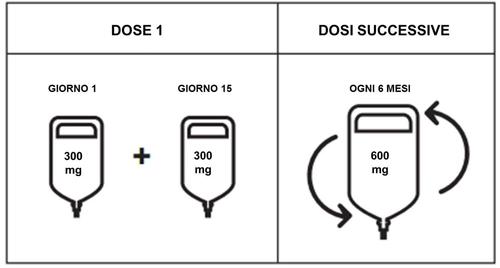
The initial dose of 600 mg is administered in two separate intravenous infusions: the first 300 mg infusion is followed 2 weeks later by a second 300 mg infusion.
- Subsequent doses
Subsequent doses of ocrelizumab are administered as a single 600 mg intravenous infusion every 6 months (see Table 1). The first subsequent 600 mg dose should be administered six months after the first infusion of the initial dose. A minimum interval of 5 months should be maintained between doses of ocrelizumab.
Figure 1. Ocrevus Dosage
Management of IRRs before infusion
- Treatment must be initiated and supervised by a healthcare professional experienced in managing severe reactions, such as infusion-related reactions (IRRs), hypersensitivity reactions and/or anaphylactic reactions, and with access to appropriate supportive medical measures.
- Premedication for IRRs
Before each ocrelizumab infusion, the following two premedications must be administered to reduce the frequency and severity of IRRs:
- 100 mg of methylprednisolone (or equivalent) intravenously approximately 30 minutes before each infusion;
- antihistamine approximately 30-60 minutes before each infusion. Consideration should also be given to premedication with an antipyretic (e.g. paracetamol) approximately 30-60 minutes before each infusion.
- Hypotension may occur as an IRR symptom during infusions. Therefore, the use of antihypertensive medications should be evaluated in the 12 hours prior to each Ocrevus infusion and during the infusion itself. Patients with a history of congestive heart failure (New York Heart Association Class III and IV) have not been studied.
Instructions for dilution
- The product must be prepared by a healthcare professional using aseptic technique. Do not shake the vial. Use a sterile needle and syringe to prepare the diluted infusion solution.
- The product is for single use only.
- The concentrate may contain small translucent and/or reflective particles associated with increased opalescence. Do not use the concentrate if it shows colour changes or if the concentrate contains foreign particles.
- The medicinal product must be diluted before administration. Solutions for intravenous administration are prepared by diluting the concentrate in an infusion bag containing an isotonic solution of sodium chloride 9 mg/mL (0.9%) (300 mg/250 mL or 600 mg/500 mL) to achieve a final ocrelizumab concentration of approximately 1.2 mg/mL.
- The diluted infusion solution must be administered through an infusion set with a 0.2 or 0.22 micron in-line filter.
- Before starting the intravenous infusion, the contents of the infusion bag should be at room temperature to avoid an infusion reaction due to administration of the solution at low temperatures.
Method of administration
- After dilution, treatment is administered by intravenous infusion through a dedicated line.
- Infusions should not be administered by rapid intravenous push or bolus injection.
Table 1: Dosage
| Quantity of ocrelizumab to be administered | or Infusion instructions | ||
| Initial dose (600 mg) divided into 2 infusions | Infusion 1 | 300 mg in 250 mL | c
|
| Infusion 2 (2 weeks later) | 300 mg in 250 mL | ||
| Subsequent doses (600 mg) Single infusion Every 6 months | Option 1 Infusion lasting approximately 3.5 hours | 600 mg in 500 mL d a | F
|
| n OR | |||
| Option 2 Infusion lasting approximately 2 hours I a i z n | a 600 mg in 500 mL i l a t |
| |
Management of IRRs during and after infusion
Patients must be monitored during the infusion and for at least one hour after completion of the infusion to detect any symptoms of an IRR.
During infusion
- Infusion modifications in case of IRR
If an IRR occurs during any infusion, follow the instructions below for modification.
Potentially life-threatening IRRs
If signs of a potentially life-threatening or disabling IRR, such as acute hypersensitivity or acute respiratory distress syndrome, are observed during an infusion, the infusion must be stopped immediately and the patient must receive appropriate treatment. The infusion must be discontinued permanently in these patients (see section 4.3).
Severe IRR
If a patient experiences a severe IRR (e.g. dyspnoea) or a set of symptoms including flushing, fever and sore throat, the infusion must be stopped immediately and the patient must receive symptomatic treatment. The infusion may only be resumed after all symptoms have resolved. The initial infusion rate must be half the rate used when the reaction occurred. No modifications to the infusion are necessary for subsequent new infusions unless the patient experiences an IRR.
Mild to moderate IRRs
If a patient experiences a mild to moderate IRR (e.g. headache), the infusion rate must be reduced to half the rate used when the event occurred. This reduced rate must be maintained for at least 30 minutes. If tolerated, the infusion rate may be increased to the patient's initial infusion rate. No modifications to the infusion are necessary for subsequent new infusions unless the patient experiences an IRR.
- Patients experiencing severe pulmonary symptoms, such as bronchospasm or asthma exacerbation, must stop the infusion immediately and permanently. After administering symptomatic treatment, the patient should be monitored until the pulmonary symptoms resolve, as initial improvement of clinical symptoms may be followed by worsening.
- Hypersensitivity may be clinically indistinguishable from an IRR in terms of symptoms. If a hypersensitivity reaction is suspected during the infusion, the infusion must be stopped immediately and permanently.
After infusion
- Patients must be monitored for at least one hour after completion of the infusion to detect any symptoms of an IRR.
- Physicians must advise patients of the possibility of an IRR occurring within 24 hours of the infusion.
Shelf life
Intact vial
2 years
Diluted solution for intravenous infusion
- Chemical and physical stability in use has been demonstrated for 24 hours at 2-8 °C and subsequently for 8 hours at room temperature.
- From a microbiological point of view, the prepared infusion solution should be used immediately. If not used immediately, the storage times and conditions before use are the responsibility of the user and should not normally exceed 24 hours at a temperature between 2-8 °C and subsequently for 8 hours at room temperature, unless the dilution is carried out in controlled and validated aseptic conditions.
- If intravenous infusion is not possible on the same day, the remaining solution must be discarded.
Ocrevus 920 mg injectable solution
ocrelizumab
Read this leaflet carefully before you are given this medicine because
it contains important information for you.
- Keep this leaflet. You may need to read it again.
- If you have any questions, ask your doctor.
- If you get any side effects, even those not listed in this leaflet, tell your doctor or nurse. See section 4.
- This medicine has been prescribed for you only. Do not pass it on to others, even if their symptoms are the same as yours, as it could be harmful.
Contents of this leaflet
- 1. What Ocrevus is and what it is used for
- 2. What you need to know before you are given Ocrevus
- 3. How Ocrevus is given
- 4. Possible side effects
- 5. How to store Ocrevus
- 6. Contents of the pack and other information
1. What is Ocrevus and what is it used for
What is Ocrevus
Ocrevus contains the active substance “ocrelizumab”. It is a type of protein called a “monoclonal antibody”. Antibodies work by binding to specific targets present in the body.
What is Ocrevus used for
Ocrevus is used to treat adults affected by:
- Relapsing forms of multiple sclerosis (MS)
- Early stage primary progressive multiple sclerosis (PPMS).
What is multiple sclerosis
Multiple sclerosis (MS) affects the central nervous system, especially the nerves in the brain and the
spinal cord. In MS, the immune system (the body's defense system) does not function
correctly and attacks the protective layer (so-called myelin sheath) surrounding nerve
cells, causing inflammation. Destruction of the myelin sheath prevents nerves from
functioning correctly.
The symptoms of MS depend on the part of the central nervous system that is affected and may
include problems with walking and balance, weakness, numbness, double and
blurred vision, poor coordination, and bladder problems.
- In relapsing forms of MS, the patient has repeated attacks of symptoms (relapses). Symptoms may appear suddenly within a few hours or slowly over several days. Symptoms disappear or improve between relapses, but damage can accumulate and lead to permanent disability.
- In primary progressive MS, symptoms generally continue to worsen from the beginning of the disease.
How does Ocrevus work?
Ocrevus binds to specific B cells, a type of white blood cell that is part of the
immune system and plays a role in MS. Ocrevus targets and removes these specific
B cells. This reduces inflammation and attacks on the myelin sheath, reduces the
likelihood of experiencing a relapse, and slows disease progression.
- In relapsing forms of MS (RMS), Ocrevus helps to significantly reduce the number of attacks (relapses) and significantly slows disease progression. Ocrevus also significantly increases the likelihood of a patient not showing evidence of disease activity (brain lesions, relapses, and worsening disability).
- In primary progressive MS (PPMS), Ocrevus helps to slow disease progression and reduce worsening of walking speed.
2. What you need to know before you are given Ocrevus
You must not be given Ocrevus:
- if you are allergic to ocrelizumab or any of the other ingredients of this medicine (listed in section 6).
- if you currently have an infection.
- if you have been told you have serious problems with your immune system.
- if you have cancer.
If you are unsure, ask your doctor before you are given Ocrevus.
Warnings and precautions
Talk to your doctor before using Ocrevusif any of the following apply to you. The
doctor may decide to postpone giving you the treatment with Ocrevus, or may
decide that you cannot receive Ocrevus if:
- You have an infection. The doctor will wait until the infection has resolved before giving you Ocrevus.
- You have had hepatitis Bin the past or are a carrier of the hepatitis B virus. This is because medicines like Ocrevus can cause the hepatitis B virus to become active again. Before treating you with Ocrevus, your doctor will check that you are not at risk of developing a hepatitis B infection. Patients who have had hepatitis B or are carriers of the virus will undergo regular blood tests and be monitored by the doctor to detect signs of hepatitis B infection.
- You have canceror have had it in the past. The doctor may decide to postpone treatment with Ocrevus. Effect on the immune system:
- Illnesses that affect the immune system: if you have another illness that affects your immune system. It may not be possible to give you Ocrevus.
- Medicines that affect the immune system: if you have taken, are taking or plan to take medicines that affect the immune system, such as chemotherapy, immunosuppressants or other medicines used to treat MS. The doctor may decide to postpone treatment with Ocrevus or may ask you to stop taking these medicines before starting treatment with Ocrevus. For more information, see below “Other medicines and Ocrevus”.
Reactions related to the injection
- Reactions related to the injection are the most common side effect of Ocrevus, when given as a subcutaneous injection (under the skin).
- Tell the nurse or doctor immediately if you experience a reaction related to the injection(see section 4 for a list of injection-related reactions). Injection-related reactions can occur during the injection or up to 24 hours after.
- To reduce the risk of an injection-related reaction, the doctor will give you medicines before each Ocrevus injection (see section 3) and will closely monitor you during the injection and for at least one hour after the initial injection.
Infections
- Tell your doctor before you are given Ocrevus if you suspect you have an infection. The doctor will wait until the infection has resolved before giving you Ocrevus.
- You may develop infections more easily with Ocrevus. This is because the immune cells that Ocrevus targets also help to fight infections.
- Before starting treatment with Ocrevus and before subsequent injections, your doctor may ask you to have a blood test to check your immune system. If you have serious problems with your immune system, you may be more likely to develop infections.
- If you are being treated with Ocrevus for primary progressive multiple sclerosis and develop difficulty swallowing, Ocrevus may increase the risk of severe pneumonia.
- Tell your doctor or nurse immediately if you notice any of these signs of infection during or after treatment with Ocrevus:
- fever or chills
- cough that does not go away
- herpes (for example on the lips, shingles or genital herpes).
- Tell your doctor or nurse immediately if you think your MS is getting worse or if you notice new symptoms. There is a very rare and potentially life-threatening brain infection called “progressive multifocal leukoencephalopathy” (PML) that can cause symptoms similar to those of MS. PML can occur in patients treated with Ocrevus.
- Tell your partner or caregiverabout your treatment with Ocrevus, because they may notice symptoms of PML that you do not notice, such as memory loss, difficulty thinking, difficulty walking, vision loss, changes in the way you walk, which the doctor may want to investigate further.
Vaccinations
- Tell your doctor if you have recently been given any vaccine or may be given a vaccine in the near future.
- During treatment with Ocrevus, you should not receive live or live-attenuated vaccines (for example, the BCG vaccine for tuberculosis or vaccines against yellow fever).
- Your doctor may recommend that you receive a seasonal flu vaccine.
- Your doctor will check if you need to receive vaccines before starting treatment with Ocrevus. Any vaccinations should be given at least 6 weeks before starting treatment with Ocrevus.
Children and adolescents
Ocrevus is not recommended for the treatment of children and adolescents under 18 years of age.
This is because it has not yet been studied in this age group.
Other medicines and Ocrevus
Tell your doctor if you are taking, have recently taken or might take any other medicines.
In particular, tell your doctor:
- if you have taken, are taking or plan to take medicines that affect the immune system- such as chemotherapy, immunosuppressants or other medicines used to treat MS. The effect of these medicines on the immune system, if given with Ocrevus, may be too strong. The doctor may decide to postpone treatment with Ocrevus or may ask you to stop taking these medicines before starting treatment with Ocrevus.
If any of the above applies to you (or you are not sure), talk to your doctor before you are given Ocrevus.
Pregnancy
- If you are pregnant, or breastfeeding, or if you suspect you might be pregnant, ask your doctor for advice before taking this medicine. This is because Ocrevus can cross the placenta and have effects on the baby.
- Do not use Ocrevus if you are pregnant unless you have first talked to your doctor. The doctor will assess the benefits of treatment with Ocrevus and the possible risks to your baby.
- Ask your doctor before vaccinating your baby.
Contraception for women
Women of childbearing potential must use contraceptive measures:
- during treatment with Ocrevus and
- for 4 months after the last dose of Ocrevus.
Breast-feeding
Do not breast-feed during treatment with Ocrevus. Ocrevus can pass into breast milk.
Driving and using machines
It is not known whether Ocrevus has an effect on your ability to drive or use tools or machines.
The doctor will tell you if your MS may affect your ability to drive or use tools and machines safely.
Ocrevus contains sodium
This medicine contains less than 1 mmol (23 mg) of sodiumper dose, that is to say it is essentially
“sodium-free”.
3. How Ocrevus is administered
Medicines you must take before receiving Ocrevus
Before receiving Ocrevus, you will receive other medicines to prevent or reduce possible side effects,
such as infusion-related reactions (see sections 2 and 4 for information on infusion-related reactions).
Before each infusion, you will receive a corticosteroid and an antihistamine, and you may also receive medicines
to lower the fever.
What dose and how often you will receive Ocrevus
You will be given a total dose of 920 mg of Ocrevus every 6 months.
How Ocrevus is administered
- Ocrevus will be administered by a doctor or nurse. It will be administered by injection under the skin (subcutaneous injection).
- The injections will be given at the abdomen over approximately 10 minutes.
- The doctor or nurse will make sure that each injection is given in the abdomen, in areas where the skin is not red, bruised, tender or hard, or in areas where there are moles or scars.
- You will be closely monitored during the administration of Ocrevus and for at least 1 hour after the initial injection, in case you experience side effects such as infusion-related reactions. If you experience an infusion-related reaction, the injection may be temporarily suspended or permanently discontinued depending on its severity (see sections 2 and 4 for information on infusion-related reactions).
If you miss an Ocrevus injection
- If you miss an Ocrevus injection, agree with your doctor to receive it as soon as possible. Do not wait until the next scheduled injection.
- To get the full benefit from Ocrevus, it is important that you receive each injection at the right time.
If you stop taking Ocrevus
- It is important that you continue treatment as long as you and your doctor believe it will be helpful.
- Some side effects may be related to low levels of B cells. After stopping treatment with Ocrevus, side effects may still occur until B cell levels return to normal. Your blood B cells will gradually return to normal levels. This may take from six months to two and a half years, or in rare cases up to several years.
- Before starting to take any other medicine, tell your doctor the date of your last dose of Ocrevus.
If you have any questions about the use of this medicine, ask your doctor.
4. Possible side effects
Like all medicines, this medicine can cause side effects, although not everybody gets them.
With Ocrevus, the following side effects have been reported:
Serious side effects:
Injection-related reactions
- Injection-related reactions are the most common side effect of treatment with

Nie jesteś pewien, czy ten lek jest odpowiedni dla ciebie?
Omów swoje objawy i leczenie z lekarzem online.
Ocrevus administered as a subcutaneous injection (very common: may affect more than
1 in 10 people). In most cases, these reactions are mild or moderate in intensity,
but some serious reactions have also occurred with Ocrevus administered by intravenous infusion (intravenous infusion).
- Immediately inform your doctor or nurse if you experience any of the signs or symptoms ofan injection-related reaction during the injection or up to 24 hours after.Symptoms include the following, but this is not a complete list:
- skin itching
- skin rash
- urticaria (hives)
- skin redness
- pain or swelling at the injection site
- sore throat or irritation
- shortness of breath
- swelling of the throat
- flushing
- low blood pressure
- fever
- feeling tired
- headache
- dizziness
- feeling sick (nausea)
- fast heartbeat.
- If you develop an injection-related reaction, you will be given medicines to treat it and it may be necessary to stop the injection. If the injection-related reaction is life-threatening, your doctor will permanently stop treatment with Ocrevus.
Infections
- You may be more likely to develop infections with Ocrevus. The following infections have been observed in patients treated with Ocrevus for MS:
- Very common(may affect more than 1 in 10 people)
- sore throat and runny nose (upper respiratory tract infection)
- influenza (flu).
- Common(may affect up to 1 in 10 people)
- sinus infection
- bronchitis (inflammation of the bronchi)
- herpes infections (cold sores or shingles)
- stomach and intestinal infection (gastroenteritis)
- respiratory tract infection
- viral infection
- skin infection (cellulitis).
Some of these can be serious.
- Immediately inform your doctor or nurse if you notice any ofthese signs of infection:
- fever or chills
- cough that doesn’t go away
- herpes (for example, on the lips, shingles, and genital herpes).
Other side effects:
Very common(may affect more than 1 in 10 people)
- reduction in specific proteins in the blood (immunoglobulins) that help protect against infections.
Common(may affect up to 1 in 10 people)
- discharge from the eye with itching, redness, and swelling (conjunctivitis)
- cough
- a build-up of thick mucus in the nose, throat, or chest
- low levels of a type of white blood cells (neutropenia).
Not known(frequency of these side effects cannot be estimated from available data)
- a decrease in white blood cells that may appear late.
Reporting of side effects
If you get any side effects, talk to your doctor or nurse. This includes any side effects not listed in this leaflet. You can also report side effects directly through
the national reporting system listed in Annex V. By reporting side effects you can help provide more information on the safety of this medicine.
5. How to store Ocrevus
Ocrevus will be stored by healthcare professionals at the hospital or clinic under the following conditions:
- This medicine must be kept out of the sight and reach of children.
- This medicine must not be used after the expiry date which is stated on the pack and on the vial label after “Exp.”. The expiry date refers to the last day of that month.
- This medicine must be stored in a refrigerator (2 °C - 8 °C). It must not be frozen. The vials must be stored in the outer packaging to protect them from light and must not be shaken.
Do not dispose of any medicine in wastewater. This will help protect the environment.
6. Contents of the pack and other information
What Ocrevus contains
- The active substance is ocrelizumab. Each vial contains 920 mg of ocrelizumab in 23 mL (40 mg/mL).
- The other ingredients are recombinant human hyaluronidase (rHuPH20), trisodium citrate trihydrate (see section 2 “Ocrevus contains sodium”), glacial acetic acid, α,α-trehalose dihydrate, polysorbate 20, L-methionine and water for injections.
Description of Ocrevus and contents of the pack
- Ocrevus is a solution ranging in appearance from clear to slightly opalescent, from colourless to light brown.
- It is supplied as an injectable solution.
- Ocrevus is available in packs containing 1 glass vial.
Marketing authorisation holder
Roche Registration GmbH
Emil-Barell-Strasse 1
79639 Grenzach-Wyhlen
Germany
Manufacturer
Roche Pharma AG
Emil-Barell-Strasse 1
D-79639 Grenzach-Wyhlen
Germany
For further information on this medicinal product, contact the local representative of the marketing authorisation holder:
België/Belgique/Belgien
N.V. Roche S.A.
Tél/Tel: +32 (0) 2 525 82 11
Lietuva
UAB “Roche Lietuva”
Tel: +370 5 2546799
България
Рош България ЕООД
Тел: +359 2 818 44 44
Luxembourg/Luxemburg
(Voir/siehe Belgique/Belgien)
Česká republika
Roche s. r. o.
Tel: +420 - 2 20382111
Magyarország
Roche (Magyarország) Kft.
Tel: +36 - 1 279 4500
Danmark
Roche Pharmaceuticals A/S
Tlf: +45 - 36 39 99 99
Malta
(see Ireland)
Deutschland
Roche Pharma AG
Tel: +49 (0) 7624 140
Nederland
Roche Nederland B.V.
Tel: +31 (0) 348 438050
Eesti
Roche Eesti OÜ
Tel: + 372 - 6 177 380
Norge
Roche Norge AS
Tlf: +47 - 22 78 90 00
Ελλάδα
Roche (Hellas) A.E.
Τηλ: +30 210 61 66 100
Österreich
Roche Austria GmbH
Tel: +43 (0) 1 27739
España
Roche Farma S.A.
Tel: +34 - 91 324 81 00
Polska
Roche Polska Sp.z o.o.
Tel: +48 - 22 345 18 88
France
Roche
Tél: +33 (0) 1 47 61 40 00
Portugal
Roche Farmacêutica Química, Lda
Tel: +351 - 21 425 70 00
Hrvatska
Roche d.o.o.
Tel: +385 1 4722 333
România
Roche România S.R.L.
Tel: +40 21 206 47 01
Ireland
Roche Products (Ireland) Ltd.
Tel: +353 (0) 1 469 0700
Slovenija
Roche farmacevtska družba d.o.o.
Tel: +386 - 1 360 26 00
Ísland
Roche Pharmaceuticals A/S
c/o Icepharma hf
Sími: +354 540 8000
Slovenská republika
Roche Slovensko, s.r.o.
Tel: +421 - 2 52638201
Italia
Roche S.p.A.
Tel: +39 - 039 2471
Suomi/Finland
Roche Oy
Puh/Tel: +358 (0) 10 554 500
Kύπρος
Γ.Α.Σταμάτης & Σια Λτδ.
Τηλ: +357 - 22 76 62 76
Sverige
Roche AB
Tel: +46 (0) 8 726 1200
Latvija
Roche Latvija SIA
Tel: +371 - 6 7039831
United Kingdom (Northern Ireland)
Roche Products (Ireland) Ltd.
Tel: +44 (0) 1707 366000
Other sources of information
More detailed information on this medicinal product is available on the website of the European Medicines Agency: http://www.ema.europa.eu .
The following information is intended exclusively for healthcare professionals:
For more information, consult the Summary of Product Characteristics.
In order to improve the traceability of biological medicinal products, the name and batch number of the medicinal product administered must be clearly recorded.
In order to avoid administration errors, it is important to check the medicinal product labels to ensure that the patient is administered the correct formulation (intravenous or subcutaneous), as prescribed.
Before administration, the medicinal product must be visually inspected to check for the absence of particles or colour changes.
The medicinal product is for single use only and must be prepared by a healthcare professional using aseptic technique.
No incompatibilities have been observed between this medicinal product and polypropylene (PP), polycarbonate (PC), polyethylene (PE), polyvinyl chloride (PVC), polyurethane (PUR) and stainless steel.
Syringe preparation
- Before use, the vial must be removed from the refrigerator to allow the solution to reach room temperature.
- Withdraw the entire contents of Ocrevus injectable solution from the vial using a syringe and a transfer needle (a 21G needle is recommended).
- Remove the transfer needle and attach a subcutaneous infusion set (e.g. with wings/butterfly) containing a 24-26G needle for injection. Use a subcutaneous infusion set with a dead volume of NO more than 0.8 mL for administration.
- Fill the subcutaneous infusion line with the injectable solution of the medicinal product to eliminate air in the line and stop before the liquid reaches the needle.
- Ensure that the syringe contains exactly 23 mL of medicinal product solution after inserting and expelling any excess volume from the syringe.
- Administer immediately to prevent the needle from becoming blocked. Do not store the prepared syringe connected to the previously filled subcutaneous infusion set.
If the dose is not administered immediately, refer to the section below
“Syringe storage”.
Syringe storage
- If the dose is not to be administered immediately, use aseptic technique to withdraw the entire contents of Ocrevus injectable solution from the vial into the syringe, so that the volume of the dose (23 mL) and that of the subcutaneous infusion set are respected. Replace the transfer needle with a syringe closure cap. Do not attach a subcutaneous infusion set for storage.
- Chemical and physical stability in use has been demonstrated for 30 days at a temperature between 2 °C and 8 °C and, in addition, for 8 hours without light protection at ≤30 °C.
- From a microbiological point of view, the product must be used immediately after transfer from the vial to the syringe. If not used immediately, the times and conditions of storage before use are the responsibility of the user and should not normally exceed 24 hours at a temperature between 2 °C and 8 °C, unless the preparation has been carried out under controlled and validated aseptic conditions.
- If the syringe has been stored in the refrigerator, allow it to reach room temperature before administration.
Method of administration
Ocrevus 920 mg injectable solution is not intended for intravenous administration and must always be
administered as a subcutaneous injection by a healthcare professional.
Patients may start treatment with ocrelizumab administered intravenously or
subcutaneously. Patients currently being treated with ocrelizumab administered intravenously
may continue treatment with intravenous ocrelizumab or switch to Ocrevus 920 mg injectable
solution.
Before administration, the medicinal product must be removed from the refrigerator to allow the
solution to reach room temperature. For instructions on the use and handling of
the medicinal product before administration, see section 6.6.
The 920 mg dose must be administered by subcutaneous injection in the abdomen over approximately 10
minutes. Use of a subcutaneous infusion set (e.g. with wings/butterfly) is recommended. Do not
administer the residual volume retained in the subcutaneous infusion set to the patient.
The injection site must be the abdomen, except for the area within 5 cm around the navel. Injections must never be made in areas where the skin shows signs of redness, bruising,
is tender or hardened, or in areas where there are moles or scars.
Ocrevus injectable solution must always be administered by a healthcare professional. For the first
dose, it is recommended that the patient be monitored for at least one hour after the injection, with access to
appropriate medical equipment to manage severe reactions such as IRs. For subsequent doses, the need for monitoring after injection is at the discretion of the treating physician (see
section 4.4).
ANNEX IV
SCIENTIFIC CONCLUSIONS AND JUSTIFICATION FOR THE VARIATION OF THE TERMS
OF THE MARKETING AUTHORISATION
Scientific conclusions
Taking into account the assessment by the Pharmacovigilance and Risk Assessment Committee
(PRAC) of the Periodic Safety Update Reports (PSUR) for ocrelizumab, the scientific conclusions of the
PRAC are as follows:
In light of the available data which do not raise concerns about an increased risk of adverse pregnancy outcomes in women exposed to ocrelizumab within the 3 months prior to the last menstrual period and the available information on the pharmacokinetics of ocrelizumab, including the terminal half-life of 26 days, the PRAC has concluded that the product information for medicinal products containing
ocrelizumab should be amended accordingly.
Having examined the PRAC recommendation, the Committee for Human Medicinal Products
(CHMP) agrees with the related overall conclusions and with the justification for the recommendation.
Justification for the variation of the terms of the marketing authorisation
Based on the scientific conclusions relating to ocrelizumab, the CHMP considers that the benefit/risk ratio of the medicinal product containing ocrelizumab remains unchanged subject to the proposed changes
to the product information.
The CHMP recommends the variation of the terms of the marketing authorisation.

Zacząłeś przyjmować lek i masz pytania?
Omów swoje objawy i leczenie z lekarzem online.
- Kraj rejestracji
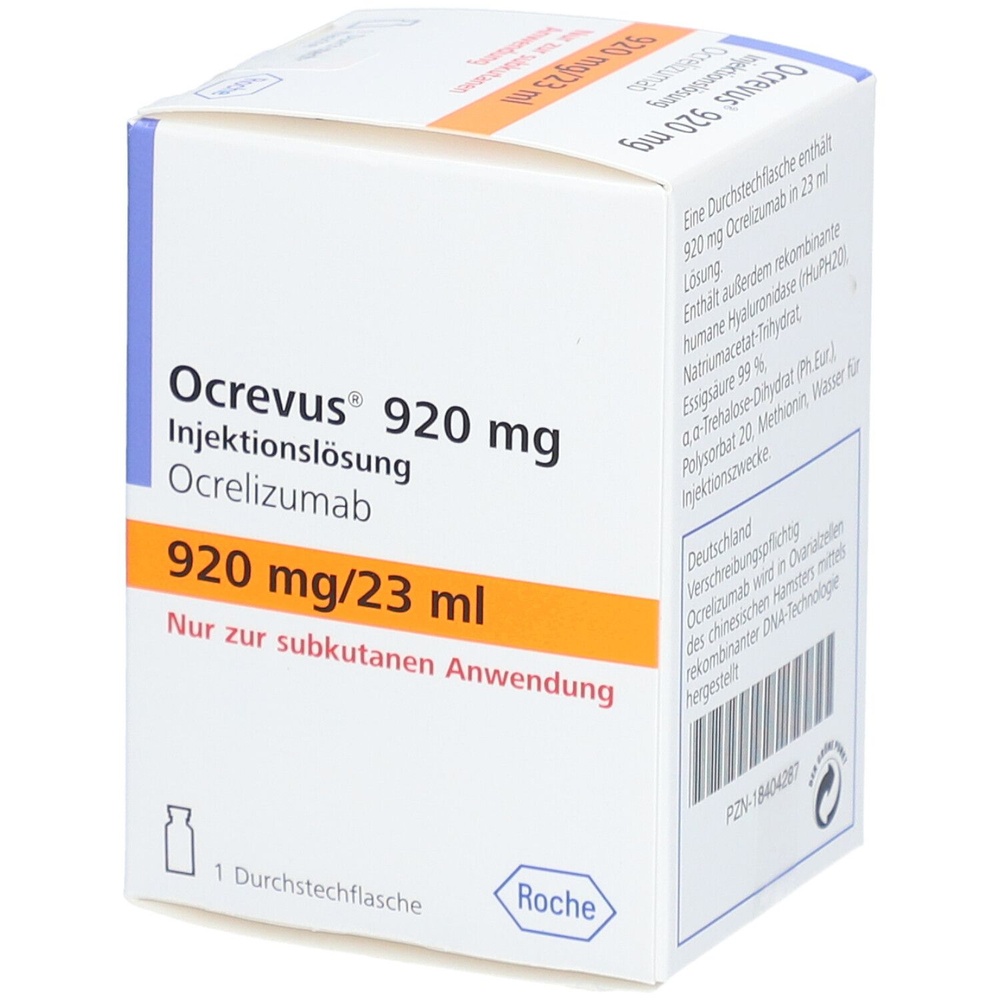
- Postać farmaceutycznaConcentrate for infusion solution, 300 MG
- Kod ATCL04AG08
- Substancja czynna
- Wymaga receptyTak
- Producent
- Te treści mają charakter wyłącznie informacyjny i nie zastępują konsultacji lekarskiej.
- Zamienniki OKREVUSPostać farmaceutyczna: Powder for intravenous infusion solution, 120 MGSubstancja czynna: belimumabProducent: GLAXOSMITHKLINE (IRELAND) LIMITEDWymaga receptyPostać farmaceutyczna: Concentrate for infusion solution, 150 mgSubstancja czynna: ublituximabProducent: NEURAXPHARM PHARMACEUTICALS, S.LWymaga receptyPostać farmaceutyczna: Powder for intravenous infusion solution, 300 MGSubstancja czynna: vedolizumabProducent: TAKEDA PHARMA A/SWymaga recepty
Odpowiedniki OKREVUS w innych krajach
Leki z tą samą substancją czynną dostępne w innych krajach.
Odpowiednik OKREVUS w Ukraina
Odpowiednik OKREVUS w Hiszpania
Lekarze online w sprawie OKREVUS
Omów stosowanie OKREVUS, bezpieczeństwo i ocenę zasadności recepty zgodnie z obowiązującymi przepisami.
Uzyskaj receptę na OKREVUS online
Wypełnij 2-minutowy formularz
Opisz swoje objawy, historię choroby i lek, o który prosisz.
Wybierz lekarza lub pozwól nam przydzielić
Wybierz specjalistę lub dopasujemy Cię do najbliższego dostępnego lekarza.
Lekarz analizuje Twój przypadek
Zazwyczaj w ciągu 30 minut. Może zadawać dodatkowe pytania przez czat.
Odbierz w dowolnej aptece
Recepta elektroniczna wysłana na Twój e-mail — ważna w całej Polsce.
Często zadawane pytania
OKREVUS wymaga recepty w Włochy. Możesz skonsultować się z lekarzem online, aby sprawdzić, czy ten lek może być odpowiedni w Twojej sytuacji.
Substancją czynną w OKREVUS jest ocrelizumab. Informacja ta pomaga rozpoznać leki o tym samym składzie, ale pod różnymi nazwami handlowymi.
OKREVUS jest produkowany przez ROCHE REGISTRATION GMBH. Nazwy handlowe i opakowania mogą się różnić w zależności od dystrybutora.
Lekarze, tacy jak Lekarze rodzinni, Psychiatrzy, Dermatolodzy, Kardiolodzy, Endokrynolodzy, Gastroenterolodzy, Pulmonolodzy, Nefrolodzy, Reumatolodzy, Hematolodzy, Zakaźnicy, Alergolodzy, Geriatrzy, Pediatrzy, Onkolodzy, mogą ocenić, czy stosowanie OKREVUS jest odpowiednie w Twoim przypadku, w zależności od sytuacji klinicznej i lokalnych przepisów. Możesz umówić konsultację online, aby omówić objawy i możliwe dalsze kroki.
Polska posiada dobrze rozwiniętą infrastrukturę ochrony zdrowia w dużych miastach, takich jak Warszawa, Kraków, Wrocław i Gdańsk. Apteki są łatwo dostępne i działają zgodnie z obowiązującymi przepisami, zapewniając dostęp do leków na receptę.
Możesz kupić OKREVUS w Warszawie, Krakowie, Wrocławiu lub Gdańsku w każdej aptece, posiadając ważną receptę.
Aby uzyskać receptę, możesz skorzystać z Oladoctor:
Inne leki zawierające tę samą substancję czynną (ocrelizumab) to m.in. BENLYSTA, BRIUMVI, ENTYVIO. Mogą one różnić się nazwą handlową lub postacią, ale zawierają ten sam składnik terapeutyczny. Przed zmianą lub rozpoczęciem nowego leku skonsultuj się z lekarzem.
