



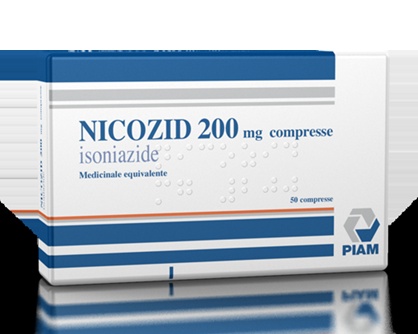
NICOZID 200 mg Таблетка

Рассмотрение рецепта онлайн
Врач рассмотрит ваш случай и примет решение о назначении рецепта, если это медицински оправдано.

Поговорите с врачом об этом лекарстве
Обсудите симптомы и возможные дальнейшие шаги на онлайн-консультации.



Инструкция по применению NIKOTSID
Содержание инструкции
- NICOZID 200mg tablets
- NICOZID 100 mg/2 ml vials for intramuscular or topical use, 500 mg/5 ml vials for slow fleboclisis
NICOZID 200mg tablets
Isoniazid
Generic medicine
Read this leaflet carefully before you start to use this medicine as it contains
important information for you.
- Keep this leaflet. You may need to read it again.
- If you have any questions, ask your doctor, pharmacist or nurse.
- This medicine has been prescribed for you only. Do not pass it on to others, even if their symptoms are the same as yours, as it could be harmful.
- If you get any side effects, even those not listed in this leaflet, tell your doctor, pharmacist or nurse. See section 4.
Contents of this leaflet:
- 1. What NICOZID is and what it is used for
- 2. What you need to know before you use NICOZID
- 3. How to use NICOZID
- 4. Possible side effects
- 5. How to store NICOZID
- 6. Contents of the pack and other information
1. What is NICOZID and what is it used for
NICOZID contains the active ingredient isoniazid, which belongs to a group of medicines
called antituberculosis drugs that kill a bacterium called Mycobacterium tuberculosis.
NICOZID is indicated, in association with other medicines, especially ethambutol and rifampicin
for:
- the treatment of tuberculosis localized in the lungs or spread outside the lungs (pulmonary or extrapulmonary tuberculosis);
- the prevention (prophylaxis) of tuberculosis in at-risk individuals (not used in association).
2. What you need to know before using NICOZID
Do not use NICOZID
- if you are allergic to isoniazid or any of the other ingredients of this medicine (listed in section 6);
- if you have suffered from liver problems caused by medicines (drug-induced liver disease);
- if you have liver disease of any kind (acute liver conditions).
Warnings and precautions
Talk to your doctor, pharmacist or nurse before using NICOZID.
Use this medicine with caution and inform your doctor in the following cases:
- if you are taking phenytoin, used to treat seizures (See section “Other medicines and NICOZID”), because isoniazid increases the levels of phenytoin in the blood causing a state of toxicity characterized by rapid and involuntary eye movements (nystagmus), loss of coordination (ataxia), excessive drowsiness (lethargy). If your doctor deems it necessary to combine these two medicines, they will prescribe you lower doses of phenytoin;
- if you are recovering from surgery, illness or trauma (convalescent patients);
- if you have liver and kidney disease (hepatic and renal conditions).
Before and during treatment with NICOZID, undergo regular eye checks (ophthalmological), as isoniazid may alter them.
In addition, during treatment with NICOZID, your doctor must have regular liver function tests performed, especially if you are over 35 years of age, and will explain what signs precede the onset of liver inflammation (prodromal signs of hepatitis).
Stop treatment immediately and inform your doctor if you experience the following during therapy with NICOZID:
- mild and temporary alteration of liver function (increased liver enzyme levels);
- severe liver inflammation (severe hepatitis). The risk of developing this condition is higher in elderly people or those who consume alcoholic beverages daily;
- nausea and vomiting;
- loss of appetite (anorexia);
- general feeling of discomfort;
- allergic reactions (hypersensitivity). In this case, if your doctor decides that it is essential to resume treatment, they will prescribe you reduced doses and then gradually increase them.
If you are taking rifampicin, another medicine for the treatment of tuberculosis, or other medicines that affect the amount of isoniazid in the blood (enzyme induction), the risk of developing toxic effects on the liver (hepatotoxicity) is greater.
In addition, rifampicin may increase the frequency and severity of blood disorders (hematological secondary reactions).
During treatment with NICOZID, you may experience symptoms of nerve inflammation (peripheral neuritis) (See section “Possible side effects”). In this case, your doctor will prescribe you therapy with vitamin B6 (pyridoxine), used for both the prevention and treatment of this type of inflammation.
Children
During early infancy, this medicine should only be administered in cases of actual need and under the direct control of the doctor.
Other medicines and NICOZID
Tell your doctor, pharmacist or nurse if you are taking, have recently taken or might take any other medicines.
Avoid using NICOZID together with disulfiram, used for the treatment of alcoholism, because when taken together these two medicines can cause coordination and mental disorders (psychic disturbances).
Use this medicine with caution and inform your doctor if you are taking the following medicines:
- phenytoin, used to treat seizures, because isoniazid increases the levels of phenytoin in the blood causing a state of toxicity characterized by rapid and involuntary eye movements (eye globes), loss of coordination, numbness (state of torpor). If your doctor deems it necessary to combine these two medicines, they will prescribe you reduced doses of phenytoin;
- aluminium hydroxide, used to reduce stomach acidity (antacid), because it reduces the effects of isoniazid. Therefore, use NICOZID 1 hour before taking the antacid;
- cycloserine, used to treat infections caused by bacteria; if administered together with NICOZID, an increase in undesirable effects affecting the brain (central nervous system) may occur.
NICOZID with alcohol
Avoid consuming large amounts of alcohol during treatment with NICOZID. Alcohol can increase the risk of liver inflammation (hepatitis) and nerves (neuropathies).
Pregnancy and breastfeeding
If you are pregnant, suspect you may be pregnant or are planning to become pregnant, or if you are breastfeeding, ask your doctor, pharmacist or nurse for advice before using this medicine.
If you are pregnant or breastfeeding, use NICOZID only if absolutely necessary and under the direct control of the doctor.
Driving and using machines
This medicine does not impair the ability to drive vehicles or operate machinery.
3. How to use NICOZID
Use this medicine following exactly the instructions of your doctor, pharmacist or
nurse. If you have any doubts, ask your doctor, pharmacist or nurse.
The dose varies depending on the type of treatment (therapeutic regimen):
- Daily treatment:the recommended dose is 5-10 mg per Kg of body weight per day orally, via injection into muscle (intramuscular route) or into a vein (intravenous route) divided into 1-2 administrations in the initial phase of treatment.
- Intermittent treatment:the recommended dose is 10 mg per Kg of body weight per day. The doctor may modify the dose based on the interval between administrations and other medicines used together with NICOZID. If the medicine must be administered via injection into the spinal cord (intrathecal route), the recommended dose is 25-50 mg per day; if, instead, the medicine must be administered via injection into the lungs (instillations into the pleural cavity), the recommended dose is 50-250 mg per day.
Use in children
The recommended dose is 6-10-20 mg per Kg of body weight per day up to a maximum
of 500 mg per day in older children. In particular, if the medicine must be
administered via injection into the spinal cord (intrathecal route), the dose
recommended is 10-20 mg per day.
Use in people with kidney problems or undergoing hemodialysis
If you suffer from kidney disorders (renal insufficiency), it is not necessary to reduce the dose.
If you have severe kidney problems (glomerular filtration rate less than 10 ml/min), the doctor must
reduce the dose of medicine to be administered (66-75% of the normal dose).
If you are undergoing mechanical blood filtration (hemodialysis, peritoneal dialysis), the doctor
must prescribe you an additional dose of NICOZID.
Use in people with liver problems
If you suffer from liver problems (hepatic insufficiency), the doctor will need to reduce the dose of
NICOZID to avoid the toxic effects of the medicine.
If you use more NICOZID than you should
Following the administration of an excessive dose of this medicine, you may experience within a short time (30 minutes – 3 hours): nausea, vomiting, dizziness, vision problems (visual disturbances) and speech. In more severe cases, seizures may occur,
breathing problems (respiratory depression), altered state of consciousness with
rapid progression from stupor to coma, increased blood acidity (metabolic acidosis),
alteration of some results of urine analyses (acetonuria), increased blood sugar levels (hyperglycemia).
The doctor will establish the most appropriate therapy for you based on the severity of the symptoms.
In case of accidental ingestion/intake of an excessive dose of NICOZID, immediately inform
your doctor or go to the nearest hospital.
If you forget to use NICOZID
Do not use a double dose to make up for the missed dose.
If you have any doubts about the use of this medicine, immediately contact your doctor, pharmacist or nurse.
4. Possible side effects
Like all medicines, this medicine can cause side effects, although not everybody gets them.
If you experience any of the following side effects, contact your doctor as soon as
possible:
- Inflammation of the pancreas, which causes severe pain in the abdomen and back (pancreatitis, frequency not known).
- Severe and widespread skin damage (separation of the epidermis and superficial mucous membranes) (toxic epidermal necrolysis - TEN, can affect up to 1 in 1000 people)
- A drug reaction that causes erythema, fever, inflammation of internal organs, hematological changes and systemic diseases (DRESS syndrome, can affect up to 1 in 1000 people).
- Yellowing of the skin and whites of the eyes, or dark urine and pale stools, fatigue, asthenia, malaise, loss of appetite, nausea or vomiting caused by liver problems (hepatitis, can affect up to 1 in 100 people).
The following side effects may occur:
Frequency not known(the frequency of which cannot be estimated on the basis of available data):
- nerve inflammation preceded by numbness, tingling, sensitivity to touch or weakness in the arms and legs (peripheral neuropathies preceded by paresthesic disturbances in the extremities), especially in people who do not eat properly (malnourished), who are predisposed because they consume large amounts of alcohol (alcoholics) or who suffer from diabetes (diabetics);
- inflammation and alteration of the optic nerve (neuritis and optic atrophy);
- convulsions, excessive activity (hyperactivity), euphoria, inability to sleep (insomnia), mental problems (toxic psychoses) with mania (manic attacks) and delusions;
- nausea, vomiting, alteration of liver function (increased liver transaminases) and of some blood tests (hyperbilirubinemia) and urine (bilirubinuria);
- decrease in the number of red blood cells (hemolytic anemia, aplastic anemia), white blood cells (agranulocytosis) and platelets (thrombocytopenia) in the blood, increase in the number of a type of white blood cells in the blood (eosinophilia);
- symptoms caused by the deficiency of some vitamins (vit. B6 and PP), increase in blood sugar levels (hyperglycemia), increase in blood acidity (acidosis);
- fever, skin irritations (morbilliform rashes, maculo-papules, exfoliative), inflammation of the lymph nodes (lymphadenitis);
- Inflammation of blood vessels.
- inflammation and pain in the joints (rheumatoid syndrome), symptoms similar to those of a severe inflammatory skin disease (lupus erythematosus-like syndrome);
- irritation at the injection site (inoculation), in case of administration by intramuscular injection.
Reporting of side effects
If you experience any side effects, including those not listed in this leaflet, please
tell your doctor or pharmacist. You can also report side effects directly
through the national reporting system at
http:// www.agenziafarmaco.gov.it/it/responsabili . By reporting side effects you can
contribute to providing more information on the safety of this medicine.
5. How to store NICOZID
Keep this medicine out of the sight and reach of children.
Do not use this medicine after the expiry date stated on the packaging after “Exp.”.
The expiry date refers to the last day of that month.
Do not dispose of any medicine in wastewater or household waste. Ask your pharmacist
how to dispose of medicines you no longer use. This will help protect the environment.
6. Contents of the pack and other information
What NICOZID contains
- The active ingredient is isoniazid. Each tablet contains 200 mg of isoniazid.
- The other ingredients are: corn starch, talc, sodium carboxymethylcellulose, magnesium stearate.
Description of NICOZID and contents of the pack
Pack of 50 tablets of 200 mg.
Marketing Authorisation Holder
PIAM FARMACEUTICI S.p.A. – Via Fieschi, 8 – 16121 Genova – Italy
Manufacturer
I.B.N. Savio srl – Via E. Bazzano, 14 – 16019 Ronco Scrivia (GE) – Italy
Geymonat S.p.A., Via S. Anna, 2 - 03012 Anagni (FR)
NICOZID 100 mg/2 ml vials for intramuscular or topical use, 500 mg/5 ml vials for slow fleboclisis
Isoniazid
Read this leaflet carefully before using this medicine as it contains
important information for you.
- Keep this leaflet. You may need to read it again.
- If you have any questions, ask your doctor, pharmacist or nurse.
- This medicine has been prescribed for you only. Do not pass it on to others, even if their symptoms are the same as yours, as it could be harmful.
- If any side effects occur, including those not listed in this leaflet, tell your doctor, pharmacist or nurse. See section 4.
Contents of this leaflet:
- 1. What NICOZID is and what it is used for
- 2. What you need to know before using NICOZID
- 3. How to use NICOZID
- 4. Possible side effects
- 5. How to store NICOZID
- 6. Contents of the pack and other information
1. What is NICOZID and what is it used for
NICOZID contains the active ingredient isoniazid, which belongs to a group of medicines
called antituberculars that kill a bacterium called Mycobacterium tuberculosis.
NICOZID is indicated, in association with other medicines, especially ethambutol and rifampicin
for:
- the treatment of tuberculosis localized in the lungs or spread outside the lungs (pulmonary or extrapulmonary tuberculosis);
- the prevention (prophylaxis) of tuberculosis in at-risk individuals (not used in association).
2. What you need to know before using NICOZID
Do not use NICOZID
- if you are allergic to isoniazid or any of the other ingredients of this medicine (listed in section 6);
- if you have suffered from liver problems caused by medicines (drug-induced liver disease);
- if you suffer from liver disease of any kind (acute hepatic conditions).
Warnings and precautions
Consult your doctor, pharmacist or nurse before using NICOZID.
Use this medicine with caution and inform your doctor in the following cases:
- if you are taking phenytoin, used to treat seizures (See section “Other medicines and NICOZID”), because isoniazid increases the levels of phenytoin in the blood causing a state of toxicity characterized by rapid and involuntary eye movements (nystagmus), loss of coordination (ataxia), excessive drowsiness (lethargy). If your doctor deems it necessary to combine these two medicines, they will prescribe you lower doses of phenytoin;
- if you are recovering from surgery, illness or trauma (convalescent patients);
- if you suffer from liver and kidney diseases (hepatic and renal conditions).
Before and during treatment with NICOZID, undergo regular eye checks (ophthalmological), as isoniazid may alter them.
In addition, during treatment with NICOZID, your doctor should have you undergo regular checks of liver function, especially if you are over 35 years of age, and will explain to you what the signs are that precede the onset of liver inflammation (prodromal signs of hepatitis).
Immediately stop treatment and inform your doctor if, during therapy with NICOZID, you experience:
- mild and temporary alteration of liver function (increased liver enzyme levels);
- severe liver inflammation (severe hepatitis). The risk of developing this disorder is greater in elderly people or those who consume alcoholic beverages daily;
- nausea and vomiting;
- loss of appetite (anorexia);
- general malaise;
- allergic reactions (hypersensitivity). In this case, if your doctor decides that it is essential to resume treatment, they will prescribe you reduced doses and then gradually increase them.
If you are taking rifampicin together with NICOZID, another medicine for the treatment of tuberculosis, or other medicines that affect the amount of isoniazid in the blood (enzyme induction), the risk of developing toxic effects on the liver (hepatotoxicity) is greater.
In addition, rifampicin may increase the frequency and severity of blood disorders (hematological type adverse reactions).
During treatment with NICOZID, you may experience symptoms of nerve inflammation (peripheral neuritis) (See section “Possible side effects”). In this case, your doctor will prescribe you therapy with vitamin B6 (pyridoxine), used for both the prevention and treatment of this type of inflammation.
Children
During early infancy, this medicine should only be administered in case of actual need and under the direct control of the doctor.
Other medicines and NICOZID
Tell your doctor, pharmacist or nurse if you are taking, have recently taken or might take any other medicines.
Avoid using NICOZID together with disulfiram, used for the treatment of alcoholism, because if taken together these two medicines can cause coordination and mental disorders (psychic disturbances).
Use this medicine with caution and inform your doctor if you are taking the following medicines:
- phenytoin, used to treat seizures, because isoniazid increases the levels of phenytoin in the blood causing a state of toxicity characterized by rapid and involuntary eye movements (eyeballs), loss of coordination, numbness (torpor). If your doctor deems it necessary to combine these two medicines, they will prescribe you reduced doses of phenytoin;
- aluminium hydroxide, used to reduce stomach acidity (antacid), because it reduces the effects of isoniazid. Therefore, use NICOZID 1 hour before taking the antacid;
- cycloserine, used to treat infections caused by bacteria; if administered together with NICOZID, an increase in undesirable effects affecting the brain (central nervous system) may occur.
NICOZID with alcohol
Avoid consuming large amounts of alcohol during treatment with NICOZID. Alcohol can increase the risk of liver inflammation (hepatitis) and nerve inflammation (neuropathies).
Pregnancy and breastfeeding
If you are pregnant, suspect you are pregnant or are planning to become pregnant, or if you are breastfeeding, ask your doctor, pharmacist or nurse for advice before using this medicine.
If you are pregnant or breastfeeding, use NICOZID only if absolutely necessary and under the direct control of your doctor.
Driving and operating machinery
This medicine does not impair the ability to drive vehicles or operate machinery.
3. How to use NICOZID
Use this medicine following exactly the instructions of your doctor, pharmacist or
nurse. If you have any doubts, ask your doctor, pharmacist or nurse.
This medicine can be administered via an injection into a muscle (intramuscular route), into a vein (intravenous route), into the spinal cord (intrathecal route) or into the
lungs (instillations into the pleural cavity).
The dose varies depending on the type of treatment (therapeutic regimen):
- Daily treatment:at the beginning of treatment, the recommended dose is 5-10 mg per Kg of body weight per day, divided into 1-2 administrations via intramuscular or intravenous injection.
- Intermittent treatment:the recommended dose is 10 mg per Kg of body weight per day. The doctor may modify the dose based on the interval between administrations and other medicines used together with NICOZID. If the medicine needs to be administered via injection into the spinal cord (intrathecal route), the recommended dose is 25-50 mg per day; if, instead, the medicine needs to be administered via injection into the lungs (instillations into the pleural cavity), the recommended dose is 50-250 mg per day.
Use in children
The recommended dose is 6-10-20 mg per Kg of body weight per day up to a maximum
of 500 mg per day in older children. In particular, if the medicine needs to be
administered via injection into the spinal cord (intrathecal route), the recommended dose is 10-20 mg per day.
Use in people with kidney problems or undergoing hemodialysis
If you suffer from kidney disorders (renal insufficiency), it is not necessary to reduce the dose.
If you have severe kidney problems (glomerular filtration rate less than 10 ml/min), the doctor must
reduce the dose of medicine to be administered (66-75% of the normal dose).
If you are undergoing mechanical blood filtration (hemodialysis, peritoneal dialysis), the doctor
must prescribe you an additional dose of NICOZID.
Use in people with liver problems
If you suffer from liver problems (hepatic insufficiency), the doctor will need to reduce the dose of
NICOZID to avoid the toxic effects of the medicine.
If you use more NICOZID than you should
Following the administration of an excessive dose of this medicine, you may experience within a short time (30 minutes – 3 hours): nausea, vomiting, dizziness, vision problems (visual disturbances) and speech. In more severe cases, seizures may occur,
breathing problems (respiratory depression), altered state of consciousness with
rapid progression from stupor to coma, increased blood acidity (metabolic acidosis),
alteration of some results of urine tests (acetonuria), increased blood sugar levels (hyperglycemia).
The doctor will establish the most appropriate therapy for you based on the severity of the symptoms.
In case of accidental ingestion/administration of an excessive dose of NICOZID, immediately inform
your doctor or go to the nearest hospital.
If you forget to use NICOZID
Do not use a double dose to make up for the missed dose.
If you have any doubts about the use of this medicine, immediately consult your doctor, pharmacist or nurse.
4. Possible side effects
Like all medicines, this medicine can cause side effects, although not everybody gets them.
If you experience any of the following side effects, contact your doctor as soon as
possible:
- Inflammation of the pancreas, which causes severe pain in the abdomen and back (pancreatitis, frequency not known).
- Severe and widespread skin damage (separation of the epidermis and superficial mucous membranes) (toxic epidermal necrolysis - TEN, may affect up to 1 in 1000 people)
- A drug reaction that causes erythema, fever, inflammation of internal organs, hematological changes and systemic diseases (DRESS syndrome, may affect up to 1 in 1000 people).
- Jaundice of the skin and whites of the eyes, or dark urine and pale stools, fatigue, asthenia, malaise, loss of appetite, nausea or vomiting caused by liver problems (hepatitis, may affect up to 1 in 100 people).
The following side effects may occur:
Frequency not known(the frequency of which cannot be established on the basis of available data):
- nerve inflammation preceded by numbness, tingling, sensitivity to touch or weakness in the arms and legs (peripheral neuropathies preceded by paresthesic disturbances in the extremities), especially in people who do not eat properly (malnourished), who are predisposed because they consume large amounts of alcohol (alcoholics) or who suffer from diabetes (diabetics);
- inflammation and alteration of the optic nerve (neuritis and optic atrophy);
- convulsions, excessive activity (hyperactivity), euphoria, inability to fall asleep (insomnia), mental problems (toxic psychoses) with mania (maniacal attacks) and delusions;
- nausea, vomiting, altered liver function (increased liver transaminases) and blood test results (hyperbilirubinemia) and urine (bilirubinuria);
- decreased number of red blood cells (hemolytic anemia, aplastic anemia), white blood cells (agranulocytosis) and platelets (thrombocytopenia) in the blood, increased number of a type of white blood cells in the blood (eosinophilia);
- symptoms caused by a deficiency of certain vitamins (vit. B6 and PP), increased blood sugar levels (hyperglycemia), increased blood acidity (acidosis);
- fever, skin irritations (morbilliform rashes, maculo-papules, exfoliative), inflammation of the lymph nodes (lymphadenitis),
- Inflammation of blood vessels.
- inflammation and pain in the joints (rheumatoid syndrome), symptoms similar to those of a severe inflammatory skin disease (lupus erythematosus-like syndrome);
- irritation at the injection site (inoculation), in case of administration by intramuscular injection.
Reporting of side effects
If you experience any side effects, including those not listed in this leaflet, please
tell your doctor or pharmacist. You can also report side effects directly
through the national reporting system at
http:// www.agenziafarmaco.gov.it/it/responsabili . By reporting side effects you can
contribute to providing more information on the safety of this medicine.
5. How to store NICOZID
Keep this medicine out of the sight and reach of children.
Do not use this medicine after the expiry date stated on the packaging after “Exp.”.
The expiry date refers to the last day of that month.
Do not dispose of any medicine in wastewater or household waste. Ask your pharmacist
how to dispose of medicines you no longer use. This will help protect the environment.
6. Contents of the pack and other information
What NICOZID contains
NICOZID 100 mg/2 ml vials for intramuscular or topical use
- The active ingredient is isoniazid. Each vial (2 ml) contains 100 mg of isoniazid.
- The other ingredient is water for injections.
NICOZID 500 mg/5 ml vials for slow intravenous infusion
- The active ingredient is isoniazid. Each vial (5 ml) contains 500 mg of isoniazid.
- The other ingredient is water for injections.
Description of the appearance of NICOZID and contents of the pack
NICOZID 100 mg/2 ml vials for intramuscular or topical use
Pack of 6 vials of 100 mg/2 ml.
NICOZID 500 mg/5 ml vials for slow intravenous infusion
Pack of 5 vials of 500 mg/5 ml.
Marketing Authorisation Holder
PIAM FARMACEUTICI S.p.A. – Via Fieschi, 8 – 16121 Genova – Italy
Manufacturer
I.B.N. Savio srl – Via E. Bazzano, 14 – 16019 Ronco Scrivia (GE) – Italy
PIAM Farmaceutici S.p.A., Via Padre G. Semeria, 5 -16131 Genova

Не уверены, подходит ли вам это лекарство?
Обсудите симптомы и варианты лечения с врачом онлайн.

Уже начали прием и появились вопросы?
Обсудите свое состояние и дальнейшие шаги с врачом онлайн.
- Страна регистрации
- Форма выпускаTablet, 200 MG
- Код АТХJ04AC01
- Действующее вещество
- Отпускается по рецептуДа
- Производитель
- Информация на этой странице носит справочный характер и не является медицинской консультацией. Перед началом приема лекарства обязательно проконсультируйтесь с врачом.
- Аналоги NIKOTSIDФорма выпуска: Film-coated tablet, 50 MGДействующее вещество: ДеламанидПроизводитель: OTSUKA NOVEL PRODUCTS GMBHОтпускается по рецептуФорма выпуска: Tablet, 200 MGДействующее вещество: претоманидаПроизводитель: MYLAN IRE HEALTHCARE LIMITEDОтпускается по рецептуФорма выпуска: Film-coated tablet, 400 MGДействующее вещество: ethambutolПроизводитель: PIAM FARMACEUTICI S.P.A.Отпускается по рецепту
Аналоги NIKOTSID в других странах
Лекарства с тем же действующим веществом, доступные в других странах.
Аналог NIKOTSID в Польша
Аналог NIKOTSID в Украина
Аналог NIKOTSID в Испания
Врачи онлайн по NIKOTSID
Обсудите применение NIKOTSID и возможные следующие шаги — по оценке врача.









Получите рецепт на NIKOTSID онлайн
Заполните форму за 2 минуты
Расскажите о симптомах, истории болезни и нужном препарате.
Выберите врача или мы назначим
Выберите специалиста или мы подберём ближайшего доступного врача.
Врач рассматривает ваш случай
Обычно в течение 30 минут. Может задать уточняющие вопросы в чате.
Получите в любой аптеке
Электронный рецепт отправляется на вашу почту — действителен по всей Польше.
Часто задаваемые вопросы
NIKOTSID требует рецепта в Италия. Вы можете уточнить у врача онлайн, подходит ли это лекарство для вашей ситуации.
Действующее вещество NIKOTSID — изониазид. Эта информация помогает определить лекарства с тем же составом под другими торговыми названиями.
NIKOTSID производится компанией PIAM FARMACEUTICI S.P.A.. Упаковка и торговое название могут отличаться в зависимости от дистрибьютора.
Врачи, включая Семейные врачи, Психиатры, Дерматологи, Кардиологи, Эндокринологи, Гастроэнтерологи, Пульмонологи, Нефрологи, Ревматологи, Гематологи, Инфекционисты, Аллергологи, Гериатры, Педиатры, Онкологи, могут оценить целесообразность применения NIKOTSID с учетом вашей ситуации и местных правил. Вы можете записаться на онлайн-консультацию, чтобы обсудить возможные варианты.
Польша имеет хорошо развитую систему здравоохранения в крупных городах, таких как Варшава, Краков, Вроцлав и Гданьск. Аптеки широко доступны и работают в соответствии с действующим законодательством, обеспечивая доступ к рецептурным препаратам.
Вы можете купить NIKOTSID в Варшаве, Кракове, Вроцлаве или Гданьске в любой аптеке при наличии действующего рецепта.
Чтобы получить рецепт, вы можете воспользоваться Oladoctor:
Другие лекарства с тем же действующим веществом (изониазид) включают DELTYBA, DOVPRELA, ETAPIAM. Они могут отличаться торговым названием или формой выпуска, но содержат одинаковый терапевтический компонент. Перед изменением лечения рекомендуется проконсультироваться с врачом.
