



NEUPRO 2 mg /24 H Трансдермальный Пластырь

Рассмотрение рецепта онлайн
Врач рассмотрит ваш случай и примет решение о назначении рецепта, если это медицински оправдано.

Поговорите с врачом об этом лекарстве
Обсудите симптомы и возможные дальнейшие шаги на онлайн-консультации.



Инструкция по применению NEUPRO
Содержание инструкции
- Neupro 1 mg/24 h transdermal patch, 3 mg/24 h transdermal patch
- Neupro 2 mg/24 h transdermal patch
- Neupro 4 mg/24 h transdermal patch, 6 mg/24 h transdermal patch, 8 mg/24 h transdermal patch
- Neupro 2 mg/24 h, 4 mg/24 h, 6 mg/24 h, 8 mg/24 h
Neupro 1 mg/24 h transdermal patch, 3 mg/24 h transdermal patch
Rotigotina
Read this leaflet carefully before you start to take this medicine as it contains important information for you.
- Keep this leaflet. You may need to read it again.
- If you have any questions, ask your doctor, pharmacist or nurse.
- This medicine has been prescribed for you only. Do not pass it on to others, even if their symptoms are the same as yours, as it could be harmful.
- If you get any side effects, even those not listed in this leaflet, tell your doctor, pharmacist or nurse. See section 4. Contents of this leaflet
- 1. What Neupro is and what it is used for
- 2. What you need to know before you take Neupro
- 3. How to take Neupro
- 4. Possible side effects
- 5. How to store Neupro
- 6. Contents of the pack and other information
1. What is Neupro and what is it used for
What is Neupro
Neupro contains the active substance rotigotine.
It belongs to the class of medicines called “dopamine agonists”. Dopamine is a substance
present in the brain responsible for the transmission of messages, the function of which is important for
movement.
What is Neupro used for
Neupro is indicated in adults for the treatment of signs and symptoms of:
- Restless Legs Syndrome- this may be associated with discomfort in the legs and arms, an irresistible need to move the legs, sleep disturbances, a feeling of fatigue or drowsiness during the day. Treatment with Neupro reduces these symptoms and decreases their duration.
2. What you need to know before you take Neupro
Do not take Neupro if:
- you are allergicto rotigotineor to any of the other ingredientsof this medicine (listed in section 6)
- you are going to have a magnetic resonance imaging(MRI) scan (diagnostic images of the inside of the body, obtained using magnetic fields instead of x-rays)
- you are going to have “cardioversion” (a specific treatment for an abnormal heart rhythm). Immediately before undergoing magnetic resonance imaging (MRI) or cardioversion, you must remove the Neupro patch to avoid skin burns, as the patch contains aluminum. You can then reapply a new patch. If any of the above conditions apply to you, do not use Neupro. If you are unsure, ask your doctor, pharmacist or nurse before use.
Warnings and precautions
Talk to your doctor, pharmacist or nurse before taking Neupro. This is because:
- your blood pressureneeds to be checked regularly while you are using Neupro, especially at the beginning of treatment. Neupro can change your blood pressure.
- your eyesneed to be checked regularly while you are using Neupro. If you notice any vision problems between check-ups, contact your doctor immediately.
- if you have severe liver problems, your doctor may need to adjust the dose. If your liver problems get worse during treatment, contact your doctor immediately.
- skin problemsmay occur caused by the patch - see “Skin problems caused by the patch” in section 4.
- you may feel very sleepy or fall asleep suddenly -see “Driving and using machines”in section 2.
- the symptoms of Restless Legs Syndromemay start earlier than usual, be more severe and involve other limbs. If you experience these symptoms before or after starting treatment with Neupro, contact your doctor as the treatment may need to be adjusted. Medicines used to treat Restless Legs Syndrome must be reduced or stopped gradually. Tell your doctor if you experience symptoms such as depression, anxiety, fatigue, sweating or pain after stopping or reducing treatment with Neupro. Loss of consciousness may occurNeupro can cause loss of consciousness. This can happen especially when you start using Neupro or when the dose is increased. Tell your doctor if you lose consciousness or feel dizzy. Abnormal changes in behaviour and thinkingNeupro can cause unwanted effects that change behaviour (the way you act). It may be helpful to tell a family member or caregiver that you are taking Neupro, so they can tell you or the doctor if they are concerned about any changes in your behaviour. Tell your doctor if you or a family member/caregiver notices that you are excessively using the medicine or developing a strong desire for high doses of Neupro or other medicines used to treat Restless Legs Syndrome. See “Abnormal changes in behaviour and thinking”in section 4 for more information. Children and adolescentsDonot give this medicine to childrenunder 18 years of age because the safety and effectiveness of the medicine in this age group have not been established. Other medicines and NeuproTell your doctor or pharmacist if you are taking, have recently taken or might take any other medicines. This includes medicines you buy without a prescription or herbal medicines. While using Neupro do not take the following medicines - because they can reduce its effect:
- “antipsychotic” medicines - used to treat certain mental disorders
- metoclopramide - used for nausea (feeling sick) and vomiting.
Tell your doctor before using Neupro if you are taking:
- sedative medicines such as benzodiazepines or medicines used to treat mental disorders or depression.
- medicines that lower blood pressure. Neupro can lower blood pressure when you get up - this effect can be worsened by medicines used to lower blood pressure. Your doctor will tell you if it is safe for you to continue taking these medicines while using Neupro. Neupro with food, drinks and alcoholBecause rotigotine passes into the blood through the skin, food and drinks have no effect on how the medicine is absorbed by the body. Ask your doctor if you can drink alcohol while using Neupro. Pregnancy and breastfeedingDo not use Neupro if you are pregnant. This is because the effects of rotigotine on pregnancy and the unborn baby are not known. Do not breastfeed during treatment with Neupro. This is because rotigotine can pass into breast milk and have effects on the baby. Also, it is likely to cause a reduction in the amount of milk produced. If you are pregnant, suspect you may be pregnant, or are planning to become pregnant, or if you are breastfeeding, ask your doctor or pharmacist for advice before taking this medicine. Driving and using machinesNeupro can cause very strong sleepiness and can make you fall asleep suddenly. If this happens to you, do not drive. In rare cases, patients have fallen asleep while driving vehicles and have caused accidents. Also, if you feel very sleepy do not use tools or machines - or do anything else that could put yourself or others at risk of serious injury. Neupro contains sodium metabisulfite (E223)Sodium metabisulfite (E223) can, rarely, cause severe hypersensitivity reactions (allergic reactions) and bronchospasm (breathing problems caused by a narrowing of the airways).
3. How to take Neupro
Use this medicine following exactly the instructions of your doctor or pharmacist. If you have
any doubts consult your doctor or pharmacist.
What dosage to use
Neupro is available in patches with different dosages that release the medicine for 24 hours. The dosages
are 1 mg/24 h, 2 mg/24 h and 3 mg/24 h for the treatment of Restless Legs Syndrome.
- The initial dose is one 1 mg/24 h patch per day.
- Starting from the second week, the daily dose may be increased by 1 mg per week, up to reaching the appropriate maintenance dose for you. This occurs when you and your doctor establish that the symptoms are adequately controlled and the undesirable effects caused by the medicine are acceptable.
- Always follow your doctor's instructions exactly.
- The maximum dose is 3 mg per day.
If you need to stop therapy, see “If you stop treatment with Neupro”in section 3.
How to use Neupro patches
Neupro is a patch to be applied to the skin.
- Make sure you have removed the old patch before applying a new one.
- Apply the new patch to a different area of skinevery day.
- Leave the patch on the skin for 24 hours, then remove it and apply a new one.
- Change the patchesevery dayat about the same time.
- Do not cut Neupro patches into pieces.Where to apply the patchApply the adhesive part of the patch to clean, dry and healthy skin, in the following regions, as indicated in grey, in the figures on the side:
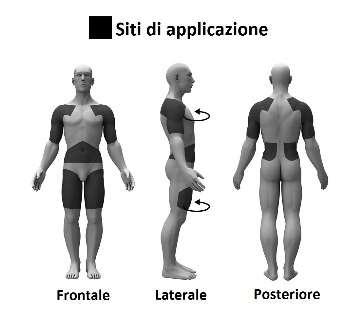
- Shoulder or upper arm.
- Abdomen.
- Side (between the ribs and hips).
- Thigh or hip.
To avoid skin irritation
- Apply the patch to a different area of theskin every day. For example, put it one day on the right side of the body, then the next day on the left side of the body. One day on the upper part of the body, then on the lower part of the body, the next day.
- Do notreapply Neupro twice to the same area of skinwithin 14days.
- Do notapply the patch to wounded or damaged skin, or to skinreddened or irritated. If you have skin problems due to the patch, see “Skin problems caused by the patch”in section 4, for further information. To prevent loss or detachment of the patch
- Do notapply the patch to an area that may be rubbed by tight clothing.
- Do notuse creams, oils, lotions, powdersor other skin productswhere you will apply the patch. Also do not apply them over or near another patch that you have already applied.
- If you need to apply the patch to an area covered with hair, you must shavethe area at least threedays beforeapplying the patch.
- If the edges of the patch lift, the patch can be further secured with medical adhesive tape. If the patch detaches, apply a new patch for the remainder of the day - then replace the patch at the same time as usual.
- Do not letthe patch area be exposed to heat- for example, excessive sunlight, sauna, very hot baths, heating pads or hot water bottles. This is because the medicine may be released faster. Contact your doctor or pharmacist if you think the heat applied has been excessive.
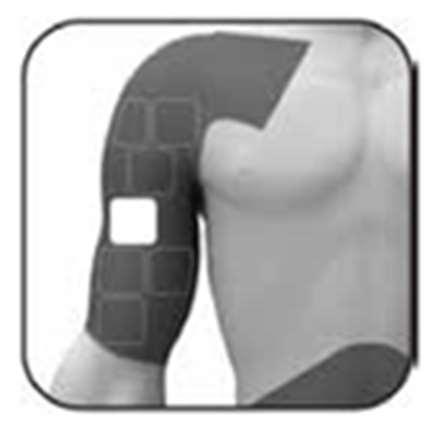
- Always check that the patch has not detached after some activities such as bathing, showeringor physical activity.
- If the patch has caused skin irritation, do not exposethe affected area to sunlight,as the skin may change color. How to use the patch
- Each patch is packaged in a separate sachet.
- Before opening the sachet, decide where to apply the new patch and make sure you have removed the old patch.
- Apply the Neupro patch to the skin immediately after opening the sachet and removing the protective film.
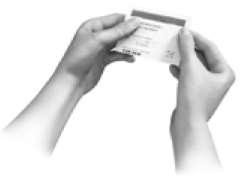
1.
To open the sachet, hold it
with both hands.
Separate the two layers of the
film.


Open the sachet.

Remove the patch from the
sachet.

5
The adhesive part of the patch
is covered by a transparent
protective layer.
- Hold the patch with both hands, with the protective layer facing you.

- Fold the patch in two. This allows you to open the S-shaped opening line.

- Detach one side of the protective lining.
- Do not touch the adhesive part of the patch with your fingers.
8.

- Hold the other side of the protective lining in your hand.
- Then apply the adhesive half of the patch to the skin.
- Press firmly on the adhesive part of the patch.

Fold the other
half of the patch backwards and detach
the other side of the protective
layer.
10.
- Press firmly on the patch with the palm of your hand.
- Hold for 30 seconds.
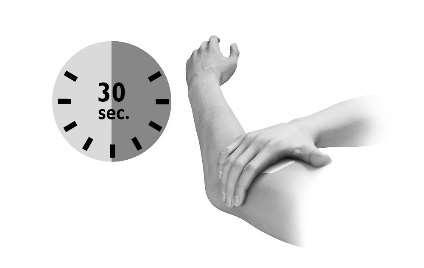
This process allows you to
make sure that the patch
is in contact with the skin and
that the corners adhere
well.
Wash your hands with water and
soap immediately
after handling the
patch.
How to remove a used patch
- Remove the used patch slowly and carefully.
- Gently wash the affected area with lukewarm water and mild soap. This allows you to remove any adhesive residue left on the skin by the patch. For adhesive residue that does not come off with water, you can also use a small amount of baby oil.
- Do not use alcohol or other solvents - for example, nail polish remover. They can cause irritation.
If you use more Neupro than you should
Using higher doses of Neupro than prescribed by your doctor can cause undesirable effects such as
feeling unwell (nausea) or vomiting, low blood pressure, seeing or hearing things that are not
real (hallucinations), feeling confused, extreme drowsiness, involuntary movements and
convulsions.
In these cases, contact your doctor or hospital immediately. They will give you instructions on how to proceed.
If you forget to replace the patch at the usual time
- If you forgot to replace the patch at the usual time, apply a new one as soon as you remember. Remove the old patch and use a new one.
- If you forgot to apply a new patch after removing the old one, apply a new one as soon as you remember. In both cases, apply a new patch at the usual time the next day. Do not apply a double dose to make up for a missed dose. If you stop treatment with NeuproDo not stop using Neupro without informing your doctor. An abrupt interruption can cause you to develop a clinical condition called “neuroleptic malignant syndrome” which could be life-threatening. The signs include: loss of muscle movements (akinesia), muscle rigidity, fever, unstable blood pressure, accelerated heartbeat (tachycardia), confusion, reduced state of consciousness (e.g., coma). If your doctor has told you to stop treatment with Neupro, the daily dose must be reduced gradually:
- Restless Legs Syndrome -reduction of 1 mg on alternate days. If you have any doubts about the use of this medicine, ask your doctor or pharmacist or nurse.
4. Possible side effects
Like all medicines, this medicine can cause side effects, although not everybody gets them.
If you notice any side effect, contact your doctor or pharmacist or
the nurse.
More frequent side effects at the beginning of therapy
You may feel unwell (nausea)and vomiting,at the beginning of therapy. These effects are
usually mild or moderate and last only for a short time. Contact your doctorif they last for a long
time or worry you.
Skin problems caused by the patch
- The patch may cause redness and a feeling of itching on the skin where it has been applied - these reactions are usually mild or moderate.
- The reactions usually disappear a few hours after the patch is removed.
- Tell your doctor ifyou have a skin reaction that lasts more than a few days and is severe or if it spreads outside the area of skin covered by the patch.
- Avoid exposing the areas of skin that have any skin reaction caused by the patch to sunlight and sunbeds.
- To avoid skin reactions, apply the patch each day to a different area and do not use the same area again for 14 days. Loss of consciousness may occurNeupro can cause loss of consciousness. This can happen particularly when you start using Neupro or when the dose is increased. Tell your doctor if you lose consciousness or feel dizzy. Abnormal changes in behaviour and thinkingTell your doctor if you notice any changes in behaviour, thinking or both,listed below. They may decide how to manage or reduce the symptoms.It may be helpful to tell a family member or carer that you are
family member or carer can tell you or the doctor if they are concerned about any
changes in your behaviour. Neupro can cause unusual urges or desires that lead you
to be unable to resist the impulse, drive or temptation to perform certain activities that
could harm you or others.
These can include:
- a strong urge to gamble excessively - even though it has a serious negative impact on you or your family
- altered or increased sexual interest and behaviour that causes you or others considerable distress, for example an increased sexual drive
- uncontrollable shopping or spending
- eating large amounts of food in a short period of time (binge eating) or compulsive eating (eating more food than normal and more than needed to satisfy your appetite).
Neupro can cause other abnormal thoughts and behaviours. These can include:
- abnormal thoughts about reality
- delusions, hallucinations (seeing or hearing things that are not real)
- confusion
- disorientation
- aggressive behaviour
- agitation
- rambling.
Tell your doctor if you notice any changes in behaviour, thinking or both,
listed above.
They may decide how to manage or reduce the symptoms.
Allergic reactions
Contact your doctor if you notice signs of an allergic reaction - these can include swelling of the face,
tongue and/or lips.
Side effects when using Neupro for restless legs syndrome
Tell your doctor or pharmacist if you notice any of the following side effects:
Very common: may affect more than 1 in 10 people
- headache
- feeling unwell (nausea)
- feeling weak (fatigue)
- skin irritation under the patch, such as redness and itching Common: may affect up to 1 in 10 people
- itching
- feeling irritable
- allergic reactions
- increased sexual activity
- high blood pressure
- vomiting, heartburn
- swelling of the legs and feet
- feeling sleepy, sudden sleep onset without warning signs, difficulty sleeping, sleep disorders, unusual dreams
- inability to resist the impulse to perform an action that could cause harm, including excessive gambling, repetitive actions with no purpose, uncontrollable shopping or spending
- eating large amounts of food in a short period of time (binge eating) or compulsive eating (eating more food than normal and more than needed to satisfy your appetite)
Uncommon: may affect up to 1 in 100 people
- feeling agitated
- feeling dizzy when standing up due to low blood pressure Rare: may affect up to 1 in 1000
- aggressive behaviour
- disorientation Not known: frequency cannot be estimated from the available data
- a strong desire for high doses of medicines like Neupro - more than needed to control the condition. This is also known as “dopamine dysregulation syndrome” and can lead to excessive use of Neupro
- feeling or seeing things that are not real (hallucinations)
- nightmares
- paranoia
- confusion
- psychotic disorders
- delusions
- rambling
- dizziness
- loss of consciousness, involuntary movements (dyskinesia)
- involuntary muscle spasms (convulsions)
- blurred vision
- vision disturbances such as seeing colours or lights
- vertigo (a sensation of spinning)
- feeling your heartbeat (palpitations)
- abnormal heart rhythm
- low blood pressure
- hiccups
- constipation, dry mouth
- stomach discomfort and pain
- diarrhoea
- flushing, increased sweating
- generalised itching, skin irritation
- generalised skin rash
- inability to achieve or maintain an erection
- weight loss, weight gain
- increased or abnormal liver function test results
- increased levels of creatine phosphokinase (CPK) (CPK is an enzyme mainly found in skeletal muscle)
- falls
- rhabdomyolysis (a rare, serious muscle disorder that causes muscle pain, tenderness and weakness and can lead to kidney problems) Tell your doctor or pharmacist if you notice any of the side effects listed above.
Reporting of side effects
If you get any side effects, talk to your doctor or pharmacist or nurse. This includes any side effects not
listed in this leaflet. You can also report side effects directly through the national reporting system listed in
Annex V.
By reporting side effects you can help provide more information on the safety of
this medicine.
5. How to store Neupro
Keep this medicine out of the sight and reach of children.
Do not use this medicine after the expiry date which is stated on the label and the packaging.
Do not store at temperatures above 30°C.
Disposal of used or unused patches
- Used patches still contain the active substance “rotigotine”, which may be harmful to other people. Fold the used patch with the adhesive side inwards. Replace the patch in its original sachet and dispose of it safely, out of the reach of children.
- Do not dispose of any medicine in wastewater or household waste. Ask your pharmacist how to dispose of medicines you no longer use. This will help protect the environment.
6. Package Contents and Other Information
What Neupro contains
The active ingredient is rotigotine.
- 1 mg/24 h: Each patch releases 1 mg of rotigotine in 24 hours. Each 5 cm patch contains 2.25 mg of rotigotine.
- 3 mg/24 h: Each patch releases 3 mg of rotigotine in 24 hours. Each 15 cm patch contains 6.75 mg of rotigotine. The other ingredients are:
- Poly(dimethylsiloxane, trimethylsilyl silicate)-copolymerized, povidone K90, sodium metabisulfite (E223), ascorbyl palmitate (E304) and DL-α-tocopherol (E307).
- Support layer: polyester film coated with silicone and aluminum, colored with a pigment layer (titanium dioxide (E171), pigment yellow 13, pigment red 166, pigment yellow
- 12) and bearing the inscription (pigment red 146, pigment yellow 180, pigment black 7).
- Protective layer: polyester film coated with transparent fluoropolymer. Description of Neupro and package contentsNeupro is a transdermal patch. It is thin and consists of three layers. It is a square patch, with rounded corners. The outer part of the support layer is beige in color and displays the inscription Neupro 1 mg /24 h or 3 mg/24 h. Neupro is available in the following packs:
The boxes contain 7, 14, 28, 30 or 84 (multipack containing 3 packs of 28) transdermal patches sealed in individual sachets.
Not all pack sizes may be marketed.
Marketing Authorisation Holder
UCB Pharma S.A.
Allée de la Recherche 60
B-1070 Brussels
Belgium
Manufacturer
UCB Pharma S.A.
Chemin du Foriest
B-1420 Braine l’Alleud
Belgium
For further information on this medicinal product, contact the local representative of the Marketing Authorisation Holder:
België/Belgique/Belgien
UCB Pharma SA/NV
Tél/Tel: +32-(0)2 559 92 00
Lietuva
UCB Pharma Oy Finland
Tel: +358-92 514 4221 (Suomija)
България
Ю СИ БИ България ЕООД
Te л. : + 359-(0) 2 962 30 49
Luxembourg/Luxemburg
UCB Pharma SA/NV
Tél/Tel: +32-(0)2 559 92 00
Česká republika
UCB s.r.o.
Tel: + 420-221 773 411
Magyarország
UCB Magyarország Kft.
Tel.: + 36-(1) 391 0060
Danmark
UCB Nordic A/S
Tlf.: + 45-32 46 24 00
Malta
Pharmasud Ltd.
Tel: +356-21 37 64 36
Deutschland
UCB Pharma GmbH
Tel: + 49-(0) 2173 48 48 48
Nederland
UCB Pharma B.V.
Tel: +31-(0)76-573 11 40
Eesti
UCB Pharma Oy Finland
Tel: +358-92 514 4221 (Soome)
Norge
UCB Nordic A/S
Tlf: +45-32 46 24 00
Ελλάδα
UCB Α.Ε.
Τηλ: +30-2109974000
Österreich
UCB Pharma GmbH
Tel: + 43-(0)1 291 80 00
España
UCB Pharma S.A.
Tel: + 34-91 570 34 44
Polska
UCB Pharma Sp. z o.o.
Tel.: + 48-22 696 99 20
France
UCB Pharma S.A.
Tél: + 33-(0)1 47 29 44 35
Portugal
BIAL-Portela & Cª, S.A.
Tel: +351-22 986 61 00
România
UCB Pharma România S.R.L.
Tel: + 40-21 300 29 04
Hrvatska
Medis Adria d.o.o.
Tel: +385-(0)1 230 34 46
Ireland
UCB (Pharma) Ireland Ltd.
Tel: + 353-(0)1-46 37 395
Slovenija
Medis, d.o.o.
Tel: + 386-1 589 69 00
Ísland
UCB Nordic A/S
Sími: + 45 / 32 46 24 00
Slovenská republika
UCB s.r.o., organizačná zložka
Tel: + 421-(0)2 5920 2020
Italia
UCB Pharma S.p.A.
Tel: + 39-02 300 791
Suomi/Finland
UCB Pharma Oy Finland
Puh/Tel: +358-92 514 4221
Κύπρος
Lifepharma (Z.A.M.) Ltd
Τηλ: + 357-22 05 63 00
Sverige
UCB Nordic A/S
Tel: + 46-(0)40 29 49 00
Latvija
UCB Pharma Oy Finland
Tel: +358-92 514 4221 (Somija)
Other sources of information
More detailed information on this medicinal product is available on the website of the European Medicines Agency: https://www.ema.europa.eu.
Neupro 2 mg/24 h transdermal patch
Rotigotina
Read this leaflet carefully before you start to take this medicine because it contains
important information for you.
- Keep this leaflet. You may need to read it again.
- If you have any questions, ask your doctor, pharmacist or nurse.
- This medicine has been prescribed for you only. Do not pass it on to others, even if their symptoms are the same as yours, as it could be harmful.
- If you get any side effects, even those not listed in this leaflet, tell your doctor, pharmacist or nurse. See section 4.
Contents of this leaflet
- 1. What Neupro is and what it is used for
- 2. What you need to know before you take Neupro
- 3. How to take Neupro
- 4. Possible side effects
- 5. How to store Neupro
- 6. Contents of the pack and other information
1. What is Neupro and what is it used for
What is Neupro
Neupro contains the active substance rotigotine.
It belongs to the class of medicines called “dopamine agonists”. Dopamine is a substance
present in the brain responsible for the transmission of messages, the function of which is important for
movement.
What is Neupro used for
Neupro is indicated in adults for the treatment of signs and symptoms of:
- Parkinson's disease -Neupro can be used alone or in combination with another medicine called levodopa.
- Restless Legs Syndrome -this may be associated with discomfort in the legs and arms, an irresistible need to move the legs, sleep disturbances, a feeling of fatigue or drowsiness during the day. Treatment with Neupro reduces these symptoms and decreases their duration.
2. What you need to know before you take Neupro
Do not take Neupro if:
- you are allergicto rotigotineor to any of the other ingredientsof this medicine (listed in section 6)
- you need to undergo a magnetic resonance imaging (MRI) scan(diagnostic images of the inside of the body, obtained using magnetic fields instead of x-rays)
- you need to undergo “cardioversion”(a specific treatment for an abnormal heart rhythm).
Immediately before undergoing magnetic resonance imaging (MRI) or cardioversion you must
remove the Neupro patch to avoid skin burns, as the patch contains aluminium.
You can then apply a new patch afterwards.
If any of the above conditions apply to you, do not use Neupro. If you have doubts, contact your
doctor or pharmacist first.
Warnings and precautions
Talk to your doctor, pharmacist or nurse before taking Neupro. This is because:
- your blood pressuremust be checked regularly while you are using Neupro, particularly at the beginning of treatment. Neupro can change your blood pressure.
- your eyesmust be checked regularly while you are using Neupro. If you notice any vision problems between check-ups, contact your doctor immediately.
- if you have severe liver problems, your doctor may need to adjust the dose. If your liver problems worsen during treatment, contact your doctor immediately.
- skin problemsmay occur caused by the patch - see “Skin problems caused by the patch” in section 4.
- you may feel very sleepy or fall asleep suddenly- see “Driving and using machines” in section 2.
- involuntary muscle contractions may occur causing abnormal movements or postures, often repetitive (dystonia), abnormal posture or lateral bending of the back (also called pleurototonia or Pisa syndrome). If this happens, your doctor may want to change the therapy.
- the symptoms of Restless Legs Syndromemay start earlier than usual, be more intense and involve other limbs. If you experience these symptoms before or after starting treatment with Neupro, contact your doctor as the treatment may need to be adjusted. Medicines used to treat Parkinson's disease and Restless Legs Syndrome must be reduced or stopped gradually. Tell your doctor if you experience symptoms such as depression, anxiety, fatigue, sweating or pain after stopping or reducing treatment with Neupro. Loss of consciousness may occurNeupro can cause loss of consciousness. This can happen particularly when you start using Neupro or when the dose is increased. Tell your doctor if you lose consciousness or feel dizzy. Abnormal changes in behaviour and thinkingNeupro can cause unwanted effects that change behaviour (the way you act). It may be helpful to tell a family member or caregiver that you are taking Neupro, so they can tell you or the doctor if they are worried about any changes in your behaviour. These include:
- a strong urge to take high doses of Neupro or other medicines used to treat Parkinson's disease and Restless Legs Syndrome
- unusual urges or desires that you cannot resist and this could harm you or others - these symptoms are mainly present in patients with Parkinson's disease
- abnormal thinking and behaviour - most of the symptoms concern patients with Parkinson's disease. See “Abnormal changes in behaviour and thinking”in section 4 for more information.
Children and adolescents
Donot give this medicine to children under 18 years of agebecause the safety and efficacy of the medicine in this age group has not been established.
Other medicines and Neupro
Tell your doctor or pharmacist if you are taking, have recently taken or might take
any other medicines. This includes medicines you buy without a prescription or herbal medicines.
If you are being treated with Neupro and levodopa at the same time, some unwanted effects
may worsen. These include seeing or hearing things that are not real (hallucinations),
involuntary movements related to Parkinson's disease (dyskinesia) and swelling of the legs and
feet.
While using Neupro do not take the following medicines – because they can reduce its effect:
- “antipsychotic” medicines - used to treat certain mental disorders
- metoclopramide - used for nausea (feeling sick) and vomiting. Tell your doctor before using Neupro if you are taking:
- sedative medicines such as benzodiazepines or medicines used to treat mental disorders or depression
- medicines that lower blood pressure. Neupro can lower blood pressure when you stand up - this effect may be worsened by medicines used to lower blood pressure. Your doctor will tell you if it is safe for you to continue taking these medicines while using Neupro. Neupro with food, drinks and alcoholBecause rotigotine passes into the blood through the skin, food and drinks have no effect on how the medicine is absorbed by the body. Ask your doctor if you can drink alcohol while using Neupro. Pregnancy and breastfeedingDo not use Neupro if you are pregnant. This is because the effects of rotigotine on pregnancy and the unborn baby are unknown. Do not breastfeed during treatment with Neupro. This is because rotigotine can pass into breast milk and have effects on the baby. Also, it is likely to cause a reduction in the amount of milk produced. If you are pregnant, suspect you may be pregnant, or are planning to become pregnant, or if you are breastfeeding, ask your doctor or pharmacist for advice before taking this medicine. Driving and using machinesNeupro can cause very strong sleepiness and can make you fall asleep suddenly. If this happens to you, do not drive. In isolated cases, patients have fallen asleep while driving vehicles and have thus caused accidents. Also, if you feel very sleepy do not use tools or machines - or do anything else that could put you or others at risk of serious injury. Neupro contains sodium metabisulphite (E223)Sodium metabisulphite (E223) can, rarely, cause severe hypersensitivity reactions (allergic reactions) and bronchospasm (breathing problems caused by a narrowing of the airways).
3. How to take Neupro
Use this medicine following exactly the instructions of your doctor or pharmacist. If you have
any doubts consult your doctor or pharmacist.
What dosage to use
The dose of Neupro depends on the disease – see below.
Neupro is available in patches with different dosages, which release the medicine for 24 hours. The dosages
are 1 mg/24 h, 2 mg/24 h, 3 mg/24 h, 4 mg/24 h, 6 mg/24 h and 8 mg/24 h. The 1 mg/24 h and 3
mg/24 h patches are used for the treatment of Restless Legs Syndrome, while the 4 mg/24 h, 6 mg/24 h and 8 mg/24 h patches are used for the treatment of Parkinson's disease. The 2 mg/24 h patches
are used for the treatment of Parkinson's disease and Restless Legs Syndrome.
- You may need to use more than one patch to reach the necessary dose, as prescribed by your doctor.
- For doses higher than 8 mg/24 h (doses prescribed by your doctor above the available dosages), more patches must be applied to reach the final dose. For example, a daily dose of 10 mg can be reached by applying a 6 mg/24 h patch and a 4 mg/24 h patch.
- The patches must not be cut into pieces. Treatment of Parkinson’s diseasePatients who are not taking levodopa - early stage of Parkinson’s disease
- The initial dose is one 2 mg/24 h patch per day.
- Starting from the second week, the daily dose can be increased weekly by 2 mg, up to reaching the appropriate maintenance dose.
- For most patients, the appropriate dose is between 6 mg and 8 mg per day. This is normally reached in 3-4 weeks.
- The maximum dose is 8 mg per day. Patients who are taking levodopa - advanced stage of Parkinson’s disease
- The initial dose is one 4 mg/24 h patch per day.
- Starting from the second week, the daily dose will be increased weekly by 2 mg, up to reaching the appropriate maintenance dose.
- For most patients, the appropriate dose is between 8 mg and 16 mg per day. This is normally reached within 3-7 weeks.
- The maximum dose is 16 mg per day. Treatment of Restless Legs Syndrome
- The initial dose is one 1 mg/24 h patch per day.
- Starting from the second week, the daily dose can be increased by 1 mg per week, up to reaching the appropriate maintenance dose. This occurs when you and your doctor determine that the symptoms are adequately controlled and the undesirable effects caused by the medicine are acceptable.
- The maximum dose is 3 mg per day. If you need to stop the treatment, see “If you stop taking Neupro”in section
- 3.
How to use Neupro patches:
Neupro is a patch to be applied to the skin.
- Make sure you have removed the old patch before applying a new one.
- Apply the new patch in a different area of the skin each day.
- Leave the patch on the skin for 24 hours, then remove it and apply a new one.
- Change the patches every day at about the same time.
- Do not cut Neupro patches into pieces.Where to apply the patch
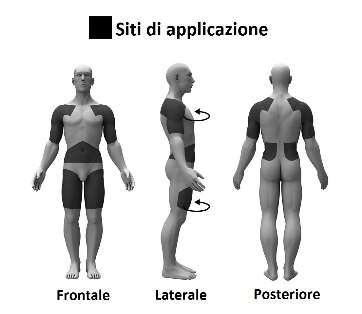
Apply the adhesive part of the patch to clean,
dry and healthy skin, in the following regions as shown in
grey in the figures on the side:
- Shoulder or upper arm.
- Abdomen.
- Side (between the ribs and hips).
- Thigh or hip.
To avoid skin irritation:
- Apply the patch in a different area of theskin each day.For example, put it one day on the right side of the body, then the next day on the left side of the body. One day on the upper part of the body, then on the lower part of the body, the next day.
- Do notreapply Neupro twice to the same areaof the skin within 14 days.
- Do notapply the patch to injured or damaged skin- or to skinreddened or irritated.
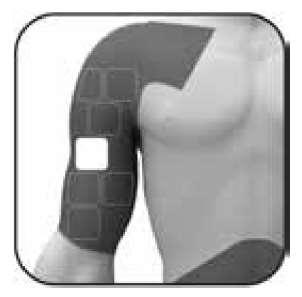
If you have skin problems due to the patch, see “ Skin problems caused by the patch”in
section 4 for more information.
To prevent the patch from falling off or detaching
- Do notapply the patch in an area that may be rubbed by tight clothing.
- Do notuse creams, oils, lotions, powdersor other skin productswhere you will apply the patch. Also, do not apply them over or near another patch that you have already applied.
- If you need to apply the patch to an area covered with hair, you must shavethe area at least threedays beforeapplying the patch.
- If the edges of the patch lift, the patch can be further secured with medical adhesive tape. If the patch detaches, apply a new patch for the remainder of the day - then replace the patch at the usual time.
- Do not letthe patch area be exposed to heat- for example, excessive sunlight, sauna, very hot baths, heating pads or hot water bottles. This is because the medicine may be released faster. Contact your doctor or pharmacist if you think the heat applied has been excessive.
- Always check that the patch has not detached after some activities such as bathing, showeringor physical activity.
- If the patch has caused skin irritation, do not exposethe affected area to sunlightbecause the skin may change color.
How to use the patch
- Each patch is packaged in a separate sachet.
- Before opening the sachet, decide where to apply the new patch and make sure you have removed the old patch.
- Apply the Neupro patch to the skin immediately after opening the sachet and removing the protective film.

1.
To open the sachet, hold it
with both hands.
Separate the two layers of the
film.
Open the sachet.



Remove the patch from the
sachet.
The adhesive part of the patch
is covered with a transparent
protective layer.

- Hold the patch with both hands, with the protective layer facing you.

Fold the patch in two.
This allows the S-shaped
opening line to open.

- Peel off one side of the protective layer.
- Do not touch the adhesive part of the patch with your fingers.
8.
- Hold the other side of the protective layer in your hand.

- Then apply the adhesive half of the patch to the skin.
- Press firmly on the adhesive part of the patch.

Fold the other
half of the patch back and peel
off the other side of the
protective layer.
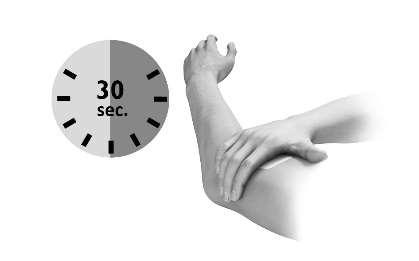
10.
- With the palm of your hand, press firmly on the patch.
- Hold for 30 seconds.
This process allows you to
ensure that the patch
is in contact with the skin and
that the corners adhere
well.
Wash your hands with water and
soap immediately
after handling the
patch.
How to remove a used patch
- Slowly and carefully remove the used patch.
- Gently wash the affected area with warm water and mild soap. This allows you to remove any adhesive residue left on the skin. For adhesive residue that does not come off with water, you can also use a small amount of baby oil.
- Do not use alcohol or other solvents - for example, nail polish remover. These can cause irritation. If you use more Neupro than you shouldUsing doses of Neupro higher than those prescribed by your doctor can cause undesirable effects such as feeling unwell (nausea) or vomiting, low blood pressure, seeing or hearing things that are not real (hallucinations), feeling confused, extreme drowsiness, involuntary movements and convulsions. In these cases, contact your doctor or hospital immediately. They will give you instructions on what to do. If you forget to replace the patch at the usual time
- If you forgot to replace the patch at the usual time, apply a new one as soon as you remember. Remove the old patch and use a new one.
- If you forgot to apply a new patch after removing the old one, apply a new one as soon as you remember. In both cases, apply a new patch at the usual time the next day. Do not apply a double dose to make up for a missed dose. If you stop taking NeuproDo not stop using Neupro without telling your doctor. An abrupt stop can cause you to develop a clinical condition called “neuroleptic malignant syndrome” which could be life-threatening. The signs include: loss of muscle movements (akinesia), muscle rigidity, fever, unstable blood pressure, rapid heartbeat (tachycardia), confusion, reduced state of consciousness (e.g. coma). If your doctor has told you to stop taking Neupro, the daily dosemust be gradually reduced:
- Parkinson’s disease- reduction of 2 mg on alternate days.
- Restless Legs Syndrome- reduction of 1 mg on alternate days. If you have any questions about the use of this medicine, ask your doctor, pharmacist or nurse.
4. Possible side effects
Like all medicines, this medicine can cause side effects, although not everyone will experience them.
If you notice any side effect, contact your doctor, pharmacist or nurse.
More frequent side effects at the beginning of therapy
You may experience feeling unwell(nausea)and vomiting,at the beginning of therapy. These effects are
usually mild or moderate and last only for a short time. Contact your doctorif they last for a long
time or worry you.
Skin problems caused by the patch
- The patch may cause redness and itching on the skin where it has been applied - these reactions are usually mild or moderate.
- The reactions usually disappear a few hours after removing the patch.
- Inform your doctorif you have a skin reaction that lasts more than a few days and is severe or if it spreads outside the area of skin covered by the patch.
- Avoid exposing the skin areas with any skin reaction caused by the patch to sunlight and tanning lamps.
- To avoid skin reactions, apply the patch every day to a different area and use the same area again only after 14 days. Loss of consciousness may occurNeupro can cause loss of consciousness. This may occur particularly when you start using Neupro or when the dose is increased. Inform your doctor if you lose consciousness or feel dizzy. Abnormal changes in behaviour and thinkingInform your doctor if you notice any changes in behaviour, thinking or both,listed below. They may decide how to intervene to manage or reduce the symptoms.It may be helpful to tell a family member or caregiver that you are experiencing these changes so they can tell you or your doctor if they are concerned about any changes in your behaviour. Neupro can cause unusual urges or desires that lead you to be unable to resist the impulse, will or temptation to perform certain activities that could harm you or others - the symptoms occur mainly in patients with Parkinson's disease. These may include:
- a strong urge to gamble excessively - even though it has a serious impact on you or your family
- altered or increased sexual interest and behaviour that causes significant distress to you or others - for example, an increased sexual drive
- uncontrollable shopping or excessive spending
- uncontrolled eating (eating large amounts of food in a short period of time) or compulsive eating (eating more food than normal and more than needed to satisfy your appetite).
Neupro can cause other abnormal thoughts and behaviours. These may include:
- abnormal thoughts about reality
- delusions, hallucinations (seeing or hearing things that are not real)
- confusion
- disorientation
- aggressive behaviour
- agitation
- rambling.
Inform your doctor if you notice any changes in behaviour, thinking or both,
listed above. They may decide how to intervene to manage or reduce the symptoms.
Allergic reactions
Contact your doctor if you notice signs of an allergic reaction – these may include swelling of the face,
tongue and/or lips.
Side effects when using Neupro for Parkinson's disease
Inform your doctor or pharmacist if you notice any of the following side effects:
Very common: may affect more than 1 in 10 people
- headache
- feeling sleepy or dizzy
- feeling unwell (nausea), vomiting
- skin irritation under the patch, such as redness and itching Common: may affect up to 1 in 10 people
- falls
- hiccups
- weight loss
- swelling of the legs and feet
- feeling weak (fatigue), feeling tired
- feeling of a racing heartbeat (palpitations)
- constipation, dry mouth, heartburn
- redness, increased sweating, itching
- dizziness (a spinning sensation)
- seeing or hearing things that are not real (hallucinations)
- decrease in blood pressure when getting up from a sitting or lying position, increase in blood pressure
- difficulty falling asleep, sleep disorders, difficulty sleeping, nightmares, unusual dreams
- involuntary movements related to Parkinson's disease (dyskinesia)
- fainting, feeling dizzy when getting up from a sitting or lying position due to a drop in blood pressure
- inability to resist the impulse to perform an action that could cause harm, including excessive gambling, repetitive meaningless actions, uncontrollable shopping or excessive spending
- uncontrolled eating (eating large amounts of food in a short period of time) or compulsive eating (eating more food than normal and more than needed to satisfy your appetite).
Uncommon: may affect up to 1 in 100 people
- blurred vision
- weight gain
- allergic reaction
- decrease in blood pressure
- acceleration of the heartbeat
- increased sexual activity
- irregular heartbeat
- stomach disorders and pain
- general itching, skin irritation
- suddenly falling asleep without warning signs
- inability to achieve or maintain an erection
- agitation, disorientation, confusion or paranoia
- increased or abnormal results in liver function tests
- visual disturbances such as seeing colours or lights
- increased levels of creatine phosphokinase (CPK) (CPK is an enzyme mainly found in skeletal muscles). Rare: may affect up to 1 in 1000
- delirium
- rambling
- irritability
- aggressive behaviour
- psychotic disorders
- widespread skin rash
- involuntary muscle spasms (convulsions). Frequency not known: the frequency cannot be estimated from the available data
- a strong desire for high doses of medicines such as Neupro, higher than necessary to control the disease. This is also known as “dopamine dysregulation syndrome” and can lead to excessive use of Neupro
- diarrhoea
- head tilting syndrome
- rhabdomyolysis (a rare, serious muscle disorder that causes pain, tenderness and muscle weakness and can lead to kidney problems) Inform your doctor, pharmacist or nurse if you notice any of the side effects listed above. Side effects when using Neupro for Restless Legs SyndromeInform your doctor or pharmacist if you notice any of the following side effects: Very common: may affect more than 1 in 10 people
- headache
- feeling unwell (nausea)
- feeling weak (fatigue)
- skin irritation under the patch, such as redness and itching
Common: may affect up to 1 in 10 people
- itching
- feeling irritable
- allergic reactions
- increased sexual activity
- high blood pressure
- vomiting, heartburn
- swelling of the legs and feet
- feeling sleepy, sudden sleepiness without warning signs, difficulty sleeping, sleep disorders, unusual dreams
- inability to resist the impulse to perform an action that could cause harm, including excessive gambling, repetitive meaningless actions, uncontrollable shopping or excessive spending
- uncontrolled eating (eating large amounts of food in a short period of time) or compulsive eating (eating more food than normal and more than needed to satisfy your appetite).
Uncommon: may affect up to 1 in 100 people
- feeling agitated
- feeling dizzy when standing up due to a drop in blood pressure. Rare: may affect up to 1 in 1000
- aggressive behaviour
- disorientation. Frequency not known: the frequency cannot be estimated from the available data
- a strong desire for high doses of medicines such as Neupro, higher than necessary to control the disease. This is also known as “dopamine dysregulation syndrome” and can lead to excessive use of Neupro
- seeing or feeling things that are not real (hallucinations)
- nightmares
- paranoia
- confusion
- psychotic disorders
- delirium
- rambling
- dizziness
- loss of consciousness, involuntary movements (dyskinesia)
- involuntary muscle spasms (convulsions)
- blurred vision
- visual disturbances such as seeing colours or lights
- vertigo (a sensation of spinning)
- perception of the heartbeat (palpitations)
- abnormal heart rate
- low blood pressure
- hiccups
- constipation, dry mouth
- stomach discomfort and pain
- diarrhoea
- redness, increased sweating
- general itching, skin irritation
- widespread skin rash
- inability to achieve or maintain an erection
- weight loss, weight gain
- increased or abnormal results in liver function tests
- increased heart rate
- increased levels of creatine phosphokinase (CPK) (CPK is an enzyme mainly found in skeletal muscles)
- falls
- rhabdomyolysis (a rare, serious muscle disorder that causes pain, tenderness and muscle weakness and can lead to kidney problems) Inform your doctor or pharmacist if you notice any of the side effects listed above.
Reporting of side effects
If you get any side effects, even those not listed in this leaflet, please tell your
doctor, pharmacist or nurse. You can also report side effects directly
through the national reporting system listed in Annex V.
By reporting side effects you can help provide more information on the safety of
this medicine.
5. How to store Neupro
Keep this medicine out of the sight and reach of children.
Do not use this medicine after the expiry date which is stated on the label and the packaging.
Do not store at a temperature above 30°C.
Disposal of used or unused patches
- Used patches still contain the active substance “rotigotine”, which may be harmful to other people. Fold the used patch with the adhesive side inwards. Replace the patch in the original sachet and dispose of it safely, out of the reach of children.
- Do not dispose of any medicine in waste water or household waste. Ask your pharmacist how to dispose of medicines you no longer use. This will help protect the environment.
6. Contents of the pack and other information
What Neupro contains
The active ingredient is rotigotine.
- Each patch releases 2 mg of rotigotine in 24 hours. Each 10 cm patch contains 4.5 mg of rotigotine. The other components are:
- Poly(dimethylsiloxane, trimethylsilyl silicate)-copolymerized, povidone K90, sodium metabisulfite (E223), ascorbyl palmitate (E304) and DL-α-tocopherol (E307).
- Support layer: polyester film coated with silicone and aluminum, colored with a pigment layer (titanium dioxide (E171), yellow pigment 13, red pigment 166, yellow
- 12) and bearing the inscription (red pigment 146, yellow pigment 180, black pigment 7).
- Protective layer: polyester film coated with transparent fluoropolymer.
Description of the appearance of Neupro and contents of the pack
Neupro is a transdermal patch. It is thin and consists of three layers. It is a square patch, with
rounded corners. The outer part of the support layer is beige in color and displays the inscription
Neupro 2 mg /24 h.
Neupro is available in the following pack sizes:
The cartons contain 7, 14, 28, 30 or 84 (multipack containing 3 packs of 28) transdermal
patches sealed in individual sachets.
Not all pack sizes may be marketed.
Marketing Authorisation Holder
UCB Pharma S.A.
Allée de la Recherche 60
B-1070 Brussels
Belgium
Manufacturer
UCB Pharma S.A.
Chemin du Foriest
B-1420 Braine l’Alleud
Belgium
For further information on this medicinal product, contact the local representative of the marketing
authorisation holder:
België/Belgique/Belgien
UCB Pharma SA/NV
Tél/Tel: +32-(0)2 559 92 00
Lietuva
UCB Pharma Oy Finland
Tel: +358-92 514 4221 (Suomija)
България
Ю СИ БИ България ЕООД
Te л. : + 359-(0) 2 962 30 49
Luxembourg/Luxemburg
UCB Pharma SA/NV
Tél/Tel: +32-(0)2 559 92 00
Česká republika
UCB s.r.o.
Tel: + 420-221 773 411
Magyarország
UCB Magyarország Kft.
Tel.: + 36-(1) 391 0060
Danmark
UCB Nordic A/S
Tlf.: + 45-32 46 24 00
Malta
Pharmasud Ltd.
Tel: +356-21 37 64 36
Deutschland
UCB Pharma GmbH
Tel: + 49-(0) 2173 48 48 48
Nederland
UCB Pharma B.V.
Tel: +31-(0)76-573 11 40
Eesti
UCB Pharma Oy Finland
Tel: +358-92 514 4221 (Soome)
Norge
UCB Nordic A/S
Tlf: +45-32 46 24 00
Ελλάδα
UCB Α.Ε.
Τηλ: +30-2109974000
Österreich
UCB Pharma GmbH
Tel: + 43-(0)1 291 80 00
España
UCB Pharma S.A.
Tel: + 34-91 570 34 44
Polska
UCB Pharma Sp. z o.o.
Tel.: + 48-22 696 99 20
France
UCB Pharma S.A.
Tél: + 33-(0)1 47 29 44 35
Portugal
BIAL-Portela & Cª, S.A.
Tel: +351-22 986 61 00
Hrvatska
Medis Adria d.o.o.
Tel: +385-(0)1 230 34 46
România
UCB Pharma România S.R.L.
Tel: + 40-21 300 29 04
Ireland
UCB (Pharma) Ireland Ltd.
Tel: + 353-(0)1 46 37 395
Slovenija
Medis, d.o.o.
Tel: + 386-1 589 69 00
Ísland
UCB Nordic A/S
Sími: + 45 / 32 46 24 00
Slovenská republika
UCB s.r.o., organizačná zložka
Tel: + 421-(0)2 5920 2020
Italia
UCB Pharma S.p.A.
Tel: + 39-02 300 791
Suomi/Finland
UCB Pharma Oy Finland
Puh/Tel: +358-92 514 4221
Κύπρος
Lifepharma (Z.A.M.) Ltd
Τηλ: + 357-22 05 63 00
Sverige
UCB Nordic A/S
Tel: + 46-(0) 40 29 49 00
Latvija
UCB Pharma Oy Finland
Tel: +358-92 514 4221 (Somija)
Other sources of information
More detailed information on this medicinal product is available on the website of the European
Medicines Agency: https://www.ema.europa.eu .

Не уверены, подходит ли вам это лекарство?
Обсудите симптомы и варианты лечения с врачом онлайн.
Neupro 4 mg/24 h transdermal patch, 6 mg/24 h transdermal patch, 8 mg/24 h transdermal patch
Rotigotina
Read this leaflet carefully before you start to take this medicine because it contains
important information for you.
- Keep this leaflet. You may need to read it again.
- If you have any questions, ask your doctor, pharmacist or nurse.
- This medicine has been prescribed for you only. Do not pass it on to others, even if their symptoms are the same as yours, as it could be harmful.
- If you get any side effects, even those not listed in this leaflet, tell your doctor, pharmacist or nurse. See section 4. Contents of this leaflet
- 1. What Neupro is and what it is used for
- 2. What you need to know before you take Neupro
- 3. How to take Neupro
- 4. Possible side effects
- 5. How to store Neupro
- 6. Contents of the pack and other information
1. What is Neupro and what is it used for
What is Neupro
Neupro contains the active substance rotigotine.
It belongs to the class of medicines called “dopamine agonists”. Dopamine is a substance
present in the brain responsible for the transmission of messages, the function of which is important for
movement.
What is Neupro used for
Neupro is indicated in adults for the treatment of the signs and symptoms of :
- Parkinson’s disease- Neupro can be used alone or in combination with another medicine called levodopa.
2. What you need to know before you take Neupro
Do not take Neupro if:
- you are allergicto rotigotineor to any of the other ingredientsof this medicine (listed in section 6)
- you are going to have a magnetic resonance imaging (MRI) scan(diagnostic images of the inside of the body, obtained using magnetic fields instead of X-rays)
- you are going to have “cardioversion” (a specific treatment for an abnormal heart rhythm). Immediately before undergoing magnetic resonance imaging (MRI) or cardioversion, remove the Neupro patch to avoid skin burns, as the patch contains aluminum. You can then apply a new patch.
If any of the above conditions apply to you, do not use Neupro. If you are unsure, contact your doctor, pharmacist, or nurse.
Warnings and precautions
Talk to your doctor, pharmacist, or nurse before taking Neupro. This is because:
- your blood pressureneeds to be checked regularly while you are using Neupro, especially at the beginning of treatment. Neupro can change your blood pressure.
- your eyesneed to be checked regularly while you are using Neupro. If you notice any vision problems between check-ups, contact your doctor immediately.
- if you have severe liver problems, your doctor may need to adjust the dose. If your liver problems get worse during treatment, contact your doctor immediately.
- skin problemsmay occur caused by the patch - see “Skin problems caused by the patch” in section 4.
- you may feel very sleepy or fall asleep suddenly -see “Driving and using machines” in section 2.
- involuntary muscle contractions may occur causing abnormal movements or postures, often repetitive (dystonia), abnormal posture or lateral bending of the back (also called pleurototus or Pisa syndrome). If this happens, your doctor may want to change the therapy. Contact your doctor if you experience these symptoms after starting treatment with Neupro. Medicines used to treat Parkinson's disease must be reduced or stopped gradually. Tell your doctor if you experience symptoms such as depression, anxiety, fatigue, sweating, or pain after stopping or reducing treatment with Neupro. Loss of consciousness can occur. Neupro can cause loss of consciousness. This can happen particularly when you start using Neupro or when the dose is increased. Tell your doctor if you lose consciousness or feel dizzy. Abnormal changes in behavior and thinkingNeupro can cause undesirable effects that change behavior (the way you act). It may be helpful to tell a family member or caregiver that you are taking Neupro so that they can tell you or your doctor if they are concerned about any changes in your behavior. These changes include:
- a strong desire for high doses of Neupro or other medicines used to treat Parkinson's disease
- unusual urges or desires that you cannot resist and this could harm you or others
- abnormal thinking and behavior See “Abnormal changes in behavior and thinking”in section 4 for more information. Children and adolescentsDonot give this medicine to childrenunder 18 years of age because the safety and efficacy of the medicine in this age group have not been established. Other medicines and NeuproTell your doctor or pharmacist if you are taking, have recently taken, or might take any other medicines. This includes medicines you buy without a prescription or herbal medicines.
If you are being treated with Neupro and levodopa at the same time, some side effects
may worsen. These include seeing or hearing things that are not real (hallucinations),
involuntary movements related to Parkinson's disease (dyskinesia), and swelling in the legs and
feet.
While using Neupro, do not take the following medicines – because they can decrease its effect:
- “antipsychotic” medicines - used to treat certain mental disorders
- metoclopramide - used for nausea (feeling sick) and vomiting. Tell your doctor before using Neupro if you are taking:
- sedative medicines such as benzodiazepines or medicines used to treat mental disorders or depression
- medicines that lower blood pressure. Neupro can lower blood pressure when you stand up - this effect may be worsened by medicines used to lower blood pressure. Your doctor will tell you if it is safe for you to continue taking these medicines while using Neupro. Neupro with food, drinks and alcoholBecause rotigotine passes into the blood through the skin, food and drinks have no effect on how the medicine is absorbed by the body. Ask your doctor if you can drink alcohol while using Neupro. Pregnancy and breastfeedingDo not use Neupro if you are pregnant. This is because the effects of rotigotine on pregnancy and the unborn child are unknown. Do not breastfeed during treatment with Neupro. This is because rotigotine can pass into breast milk and have effects on the baby. In addition, a reduction in the amount of milk produced is likely. If you are pregnant, suspect you are pregnant, or are planning to become pregnant, or if you are breastfeeding, ask your doctor or pharmacist for advice before taking this medicine. Driving and using machinesNeupro can cause very strong sleepiness and can make you fall asleep suddenly. If this happens to you, do not drive. In isolated cases, patients have fallen asleep while driving vehicles and have thus caused accidents. Also, if you feel very sleepy, do not use tools or machines - or do anything else that could put yourself or others at risk of serious accidents. Neupro contains sodium metabisulfite (E223)Sodium metabisulfite (E223) can, rarely, cause severe hypersensitivity reactions (allergic reactions) and bronchospasm (breathing problems caused by a narrowing of the airways).
3. How to take Neupro
Use this medicine always exactly as your doctor or pharmacist has told you. If you have
any doubts ask your doctor or pharmacist.
What dosage to use
The dose of Neupro depends on the disease – see below.
Neupro is available in patches with different dosages, which release the medicine for 24 hours. The dosages
are 2 mg/24 h, 4 mg/24 h, 6 mg/24 h and 8 mg/24 h for the treatment of Parkinson’s disease.
- You may need to use more than one patch to reach the necessary dose, as prescribed by your doctor.
- For doses higher than 8 mg/24 h (doses prescribed by your doctor above the available dosages), more patches must be applied to reach the final dose. For example, a daily dose of 10 mg can be reached by applying a 6 mg/24 h patch and a 4 mg/24 h patch.
- The patches must not be cut into pieces.
Treatment of Parkinson’s disease
Patients who are not taking levodopa– early stage of Parkinson’s disease
- The initial dose is one 2 mg/24 h patch per day.
- Starting from the second week, the daily dose can be increased weekly by 2 mg, up to reaching the appropriate maintenance dose.
- For most patients, the appropriate dose is between 6 mg and 8 mg per day. This is normally reached in 3-4 weeks.
- The maximum dose is 8 mg per day. Patients who are taking levodopa- advanced stage of Parkinson’s disease
- The initial dose is one 4 mg/24 h patch per day.
- Starting from the second week, the daily dose can be increased weekly by 2 mg, up to reaching the appropriate maintenance dose.
- For most patients, the appropriate dose is between 8 mg and 16 mg per day. This is normally reached within 3-7 weeks.
- The maximum dose is 16 mg per day. If you need to stop the treatment, see “If you stop taking Neupro”in paragraph
- 3. How to use Neupro patches:Neupro is a patch to be applied to the skin.
- Make sure you have removed the old patch before applying a new one.
- Apply the new patch to a different area of skineach day.
- Leave the patch on the skin for 24 hours, then remove it and apply a new one.
- Change the patches every day at about the same time.
- Do not cut the Neupro patches into pieces. Where to apply the patch
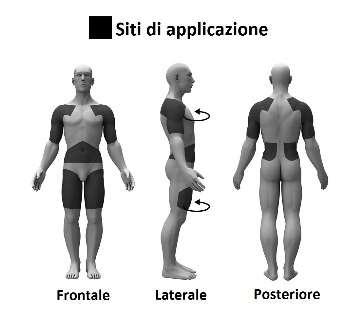
Apply the adhesive part of the patch to clean,
dry and healthy skin, in the following regions as shown in
grey in the figures on the side:
- Shoulder or upper arm.
- Abdomen.
- Side (between the ribs and hips).
- Thigh or hip.
To avoid skin irritation
- Apply the patch to a different area of skinevery day.For example, put it one day on the right side of the body, then the next day on the left side of the body. One day on the upper part of the body, then on the lower part of the body, the next day.
- Do not reapply Neupro twice to the same area of skinwithin 14 days.
- Do notapply the patch to wounded or damaged skin- or to skinthat is red or irritated.If you have skin problems due to the patch, see “ Skin problems caused by the patch” in paragraph 4 for more information. Toprevent the patch from falling off or detaching
- Do notapply the patch to an area that may be rubbed by tight clothing.
- Do notuse creams, oils, lotions, powdersor other skin productswhere you will apply the patch. Also do not apply them over or near a patch that you have already applied.
- If you need to apply the patch to an area covered with hair, you must shavethe area at least threedaysbefore applying the patch.
- If the edges of the patch lift, the patch can be further secured with medical adhesive tape.
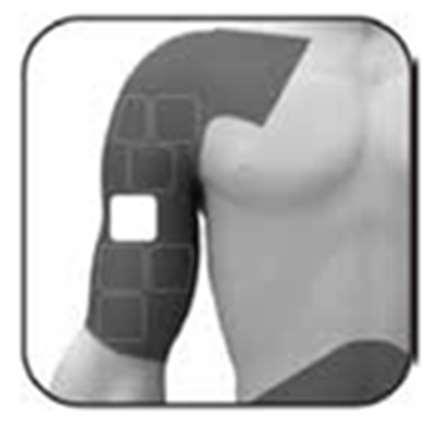
If the patch comes off, apply a new patch for the rest of the day, then replace the patch
at the same time as usual.
- Do not letthe patch area be exposed to heat- for example, excessive sunlight, sauna, very hot baths, heating pads or hot water bottles. This is because the medicine may be released faster. Contact your doctor or pharmacist if you think the heat applied has been excessive.
- Always check that the patch has not come off after some activities such as bathing, showeringor physical activity.If the patch has caused skin irritation, do not exposethe area to sunlight,as the skin may change colour. How to use the patch
- Each patch is packaged in a separate sachet.
- Before opening the sachet, decide where to apply the new patch and make sure you have removed the old patch.
- Apply the Neupro patch to the skin immediately after opening the sachet and removing the protective film.

1.
To open the sachet, hold it
with both hands.

Separate the two layers of the
film.

Open the sachet.

Remove the patch from the
sachet.

The adhesive part of the patch
is covered with a transparent
protective layer.
- Hold the patch with both hands, with the protective layer facing you.
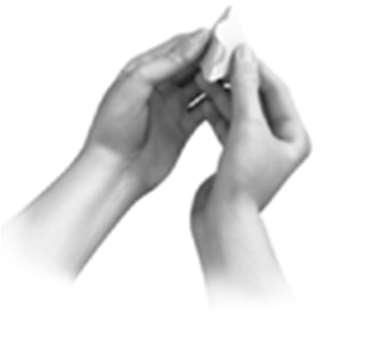
Fold the patch in two.
This allows you to open the
S-shaped opening line.

- Peel off one side of the protective lining.
- Do not touch the adhesive part of the patch with your fingers.
8.

- Hold the other side of the protective lining in your hand.
- Then apply the adhesive half of the patch to the skin.
- Press firmly on the adhesive part of the patch.

Fold back the other
half of the patch and peel off
the other side of the protective
layer.
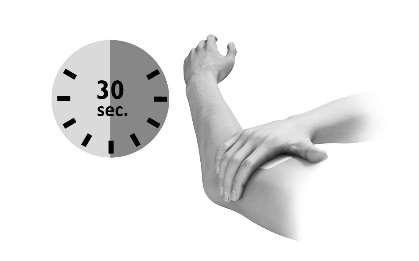
- With the palm of your hand, press firmly on the patch.
- Hold for 30 seconds. This process allows you to ensure that the patch is in contact with the skin and
that the corners adhere
well.
Wash your hands with water and
soap immediately
after handling the
patch.
How to remove a used patch
- Remove the used patch slowly and carefully.
- Gently wash the affected area with warm water and mild soap. This allows you to remove any adhesive residue left on the skin by the patch. For adhesive residue that does not come off with water, you can also use a small amount of baby oil.
- Do not use alcohol or other solvents - for example, nail polish remover, as they may cause irritation. If you use more Neupro than you shouldUsing higher doses of Neupro than prescribed by your doctor can cause adverse effects such as feeling unwell (nausea) or vomiting, low blood pressure, seeing or hearing things that are not real (hallucinations), feeling confused, extreme drowsiness, involuntary movements and seizures. In these cases, contact your doctor or hospital immediately. They will give you instructions on how to proceed. If you forget to replace the patch at the usual time
- If you forgot to replace the patch at the usual time, apply a new one as soon as you remember. Remove the old patch and use a new one.
- If you forgot to apply a new patch after removing the old one, apply a new one as soon as you remember. In both cases, apply a new patch at the usual time the next day. Do not apply a double dose to make up for a missed dose. If you stop taking NeuproDo not stop using Neupro without informing your doctor. An abrupt interruption can cause the development of a clinical condition called “neuroleptic malignant syndrome” which could be life-threatening. The signs include: loss of muscle movements (akinesia), muscle rigidity, fever, unstable blood pressure, rapid heartbeat (tachycardia), confusion, reduced state of consciousness (e.g. coma). If your doctor has told you to stop taking Neupro, the daily dosemust be gradually reduced:
- Parkinson’s disease- reduction of 2 mg on alternate days.
If you have any questions about using this medicine, ask your doctor, pharmacist or
nurse.
4. Possible side effects
Like all medicines, this medicine can cause side effects, although not everyone will experience them.
If you notice any side effect, contact your doctor, pharmacist or
nurse.
More frequent side effects at the beginning of therapy
You may experience feeling unwell(nausea)and vomiting at the beginning of therapy. These effects are
usually mild or moderate and last only for a short time. Contact your doctorif they last for a long
time or worry you.
Skin problems caused by the patch
- The patch may cause redness and itching on the skin where it was applied - these reactions are usually mild or moderate.
- The reactions usually disappear a few hours after removing the patch.
- Inform your doctorif you have a skin reaction that lasts more than a few days and is severe or if it spreads outside the area of skin covered by the patch.
- Avoid exposing the areas of skin with any skin reaction caused by the patch to sunlight and tanning lamps.
- To avoid skin reactions, apply the patch to a different area each day and do not use the same area again for 14 days. Loss of consciousness may occurNeupro can cause loss of consciousness. This may occur particularly when you start using Neupro or when the dose is increased. Inform your doctor if you lose consciousness or feel dizzy. Abnormal behavior and thinking changesInform your doctor if you notice any changes in behavior, thinking, or both,listed below. They may decide how to intervene to manage or reduce the symptoms.It may be helpful to tell a family member or caregiver that you are experiencing these changes, so they can tell you or your doctor if they are concerned about any changes in your behavior. Neupro can cause unusual urges or desires that lead you to be unable to resist the impulse, will, or temptation to perform certain activities that could harm you or others. These may include:
- a strong urge to gamble excessively despite it seriously affecting you or your family
- altered or increased sexual interest and behavior that causes significant distress to you or others - for example, an increased sexual drive
- uncontrollable shopping or excessive spending
- uncontrolled eating (eating large amounts of food in a short period of time) or compulsive eating (eating more food than normal and more than needed to satisfy your appetite).
Neupro can cause other abnormal thoughts and behaviors. These may include:
- abnormal thoughts about reality
- delusions, hallucinations (seeing or hearing things that are not real)
- confusion
- disorientation
- aggressive behavior
- agitation
- rambling.
Inform your doctor if you notice any changes in behavior, thinking, or both,
listed above.
They may decide how to intervene to manage or reduce the symptoms.
Allergic reactions
Contact your doctor if you notice signs of an allergic reaction – these may include swelling of the face,
tongue and/or lips.
Side effects when using Neupro for Parkinson's disease
Inform your doctor, pharmacist or nurse if you notice any of the following side effects:
Very common: may affect more than 1 in 10 people
- headache
- feeling sleepy or dizzy
- feeling unwell (nausea), vomiting
- skin irritation under the patch, such as redness and itching Common: may affect up to 1 in 10 people
- falls
- hiccups
- weight loss
- swelling of the legs and feet
- feeling weak (fatigue), feeling tired
- feeling of a racing heartbeat (palpitations)
- constipation, dry mouth, heartburn
- redness, increased sweating, itching
- dizziness (a spinning sensation)
- seeing or hearing things that are not real (hallucinations)
- decrease in blood pressure when getting up from a sitting or lying position, increase in blood pressure
- difficulty falling asleep, sleep disorders, difficulty sleeping, nightmares, unusual dreams
- involuntary movements related to Parkinson's disease (dyskinesia)
- fainting, feeling dizzy when getting up from a sitting or lying position due to a drop in blood pressure
- inability to resist the impulse to perform an action that could cause harm, including excessive gambling, repetitive actions without meaning, uncontrollable shopping or excessive spending
- uncontrolled eating (eating large amounts of food in a short period of time) or compulsive eating (eating more food than normal and more than needed to satisfy your appetite).
Uncommon: may affect up to 1 in 100 people
- blurred vision
- weight gain
- allergic reaction
- decrease in blood pressure
- increased heart rate
- increased sexual drive
- irregular heartbeat
- stomach problems and pain
- generalized itching, skin irritation
- falling asleep suddenly without warning signs
- inability to achieve or maintain an erection
- agitation, disorientation, confusion, or paranoia
- increased or abnormal results in liver function tests
- vision disturbances such as seeing colors or lights
- increased levels of creatine phosphokinase (CPK) (CPK is an enzyme found mainly in skeletal muscles) Rare: may affect up to 1 in 1000
- delirium
- rambling
- irritability
- aggressive behavior
- psychotic disorders
- widespread skin rash
- involuntary muscle spasms (convulsions). Frequency not known: the frequency cannot be estimated from the available data
- a strong desire for high doses of medicines like Neupro higher than necessary to control the disease. This is also known as “dopamine dysregulation syndrome” and can lead to excessive use of Neupro.
- diarrhea
- head dropping syndrome
- rhabdomyolysis (a rare, serious muscle disorder that causes pain, tenderness, and muscle weakness and can lead to kidney problems) Inform your doctor, pharmacist or nurse if you notice any of the side effects listed above. Reporting of side effectsIf you get any side effects, even those not listed in this leaflet, tell your doctor, pharmacist or nurse. You can also report side effects directly through the national reporting system listed in Annex V. By reporting side effects you can help provide more information on the safety of this medicine.
5. How to store Neupro
Keep this medicine out of the sight and reach of children.
Do not use this medicine after the expiry date which is stated on the label and the packaging.
Do not store at temperatures above 30°C.
Disposal of used or unused patches
- Used patches still contain the active substance “rotigotine”, which may be harmful to other people. Fold the used patch with the adhesive side inwards. Replace the patch in the original sachet and dispose of it safely, out of the reach of children.
- Do not dispose of any medicine in wastewater or household waste. Ask your pharmacist how to dispose of medicines you no longer use. This will help protect the environment.
6. Contents of the pack and other information
What Neupro contains
The active ingredient is rotigotine.
- 4 mg/24 h:
Each patch releases 4 mg of rotigotine in 24 hours. Each patch of 20 cm contains 9.0 mg
of rotigotine.
- 6 mg/24 h: Each patch releases 6 mg of rotigotine in 24 hours. Each patch of 30 cm contains 13.5 mg of rotigotine.
- 8 mg/24 h: Each patch releases 8 mg of rotigotine in 24 hours. Each patch of 40 cm contains 18.0 mg of rotigotine. The other ingredients are:
- Poly(dimethylsiloxane, trimethylsilyl silicate)-copolymerized, povidone K90, sodium metabisulfite (E223), ascorbyl palmitate (E304) and DL-α-tocopherol (E307).
- Support layer: polyester film coated with silicone and aluminum, colored with a pigment layer (titanium dioxide (E171), pigment yellow 13, pigment red 166, pigment yellow
- 12) and bearing lettering (pigment red 146, pigment yellow 180, pigment black 7).
- Protective layer: polyester film coated with transparent fluoropolymer. Description of Neupro and contents of the packNeupro is a transdermal patch. It is thin and consists of three layers. It is a square patch with rounded corners. The outside of the support layer is beige in color and displays the writing Neupro 4 mg /24 h, Neupro 6 mg/24 h or Neupro 8 mg/24 h. Neupro is available in the following packs: The boxes contain 7, 14, 28, 30 or 84 (multipack containing 3 packs of 28) transdermal patches sealed in individual sachets. Not all pack sizes may be marketed. Marketing Authorisation HolderUCB Pharma S.A. Allée de la Recherche 60 B-1070 Brussels Belgium ManufacturerUCB Pharma S.A. Chemin du Foriest B-1420 Braine l’Alleud Belgium For further information on this medicine, contact the local representative of the marketing authorisation holder: België/Belgique/BelgienUCB Pharma SA/NV Tél/Tel: +32-(0)2 559 92 00 LietuvaUCB Pharma Oy Finland Tel: +358-92 514 4221 (Suomija) БългарияЮ СИ БИ България ЕООД Te л. : + 359-(0)2 962 30 49 Luxembourg/LuxemburgUCB Pharma SA/NV Tél/Tel: +32- (0)2 559 92 00
Česká republika
UCB s.r.o.
Tel: + 420-221 773 411
Magyarország
UCB Magyarország Kft.
Tel.: + 36-(1) 391 0060
Danmark
UCB Nordic A/S
Tlf.: + 45-32 46 24 00
Malta
Pharmasud Ltd.
Tel: +356-21 37 64 36
Deutschland
UCB Pharma GmbH
Tel: + 49-(0) 2173 48 48 48
Nederland
UCB Pharma B.V.
Tel: +31-(0)76-573 11 40
Eesti
UCB Pharma Oy Finland
Tel: +358-92 514 4221 (Soome)
Norge
UCB Nordic A/S
Tlf: +45-32 46 24 00
Ελλάδα
UCB Α.Ε.
Τηλ: +30-2109974000
Österreich
UCB Pharma GmbH
Tel: + 43-(0)1 291 80 00
España
UCB Pharma S.A.
Tel: + 34-91 570 34 44
Polska
UCB Pharma Sp. z o.o.
Tel.: + 48-22 696 99 20
France
UCB Pharma S.A.
Tél: + 33-(0)1 47 29 44 35
Portugal
BIAL-Portela & Cª, S.A.
Tel: +351-22 986 61 00
România
UCB Pharma România S.R.L.
Tel: + 40-21 300 29 04
Ireland
UCB (Pharma) Ireland Ltd.
Tel: + 353-(0)1-46 37 395
Hrvatska
Medis Adria d.o.o.
Tel: +385-(0)1 230 34 46
Slovenija
Medis, d.o.o.
Tel: + 386-1 589 69 00
Ísland
UCB Nordic A/S
Sími: + 45 / 32 46 24 00
Slovenská republika
UCB s.r.o., organizačná zložka
Tel: + 421-(0)2 5920 2020
Italia
UCB Pharma S.p.A.
Tel: + 39-02 300 791
Suomi/Finland
UCB Pharma Oy Finland
Puh/Tel: +358-92 514 4221
Κύπρος
Lifepharma (Z.A.M.) Ltd
Τηλ: + 357-22 05 63 00
Sverige
UCB Nordic A/S
Tel: + 46-(0)40 29 49 00
Latvija
UCB Pharma Oy Finland
Tel: +358-92 514 4221 (Somija)
Other sources of information
More detailed information on this medicine is available on the website of the European Medicines Agency: https://www.ema.europa.eu .
Neupro 2 mg/24 h, 4 mg/24 h, 6 mg/24 h, 8 mg/24 h
Transdermal patch
Rotigotina
Read this leaflet carefully before you start to take this medicine as it contains
important information for you.
- Keep this leaflet. You may need to read it again.
- If you have any questions, ask your doctor, pharmacist or nurse.
- This medicine has been prescribed for you only. Do not pass it on to others, even if their symptoms are the same as yours, as it could be harmful.
- If you get any side effects, even those not listed in this leaflet, tell your doctor, pharmacist or nurse. See section 4. Contents of this leaflet
- 1. What Neupro is and what it is used for
- 2. What you need to know before you take Neupro
- 3. How to take Neupro
- 4. Possible side effects
- 5. How to store Neupro
- 6. Contents of the pack and other information
1. What is Neupro and what is it used for
What is Neupro
Neupro contains the active substance rotigotine.
It belongs to the class of medicines called “dopamine agonists”. Dopamine is a substance
present in the brain responsible for the transmission of messages, the function of which is important for
movement.
What is Neupro used for
Neupro is indicated in adults for the treatment of signs and symptoms of:
- Parkinson’s disease- Neupro can be used alone or in combination with another medicine called levodopa.
2. What you need to know before you take Neupro
Do not take Neupro if:
- you are allergicto rotigotineor to any of the other ingredientsof this medicine (listed in section 6)
- you are going to have a magnetic resonance imaging (MRI) scan(diagnostic images of the inside of the body, obtained using magnetic fields instead of x-rays)
- you are going to have “cardioversion” (a specific treatment for an abnormal heart rhythm). Immediately before undergoing magnetic resonance imaging (MRI) or cardioversion, you must remove the Neupro patch to avoid skin burns, because it contains aluminium. You can then apply a new patch.
If any of the above conditions apply to you, do not use Neupro. If you are unsure, ask your doctor, pharmacist or
nurse.
Warnings and precautions
Talk to your doctor, pharmacist or nurse before taking Neupro. This is because:
- your blood pressuremust be checked regularly while you are using Neupro, especially at the beginning of treatment. Neupro can change your blood pressure.
- your eyesmust be checked regularly while you are using Neupro. If you notice any problems with your vision between checks, you should contact your doctor immediately.
- if you have severe liver problems, your doctor may need to adjust the dose. If your liver problems get worse during treatment, contact your doctor immediately.
- skin problemsmay occur caused by the patch - see “Skin problems caused by the patch” in section 4.
- you may feel very sleepy or fall asleep suddenly -see “Driving and using machinery” in section 2.
- involuntary muscle contractions may occur causing abnormal movements or postures, often repetitive (dystonia), abnormal posture or lateral bending of the back (also called pleurototonia or Pisa syndrome). If this happens, your doctor may want to change the therapy. Contact your doctor if you experience these symptoms after starting treatment with Neupro. Medicines used to treat Parkinson's disease must be reduced or stopped gradually. Tell your doctor if you experience symptoms such as depression, anxiety, fatigue, sweating or pain after stopping or reducing treatment with Neupro. Loss of consciousness can occur. Neupro can cause loss of consciousness. This can happen particularly when you start using Neupro or when the dose is increased. Tell your doctor if you lose consciousness or feel dizzy. Abnormal changes in behaviour and thinkingNeupro can cause unwanted effects that change behaviour (the way you act). It may be helpful to tell a family member or caregiver that you are taking Neupro, so they can tell you or the doctor if they are concerned about any changes in your behaviour. These include:
- a strong urge to take high doses of Neupro or other medicines used to treat Parkinson's disease
- unusual urges or desires that you cannot resist and this could harm you or others
- abnormal thinking and behaviour. See “Abnormal changes in behaviour and thinking” in section 4 for more information. Children and adolescentsDo notgive this medicine to childrenunder 18 years of age because the safety and effectiveness of the medicine in this age group have not been established. Other medicines and NeuproTell your doctor or pharmacist if you are taking, have recently taken or might take any other medicines. This includes medicines you have bought without a prescription or herbal medicines.
If you are being treated with Neupro and levodopa at the same time, some unwanted effects
may get worse. These include seeing or hearing things that are not real (hallucinations),
involuntary movements related to Parkinson's disease (dyskinesia) and swelling in the legs and
feet.
While using Neupro do not take the following medicines - they may reduce its effect:
- “antipsychotic” medicines - used to treat certain mental disorders
- metoclopramide - used for nausea (feeling sick) and vomiting. Tell your doctor before using Neupro if you are taking:
- sedative medicines such as benzodiazepines or medicines used to treat mental disorders or depression.
- medicines that lower blood pressure. Neupro can lower blood pressure when you stand up - this effect may be worsened by medicines used to lower blood pressure. Your doctor will tell you if it is safe for you to continue taking these medicines while using Neupro. Neupro with food, drinks and alcoholBecause rotigotine passes into the blood through the skin, food and drinks have no effect on how the medicine is absorbed by the body. Ask your doctor if you can drink alcohol while using Neupro. Pregnancy and breastfeedingDo not use Neupro if you are pregnant. This is because the effects of rotigotine on pregnancy and the unborn child are unknown. Do not breastfeed while taking Neupro. This is because rotigotine can pass into breast milk and have effects on the baby. Also, it is likely to cause a reduction in the amount of milk produced. If you are pregnant, suspect you may be pregnant, or are planning to become pregnant, or if you are breastfeeding, ask your doctor or pharmacist for advice before taking this medicine. Driving and using machineryNeupro can cause very strong sleepiness and can make you fall asleep suddenly. If this happens to you, do not drive. In isolated cases, patients have fallen asleep while driving vehicles and have caused accidents. Also, if you feel very sleepy do not use tools or machinery - or do anything else that could put you or other people at risk of serious accidents. Neupro contains sodium metabisulphite (E223)Sodium metabisulphite (E223) can, rarely, cause severe hypersensitivity reactions (allergic reactions) and bronchospasm (breathing problems caused by a narrowing of the airways).
3. How to take Neupro
Use this medicine following exactly the instructions of your doctor or pharmacist. If you have
doubts consult your doctor or pharmacist.
What dosage to use
The dose of Neupro depends on the disease – see below.
Neupro is available in patches with different dosages, which release the medicine for 24 hours. The dosages
are 2 mg/24 h, 4 mg/24 h, 6 mg/24 h and 8 mg/24 h for the treatment of Parkinson's disease.
You may need to use more than one patch to reach the dose, as prescribed by your
doctor.
The Neupro starter pack contains 4 separate packs (one for each amount
of active ingredient) with 7 patches each. These packs are generally used in the
first four weeks of treatment but, depending on your response to Neupro, you may not
need to use all the packs included or you may need to use other higher doses after the
week 4, not included in this pack.
On the first day of treatment, start with Neupro 2 mg (pack with the writing “ Week 1”) and
take one Neupro 2 mg transdermal patch every day. Use Neupro 2 mg for 7 days (for example,
if you start on Sunday, move to the next dose the following Sunday).
At the beginning of the second week, take Neupro 4 mg (pack with the writing “ Week 2”).
At the beginning of the third week, take Neupro 6 mg (pack with the writing “ Week 3”).
At the beginning of the fourth week, take Neupro 8 mg (pack with the writing “ Week 4”).
The most suitable dose for you depends on your needs.
4 mg of Neupro per day may be an effective dose for some patients. In most
patients with early-stage Parkinson's disease, the effective dose is reached within 3 or 4
weeks, with doses of 6 mg/24 h or 8 mg/24 h, respectively. The maximum dose is 8 mg per day.
For most patients with advanced Parkinson's disease, the effective dose is
reached within 3 - 7 weeks, with doses of 8 mg per day, up to a maximum dose of 16 mg per day.
For higher doses than 8 mg/24 h (doses prescribed by the doctor above the available dosages),
more patches must be applied to reach the final dose. For example, a daily dose of
14 mg could be achieved by applying a 6 mg/24 h patch and an 8 mg/24 h patch and
similarly a daily dose of 16 mg could be achieved by applying two 8
mg/24 h patches.
If you need to stop the treatment, see “If you stop taking Neupro”in the paragraph
- 3. How to use Neupro patchesNeupro is a patch to be applied to the skin.
- Make sure you have removed the old patch before applying a new one.
- Apply the new patch in a different area of the skin each day.
- Leave the patch on the skin for 24 hours, then remove it and apply a new one.
- Change the patch every day at about the same time.
- Do not cut Neupro patches into pieces.Where to apply the patch
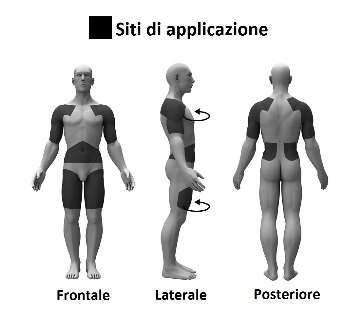
Apply the adhesive part of the patch to clean,
dry and healthy skin, in the following regions as indicated in
grey, in the figures on the side:
- Shoulder or upper arm.
- Abdomen.
- Side (between the ribs and hips).
- Thigh or hip.
To avoid skin irritation:
- Apply the patch in a different area of the skinevery day. For example, put it one day on the right side of the body,
then the next day on the left side of the body.
One day on the upper part of the body,
then on the lower part of the body, the next day.
- Do notreapply Neupro twice to the same areaof the skinwithin 14 days.
- Do notapply the patch to wounded or damaged skin- or to reddened or irritated skin. If you have skin problems due to the patch, see “Skin problems caused by the patch”in paragraph 4 for more information. To prevent loss or detachment of the patch
- Do notapply the patch in an area that may be rubbed by tight clothing.
- Do notuse creams, oils, lotions, powdersor other skin productswhere you will apply the patch. Also do not apply them over or near another patch you have already applied.
- If you need to apply the patch to an area covered with hair, you must shavethe area at least threedaysbefore applying the patch.
- If the edges of the patch lift, the patch can be further secured with medical adhesive tape. If the patch detaches, apply a new patch for the rest of the day - then replace the patch at the usual time.
- Do not letthe patch area be exposed to heat- for example, excessive sunlight, sauna, very hot baths, heating pads or hot water bottles. This is because the medicine may be released faster. Contact your doctor or pharmacist if you think the heat applied has been excessive.
- Always check that the patch has not detached after some activities such as bathing, showering or physical activity.If the patch has caused skin irritation, do not exposethe area to sunlight,as the skin may change color. How to use the patch
- Each patch is packaged in a separate sachet.
- Before opening the sachet, decide where to apply the new patch and make sure you have removed any old patches.
- Apply the Neupro patch to the skin immediately after opening the sachet and removing the protective film.
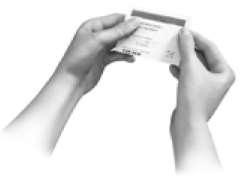
1.
To open the sachet, hold it
with both hands.
Separate the two layers of the
film.
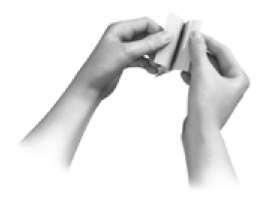
Open the sachet.


Remove the patch from the
sachet
The adhesive part of the patch
is covered with a transparent
protective layer.

- Hold the patch with both hands, with the protective layer facing you. 6.

- Fold the patch in two. This allows the S-shaped opening line to open.

- Peel off one side of the protective lining.
- Do not touch the adhesive part of the patch with your fingers.

- Hold the other side of the protective lining in your hand.
- Then apply the adhesive half of the patch to the skin.
- Press firmly on the adhesive part of the patch.

Fold back the other
half of the patch and peel off
the other side of the protective
layer.
10.
- With the palm of your hand, press firmly on the patch.
- Hold for 30 seconds. This process allows you to ensure that the patch is in contact with the skin and that the corners adhere well.
Wash your hands with water and
soap immediately
after handling
the patch.
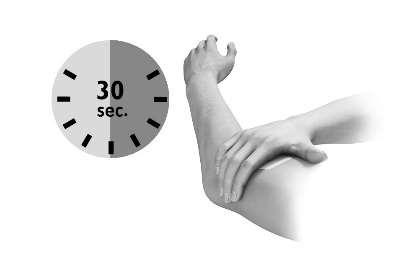
How to remove a used patch
- Remove the used patch slowly and carefully.
- Gently wash the affected area with warm water and mild soap. This allows you to remove any adhesive residue left on the skin by the patch. For adhesive residue that does not come off with water, you can also use a small amount of baby oil.
- Do not use alcohol or other solvents - for example nail polish remover, as they may cause irritation.
If you use more Neupro than you should
Using higher doses of Neupro than prescribed by your doctor can cause adverse effects such as
feeling unwell (nausea) or vomiting, low blood pressure, seeing or hearing things that are not
real (hallucinations), feeling confused, extreme drowsiness, involuntary movements and
convulsions.
In these cases, contact your doctor or hospital immediately. They will give you instructions on what to do.
If you have applied a patch differentfrom the one prescribed by your doctor (e.g. Neupro 4 mg/24 h instead
of Neupro 2 mg/24 h), contact your doctor or hospitalfor immediate advice and follow their
advice on patch changes.
If any unpleasant reaction occurs, consult your doctor.
If you forget to replace the patch at the usual time
- If you forgot to replace the patch at the usual time, apply a new one as soon as you remember. Remove the old patch and use a new one.
- If you forgot to apply a new patch after removing the old one, apply a new one as soon as you remember. In both cases, apply the new patch at the usual time the next day. Do not apply a double dose to make up for a missed dose. If you stop taking NeuproDo not stop using Neupro without informing your doctor. An abrupt interruption can cause the development of a clinical condition called “neuroleptic malignant syndrome” which could be life-threatening. The signs include: loss of muscle movements (akinesia), muscle rigidity, fever, unstable blood pressure, rapid heartbeat (tachycardia), confusion, reduced state of consciousness (e.g. coma). If your doctor has told you to stop taking Neupro, the daily doseof Neupro must be reduced gradually:
- Parkinson's disease- reduction of 2 mg on alternate days. If you have any questions about the use of this medicine, ask your doctor, pharmacist or nurse.
4. Possible side effects
Like all medicines, this medicine can cause side effects, although not everybody gets them.
If you notice any side effect, contact your doctor, pharmacist or
nurse.
More frequent side effects at the beginning of therapy
You may feel unwell (nausea) and vomitingat the beginning of therapy. These effects are
normally mild or moderate and last only for a short time. Contact your doctorif they last for a long
time or worry you.
Skin problems caused by the patch
- The patch may cause skin reactions such as redness, itching on the skin where it has been applied - these reactions are normally mild or moderate.
- The reactions normally disappear a few hours after the patch is removed.
- Tell your doctorif you have a skin reaction that lasts more than a few days, and that is severe or if it spreads outside the area of skin covered by the patch.
- Avoid exposing the skin areas with any skin reaction caused by the patch to sunlight and tanning lamps.
- To avoid skin reactions, apply the patch every day to a different area and use the same area again only after 14 days. Loss of consciousness may occurNeupro can cause loss of consciousness. This can occur particularly when you start using Neupro or when the dose is increased. Tell your doctor if you lose consciousness or feel dizzy. Abnormal behaviour and thinking changesTell your doctor if you notice any changes in behaviour, thinking or both,listed below. They may decide how to manage or reduce the symptomsIt may be helpful to tell a family member or caregiver that you are experiencing these changes, or that a family member or caregiver can tell you or your doctor if they are concerned about any changes in your behaviour. Neupro can cause unusual urges or desires that lead you to be unable to resist the impulse, drive or temptation to perform certain activities that could harm you or others. These may include:
- a strong urge to gamble excessively despite it seriously affecting you or your family increased sexual interest and behaviour that causes significant distress to you or others - for example an increased sexual drive
- uncontrollable shopping or excessive spending
- uncontrolled eating (eating large amounts of food in a short period of time) or compulsive eating (eating more food than normal and more than needed to satisfy your appetite).
Neupro can cause other abnormal thoughts and behaviours. These may include:
- abnormal thoughts about reality
- delusions, hallucinations (seeing or hearing things that are not real)
- confusion
- disorientation
- aggressive behaviour
- agitation
- rambling.
Tell your doctor if you notice any changes in behaviour, thinking or both,
listed above. They may decide how to manage or reduce the symptoms.
Allergic reactions
Contact your doctor if you notice signs of an allergic reaction – these may include swelling of the face,
tongue and/or lips.
Side effects when using Neupro for Parkinson’s disease
Tell your doctor, pharmacist or nurse if you notice any of the following side effects:
Very common: may affect more than 1 in 10 people
- headache
- feeling sleepy or dizzy
- feeling unwell (nausea), vomiting
- skin irritation under the patch, such as redness and itching.
Common: may affect up to 1 in 10 people
- falls
- hiccups
- weight loss
- swelling of the legs and feet
- feeling weak (fatigue), tiredness
- feeling of a racing heartbeat (palpitations)
- constipation, dry mouth, heartburn
- redness, increased sweating, itching
- dizziness (a spinning sensation)
- seeing or hearing things that are not real (hallucinations)
- decrease in blood pressure when getting up from a sitting or lying position, increase in blood pressure
- difficulty falling asleep, sleep disorders, difficulty sleeping, nightmares, unusual dreams
- involuntary movements related to Parkinson’s disease (dyskinesia)
- fainting, feeling dizzy when getting up from a sitting or lying position due to a drop in blood pressure
- inability to resist the impulse to perform an action that could be harmful, including excessive gambling, repetitive behaviours with no purpose, uncontrollable shopping or excessive spending
- uncontrolled eating (eating large amounts of food in a short period of time) or compulsive eating (eating more food than normal and more than needed to satisfy your appetite).
Uncommon: may affect up to 1 in 100 people
- blurred vision
- weight gain
- allergic reaction
- decrease in blood pressure
- increased heart rate
- stomach and abdominal disorders
- generalised itching, skin irritation
- falling asleep suddenly without warning signs
- inability to achieve or maintain an erection
- agitation, disorientation, confusion or paranoia
- increased or abnormal results in liver function tests
- visual disturbances such as seeing colours or lights
- increased levels of creatine phosphokinase (CPK) (CPK is an enzyme mainly found in skeletal muscles) Rare: may affect up to 1 in 1000
- delirium
- rambling
- irritability
- aggressive behaviour
- psychotic disorders
- generalised rash
- involuntary muscle spasms (convulsions) Frequency not known: the frequency cannot be estimated from the available data
- a strong desire for high doses of medicines like Neupro higher than needed to control the disease. This is also known as “dopamine dysregulation syndrome” and can lead to excessive use of Neupro.
- diarrhoea
- head dropping syndrome
- rhabdomyolysis (a rare, serious muscle disorder that causes muscle pain, tenderness and weakness and may lead to kidney problems) Tell your doctor, pharmacist or nurse if you notice any of the side effects listed above. Reporting of side effectsIf you get any side effects, talk to your doctor, pharmacist or nurse. This includes any possible side effects not listed in this leaflet. You can also report side effects directly through the national reporting system listed in Annex V. By reporting side effects you can help provide more information on the safety of this medicine.
5. How to store Neupro
Keep this medicine out of the sight and reach of children.
Do not use this medicine after the expiry date which is stated on the label and the packaging.
Do not store at a temperature above 30°C.
Disposal of used or unused patches
- Used patches still contain the active substance ‘rotigotine’, which may be harmful to other people. Fold the used patch with the adhesive side inwards. Replace the patch in the original sachet and dispose of it safely, out of the reach of children.
- Do not dispose of any medicine in waste water or household waste. Ask your pharmacist how to dispose of medicines you no longer use. This will help protect the environment.
6. Contents of the pack and other information
What Neupro contains
The active ingredient is rotigotine.
- 2 mg/24 h: Each patch releases 2 mg of rotigotine in 24 hours. Each 10 cm patch contains 4.5 mg of rotigotine.
- 4 mg/24 h: Each patch releases 4 mg of rotigotine in 24 hours. Each 20 cm patch contains 9.0 mg of rotigotine.
- 6 mg/24 h: Each patch releases 6 mg of rotigotine in 24 hours. Each 30 cm patch contains 13.5 mg of rotigotine.
- 8 mg/24 h: Each patch releases 8 mg of rotigotine in 24 hours. Each 40 cm patch contains 18.0 mg of rotigotine. The other ingredients are:
- Poly(dimethylsiloxane, trimethylsilyl silicate)-copolymerized, povidone K90, sodium metabisulfite (E223), ascorbyl palmitate (E304) and DL-α-tocopherol (E307).
- Support layer: polyester film coated with silicone and aluminum, colored with a pigment layer (titanium dioxide (E171), pigment yellow 13, pigment red 166, pigment yellow
- 12) and bearing lettering (pigment red 146, pigment yellow 180, pigment black 7).
- Protective layer: polyester film coated with transparent fluoropolymer. Description of the appearance of Neupro and contents of the packNeupro is a transdermal patch. It is thin and consists of three layers. It is a square patch, with rounded corners. The outer part of the support layer is beige in color and displays the writing Neupro 2 mg/24 h, 4 mg/24 h, 6 mg/24 h or 8 mg/24 h. Neupro is available in the following packs: The starter pack contains 28 transdermal patches in 4 boxes containing 7 patches of 2 mg, 4 mg, 6 mg and 8 mg each, sealed in individual sachets. Marketing Authorisation HolderUCB Pharma S.A. Allée de la Recherche 60 B-1070 Brussels Belgium ManufacturerUCB Pharma S.A. Chemin du Foriest B-1420 Braine l’Alleud Belgium For further information on this medicine, contact the local representative of the marketing authorisation holder: België/Belgique/BelgienUCB Pharma SA/NV Tél/Tel: +32-(0)2 559 92 00 LietuvaUCB Pharma Oy Finland Tel: +358-92 514 4221 (Suomija) БългарияЮ СИ БИ България ЕООД Te л. : + 359-(0) 2 962 30 49 Luxembourg/LuxemburgUCB Pharma SA/NV Tél/Tel: +32-(0)2 559 92 00 Česká republikaUCB s.r.o. Tel: + 420-221 773 411 MagyarországUCB Magyarország Kft. Tel.: + 36-(1) 391 0060 DanmarkUCB Nordic A/S Tlf.: + 45-32 46 24 00 MaltaPharmasud Ltd. Tel: +356-21 37 64 36 DeutschlandUCB Pharma GmbH Tel: + 49-(0) 2173 48 48 48 NederlandUCB Pharma B.V. Tel: +31-(0)76-573 11 40 EestiUCB Pharma Oy Finland Tel: +358-92 514 4221 (Soome) NorgeUCB Nordic A/S Tlf: +45-32 46 24 00
Ελλάδα
UCB Α.Ε.
Τηλ: +30-2109974000
Österreich
UCB Pharma GmbH
Tel: + 43-(0)1 291 80 00
España
UCB Pharma S.A.
Tel: + 34-91 570 34 44
Polska
UCB Pharma Sp. z o.o.
Tel.: + 48-22 696 99 20
France
UCB Pharma S.A.
Tél: + 33-(0)1 47 29 44 35
Portugal
BIAL-Portela & Cª, S.A.
Tel: +351-22 986 61 00
România
UCB Pharma România S.R.L.
Tel: + 40-21 300 29 04
Hrvatska
Medis Adria d.o.o.
Tel: +385-(0)1 230 34 46
Ireland
UCB (Pharma) Ireland Ltd.
Tel: + 353-(0)1-46 37 395
Slovenija
Medis, d.o.o.
Tel: + 386-1 589 69 00
Ísland
UCB Nordic A/S
Sími: + 45 / 32 46 24 00
Slovenská republika
UCB s.r.o., organizačná zložka
Tel: + 421-(0)2 5920 2020
Italia
UCB Pharma S.p.A.
Tel: + 39-02 300 791
Suomi/Finland
UCB Pharma Oy Finland
Puh/Tel: +358-92 514 4221
Κύπρος
Lifepharma (Z.A.M.) Ltd
Τηλ: + 357-22 05 63 00
Sverige
UCB Nordic A/S
Tel: + 46-(0) 40 29 49 00
Latvija
UCB Pharma Oy Finland
Tel: +358-92 514 4221 (Somija)
Other sources of information
More detailed information on this medicine is available on the website of the European
Medicines Agency: https://www.ema.europa.eu .

Уже начали прием и появились вопросы?
Обсудите свое состояние и дальнейшие шаги с врачом онлайн.
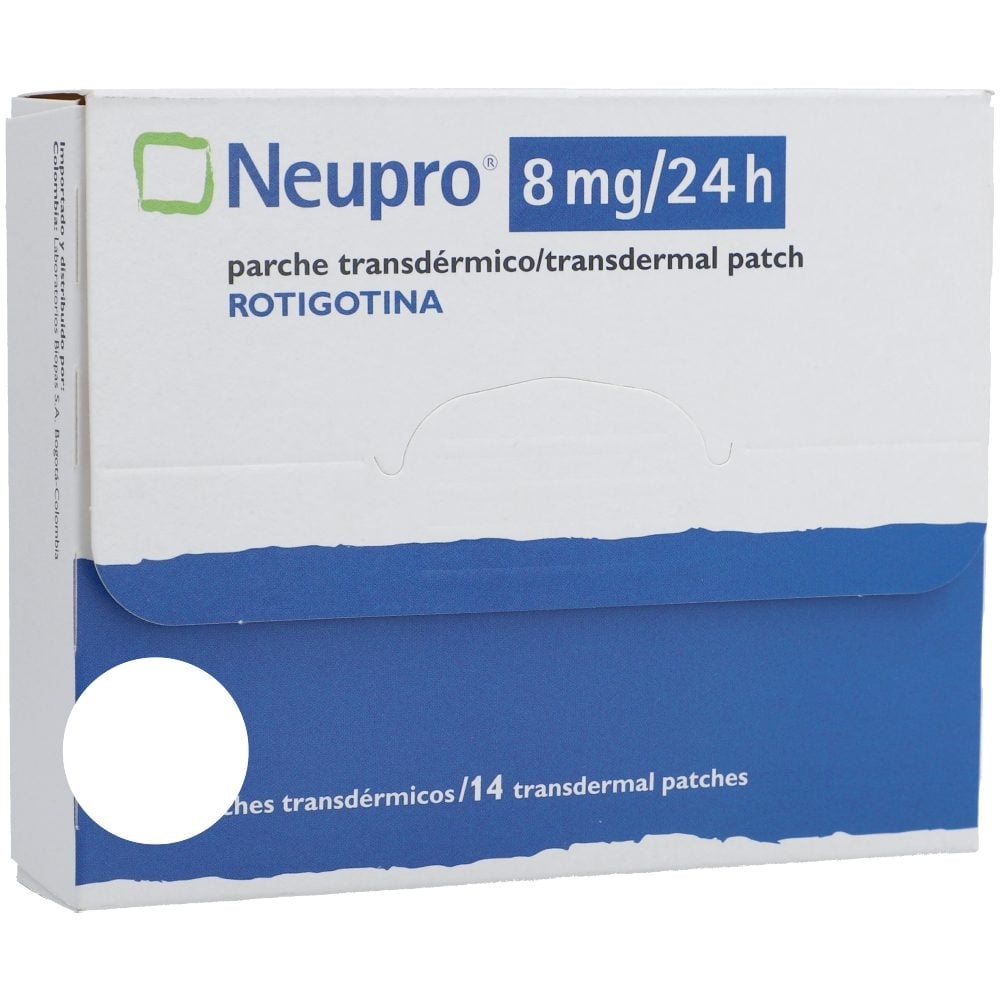
- Страна регистрации
- Форма выпускаTransdermal patch, 2 MG/24 H
- Код АТХN04BC09
- Действующее вещество
- Отпускается по рецептуДа
- Производитель
- Информация на этой странице носит справочный характер и не является медицинской консультацией. Перед началом приема лекарства обязательно проконсультируйтесь с врачом.
- Аналоги NEUPROФорма выпуска: Infusion solution, 50 MG/5 MLДействующее вещество: apomorphineПроизводитель: CHIESI ITALIA S.P.AОтпускается по рецептуФорма выпуска: Tablet, 1 MGДействующее вещество: каберголинаПроизводитель: PFIZER ITALIA S.R.L.Отпускается по рецептуФорма выпуска: Sublingual film, 10 mgДействующее вещество: apomorphineПроизводитель: BIAL -PORTELA & CA ,SAОтпускается по рецепту
Аналоги NEUPRO в других странах
Лекарства с тем же действующим веществом, доступные в других странах.
Аналог NEUPRO в Испания
Врачи онлайн по NEUPRO
Обсудите применение NEUPRO и возможные следующие шаги — по оценке врача.



Получите рецепт на NEUPRO онлайн
Заполните форму за 2 минуты
Расскажите о симптомах, истории болезни и нужном препарате.
Выберите врача или мы назначим
Выберите специалиста или мы подберём ближайшего доступного врача.
Врач рассматривает ваш случай
Обычно в течение 30 минут. Может задать уточняющие вопросы в чате.
Получите в любой аптеке
Электронный рецепт отправляется на вашу почту — действителен по всей Польше.
Часто задаваемые вопросы
NEUPRO требует рецепта в Италия. Вы можете уточнить у врача онлайн, подходит ли это лекарство для вашей ситуации.
Действующее вещество NEUPRO — rotigotine. Эта информация помогает определить лекарства с тем же составом под другими торговыми названиями.
NEUPRO производится компанией UCB PHARMA S.A.. Упаковка и торговое название могут отличаться в зависимости от дистрибьютора.
Врачи, включая Семейные врачи, Психиатры, Дерматологи, Кардиологи, Эндокринологи, Гастроэнтерологи, Пульмонологи, Нефрологи, Ревматологи, Гематологи, Инфекционисты, Аллергологи, Гериатры, Педиатры, Онкологи, могут оценить целесообразность применения NEUPRO с учетом вашей ситуации и местных правил. Вы можете записаться на онлайн-консультацию, чтобы обсудить возможные варианты.
Польша имеет хорошо развитую систему здравоохранения в крупных городах, таких как Варшава, Краков, Вроцлав и Гданьск. Аптеки широко доступны и работают в соответствии с действующим законодательством, обеспечивая доступ к рецептурным препаратам.
Вы можете купить NEUPRO в Варшаве, Кракове, Вроцлаве или Гданьске в любой аптеке при наличии действующего рецепта.
Чтобы получить рецепт, вы можете воспользоваться Oladoctor:
Другие лекарства с тем же действующим веществом (rotigotine) включают APOFIN, KABASER, KYNMOBI. Они могут отличаться торговым названием или формой выпуска, но содержат одинаковый терапевтический компонент. Перед изменением лечения рекомендуется проконсультироваться с врачом.
