



LUCENTIS 0.5 mg/0.05 ml Инъекционный раствор

Рассмотрение рецепта онлайн
Врач рассмотрит ваш случай и примет решение о назначении рецепта, если это медицински оправдано.

Поговорите с врачом об этом лекарстве
Обсудите симптомы и возможные дальнейшие шаги на онлайн-консультации.



Инструкция по применению LUKENTIS
Содержание инструкции
- Lucentis 10 mg/ml injectable solution
- Lucentis 10 mg/ml injectable solution in pre-filled syringe
- Lucentis 10 mg/ml injectable solution
Lucentis 10 mg/ml injectable solution
ranibizumab
ADULTS
Information for prematurely born children can be found on the other side of this leaflet.
Read this leaflet carefully before this medicine is administered to you because
it contains important information for you.
- Keep this leaflet. You may need to read it again.
- If you have any questions, ask your doctor.
- If any side effects occur, including those not listed in this leaflet, tell your doctor. See section 4.
Contents of this leaflet
- 1. What Lucentis is and what it is used for
- 2. What you need to know before Lucentis is administered to you
- 3. How Lucentis will be administered to you
- 4. Possible side effects
- 5. How to store Lucentis
- 6. Contents of the pack and other information
1. What is Lucentis and what is it used for
What is Lucentis
Lucentis is a solution that must be injected into the eye. Lucentis belongs to a group of
medicines called anti-neovascularization agents. It contains an active substance called
ranibizumab.
What is Lucentis used for
Lucentis is used in adults to treat various eye conditions that cause a decrease
in vision.
These conditions are due to damage to the retina (the light-sensitive layer at the back
of the eye) caused by:
- Growth of abnormal blood vessels that leak fluid. This is observed in conditions such as age-related macular degeneration (AMD) and proliferative diabetic retinopathy (PDR, a condition caused by diabetes). It may be associated with choroidal neovascularization (CNV) due to pathological myopia (PM), angioid streaks, central serous chorioretinopathy or inflammatory CNV.
- Macular edema (swelling in the center of the retina). This swelling can be caused by diabetes (a condition called diabetic macular edema (DME)) or blockage of the retinal veins (a condition called retinal vein occlusion (RVO)).
How Lucentis works
Lucentis recognizes and specifically binds to a protein called vascular endothelial growth
factor A (VEGF-A) present in the eye. When in excess, VEGF-A causes abnormal growth
of blood vessels and swelling in the eye that can lead to a decrease in
vision in conditions such as AMD, DME, PDR, RVO, PM and CNV. By binding to VEGF-A, Lucentis can
block its action and prevent abnormal growth and swelling.
In these conditions, Lucentis can help stabilize and, in many cases, improve vision.
2. What you need to know before you are given Lucentis
You must not receive Lucentis
- if you are allergic to ranibizumab or any of the other ingredients of this medicine (listed in section 6).
- if you have an infection in your eye or the surrounding area.
- if you have pain or redness (severe inflammation inside the eye) in your eye.
Warnings and precautions
Talk to your doctor before you are given Lucentis.
- Lucentis is given by an injection into your eye. Occasionally, after treatment with Lucentis, an infection inside the eye, pain or redness (inflammation), detachment or tear of one of the layers at the back of the eye (retinal detachment or tear and detachment or tear of the retinal pigment epithelium), or clouding of the lens of the eye (cataract) can occur. It is important to identify and treat an infection or retinal detachment as soon as possible. Tell your doctor immediately if you experience signs such as eye pain or increased discomfort, worsening redness of the eye, blurred or decreased vision, an increase in the number of floaters in your vision, or increased sensitivity to light.
- In some patients, the pressure in your eye may increase briefly immediately after the injection. This event may go unnoticed, so your doctor must perform a check after each injection.
- Tell your doctor if you have had previous eye problems or treatments, or if you have had a stroke or signs of transient ischemic attacks (weakness or paralysis of the limbs or face, difficulty speaking or understanding). This information will be taken into consideration to assess whether Lucentis is the appropriate treatment for you.
See section 4 ("Possible side effects") for more detailed information about the side effects that may occur during therapy with Lucentis.
Children and adolescents (under 18 years of age)
Except for retinopathy of prematurity, the use of Lucentis has not been established in children and
adolescents and is therefore not recommended. For the treatment of premature babies with
Other medicines and Lucentis
Tell your doctor if you are taking, have recently taken or might take any other medicines.
Pregnancy and breastfeeding
- Women of childbearing potential must use effective contraception during treatment and for at least three months after the last injection of Lucentis.
- There is no experience with the use of Lucentis in pregnant women. Lucentis should not be used during pregnancy unless the potential benefit outweighs the potential risk to the fetus. If you are pregnant, suspect you are pregnant or are planning to become pregnant, talk to your doctor before taking Lucentis.
- The use of Lucentis during breastfeeding is not recommended as small amounts of Lucentis may pass into breast milk. Ask your doctor or pharmacist for advice before treatment with Lucentis.
Driving and operating machinery
Temporary blurred vision may occur after treatment with Lucentis. If this
happens, do not drive and do not use machinery until this condition has resolved.
3. How Lucentis will be administered to you
Lucentis is administered by the ophthalmologist as a single injection into the eye under local
anesthesia. The usual dose of an injection is 0.05 ml (which contains 0.5 mg of active substance).
The interval between two doses injected into the same eye must be at least four weeks. All
injections will be administered by the ophthalmologist.
Before the injection, the doctor will carefully clean the eye to prevent infection. The doctor will
also give you a local anesthetic to reduce or prevent any pain that may occur with the injection.
Treatment is started with one injection of Lucentis per month. The doctor will monitor the condition
of the eye and, based on the response to treatment, will decide whether and when further
treatment is necessary.
prepare and administer Lucentis to adults”.
Elderly (65 years of age and over)
Lucentis can be used for patients aged 65 years and over without dose adjustments.
Before stopping treatment with Lucentis
If you are considering stopping treatment with Lucentis, attend your next visit and discuss it with
your doctor. The doctor will advise you and decide how long you should be treated with
Lucentis.
If you have any doubts about the use of this medicine, ask your doctor.
4. Possible side effects
Like all medicines, this medicine can cause side effects, although not everybody gets them.
The side effects associated with the administration of Lucentis are due to both the medicine itself
and the injection procedure and mostly affect the eye.
The most serious side effects are described below:
Serious common side effects(may affect up to 1 in 10 people): detachment or tear
in the back of the eye (retinal detachment or tear), which manifests with flashes of light
with floating spots up to a temporary reduction in vision, or clouding of the lens
(cataract).
Serious uncommon side effects(may affect up to 1 in 100 people): blindness, infection
of the eyeball (endophthalmitis) with inflammation inside the eye.
The symptoms you may experience are eye pain or increased eye discomfort, worsening
of eye redness, blurred or decreased vision, increased number of floaters in
vision, or increased sensitivity to light. Contact your doctor immediately if any of these
side effects occur.
The most frequently reported side effects are described below:
Very common side effects(may affect more than 1 in 10 people)
Visual side effects include: eye inflammation, bleeding in the back of the eye (retinal hemorrhage), visual disturbances, eye pain, floaters or spots
in vision (flying spots), localized eye redness, eye irritation, foreign body sensation in the eye, increased tear production, inflammation or infection of the eyelid margin, dry eye, eye redness or itching, and increased pressure inside
the eye.
Non-visual side effects include: sore throat, nasal congestion, runny nose, headache, and
joint pain.
Other side effects that may occur following treatment with Lucentis are described below:
Common side effects
Visual side effects include: decreased visual acuity, swelling of a part
of the eye (uvea, cornea), inflammation of the cornea (front of the eye), small marks on
the surface of the eye, blurred vision, bleeding at the injection site, bleeding
in the eye, eye discharge with itching, redness and swelling (conjunctivitis), sensitivity to
light, eye discomfort, eyelid swelling, eyelid pain.
Non-visual side effects include: urinary tract infection, decreased red blood cells (with symptoms such as fatigue, shortness of breath, dizziness, pallor), anxiety, cough, nausea, allergic reactions such as rash, hives, itching and redness of the skin.
Uncommon side effects
Visual side effects include: inflammation and bleeding in the front
of the eye, pus collection in the eye, changes in the central part of the ocular surface,
pain or irritation at the injection site, abnormal sensation in the eye, eyelid irritation.
If you experience any side effects, including those not listed in this leaflet, tell
your doctor.
Reporting of side effects
If you get any side effects, talk to your doctor. You can also report side effects directly through the national reporting system
described in Annex V. By reporting side effects you can help provide
more information on the safety of this medicine.
5. How to store Lucentis
- Keep this medicine out of the sight and reach of children.
- Do not use this medicine after the expiry date which is stated on the carton and on the vial label after scad. and after EXP. The expiry date refers to the last day of that month.
- Store in a refrigerator (2 C - 8 C). Do not freeze.
- Before use, the unopened vial can be stored at room temperature (25°C) for a maximum of 24 hours.
- Keep the vial in the outer packaging to protect the medicine from light.
- Do not use a package that is damaged.
6. Contents of the pack and other information
What Lucentis contains
- The active substance is ranibizumab. Each ml contains 10 mg of ranibizumab. Each vial contains 2.3 mg of ranibizumab in 0.23 ml of solution. This provides an amount sufficient for the administration of a single dose of 0.05 ml containing 0.5 mg of ranibizumab.
- The other components are α,α-trehalose dihydrate; histidine hydrochloride, monohydrate; histidine; polysorbate 20; water for injections.
Description of the appearance of Lucentis and contents of the pack
Lucentis is an injectable solution in a vial (0.23 ml). The solution is aqueous, clear, from
colourless to pale yellow-brownish.
Two different packs are available:
Vial alone
Pack containing a glass vial of ranibizumab with a chlorobutyl rubber stopper. The
vial is for single use.
Vial + filter needle
Pack containing only a glass vial of ranibizumab with a chlorobutyl rubber stopper and
a bevelled filter needle (18G x 1½″, 1.2 mm x 40 mm, 5 micrometers) for drawing up the contents of the
vial. All components are for single use.
Marketing Authorisation Holder
Novartis Europharm Limited
Vista Building
Elm Park, Merrion Road
Dublin 4
Ireland
Manufacturer
Novartis Farmacéutica, S.A.
Gran Via de les Corts Catalanes, 764
08013 Barcelona
Spain
Lek Pharmaceuticals d.d.
Verovškova ulica 57
Ljubljana, 1526
Slovenia
Novartis Pharma GmbH
Roonstrasse 25
90429 Nuremberg
Germany
For further information on this medicine, contact the local representative of the marketing
authorisation holder:
België/Belgique/Belgien
Novartis Pharma N.V.
Tél/Tel: +32 2 246 16 11
Lietuva
SIA Novartis Baltics Lietuvos filialas
Tel: +370 5 269 16 50
България
Novartis Bulgaria EOOD
Тел.: +359 2 489 98 28
Luxembourg/Luxemburg
Novartis Pharma N.V.
Tél/Tel: +32 2 246 16 11
Česká republika
Novartis s.r.o.
Tel: +420 225 775 111
Magyarország
Novartis Hungária Kft.
Tel.: +36 1 457 65 00
Danmark
Novartis Healthcare A/S
Tlf: +45 39 16 84 00
Malta
Novartis Pharma Services Inc.
Tel: +356 2122 2872
Deutschland
Novartis Pharma GmbH
Tel: +49 911 273 0
Nederland
Novartis Pharma B.V.
Tel: +31 88 04 52 111
Eesti
SIA Novartis Baltics Eesti filiaal
Tel: +372 66 30 810
Norge
Novartis Norge AS
Tlf: +47 23 05 20 00
Ελλάδα
Novartis (Hellas) A.E.B.E.
Τηλ: +30 210 281 17 12
Österreich
Novartis Pharma GmbH
Tel: +43 1 86 6570
España
Novartis Farmacéutica, S.A.
Tel: +34 93 306 42 00
Polska
Novartis Poland Sp. z o.o.
Tel.: +48 22 375 4888
France
Novartis Pharma S.A.S.
Tél: +33 1 55 47 66 00
Portugal
Novartis Farma - Produtos Farmacêuticos, S.A.
Tel: +351 21 000 8600
Hrvatska
Novartis Hrvatska d.o.o.
Tel. +385 1 6274 220
România
Novartis Pharma Services Romania SRL
Tel: +40 21 31299 01
Ireland
Novartis Ireland Limited
Tel: +353 1 260 12 55
Slovenija
Novartis Pharma Services Inc.
Tel: +386 1 300 75 50
Ísland
Vistor hf.
Sími: +354 535 7000
Slovenská republika
Novartis Slovakia s.r.o.
Tel: +421 2 5542 5439
Italia
Novartis Farma S.p.A.
Tel: +39 02 96 54 1
Suomi/Finland
Novartis Finland Oy
Puh/Tel: +358 (0)10 6133 200
Κύπρος
Novartis Pharma Services Inc.
Τηλ: +357 22 690 690
Sverige
Novartis Sverige AB
Tel: +46 8 732 32 00
Latvija
SIA Novartis Baltics
Tel: +371 67 887 070
United Kingdom (Northern Ireland)
Novartis Ireland Limited
Tel: +44 1276 698370
Other sources of information
More detailed information on this medicine is available on the website of the European Medicines
Agency, http://www.ema.europa.eu
THE FOLLOWING INFORMATION IS FOR HEALTHCARE PROFESSIONALS ONLY:
Please also refer to section 3 “How Lucentis will be administered to you”.
How to prepare and administer Lucentis to adults
Single-use vials, for intravitreal use only.
Lucentis must be administered by a qualified ophthalmologist experienced in intravitreal injections.
In exudative AMD, CNV, PDR and visual impairment due to DME, or macular oedema secondary to BRVO, the recommended dose of Lucentis is 0.5 mg in a single intravitreal injection.
This corresponds to an injected volume of 0.05 ml. The interval between two injections into the same eye must be at least four weeks.
Treatment is initiated with an injection every month until maximum visual acuity is achieved and/or there are no signs of disease activity such as changes in visual acuity and alterations in other signs and
symptoms of the disease during continued treatment. In patients with exudative AMD, DME, PDR and BRVO, it may be necessary to start therapy with three or more consecutive monthly injections.
Therefore, monitoring and treatment intervals must be decided by the physician and must be
based on disease activity, as assessed by visual acuity assessment and/or anatomical parameters.
If, in the opinion of the physician, visual acuity and anatomical parameters indicate that the patient is not
benefiting from continued treatment, Lucentis should be discontinued.
Monitoring of disease activity may include clinical examination, functional assessments or
imaging techniques (e.g. optical coherence tomography or fluorescein angiography).
If patients are treated according to a “treat-and-extend” regimen, upon reaching
maximum visual acuity and/or in the absence of signs of disease activity, treatment intervals
may be gradually extended until signs of the disease reappear or a
worsening of visual function is observed. The treatment interval should be gradually extended by a
maximum of two weeks in patients with exudative AMD and may be extended up to one month in patients
with DME. Treatment intervals may also be gradually extended in the treatment
of BRVO and PDR, however, there is insufficient data to establish the duration of these intervals. Upon
recurrence of disease activity, the treatment interval should be reduced accordingly.
Treatment of visual impairment caused by CNV should be determined individually for
each patient based on disease activity. Some patients may only need one
injection during the first 12 months; others may need more frequent treatment, up to one
monthly injection. For CNV secondary to pathological myopia (PM), many patients may
only need one or two injections during the first year.
Lucentis and argon laser photocoagulation in DME and macular oedema secondary to BRVO
There is some experience with Lucentis administered in conjunction with argon laser photocoagulation.
When used on the same day, Lucentis should be administered at least 30 minutes after
argon laser photocoagulation. Lucentis may be administered to patients who have previously received
argon laser photocoagulation.
Lucentis and photodynamic therapy with verteporfin in CNV secondary to PM
There is no experience with the administration of Lucentis in association with verteporfin.
Before administration, Lucentis should be visually inspected for the presence of
particles and colour changes.
The injection procedure must be performed under aseptic conditions, including surgical scrubbing of the hands, sterile gloves, a sterile drape and a sterile blepharostat (or equivalent) and
the possibility of performing a sterile paracentesis (if necessary). Before performing the intravitreal procedure, the patient's medical history should be carefully assessed for hypersensitivity reactions. Adequate anaesthesia and a broad-spectrum topical antimicrobial should be administered before the injection to disinfect the periocular, ocular and eyelid surfaces, as per clinical practice.
Vial alone
The vial is for single use. After injection, unused product must be discarded. Any vial
showing signs of damage or tampering should not be used. Sterility cannot be
guaranteed if the package seal is broken.
- a 5 µm filter needle (18G)
- a sterile 1 ml syringe (with a 0.05 ml mark)
- an injection needle (30G x ½″). These devices are not included in the Lucentis pack.
Vial + filter needle
All components are sterile and for single use. Any component with packaging showing signs of
damage or tampering should not be used. Sterility cannot be guaranteed if the package seal
of the component is broken. Re-use may cause infection or other
illness/injury.
The following single-use medical devices are required for preparing and injecting Lucentis intravitreally:
- a 5 µm filter needle (18G x 1½″, 1.2 mm x 40 mm, supplied)
- a sterile 1 ml syringe (with a 0.05 ml mark not included in the Lucentis pack)
- an injection needle (30G x ½″; not included in the Lucentis pack)
To prepare Lucentis for intravitreal injection in adult patients, please follow these
instructions:
- 1. Before drawing up, remove the vial cap and clean the vial septum (e.g. with a 70% alcohol swab).
- 2. Attach a 5 µm filter needle (18G x 1½″, 1.2 mm x 40 mm, 5 µm) to a 1 ml syringe aseptically. Insert the bevelled filter needle into the centre of the stopper until it touches the bottom of the vial.
- 3. Draw up all the liquid from the vial while holding it upright, slightly tilted to facilitate complete withdrawal.
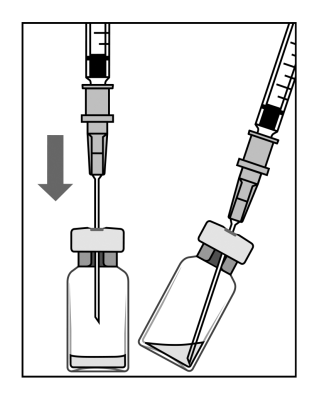
- 4. Make sure the syringe plunger is pulled back sufficiently when emptying the vial to completely empty the filter needle.
- 5. Leave the bevelled filter needle in the vial and detach the syringe from it. Discard the filter needle after drawing up the contents of the vial and do not use it for the intravitreal injection.
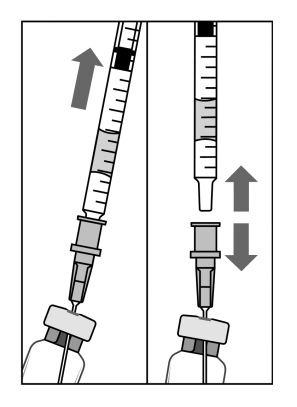
- 6. Firmly and aseptically attach an injection needle (30G x ½″, 0.3 mm x 13 mm) to the syringe.
- 7. Carefully remove the cap from the injection needle without disconnecting the injection needle from the syringe.
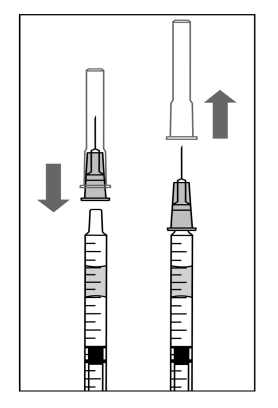
Note: Hold the base of the injection needle while removing the
cap.
- 8. Carefully expel air and excess solution from the syringe and adjust the dose to 0.05 ml marked on the syringe. The syringe is ready for injection.
Note :Do not clean the injection needle. Do not pull back the
plunger.
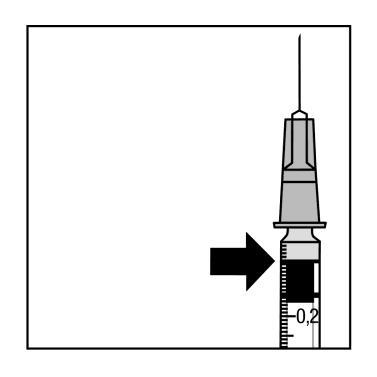
0.05 ml
Insert the injection needle 3.5-4.0 mm posterior to the limbus, into the vitreous cavity, avoiding
the horizontal meridian and directing the needle towards the centre of the eyeball. Inject the injection volume
of 0.05 ml; change the sclerotic site for subsequent injections.
After the injection, do not recap the needle or detach it from the syringe. Dispose of the used syringe together with
the needle in a suitable container or in accordance with local regulations.
Lucentis 10 mg/ml injectable solution in pre-filled syringe
ranibizumab
Read this leaflet carefully before you are given this medicine as it contains important information for you.
- Keep this leaflet. You may need to read it again.
- If you have any questions, ask your doctor.
- If you get any side effects, even those not listed in this leaflet, tell your doctor. See section 4.
Contents of this leaflet
- 1. What Lucentis is and what it is used for
- 2. What you need to know before you are given Lucentis
- 3. How Lucentis will be given to you
- 4. Possible side effects
- 5. How to store Lucentis
- 6. Contents of the pack and other information
1. What is Lucentis and what is it used for
What is Lucentis
Lucentis is a solution that must be injected into the eye. Lucentis belongs to a group of
medicines called anti-angiogenic agents. It contains an active substance called
ranibizumab.
What is Lucentis used for
Lucentis is used in adults to treat various eye conditions that cause a decrease
in vision.
These conditions are due to damage to the retina (the light-sensitive layer at the back
of the eye) caused by:
- Growth of abnormal blood vessels that leak fluid. This is observed in conditions such as age-related macular degeneration (AMD) and proliferative diabetic retinopathy (PDR, a condition caused by diabetes). It may be associated with choroidal neovascularization (CNV) due to pathological myopia (PM), angioid streaks, central serous chorioretinopathy or inflammatory CNV.
- Macular edema (swelling in the center of the retina). This swelling can be caused by diabetes (a condition called diabetic macular edema (DME)) or blockage of the retinal veins (a condition called retinal vein occlusion (RVO)).
How Lucentis works
Lucentis recognizes and specifically binds to a protein called vascular endothelial growth
factor A (VEGF-A) present in the eye. When in excess, VEGF-A causes abnormal growth
of blood vessels and swelling in the eye that can lead to a decrease in
vision in conditions such as AMD, DME, PDR, RVO, PM and CNV. By binding to VEGF-A, Lucentis can
block its action and prevent abnormal growth and swelling.
In these conditions, Lucentis can help stabilize and, in many cases, improve vision.
2. What you need to know before you are given Lucentis
You must not receive Lucentis
- if you are allergic to ranibizumab or any of the other ingredients of this medicine (listed in section 6).
- if you have an infection in your eye or the surrounding area.
- if you have pain or redness (severe intraocular inflammation) in your eye.
Warnings and precautions
Talk to your doctor before you are given Lucentis.
- Lucentis is given by an injection into your eye. Occasionally, after treatment with Lucentis, an infection inside the eye, pain or redness (inflammation), detachment or tear of one of the layers at the back of the eye (retinal detachment or tear and detachment or tear of the retinal pigment epithelium), or clouding of the lens of the eye (cataract) can occur. It is important to identify and treat an infection or retinal detachment as soon as possible. Tell your doctor immediately if you experience signs such as eye pain or increased discomfort, worsening of eye redness, blurred or decreased vision, an increase in the number of floaters in your vision, or increased sensitivity to light.
- In some patients, the pressure in your eye may increase briefly immediately after the injection. This event is something you may not notice, so your doctor must perform a check after each injection.
- Tell your doctor if you have had previous eye problems or treatments, or if you have had a stroke or signs of transient ischemic attacks (weakness or paralysis of the limbs or face, difficulty speaking or understanding). This information will be taken into consideration to assess whether Lucentis is the appropriate treatment for you.
See section 4 ("Possible side effects") for more detailed information about the side effects that may occur during therapy with Lucentis.
Children and adolescents (under 18 years of age)
The use of Lucentis has not been established in children and adolescents and is therefore not recommended.
Other medicines and Lucentis
Tell your doctor if you are taking, have recently taken or might take any other medicines.
Pregnancy and breastfeeding
- Women of childbearing potential must use effective contraception during treatment and for at least three months after the last Lucentis injection.
- There is no experience with the use of Lucentis in pregnant women. Lucentis should not be used during pregnancy unless the potential benefit outweighs the potential risk to the fetus. If you are pregnant, suspect you may be pregnant or are planning to become pregnant, talk to your doctor before taking Lucentis.
- The use of Lucentis during breastfeeding is not recommended as small amounts of Lucentis may pass into breast milk. Ask your doctor or pharmacist for advice before treatment with Lucentis.
Driving and using machines
Temporary blurred vision may occur after treatment with Lucentis. If this
happens, do not drive or use machines until this condition has resolved.
3. How Lucentis will be administered to you
Lucentis is administered by the ophthalmologist as a single injection into the eye under local
anesthesia. The usual dose of an injection is 0.05 ml (which contains 0.5 mg of active substance). The
prefilled syringe contains a volume greater than the recommended dose of 0.5 mg. The drawable
volume should not be used completely. The excess volume must be discarded before proceeding with
the injection. Injecting the entire volume of the prefilled syringe may cause an overdose.
The interval between two doses injected into the same eye must be at least four weeks. All
injections will be administered to you by the ophthalmologist.
Before the injection, the doctor will carefully clean the eye to prevent infection. The doctor will
also give you a local anesthetic to reduce or prevent any pain that may occur with the injection.
Treatment is started with one injection of Lucentis per month. The doctor will monitor the condition
of the eye and, based on the response to treatment, will decide if and when further
treatment is necessary.
prepare and administer Lucentis.”
Elderly (65 years of age and over)
Lucentis can be used for patients aged 65 years and over without dose adjustments.
Before stopping treatment with Lucentis
If you are considering stopping treatment with Lucentis, attend your next visit and discuss it with your
doctor. The doctor will advise you and decide how long you should be treated with
Lucentis.
If you have any doubts about the use of this medicine, ask your doctor.
4. Possible side effects
Like all medicines, this medicine can cause side effects, although not everybody gets them.
Side effects associated with the administration of Lucentis are due to both the medicine itself
and the injection procedure and mostly affect the eye.
The more serious side effects are described below:
Serious common side effects(may affect up to 1 in 10 people): detachment or tear
in the back of the eye (retinal detachment or tear), which manifests with flashes of light
with floating objects up to a temporary reduction in vision, or clouding of the lens
(cataract).
Serious uncommon side effects(may affect up to 1 in 100 people): blindness, infection
of the eyeball (endophthalmitis) with inflammation inside the eye.
The symptoms you may experience are eye pain or increased discomfort, worsening
eye redness, blurred or decreased vision, increased number of small particles
in vision or increased sensitivity to light. Contact your doctor immediately if any of
these side effects occur.
The most frequently reported side effects are described below:
Very common side effects(may affect more than 1 in 10 people)
Visual side effects include: eye inflammation, bleeding in the back
of the eye (retinal hemorrhage), visual disturbances, eye pain, floaters or spots
in vision, localized eye redness, eye irritation, foreign body sensation in the eye, increased tear production, inflammation or infection of the eyelid margin, dry eye, eye redness or itching, and increased pressure inside
the eye.
Non-visual side effects include: sore throat, nasal congestion, runny nose, headache, and
joint pain.
Other side effects that may occur following treatment with Lucentis are described below:
Common side effects
Visual side effects include: decreased visual acuity, swelling of a part
of the eye (uvea, cornea), inflammation of the cornea (front part of the eye), small marks on
the surface of the eye, blurred vision, bleeding at the injection site, bleeding
in the eye, eye discharge with itching, redness and swelling (conjunctivitis), sensitivity to
light, eye discomfort, eyelid swelling, eyelid pain.
Non-visual side effects include: urinary tract infection, decreased red blood cells
(with symptoms such as fatigue, shortness of breath, dizziness, paleness), anxiety, cough, nausea, allergic reactions such as rash, hives, itching and redness of the skin.
Uncommon side effects
Visual side effects include: inflammation and bleeding in the front
of the eye, pus collection in the eye, changes in the central part of the eye surface,
pain or irritation at the injection site, abnormal sensation in the eye, eyelid irritation.
If you experience any side effects, including those not listed in this leaflet, tell your
doctor.
Reporting of side effects
If you get any side effects, talk to your doctor or pharmacist. You can also report side effects directly through the national reporting system reported in Annex V. By reporting side effects you can help provide
more information on the safety of this medicine.
5. How to store Lucentis
- Keep this medicine out of the sight and reach of children.
- Do not use this medicine after the expiry date which is stated on the carton and on the label of the pre-filled syringe after EXP. and after EXP. The expiry date refers to the last day of that month.
- Store in a refrigerator (2 C - 8 C). Do not freeze.
- Before use, the sealed tray can be stored at room temperature (25°C) for a maximum of 24 hours.
- Keep the pre-filled syringe in its sealed tray in the carton to protect the medicine from light.
- Do not use a package that is damaged.
6. Contents of the pack and other information
What Lucentis contains
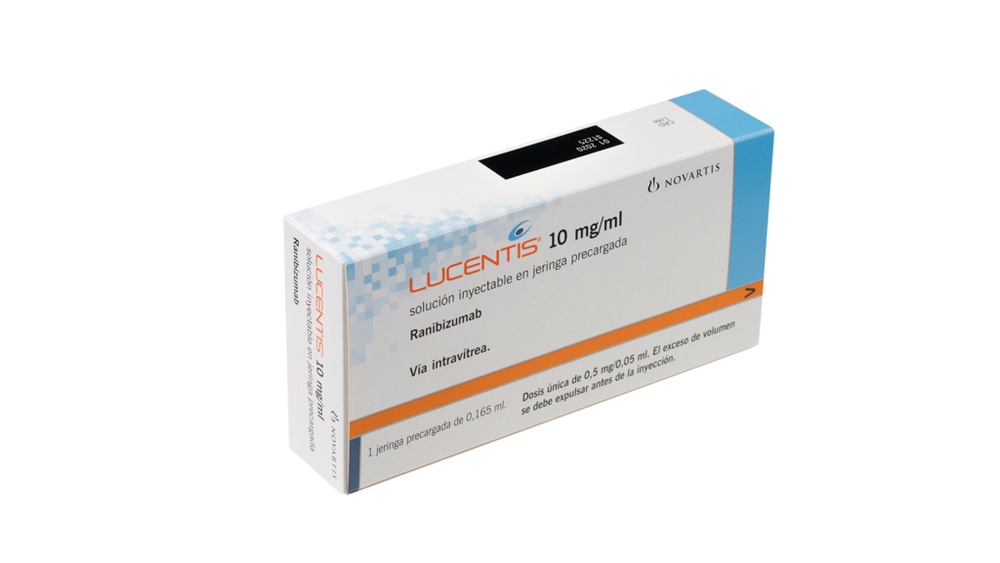
- The active substance is ranibizumab. Each ml contains 10 mg of ranibizumab. One pre-filled syringe contains 0.165 ml, equivalent to 1.65 mg of ranibizumab. This provides a sufficient amount for administering a single dose of 0.05 ml containing 0.5 mg of ranibizumab.
- The other ingredients are α,α-trehalose dihydrate; histidine hydrochloride, monohydrate; histidine; polysorbate 20; water for injections.
Description of Lucentis and contents of the pack
Lucentis is an injectable solution in a pre-filled syringe. The pre-filled syringe contains 0.165 ml
of an aqueous, clear, colorless to pale yellow-brown solution. The pre-filled syringe contains
a volume greater than the recommended dose of 0.5 mg. The withdrawable volume should not be used
completely. The excess volume must be discarded before proceeding with the injection. Injecting
the entire volume of the pre-filled syringe may cause an overdose.
The pack contains one pre-filled syringe, packaged in a sealed tray. The pre-filled
syringe is for single use only.
Marketing Authorisation Holder
Novartis Europharm Limited
Vista Building
Elm Park, Merrion Road
Dublin 4
Ireland
Manufacturer
Novartis Pharma GmbH
Roonstrasse 25
90429 Nuremberg
Germany
Alcon-Couvreur N.V.
Rijksweg 14
2870 Puurs
Belgium
For further information on this medicinal product, contact the local representative of the marketing
authorisation holder:
België/Belgique/Belgien
Novartis Pharma N.V.
Tél/Tel: +32 2 246 16 11
Lietuva
SIA Novartis Baltics Lietuvos filialas
Tel: +370 5 269 16 50
България
Novartis Bulgaria EOOD
Тел.: +359 2 489 98 28
Luxembourg/Luxemburg
Novartis Pharma N.V.
Tél/Tel: +32 2 246 16 11
Česká republika
Novartis s.r.o.
Tel: +420 225 775 111
Magyarország
Novartis Hungária Kft.
Tel.: +36 1 457 65 00
Danmark
Novartis Healthcare A/S
Tlf: +45 39 16 84 00
Malta
Novartis Pharma Services Inc.
Tel: +356 2122 2872
Deutschland
Novartis Pharma GmbH
Tel: +49 911 273 0
Nederland
Novartis Pharma B.V.
Tel: +31 88 04 52 111
Eesti
SIA Novartis Baltics Eesti filiaal
Tel: +372 66 30 810
Norge
Novartis Norge AS
Tlf: +47 23 05 20 00
Ελλάδα
Novartis (Hellas) A.E.B.E.
Τηλ: +30 210 281 17 12
Österreich
Novartis Pharma GmbH
Tel: +43 1 86 6570
España
Novartis Farmacéutica, S.A.
Tel: +34 93 306 42 00
Polska
Novartis Poland Sp. z o.o.
Tel.: +48 22 375 4888
France
Novartis Pharma S.A.S.
Tél: +33 1 55 47 66 00
Portugal
Novartis Farma - Produtos Farmacêuticos, S.A.
Tel: +351 21 000 8600
Hrvatska
Novartis Hrvatska d.o.o.
Tel. +385 1 6274 220
România
Novartis Pharma Services Romania SRL
Tel: +40 21 31299 01
Ireland
Novartis Ireland Limited
Tel: +353 1 260 12 55
Slovenija
Novartis Pharma Services Inc.
Tel: +386 1 300 75 50
Ísland
Vistor hf.
Sími: +354 535 7000
Slovenská republika
Novartis Slovakia s.r.o.
Tel: +421 2 5542 5439
Italia
Novartis Farma S.p.A.
Tel: +39 02 96 54 1
Suomi/Finland
Novartis Finland Oy
Puh/Tel: +358 (0)10 6133 200
Κύπρος
Novartis Pharma Services Inc.
Τηλ: +357 22 690 690
Sverige
Novartis Sverige AB
Tel: +46 8 732 32 00
Latvija
SIA Novartis Baltics
Tel: +371 67 887 070
United Kingdom (Northern Ireland)
Novartis Ireland Limited
Tel: +44 1276 698370
Other sources of information
More detailed information on this medicinal product is available on the website of the European
Medicines Agency http://www.ema.europa.eu
The following information is intended exclusively for healthcare professionals:
Please also refer to section 3 “How Lucentis will be administered to you”.
How to prepare and administer Lucentis
Single-use prefilled syringe, for intravitreal use only
Lucentis must be administered by a qualified ophthalmologist, experienced in intravitreal injections.
In exudative AMD, CNV, PDR and visual impairment due to DME, or in macular
edema secondary to BRVO, the recommended dose of Lucentis is 0.5 mg in a single
intravitreal injection. This corresponds to an injected volume of 0.05 ml. The interval between two injected doses
in the same eye must be at least four weeks.
Treatment is initiated with an injection per month until maximum visual acuity is achieved and/or there
are no signs of disease activity such as changes in visual acuity and alterations of other signs and
symptoms of the disease during continued treatment. In patients with exudative AMD, DME,
PDR and BRVO, it may be necessary to start therapy with three or more consecutive monthly injections.
Therefore, monitoring and treatment intervals must be decided by the physician and must be
based on disease activity, as assessed by visual acuity assessment and/or anatomical parameters.
If, in the physician's opinion, visual acuity and anatomical parameters indicate that the patient is not
benefiting from continued treatment, Lucentis should be discontinued.
Monitoring of disease activity may include clinical examination, functional assessments or
imaging techniques (e.g. optical coherence tomography or fluorescein angiography).
If patients are treated according to a “treat-and-extend” regimen, upon reaching
maximum visual acuity and/or in the absence of signs of disease activity, treatment intervals
may be gradually extended until signs of the disease reappear or a
worsening of visual function is evident. The treatment interval should be gradually extended by a
maximum of two weeks in patients with exudative AMD and may be extended up to one month in patients
with DME. Treatment intervals may also be gradually extended in the treatment
of BRVO and PDR, however, there is insufficient data to establish the duration of these intervals. Upon
recurrence of disease activity, the treatment interval must be reduced accordingly.
Treatment of visual impairment caused by CNV must be determined individually for
each patient based on disease activity. Some patients may only need one
injection during the first 12 months; others may need more frequent treatment, up to one
injection per month. For CNV secondary to pathological myopia (PM), many patients may only need
one or two injections during the first year.
Lucentis and argon laser photocoagulation in DME and macular edema secondary to BRVO
There is some experience with Lucentis administered in conjunction with argon laser photocoagulation.
When used on the same day, Lucentis should be administered at least 30 minutes after
argon laser photocoagulation. Lucentis can be administered to patients who have previously received
argon laser photocoagulation.
Lucentis and photodynamic therapy with verteporfin in CNV secondary to PM
There is no experience with the administration of Lucentis in association with verteporfin.
Before administration, Lucentis must be visually inspected to highlight the presence
of particles and chromatic alterations.
The injection procedure must be performed under aseptic conditions, including surgical hand disinfection,
sterile gloves, a sterile drape and a sterile blepharostat (or equivalent) and the
possibility of performing a sterile paracentesis (if necessary). Before performing the procedure
intravitreally, the patient's medical history should be carefully evaluated with regard to hypersensitivity reactions.
Before the injection, adequate anesthesia and a broad-spectrum topical antimicrobial should be administered to disinfect the periocular, ocular and eyelid surface,
as per clinical practice.
The prefilled syringe is for single use only. The prefilled syringe is sterile. Do not use the product
if the packaging is damaged. The sterility of the prefilled syringe cannot be guaranteed if the
tray is not intact. Do not use the prefilled syringe if the solution is discolored, cloudy or contains
particles.
The prefilled syringe contains a volume greater than the recommended dose of 0.5 mg. The volume
withdrawable from the prefilled syringe (0.1 ml) must not be used completely. The excess volume
must be discarded before proceeding with the injection. Injecting the entire volume of the prefilled syringe
may cause overdose. To expel air bubbles and excess medicine,
gently push the plunger to align the lower edge of the rubber stopper dome with
the black measurement line on the syringe (equivalent to 0.05 ml, i.e. 0.5 mg of ranibizumab).
A sterile 30G x ½″ injection needle must be used for intravitreal injection.
To prepare Lucentis for intravitreal injection, please follow the instructions for use:
| Introduction | Read all instructions carefully before using the prefilled syringe. a The prefilled syringe is for single use only. The prefilled syringe is sterile. Do not use the product if the packaging is damaged. Opening the sealed n tray and all subsequent operations must be performed under aseptic conditions. Note: The dose must be set to 0.05 ml. |
| Description of the prefilled syringe | a i Cap Syringe measurement line Handle l 0.05 ml dose a t I a Plunger i Luer lock Rubber stopper z Figure 1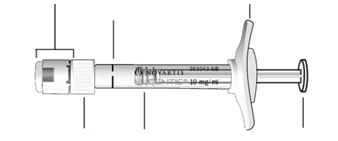 |
| n Preparation e |
|
| Syringe check |
| a c o |
| Removal of syringe cap |
| m r a F Figure 2 Figure 3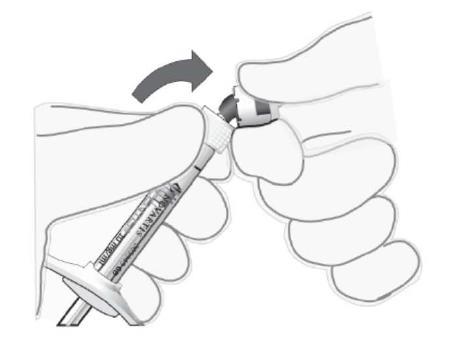 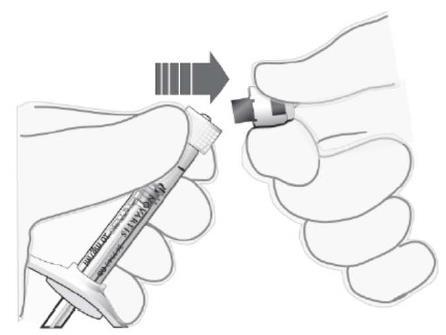 |
| Needle insertion | i
| Figura 4 Figura 5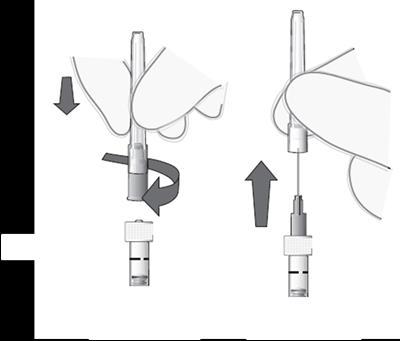 |
| Expulsion of air bubbles |
| o c a m r a F Figure 6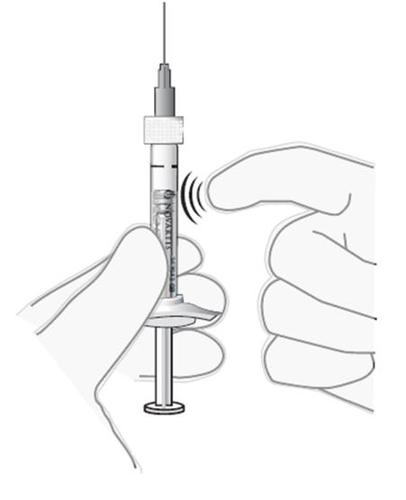 |
| Setting the dose |
| Figura 7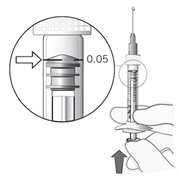 |
| Injection n e g | i The injection procedure must be performed under aseptic conditions. z
| |

Не уверены, подходит ли вам это лекарство?
Обсудите симптомы и варианты лечения с врачом онлайн.
Lucentis 10 mg/ml injectable solution
ranibizumab
PREMATURELY BORN CHILDREN
Information for adults can be found on the other side of this leaflet.
Read this leaflet carefully before this medicine is administered to the child
because it contains important information for you.
- Keep this leaflet. You may need to read it again.
- If you have any questions, ask your child’s doctor.
- If the child experiences any side effects, including those not listed in this leaflet, ask your child’s doctor. See section 4.
Contents of this leaflet
- 1. What Lucentis is and what it is used for
- 2. What you need to know before Lucentis is administered to the child
- 3. How Lucentis will be administered
- 4. Possible side effects
- 5. How to store Lucentis
- 6. Contents of the pack and other information
1. What is Lucentis and what is it used for
What is Lucentis
Lucentis is a solution that must be injected into the eye. Lucentis belongs to a group of
medicines called anti-neovascularization agents. It contains the active substance called ranibizumab.
What is Lucentis used for
Lucentis is used in prematurely born children for the treatment of retinopathy of prematurity
(ROP), a disease that causes impaired vision due to damage to the back
of the eye (the retina) caused by abnormal growth of blood vessels.
How Lucentis works
Lucentis recognizes and specifically binds to a protein called human vascular endothelial growth
factor A (VEGF-A) present in the eye. When in excess, VEGF-A causes abnormal growth
of blood vessels in the eye. Lucentis can block its action and prevent this abnormal growth
.
2. What you need to know before Lucentis is given to your child
Your child must not receive Lucentis
- If your child is allergic to ranibizumab or any of the other ingredients of this medicine (listed in section 6).
- If your child has an infection in the eye or the surrounding area.
- If your child has pain or redness (severe intraocular inflammation) in the eye.
Warnings and precautions
Consult your child’s doctor before your child receives Lucentis.
- Lucentis is given by an injection into the eye. Occasionally, after treatment with Lucentis, an infection inside the eye, pain or redness (inflammation), detachment or tear of one of the layers at the back of the eye (retinal detachment or tear and detachment or tear of the retinal pigment epithelium), or clouding of the lens (cataract) may occur. It is important to identify and treat an infection or retinal detachment as soon as possible. Immediately inform the doctor if the child develops signs such as eye pain or worsening redness of the eye.
- In some patients, the pressure in the eye may increase briefly immediately after the injection. Your child’s doctor may monitor this after each injection.
See section 4 ("Possible side effects") for more detailed information about the side effects that may occur during therapy with Lucentis.
Other medicines and Lucentis
Tell your child’s doctor if your child is taking, has recently taken or might take any other medicines.
3. How Lucentis will be administered
Lucentis is administered by the ophthalmologist through a single injection into the child's eyes,
usually under local anesthesia. The usual dose of an injection is 0.02 ml (which contains 0.2 mg
of active substance). The interval between two doses injected into the same eye must be at least four
weeks. All injections will be administered by the ophthalmologist.
Before the injection, the child's doctor will carefully clean the child's eyes to prevent
infection. The doctor will also give the child a local anesthetic to reduce or prevent any
pain.
Treatment is started with an injection of Lucentis in each eye (some children may
only need treatment in one eye). The doctor will monitor the condition of the eye/s of the
child and, based on the child's response to treatment, will decide whether and when further
treatment is necessary.
and administer Lucentis to premature infants.”
Before stopping treatment with Lucentis
If you are considering stopping your child's treatment with Lucentis, attend your next
visit and discuss it with your child's doctor. The doctor will advise you and decide how long the
child will need to be treated with Lucentis.
If you have any doubts about the use of this medicine, ask your child's doctor.
4. Possible side effects
Like all medicines, this medicine can cause side effects, although not everybody gets them.
The side effects associated with the administration of Lucentis are due to both the medicine itself
and the injection procedure and mostly affect the eye.
The most common side effects in premature infants are described below:
Visual side effects include: bleeding in the back of the eye
(retinal bleeding), bleeding in the eye or at the injection site, and bloodshot eye (conjunctival bleeding).
Non-visual side effects include: sore throat, nasal congestion and runny nose, low
red blood cell count (with symptoms such as fatigue, shortness of breath, pale skin), cough, urinary tract
infection, allergic reactions such as skin rash and skin redness.
Further side effects observed with Lucentis in adults. These side effects
can also occur in premature infants.
The most serious side effects in adults are described below:
Serious common side effects (may affect up to 1 in 10 patients): detachment or tear
in the back of the eye (retinal detachment or tear) leading to temporary
vision impairment, or clouding of the lens of the eye (cataract).
Serious uncommon side effects (may affect up to 1 in 100 patients): blindness, infection of
the eyeball (endophthalmitis) with inflammation inside the eye.
It is important to identify and treat serious side effects such as eye infection or
retinal tear as soon as possible. Immediately inform the doctor if the child develops
signs such as eye pain or worsening eye redness.
Other side effects in adults are described below:
Very common side effects (may affect more than 1 in 10 patients)
Visual side effects include: eye inflammation, visual disturbances, eye pain,
floaters or spots in vision (mobile bodies), eye irritation, foreign body sensation
in the eye, increased tear production, inflammation or infection of the eyelid margin,
dry eye, eye redness or itching, and increased eye pressure.
Non-visual side effects include: headache and joint pain.
Common side effects
Visual side effects include: decreased visual acuity, swelling of a part
of the eye (uvea, cornea), inflammation of the cornea (front part of the eye), small marks on
the surface of the eye, blurred vision, eye discharge with itching, redness and swelling
(conjunctivitis), sensitivity to light, eye discomfort, eyelid swelling, eyelid pain.
Non-visual side effects include: anxiety, nausea.
Uncommon side effects
Visual side effects include: inflammation and bleeding in the front
of the eye, pus collection in the eye, changes in the central part of the ocular surface,
pain or irritation at the injection site, abnormal sensation in the eye, eyelid irritation.
If you have any questions about any side effect, ask the child's doctor.
Reporting of side effects
If you experience any side effect in the child, including those not listed in this leaflet,
consult the child's doctor. You can also report side effects directly through the
national reporting system as reported in Annex V. By reporting side effects you can
help provide more information on the safety of this medicine.
5. How to store Lucentis
- Keep this medicine out of the sight and reach of children.
- Do not use this medicine after the expiry date which is stated on the carton and on the vial label after scad. and after EXP. The expiry date refers to the last day of that month.
- Store in a refrigerator (2 C - 8 C). Do not freeze.
- Before use, the unopened vial can be stored at room temperature (25°C) for a maximum of 24 hours.
- Keep the vial in the outer packaging to protect the medicine from light.
- Do not use a package that is damaged.
6. Package contents and other information
What Lucentis contains
- The active substance is ranibizumab. Each ml contains 10 mg of ranibizumab. Each vial contains 2.3 mg of ranibizumab in 0.23 ml of solution. This provides an amount sufficient for administering a single dose of 0.02 ml containing 0.2 mg of ranibizumab.
- The other ingredients are α,α-trehalose dihydrate; histidine hydrochloride, monohydrate; histidine; polysorbate 20; water for injections.
Description of Lucentis and package contents
Lucentis is an injectable solution in a vial (0.23 ml). The solution is aqueous, clear, from
colourless to pale yellow-brown.
Two different packs are available:
Vial alone
Pack containing a glass vial of ranibizumab with a chlorobutyl rubber stopper. The
vial is for single use.
Vial + filter needle
Pack containing a glass vial of ranibizumab with a chlorobutyl rubber stopper and a
bevelled filter needle (18G x 1½″, 1.2 mm x 40 mm, 5 micrometers) for withdrawing the contents of the
vial. All components are for single use.
Marketing Authorisation Holder
Novartis Europharm Limited
Vista Building
Elm Park, Merrion Road
Dublin 4
Ireland
Manufacturer
Novartis Farmacéutica, S.A.
Gran Via de les Corts Catalanes, 764
08013 Barcelona
Spain
Lek Pharmaceuticals d.d.
Verovškova ulica 57
Ljubljana, 1526
Slovenia
Novartis Pharma GmbH
Roonstrasse 25
90429 Nuremberg
Germany
For further information on this medicine, contact the local representative of the marketing
authorisation holder:
België/Belgique/Belgien
Novartis Pharma N.V.
Tél/Tel: +32 2 246 16 11
Lietuva
SIA Novartis Baltics Lietuvos filialas
Tel: +370 5 269 16 50
България
Novartis Bulgaria EOOD
Тел.: +359 2 489 98 28
Luxembourg/Luxemburg
Novartis Pharma N.V.
Tél/Tel: +32 2 246 16 11
Česká republika
Novartis s.r.o.
Tel: +420 225 775 111
Magyarország
Novartis Hungária Kft.
Tel.: +36 1 457 65 00
Danmark
Novartis Healthcare A/S
Tlf: +45 39 16 84 00
Malta
Novartis Pharma Services Inc.
Tel: +356 2122 2872
Deutschland
Novartis Pharma GmbH
Tel: +49 911 273 0
Nederland
Novartis Pharma B.V.
Tel: +31 88 04 52 111
Eesti
SIA Novartis Baltics Eesti filiaal
Tel: +372 66 30 810
Norge
Novartis Norge AS
Tlf: +47 23 05 20 00
Ελλάδα
Novartis (Hellas) A.E.B.E.
Τηλ: +30 210 281 17 12
Österreich
Novartis Pharma GmbH
Tel: +43 1 86 6570
España
Novartis Farmacéutica, S.A.
Tel: +34 93 306 42 00
Polska
Novartis Poland Sp. z o.o.
Tel.: +48 22 375 4888
France
Novartis Pharma S.A.S.
Tél: +33 1 55 47 66 00
Portugal
Novartis Farma - Produtos Farmacêuticos, S.A.
Tel: +351 21 000 8600
Hrvatska
Novartis Hrvatska d.o.o.
Tel. +385 1 6274 220
România
Novartis Pharma Services Romania SRL
Tel: +40 21 31299 01
Ireland
Novartis Ireland Limited
Tel: +353 1 260 12 55
Slovenija
Novartis Pharma Services Inc.
Tel: +386 1 300 75 50
Ísland
Vistor hf.
Sími: +354 535 7000
Slovenská republika
Novartis Slovakia s.r.o.
Tel: +421 2 5542 5439
Italia
Novartis Farma S.p.A.
Tel: +39 02 96 54 1
Suomi/Finland
Novartis Finland Oy
Puh/Tel: +358 (0)10 6133 200
Κύπρος
Novartis Pharma Services Inc.
Τηλ: +357 22 690 690
Sverige
Novartis Sverige AB
Tel: +46 8 732 32 00
Latvija
SIA Novartis Baltics
Tel: +371 67 887 070
United Kingdom (Northern Ireland)
Novartis Ireland Limited
Tel: +44 1276 698370
Other sources of information
More detailed information on this medicine is available on the European Medicines Agency website, http://www.ema.europa.eu
THE FOLLOWING INFORMATION IS EXCLUSIVELY FOR
HEALTHCARE PROFESSIONALS:
Please also refer to section 3 “How Lucentis will be administered”.
How to prepare and administer Lucentis to premature infants
Single-use vials, for intravitreal use only.
Lucentis must be administered by a qualified ophthalmologist experienced in intravitreal injections in premature
infants.
For the treatment of premature infants, use the high-precision, low-volume syringe,
supplied with an injection needle (30G x ½″) in the VISISURE kit.
The recommended dose of Lucentis in premature infants is 0.2 mg administered via a
single intravitreal injection.This corresponds to an injected volume of 0.02 ml. In premature
infants, treatment of retinopathy of prematurity (ROP) is initiated with a single injection per
eye and can be administered bilaterally on the same day. A total of up to three injections per eye may be administered within six months of treatment initiation if there are signs of disease activity. Most patients (78%) in the RAINBOW clinical study of 24 weeks received one injection per eye. Patients who were treated with 0.2 mg in this clinical study
did not require additional treatment in the subsequent long-term extension study that followed patients up to five years of age. Administration of more than three injections per eye has
not been studied. The interval between two injected doses in the same eye must be at least four
weeks.
Before administration, Lucentis must be visually inspected for the presence of
particles and discoloration.
The injection procedure must be performed under aseptic conditions, including surgical scrubbing of the hands, sterile gloves, a sterile drape (or equivalent) and the
possibility of performing a sterile paracentesis (if necessary). Before performing the intravitreal procedure, the patient’s history for hypersensitivity reactions must be carefully assessed. Adequate anesthesia and a broad-spectrum topical antimicrobial agent must be administered before the injection to disinfect the periocular, ocular and eyelid surface, as per clinical practice.
Vial alone
The vial is for single use. After injection, unused product must be discarded. Any
vial showing signs of damage or tampering must not be used. Sterility cannot be
guaranteed if the package seal is broken.
The following single-use medical devices are required for preparation and intravitreal injection:
- a 5 µm filter needle (18G); not included in the Lucentis pack
- a sterile high-precision, low-volume syringe (supplied separately in the VISISURE kit)
- an injection needle (30G x ½″) (supplied separately in the VISISURE kit).
Vial + filter needle
All components are sterile and for single use. Any component with packaging showing signs of
damage or tampering must not be used. Sterility cannot be guaranteed if the package seal of the component is broken. Re-use may cause infection or other
illness/injury.
The following single-use medical devices are required for preparation and intravitreal injection:
- a 5 µm filter needle (18G x 1½″, 1.2 mm x 40 mm, supplied)
- a sterile high-precision, low-volume syringe (supplied separately in the VISISURE kit)
- an injection needle (30G x ½″) (supplied separately in the VISISURE kit).
To prepare Lucentis for intravitreal administration in premature infants, please follow
the instructions for use included in the VISISURE kit.
Insert the injection needle 1.0-2.0 mm posterior to the limbus, directing the needle towards the
optic nerve. Inject the injection volume of 0.02 ml.

Уже начали прием и появились вопросы?
Обсудите свое состояние и дальнейшие шаги с врачом онлайн.
- Страна регистрации
- Форма выпускаInjectable solution, 0.5MG/0.05ML
- Код АТХS01LA04
- Действующее вещество
- Отпускается по рецептуДа
- Производитель
- Информация на этой странице носит справочный характер и не является медицинской консультацией. Перед началом приема лекарства обязательно проконсультируйтесь с врачом.
- Аналоги LUKENTISФорма выпуска: Injectable solution, 10 mg/mlДействующее вещество: РанибизумабПроизводитель: SAMSUNG BIOEPIS NL B.V.Отпускается по рецептуФорма выпуска: Injectable solution, 10 mg/mlДействующее вещество: РанибизумабПроизводитель: MIDAS PHARMA GMBHОтпускается по рецептуФорма выпуска: Injectable solution, 10 mg / mlДействующее вещество: РанибизумабПроизводитель: MIDAS PHARMA GMBHОтпускается по рецепту
Аналоги LUKENTIS в других странах
Лекарства с тем же действующим веществом, доступные в других странах.
Аналог LUKENTIS в Испания
Аналог LUKENTIS в Украина
Врачи онлайн по LUKENTIS
Обсудите применение LUKENTIS и возможные следующие шаги — по оценке врача.









Получите рецепт на LUKENTIS онлайн
Заполните форму за 2 минуты
Расскажите о симптомах, истории болезни и нужном препарате.
Выберите врача или мы назначим
Выберите специалиста или мы подберём ближайшего доступного врача.
Врач рассматривает ваш случай
Обычно в течение 30 минут. Может задать уточняющие вопросы в чате.
Получите в любой аптеке
Электронный рецепт отправляется на вашу почту — действителен по всей Польше.
Часто задаваемые вопросы
LUKENTIS требует рецепта в Италия. Вы можете уточнить у врача онлайн, подходит ли это лекарство для вашей ситуации.
Действующее вещество LUKENTIS — Ранибизумаб. Эта информация помогает определить лекарства с тем же составом под другими торговыми названиями.
LUKENTIS производится компанией NOVARTIS EUROPHARM LIMITED. Упаковка и торговое название могут отличаться в зависимости от дистрибьютора.
Врачи, включая Семейные врачи, Психиатры, Дерматологи, Кардиологи, Эндокринологи, Гастроэнтерологи, Пульмонологи, Нефрологи, Ревматологи, Гематологи, Инфекционисты, Аллергологи, Гериатры, Педиатры, Онкологи, могут оценить целесообразность применения LUKENTIS с учетом вашей ситуации и местных правил. Вы можете записаться на онлайн-консультацию, чтобы обсудить возможные варианты.
Польша имеет хорошо развитую систему здравоохранения в крупных городах, таких как Варшава, Краков, Вроцлав и Гданьск. Аптеки широко доступны и работают в соответствии с действующим законодательством, обеспечивая доступ к рецептурным препаратам.
Вы можете купить LUKENTIS в Варшаве, Кракове, Вроцлаве или Гданьске в любой аптеке при наличии действующего рецепта.
Чтобы получить рецепт, вы можете воспользоваться Oladoctor:
Другие лекарства с тем же действующим веществом (Ранибизумаб) включают BYOOVITS, RANIBITSUMAB MIDAS, RANIVISIO. Они могут отличаться торговым названием или формой выпуска, но содержат одинаковый терапевтический компонент. Перед изменением лечения рекомендуется проконсультироваться с врачом.
