



LAMICTAL 25 мг Диспергируемые таблетки

Рассмотрение рецепта онлайн
Врач рассмотрит ваш случай и примет решение о назначении рецепта, если это медицински оправдано.

Поговорите с врачом об этом лекарстве
Обсудите симптомы и возможные дальнейшие шаги на онлайн-консультации.



Инструкция по применению LAMIKTAL
Содержание инструкции
- Lamictal 25 mg chewable/dispersible tablets, 50 mg chewable/dispersible tablets, 100 mg chewable/dispersible tablets, 200 mg chewable/dispersible tablets
- Lamictal 2 mg chewable/dispersible tablets, 5 mg chewable/dispersible tablets
Lamictal 25 mg chewable/dispersible tablets, 50 mg chewable/dispersible tablets, 100 mg chewable/dispersible tablets, 200 mg chewable/dispersible tablets
Lamotrigine
Read this leaflet carefully before you start taking this medicine because it contains important
information for you.
- Keep this leaflet. You may need to read it again.
- If you have any questions, ask your doctor or pharmacist.
- This medicine has been prescribed for you only. Do not pass it on to others, even if their symptoms are the same as yours, as it could be harmful.
- If you get any side effects, even those not listed in this leaflet, tell your doctor or pharmacist. See section 4.
Contents of this leaflet:
1. What Lamictal is and what it is used for
2. What you need to know before you take Lamictal
3. How to take Lamictal
4. Possible side effects
5. How to store Lamictal
6. Contents of the pack and other information
1. What Lamictal is and what it is used for
Lamictal belongs to a group of medicines called anticonvulsants. It is used for the treatment of two
conditions – epilepsyand bipolar disorder.
Lamictal treats epilepsyby blocking signals in the brain that cause seizures
(convulsions).
- In adults and children 13 years and older, Lamictal can be used, alone or with other medicines, to treat epilepsy. Lamictal can also be used with other medicines to treat seizures that occur in a condition called Lennox-Gastaut syndrome.
- In children between 2 and 12 years of age, Lamictal can be used with other medicines to treat these conditions. It can be used alone to treat a type of epilepsy called typical absence seizures.
Lamictal also treats bipolar disorder.
People with bipolar disorder (also called manic depression) have extreme mood swings, with
periods of mania (excitement or euphoria) alternating with periods of depression (deep sadness or
despair). In adults 18 years and older, Lamictal can be used, alone or with other
medicines, to help prevent periods of depression that occur in bipolar disorder. It is not yet known
how Lamictal works in the brain to have this effect.
2. What you need to know before taking Lamictal
Do not take Lamictal:
- if you are allergic( hypersensitive) to lamotrigine or to any of the other ingredients of this medicine (listed in section 6).
If this applies to you:
➔ tell your doctorand do not take Lamictal.
Warnings and precautions
Take special care with Lamictal
Talk to your doctor or pharmacist before taking Lamictal:
- if you have any kidney problems
- if you have ever developed a skin rash( of the skin) after taking lamotrigine or other medicines for bipolar disorder or epilepsy
- if you develop a skin rash or sunburn (sunburn) after taking medicinescontaining lamotrigine and exposure to the sun or artificial light (e.g. a solarium). The doctor will check your treatment and may advise you to avoid exposure to sunlight or to protect yourself from the sun (e.g. by using sunscreen and/or wearing protective clothing)
- if you have ever had meningitis after taking lamotrigine(read the description of these symptomsin section 4 of this leaflet: Rare side effects)
- if you are already taking medicines that contain lamotrigine
- if you have a condition called Brugada syndrome or other heart problems.Brugada syndrome is a genetic condition that causes abnormal electrical activity of the heart. Lamotrigine can cause ECG abnormalities that can lead to arrhythmia (irregular heartbeat).
If any of these applies to you:
➔ tell your doctor,who may decide to reduce the dose or that Lamictal is not suitable for you.
Important information about potentially life-threatening reactions
A small number of people taking Lamictal experience an allergic reaction or a skin reaction
potentially life-threatening, which, if left untreated, can develop into more serious problems. These
may include Stevens–Johnson syndrome (SJS), toxic epidermal necrolysis (TEN) and drug reaction with
eosinophilia and systemic symptoms (DRESS). You need to know the symptoms to pay
attention while taking Lamictal. The risk may be associated with a genetic variant in
people of Asian origin (mainly of Chinese Han and Thai origin). If you are of this origin and
previous tests have shown you to carry this genetic variant (HLA-B* 1502), discuss this with your doctor
before taking Lamictal.
➔ Read the description of these symptoms in section 4 of this leafletin “Potentially
life-threatening reactions: seek immediate medical help”.
Hemophagocytic Lymphohistiocytosis (HLH)
In patients treated with lamotrigine, there have been reports of a rare but very serious reaction of
the immune system.
➔ Contact your doctor or pharmacist immediatelyif you experience any of the following symptoms
while taking lamotrigine: fever, rash, neurological symptoms (e.g. convulsions or
tremors, confusion, impaired brain function).
Thoughts of harming yourself or suicide
Antiepileptic medicines are used to treat various conditions, including epilepsy and
bipolar disorder. People with bipolar disorder may sometimes have thoughts of harming themselves or
committing suicide. If you have bipolar disorder, you are more likely to have these thoughts:
- when you start treatment for the first time
- if you have had thoughts of harming yourself or related to suicide in the past
- if you are under 25 years old. If you have thoughts or experiences that bother you, or if you notice that you are feeling worse or developing new symptoms while taking Lamictal: ➔ contact your doctor as soon as possible or go to the nearest hospital for help.It may be helpful to tell a family member, caregiver, or good friend that you may becomedepressed or experience significant mood changes and ask them to read this leaflet. You
can
ask them to tell you if they are concerned about your depression or other changes in your
behavior.
A small number of people undergoing treatment with antiepileptics, such as Lamictal, have also had
thoughts of harming themselves or committing suicide. If you have these thoughts at any time, contact
your doctor immediately.
If you are taking Lamictal for epilepsy
In some types of epilepsy, seizures may occasionally worsen or occur more frequently during
treatment with Lamictal.
Some patients may experience severe seizures, which can cause serious health problems. If seizures
become more frequent or if you experience a severe seizure while taking Lamictal:
➔ contact your doctor as soon as possible.
Lamictal should not be given to people under 18 years of age for the treatment of bipolar
disorder.Medicines that treat depression and other mental health problems increase the risk of
thoughts and behaviors of suicide in children and adolescents under 18 years of age.
Other medicines and Lamictal
Tell your doctor or pharmacist if you are taking, have recently taken or may take
any other medicines,including herbal remedies or other over-the-counter medicines.
The doctor needs to know if you are taking other medicines to treat epilepsy or mental health problems
to make sure you are taking the correct dose of Lamictal. These medicines include:
- oxcarbazepine, felbamate, gabapentin, levetiracetam, pregabalin, topiramateor zonisamide,used for the treatment of epilepsy
- lithium, olanzapineor aripiprazoleused for the treatment of mental health problems
- bupropion,used for the treatment of mental health problemsor to quit smoking
- paracetamol,used for the treatment of painand fever➔ Tell your doctorif you are taking any of these medicines.
Some medicines interact with Lamictal or make side effects more likely.
These include:
- valproate, used for the treatment of epilepsyand mental health problems
- carbamazepine, used for the treatment of epilepsyand mental health problems
- phenytoin, primidoneor phenobarbital,used for the treatment of epilepsy
- risperidone,used for the treatment of mental health problems
- rifampicin,an antibiotic
- medicines used for the treatment of Human Immunodeficiency Virus(HIV) infection(combination of lopinavir and ritonavir or atazanavir and ritonavir)
- medicines containing estrogens, including hormonal contraceptives, such as the pill(see below) andhormone replacement therapy.➔ Tell your doctorif you are taking or starting or stopping any of these medicines.
Hormonal contraceptives (like the pill) can change the way Lamictal works
The doctor may recommend that you use a particular type of hormonal contraceptive, or another method
of contraception, such as a condom, diaphragm, or intrauterine device. If you are using hormonal contraceptives
like the pill, the doctor may take blood samples to check your Lamictal levels. If you are
using or are thinking of starting to use a hormonal contraceptive:
➔ tell your doctor, who will discuss with you suitable contraceptive methods.
Lamictal can also change the way hormonal contraceptives work, although it is unlikely
to make them less effective. If you are using a hormonal contraceptive and notice any changes
in your periods, such as breakthrough bleeding or bleeding between periods:
➔ tell your doctor.These may be signs that Lamictal is changing the way the
contraceptive is working.
Hormone replacement therapy can change the way Lamictal works
If you are using hormone replacement therapy containing estrogens, the doctor may take samples
of your blood to check your Lamictal level.
Pregnancy and breastfeeding
➔ If you are pregnant, suspect you are pregnant, or are planning to become pregnant,ask your doctor or
pharmacist for advice before taking this medicine.
- Do not stop treatment without talking to your doctor.This is particularly important if you have epilepsy.
- Pregnancy can alter the effectiveness of Lamictal, so blood tests and a change in the dose of Lamictal may be necessary.
- There may be a small increase in the risk of birth defects, including cleft lip (labioschisis) or cleft palate (palatoschisis), if Lamictal is taken during the first 3 months of pregnancy.
- The doctor may advise you to take a supplement of folic acid, if you are planning a pregnancy or if you are already pregnant.
➔ If you are breastfeeding or are planning to breastfeed, ask your doctor or
pharmacist for advice before taking this medicine.The active ingredient of Lamictal passes into
breast milk and can have effects on the baby. The doctor will discuss the risks and benefits
of breastfeeding while taking Lamictal and will check the baby from time to time, in case
you experience drowsiness, rash, or poor weight gain, if you decide to
breastfeed. Tell your doctor if you notice any of these symptoms in the baby.
Driving and using machines
Lamictal can cause dizziness and double vision.
➔ Do not drive or use machines unless you are sure you do not have these symptoms.
If you have epilepsy, talk to your doctor about driving and using machines.
Information about the excipients of Lamictal
Lamictal chewable/dispersible tablets contain less than 1 mmol (23 mg) of sodium per tablet,
i.e. essentially “sodium-free”.
3. How to take Lamictal
Always take this medicine exactly as your doctor or pharmacist has told you. If you have
any doubts, ask your doctor or pharmacist.
How much Lamictal to take
It may take some time to find the optimal dose of Lamictal for you. The dose you need to
take will depend on:
- your age
- whether you are taking Lamictal with other medicines
- if you have any kidney or liver problems.
The doctor will prescribe a low dose to start with, and will gradually increase the dose over a few
weeks until the dose that works for you is reached (called effective dose). Do not take more
Lamictal than your doctor has told you.
The usual effective dose of Lamictal in adults and children aged 13 years and over is between 100 mg and
400 mg each day.
In children aged between 2 and 12 years, the effective dose depends on body weight – generally, it is
between 1 mg and 15 mg for each kilogram of the child's weight, up to a maximum maintenance dose of
200 mg per day.
Lamictal is not recommended in children under 2 years of age.
How to take the Lamictal dose
Take the Lamictal dose once or twice a day, as prescribed by your doctor. It can be taken with or
without food.
- Always take the full dosethat your doctor has prescribed. Never take only part of a tablet.
The doctor may also advise you to start or stop taking other medicines, depending on the type of
conditions for which they are taken and your response to treatment.
The chewable/dispersible Lamictal tablets can be swallowed whole with a little water,
chewed or mixed with water to make a liquid medicine. Never take only part of the
liquid.
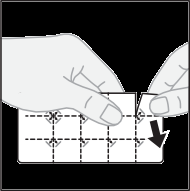
Extracting a tablet
These tablets are in special packaging to prevent children from taking them.
Each unit of the blister pack has a number. Take the tablets in order, starting with tablet number 1.
- 1. Separate a tablet: tear along the cutting lines to separate a “pocket” from the blister pack.
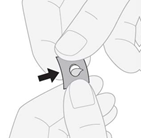
- 2. Remove the outer layer: starting from the corner, lift and peel it off the pocket.


- 3. Push out the tablet: gently push one end of the tablet through the foil.
 | a c o |
To chew the tablet:
You may need to drink some water at the same time to help the tablet dissolve in
your mouth. Then drink some more water to make sure all the medicine has been swallowed.
To make the medicine liquid:
- Put the tablet in a glass with enough water to cover the entire tablet.
- To dissolve the tablet, stir or wait until the tablet has completely dissolved.
- Drink all the liquid.
- Add a little more water to the glass and drink it, to make sure no medicine remains in the glass.
If you take more Lamictal than you should
➔ Contact your doctor or the nearest hospital emergency room immediately.If possible,
show them the Lamictal packaging.
If you take too much Lamictal you are more likely to experience serious side effects that can be
fatal.
Someone who has taken too much Lamictal may experience one of the following symptoms:
- rapid, uncontrollable eye movements (nystagmus)
- clumsiness and lack of coordination, which changes balance (ataxia)
- changes in heart rhythm (usually detected by ECG)
- loss of consciousness, seizures or coma.
If you forget to take a single dose of Lamictal
➔ Do not take an extra dose to make up for the missed dose. Take the next dose
at the usual time.
If you forget to take more doses of Lamictal
➔ Ask your doctor for advice on how to start taking it again.This is important.
Do not stop taking Lamictal without your doctor's advice
Lamictal must be taken until your doctor has recommended you to stop. Do not stop unless your
doctor tells you to.
If you are taking Lamictal for epilepsy
To stop taking Lamictal, it is important to reduce the dose gradually, over about 2
weeks. If you stop taking Lamictal suddenly, epilepsy may return or
worsen.
If you are taking Lamictal for bipolar disorder
Lamictal may take some time to work, so you are unlikely to feel better
immediately. If you stop taking Lamictal, you will not need to reduce the dose gradually. But if you
want to stop taking Lamictal, you should always talk to your doctor first.
4. Possible side effects
Like all medicines, this medicine can cause side effects, although not everybody gets them.
manifest.
Potentially life-threatening reactions: seek medical help immediately
A small number of people taking Lamictal experience an allergic reaction or a skin reaction
potentially life-threatening, which, if left untreated, can develop into more serious problems.
These symptoms are more likely to occur during the first few months of treatment with Lamictal,
especially if the initial dose is too high or if the dose is increased too rapidly, or if Lamictal
is taken with another medicine called valproate.Some of these symptoms are more common in
children, so parents should pay particular attention to their appearance.
The symptoms of such reactions include:
- skin rash or skin redness,which may develop into severe or sometimes life-threatening skin reactions including rash with target lesions ( erythema multiforme), widespread rash with blisters and skin detachment, which appear particularly around the mouth, nose, eyes and genitals ( Stevens-Johnson syndrome), widespread skin detachment (more than 30% of the body surface area - toxic epidermal necrolysis) or extensive rashes involving the liver, blood and other organs (drug reaction with eosinophilia and systemic symptoms which is also known as DRESS hypersensitivity syndrome)
- sores in the mouth, throat, nose or genitals
- sore mouth or red and swollen eyes(conjunctivitis)
- high temperature(fever), flu-like symptoms or drowsiness
- swelling of the faceor swelling of the glandsin the neck, armpits or groin
- unexpected bleeding or bruisingor fingers turning blue
- sore throator more infections (like colds) than usual
- increased levels of liver enzymes observed in blood tests
- increase of a type of white blood cells (eosinophils)
- enlarged lymph nodes
- organ involvement including liver and kidneys.
In many cases these symptoms will be signs of less serious side effects. But you should be informed that
they are potentially life-threateningand can,if left untreated , develop into more serious problems,
such as organ failure. If you notice any of these symptoms:
➔ contact your doctor immediately.Your doctor may decide to perform diagnostic tests on
the liver, kidneys or blood and may tell you to stop taking Lamictal. If you have developed
Stevens-Johnson syndrome or toxic epidermal necrolysis your doctor will tell you that you should never use
lamotrigine again.
Hemophagocytic Lymphohistiocytosis (HLH)(see section 2: What you need to know before you take Lamictal).
Very common side effects
May affect more than 1 in 10people:
- headache
- skin rash
Common side effects
May affect up to 1 in 10people:
- aggression or irritability
- drowsiness
- dizziness
- jerks or tremors
- difficulty sleeping (insomnia)
- agitation
- diarrhoea
- dry mouth
- nausea or vomiting
- fatigue
- back pain or joint pain or pain elsewhere.
Uncommon side effects
May affect up to 1 in 100people:
- clumsiness and lack of coordination (ataxia)
- double vision or blurred vision
- unusual or thinning of hair ( alopecia)
- skin rash (of the skin) or sunburn (sunburn) after exposure to the sun or artificial light ( photosensitivity).
Rare side effects
May affect up to 1 in 1,000people:
- skin reaction causing red spots or patches on the skin, which may look like a target or “bull’s eye” with a dark red centre surrounded by paler red rings ( erythemamultiforme)
- a life-threatening skin reaction (Stevens-Johnson syndrome): (see also theinformation at the beginning ofsection 4).
- a group of symptoms associated with: fever, nausea, vomiting, headache, stiff neck and extreme sensitivity to bright light. This may be caused by inflammation of the membranes surrounding the brain and spinal cord ( meningitis). These symptoms usually disappear once the treatment is stopped, however if the symptoms continue or worsen contact your doctor
- rapid, uncontrollable eye movements (nystagmus)
- itchy eyes, with discharge and crusting of the eyelids (conjunctivitis).
Very rare side effects
May affect up to 1 in 10,000people:
- life-threatening skin reaction ( toxic epidermal necrolysis) ( see also theinformation at the beginning ofsection 4)
- drug reaction with eosinophilia and systemic symptoms (DRESS) (see also the informationat the beginning ofsection 4)
- high temperature ( fever) ( see also the information at the beginning ofsection 4)
- swelling of the face ( edema) or swelling of the glands in the neck, armpits or groin ( lymphadenopathy) ( see also the information at the beginning of section 4)
- impaired liver function, demonstrated by blood tests, or liver failure ( see also the information at the beginning of section 4)
- a severe blood clotting disorder, which can cause unexpected bleeding or bruising ( disseminated intravascular coagulation)( see also the information at the beginning ofsection 4)
- hemophagocytic lymphohistiocytosis (HLH) (see section 2: What you need to know before you take Lamictal)
- changes that can be demonstrated by blood tests - including reduction in the number of red blood cells in the blood ( anaemia), reduction in the number of white blood cells in the blood ( leucopenia, neutropenia, agranulocytosis), reduction in the number of platelets ( thrombocytopenia), reduction in the number of all these types of cells ( pancytopenia) and a bone marrow disorder called aplastic anaemia
- hallucinations (“seeing” or “hearing” things that are not really there)
- confusion
- feeling “off balance” or unsteady
- uncontrollable repetitive movements of the body and/or sounds or words ( tics), involuntary muscle spasms affecting the eyes, head and torso ( choreoathetosis), or other unusual body movements, such as jerks, tremors or stiffness
- in people who already suffer from epilepsy, seizures occur more frequently
- in people who already suffer from Parkinson’s disease, worsening of symptoms
- lupus-like reactions (symptoms may include: back or joint pain which may sometimes be accompanied by fever and/or general malaise).
Other side effects
Other side effects have been reported in a small number of people but their frequency is not known:
- there have been reports of bone disorders including osteopenia and osteoporosis (thinning of the bones) and fractures. Check with your doctor or pharmacist if you are on long-term antiepileptic treatment, have a history of osteoporosis, or are taking steroids
- kidney inflammation ( tubulointerstitial nephritis) or inflammation of both the kidneys and the eyes ( tubulointerstitial nephritis and uveitis syndrome)
- nightmares
- reduced immunity due to lower levels of antibodies in the blood called immunoglobulins which help protect against infections
- nodules or patches of skin that are red in colour ( pseudolymphoma).
Reporting of side effects
If you get any side effects, even those not listed in this leaflet, tell your
doctor or pharmacist. You can also report side effects directly through the national
reporting system at https://www.aifa.gov.it/content/segnalazioni-reazioni-avverse.
By reporting side effects you can help provide more information on the safety of this
medicine.
5. How to store Lamictal
Keep this medicine out of the sight and reach of children.
Do not use this medicine after the expiry date which is stated on the blister, the carton or the bottle. The
expiry date refers to the last day of that month.
Lamictal does not require special storage conditions.
Do not dispose of any medicine in waste water or household waste. Ask your pharmacist how to dispose of
medicines you no longer use. This will help protect the environment.
6. Package Contents and Other Information
What Lamictal chewable/dispersible tablets contain
The active ingredient is lamotrigine. Each chewable/dispersible tablet contains 25 mg, 50 mg, 100 mg or
200 mg of lamotrigine.
The excipients are: calcium carbonate, low-substituted hydroxypropylcellulose, magnesium and aluminium silicate, sodium starch glycolate (Type A), povidone K30, sodium saccharin, magnesium stearate,
blackcurrant flavour.
Description of the appearance of Lamictal chewable/dispersible tablets and package contents
Lamictal (all strengths) chewable/dispersible tablets are from white to off-white in colour and
may be slightly bevelled. They have a blackcurrant flavour.
Not all pack sizes may be marketed in your country.
The 25 mg chewable/dispersible tablets are square with rounded corners. They have “GSCL5” imprinted on one side and “25” on the other. Each pack contains blisters of 10, 14, 21, 28, 30, 42,
50, 56 or 60 tablets.
The 50 mg chewable/dispersible tablets are square with rounded corners. They have “GSCX7” imprinted on one side and “50” on the other. Each pack contains blisters of 10, 14, 28, 30, 42, 50,
56, 60, 90, 98, 100, 196 or 200 tablets.
The 100 mg chewable/dispersible tablets are square with rounded corners. They have “GSCL7” imprinted on one side and “100” on the other. Each pack contains blisters of 10, 14, 28, 30, 42, 50,
56, 60, 90, 98, 100, 196 or 200 tablets.
The 200 mg chewable/dispersible tablets are square with rounded corners. They have “GSEC5” imprinted on one side and “200” on the other. Each pack contains blisters of 10, 14, 28, 30, 42, 50,
56, 60, 90, 98, 100, 196 or 200 tablets.
Marketing Authorisation Holder and Manufacturer
Marketing Authorisation Holder:
GlaxoSmithKline S.p.A. - Viale dell’Agricoltura 7 - 37135 Verona - Italy
Manufacturer responsible for batch release:
Glaxo Operations UK Limited (Trading as Glaxo Wellcome Operations), Priory Street, Ware,
Hertfordshire SG12 0DJ, United Kingdom.
Delpharm Poznań Spółka Akcyjna, ul. Grunwaldzka 189, 60-322 Poznań, Poland.
This medicinal product is authorised in the Member States of the European Economic Area under the following
names:
| Austria Lamictal | Belgium Lamictal | Bulgaria Lamictal |
| Croatia Lamictal | Cyprus Lamictal | Czech Republic Lamictal |
| Denmark Lamictal | Estonia Lamictal | Finland Lamictal |
| France Lamictal | Germany Lamictal | Greece Lamictal |
| Hungary Lamictal | Iceland Lamictal | Ireland Lamictal |
| Italy Lamictal | Latvia Lamictal | Lithuania Lamictal |
| Luxembourg Lamictal | Malta Lamictal | Netherlands Lamictal |
| Norway Lamictal | Poland Lamitrin Lamitrin S | Portugal Lamictal |
| Romania Lamictal | Slovak Republic Lamictal | Slovenia Lamictal |
| Spain Lamictal | Sweden Lamictal |
Lamictal 2 mg chewable/dispersible tablets, 5 mg chewable/dispersible tablets
Lamotrigine
Read this leaflet carefully before you start taking this medicine as it contains important
information for you.
- Keep this leaflet. You may need to read it again.
- If you have any questions, ask your doctor or pharmacist.
- This medicine has been prescribed for you only. Do not pass it on to others, even if their symptoms are the same as yours, as it could be harmful.
- If you get any side effects, even those not listed in this leaflet, tell your doctor or pharmacist. See section 4.
Contents of this leaflet:
1. What Lamictal is and what it is used for
2. What you need to know before you take Lamictal
3. How to take Lamictal
4. Possible side effects
5. How to store Lamictal
6. Contents of the pack and other information
1. What Lamictal is and what it is used for
Lamictal belongs to a group of medicines called anticonvulsants. It is used for the treatment of two
conditions – epilepsyand bipolar disorder.
Lamictal treats epilepsyby blocking the signals in the brain that trigger seizures
(convulsions).
- In adults and children 13 years and older, Lamictal can be used, alone or with other medicines, to treat epilepsy. Lamictal can also be used with other medicines to treat seizures that occur in a condition called Lennox-Gastaut syndrome.
- In children between 2 and 12 years of age, Lamictal can be used with other medicines to treat these conditions. It can be used alone to treat a type of epilepsy called typical absence seizures.
Lamictal also treats bipolar disorder.
People with bipolar disorder (also known as manic-depressive illness) have extreme mood swings, with
periods of mania (excitement or euphoria) alternating with periods of depression (deep sadness or
despair). In adults 18 years and older, Lamictal can be used, alone or with other
medicines, to help prevent periods of depression in bipolar disorder. It is not yet known
how Lamictal works in the brain to have this effect.
2. Cosa deve sapere prima di prendere Lamictal
Non prenda Lamictal:
- se è allergico( ipersensibile) a lamotrigina o a uno qualsiasi degli altri componenti di questo medicinale (elencati al paragrafo 6).
Se questo la riguarda:
➔ informi il medicoe non prenda Lamictal.
Avvertenze e precauzioni
Faccia particolare attenzione con Lamictal
Si rivolga al medico o al farmacista prima di prendere Lamictal:
- se ha un qualsiasi problema ai reni
- se ha mai sviluppato un’eruzione cutanea (della pelle)dopo l’assunzione di lamotrigina o di altri medicinali per il disturbo bipolare o l’epilessia
- se ha un’eruzione cutanea o una ustione solare (scottatura) dopo l’assunzione di farmacicontenenti lamotrigina e l’esposizione al sole o alla luce artificiale (ad es. un solarium). Il medico verificherà il trattamento e le potrebbe consigliare di evitare l’esposizione alla luce solare o di proteggersi dal sole (ad es. utilizzando una protezione solare e/o indossando indumenti protettivi)
- se ha mai avuto la meningite dopo aver preso lamotrigina(legga la descrizione di questi sintominel paragrafo 4 di questo foglio: Effetti indesiderati rari)
- se sta già prendendo medicinali che contengono lamotrigina
- se presenta una condizione chiamata sindrome di Brugada o altri problemi cardiaci.La sindrome di Brugada è una patologia genetica che determina un’attività elettrica anomala del cuore. Le anomalie ECG che possono portare ad aritmia (ritmo cardiaco anomalo) possono essere provocate da lamotrigina.
Se uno di questi casi la riguarda:
➔ informi il medico,che può decidere di ridurre la dose o che Lamictal non sia adatto a lei.
Informazioni importanti riguardo a reazioni potenzialmente pericolose per la vita
Un piccolo numero di persone che assumono Lamictal ha una reazione allergica o una reazione della pelle
potenzialmente pericolose per la vita, che, se non trattate, possono evolvere in problemi più gravi. Queste
possono includere sindrome di Stevens–Johnson (SJS), necrolisi epidermica tossica (TEN) e reazione da
farmaco con eosinofilia e sintomi sistemici (DRESS). Lei ha bisogno di conoscere i sintomi per fare
attenzione mentre sta prendendo Lamictal. Il rischio può essere associato con una variante genetica nelle
persone di origine asiatica (principalmente di origine cinese Han e di origine Thai). Se è di questa origine e
da test precedenti è risultato portatore di questa variante genetica (HLA-B* 1502), ne discuta con il medico
prima di prendere Lamictal.
➔ Legga la descrizione di questi sintomi nel paragrafo 4 di questo foglioin “Reazioni
potenzialmente pericolose per la vita: chieda immediatamente aiuto al medico”.
Linfoistiocitosi Emofagocitica (HLH)
In pazienti in trattamento con lamotrigina, vi sono state segnalazioni di una rara ma molto grave reazione del
sistema immunitario.
➔ Contatti il medico o il farmacista immediatamentese manifesta uno qualsiasi dei seguenti sintomi
mentre sta prendendo lamotrigina: febbre, eruzione cutanea, sintomi neurologici (es. scosse o
tremori, stato confusionale, disturbi della funzione cerebrale).
Pensieri di farsi del male o di suicidio
I medicinali antiepilettici sono utilizzati per il trattamento di varie condizioni, inclusi l’epilessia ed il
disturbo bipolare. Le persone con disturbo bipolare possono talvolta avere pensieri di farsi del male o di
commettere suicidio. Se lei ha un disturbo bipolare è più probabile che lei abbia questi pensieri:
- quando inizia il trattamento per la prima volta
- se ha avuto in precedenza pensieri di farsi del male o relativi al suicidio
- se ha meno di 25 anni. Se lei ha pensieri o esperienze che la disturbano, o se lei nota di sentirsi peggio o di sviluppare nuovi sintomi mentre sta prendendo Lamictal: ➔ contatti il medico il prima possibile o vada al più vicino ospedale per avere aiuto.Può trovare utile dire a un familiare, a chi la assiste o a un buon amico che è possibile che lei diventidepresso o abbia importanti cambiamenti d’umore e chiedere loro di leggere questo foglio. Puòchiedere loro di dirle se sono preoccupati per la sua depressione o per altri cambiamenti del suocomportamento.
Un piccolo numero di persone in corso di trattamento con antiepilettici, come Lamictal, ha anche avuto
pensieri di farsi del male o di suicidarsi. Se in qualsiasi momento le venissero questi pensieri, contatti
immediatamente il medico.
Se sta prendendo Lamictal per l’epilessia
In alcuni tipi di epilessia le crisi possono occasionalmente peggiorare o presentarsi più spesso durante il
trattamento con Lamictal.
Alcuni pazienti possono avere crisi epilettiche gravi, che possono causare gravi problemi di salute. Se le crisi
diventano più frequenti o se lei presenta una crisi grave mentre sta prendendo Lamictal:
➔ contatti il medico il prima possibile.
Lamictal non deve essere dato a persone di età inferiore a 18 anni per il trattamento del disturbo
bipolare.I medicinali che trattano la depressione e altri problemi di salute mentale aumentano il rischio di
pensieri e comportamenti suicidi nei bambini e negli adolescenti di età inferiore a 18 anni.
Altri medicinali e Lamictal
Informi il medico o il farmacista se sta assumendo, ha recentemente assunto o potrebbe assumere
qualsiasi altro medicinale,compresi preparati erboristici o altri medicinali senza prescrizione medica.
Il medico deve sapere se lei sta prendendo altri medicinali per trattare l’epilessia o problemi di salute mentale
per essere sicuro che lei stia assumendo la dose corretta di Lamictal. Questi medicinali includono:
- oxcarbazepina, felbamato, gabapentina, levetiracetam, pregabalin, topiramatoo zonisamide,utilizzati per il trattamento dell’ epilessia
- litio, olanzapinao aripiprazoloutilizzati per il trattamento di problemi di salute mentale
- bupropione,utilizzato per il trattamento di problemi di salute mentaleo per smettere di fumare
- paracetamolo,utilizzato per il trattamento di doloree febbre➔ Informi il medicose sta prendendo uno di questi medicinali.
Alcuni medicinali interagiscono con Lamictal o rendono più probabile la comparsa di effetti indesiderati.
Questi includono:
- valproato, utilizzato per il trattamento dell’ epilessiae di problemi di salute mentale
- carbamazepina, utilizzata per il trattamento dell’ epilessiae di problemi di salute mentale
- fenitoina, primidoneo fenobarbitale,utilizzati per il trattamento dell’ epilessia
- risperidone,utilizzato per il trattamento di problemi di salute mentale
- rifampicina,un antibiotico
- medicinali utilizzati per il trattamento dell’ infezione da Virus dell’Immunodeficienza Umana(HIV)(associazione di lopinavir e ritonavir o di atazanavir e ritonavir)
- medicinali contenenti estrogeni, inclusi i contraccettivi ormonali, come la pillola(vedere sotto)ela terapia ormonale sostitutiva.➔ Informi il medicose sta prendendo o se sta iniziando o smettendo di prendere uno di questi medicinali.
Contraccettivi ormonali (come la pillola) possono modificare il modo con cui Lamictal agisce
Il medico potrà raccomandarle di utilizzare un particolare tipo di contraccettivo ormonale, o un altro metodo
di contraccezione, come il preservativo, il diaframma o la spirale. Se sta utilizzando contraccettivi ormonali
come la pillola, il medico potrà prelevarle campioni di sangue per controllare i livelli di Lamictal. Se lei sta
usando o sta pensando di iniziare ad usare un contraccettivo ormonale:
➔ informi il medico, che discuterà con lei i metodi contraccettivi adatti.
Lamictal può anche modificare il modo in cui i contraccettivi ormonali agiscono, sebbene sia improbabile
che li renda meno efficaci. Se sta utilizzando un contraccettivo ormonale e nota un qualsiasi cambiamento
nelle mestruazioni, come sanguinamenti improvvisi o perdite di sangue tra un ciclo e l’altro:
➔ informi il medico.Questi possono essere segnali che Lamictal sta modificando il modo di agire del
contraccettivo.
Terapie ormonali sostitutive possono modificare il modo con cui Lamictal agisce
Se sta utilizzando una terapia ormonale sostitutiva contenente estrogeni, il medico potrà prelevare campioni
del suo sangue per controllare il livello di Lamictal.
Gravidanza e allattamento
➔ Se è in corso una gravidanza, se sospetta o sta pianificando una gravidanza,chieda consiglio al
medico o al farmacista prima di prendere questo medicinale.
- Non deve interrompere il trattamento senza parlarne con il medico.Questo è particolarmente importante se lei soffre di epilessia.
- La gravidanza può alterare l’efficacia di Lamictal, pertanto possono essere necessari esami del sangue e la modifica della dose di Lamictal.
- Vi può essere un piccolo aumento del rischio di difetti alla nascita, che includono la fenditura del labbro (labioschisi) o del palato (palatoschisi), se Lamictal è preso durante i primi 3 mesi di gravidanza.
- Il medico può consigliarle di prendere un’aggiunta di acido folico, nel caso stia pianificando una gravidanza o se è già in gravidanza.
➔ Se sta allattando con latte materno o se sta pensando di farlo chieda consiglio al medico o al
farmacista prima di prendere questo medicinale.Il principio attivo di Lamictal passa nel latte
materno e può avere effetti sul bambino. Il medico le parlerà dei rischi e dei benefici
dell’allattamento con latte materno mentre sta prendendo Lamictal e controllerà il bambino di tanto
in tanto, nel caso si verifichino sonnolenza, eruzione cutanea o scarso aumento di peso, se decide di
allattare con latte materno. Informi il medico se osserva uno qualsiasi di questi sintomi nel bambino.
Guida di veicoli e utilizzo di macchinari
Lamictal può causare capogiri e visione doppia.
➔ Non guidi veicoli né utilizzi macchinari a meno che sia sicuro di non avere questi sintomi.
Se soffre di epilessia, parli al medico relativamente alla guida di veicoli e all’utilizzo di macchinari.
Informazioni sugli eccipienti di Lamictal
Lamictal compresse masticabili/dispersibili contiene meno di 1 mmol (23 mg) di sodio per compressa,
cioè essenzialmente “senza sodio”.
3. How to take Lamictal
Always take this medicine exactly as your doctor or pharmacist has told you. If you have
any doubts, ask your doctor or pharmacist.
How much Lamictal to take
It may take some time to find the optimal dose of Lamictal for you. The dose you need to
take will depend on:
- your age
- whether you are taking Lamictal with other medicines
- if you have any kidney or liver problems.
The doctor will prescribe a low dose to start with, and will gradually increase the dose over a few
weeks until the dose that works for you is reached (called effective dose). Do not take more
Lamictal than your doctor has told you to.
The usual effective dose of Lamictal in adults and children aged 13 years and over is between 100 mg and
400 mg each day.
In children aged between 2 and 12 years, the effective dose depends on body weight – generally, it is
between 1 mg and 15 mg for each kilogram of the child's weight, up to a maximum maintenance dose of
200 mg per day.
Lamictal is not recommended in children under 2 years of age.
How to take the Lamictal dose
Take the Lamictal dose once or twice a day, as prescribed by your doctor. It can be taken with or
without food.
- Always take the full dosethat your doctor has prescribed. Never take only part of a tablet.
The doctor may also advise you to start or stop taking other medicines, depending on the type of
conditions for which they are taken and your response to treatment.
The chewable/dispersible Lamictal tablets can be swallowed whole with some water,
chewed or mixed in water to make a liquid medicine. Never take only part of the
liquid.
To chew the tablet:
You may need to drink some water at the same time to help the tablet dissolve in
your mouth. Then drink some more water to make sure that all the medicine has been swallowed.
To make the medicine liquid:
- Place the tablet in a glass with enough water to at least cover the entire tablet.
- To dissolve the tablet, stir or wait until the tablet has completely dissolved.
- Drink all of the liquid.
- Add a little more water to the glass and drink it, to make sure that no medicine remains in the glass.
If you take more Lamictal than you should
➔ Contact your doctor or the nearest hospital emergency room immediately.If possible,
show them the Lamictal packaging.
If you take too much Lamictal you are more likely to experience serious side effects that can be
fatal.
Someone who has taken too much Lamictal may experience one of these symptoms:
- rapid, uncontrollable eye movements (nystagmus)
- clumsiness and lack of coordination, which changes balance (ataxia)
- changes in heart rhythm (usually detected by ECG)
- loss of consciousness, seizures or coma.
If you forget to take a single dose of Lamictal
➔ Do not take extra tablets to make up for a missed dose. Take the next dose
at the usual time.
If you forget to take more doses of Lamictal
➔ Ask your doctor for advice on how to start taking it again.It is important that you do so.
Do not stop taking Lamictal without your doctor's advice
Lamictal must be taken for as long as recommended by your doctor. Do not stop unless your
doctor tells you to do so.
If you are taking Lamictal for epilepsy
To stop taking Lamictal, it is important to reduce the dose gradually, over about 2
weeks. If you stop taking Lamictal suddenly, your epilepsy may return or
worsen.
If you are taking Lamictal for bipolar disorder
Lamictal may need some time to work, so you are unlikely to feel better
immediately. If you stop taking Lamictal, you will not need to reduce the dose gradually. But if you
want to stop taking Lamictal, you should always talk to your doctor first.
4. Possible side effects
Like all medicines, this medicine can cause side effects, although not everyone will experience them.
Potentially life-threatening reactions: seek medical help immediately
A small number of people taking Lamictal experience an allergic reaction or a skin reaction that is potentially life-threatening, which, if left untreated, can develop into more serious problems.
These symptoms are more likely to occur during the first few months of treatment with Lamictal, especially if the initial dose is too high or if the dose is increased too rapidly, or if Lamictal is taken with another medicine called valproate.Some of these symptoms are more common in children, so parents should pay particular attention to their appearance.
The symptoms of such reactions include:
- skin rash or skin redness,which may develop into severe or sometimes life-threatening skin reactions including rash with target lesions ( multiforme erythema), widespread rash with blisters and skin detachment, which appears particularly around the mouth, nose, eyes and genitals ( Stevens-Johnson syndrome), widespread skin detachment (more than 30% of the body surface area - toxic epidermal necrolysis) or extensive rashes involving the liver, blood and other organs (drug reaction with eosinophilia and systemic symptoms which is also known as DRESS hypersensitivity syndrome)
- sores in the mouth, throat, nose or genitals
- sore throat or red and swollen eyes(conjunctivitis)
- high temperature(fever), flu-like symptoms or drowsiness
- swelling of the faceor swelling of the glandsin the neck, armpits or groin
- unexpected bleeding or bruisingor fingers turning blue
- sore throator more infections (like colds) than usual
- increased levels of liver enzymes observed in blood tests
- increase of a type of white blood cells (eosinophils)
- enlarged lymph nodes
- organ involvement including liver and kidneys.
In many cases, these symptoms will be signs of less serious side effects. But you should be informed that they are potentially life-threateningand can,if left untreated , develop into more serious problems, such as organ failure. If you notice any of these symptoms:
➔ contact your doctor immediately.Your doctor may decide to perform diagnostic tests on the liver, kidneys or blood and may tell you to stop taking Lamictal. If you have developed Stevens-Johnson syndrome or toxic epidermal necrolysis, your doctor will tell you that you should never use lamotrigine again.
Hemophagocytic Lymphohistiocytosis (HLH)(see section 2: What you need to know before taking Lamictal).
Very common side effects
May affect more than 1 in 10people:
- headache
- skin rash
Common side effects
May affect up to 1 in 10people:
- aggression or irritability
- drowsiness
- dizziness
- jerks or tremors
- difficulty sleeping (insomnia)
- agitation
- diarrhea
- dry mouth
- nausea or vomiting
- fatigue
- back or joint pain or pain in other locations.
Uncommon side effects
May affect up to 1 in 100people:
- clumsiness and lack of coordination (ataxia)
- double vision or blurred vision
- unusual or thinning of hair ( alopecia)
- skin rash or sunburn (skin reddening) after exposure to the sun or artificial light ( photosensitivity).
Rare side effects
May affect up to 1 in 1,000people:
- skin reaction causing red spots or patches on the skin, which may look like a target or “bull’s-eye” with a dark red center surrounded by paler red rings ( erythema multiforme)
- a life-threatening skin reaction (Stevens-Johnson syndrome): (see also the information at the beginning of section 4).
- a group of symptoms associated with: fever, nausea, vomiting, headache, stiff neck and extreme sensitivity to bright light. This may be caused by inflammation of the membranes surrounding the brain and spinal cord ( meningitis). These symptoms usually disappear once treatment is stopped, however if the symptoms continue or worsen contact your doctor
- rapid, uncontrollable eye movements (nystagmus)
- itchy eyes, with discharge and crusting of the eyelids (conjunctivitis).
Very rare side effects
May affect up to 1 in 10,000people:
- life-threatening skin reaction ( toxic epidermal necrolysis) ( see also the information at the beginning of section 4)
- drug reaction with eosinophilia and systemic symptoms (DRESS) (see also the information at the beginning of section 4)
- high temperature ( fever) ( see also the information at the beginning of section 4)
- swelling of the face ( edema) or swelling of the glands in the neck, armpits or groin ( lymphadenopathy) ( see also the information at the beginning of section 4)
- impaired liver function, demonstrated by blood tests, or liver failure ( see also the information at the beginning of section 4)
- a serious blood clotting disorder, which can cause unexpected bleeding or bruising ( disseminated intravascular coagulation)( see also the information at the beginning of section 4)
- hemophagocytic lymphohistiocytosis (HLH) (see section 2: What you need to know before taking Lamictal)
- changes that can be demonstrated by blood tests - including reduction in the number of red blood cells ( anemia), reduction in the number of white blood cells ( leukopenia, neutropenia, agranulocytosis), reduction in the number of platelets ( thrombocytopenia),
reduction in the number of all these types of cells ( pancytopenia) and a bone marrow disorder called aplastic anemia
- hallucinations (“seeing” or “hearing” things that do not really exist)
- confusion
- feeling “wobbly” or unstable when moving
- repetitive, uncontrollable movements of the body and/or sounds or words ( tics), uncontrollable muscle spasms affecting eyes, head and torso ( choreoathetosis), or other unusual body movements, such as jerks, tremors or stiffness
- in people who already suffer from epilepsy, seizures occur more frequently
- in people who already suffer from Parkinson’s disease, worsening of symptoms
- lupus-like reactions (symptoms may include: back or joint pain which may sometimes be accompanied by fever and/or general malaise).
Other side effects
Other side effects have been reported in a small number of people but their frequency is not known:
- there have been reports of bone disorders including osteopenia and osteoporosis (thinning of the bones) and fractures. Check with your doctor or pharmacist if you are on long-term antiepileptic treatment, if you have a history of osteoporosis, or if you are taking steroids
- kidney inflammation ( tubulointerstitial nephritis) or inflammation of both the kidneys and eyes ( tubulointerstitial nephritis and uveitis syndrome)
- nightmares
- reduced immunity due to lower levels of antibodies in the blood called immunoglobulins that help protect against infections
- nodules or patches of skin that are reddish in color ( pseudolymphoma).
Reporting of side effects
If you get any side effects, even those not listed in this leaflet, tell your doctor or pharmacist. You can also report side effects directly through the national reporting system at https://www.aifa.gov.it/content/segnalazioni-reazioni-avverse.
By reporting side effects you can help provide more information on the safety of this medicine.
5. How to store Lamictal
Keep this medicine out of the sight and reach of children.
Do not use this medicine after the expiry date which is stated on the blister, the carton or the bottle. The
expiry date refers to the last day of that month.
Lamictal does not require special storage conditions.
Do not dispose of any medicine in waste water or household waste. Ask your pharmacist how to dispose of
medicines you no longer use. This will help protect the environment.
6. Package Contents and Other Information
What Lamictal chewable/dispersible tablets contain
The active ingredient is lamotrigine. Each chewable/dispersible tablet contains 2 mg or 5 mg of
lamotrigine.
The excipients are: calcium carbonate, low-substituted hydroxypropylcellulose, magnesium and aluminium silicate, sodium starch glycolate (Type A), povidone K30, sodium saccharin, magnesium stearate,
blackcurrant flavour.
Description of the appearance of Lamictal chewable/dispersible tablets and package contents
Lamictal (all strengths) chewable/dispersible tablets are white to off-white in colour and
may be slightly chamfered. They have a blackcurrant flavour.
Not all pack sizes may be marketed in your country.
The 2 mg chewable/dispersible tablets are round. They have “LTG” imprinted above the
number “2” on one side and two overlapping ovals at right angles on the other. Each bottle contains 30 tablets.
The 5 mg chewable/dispersible tablets are elongated in shape, with curved sides. They have
“GSCL2” imprinted on one side and “5” on the other. Each pack contains blisters of 10, 14, 28, 30, 42, 50 or 56
tablets or bottles of 14, 28, 30, 42, 56 or 60 tablets.
Marketing Authorisation Holder and Manufacturer
Marketing Authorisation Holder:
GlaxoSmithKline S.p.A. - Viale dell’Agricoltura 7 - 37135 Verona - Italy
Manufacturer responsible for batch release:
Glaxo Operations UK Limited (Trading as Glaxo Wellcome Operations), Priory Street, Ware,
Hertfordshire SG12 0DJ, United Kingdom.
Delpharm Poznań Spółka Akcyjna, ul. Grunwaldzka 189, 60-322 Poznań, Poland.
This medicinal product is authorised in the Member States of the European Economic Area under the following
names:
| Austria Lamictal | Belgium Lamictal | Bulgaria Lamictal |
| Croatia Lamictal | Cyprus Lamictal | Czech Republic Lamictal |
| Denmark Lamictal | Estonia Lamictal | Finland Lamictal |
| France Lamictal | Germany Lamictal | Greece Lamictal |
| Hungary Lamictal | Iceland Lamictal | Ireland Lamictal |
| Italy Lamictal | Latvia Lamictal | Lithuania Lamictal |
| Luxembourg Lamictal | Malta Lamictal | Netherlands Lamictal |
| Norway Lamictal | Poland Lamitrin Lamitrin S | Portugal Lamictal |
| Romania Lamictal | Slovak Republic Lamictal | Slovenia Lamictal |
| Spain Lamictal | Sweden Lamictal |

Не уверены, подходит ли вам это лекарство?
Обсудите симптомы и варианты лечения с врачом онлайн.

Уже начали прием и появились вопросы?
Обсудите свое состояние и дальнейшие шаги с врачом онлайн.

- Страна регистрации
- Форма выпускаDispersible tablet, 25 MG
- Код АТХN03AX09
- Действующее вещество
- Отпускается по рецептуДа
- Производитель
- Информация на этой странице носит справочный характер и не является медицинской консультацией. Перед началом приема лекарства обязательно проконсультируйтесь с врачом.
- Аналоги LAMIKTALФорма выпуска: Dispersible tablet, 5 MGДействующее вещество: ламотриджинПроизводитель: AUROBINDO PHARMA (ITALIA) S.R.L.Отпускается по рецептуФорма выпуска: Dispersible tablet, 25 MGДействующее вещество: ламотриджинПроизводитель: DOC GENERICI SRLОтпускается по рецептуФорма выпуска: Tablet, 5 MGДействующее вещество: ламотриджинПроизводитель: SANDOZ S.P.A.Отпускается по рецепту
Аналоги LAMIKTAL в других странах
Лекарства с тем же действующим веществом, доступные в других странах.
Аналог LAMIKTAL в Испания
Аналог LAMIKTAL в Польша
Аналог LAMIKTAL в Украина
Врачи онлайн по LAMIKTAL
Обсудите применение LAMIKTAL и возможные следующие шаги — по оценке врача.



Получите рецепт на LAMIKTAL онлайн
Заполните форму за 2 минуты
Расскажите о симптомах, истории болезни и нужном препарате.
Выберите врача или мы назначим
Выберите специалиста или мы подберём ближайшего доступного врача.
Врач рассматривает ваш случай
Обычно в течение 30 минут. Может задать уточняющие вопросы в чате.
Получите в любой аптеке
Электронный рецепт отправляется на вашу почту — действителен по всей Польше.
Часто задаваемые вопросы
LAMIKTAL требует рецепта в Италия. Вы можете уточнить у врача онлайн, подходит ли это лекарство для вашей ситуации.
Действующее вещество LAMIKTAL — ламотриджин. Эта информация помогает определить лекарства с тем же составом под другими торговыми названиями.
LAMIKTAL производится компанией GLAXOSMITHKLINE S.P.A.. Упаковка и торговое название могут отличаться в зависимости от дистрибьютора.
Врачи, включая Семейные врачи, Психиатры, Дерматологи, Кардиологи, Эндокринологи, Гастроэнтерологи, Пульмонологи, Нефрологи, Ревматологи, Гематологи, Инфекционисты, Аллергологи, Гериатры, Педиатры, Онкологи, могут оценить целесообразность применения LAMIKTAL с учетом вашей ситуации и местных правил. Вы можете записаться на онлайн-консультацию, чтобы обсудить возможные варианты.
Польша имеет хорошо развитую систему здравоохранения в крупных городах, таких как Варшава, Краков, Вроцлав и Гданьск. Аптеки широко доступны и работают в соответствии с действующим законодательством, обеспечивая доступ к рецептурным препаратам.
Вы можете купить LAMIKTAL в Варшаве, Кракове, Вроцлаве или Гданьске в любой аптеке при наличии действующего рецепта.
Чтобы получить рецепт, вы можете воспользоваться Oladoctor:
Другие лекарства с тем же действующим веществом (ламотриджин) включают AMALESS, LAMOTRIJINA DOK, LAMOTRIJINA SANDOTS. Они могут отличаться торговым названием или формой выпуска, но содержат одинаковый терапевтический компонент. Перед изменением лечения рекомендуется проконсультироваться с врачом.
