



KYTRIL 3 mg /3 Ml Инъекционный Раствор

Рассмотрение рецепта онлайн
Врач рассмотрит ваш случай и примет решение о назначении рецепта, если это медицински оправдано.

Поговорите с врачом об этом лекарстве
Обсудите симптомы и возможные дальнейшие шаги на онлайн-консультации.



Инструкция по применению KYTRIL
Содержание инструкции
- Kytril film-coated tablets 1 mg, film-coated tablets 2 mg
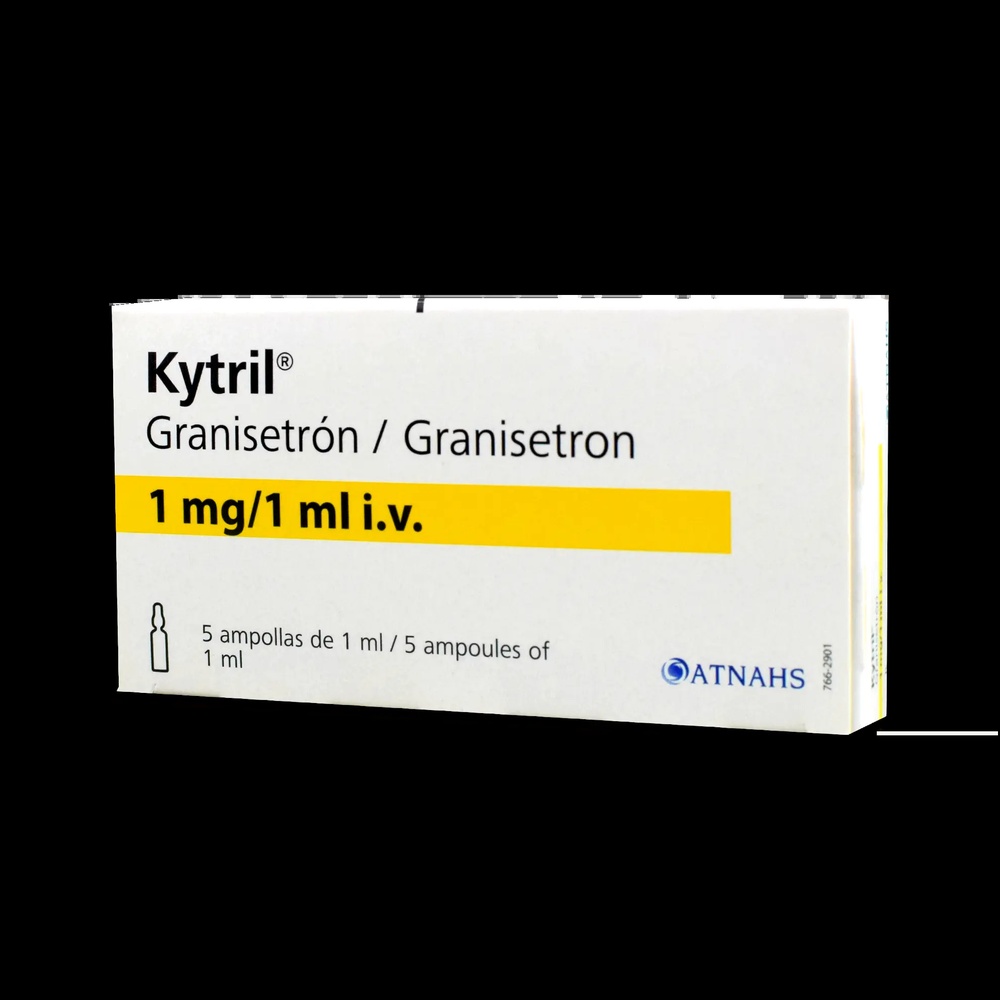
- Kytril 1 mg/1 ml injectable solution, 3 mg/3 ml injectable solution
Kytril film-coated tablets 1 mg, film-coated tablets 2 mg
Granisetron
Read this leaflet carefully before you start taking this medicine as it contains important information for you.
- Keep this leaflet. You may need to read it again.
- If you have any questions, ask your doctor, nurse or pharmacist.
- This medicine has been prescribed for you only. Do not pass it on to others, even if they have the same symptoms as you, as it may be harmful.
- If you get any side effects, even those not listed in this leaflet, or if you notice any worsening of your condition, tell your doctor, nurse or pharmacist. See section 4.
Contents of this leaflet:
- 1. What Kytril is and what it is used for
- 2. What you need to know before you take Kytril
- 3. How to take Kytril
- 4. Possible side effects
- 5. How to store Kytril
- 6. Contents of the pack and other information
1. What is Kytril and what is it used for
Kytril contains the active ingredient granisetron which belongs to a group of medicines called
“5-HT receptor antagonists” or “antiemetics”. These tablets should only be used
in adults.
Kytril is used to prevent or treat nausea and vomiting caused by treatment with other
medicines, such as, for example, chemotherapy or radiotherapy for cancer.
2. What you need to know before you take Kytril
Do not take Kytril tablets
- if you are allergic (hypersensitive) to granisetron or any of the excipients of Kytril (listed in section 6: “Further information” and “Important information about some of the excipients of Kytril”, listed below).
If you have doubts, before taking these tablets, consult your doctor, nurse or pharmacist.
Warnings and precautions
Talk to your doctor, nurse or pharmacist before using these tablets, especially if:
- you have problems with bowel movements due to an intestinal blockage.
- you have heart problems, are being treated for cancer with a medicine that is known to damage the heart, or if you have problems with salt levels, such as potassium, sodium or calcium in the body (electrolyte imbalance).
- you are taking other “5-HT receptor antagonist” medicines, including dolasetron, ondansetron, used like Kytril in the treatment and prevention of nausea and vomiting.
Serotonin syndrome is an uncommon but potentially life-threatening reaction that
can occur with granisetron (see section 4). It can cause serious changes in the way the
brain, muscles and digestive system work. The reaction can occur if you take Kytril on
its own, butis more likely to occur if you take Kytril with some other medicines (particularly
fluoxetine, paroxetine, sertraline, fluvoxamine citalopram, escitalopram, venlafaxine and duloxetine). The
risk of serotonin syndrome also increases if you are taking medicines containing buprenorphine
or other opioids. Make sure to inform your doctor, nurse or pharmacist of all the medicines you are
taking.
Children
Children should not take these tablets.
Other medicines and Kytril
Tell your doctor, nurse or pharmacist if you are taking or have recently taken or might
take any other medicines, including those available without a prescription. This is because Kytril
can affect how some medicines work. Other medicines can also affect
how these tablets work.
Tell your doctor or nurse in particular if you are taking, have recently taken or might
take any other medicine:
- medicines used to treat irregular heartbeat other than “5-HT receptor antagonists”, such as dolasetron or ondansetron (see “Warnings and precautions” above)
- phenobarbital, a medicine used to treat epilepsy
- ketoconazole, a medicine used to treat fungal infections
- erythromycin, an antibiotic used to treat bacterial infections
- SSRIs (selective serotonin reuptake inhibitors) used to treat depression and/or anxiety including fluoxetine, paroxetine, sertraline, fluvoxamine, citalopram, escitalopram.
- SNRIs (selective serotonin and noradrenaline reuptake inhibitors) used to treat depression and/or anxiety including venlafaxine, duloxetine
- medicines containing buprenorphine or other opioids
Pregnancy and breastfeeding
You should not take these tablets if you are pregnant, trying to become pregnant or
breastfeeding, unless your doctor has prescribed them.
If you are pregnant, suspect you are pregnant, or are planning a pregnancy, or if you are breastfeeding
with breast milk, ask your doctor, nurse or pharmacist for advice before taking this
medicine.
Driving and using machines
Kytril does not alter or alters negligibly the ability to drive vehicles or use tools or
machinery.
Kytril contains lactose
If your doctor has diagnosed you with intolerance to certain sugars, contact him before taking
this medicine.
Kytril contains sodium
This medicine contains less than 1 mmol of sodium (23 mg) per dose (1mg; 2 mg), which is
essentially ‘sodium-free’.
3. How to take Kytril
Take this medicine exactly as your doctor has instructed. If you have any doubts, consult your
doctor, nurse or pharmacist.
The recommended dose of Kytril varies from patient to patient depending on age, weight and whether the
medicine has been given to you to prevent or treat nausea and vomiting. Your doctor will calculate the dose to
be taken.
Prevention of nausea or vomiting
The first dose of Kytril is usually given one hour before radiotherapy or chemotherapy.
The dose will be:
- one 1 mg tablet twice a day or
- two 1 mg tablets once a day or
- one 2 mg tablet once a day
for up to one week after radiotherapy or chemotherapy.
Treatment of nausea or vomiting
The dose will usually be:
- one 1 mg tablet twice a day or
- two 1 mg tablets once a day or
- one 2 mg tablet once a day.
If you take more Kytril than you should
If you think you have taken too many tablets, contact your doctor or nurse. The symptoms of an
overdose include a mild headache. You will be treated according to your symptoms.
If you forget to take Kytril
If you think you have forgotten to take the medicine, contact your doctor or nurse.
Do not take a double dose to make up for a missed tablet.
If you stop taking Kytril
Do not stop taking Kytril before the cancer treatment is finished. If
you stop taking Kytril, the symptoms may return.
If you have any further questions about the use of this medicine, ask your doctor, nurse or
pharmacist.
4. Possible side effects
Like all medicines, this medicine can cause side effects, although not everyone gets them.
If you notice the following problem, contact your doctor immediately :
- allergic reactions (anaphylaxis). Signs may include swelling of the throat, face, lips and mouth, difficulty breathing or swallowing.
- serotonin syndrome. Signs may include diarrhoea, nausea, vomiting, high temperature and blood pressure, excessive sweating and a fast heartbeat, agitation, confusion, hallucinations, shivering, muscle tremors, spasms or rigidity, loss of coordination and restlessness. This reaction may occur if you take Kytril alone or, more likely, with some other medicines (see "Warnings and precautions").
Other side effects that may occur while taking this medicine are:
Very common: may affect more than 1 in 10 people
- headache
- constipation. Your doctor will check your health status.
Common: may affect up to 1 in 10 people
- difficulty sleeping (insomnia)
- changes in liver function indicated by blood tests
- diarrhoea.
Uncommon: may affect up to 1 in 100 people
- skin rashes or an allergic skin reaction or hives (urticaria). Signs may include red, raised and itchy blisters.
- changes in heartbeat (rhythm) and changes observed on an ECG (electrical recording of the heart).
- abnormal involuntary movements such as tremor, muscle rigidity and muscle contractions.
Reporting of side effects
If you get any side effects, even those not listed in this leaflet, tell your doctor, nurse or
pharmacist. You can also report side effects directly through the national reporting system at:
https://www.aifa.gov.it/content/segnalazioni-reazioni-avverse . By reporting side effects you can
help provide more information on the safety of this medicine.
5. How to store Kytril
Keep this medicine out of the reach and sight of children.
Do not use this medicine after the expiry date which is stated on the blister and the carton after
“Exp.” The expiry date refers to the last day of the month.
This medicine does not require any special storage conditions.
Do not dispose of any medicine in wastewater or household waste. Ask your pharmacist how to
dispose of medicines you no longer use. This will help protect the environment.
6. Contents of the pack and other information
What Kytril contains
The active ingredient is granisetron.
Each film-coated tablet contains 1 mg of granisetron (as hydrochloride).
Each film-coated tablet contains 2 mg of granisetron (as hydrochloride).
The other ingredients are:
Lactose monohydrate
hypromellose
Sodium carboxymethyl starch
Microcrystalline cellulose
magnesium stearate,
Film coating:
Hypromellose
Titanium dioxide (E 171)
Macrogol 400
Polysorbate 80
Appearance of Kytril and contents of the pack
The tablets are biconvex, triangular, from white to almost white in colour, with K1 imprinted on one
side.
The tablets are biconvex, triangular, from white to almost white in colour, with K2 imprinted on one
side.
Opaque PVC blisters sealed with an aluminium foil containing 2 or 10 tablets (1mg) or 1.5 or
10 tablets (2mg). Not all pack sizes may be marketed.
Marketing Authorisation Holder and Manufacturer
Atnahs Pharma Netherlands B.V.
Copenhagen Towers
Ørestads Boulevard 108, 5.tv
DK-2300 København S
Denmark
Manufacturer
IL CSM Clinical Supplies Management
Marie-Curie-Strasse 8
Lörrach
Baden-Württemberg
79539, Germany
This medicinal product is authorised in the Member States of the European Economic Community and in
United Kingdom (Northern Ireland) under the following denominations:
Austria, Belgium, Czech Republic, Estonia, Finland, France, Ireland, Italy, Netherlands, Slovenia,
Spain, United Kingdom (Northern Ireland): Kytril
Germany: Kevatril
Other sources of information
More detailed information on this medicinal product is available on the AIFA website:
Kytril 1 mg/1 ml injectable solution, 3 mg/3 ml injectable solution
Granisetron
Read this leaflet carefully before receiving this medicine as it contains important
information for you.
- Keep this leaflet. You may need to read it again.
- If you have any questions, ask your doctor, nurse or pharmacist.
- This medicine has been prescribed for you only. Do not pass it on to others, even if their symptoms are the same as yours, as it could be harmful.
- If you get any side effects, even those not listed in this leaflet, or if you notice any undesirable effect not listed in this leaflet, tell your doctor, nurse or pharmacist. See section 4.
Contents of this leaflet:
- 1. What Kytril is and what it is used for
- 2. What you need to know before you receive Kytril
- 3. How to receive Kytril
- 4. Possible side effects
- 5. How to store Kytril
- 6. Contents of the pack and other information
1. What is Kytril and what is it used for
Kytril contains the active ingredient granisetron which belongs to a group of medicines called
“5-HT receptor antagonists” or “antiemetics”.
Kytril is used to prevent or treat nausea and vomiting caused by treatment with other
medicines, such as, for example, chemotherapy or radiotherapy for cancer and by surgical procedures.
The injectable solution is to be used in adults and in children starting from 2 years of age.
2. What you need to know before you take Kytril
Do not use Kytril
- if you are allergic (hypersensitive) to granisetron or any of the excipients of Kytril (listed in section 6: “Further information”)
If you have any doubts, before receiving the injection, ask your doctor, nurse or pharmacist.
Warnings and precautions
Talk to your doctor, nurse or pharmacist before using Kytril, especially if:
- you have problems with bowel movements due to an intestinal blockage.
- you have heart problems, are being treated for cancer with a medicine that is known to damage the heart, or if you have problems with salt levels, such as potassium, sodium or calcium in the body (electrolyte imbalance).
- you are taking other “5-HT receptor antagonists”, which include dolasetron, ondansetron, used like Kytril in the treatment and prevention of nausea and vomiting.
Serotonin syndrome is an uncommon but potentially life-threatening reaction that can
occur with granisetron (see section 4). It can cause serious changes in the way the brain, the
muscles and the digestive system work. The reaction may occur if you take Kytril alone, butis more
likely to occur if you take Kytril with some other medicines (particularly fluoxetine,
paroxetine, sertraline, fluvoxamine citalopram, escitalopram, venlafaxine and duloxetine).
The risk of serotonin syndrome also increases if you are taking medicines containing buprenorphine or
other opioids. Make sure to inform your doctor, nurse or pharmacist of all the medicines you are
taking.
Other medicines and Kytril
Tell your doctor, nurse or pharmacist if you are taking, have recently taken or might
take any other medicines, including those available without a prescription. This is because Kytril can
affect the way some medicines work. Other medicines can also affect the way the injection works.
Tell your doctor or nurse in particular if you are taking, have recently taken or might
take any other medicine:
- medicines used to treat irregular heartbeat other than “5-HT receptor antagonists”, such as dolasetron or ondansetron (see “Warnings and precautions”, as above)
- phenobarbital, a medicine used to treat epilepsy
- ketoconazole, a medicine used to treat fungal infections
- erythromycin antibiotic, used to treat bacterial infections
- SSRIs (selective serotonin reuptake inhibitors) used to treat depression and/or anxiety including fluoxetine, paroxetine, sertraline, fluvoxamine, citalopram, escitalopram.
- SNRIs (selective serotonin and noradrenaline reuptake inhibitors) used to treat depression and/or anxiety including venlafaxine, duloxetine
- medicines containing buprenorphine or other opioids
Pregnancy and breastfeeding
You should not receive this injection if you are pregnant, if you are trying to become pregnant or if you are
breastfeeding, unless your doctor has prescribed it.
If you are pregnant, suspect you are pregnant, or are planning a pregnancy, or if you are breastfeeding, ask your doctor, nurse or pharmacist for advice before taking this medicine.
Driving and using machines
It is unlikely that Kytril will affect your ability to drive or operate tools or machinery.
Kytril contains sodium.
This medicine contains less than 1 mmol of sodium (23 mg) per dose (1mg/1ml; 3 mg/3ml), i.e.
essentially ‘sodium-free’.
3. How to receive Kytril
The injection will be administered to you by a doctor or nurse. The recommended dose of Kytril
varies from patient to patient depending on age, weight and whether the medicine has been given to prevent or
treat nausea and vomiting. The doctor will calculate the dose to be taken.
Kytril can be administered as an injection into the veins (intravenous).
Prevention of nausea or vomiting after radio- or chemotherapy
The injection will be administered to you before the radio- or chemotherapy begins. The intravenous
injection will take from 30 seconds to 5 minutes and the dose will normally be between 1 and 3 mg. The medicine may
be diluted before being injected.
Treatment of nausea or vomiting after radio- or chemotherapy
The injection will take from 30 seconds to 5 minutes and the dose will normally be between 1 and 3 mg. The
medicine may be diluted before being injected into a vein. You may receive more injections to stop the
discomfort after the first dose. At least 10 minutes must pass between each injection. The maximum dose of Kytril that will be administered will be 9 mg per day.
Combination with steroids
The effect of the injection can be improved with the use of medicines called
adrenocorticosteroids. The steroid will be administered at a dose between 8 and 20 mg of dexamethasone
before radiotherapy or chemotherapy or as 250 mg of methylprednisolone, which will be
administered before and after radiotherapy or chemotherapy.
Use in children for the prevention or treatment of nausea or vomiting after
radiotherapy or chemotherapy
In children, Kytril will be administered by intravenous injection, as described above, and the dose
will depend on the child's weight. The injections will be diluted and given before radiotherapy or
chemotherapy and will take 5 minutes. Children will be given a maximum of 2 doses per day
with an interval of at least 10 minutes.
Treatment of nausea or vomiting after surgery
The injection into the veins will take from 30 seconds to 5 minutes and the dose will usually be 1mg. The maximum dose of Kytril that will be administered will be 3 mg per day.
Use in children for the prevention or treatment of nausea or vomiting after
surgery
This injection should not be given to children to treat nausea or vomiting after surgery.
If you receive too much Kytril
Because the injection will be administered by a doctor or nurse, it is unlikely that you will receive
too much. However, if you are concerned, contact your doctor or nurse. Symptoms of an overdose
include a mild headache. It will be treated according to the symptoms.
If you have any questions about the use of this medicine, ask your doctor, nurse or pharmacist.
4. Possible side effects
Like all medicines, this medicine can cause side effects, although not everybody gets them.
If you notice any of the following problems, contact your doctor immediately:
- allergic reactions (anaphylaxis). Signs may include swelling of the throat, face, lips and mouth, difficulty breathing or swallowing.
- serotonin syndrome. Signs may include diarrhoea, nausea, vomiting, high temperature and blood pressure, excessive sweating and a fast heartbeat, agitation, confusion, hallucinations, shivering, muscle tremors, spasms or rigidity, loss of coordination and restlessness. This reaction can occur if you take Kytril alone or, more likely, with certain other medicines (see "Warnings and precautions").
Other side effects that may occur during the use of this medicine are:
Very common: may affect more than 1 in 10 people
- headache
- constipation. Your doctor will check your health status.
Common: may affect up to 1 in 10 people
- difficulty sleeping (insomnia)
- changes in liver function indicated by blood tests
- diarrhoea.
Uncommon: may affect up to 1 in 100 people
- skin rashes or an allergic skin reaction or hives (urticaria). Signs may include red, raised, itchy blisters.
- changes in heartbeat (rhythm) and changes observed on an ECG (electrical recording of the heart).
- abnormal involuntary movements such as tremor, muscle stiffness and muscle contractions.
Reporting of side effects
If you get any side effects, talk to your doctor, nurse or pharmacist. You can also report side effects directly through
the national reporting system at: https://www.aifa.gov.it/content/segnalazioni-reazioni-
avverse . By reporting side effects you can help provide more information on the
safety of this medicine.
5. How to store Kytril
Keep this medicine out of the reach and sight of children.
Do not use this medicine after the expiry date which is stated on the carton and/or the vial after
“Exp.” The expiry date refers to the last day of the month.
Keep the container in the outer packaging to protect the medicine from light.
Following dilution, the diluted solution should be stored at 2°C – 8°C and used within 24
hours of dilution.
Do not dispose of any medicine in wastewater or household waste. Ask your pharmacist how to
dispose of medicines you no longer use. This will help protect the environment.
6. Contents of the pack and other information
What Kytril contains
The active ingredient is granisetron.
Each ml of injectable solution contains 1 mg of granisetron (as hydrochloride).
Each ml of injectable solution contains 1 mg of granisetron (as hydrochloride).
The other ingredients are sodium chloride, water for injections, citric acid monohydrate,
hydrochloric acid and sodium hydroxidefor pH adjustment (acidity).
Appearance of Kytril and contents of the pack
Kytril solution is a clear, colourless liquid contained in colourless glass vials with a
nominal volume of 1 and 3 ml.
Each pack may contain either 1 or 5 vials.
Not all pack sizes may be marketed.
Each ml of solution 1 Kytril contains 1 mg of granisetron (as hydrochloride).
Each 1 ml vial contains 1 mg of granisetron (as hydrochloride).
Each 3 ml vial contains 3 mg of granisetron (as hydrochloride).
Dilution for administration
For single use. Dilute before use.
The product must be diluted before use both as an injection and as an infusion.
Marketing Authorisation Holder and Manufacturer
Atnahs Pharma Netherlands B.V.
Copenhagen Towers
Ørestads Boulevard 108, 5.tv
DK-2300 København S
Denmark
Manufacturer
Cenexi
52, rue M. et J. Gaucher
94120 Fontenay-sous-Bois
France
This medicinal product is authorised in the Member States of the European Economic Community and in the
United Kingdom (Northern Ireland) under the following denominations:
Austria, Belgium, Czech Republic, Estonia, Finland, France, Ireland, Italy, Netherlands, Slovenia, Spain,
United Kingdom: Kytril
Germany: Kevatril
Other sources of information
More detailed information on this medicine is available on the AIFA website

Не уверены, подходит ли вам это лекарство?
Обсудите симптомы и варианты лечения с врачом онлайн.

Уже начали прием и появились вопросы?
Обсудите свое состояние и дальнейшие шаги с врачом онлайн.
- Страна регистрации
- Форма выпускаInjectable solution, 3 MG/3 ML
- Код АТХA04AA02
- Действующее вещество
- Отпускается по рецептуДа
- Производитель
- Информация на этой странице носит справочный характер и не является медицинской консультацией. Перед началом приема лекарства обязательно проконсультируйтесь с врачом.
- Аналоги KYTRILФорма выпуска: Film-coated tablet, 1 MGДействующее вещество: granisetronПроизводитель: S.F. GROUP S.R.L.Отпускается по рецептуФорма выпуска: Injectable solution, 1MG/MLДействующее вещество: granisetronПроизводитель: HIKMA FARMACEUTICA (PORTUGAL) S.A.Отпускается по рецептуФорма выпуска: Film-coated tablet, 1 MGДействующее вещество: granisetronПроизводитель: MYLAN S.P.A.Отпускается по рецепту
Аналоги KYTRIL в других странах
Лекарства с тем же действующим веществом, доступные в других странах.
Аналог KYTRIL в Испания
Врачи онлайн по KYTRIL
Обсудите применение KYTRIL и возможные следующие шаги — по оценке врача.









Получите рецепт на KYTRIL онлайн
Заполните форму за 2 минуты
Расскажите о симптомах, истории болезни и нужном препарате.
Выберите врача или мы назначим
Выберите специалиста или мы подберём ближайшего доступного врача.
Врач рассматривает ваш случай
Обычно в течение 30 минут. Может задать уточняющие вопросы в чате.
Получите в любой аптеке
Электронный рецепт отправляется на вашу почту — действителен по всей Польше.
Часто задаваемые вопросы
KYTRIL требует рецепта в Италия. Вы можете уточнить у врача онлайн, подходит ли это лекарство для вашей ситуации.
Действующее вещество KYTRIL — granisetron. Эта информация помогает определить лекарства с тем же составом под другими торговыми названиями.
KYTRIL производится компанией ATNAHS PHARMA NETHERLANDS BV. Упаковка и торговое название могут отличаться в зависимости от дистрибьютора.
Врачи, включая Семейные врачи, Психиатры, Дерматологи, Кардиологи, Эндокринологи, Гастроэнтерологи, Пульмонологи, Нефрологи, Ревматологи, Гематологи, Инфекционисты, Аллергологи, Гериатры, Педиатры, Онкологи, могут оценить целесообразность применения KYTRIL с учетом вашей ситуации и местных правил. Вы можете записаться на онлайн-консультацию, чтобы обсудить возможные варианты.
Польша имеет хорошо развитую систему здравоохранения в крупных городах, таких как Варшава, Краков, Вроцлав и Гданьск. Аптеки широко доступны и работают в соответствии с действующим законодательством, обеспечивая доступ к рецептурным препаратам.
Вы можете купить KYTRIL в Варшаве, Кракове, Вроцлаве или Гданьске в любой аптеке при наличии действующего рецепта.
Чтобы получить рецепт, вы можете воспользоваться Oladoctor:
Другие лекарства с тем же действующим веществом (granisetron) включают GRANEM, GRANISETRON IKMA, GRANISETRON MYLAN JENERIKS. Они могут отличаться торговым названием или формой выпуска, но содержат одинаковый терапевтический компонент. Перед изменением лечения рекомендуется проконсультироваться с врачом.
