



KOMOREBI 5 мг/мл Глазные капли, раствор

Рассмотрение рецепта онлайн
Врач рассмотрит ваш случай и примет решение о назначении рецепта, если это медицински оправдано.

Поговорите с врачом об этом лекарстве
Обсудите симптомы и возможные дальнейшие шаги на онлайн-консультации.



Инструкция по применению KOMOREBI
Содержание инструкции
Komorebi 5 mg/ml eye drops, solution.
ketorolac trometamol
Read this leaflet carefully before you start using this medicine as it contains important
information for you.
- Keep this leaflet. You may need to read it again.
- If you have any questions, ask your doctor or pharmacist.
- This medicine has been prescribed for you only. Do not pass it on to others, even if they have the same symptoms as you, as it may be harmful.
- If you get any side effects, even those not listed in this leaflet, tell your doctor or pharmacist. See section 4.
Contents of this leaflet
- 1. What Komorebi is and what it is used for
- 2. What you need to know before you use Komorebi
- 3. How to use Komorebi
- 4. Possible side effects
- 5. How to store Komorebi
- 6. Contents of the pack and other information
1. What is Komorebi and what is it used for
Komorebi is a medicine to be administered via ocular route.
Komorebi is indicated for:
- the treatment of pain and inflammation following cataract surgery;
- the inhibition of intraoperative miosis during cataract surgery;
- the short-term relief of allergic conjunctivitis.
2. What you need to know before using Komorebi
Do not use Komorebi
- if you are allergic (hypersensitive) to ketorolac trometamol or to any of the other components of this medicine (listed in section 6);
- if you are allergic (hypersensitive) to acetylsalicylic acid and other non-steroidal anti-inflammatory drugs, such as ibuprofen.
Warnings and precautions
Talk to your doctor or pharmacist before using Komorebi:
- if you have a tendency to bleed easily. Contact lens wearers should use glasses during the treatment period with Komorebi.
As with other non-steroidal anti-inflammatory drugs, ketorolac trometamol may delay the
healing of corneal wounds and its use should therefore be carefully considered by the doctor if you have
a predisposition to persistent epithelial lesions, corneal denervation, diabetes mellitus and
severe dry eye.
Prolonged use of non-steroidal anti-inflammatory drugs can lead to thinning, erosion,
ulceration or perforation of the cornea.
Topical NSAIDs should be used with caution in patients who have undergone complicated
ocular surgery, who have corneal denervation, corneal epithelial defects,
diabetes mellitus, ocular surface diseases (e.g. dry eye syndrome), rheumatoid arthritis
or who have undergone repeated eye surgery in a short period of time, which
may be more exposed to the risk of adverse reactions at the corneal level capable of
compromising vision.
Post-marketing experience with topical NSAIDs also indicates that use beyond 24 hours
before surgery, or beyond 14 days after surgery, may increase the risk of onset and
severity of corneal adverse events.
The concomitant use of ketorolac and topical corticosteroids should be carefully monitored by
the doctor in patients predisposed to corneal epithelial rupture, due to the potential increase in healing
times.
Other medicines and Komorebi
Tell your doctor or pharmacist if you are taking, have recently taken or might take any other
medicine.
Although ketorolac is well tolerated when used in association with other medicines for ophthalmic or systemic use, such as antibiotics, sedatives, hyaluronidase and/or other local anesthetics, beta-blockers, carbonic anhydrase inhibitors, miotics, mydriatics and cycloplegics, tell your doctor if you are taking the following medicines:
- other medicines to be administered via ocular route;
- medicines that reduce the blood's ability to coagulate, such as warfarin.
The concomitant use of non-steroidal anti-inflammatory drugs and topical corticosteroids can
increase the risk of scarring problems (see Warnings and precautions).
Pregnancy and breastfeeding
If you are pregnant, suspect you are pregnant or are planning a pregnancy, or if you are breastfeeding with breast
milk, ask your doctor or pharmacist for advice before using this medicine.
Pregnancy
The safety of the medicine in pregnant women has not been established. There are no recent controlled studies regarding the use of ketorolac trometamol in pregnant women. Therefore, the use
of the medicine in pregnancy should only be considered if the benefits clearly outweigh the
risks. Due to the known risks associated with the use of non-steroidal anti-inflammatory drugs during the third
trimester of pregnancy, ketorolac trometamol should not be used in this stage of
pregnancy.
Breastfeeding
Komorebi is not recommended in breastfeeding women.
Driving and operating machinery
Avoid driving vehicles and operating machinery if you experience vision disturbances, such as blurred
vision.
Komorebi contains benzalkonium chloride:
Each ml of this medicine contains 0.05 mg of benzalkonium chloride.
Benzalkonium chloride can be absorbed by soft contact lenses and can lead to a change in
their color. Remove contact lenses before using this medicine and wait 15 minutes before
reapplying them. Benzalkonium chloride can also cause eye irritation, especially if you have dry eyes
or corneal disorders (the most superficial transparent layer of the eye). If you experience an abnormal
sensation in the eye, burning or pain after using this medicine, talk to your doctor.
3. How to use Komorebi
Use this medicine following the doctor's instructions exactly. If you have any doubts, consult your
doctor or pharmacist.
Treatment of pain and inflammation following cataract surgery:
the recommended dose is 1 drop 4 times a day for 2-4 weeks
Inhibition of intraoperative miosis during cataract surgery:
the recommended dose is 1 drop every 30 minutes, starting administration 2 hours before the
surgical intervention, for a total of 4 drops. The last drop must be administered 30 minutes before
surgical preparation.
Short-term relief of allergic conjunctivitis:
the recommended dose is 1 drop 4 times a day for 1-2 weeks.
Use in children
The recommended dose is identical to the recommended dose for adults.
Komorebi should not be used in children under 14 years of age.
How to use Komorebi
- 1. Wash your hands and sit or assume a comfortable position.
- 2. Unscrew and remove the cap from the bottle by applying slight pressure.

- 3. Gently lower the lower eyelid of the eye to be treated with your finger.

- 4. Position the tip of the dropper close to the eye, but without touching it.

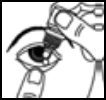
- 5. Gently press the bottle to instill one drop of eye drops into the eye, then release the lower eyelid.
- 6. With a finger, press the corner of the affected eye, near the nose. Keep pressing for

2 or 3 minutes, keeping the eye closed to avoid the risk of absorption of the
medicine by the nasal mucosa.
- 7. Repeat the operation for the other eye if your doctor has told you to do so.
- 8. Screw the cap back onto the bottle. Do not exceed the dose prescribed by your doctor.
If you use more Komorebi than you should
Overdose situations have not been described for ophthalmic administration of this
medicine. However, in case of accidental ingestion of any amount of Komorebi, contact
your doctor immediately or go to the nearest hospital. Bring the container of the
medicine with you.
If you forget to use Komorebi
Do not use a double dose to make up for a missed dose. If you forget to use a dose, do
so as soon as you remember and then continue treatment as usual from that point on.
However, if it is almost time to apply the next dose, skip the missed dose and apply the
eye drops as usual.
If you have any doubts about using this medicine, ask your doctor or pharmacist.
4. Possible side effects
Like all medicines, this medicine can cause side effects, although not everybody gets them.
Side effects are listed according to system organ class and frequency. Frequencies are defined as: very common (≥1/10), common (≥1/100 to <1/10), uncommon (≥1/1000 to
<1/100), rare (≥1/10 000 to <1/1000), very rare (<1/10 000), not known (frequency cannot be
estimated based on available data).

| System organ class | Frequency | Side effects |
| n Immune system disorders | Common | Allergic reactions |
| e g A Eye disorders | Very common | Eye irritation (including burning sensation) Eye pain (including stinging pain) |
| Common | Superficial corneal inflammation (keratitis) Swelling (edema) of the eye and/or eyelids Eye itching Increased blood flow in the conjunctiva |
Due to the possibility of systemic absorption of ketorolac trometamol administered topically, side effects reported for systemic use may occur, although rarely, such as
headaches, flu-like symptoms, nausea, vomiting, bleeding and peptic ulcer.
Reporting of side effects
If you get any side effects, even those not listed in this leaflet, tell your doctor or pharmacist. You can also report side effects directly through the national reporting system at https://www.aifa.gov.it/content/segnalazioni-reazioni-avverse .
By reporting side effects you can help provide more information on the safety of
this medicine.
5. How to store Komorebi
Do not store at a temperature above 25ºC.
Keep the bottle tightly closed.
Keep the bottle in the outer packaging to protect the medicine from light and moisture.
Use Komorebi within 28 days of first opening the bottle.
Keep this medicine out of sight and reach of children.
Do not use this medicine after the expiry date stated on the label and on the package after “Exp.”. The
expiry date refers to the last day of the month indicated.
Do not dispose of any medicine in wastewater or household waste. Ask your pharmacist how to
dispose of medicines you no longer use. This will help protect the environment.
6. Contents of the pack and other information
What Komorebi contains
The active ingredient is ketorolac trometamol.
The other ingredients are: sodium chloride, disodium edetate, benzalkonium chloride, water for injections and hydrochloric acid and/or sodium hydroxide for pH adjustment.
Description of the appearance of Komorebi and contents of the pack
Komorebi is supplied in the pharmaceutical form of eye drops, solution, in sterile dropper bottles of 10 ml.
| o (conjunctival hyperemia) c Eye infection Eye inflammation | ||
| Uncommon | a Corneal ulcer Corneal infiltrates m Blurred and/or reduced vision Eye dryness Inflammation of the iris (iritis) | |
| Not known | Thinning of the cornea r Corneal erosion a Epithelial rupture Corneal perforation |
Marketing Authorisation Holder and Manufacturer
Marketing Authorisation Holder
Fidia Farmaceutici S.p.A.
Via Ponte della Fabbrica, 3/A
35031 Abano Terme (PD)
Italy
Manufacturer
Laboratório Edol - Produtos Farmacêuticos, S.A.
Av. 25 de Abril, 6-6A
2795-225 Linda-a-Velha
Portugal
This medicinal product is authorised in the Member States of the European Economic Area under the following
denominations:
Italy – Komorebi 5 mg/ml eye drops, solution
Portugal – Hebe 5 mg/ml eye drops, solution

Не уверены, подходит ли вам это лекарство?
Обсудите симптомы и варианты лечения с врачом онлайн.

Уже начали прием и появились вопросы?
Обсудите свое состояние и дальнейшие шаги с врачом онлайн.

- Страна регистрации
- Форма выпускаEye drops, solution, 5 MG/ML
- Код АТХS01BC05
- Действующее вещество
- Отпускается по рецептуДа
- Производитель
- Информация на этой странице носит справочный характер и не является медицинской консультацией. Перед началом приема лекарства обязательно проконсультируйтесь с врачом.
- Аналоги KOMOREBIФорма выпуска: Eye drops, solution, 0.5%Действующее вещество: ketorolacПроизводитель: ABBVIE S.R.L.Отпускается без рецептаФорма выпуска: Eye drops, solution, 0.5%Действующее вещество: bendazacПроизводитель: OMNIVISION ITALIA SRLОтпускается по рецептуФорма выпуска: Eye drops, solution, 0.9 MG/MLДействующее вещество: бромфенакПроизводитель: BIONATIVA S.P.A.Отпускается по рецепту
Аналоги KOMOREBI в других странах
Лекарства с тем же действующим веществом, доступные в других странах.
Аналог KOMOREBI в Украина
Аналог KOMOREBI в Испания
Врачи онлайн по KOMOREBI
Обсудите применение KOMOREBI и возможные следующие шаги — по оценке врача.









Получите рецепт на KOMOREBI онлайн
Заполните форму за 2 минуты
Расскажите о симптомах, истории болезни и нужном препарате.
Выберите врача или мы назначим
Выберите специалиста или мы подберём ближайшего доступного врача.
Врач рассматривает ваш случай
Обычно в течение 30 минут. Может задать уточняющие вопросы в чате.
Получите в любой аптеке
Электронный рецепт отправляется на вашу почту — действителен по всей Польше.
Часто задаваемые вопросы
KOMOREBI требует рецепта в Италия. Вы можете уточнить у врача онлайн, подходит ли это лекарство для вашей ситуации.
Действующее вещество KOMOREBI — ketorolac. Эта информация помогает определить лекарства с тем же составом под другими торговыми названиями.
KOMOREBI производится компанией FIDIA FARMACEUTICI S.P.A.. Упаковка и торговое название могут отличаться в зависимости от дистрибьютора.
Врачи, включая Семейные врачи, Психиатры, Дерматологи, Кардиологи, Эндокринологи, Гастроэнтерологи, Пульмонологи, Нефрологи, Ревматологи, Гематологи, Инфекционисты, Аллергологи, Гериатры, Педиатры, Онкологи, могут оценить целесообразность применения KOMOREBI с учетом вашей ситуации и местных правил. Вы можете записаться на онлайн-консультацию, чтобы обсудить возможные варианты.
Польша имеет хорошо развитую систему здравоохранения в крупных городах, таких как Варшава, Краков, Вроцлав и Гданьск. Аптеки широко доступны и работают в соответствии с действующим законодательством, обеспечивая доступ к рецептурным препаратам.
Вы можете купить KOMOREBI в Варшаве, Кракове, Вроцлаве или Гданьске в любой аптеке при наличии действующего рецепта.
Чтобы получить рецепт, вы можете воспользоваться Oladoctor:
Другие лекарства с тем же действующим веществом (ketorolac) включают AKULAR, BENDALINA, BROMOFTIL. Они могут отличаться торговым названием или формой выпуска, но содержат одинаковый терапевтический компонент. Перед изменением лечения рекомендуется проконсультироваться с врачом.
