



IBITAZINA 2 G/250 MG Порошок и раствор для инъекционного раствора

Рассмотрение рецепта онлайн
Врач рассмотрит ваш случай и примет решение о назначении рецепта, если это медицински оправдано.

Поговорите с врачом об этом лекарстве
Обсудите симптомы и возможные дальнейшие шаги на онлайн-консультации.



Инструкция по применению IBITATSINA
Содержание инструкции
- What is Ibitazina and what is it used for
- What you need to know before using Ibitazina
- How to use Ibitazina
- Possible side effects
- How to store Ibitazina
- Package Contents and Other Information
Ibitazina 2 g + 250 mg/4 ml powder and solvent for injectable solution for intramuscular use
piperacillin/tazobactam
Generic medicine
Read this leaflet carefully before using this medicine as it contains important
information for you.
- Keep this leaflet. You may need to read it again.
- If you have any questions, ask your doctor, pharmacist or nurse.
- This medicine has been prescribed for you only. Do not pass it on to others, even if they have the same symptoms as you, as it could be harmful.
- If you get any side effects, even those not listed in this leaflet, tell your doctor, pharmacist or nurse. See section 4.
Contents of this leaflet
- 1. What Ibitazina is and what it is used for
- 2. What you need to know before you use Ibitazina
- 3. How to use Ibitazina
- 4. Possible side effects
- 5. How to store Ibitazina
- 6. Contents of the pack and other information
1. What is Ibitazina and what is it used for
Piperacillin belongs to the group of antibiotic medicines known as “broad-spectrum penicillins”, which are able to kill many types of bacteria. Tazobactam can prevent the resistance that some bacteria have towards piperacillin. This means that when piperacillin and tazobactam are administered together, they can kill more types of bacteria.
Ibitazina is indicated in adults and adolescents for the treatment of bacterial infections affecting the lower respiratory tract (lungs), the urinary tract (kidneys and bladder), the abdomen, the skin or the blood. Ibitazina can be used for the treatment of bacterial infections in patients with a low number of white blood cells (reduced resistance to infections).
Ibitazina is indicated in children aged between 2 and 12 years for the treatment of abdominal infections, such as appendicitis, peritonitis (infections of the fluid and tissue lining the abdominal organs) and gallbladder (biliary) infections. Ibitazina can be used for the treatment of bacterial infections in patients with a low number of white blood cells (reduced resistance to infections).
In some serious infections, the doctor may consider using Ibitazina in association with other antibiotics.
2. What you need to know before using Ibitazina
Do not use Ibitazina
- If you are allergic (hypersensitive) to piperacillin and tazobactam or to any of the other ingredients of this medicine (listed in section 6)
- If you are allergic (hypersensitive) to other antibiotics such as penicillins, cephalosporins or other beta-lactamase inhibitors, as you may also be allergic to Ibitazina
- If you are allergic to lidocaine (an anesthetic contained in the solvent for intramuscular use)
Warnings and precautions
Talk to your doctor, pharmacist or nurse before taking Ibitazina:
- if you have allergies. If you have several allergies, tell your doctor or healthcare professional before taking this medicine
- if you suffer from diarrhoea before treatment or if you develop diarrhoea during or after treatment. In this case, tell your doctor or healthcare professional immediately. Do not take other medicines for diarrhoea before consulting your doctor
- if you have low levels of potassium in your blood. Your doctor may request a check of your kidney function before you take this medicine and may request that regular blood tests be performed during treatment
- if you suffer from kidney or liver problems, or if you are on hemodialysis. Your doctor may request a check of your kidney function before you take this medicine and may request that regular blood tests be performed during treatment
- if you are taking other medicines (called anticoagulants), to avoid excessive blood clotting (see section “Other medicines and Ibitazina”)or if unexpected bleeding occurs during treatment. In this case, you should immediately inform your doctor or healthcare professional
- if you develop convulsions during treatment. In this case, you should immediately inform your doctor or healthcare professional
- if you think your infection is getting worse or you have a new infection. In this case, you should immediately inform your doctor or healthcare professional.
Hemophagocytic lymphohistiocytosis
Cases of a disease in which the immune system produces a higher amount than normal of white blood cells called histiocytes and lymphocytes have been reported, resulting in inflammation
(hemophagocytic lymphohistiocytosis). This condition can be life-threatening if not
diagnosed and treated early.
If you develop several symptoms such as fever, swollen lymph nodes, feeling of weakness, feeling
of dizziness, shortness of breath, bruising or rash, contact
your doctor immediately.
Children
The use of Ibitazina is not recommended in children under 2 years of age due to insufficient
data on safety and efficacy.
Other medicines and Ibitazina
Tell your doctor or pharmacist if you are taking, have recently taken or might take
any other medicines, including those available without a prescription.
Some medicines may interact with piperacillin and tazobactam.
These include:
- medicine for gout (probenecid), which may increase the time it takes for piperacillin and tazobactam to be eliminated from the body
- medicines to thin the blood or treat blood clots (e.g. heparin, warfarin or aspirin)
- medicines used to relax muscles during surgery. Tell your doctor if you are going to have general anesthesia
- methotrexate (medicine used to treat some cancers, arthritis or psoriasis). Piperacillin and tazobactam may increase the time it takes to eliminate methotrexate from the body.
- medicines that can lower potassium levels in the blood (e.g. tablets that increase urine production or some anticancer medicines)
- medicines containing other antibiotics, such as tobramycin, gentamicin or vancomycin. Tell your doctor if you have kidney problems.
Effects on laboratory test results
Tell your doctor or laboratory personnel that you are taking Ibitazina, if you are going to have blood or urine tests.
Pregnancy and breastfeeding
If you are pregnant, suspect you are pregnant, are planning a pregnancy or are breastfeeding with breast
milk, ask your doctor or pharmacist for advice before taking this medicine.
The doctor will decide whether Ibitazina is suitable for you.
Piperacillin and tazobactam can reach the baby in the womb or pass through breast
milk. If you are breastfeeding, your doctor will decide whether Ibitazina is suitable for you.
Driving and using machines
Taking Ibitazina does not appear to impair the ability to drive vehicles and use machines.
Ibitazina contains sodium
This medicine contains 108 mg of sodium (the main component of table salt) per
vial. This is equivalent to 5.4% of the recommended maximum daily intake with the diet of
an adult.

Не уверены, подходит ли вам это лекарство?
Обсудите симптомы и варианты лечения с врачом онлайн.
3. How to use Ibitazina
Use this medicine following exactly the instructions of your doctor or pharmacist. If you have
doubts, consult your doctor or pharmacist.
Ibitazina can be administered both into a muscle (intramuscularly) and into a vein
(intravenously).
The solvent vial with lidocaine, included in each package of Ibitazina, must be used
exclusively for intramuscular use.
Ibitazina, diluted with compatible solvents, can be administered by infusion (duration 20-30
minutes).
Dosage
The dose of medicine that will be administered to you depends on the condition for which you are being treated, your
age and the possible presence of kidney problems.
Adults and adolescents over 12 years of age
The recommended dose is:
2 g + 250 mg of piperacillin/tazobactam every 12 hours intramuscularly. No more than
2 g of piperacillin/0.25 g of tazobactam per injection site should be exceeded
the usual dose is 4 g/0.5 g of piperacillin/tazobactam, administered every 6-8 hours into a vein
(directly into the bloodstream).
Children aged between 2 and 12 years
The usual dosage in children with abdominal infections is 100 mg/12.5 mg/kg of body weight of
piperacillin/tazobactam administered every 8 hours into a vein (directly into the blood).
The usual dosage in children with a reduced number of white blood cells is 80 mg/10 mg/kg of body
weight of piperacillin/tazobactam administered every 6 hours into a vein (directly into the blood).
Your doctor will calculate the dosage based on the child's weight, but the daily dosage should not
exceed 4 g/0.5 g of Ibitazina.
Ibitazina will be administered until the complete disappearance of signs of infection (from 5 to 14 days).
Patients with kidney problems
The doctor may need to reduce the dose of Ibitazina or the frequency with which it is administered to you. The
doctor may also prescribe blood tests to check the correctness of the treatment dose, especially if you have to take this medicine for a prolonged period.
Instructions for reconstitution and dilution for intramuscular administration(for
intravenous administration performed by healthcare professionals see the end of the package
leaflet).
Ibitazina 2 g + 250 mg must be reconstituted with the solvent vial included in the package,
containing 4 ml of a 0.5% lidocaine solution.
The solvent vial with lidocaine, included in the package, must be used only for
intramuscular administration.
Do not exceed the dose of 2 g + 250 mg of piperacillin/tazobactam per injection site.
Piperacillin/tazobactam and antibiotics called aminoglycosides must be reconstituted and
administered separately at different injection sites.
To ensure correct reconstitution, follow the following procedure
- 1. Shake the vial containing the lyophilized powder to be reconstituted so as to detach the powder from the bottom of the vial.
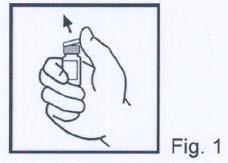
- 2. Remove the plastic cap with a reversible opening from the vial to expose the central portion of the rubber stopper and keep it (Fig. 1). Always avoid touching the central portion of the rubber stopper with your hand.
- 3. With a syringe, draw the solvent containing lidocaine and introduce it into the vial containing the
lyophilized powder.
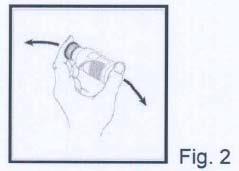
- 4. Place the plastic cap on the rubber stopper to avoid touching the central portion of the stopper with your fingers. Shake vigorously until the powder is completely dissolved. With constant shaking, reconstitution should occur within 10 minutes (Fig. 2)
- 5. Allow the resulting solution to rest until the foam disappears and a
clear solution is obtained. Make sure there are no residual particles that have not dissolved.
- 6. Remove the plastic cap and draw the solution with a 5 ml syringe for intramuscular administration.
After reconstitution, the solution must be administered immediately
Unused solutions must be discarded
If you take more Ibitazina than you should
Since Ibitazina will be administered to you by a doctor or healthcare personnel, it is unlikely that you will be given
an excessive dosage. However, if you experience adverse effects such as convulsions, or think you
have received a high dose of Ibitazina, immediately inform your treating doctor.
If you forget to take Ibitazina
If you think you have not been given a dose of Ibitazina, immediately inform your doctor or
healthcare personnel.
If you have any doubts about the use of this medicine, ask your doctor or healthcare personnel.
4. Possible side effects
Like all medicines, this medicine can cause side effects, although not everyone will experience them.
Seek immediate medical attentionif you experience any of these potentially serious side effects:
The serious side effects (whose frequency is indicated in parentheses) of Ibitazina are:
- severe skin rashes [(Stevens-Johnson syndrome, bullous dermatitis (not known), exfoliative dermatitis (not known), toxic epidermal necrolysis (rare)] which initially appear as reddish, target-like patches or circular spots often with central blisters in the trunk area. Other signs include ulcers in the mouth, throat, nose, on the
extremities, genitals and conjunctivitis (red and swollen eyes). The rash may progress to
widespread blisters or widespread skin peeling and may be potentially fatal
- severe allergic reaction potentially fatal (drug reaction with eosinophilia and systemic symptoms) which may involve the skin and, especially, other organs under the skin, such as the kidney and liver
- a skin condition (acute generalized exanthematous pustulosis) accompanied by fever, characterized by numerous small blisters filled with fluid appearing within large areas of swollen and reddened skin, swelling of the face, lips, tongue or other parts of the body (not known)
- shortness of breath, wheezing or difficulty breathing (not known)
- severe skin rash or hives (not common), itching or rash on the skin (common)
- yellowing of the eyes or skin (not known)
- damage to blood cells whose signs include: unexplained shortness of breath, red or brown urine (not known), nosebleeds (rare) and pinpoint bruising (not known), severe decrease in the number of white blood cells (rare)
- severe or persistent diarrhea associated with fever or weakness (rare).
If any of the followingside effects worsen, or if you notice any
side effect not listed in this leaflet, tell your doctor or other healthcare professional.
Very common side effects(may affect more than 1 in 10 people)
- diarrhea
Common side effects(may affect 1 in 10 people)
- yeast infection
- reduction in platelets, reduction in red blood cells or blood pigment/hemoglobin, abnormal laboratory test values (positive direct Coombs test), prolonged blood clotting time (prolonged activated partial thromboplastin time)
- reduction in albumin protein and total proteins in the blood
- headache, insomnia
- abdominal pain, vomiting, nausea, constipation, stomach disorders
- increased liver enzymes in the blood (increased alanine aminotransferase, increased aspartate aminotransferase)
- skin rash, itching
- increased muscle metabolism product in the blood (increased creatinine in the blood)
- fever, injection site reaction.
Uncommon side effects(may affect 1 in 100 people)
- decrease in the number of white blood cells (leukopenia), prolonged blood clotting time (prolonged prothrombin time)
- reduction in potassium levels in the blood (hypokalaemia), reduction in blood sugar
- seizures, reported in patients taking high doses or with kidney problems;
- low blood pressure, inflammation of the veins (felt as soreness or redness in the affected area)
- flushed skin with hot flushes
- increase in the blood of a pigment produced by degradation (bilirubin)
- skin reactions with redness, formation of lesions on the skin (exanthema, erythema multiforme), urticaria
- joint and muscle pain
- chills.
Rare side effects(may affect 1 in 1,000 people)
- severe reduction in white blood cells (agranulocytosis), nosebleeds
- severe infection of the colon
- inflammation of the mucous membranes lining the mouth
- detachment of the upper layer of the skin all over the body (toxic epidermal necrolysis).
Not known(frequency cannot be estimated from available data)
- severe reduction of red blood cells, white blood cells and platelets (pancytopenia), reduction of white blood cells (neutropenia), reduction of red blood cells due to breakage or premature degradation (hemolytic anemia), appearance of bruises with small spots (purpura), prolonged bleeding time
- increase in platelets, increase in a specific type of white blood cells (eosinophilia)
- allergic reaction and severe allergic reaction
- hepatitis, yellowish discoloration of the skin or whites of the eyes (jaundice)
- severe allergic reaction spreading throughout the body with rash on the skin and mucous membranes, blisters and various skin eruptions (Stevens-Johnson syndrome), severe allergic reaction involving the skin and other organs such as the kidney and liver (drug reaction with eosinophilia and systemic symptoms), numerous small blisters filled with fluid appearing within large areas of swollen and reddened skin accompanied by fever (acute generalized exanthematous pustulosis), skin reactions with blisters (bullous dermatitis)
- poor kidney function and kidney problems
- a form of lung disease in which eosinophils (a form of white blood cells) appear in the lung in increased numbers.
- acute disorientation and confusion (delirium).
Piperacillin therapy has been associated with an increased incidence of fever and skin rash
(rash) in patients with cystic fibrosis.
Beta-lactam antibiotics, including piperacillin tazobactam, can lead to manifestations of
encephalopathy and seizures.
Reporting of side effects
If you get any side effects, even those not listed in this leaflet, tell your
doctor or pharmacist. You can also report side effects directly through the national
reporting system at https://www.aifa.gov.it/content/segnalazioni-
reazioni-avverse . By reporting side effects you can help provide more information
on the safety of this medicine.

Уже начали прием и появились вопросы?
Обсудите свое состояние и дальнейшие шаги с врачом онлайн.
5. How to store Ibitazina
Do not store at a temperature above 25°C.
Keep this medicine out of the sight and reach of children.
Do not use this medicine after the expiry date which is stated on the pack after “Scad”. The expiry
date refers to the last day of that month.
For single use only. Unused solutions should be discarded.
Do not dispose of any medicine in wastewater or household waste. Ask your pharmacist how to
dispose of medicines you no longer use. This will help protect the environment.
6. Package Contents and Other Information
What Ibitazina contains
The active ingredients are: piperacillin and tazobactam.
Each vial contains 2 g of piperacillin (sodium salt) and 0.25 g tazobactam (sodium salt)
The other components contained in the solvent vial are: lidocaine hydrochloride, water for injections
injectable preparations.
Description of the appearance of Ibitazina and contents of the pack
Ibitazina is a white or almost white powder contained in a vial
Pack of 1 vial of powder of 2 g + 250 mg of piperacillin and tazobactam and 1 solvent vial of
20 mg/4 ml of lidocaine hydrochloride.
The solvent vial, containing lidocaine hydrochloride, is for intramuscular use only
Marketing Authorisation Holder
Ibigen S.r.l.
Via Fossignano, 2
04011 Aprilia (LT)
Italy
[email protected]
Powder vial manufacturer
Istituto Biochimico Italiano G. Lorenzini S.p.A.
Via Fossignano, 2
04011 Aprilia (LT)
Italy
Solvent vial manufacturer
S.A.L.F. S.p.A.
Via Marconi, 2
24069 Cenate Sotto (Bergamo)
Italy
Batch release responsible
Istituto Biochimico Italiano G. Lorenzini S.p.A.
Via Fossignano, 2
04011 Aprilia (LT)
Italy
---------------------------------------------------------------------------------------------------------------------------
The following information is intended exclusively for doctors or healthcare professionals
Instructions for reconstitution and dilution for intravenous administration
To be carried out only by healthcare personnel.
Reconstitute the medicine with 10 ml of solvent, using one of the compatible solutions listed
below.
Compatible solutions:
- water for injectable preparations
- physiological saline solution
- water for injectable preparations with benzyl alcohol
- physiological saline solution with benzyl alcohol
- water for injectable preparations with parabens
- physiological saline solution with parabens
- 5% dextrose
Shake the vial containing the lyophilized powder to be reconstituted so as to detach the
powder from the bottom of the vial.
Using a syringe, draw up a suitable solvent and introduce it into the vial containing the lyophilized powder.
Shake vigorously until the powder is completely dissolved. With constant shaking, the
reconstitution should occur within 10 minutes.
Allow the resulting solution to stand until the foam has disappeared and a
clear solution is obtained. Ensure that there are no residual undissolved particles before drawing it up with
a suitable syringe.
If the reconstitution has been carried out as indicated, the solution aspirated will contain the amount of
piperacillin and tazobactam stated on the label.
The reconstituted solution can be further diluted to the desired volume (50-150 ml) using one
of the following diluents compatible with intravenous administration:
- water for injectable preparations (the maximum recommended volume of water for injectable preparations is 50 ml per dose)
- physiological saline solution
- 5% glucose solution
- 6% dextran in physiological saline solution
Incompatibilities
When Ibitazina is to be administered simultaneously with other antibiotics (for example
aminoglycosides), the medicines must be administered separately. In vitromixing of
Ibitazina with an aminoglycoside may result in substantial inactivation of the aminoglycoside.
Ibitazina must not be mixed with other medicines in the same syringe or infusion bottle as
compatibility has not been established.
Ibitazina must not be used with solutions containing only sodium bicarbonate due to
chemical instability.
Ibitazina must not be added to blood products and hydrolysed albumins.
Overdosage
Cases of overdosage with piperacillin and tazobactam have been reported. The majority of events
experienced, including nausea, vomiting and diarrhoea, have been reported with the usual
recommended dosages. Patients may experience neuromuscular excitability or convulsions if they are
administered higher doses than recommended intravenously (particularly
in the presence of renal insufficiency).
Treatment should be supportive and symptomatic according to the patient's clinical presentation.
Excessive serum concentrations of piperacillin or tazobactam could be reduced with
haemodialysis.
- Страна регистрации
- Форма выпускаPowder and solvent for injectable solution, 2 G + 250 MG
- Код АТХJ01CR05
- Действующее вещество
- Отпускается по рецептуДа
- Производитель
- Информация на этой странице носит справочный характер и не является медицинской консультацией. Перед началом приема лекарства обязательно проконсультируйтесь с врачом.
- Аналоги IBITATSINAФорма выпуска: Powder and solvent for injectable solution, 2 G + 0,25 G/4 MLДействующее вещество: piperacillin and beta-lactamase inhibitorПроизводитель: LABORATORIO FARMACEUTICO C.T. S.R.L.Отпускается по рецептуФорма выпуска: Powder for injectable/infusion solution, 2G/0.25GДействующее вещество: piperacillin and beta-lactamase inhibitorПроизводитель: Eugia Pharma (Malta) LimitedОтпускается по рецептуФорма выпуска: Powder for injectable/infusion solution, 2 G/0.25 GДействующее вещество: piperacillin and beta-lactamase inhibitorПроизводитель: IBIGEN S.R.L.Отпускается по рецепту
Аналоги IBITATSINA в других странах
Лекарства с тем же действующим веществом, доступные в других странах.
Аналог IBITATSINA в Испания
Аналог IBITATSINA в Польша
Аналог IBITATSINA в Украина
Врачи онлайн по IBITATSINA
Обсудите применение IBITATSINA и возможные следующие шаги — по оценке врача.









Получите рецепт на IBITATSINA онлайн
Заполните форму за 2 минуты
Расскажите о симптомах, истории болезни и нужном препарате.
Выберите врача или мы назначим
Выберите специалиста или мы подберём ближайшего доступного врача.
Врач рассматривает ваш случай
Обычно в течение 30 минут. Может задать уточняющие вопросы в чате.
Получите в любой аптеке
Электронный рецепт отправляется на вашу почту — действителен по всей Польше.
Часто задаваемые вопросы
IBITATSINA требует рецепта в Италия. Вы можете уточнить у врача онлайн, подходит ли это лекарство для вашей ситуации.
Действующее вещество IBITATSINA — piperacillin and beta-lactamase inhibitor. Эта информация помогает определить лекарства с тем же составом под другими торговыми названиями.
IBITATSINA производится компанией IBIGEN S.R.L.. Упаковка и торговое название могут отличаться в зависимости от дистрибьютора.
Врачи, включая Семейные врачи, Психиатры, Дерматологи, Кардиологи, Эндокринологи, Гастроэнтерологи, Пульмонологи, Нефрологи, Ревматологи, Гематологи, Инфекционисты, Аллергологи, Гериатры, Педиатры, Онкологи, могут оценить целесообразность применения IBITATSINA с учетом вашей ситуации и местных правил. Вы можете записаться на онлайн-консультацию, чтобы обсудить возможные варианты.
Польша имеет хорошо развитую систему здравоохранения в крупных городах, таких как Варшава, Краков, Вроцлав и Гданьск. Аптеки широко доступны и работают в соответствии с действующим законодательством, обеспечивая доступ к рецептурным препаратам.
Вы можете купить IBITATSINA в Варшаве, Кракове, Вроцлаве или Гданьске в любой аптеке при наличии действующего рецепта.
Чтобы получить рецепт, вы можете воспользоваться Oladoctor:
Другие лекарства с тем же действующим веществом (piperacillin and beta-lactamase inhibitor) включают LIMERIK, PIPERAKILLINA E TATSOBAKTAM AUROBINDO, PIPERAKILLINA E TATSOBAKTAM IBIJEN. Они могут отличаться торговым названием или формой выпуска, но содержат одинаковый терапевтический компонент. Перед изменением лечения рекомендуется проконсультироваться с врачом.
