



GLIADEL 7.7 MG Implant

Ocena recepty online
Lekarz przeanalizuje Twój przypadek i zdecyduje, czy wystawienie recepty jest medycznie uzasadnione.

Porozmawiaj z lekarzem o tym leku
Omów swoje objawy i opcje leczenia podczas szybkiej konsultacji online.



Jak stosować LYADEL
Treść ulotki
- GLIADEL 7.7 mg Implant
- What is GLIADEL and what is it used for
- What you need to know before using the GLIADEL implant
- How GLIADEL Implants are Used
- Possible side effects
- How to store GLIADEL Implants
- Contents of the pack and other information
- MEDICINAL PRODUCT NAME
- QUALITATIVE AND QUANTITATIVE COMPOSITION
- PHARMACEUTICAL FORM
- 2 Dosage and administration method
- 3 Contraindications
- 4 Special warnings and precautions for use
- 5 Interactions with other medicinal products and other forms of interaction
- 6 Fertility, pregnancy and lactation
- 7 Effects on the ability to drive and operate machinery
- 8 Undesirable effects
- 9 Overdosage
- 2 Pharmacokinetic properties
- 3 Preclinical safety data
- 2 Incompatibilities
- 3 Shelf life
- 4 Special precautions for storage
- 5 Nature and contents of container
- 6 Special precautions for disposal and other handling
- MARKETING AUTHORISATION HOLDER
- MARKETING AUTHORISATION NUMBER(S)
- DATE OF FIRST AUTHORISATION/RENEWAL OF THE AUTHORISATION
- DATE OF TEXT REVISION
GLIADEL 7.7 mg Implant
Carmustine
Read this leaflet carefully before you receive GLIADEL Implant, as it contains
important information for you
- Keep this leaflet. You may need to read it again.
- If you have any questions, ask your doctor.
- If any side effects occur, including those not listed in this leaflet, tell your doctor. See section 4.
Contents of this leaflet:
- 1. What GLIADEL is and what it is used for
- 2. What you need to know before you use GLIADEL Implant
- 3. How GLIADEL Implants are used
- 4. Possible side effects
- 5. How to store GLIADEL
- 6. Contents of the pack and other information
1. What is GLIADEL and what is it used for
GLIADEL implants allow for the diffusion of carmustine directly into the site of the cerebral tumor.
Carmustine belongs to a group of anti-cancer substances that help fight
against the proliferation of certain tumor cells located in the brain, as a complement
to surgical intervention.
The GLIADEL implant can be used in combination with radiation in the treatment of
brain tumors.
It has been shown that GLIADEL implants prolong the survival of patients affected by
brain tumor.
2. What you need to know before using the GLIADEL implant
Do not use GLIADELif you are allergic to carmustine or polifeprosan 20.
Warnings and precautions
After surgery to remove the brain tumor and the placement of the GLIADEL implants, your
doctor or surgeon will carefully monitor for the possible occurrence of known complications. In
some cases, the surgeon may need to re-operate (due to complications or tumor recurrence). The
complications include:
- Convulsions (seizures)
- Brain infections (infections inside the skull)
- Cerebral edema
- Cerebrospinal fluid leaks
- Problems with surgical wound healing
The doctor will keep you under close observation if you are taking steroid medications to reduce edema or
cerebral hypertension.
Before inserting the implants, the surgeon may need to close an internal channel in the brain to
prevent the implants from penetrating, which could cause a buildup of fluid inside the
skull.
After the Gliadel implants are inserted, clinical imaging may reveal cerebral edema
due to fluid accumulation and inflammation caused by the Gliadel implants or the
progression of the tumor pathology.
Other medicines and GLIADEL Implants
Tell your doctor if you are taking or have recently taken any other medicines, including those
available without a prescription.
Pregnancy and breastfeeding
If you are pregnant, suspect you may be pregnant, are planning a pregnancy, or are breastfeeding,
ask your doctor for advice before receiving this medicine. GLIADEL Implants have not
been studied in pregnant women. The active ingredient, carmustine, has been observed to
negatively affect fetal development. GLIADEL Implants should not be used in pregnant
and breastfeeding women. Women of childbearing potential must use effective contraceptive
measures for 6 months after the insertion of GLIADEL Implants. Men with female partners of
childbearing potential must use contraceptive measures for 90 days after the insertion of
GLIADEL Implants.
Driving and operating machinery
Driving and operating machinery are not recommended after treatment. Check with your
doctor if you can drive vehicles or use tools or machinery.
3. How GLIADEL Implants are Used
The use of GLIADEL implants is strictly reserved for adult patients.
The surgeon or pharmacist will ensure that the product is available at the time of surgery.
After the removal of the brain tumor, the surgeon will insert a maximum of eight implants into the space
that the tumor occupied. The implants are placed in such a way as to cover the tumor as best
as possible. After the operation, the implants slowly dissolve over approximately two or three weeks,
releasing carmustine onto the surrounding cells.
If you have any doubts about the use of GLIADEL, please consult your doctor.
4. Possible side effects
Like all medicines, GLIADEL can cause side effects, although not everybody gets them.
If you notice any side effects not listed in this leaflet, or if you think any side effect is getting serious, tell your doctor straight away.
The most common undesirable events observed during tests in both newly diagnosed malignant glioma
(brain tumor) (120 patients) and diagnosed recurrent malignant glioma (110 patients) are
listed below.
The four categories below of side effects are possibly linked to the use of GLIADEL implants.
- 1.Seizures (epileptic)were very common. Most of them were mild to moderate in intensity and occurred within 5 days after surgery.
- 2.Cerebral edemawas also very common. Cerebral edema means that a new surgery may be required, either to remove the implants or any remaining parts of them.
- 3.Problems with surgical wound healing from mild tosevere were also very common.
- 4.Common were brain infections(infections inside the skull) such as meningitis or abscesses (pus collection). During the tests, the following side effects were observed in patients. The side effects were similar to those found in patients undergoing brain cancer surgery without implanting the GLIADEL implant.
Very common: may affect more than 1 in 10 people
- Psychiatric disorders Depression
- Nervous system disorders Weakness, especially on one side of the body; convulsions (spasms); confusion; headache; cerebral edema; drowsiness; speech problems
- Vascular disorders Vascular inflammation.
- Gastrointestinal disorders Nausea; vomiting; constipation.
- Skin and subcutaneous tissue disorders Rash; hair loss.
- Renal and urinary disorders Urinary tract infection.
- Systemic disorders and conditions related to the administration site Worsening of general condition; infection; headache; feeling weak; fever or pain; abnormal (slow) wound healing.
Common: may affect up to 1 in 10 people
- Hematopoietic system disorders Reduction in the number of red blood cells, which can make the skin pale and cause fatigue and shortness of breath; reduction in the number of platelets which increases the risk of bleeding; increase in the number of white blood cells.
- Endocrine disorders (hormonal problems) Diabetes mellitus (abnormally high blood sugar levels).
- Metabolism and nutrition disorders Peripheral edema (excess fluid in the arms or legs); low sodium concentration in the blood, which causes fatigue and confusion, muscle contraction, spasms and coma; high blood sugar levels; low potassium concentration in the blood, which can cause muscle weakness, contraction or abnormal heart rate.
- Psychiatric disorders Personality changes; excessive anxiety; abnormal thinking; hallucinations; insomnia (poor quality sleep).
- Nervous system disorders Amnesia (memory loss); increased pressure in the skull due to excess fluid; facial paralysis; lack of coordination; numbness; abnormal burning and tingling sensations; difficulty walking, dizziness; seizures (spasms); tremors; meningitis (inflammation of the head); abscess (pus collection); loss of consciousness.
- Eye disorders Blurred or abnormal vision; swelling around the eyes; eye pain.
- Vascular disorders Bleeding; high or low blood pressure
- Respiratory, thoracic and mediastinal disorders Lung infections or pneumonia, with shortness of breath, cough and increased temperature.
- Gastrointestinal disorders Microbial infection of the mouth; diarrhea; constipation; fecal incontinence (uncontrolled stools); difficulty swallowing; bleeding in the stomach or intestines.
- Skin and subcutaneous tissue disorders Rash
- Musculoskeletal and connective tissue disorders General infection.
- Renal and urinary disorders Urinary tract infections; urinary incontinence.
- Systemic disorders and conditions related to the administration site Abdominal, back and chest pain; facial swelling; abscess (pus collection); accidental wound; allergic reaction; neck pain and bloodstream infection.
Uncommon side effects (between 1 and 10 patients in 1,000)
Injuries, poisoning and procedural complications
Pneumocephalus (accumulation of air at the implant site)
Reporting of side effects:
If you get any side effects, talk to your doctor or pharmacist. This includes any possible side effects not
listed in this leaflet. You can also report side effects directly through the national reporting system at:
https://www.aifa.gov.it/content/segnalazioni-reazioni-avverse . By reporting side effects you can help
provide more information on the safety of this medicine.
5. How to store GLIADEL Implants
Keep this medicine out of the sight and reach of children.
Store in a freezer at -20°C or below.
Unopened outer pouches may be kept at a temperature not exceeding 22°C for a
maximum period of six hours.
The product may be refrozen only once, if the pouches have not been opened and have been kept
for a maximum period of 6 hours at a temperature not exceeding 22°C. After refreezing, the
product must be used within 30 days.
Do not use GLIADEL after the expiry date stated on the outer packaging and/or pouch. The expiry
date refers to the last day of the month indicated. The surgeon or hospital pharmacist
will verify the expiry date before using the implants.
6. Contents of the pack and other information
What GLIADEL implants contain
- The active ingredient is carmustine. Each implant contains 7.7 mg of carmustine
- The other ingredient is polifeprosan 20.
Description of the appearance of GLIADEL and contents of the pack
GLIADEL is available in packs of eight flat, disc-shaped implants of off-white/pale yellow colour
pale. Each implant is individually packaged in a sachet covered with an aluminum foil.
Marketing Authorisation Holder and Manufacturer
Manufacturer 1 (Importer)
ALMAC PHARMA SERVICES (IRELAND)
LIMITED
Finnabair Industrial Estate,
Dundalk,
Co. Louth, A91 P9KD
Ireland
Tel: +353 42 932 0718
Fax: +353 42 932 0718
Manufacturer 2 (Importer)
ALMAC PHARMA SERVICES LIMITED
20 Seagoe Industrial Estate
Craigavon, BT63 5QD, United Kingdom
Tel: +44 (0)28 3836 3363
Fax: +44 (0)28 3836 3300
<-----------------------------------------------------------------------------------------------------------------------------
A.I.C Holder
Clinigen Healthcare B.V.
Schiphol Boulevard 359
WTC Schiphol Airport, D Tower 11th floor
1118BJ Schiphol
Netherlands
INFORMATION NOTE FOR MEDICAL PROFESSIONALS OR HEALTHCARE OPERATORS
1. MEDICINAL PRODUCT NAME
GLIADEL 7.7 mg Implant
2. QUALITATIVE AND QUANTITATIVE COMPOSITION
Each implant contains 7.7 mg of carmustine.
For the complete list of excipients, see section 6.1.
3. PHARMACEUTICAL FORM
Implant.
Flat, disc-shaped implant, off-white/pale yellow in color.
4. CLINICAL INFORMATION
4.1 Therapeutic indications
The use of GLIADEL Implant is indicated in the treatment of adult patients with a recent diagnosis of high-grade glioma
in addition to surgical intervention and radiotherapy.
The use of GLIADEL Implant is indicated as an addition to surgical intervention in the treatment of
adult patients affected by glioblastoma multiforme with histologically confirmed recurrences and
for whom surgical resection is indicated.
4.2 Dosage and administration method
Dosage
For intralesional administration only.
Each GLIADEL Implant contains 7.7 mg of carmustine, with a total dose of 61.6 mg when
eight implants are placed in the tumor resection cavity.
Paediatric population
The safety and efficacy of GLIADEL Implant in patients under the age of 18 years have not been
established. No data are available regarding this.
Administration method
If the size and morphology of the resection cavity allow, it is recommended to place
a maximum of eight implants. Implants divided in half can be used, but implants divided into more than
two parts must be discarded in appropriate containers for the disposal of biological risk waste
(see section 6.6).
It is recommended to place the implants in the resection cavity by removing them directly from the
sterile inner packaging. To fix the implants to the surface of the cavity, regenerated oxidized cellulose can be placed on
them (see section 6.6).
4.3 Contraindications
Hypersensitivity to the active ingredient carmustine or to any of the excipients of GLIADEL..
4.4 Special warnings and precautions for use
Patients undergoing craniotomy for glioblastoma and application of GLIADEL (Implant) must
be kept under close monitoring due to the known complications of craniotomy which include
seizures, intracranial infections, abnormal wound healing, cerebral edema and
pneumocephalus (see section 4.8 “Undesirable effects”). In patients treated with GLIADEL Implant
cases of mass effect within the brain unresponsive to corticosteroids have been observed, including one case
where the onset of brain herniation occurred. It is essential to carefully monitor patients
treated with GLIADEL Implant to detect any cerebral edema/intracranial hypertension with
subsequent use of steroids (see section 4.8). Cerebrospinal fluid (CSF) leakage has been
more frequent in patients treated with GLIADEL Implant. It is recommended to carefully perform
airtight closure of the dura mater and local incisions (see section 4.8).
Changes in the wall of cerebral blood vessels located near the
Gliadel disc have been observed, including cases of aneurysm with subsequent cerebral hemorrhage several months after
implantation of these discs. Implantation of Gliadel discs near large
cerebral blood vessels must be avoided.
The development of cerebral edema with mass effect (due to tumor recurrence, intracranial infection or
necrosis) may require further surgical intervention and, in some cases, removal of GLIADEL
Implant or its residues.
To prevent migration of the implants into the ventricular system and the possibility of subsequent
obstructive hydrocephalus, communication between the surgical resection cavity and the
ventricular system must be avoided. If there is a communication with a diameter greater than that of the implant, it
should be closed before placement of GLIADEL Implant.
Computed tomography and magnetic resonance imaging may show an increase in brain
tissue surrounding the resection cavity after placement of GLIADEL implants. This
increase may be indicative of edema and inflammation caused by GLIADEL implants or
tumor progression.
Women of childbearing potential must use effective contraceptive measures for at least 6 months after insertion
of GLIADEL Implant.
Male patients with female partners of childbearing potential should be advised to
use effective contraceptive measures for at least 90 days after insertion of GLIADEL Implant.
4.5 Interactions with other medicinal products and other forms of interaction
Interactions of GLIADEL Implant with other medicinal products or with chemotherapy have not been
formally evaluated.
4.6 Fertility, pregnancy and lactation
Pregnancy
No studies have been conducted with GLIADEL Implant in pregnant women, nor studies to evaluate
the reproductive toxicity of GLIADEL Implant.
Carmustine, the active substance of GLIADEL Implant, if administered systemically, may have
genotoxic effects and may negatively affect fetal development (see section 5.3). GLIADEL
Implant, therefore, is not recommended during pregnancy and in women of childbearing potential who are not using
contraceptive measures. Women of childbearing potential should use effective contraceptive measures for at least
6 months after the insertion of GLIADEL Implant.
Male patients with female partners of childbearing potential should be advised to use effective contraceptive measures for at least
90 days after the insertion of GLIADEL Implant.
If, despite everything, the use of GLIADEL Implant during pregnancy is considered necessary, the
patient should be informed of the potential risk to the fetus. Patients who become pregnant after
the insertion of GLIADEL Implant should seek genetic counseling.
Lactation
It is not known whether the components of GLIADEL Implant are excreted in human milk. Because some
medicinal products are excreted in human milk and due to the potential risk of serious adverse reactions
to carmustine in breastfed infants, breastfeeding is contraindicated.
Fertility:
No studies have been conducted on the impact of GLIADEL Implant on fertility.
4.7 Effects on the ability to drive and operate machinery
GLIADEL Implant does not affect the ability to drive vehicles and operate machinery. However,
craniotomy and GLIADEL Implant can cause disorders of the nervous system and vision. Therefore
the patient must be warned of the potential effect of these events on the ability to drive vehicles or
operate machinery.
4.8 Undesirable effects
The range of undesirable effects observed in patients with recently diagnosed high-grade glioma and
recurrent malignant gliomas has generally been consistent with that observed in patients undergoing
craniotomy for malignant gliomas.
Very common ( 1/10), common ( 1/100 to < 1/10) and uncommon ( 1/1,000
to < 1/100) undesirable effects observed in patients treated with GLIADEL Implant during clinical trials are listed
below.
Within each frequency group, undesirable effects must be presented in decreasing order of severity.
Primary surgical intervention
The following data relate to adverse reactions occurring more frequently and observed in 5% or more
of the 120 patients with newly diagnosed malignant glioma treated with GLIADEL Implant during the
clinical study.
Common adverse reactions observed in ≥ 5% of patients treated with GLIADEL Implant during
initial surgical intervention
| System organ class | Adverse reactions | |
| n Endocrine disorders | common | Diabetes mellitus |
| e Psychiatric disorders | very common | Depression |
| common | Personality disorder, anxiety, abnormal thinking, hallucinations, insomnia | |
| g Nervous system disorders | very common | Hemiplegia, convulsions, confusion, cerebral edema, aphasia, drowsiness, speech disorders |
| common | Amnesia, increased intracranial pressure, personality disorders, anxiety, facial paralysis, neuropathy, ataxia, hypoesthesia, paresthesia, abnormal thinking, abnormal gait, dizziness, grand mal seizure, hallucinations, insomnia, tremor | |
| Eye disorders | common | c Conjunctival edema, abnormal vision, visual field defects |
| Vascular disorders | very common | a Thrombophlebitis |
| common | Hemorrhage | |
| Respiratory, thoracic and mediastinal disorders | common | m Pulmonary embolism |
| Infections and infestations | common | Pneumonia |
| Gastrointestinal disorders | very common | Nausea, vomiting, constipation |
| common | r Diarrhea | |
| Skin and subcutaneous tissue disorders | very common | a Rash, alopecia |
| Renal and urinary disorders | common | F Urinary tract infection, urinary incontinence |
| Systemic disorders and conditions related to administration site | very common | Aggravated reaction, headache, asthenia, infection, fever, pain, abnormal wound healing |
| common | l e Abdominal pain, back pain, facial edema, chest pain, abscess, accidental injury, peripheral edema |
Intracranial hypertension occurred more frequently in patients treated with GLIADEL
Implant than in those treated with placebo (9.2% versus 1.7%). It was generally observed later,
at the time of recurrence, and is unlikely to be associated with the use of GLIADEL Implant (see
section 4.4).
Cerebrospinal fluid leakage was more common in patients treated with GLIADEL Implant than
in those treated with placebo. However, intracranial infections and other healing abnormalities were not
increased (see section 4.4).
Surgical intervention for recurrence
In 4% or more of the 110 patients treated with GLIADEL Implant in surgical interventions for recurrence in
a controlled clinical study, the following post-operative adverse reactions were observed. Except for effects on the nervous system, which may have been caused by placebo implants, only the most common reactions in the group treated with GLIADEL Implant are listed. These
adverse reactions were not present before surgery or worsened after
the operation during the follow-up period, which was a maximum of 71 months.
Common adverse reactions observed in ≥ 4% of patients treated with GLIADEL Implant
during surgical intervention for recurrence
| z System organ class | Adverse reactions | |
| Hematopoietic system disorders | common | Anemia |
| n Metabolism and nutrition disorders | common | Hyponatremia |
| e g Nervous system disorders | very common | Convulsions, hemiplegia, headache, drowsiness, confusion |
| common | Aphasia, stupor, cerebral edema, increased intracranial pressure, meningitis or abscess | |
| Vascular disorders | common | Thrombophlebitis |
| A Respiratory, thoracic and mediastinal disorders | common | Pulmonary embolism |
| Infections and infestations | common | Pneumonia, oral candidiasis |
| Gastrointestinal disorders | common | Nausea, vomiting |
| Skin and subcutaneous tissue disorders | common | Rash |
| Renal and urinary disorders | very common | Urinary tract infection |
| Systemic disorders and conditions related to administration site | very common | Fever, abnormal wound healing |
| common | o Infection, pain |
In patients treated with GLIADEL (Implant), in all studies, the following adverse events have been reported,
not listed in the table above. The events listed were not present before
surgery or worsened in the period following surgery. It is not possible
to determine whether GLIADEL (Implant) caused these events.
Adverse events in patients treated with GLIADEL (Implant)
| System organ class | Adverse reactions | |
| Hematopoietic system disorders | common | a Thrombocytopenia, leukocytosis |
| Metabolism and nutrition disorders | common | Hyponatremia, hyperglycemia, hypokalemia |
| Nervous system disorders | common | F Hydrocephalus, ataxia, dizziness, hemiplegia, coma, amnesia, diplopia |
| uncommon | Cerebral hemorrhage, cerebral infarction | |
| Psychiatric disorders | common | l Depression, abnormal thinking, insomnia, paranoid reaction |
| Eye disorders | common | e Visual impairment, eye pain |
| Cardiac disorders, Vascular disorders | common | d Hypertension, hypotension |
| Respiratory, thoracic and mediastinal disorders | common | Infection, aspiration pneumonia |
| Gastrointestinal disorders | a common | Diarrhea, constipation, dysphagia, gastrointestinal hemorrhage, fecal incontinence |
| Skin and subcutaneous tissue disorders | n common | Rash |
| Musculoskeletal and connective tissue disorders | a common | Infection |
| Renal and urinary disorders | common | Urinary incontinence |
| l Systemic disorders and conditions related to administration site | i common | Peripheral edema, neck pain, accidental injury, back pain, allergic reaction, asthenia, chest pain, sepsis |
| a Trauma, poisoning and complications from procedure | uncommon | pneumocephalus |
With Gliadel, cases of air accumulation at the implantation site have been observed, sometimes associated with
neurological symptoms (hemiplegia, aphasia, seizures)
The following four categories of adverse reactions are possibly related to treatment with
GLIADEL Implant.
Seizures
In the initial surgical intervention, the incidence of seizures within the first 5 days after implantation
of the wafers was 2.5% in the GLIADEL Implant-treated group.
In the surgical intervention for the recurrence clinical study, the incidence of post-operative seizures was 19% in patients treated with GLIADEL Implant. 54% of patients (12 out of 22)
treated with GLIADEL Implant experienced the onset of new seizures or
worsening of existing seizures within the first five days after surgery.
The median time to onset of new or worsened post-operative seizures was 3.5
days in patients treated with GLIADEL Implant.
Cerebral edema
If cerebral edema with mass effect develops (due to tumor recurrence, intracranial infection
or necrosis), further surgical intervention and, in some cases, removal of GLIADEL Implant or its residues may be necessary (see
section 4.4).
Healing abnormalities
The following healing abnormalities have been reported in clinical studies relating to GLIADEL Implant:
incision dehiscence, delayed incision healing, subdural, subgaleal or
incision effusions and cerebrospinal fluid leakage.
In the clinical study relating to initial surgical intervention, cerebrospinal fluid leakage occurred in 5% of patients treated with GLIADEL
Implant. During surgery, to minimize the risk of cerebrospinal fluid leakage, a tight closure of the
dura mater must be obtained (see section 4.4).
Intracranial infection
In the clinical study relating to initial surgical intervention, the incidence of cerebral abscess or
meningitis was 5% in patients treated with GLIADEL Implant.
In the case of recurrence interventions, the incidence of cerebral abscess or meningitis was 4% in
patients treated with GLIADEL Implant.
In a published clinical study, the formation of cysts was reported after treatment with GLIADEL Implant. This reaction occurred in 10% of patients observed in the study; cyst formation is however possible after resection of a malignant glioma.
Reporting of suspected adverse reactions
Reporting of suspected adverse reactions that occur after authorization of the medicinal product
is important, as it allows continuous monitoring of the benefit/risk balance of the
medicinal product. Healthcare professionals are required to report any suspected adverse reactions through the
national reporting system located at: https://www.aifa.gov.it/content/segnalazioni-
reazioni-avverse
.
4.9 Overdosage
Not pertinent
5. PHARMACOLOGICAL PROPERTIES
5.1 Pharmacodynamic properties
Pharmacotherapeutic category: antineoplastic agents, ATC code: L01AD01
Preclinical data
GLIADEL Implant releases carmustine directly into the surgical cavity created after tumour resection.
With exposure to the aqueous environment of the cavity, the anhydride bonds in the copolymer
are hydrolysed, releasing carmustine, carboxyphenoxypropane and sebacic acid. The carmustine
released from GLIADEL Implant diffuses into the surrounding brain tissue and produces an antineoplastic effect by alkylating DNA and RNA.
Carmustine degrades and is spontaneously metabolized. The alkylating portion thus produced,
presumably chloroethyl carbonium ion, causes the formation of irreversible cross-links in DNA.
The tumouricidal activity of GLIADEL Implant depends on the release of carmustine into the tumour cavity in
concentrations sufficient for effective cytotoxicity.
More than 70% of the copolymer degrades within three weeks. The metabolic transformation and excretion
of the monomers are different. Carboxyphenoxypropane is eliminated mainly by the kidney and
sebacic acid, an endogenous fatty acid, is metabolised by the liver and exhaled as
CO in animals.
Clinical data
Initial surgery
In a randomised, double-blind, placebo-controlled clinical study of 240 adults with recently
diagnosed high-grade malignancy glioma who were to undergo initial craniotomy for
tumour resection, median survival increased from 11.6 months with placebo to 13.9 months with
GLIADEL Implant (p-value = 0.079, unstratified log-rank test) in the original study phase. The
most common type of tumour was Glioblastoma Multiforme (GBM) (n=207), followed by
anaplastic oligoastrocytoma (n=11), anaplastic oligodendroglioma (n=11) and anaplastic astrocytoma
(n=2). The relative risk for GLIADEL Implant was 0.77 (95% CI: 0.57 – 1.03). In the long-term follow-up phase, patients still alive at the completion of the original phase were
followed for at least three years or until death. Median survival increased from 11.6 months with
placebo to 13.9 months with GLIADEL Implant (p-value <0.05, log-rank test). The relative risk for
treatment with GLIADEL Implant was 0.73 (95% CI: 0.56-0.95).
Surgery for recurrences
In a randomised, double-blind, placebo-controlled clinical study of 145 adults with
recurrent glioblastoma (GBM), GLIADEL Implant prolonged the survival of these patients.
Ninety-five percent of patients treated with GLIADEL Implant received 7 to 8 implants.
The six-month survival rate was 36% (26 patients out of 73) with placebo compared to
56% (40 patients out of 72) with treatment with GLIADEL Implant. Median survival of
patients with GBM was 20 weeks with placebo and 28 weeks with treatment with GLIADEL
Implant.
5.2 Pharmacokinetic properties
The absorption, distribution, metabolism and excretion of the copolymer in humans are not
known. The concentrations of carmustine delivered by GLIADEL Implant in human brain tissue
have not been determined. It has not been possible to establish plasma levels of carmustine
after placement of GLIADEL Implant. Carmustine was not detected in the blood or
cerebrospinal fluid of rabbits with implants containing 3.85% carmustine.
Following an intravenous infusion of carmustine at doses ranging from 30 to 170 mg/m², the average terminal
half-life, clearance and steady-state volume of distribution are 22 minutes, 56 ml/min/kg
and 3.25 l/kg, respectively. Approximately 60% of an intravenous dose of 200 mg/m² of C-carmustine is excreted in the urine
within 96 hours and 6% is exhaled as CO.
GLIADEL Implant is biodegradable in the human brain when placed in the cavity following
tumor resection. The rate of biodegradation varies depending on the patient. During the process
of biodegradation, a residue of the implant may be observed on imaging scans or during further
surgical interventions, even if extensive degradation of all components has occurred.
5.3 Preclinical safety data
No studies on carcinogenicity, mutagenicity, embryo-foetal toxicity, prenatal and postnatal toxicity and impairment of fertility have been conducted with GLIADEL Implant.
Carmustine, the active substance of GLIADEL Implant, if administered systemically, has
embryotoxic, teratogenic, genotoxic and carcinogenic effects and can cause testicular degeneration in
various animal models.
6. PHARMACEUTICAL INFORMATION
6.1 List of excipients
Polifeprosan 20
6.2 Incompatibilities
Not applicable.
6.3 Shelf life
4 years
6.4 Special precautions for storage
Store in freezer at a temperature of –20 °C or below.
Unopened outer bags may be kept at a temperature not exceeding 22 °C for a period
not exceeding six hours.
The product may be refrozen only once if the bags have not been opened and have been kept for
a period not exceeding 6 hours at a temperature not exceeding 22 °C. After refreezing, the
product must be used within 30 days.
6.5 Nature and contents of container
GLIADEL Implant is available in boxes containing eight implants. Each implant is packaged
individually in two aluminum laminate pouches.
6.6 Special precautions for disposal and other handling
The implants must be handled by personnel wearing surgical gloves, as exposure
to carmustine can cause severe burns and skin hyperpigmentation. It is recommended to use two
pairs of gloves and to discard the outer gloves after use in a designated container for biological hazard
waste. A surgical instrument suitable for
handling implants must be used for implant placement. If further neurosurgical intervention is indicated, any implant or
implant residue must be handled as a potential cytotoxic agent. Unused product or waste materials must be disposed of in accordance with local regulations for
cytotoxic agents.
GLIADEL Implant must be handled with caution. The pouches containing GLIADEL Implant
must be delivered to the operating room and remain closed until the implants are ready for
placement in the resection cavity. Only the outer surface of the outer pouch
is not sterile. However, if an implant is dropped, it must be disposed of properly.
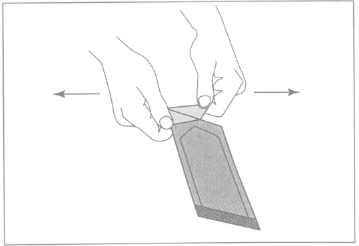
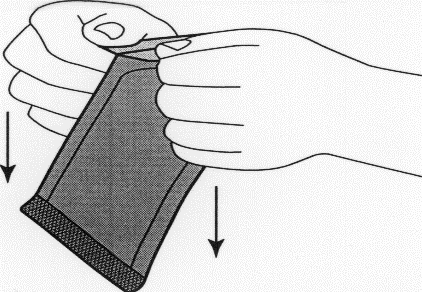
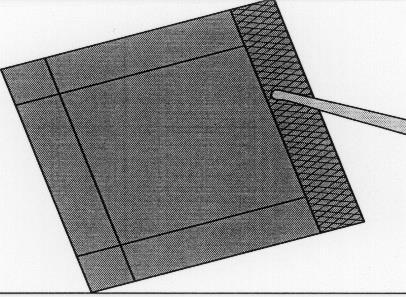
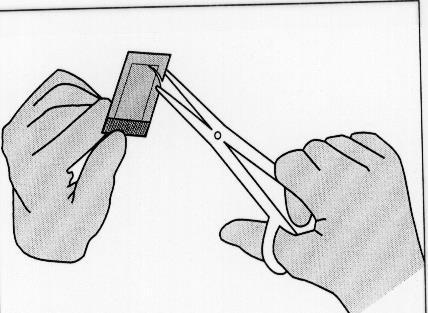
Instructions for opening the pouches containing the implant:
Illustration 1:To open the outer pouch, locate
the folded corner and pull slowly with an outward
motion.
Illustration 2:Do not pull downwards avoiding rolling
your knuckles on the pouch, as such pressure on the implant
may cause it to break.
Illustration 3:Extract the inner pouch using
surgical forceps and pulling upwards.
Illustration 4:To open the inner pouch, grasp it
gently and cut it in a semicircle around the implant.
Illustration 5:To extract the implant, grasp it
gently with surgical forceps
and place it directly into the resection cavity.
However, if the implant is dropped, it must be disposed of properly.
After performing tumor resection, confirming the tumor pathology, and achieving hemostasis,
up to eight implants can be placed to cover as much of the
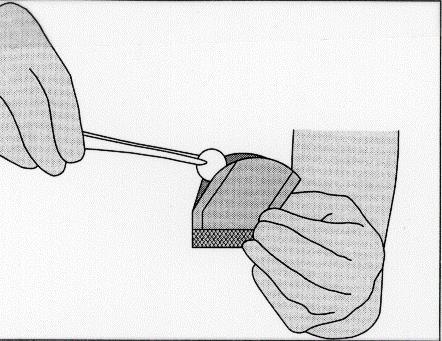
resection cavity as possible. Slight overlap of the implants is acceptable. Implants
divided in half can be used, but implants divided into more than two parts must be discarded in designated containers
for biological hazard waste.
Regenerated oxidized cellulose can be placed on the implants to secure them to the surface of
the cavity. After placing the implants, the resection cavity must be irrigated and the dura mater
must be closed tightly.
Any unused or discarded product must be disposed of in accordance with local requirements for
biological hazard waste.
7. MARKETING AUTHORISATION HOLDER
Clinigen Healthcare B.V.
Schiphol Boulevard 359
WTC Schiphol Airport, D Tower 11th floor
1118BJ Schiphol
Netherlands
8. MARKETING AUTHORISATION NUMBER(S)
AIC n. 034709016
9. DATE OF FIRST AUTHORISATION/RENEWAL OF THE AUTHORISATION
Date of first authorisation: 28/05/1999
Date of last renewal: 10/06/2008
10. DATE OF TEXT REVISION

Nie jesteś pewien, czy ten lek jest odpowiedni dla ciebie?
Omów swoje objawy i leczenie z lekarzem online.

Zacząłeś przyjmować lek i masz pytania?
Omów swoje objawy i leczenie z lekarzem online.

- Kraj rejestracji
- Postać farmaceutycznaImplant, 7.7 MG
- Kod ATCL01AD01
- Substancja czynna
- Wymaga receptyTak
- Producent
- Te treści mają charakter wyłącznie informacyjny i nie zastępują konsultacji lekarskiej.
- Zamienniki LYADELPostać farmaceutyczna: Powder and solvent for concentrate for infusion solution, 100 MGSubstancja czynna: carmustineProducent: TILLOMED ITALIA SRLWymaga receptyPostać farmaceutyczna: Powder and solvent for concentrate for infusion solution, 100 MGSubstancja czynna: carmustineProducent: Eugia Pharma (Malta) LimitedWymaga receptyPostać farmaceutyczna: Powder and solvent for intravenous infusion solution, 100 MGSubstancja czynna: carmustineWymaga recepty
Odpowiedniki LYADEL w innych krajach
Leki z tą samą substancją czynną dostępne w innych krajach.
Odpowiednik LYADEL w Hiszpania
Odpowiednik LYADEL w Polska
Odpowiednik LYADEL w Ukraina
Uzyskaj receptę na LYADEL online
Wypełnij 2-minutowy formularz
Opisz swoje objawy, historię choroby i lek, o który prosisz.
Wybierz lekarza lub pozwól nam przydzielić
Wybierz specjalistę lub dopasujemy Cię do najbliższego dostępnego lekarza.
Lekarz analizuje Twój przypadek
Zazwyczaj w ciągu 30 minut. Może zadawać dodatkowe pytania przez czat.
Odbierz w dowolnej aptece
Recepta elektroniczna wysłana na Twój e-mail — ważna w całej Polsce.
Często zadawane pytania
LYADEL wymaga recepty w Włochy. Możesz skonsultować się z lekarzem online, aby sprawdzić, czy ten lek może być odpowiedni w Twojej sytuacji.
Substancją czynną w LYADEL jest carmustine. Informacja ta pomaga rozpoznać leki o tym samym składzie, ale pod różnymi nazwami handlowymi.
LYADEL jest produkowany przez CLINIGEN HEALTHCARE B.V.. Nazwy handlowe i opakowania mogą się różnić w zależności od dystrybutora.
Lekarze, tacy jak Lekarze rodzinni, Psychiatrzy, Dermatolodzy, Kardiolodzy, Endokrynolodzy, Gastroenterolodzy, Pulmonolodzy, Nefrolodzy, Reumatolodzy, Hematolodzy, Zakaźnicy, Alergolodzy, Geriatrzy, Pediatrzy, Onkolodzy, mogą ocenić, czy stosowanie LYADEL jest odpowiednie w Twoim przypadku, w zależności od sytuacji klinicznej i lokalnych przepisów. Możesz umówić konsultację online, aby omówić objawy i możliwe dalsze kroki.
Polska posiada dobrze rozwiniętą infrastrukturę ochrony zdrowia w dużych miastach, takich jak Warszawa, Kraków, Wrocław i Gdańsk. Apteki są łatwo dostępne i działają zgodnie z obowiązującymi przepisami, zapewniając dostęp do leków na receptę.
Możesz kupić LYADEL w Warszawie, Krakowie, Wrocławiu lub Gdańsku w każdej aptece, posiadając ważną receptę.
Aby uzyskać receptę, możesz skorzystać z Oladoctor:
Inne leki zawierające tę samą substancję czynną (carmustine) to m.in. BIKNU, KARMUSTINA AUROBINDO, KARMUSTINA MEDAK. Mogą one różnić się nazwą handlową lub postacią, ale zawierają ten sam składnik terapeutyczny. Przed zmianą lub rozpoczęciem nowego leku skonsultuj się z lekarzem.
