



DOCETAXEL 80 mg /4 Ml Koncentrat Do Sporządzania Roztworu Do Infuzji

Ocena recepty online
Lekarz przeanalizuje Twój przypadek i zdecyduje, czy wystawienie recepty jest medycznie uzasadnione.

Porozmawiaj z lekarzem o tym leku
Omów swoje objawy i opcje leczenia podczas szybkiej konsultacji online.



Jak stosować DOKETAXEL KABI
Treść ulotki
- DOCETAXEL KABI 20 mg/ 1 ml concentrate for solution for infusion
- DOCETAXEL KABI should not be administered during pregnancy unless clearly
- DOCETAXEL KABI 80mg/ 4 ml concentrate for solution for infusion
- DOCETAXEL KABI 120mg/ 6 ml concentrate for solution for infusion
- DOCETAXEL KABI 160mg/ 8 ml concentrate for infusion solution
- DOCETAXEL KABI 180 mg/ 9 ml concentrate for solution for infusion
DOCETAXEL KABI 20 mg/ 1 ml concentrate for solution for infusion
docetaxel
Read this leaflet carefully before you use this medicine, as it contains important information for you.
- Keep this leaflet. You may need to read it again.
- If you have any questions, ask your doctor, hospital pharmacist or nurse.
- If you get any side effects, even those not listed in this leaflet, tell your doctor, hospital pharmacist or nurse. See section 4.
Contents of this leaflet:
- 1. What DOCETAXEL KABI is and what it is used for
- 2. What you need to know before you use DOCETAXEL KABI
- 3. How to use DOCETAXEL KABI
- 4. Possible side effects
- 5. How to store DOCETAXEL KABI
- 6. Contents of the pack and other information
1 What DOCETAXEL KABI is and what it is used for
The name of this medicine is DOCETAXEL KABI. The active ingredient is docetaxel.
Docetaxel is a substance derived from the needles of the yew tree and belongs to the group of anti-cancer drugs called taxanes.
DOCETAXEL KABI has been prescribed by your doctor for the treatment of breast cancer, particular forms of lung cancer (non-small cell lung cancer), prostate cancer, adenocarcinoma of the stomach or cancer of the head and neck:
- for the treatment of advanced breast cancer, DOCETAXEL KABI can be administered alone or in combination with doxorubicin, or trastuzumab, or capecitabine.
- for the treatment of early breast cancer with or without lymph node involvement, DOCETAXEL KABI can be administered in combination with doxorubicin and cyclophosphamide.
- for the treatment of lung cancer, DOCETAXEL KABI can be administered alone or in combination with cisplatin.
- for the treatment of prostate cancer, DOCETAXEL KABI is administered in combination with prednisone or prednisolone.
- for the treatment of metastatic stomach adenocarcinoma, DOCETAXEL KABI is administered in combination with cisplatin and 5-fluorouracil.
- for the treatment of head and neck cancer, DOCETAXEL KABI is administered in combination with cisplatin and 5-fluorouracil.
2. What you need to know before using DOCETAXEL KABI
Do not use DOCETAXEL KABI:
- if you are allergic (hypersensitive) to docetaxel or any of the excipients of DOCETAXEL KABI (listed in section 6); if your white blood cell count is too low;
- if you suffer from severe liver disorders.
Warnings and precautions
Before each treatment with DOCETAXEL KABI, blood tests will be performed to determine if your blood cells are numerous enough and if your liver function is sufficient to receive DOCETAXEL KABI.
If your white blood cell count is altered, you may also experience fever or infections.
Immediately inform your doctor, hospital pharmacist or nurse if you have abdominal pain or tenderness, diarrhea, rectal bleeding, blood in your stool or fever. These symptoms may be the first signs of severe gastrointestinal toxicity, which can be fatal. Your doctor will take care of it immediately.
Inform your doctor, hospital pharmacist or nurse if you have vision problems. If you experience vision problems, especially blurred vision, you should have your eyes and vision checked immediately.
Inform your doctor, hospital pharmacist or nurse if you have had an allergic reaction to a previous paclitaxel therapy. Inform your doctor, hospital pharmacist or nurse if you have heart problems.
If you develop acute lung problems or if existing symptoms worsen (fever, shortness of breath or cough), immediately inform your doctor, hospital pharmacist or nurse. Your doctor may immediately discontinue treatment.
You will be asked to take preventive treatment with oral corticosteroids such as dexamethasone one day before the administration of DOCETAXEL KABI and continue for one or two days afterwards in order to reduce some undesirable effects that may occur following infusion of DOCETAXEL KABI, in particular allergic reactions and fluid retention (swelling of the hands, feet, legs, or weight gain).
During treatment, you may need medications to maintain the number of blood cells.
Serious skin problems such as Stevens-Johnson Syndrome (SJS), Toxic Epidermal Necrolysis (TEN) and Acute Generalized Exanthematous Pustulosis (AGEP) have been reported with DOCETAXEL KABI.
- The symptoms of SJS/TEN may include blisters, peeling or bleeding of any part of the skin (including lips, eyes, mouth, nose, genitals, hands or feet) with or without redness. You may also have flu-like symptoms such as fever, chills or muscle pain.
- The symptoms of AGEP may include a widespread, scaly and reddened rash with bumps under the skin swollen (including skin folds, trunk and upper extremities) and blisters accompanied by fever. If you develop severe skin reactions or any of the reactions listed above, contact your doctor or healthcare professional immediately.
Before starting DOCETAXEL KABI, inform your doctor, hospital pharmacist or nurse if you have kidney problems or high levels of uric acid in your blood.
DOCETAXEL KABI contains alcohol. Inform your doctor if you suffer from alcohol dependence, epilepsy or liver failure. See also the section “DOCETAXEL KABI contains ethanol (alcohol)” below.
Other medicines and DOCETAXEL KABI:
The amount of alcohol in this medicine may alter the effects of other medicines. Inform your doctor or pharmacist if you are taking other medicines.
Inform your doctor or hospital pharmacist if you are taking or have recently taken any other medicines, including those without a prescription. This is because DOCETAXEL KABI or other medicines may not work as expected and you may be more likely to experience undesirable effects.
Pregnancy, breastfeeding and fertility
Ask your doctor for advice before taking any medicine.
DOCETAXEL KABI should not be administered during pregnancy unless clearly
indicated by the doctor.
Do not become pregnant during treatment and for 2 months after the end of treatment with
this medicine. You must use adequate contraceptive measures during treatment and for 2 months
after the end of treatment because DOCETAXEL KABI may be dangerous for the
child. If you become pregnant during treatment, inform your doctor immediately.
Do not breastfeed during therapy with DOCETAXEL KABI..
If you are a man undergoing treatment with DOCETAXEL KABI, do not father a child and must use adequate
contraceptive measures during treatment and for 4 months after the end of treatment with
this medicinal product. It is recommended to inquire about sperm preservation before
treatment as docetaxel may alter male fertility.
Driving and operating machinery:
The amount of alcohol in this medicine may impair your ability to drive or operate
machinery.
It may have undesirable effects with this medicine that may impair your ability to
drive, use equipment or machinery (see section 4 Possible side effects). If this
should occur, do not drive, and do not use any equipment or machinery before discussing it with
your doctor, nurse or hospital pharmacist.
DOCETAXEL KABI contains ethanol (alcohol).
This medicine contains 395 mg of alcohol (ethanol) in each ml, which is equivalent to 39.5% v/v.
The amount in 9 ml of dose is equivalent to 88.9 ml of beer or 35.6 ml of wine.
The alcohol contained in this preparation may have an influence on children. These effects may
include feeling sleepy and mood swings. It may also alter the ability to concentrate and to
engage in physical activity.
If you suffer from epilepsy or have liver problems, talk to your doctor or pharmacist before taking
this medicine.
If you have an alcohol dependence, talk to your doctor or pharmacist before taking this
medicine.
3. How to use DOCETAXEL KABI
DOCETAXEL KABI will be administered to you by a healthcare professional.
Usual dosage:
The dosage will depend on your weight and your general health condition. The doctor will calculate the body
surface area in square meters (m²) and determine the dose you will receive.
Method and route of administration:
DOCETAXEL KABI will be administered via intravenous infusion (intravenous use).
The infusion will last approximately 1 hour and will take place in hospital.
Frequency of administration:
The infusion will normally be administered once every 3 weeks.
The doctor may vary the dose and frequency of administration based on blood tests,
your general condition and your response to DOCETAXEL KABI. In particular, inform the doctor
in case of diarrhea, inflammation of the mouth, numbness, tingling, fever, and show him
the results of the blood tests. This information will allow him to decide if a dose reduction is necessary. If you have any doubts about the use of this medicine, consult your doctor or
hospital pharmacist.
4. Possible side effects
Like all medicines, this medicine can cause side effects, although not everyone will experience them.
Your doctor will discuss this with you and explain the potential risks and benefits of treatment.
The adverse reactions, most commonly reported, of DOCETAXEL KABI alone are: decrease
in the number of red blood cells or white blood cells, hair loss, nausea, vomiting, inflammation in the mouth,
diarrhea and fatigue.
If you are administered DOCETAXEL KABI in combination with other chemotherapeutic medicines, the
severity of the side effects may increase.
During infusion in hospital, the following allergic reactions may occur (may
affect more than 1 in 10 people):
- hot flashes, skin reactions, itching
- feeling of tightness in the chest, difficulty breathing
- fever or chills
- back pain
- low blood pressure More serious reactions may occur. If you have had a previous hypersensitivity reaction to paclitaxel, you may also develop a hypersensitivity reaction to docetaxel, which may be more severe.
During treatment, your condition will be carefully monitored by hospital staff.
Immediately inform hospital staff if you notice the appearance of any of these
effects.
Within the time frame between two infusions of DOCETAXEL KABI, the
side effects listed below may occur, and the frequency may vary depending on the combination medicines
you are taking:
Very common(may affect more than 1 in 10 people):
- infections, decrease in the number of red blood cells (anemia) or white blood cells (these are important in fighting infections) and platelets
- fever: in this case you should inform your doctor immediately
- allergic reactions as described above
- loss of appetite (anorexia)
- insomnia
- sensation of numbness or tingling or pain in the joints or muscles
- headache
- altered sense of taste
- inflammation of the eye or increased tearing of the eye
- swelling caused by insufficient lymphatic drainage
- difficulty breathing
- mucus from the nose; inflammation of the throat and nose; cough
- nosebleeds
- inflammation in the mouth
- stomach disorders including nausea, vomiting and diarrhea, constipation
- abdominal pain
- indigestion
- hair loss: in most cases hair growth returns to normal. In some cases (frequency unknown) permanent hair loss has been observed
- redness and swelling of the palms of the hands or soles of the feet, which may cause peeling of the skin (this can also happen on arms, face or body)
- change in nail color, which may detach
- muscle pain; back pain or bone pain
- changes or absence of the menstrual period
- swelling of hands, feet, legs
- fatigue or flu-like symptoms
- weight gain or loss
- upper respiratory tract infection
Common(may affect up to 1 in 10 people):
- oral candidiasis
- dehydration
- dizziness
- hearing impairment
- decreased blood pressure; irregular or rapid heartbeat
- heart failure
- esophagitis
- dry mouth
- difficulty or pain in swallowing
- bleeding
- increased liver enzymes (which is why it is necessary to have regular blood tests)
- increased blood sugar levels (diabetes)
- reduction of potassium, calcium and/or phosphate in the blood
Uncommon(may affect up to 1 in 100 people):
- fainting
- at the injection site, skin reactions, phlebitis (inflammation of the veins) or swelling
- formation of blood clots
- acute myeloid leukemia and myelodysplastic syndrome (types of blood cancer) may occur in patients treated with docetaxel, together with some other anticancer treatments
Rare(may affect up to 1 in 1,000 people):
- inflammation of the colon, small intestine, which may be fatal (frequency unknown); intestinal perforation
Frequency not known (cannot be estimated from available data):
- interstitial lung diseases (lung inflammation that can cause cough and difficulty breathing. Lung inflammation can also develop when treatment with docetaxel is administered in conjunction with radiotherapy)
- pneumonia (lung infections)
- pulmonary fibrosis (scarring and thickening in the lungs that causes shortness of breath)
- blurred vision due to swelling of the retina inside the eye (cystoid macular edema)
- reduction of sodium, and/or magnesium in the blood (electrolyte imbalances).
- ventricular arrhythmia or ventricular tachycardia (manifests as rapid or irregular heartbeats, severe shortness of breath, dizziness and/or fainting). Some of these symptoms may be serious. If this happens, you should inform a doctor immediately
- reactions at the injection site at the site of a previous reaction.
- non-Hodgkin's lymphoma (a cancer that affects the immune system) and other cancers, may occur in patients treated with docetaxel, together with some other anticancer treatments
- Stevens-Johnson Syndrome (SJS) and Toxic Epidermal Necrolysis (TEN) (blisters, peeling or bleeding of any part of the skin (including lips, eyes, mouth, nose, genitals, hands or feet) with or without redness. You may also have flu-like symptoms such as fever, chills or muscle pain)
- Acute Generalized Exanthematous Pustulosis (AGEP) (generalized scaly and reddened rash with bumps under the skin swollen (including skin folds, trunk and upper extremities) and blisters accompanied by fever).
- Tumor lysis syndrome is a serious condition revealed by changes in blood tests such as increased levels of uric acid, potassium, phosphorus and decreased levels of calcium; and causes symptoms such as seizures, kidney failure (reduced amount of urine or dark urine) and heart rhythm disturbances. In these cases, you should immediately inform your doctor.
- Myositis (inflammation of the muscles - heat, redness and swelling - that produces muscle pain and weakness).
Reporting of side effects
If you experience any side effects, including those not listed in this leaflet, tell
your doctor, hospital pharmacist or nurse. You can also report side effects directly
through the national reporting system at
https://www.aifa.gov.it/content/segnalazioni-reazioni-avverse
. By reporting side effects you can help provide more information on the safety
of this medicine
5. How to store DOCETAXEL KABI
Keep this medicine out of the sight and reach of children.
Do not use this medicine after the expiry date stated on the packaging and on the label of the
vial after Exp. The expiry date refers to the last day of that month.
Do not store at a temperature above 25°C.
Store the medicine in the original packaging to protect it from direct light.
Use the vial immediately after opening. If not used
immediately, the in-use storage times and conditions are the responsibility of the
user.
From a microbiological point of view, reconstitution/dilution must occur under controlled and aseptic conditions.
Use the medicine immediately after it has been added to the infusion bag. If not
used immediately, the in-use storage times and conditions are the responsibility of the user and should normally not be maintained for more than 6 hours at below 25°C including
the one-hour infusion.
Docetaxel solution for infusion is supersaturated, therefore it may crystallize over time. If crystals form, the solution should no longer be used and must be discarded.
Do not dispose of any medicine in wastewater. Ask your pharmacist how to dispose of medicines
that you no longer use. These measures will help protect the environment.
6. Package Contents and Other Information
What DOCETAXEL KABI contains
- The active ingredient is docetaxel anhydrous. Each ml of concentrate for solution for infusion contains 20 mg of docetaxel.
- The excipients are polysorbate 80, anhydrous ethanol (see section 2) and citric acid (to adjust the pH).
Description of the appearance of DOCETAXEL KABI and contents of the pack:
DOCETAXEL KABI concentrate for solution for infusion is a clear solution from colorless to
pale yellow.
Clear colorless glass vial (Type I) of 6 ml with a flurotec rubber closure and a
blue aluminum crimp cap containing 1 ml of concentrate.
Each pack contains one 1 ml vial of concentrate (20 mg of docetaxel)).
Marketing Authorisation Holder:
Fresenius Kabi Deutschland GmbH
Else-Kröner-Straße 1,
61352 Bad Homburg v.d.Höhe
Germany
Manufacturer
Fresenius Kabi Deutschland GmbH
Pfingstweide 53
61169 Friedberg
Germany
For further information on this medicinal product, contact the local representative of the Marketing
Authorisation Holder.
This leaflet was last updated in: (MM/YYYY)
The following information is intended exclusively for healthcare professionals.
GUIDE TO THE PREPARATION OF DOCETAXEL 20 mg/1ml CONCENTRATE FOR
SOLUTION FOR INFUSION
It is important that you read the entire contents of this guide before preparing the infusion solution of
DOCETAXEL KABI.
Recommendations for safe handling
Docetaxel is an antineoplastic drug and, as with other potentially toxic products, caution should be
exercised when handling and preparing its solutions. The use of gloves is recommended.
If DOCETAXEL KABI in concentrated form or infusion solution should come into contact
with the skin, wash immediately and thoroughly with water and soap. If it should come into contact
with mucous membranes, wash immediately and thoroughly with water.
Preparation for intravenous administration
Preparation of the infusion solution
Do not use other medicinal products containing docetaxel consisting of 2 vials (concentrate
and solvent) with this medicinal product (Docetaxel Kabi 20 mg/ 1ml concentrate for solution for
infusion which contains only 1 vial).
DOCETAXEL KABI 20 mg/ 1ml concentrate for solution for infusion does NOT require
dilution with a solvent first and is ready to be added to the infusion solution.
- Each vial is for single use only and must be used immediately after opening. If not used immediately, the in-use storage times and conditions are the responsibility of the user. More than one vial of concentrate for intravenous infusion may be required to obtain the dose required for the patient. For example, a dose of 140 mg of docetaxel requires 7 ml of docetaxel concentrate for solution.
- Aseptically draw up the required amount of concentrate for solution for infusion with a graduated syringe.
In each vial of DOCETAXEL KABI 20 mg/ 1ml the concentration of docetaxel is 20
mg/ml.
- Inject in a single injection into a 250 ml bag or bottle containing 5% glucose solution or 9 mg/ml (0.9%) sodium chloride solution for infusion. If a dose greater than 190 mg of docetaxel is required, use a larger volume of solvent so as not to exceed a concentration of 0.74 mg/ml of docetaxel.
- Mix the bag or bottle manually using a rotating motion.
- From a microbiological point of view, reconstitution/dilution must take place in controlled and aseptic conditions and the infusion solution must be used immediately. If not used immediately, the in-use storage times and conditions are the responsibility of the user. Once added as recommended to the infusion bag, the docetaxel infusion solution, if stored at a temperature below 25°C, is stable for 6 hours. It must be used within 6 hours (including the approximately 1 hour required for intravenous infusion). The docetaxel infusion solution is supersaturated, therefore, it may crystallize over time. If crystals appear, the solution must no longer be used and must be discarded.
- As with all products for parenteral use, the infusion solution must be visually inspected before use, solutions containing precipitates must be discarded.
Disposal
All materials that have been used for dilution and administration must be disposed of
in accordance with standard procedures. Do not dispose of any medicines via wastewater. Ask your
pharmacist how to dispose of medicines you no longer use. This will help protect the environment.

Nie jesteś pewien, czy ten lek jest odpowiedni dla ciebie?
Omów swoje objawy i leczenie z lekarzem online.
DOCETAXEL KABI 80mg/ 4 ml concentrate for solution for infusion
docetaxel
Read this leaflet carefully before you use this medicine as it contains
important information for you.
- Keep this leaflet. You may need to read it again.
- If you have any questions, ask your doctor, hospital pharmacist or nurse.
- If you get any side effects, even those not listed in this leaflet, tell your doctor, hospital pharmacist or nurse. See section 4.
Contents of this leaflet:
- 1. What DOCETAXEL KABI is and what it is used for
- 2. What you need to know before you use DOCETAXEL KABI
- 3. How to use DOCETAXEL KABI
- 4. Possible side effects
- 5. How to store DOCETAXEL KABI
- 6. Contents of the pack and other information
1 What DOCETAXEL KABI is and what it is used for
The name of this medicine is DOCETAXEL KABI. The active substance is docetaxel.
Docetaxel is a substance derived from the needles of the yew tree and belongs to the group
of anti-cancer drugs called taxanes.
DOCETAXEL KABI has been prescribed by your doctor for the treatment of breast cancer,
specific forms of lung cancer (non-small cell lung cancer), prostate cancer, gastric adenocarcinoma or head and neck cancer:
- for the treatment of advanced breast cancer, DOCETAXEL KABI can be given alone or in combination with doxorubicin, or trastuzumab, or capecitabine.
- for the treatment of early breast cancer with or without lymph node involvement, DOCETAXEL KABI can be given in combination with doxorubicin and cyclophosphamide.
- for the treatment of lung cancer, DOCETAXEL KABI can be given alone or in combination with cisplatin.
- for the treatment of prostate cancer, DOCETAXEL KABI is given in combination with prednisone or prednisolone.
- for the treatment of metastatic gastric adenocarcinoma, DOCETAXEL KABI is given in combination with cisplatin and 5-fluorouracil.
- for the treatment of head and neck cancer, DOCETAXEL KABI is given in combination with cisplatin and 5-fluorouracil.
2. What you need to know before you use DOCETAXEL KABI
Do not use DOCETAXEL KABI:
if you are allergic (hypersensitive) to docetaxel or any of the excipients of DOCETAXEL KABI
(listed in section 6);
- if your white blood cell count is too low;
- if you suffer from severe liver disorders.
Warnings and precautions
Before each treatment with DOCETAXEL KABI, blood tests will be performed to determine if
your blood cells are numerous enough and if your liver function is sufficient to receive
DOCETAXEL KABI.
If your white blood cell count is altered, you may also experience fever or infections.
Immediately inform your doctor, hospital pharmacist or nurse if you have abdominal pain or
tenderness, diarrhea, rectal bleeding, blood in your stool or fever. These symptoms
may be the first signs of severe gastrointestinal toxicity, which can be fatal. Your
doctor will take care of it immediately.
Inform your doctor, hospital pharmacist or nurse if you have vision problems. If you experience
vision problems, especially blurred vision, you should have your eyes and vision checked immediately.
Inform your doctor, hospital pharmacist or nurse if you have had an allergic reaction to a
previous paclitaxel therapy.
Inform your doctor, hospital pharmacist or nurse if you have heart problems.
If you develop acute lung problems or if existing symptoms worsen (fever,
shortness of breath or cough), immediately inform your doctor, hospital pharmacist or nurse. Your
doctor may immediately stop the treatment.
You will be asked to take preventative treatment with corticosteroids orally, such as
dexamethasone, one day before the administration of DOCETAXEL KABI and continue for one
or two days after, in order to reduce some undesirable effects that may occur following
infusion of DOCETAXEL KABI, in particular allergic reactions and fluid retention (swelling
of the hands, feet, legs, or weight gain).
During treatment, you may need medications to maintain your blood cell count.
Serious skin problems such as Stevens-Johnson Syndrome (SJS), Toxic Epidermal Necrolysis (TEN) and Acute Generalized Exanthematous Pustulosis (AGEP)
have been reported with DOCETAXEL KABI.
- The symptoms of SJS/TEN may include blisters, peeling or bleeding of any part of the skin (including lips, eyes, mouth, nose, genitals, hands or feet) with or without redness. You may also have flu-like symptoms, such as fever, chills or muscle pain.
- The symptoms of AGEP may include a widespread, scaly and reddened rash with bumps under the skin swelling (including skin folds, trunk and upper extremities) and blisters accompanied by fever. If you develop severe skin reactions or any of the reactions listed above, contact your doctor or healthcare professional immediately.
Before starting DOCETAXEL KABI, inform your doctor, hospital pharmacist or nurse if
you have kidney problems or high levels of uric acid in your blood.
DOCETAXEL KABI contains alcohol. Inform your doctor if you suffer from alcohol dependence, or
epilepsy or liver failure. See also the section “DOCETAXEL KABI contains
ethanol (alcohol)” below.
Other medicines and DOCETAXEL KABI:
The amount of alcohol in this medicine may alter the effects of other medicines. Inform your doctor or
pharmacist if you are taking other medicines.
Inform your doctor or hospital pharmacist if you are taking or have recently taken any
other medicines, including those available without a prescription. This is because DOCETAXEL KABI or
other medicines may not work as expected and you may be more likely to
experience undesirable effects.
Pregnancy, breastfeeding and fertility
Ask your doctor for advice before taking any medicine.
DOCETAXEL KABI must NOT be administered during pregnancy unless clearly
indicated by your doctor.
You must not become pregnant during treatment and for 2 months after the end of treatment with
this medicine. You must use adequate contraceptive measures during treatment and for 2 months
after the end of treatment because DOCETAXEL KABI may be dangerous to the baby.
If you become pregnant during treatment, inform your doctor immediately.
You must not breastfeed during therapy with DOCETAXEL KABI..
If you are a man undergoing treatment with DOCETAXEL KABI, you must not father a child and must adopt
adequate contraceptive measures during treatment and for 4 months after the end of treatment
with this medicine. It is recommended that you inquire about sperm preservation before
treatment, as docetaxel may alter male fertility.
Driving and using machines:
The amount of alcohol in this medicine may impair your ability to drive or operate
machinery.
You may experience side effects with this medicine that may impair your ability
to drive, operate equipment or machinery (see section 4 Possible side effects).
If this happens, do not drive, and do not use any equipment or machinery before
discussing it with your doctor, nurse or hospital pharmacist.
DOCETAXEL KABI contains ethanol (alcohol).
This medicine contains 1.58 g of alcohol (ethanol) in each 4 ml, which is equivalent to 39.5% v/v.
The amount in 9 ml of dose is equivalent to 88.9 ml of beer or 35.6 ml of wine.
The alcohol contained in this preparation may have an influence on children. These effects may
include feeling sleepy and mood swings. It may also impair your ability to concentrate and
perform physical activity.
If you have epilepsy or liver problems, talk to your doctor or pharmacist before taking
this medicine.
If you have an alcohol dependence, talk to your doctor or pharmacist before taking this
medicine.
3. How to use DOCETAXEL KABI
DOCETAXEL KABI will be administered to you by a healthcare professional.
Usual dosage:
The dosage will depend on your weight and your general health condition. The doctor will calculate the body
surface area in square meters (m²) and determine the dose you will receive.
Method and route of administration:
DOCETAXEL KABI will be administered to you via intravenous infusion (intravenous use).
The infusion will last approximately 1 hour and will take place in the hospital.
Frequency of administration:
The infusion will normally be administered to you once every 3 weeks.
The doctor may vary the dose and frequency of administration based on blood tests,
your general condition and your response to DOCETAXEL KABI. In particular, inform the doctor
in case of diarrhea, mouth inflammation, numbness, tingling, fever, and show him
the results of the blood tests. This information will allow him to decide if a dose reduction is necessary. If you have any doubts about the use of this medicine, consult your doctor or
hospital pharmacist.
4. Possible side effects
Like all medicines, this medicine can cause side effects, although not everyone will experience them.
Your doctor will discuss this with you and explain the potential risks and benefits of treatment.
The adverse reactions, most commonly reported, of DOCETAXEL KABI alone are: decrease
in the number of red blood cells or white blood cells, hair loss, nausea, vomiting, inflammation in the mouth,
diarrhea and fatigue.
If you are given DOCETAXEL KABI in combination with other chemotherapeutic medicines, the
severity of the side effects may increase.
During the infusion in hospital, the following allergic reactions may occur (may
affect more than 1 in 10 people):
- hot flashes, skin reactions, itching
- feeling of tightness in the chest, difficulty breathing
- fever or chills
- back pain
- low blood pressure More serious reactions may occur. If you have had a previous hypersensitivity reaction to paclitaxel, you may also develop a hypersensitivity reaction to docetaxel, which may be more severe.
During treatment, your condition will be carefully monitored by hospital staff.
Immediately inform hospital staff if you notice the appearance of any of these
effects.
In the time interval between two infusions of DOCETAXEL KABI, the following side effects may occur,
and the frequency may vary depending on the combination medicines
you are taking:
Very common(may affect more than 1 in 10 people):
- infections, decrease in the number of red blood cells (anemia) or white blood cells (these latter
are important in fighting infections) and platelets
- fever: in this case you should inform your doctor immediately
- allergic reactions as described above
- loss of appetite (anorexia)
- insomnia
- sensation of numbness or tingling or pain in the joints or muscles
- headache
- altered sense of taste
- inflammation of the eye or increased tearing of the eye
- swelling caused by insufficient lymphatic drainage
- difficulty breathing
- mucus from the nose; inflammation of the throat and nose; cough
- nosebleeds
- inflammations in the mouth
- stomach disorders including nausea, vomiting and diarrhea, constipation
- abdominal pain
- indigestion
- hair loss: in most cases, hair growth returns to normal. In some cases (frequency not known) permanent hair loss has been observed
- redness and swelling of the palms of the hands or soles of the feet, which may cause peeling
- of the skin (this can also happen on arms, face or body)
- change in the color of the nails, which may detach
- muscle pain; back pain or bone pain
- changes or absence of the menstrual period
- swelling of hands, feet, legs
- fatigue or flu-like symptoms
- weight gain or loss
- upper respiratory tract infection
Common(may affect up to 1 in 10 people):
- oral candidiasis
- dehydration
- dizziness
- hearing impairment
- decreased blood pressure; irregular or rapid heartbeat
- heart failure
- esophagitis
- dry mouth
- difficulty or pain in swallowing
- bleeding
- increased liver enzymes (which leads to the need for regular blood tests)
- increased blood sugar levels (diabetes)
- reduction of potassium, calcium and/or phosphate in the blood
Uncommon(may affect up to 1 in 100 people):
- fainting
- at the injection site skin reactions, phlebitis (inflammation of the veins) or swelling
- formation of blood clots
- acute myeloid leukemia and myelodysplastic syndrome (types of blood cancer) can occur in patients treated with docetaxel together with some other anticancer treatments
Rare(may affect up to 1 in 1,000 people):
- inflammation of the colon, small intestine, which can be fatal (frequency not known); intestinal perforation.
Frequency not known (cannot be estimated from the available data)
- interstitial lung diseases (lung inflammation that can cause cough and difficulty breathing. Lung inflammation can also develop when treatment with docetaxel is administered in conjunction with radiotherapy)
- pneumonia (lung infections)
- pulmonary fibrosis (scarring and thickening in the lungs that causes shortness of breath)
- blurred vision due to swelling of the retina inside the eye (cystoid macular edema)
- reduction of sodium and/or magnesium in the blood (electrolyte imbalance).
- ventricular arrhythmia or ventricular tachycardia (manifests as rapid or irregular heartbeats, severe shortness of breath, dizziness and/or fainting). Some of these symptoms may be serious. If this happens, you should inform a doctor immediately
- reactions at the injection site at the site of a previous reaction.
- non-Hodgkin's lymphoma (a cancer that affects the immune system) and other cancers can occur in patients treated with docetaxel together with some other anticancer treatments.
- Stevens-Johnson Syndrome (SJS) and Toxic Epidermal Necrolysis (TEN) (blisters, peeling or bleeding of any part of the skin (including lips, eyes, mouth, nose, genitals, hands or feet) with or without redness. At the same time, you may also have flu-like symptoms such as fever, chills or muscle pain)
- Acute Generalized Exanthematous Pustulosis (AGEP) (generalized scaly and reddened rash with bumps under the skin swollen (including skin folds, trunk and upper extremities) and blisters accompanied by fever).
- Tumor lysis syndrome is a serious condition revealed by changes in blood tests such as increased levels of uric acid, potassium, phosphorus and reduced levels of calcium; and causes symptoms such as convulsions, kidney failure (reduced amount of urine or dark urine) and heart rhythm disturbances. In these cases, you should immediately inform your doctor. Myositis (inflammation of the muscles - heat, redness and swelling - that produces muscle pain and weakness). Reporting of side effectsIf you experience any side effects, including those not listed in this leaflet, tell your doctor, hospital pharmacist or nurse. You can also report side effects directly through the national reporting system at https://www.aifa.gov.it/content/segnalazioni-reazioni-avverse. . By reporting side effects you can help provide more information on the safety of this medicine
5. How to store DOCETAXEL KABI
Keep this medicine out of the sight and reach of children.
Do not use this medicine after the expiry date stated on the packaging and on the label of the
vial after Exp. The expiry date refers to the last day of that month.
Do not store at a temperature above 25°C.
Store the medicine in the original packaging to protect it from direct light.
Use the vial immediately after opening. If not used
immediately, the in-use storage times and conditions are the responsibility of
the user.
From a microbiological point of view, reconstitution/dilution must occur under controlled and aseptic conditions.
Use the medicine immediately after it has been added to the infusion bag. If not
used immediately, the in-use storage times and conditions are the responsibility of
the user and should normally not be maintained for more than 6 hours at below 25°C including
the one-hour infusion.
Docetaxel solution for infusion is supersaturated, therefore it may crystallize over time. If crystals form, the solution should no longer be used and must be discarded.
Do not dispose of any medicine in wastewater. Ask your pharmacist how to dispose of medicines
that you no longer use. These measures will help protect the environment.
6. Package Contents and Other Information
What DOCETAXEL KABI contains
- The active ingredient is docetaxel anhydrous. Each ml of concentrate for solution for infusion contains 20 mg of docetaxel.
- The excipients are polysorbate 80, anhydrous ethanol (see section 2) and citric acid (to adjust the pH).
Description of the appearance of DOCETAXEL KABI and contents of the pack:
DOCETAXEL KABI concentrate for solution for infusion is a clear solution from colorless to
pale yellow.
Clear colorless glass vial (Type I) of 6 ml with a flurotec rubber closure and a
blue aluminum crimp cap containing 4ml of concentrate.
Each pack contains one 4 ml vial of concentrate (80mg of docetaxel)).
Marketing Authorisation Holder:
Fresenius Kabi Deutschland GmbH
Else-Kröner-Straße 1,
61352 Bad Homburg v.d.Höhe
Germany
Manufacturer
Fresenius Kabi Deutschland GmbH
Pfingstweide 53
61169 Friedberg
Germany
For further information on this medicinal product, contact the local representative of the Marketing
Authorisation Holder.
This leaflet was last updated on: (MM/YYYY)
The following information is intended exclusively for healthcare professionals.
GUIDE TO THE PREPARATION OF DOCETAXEL 80 mg/ 4ml CONCENTRATE FOR
SOLUTION FOR INFUSION
It is important that you read the entire content of this guide before preparing the infusion solution of
DOCETAXEL KABI.
Recommendations for safe handling
Docetaxel is an antineoplastic drug and, as with other potentially toxic products, caution should be
exercised when handling and preparing its solutions. The use of gloves is recommended.
If DOCETAXEL KABI in concentrated form or infusion solution comes into contact
with the skin, wash immediately and thoroughly with water and soap. If it comes into contact
with the mucous membranes, wash immediately and thoroughly with water.
Preparation for intravenous administration
Preparation of the infusion solution
Do not use other medicinal products based on docetaxel consisting of 2 vials (concentrate
and solvent) with this medicine (Docetaxel Kabi 80 mg/ 4ml concentrate for solution for
infusion which contains only 1 vial).
DOCETAXEL KABI 80 mg/ 4ml concentrate for solution for infusion does NOT require
dilution with a solvent first and is ready to be added to the infusion solution.
- Each vial is for single use and must be used immediately after opening. If not used immediately, the in-use storage times and conditions are the responsibility of the user. More than one vial of concentrate for intravenous infusion solution may be required to obtain the dose required for the patient. For example, a dose of 140 mg of docetaxel requires 7 ml of docetaxel concentrate for solution.
- Aseptically draw up the required amount of concentrate for solution for infusion with a graduated syringe.
In each vial of DOCETAXEL KABI 80 mg/ 4ml the concentration of docetaxel is 20
mg/ml.
- Inject in a single injection into a 250 ml bag or bottle containing 5% glucose solution or 9 mg/ml (0.9%) sodium chloride solution for infusion. If a dose greater than 190 mg of docetaxel is required, use a larger volume of solvent so as not to exceed a concentration of 0.74 mg/ml of docetaxel.
- Mix the bag or bottle manually using a rotating movement.
- From a microbiological point of view, reconstitution/dilution must take place in controlled and aseptic conditions and the infusion solution must be used immediately. If not used immediately, the in-use storage times and conditions are the responsibility of the user. Once added as recommended to the infusion bag, the docetaxel infusion solution, if stored at a temperature below 25°C, is stable for 6 hours. It must be used within 6 hours (including the approximately 1 hour required for intravenous infusion). The docetaxel infusion solution is supersaturated, therefore, it may crystallize over time. If crystals appear, the solution should no longer be used and must be discarded.
- As with all products for parenteral use, the infusion solution must be visually inspected before use, solutions containing precipitates must be discarded.
Disposal
All materials that have been used for dilution and administration must be disposed of
in accordance with standard procedures. Do not dispose of any medicines down the drain. Ask your
pharmacist how to dispose of medicines you no longer use. This will help protect the environment.
DOCETAXEL KABI 120mg/ 6 ml concentrate for solution for infusion
docetaxel
Read this leaflet carefully before you use this medicine because it contains
important information for you.
- Keep this leaflet. You may need to read it again.
- If you have any questions, ask your doctor, hospital pharmacist or nurse.
- If any side effects occur, including any not listed in this leaflet, tell your doctor, hospital pharmacist or nurse. See section 4.
Contents of this leaflet:
- 1. What DOCETAXEL KABI is and what it is used for
- 2. What you need to know before you use DOCETAXEL KABI
- 3. How to use DOCETAXEL KABI
- 4. Possible side effects
- 5. How to store DOCETAXEL KABI
- 6. Contents of the pack and other information
1. What is DOCETAXEL KABI and what it is used for
The name of this medicine is DOCETAXEL KABI. The active substance is docetaxel.
Docetaxel is a substance derived from the needle-like leaves of the yew tree and belongs to the group
of anti-tumor drugs called taxanes.
DOCETAXEL KABI has been prescribed by your doctor for the treatment of breast cancer,
specific forms of lung cancer (non-small cell lung cancer), prostate cancer, adenocarcinoma of the
stomach or head and neck cancer:
- for the treatment of advanced breast cancer, DOCETAXEL KABI can be administered alone or in combination with doxorubicin, or trastuzumab, or capecitabine.
- for the treatment of early breast cancer with or without lymph node involvement, DOCETAXEL KABI can be administered in combination with doxorubicin and cyclophosphamide.
- for the treatment of lung cancer, DOCETAXEL KABI can be administered alone or in combination with cisplatin.
- for the treatment of prostate cancer, DOCETAXEL KABI is administered in combination with prednisone or prednisolone.
- for the treatment of metastatic stomach adenocarcinoma, DOCETAXEL KABI is administered in combination with cisplatin and 5-fluorouracil.
- for the treatment of head and neck cancer, DOCETAXEL KABI is administered in combination with cisplatin and 5-fluorouracil.
2. What you need to know before using DOCETAXEL KABI
Do not use DOCETAXEL KABI:
- if you are allergic (hypersensitive) to docetaxel or any of the excipients of DOCETAXEL KABI (listed in section 6);
- if your white blood cell count is too low;
- if you suffer from severe liver disorders.
Warnings and precautions
Before each treatment with DOCETAXEL KABI, blood tests will be performed to determine if
your blood cells are numerous enough and if your liver function is sufficient to receive
DOCETAXEL KABI.
If white blood cell counts are altered, fever or infections may also occur.
Immediately inform your doctor, hospital pharmacist or nurse if you have abdominal pain or
tenderness, diarrhea, rectal bleeding, blood in the stool or fever. These symptoms
may be the first signs of severe gastrointestinal toxicity, which can be fatal. Your
doctor will address this immediately.
Inform your doctor, hospital pharmacist or nurse if you have vision problems. If you experience
vision problems, especially blurred vision, you should have your eyes and vision checked immediately.
Inform your doctor, hospital pharmacist or nurse if you have had an allergic reaction to a
previous paclitaxel therapy.
Inform your doctor, hospital pharmacist or nurse if you have heart problems.
If you develop acute lung problems or if existing symptoms worsen (fever,
shortness of breath or cough), immediately inform your doctor, hospital pharmacist or nurse. Your
doctor may immediately discontinue treatment.
You will be asked to take preventive treatment with corticosteroids orally, such as
dexamethasone, one day before the administration of DOCETAXEL KABI and to continue for one
or two days afterwards in order to reduce some undesirable effects that may occur following
infusion of DOCETAXEL KABI, in particular allergic reactions and fluid retention (swelling
of the hands, feet, legs, or weight gain).
During treatment, you may need medications to maintain the number of blood cells.
Severe skin problems such as Stevens-Johnson Syndrome (SJS), Toxic Epidermal Necrolysis (TEN) and Acute Generalized Exanthematous Pustulosis
(AGEP) have been reported with DOCETAXEL KABI.
- The symptoms of SJS/TEN may include blisters, peeling or bleeding of any part of the skin (including lips, eyes, mouth, nose, genitals, hands or feet) with or without redness. You may also have flu-like symptoms, such as fever, chills or muscle pain.
- The symptoms of AGEP may include a widespread, scaly and reddened rash with bumps under the skin swelling (including skin folds, trunk and upper extremities) and blisters accompanied by fever. If you develop severe skin reactions or any of the reactions listed above, contact your doctor or healthcare professional immediately.
Before starting DOCETAXEL KABI, inform your doctor, hospital pharmacist or nurse if
you have kidney problems or high levels of uric acid in your blood.
DOCETAXEL KABI contains alcohol. Inform your doctor if you suffer from alcohol dependence, epilepsy
or liver failure. See also the section “DOCETAXEL KABI contains ethanol
(alcohol)” below.
Other medicines and DOCETAXEL KABI:
The amount of alcohol in this medicine may alter the effects of other medicines. Inform your doctor or
pharmacist if you are taking other medicines.
Inform your doctor or hospital pharmacist if you are taking or have recently taken any
other medicines, including those available without a prescription. This is because DOCETAXEL KABI or
other medicines may not work as expected and you may be more likely to
experience undesirable effects
Pregnancy, breastfeeding and fertility
Ask your doctor for advice before taking any medicine.
DOCETAXEL KABI must NOT be administered during pregnancy, unless clearly
indicated by your doctor.
You must not become pregnant during treatment and for 2 months after the end of treatment with
this medicine. You must use adequate contraceptive measures during treatment and for 2 months
after the end of treatment because DOCETAXEL KABI may be dangerous for the
child. If you become pregnant during treatment, inform your doctor immediately.
You must not breastfeed during therapy with DOCETAXEL KABI..
If you are a man undergoing treatment with DOCETAXEL KABI, you must not father a child and must use adequate
contraceptive measures during treatment and for 4 months after the end of treatment with
this medicine. It is recommended to inquire about sperm preservation before
treatment as docetaxel may alter male fertility.
Driving and operating machinery:
The amount of alcohol in this medicine may impair your ability to drive or operate
machinery.
You may experience side effects with this medicine that may impair your ability
to drive, use equipment or machinery (see section 4 Possible side effects).
If this should occur, do not drive, and do not use any equipment or machinery before
discussing it with your doctor, nurse or hospital pharmacist.
DOCETAXEL KABI contains ethanol (alcohol).
This medicine contains 2.37 g of alcohol (ethanol) in each 6 ml, which is equivalent to 39.5% v/v.
The amount in 9 ml of dose is equivalent to 88.9 ml of beer or 35.6 ml of wine.
The alcohol contained in this preparation may have an influence on children. These effects may
include feeling sleepy and mood swings. It may also alter the ability to concentrate and to
engage in physical activity.
If you suffer from epilepsy or have liver problems, talk to your doctor or pharmacist before taking
this medicine.
If you have an alcohol dependence, talk to your doctor or pharmacist before taking this
medicine.
3. How to use DOCETAXEL KABI
DOCETAXEL KABI will be administered to you by a healthcare professional.
Usual dosage:
The dosage will depend on your weight and your general health condition. The doctor will calculate the body
surface area in square meters (m²) and determine the dose you will receive.
Method and route of administration:
DOCETAXEL KABI will be administered via intravenous infusion (intravenous use).
The infusion will last approximately 1 hour and will take place in hospital.
Frequency of administration:
The infusion will normally be administered once every 3 weeks.
The doctor may vary the dose and frequency of administration based on blood tests,
your general condition and your response to DOCETAXEL KABI. In particular, inform the doctor
in case of diarrhea, inflammation of the mouth, numbness, tingling, fever, and show him
the results of your blood tests. This information will allow him to decide if a dose reduction is necessary. If you have any doubts about the use of this medicine, consult your doctor or
hospital pharmacist.
4. Possible side effects
Like all medicines, this medicine can cause side effects, although not everyone gets them.
Your doctor will discuss this with you and explain the potential risks and benefits of treatment.
The adverse reactions, most commonly reported, of DOCETAXEL KABI alone are: decrease
in the number of red blood cells or white blood cells, hair loss, nausea, vomiting, inflammation in the mouth,
diarrhea and fatigue.
If this medicine is given to you in combination with other chemotherapeutic agents, the severity
of the side effects of DOCETAXEL KABI may increase.
During the infusion in hospital, the following allergic reactions may occur (may
occur in more than 1 in 10 people):
- hot flashes, skin reactions, itching
- feeling of tightness in the chest, difficulty breathing
- fever or chills
- back pain
- low blood pressure. More serious reactions may occur. If you have had a previous hypersensitivity reaction to paclitaxel, you may also develop a hypersensitivity reaction to docetaxel, which may be more severe.
During treatment, your condition will be carefully monitored by the hospital staff.
Immediately inform the hospital staff if you notice the appearance of any of these effects.
In the time interval between two infusions of DOCETAXEL KABI, the following
side effects listed below may occur, and the frequency may vary depending on the combination drugs
you are taking:
Very common(may affect more than 1 in 10 people):
- infections, decrease in the number of red blood cells (anemia) or white blood cells (these are important in fighting infections) and platelets
- fever: in this case you should inform the doctor immediately
- allergic reactions as described above
- loss of appetite (anorexia)
- insomnia
- sensation of numbness or tingling or pain in the joints or muscles
- headache
- altered sense of taste
- inflammation of the eye or increased tearing of the eye
- swelling caused by insufficient lymphatic drainage
- difficulty breathing
- mucus from the nose; inflammation of the throat and nose; cough
- nosebleeds
- inflammation in the mouth
- stomach disorders including nausea, vomiting and diarrhea, constipation
- abdominal pain
- indigestion
- hair loss: in most cases hair growth returns to normal. In some cases (frequency not known) permanent hair loss has been observed
- redness and swelling of the palms of the hands or soles of the feet, which may cause scaling
- of the skin (this can also happen on arms, face or body)
- change in the color of the nails, which may detach
- muscle pain; back pain or bone pain
- changes or absence of the menstrual period
- swelling of hands, feet, legs
- fatigue or flu-like symptoms
- weight gain or loss
- upper respiratory tract infection
Common(may affect up to 1 in 10 people):
- oral candidiasis
- dehydration
- dizziness
- hearing impairment
- decreased blood pressure; irregular or rapid heartbeat
- heart failure
- esophagitis
- dry mouth
- difficulty or pain in swallowing
- bleeding
- increased liver enzymes (which is why it is necessary to have regular blood tests) increased blood sugar levels (diabetes)
- reduction of potassium, calcium and/or phosphate in the blood
Uncommon(may affect up to 1 in 100 people):
- fainting
- skin reactions, phlebitis (inflammation of the veins) or swelling at the injection site
- blood clot formation
- acute myeloid leukemia and myelodysplastic syndrome (types of blood cancer) may occur in patients treated with docetaxel together with some other anticancer treatments.
Rare(may affect up to 1 in 1,000 people):
- inflammation of the colon, small intestine, which may be fatal (frequency not known); intestinal perforation.
Frequency not known (cannot be estimated from the available data).
- interstitial lung diseases (lung inflammation that can cause cough and difficulty breathing. Lung inflammation can also develop when treatment with docetaxel is given in conjunction with radiation therapy)
- pneumonia (lung infections)
- pulmonary fibrosis (scarring and thickening in the lungs that causes shortness of breath)
- blurred vision due to swelling of the retina inside the eye (cystoid macular edema)
- reduction of sodium, and/or magnesium in the blood (electrolyte imbalance).
- ventricular arrhythmia or ventricular tachycardia (manifests as rapid or irregular heartbeats, severe shortness of breath, dizziness and/or fainting). Some of these symptoms may be serious. If this happens, you should inform a doctor immediately
- reactions at the injection site at a previous reaction
- non-Hodgkin's lymphoma (a cancer that affects the immune system) and other cancers may occur in patients treated with docetaxel together with some other anticancer treatments.
- Stevens-Johnson syndrome (SJS) and Toxic Epidermal Necrolysis (TEN) (blisters, peeling or bleeding of any part of the skin (including lips, eyes, mouth, nose, genitals, hands or feet) with or without redness. You may also have flu-like symptoms such as fever, chills or muscle pain)
- Acute Generalized Exanthematous Pustulosis (AGEP) (widespread scaly and reddened rash with bumps under the skin swollen (including skin folds, trunk and upper extremities) and blisters accompanied by fever).
- Tumor lysis syndrome is a serious condition revealed by changes in blood tests such as increased uric acid, potassium, phosphorus and decreased calcium levels; and causes symptoms such as convulsions, kidney failure (reduced amount of urine or dark urine) and heart rhythm disturbances. In these cases, you should immediately inform the doctor. Myositis (inflammation of the muscles - heat, redness and swelling - that produces muscle pain and weakness). Reporting of side effectsIf you get any side effects, even if not listed in this leaflet, tell your doctor, hospital pharmacist or nurse. You can also report side effects directly through the national reporting system at https://www.aifa.gov.it/content/segnalazioni-reazioni-avverse. By reporting side effects you can help provide more information on the safety of this medicine.
5. How to store DOCETAXEL KABI
Keep this medicine out of the sight and reach of children.
Do not use this medicine after the expiry date stated on the packaging and on the label of the
vial after Exp. The expiry date refers to the last day of the month.
Do not store at a temperature above 25°C.
Store the medicine in the original packaging to protect it from direct light.
Use the vial immediately after opening. If not used
immediately, the in-use storage times and conditions are the responsibility of
the user.
From a microbiological point of view, reconstitution/dilution must take place under
controlled and aseptic conditions.
Use the medicine immediately after it has been added to the infusion bag. If not
used immediately, the in-use storage times and conditions are the responsibility of
the user and normally should not be maintained for more than 6 hours at below 25°C including
the one-hour infusion.
Docetaxel solution for infusion is supersaturated, therefore it may crystallize over time. If crystals form,
the solution should no longer be used and must be discarded.
Do not dispose of any medicine in wastewater. Ask your pharmacist how to dispose of medicines
that you no longer use. These measures will help protect the environment.
6. Package Contents and Other Information
What DOCETAXEL KABI contains
- The active ingredient is docetaxel anhydrous. Each ml of concentrate for solution for infusion contains 20 mg of docetaxel.
- The excipients are polysorbate 80, anhydrous ethanol (see section 2) and citric acid (to adjust the pH).
Description of the appearance of DOCETAXEL KABI and contents of the pack:
DOCETAXEL KABI concentrate for solution for infusion is a clear solution from colourless to
pale yellow.
Clear colorless glass vial (Type I) of 6 ml with a flurotec rubber closure and a
red aluminum crimp cap containing 6 ml of concentrate.
Each pack contains one 6ml vial of concentrate (120mg of docetaxel)).
Marketing Authorization Holder:
Fresenius Kabi Deutschland GmbH
Else-Kröner-Straße 1,
61352 Bad Homburg v.d.Höhe
Germany
Manufacturer
Fresenius Kabi Deutschland GmbH
Pfingstweide 53
61169 Friedberg
Germany
For further information on this medicine, contact the local representative of the Marketing
Authorization Holder.
This leaflet was last updated on: (MM/YYYY)
The following information is intended exclusively for healthcare professionals.
GUIDE TO THE PREPARATION OF DOCETAXEL 120mg/6ml CONCENTRATE FOR
SOLUTION FOR INFUSION
It is important that you read the entire contents of this guide before preparing the solution for
infusion of DOCETAXEL KABI.
Recommendations for safe handling
Docetaxel is an antineoplastic drug and, as with other potentially toxic products, caution should
be exercised when handling and preparing its solutions. The use of gloves is recommended.
If DOCETAXEL KABI in concentrated form or solution for infusion should come into contact
with the skin, wash immediately and thoroughly with water and soap. If it should come into contact
with mucous membranes, wash immediately and thoroughly with water.
Preparation for intravenous administration
Preparation of the solution for infusion
Do not use other medicinal products based on docetaxel consisting of 2 vials (concentrate
and solvent) with this medicine (Docetaxel Kabi 120mg/6ml concentrate for solution for
infusion which contains only 1 vial).
DOCETAXEL KABI 120mg/6ml concentrate for solution for infusion does NOT require
dilution with a solvent first and is ready to be added to the infusion solution.
- Each vial is for single use and must be used immediately after opening. If not used immediately, the in-use storage times and conditions are the responsibility of the user. More than one vial of concentrate for intravenous infusion solution may be required to obtain the dose required for the patient. For example, a dose of 140 mg of docetaxel requires 7 ml of docetaxel concentrate for solution.
- Aseptically draw up the required amount of concentrate for infusion solution with a graduated syringe.
In each vial of DOCETAXEL KABI 120mg/6ml the concentration of docetaxel is 20
mg/ml.
- Inject in a single injection into a 250 ml bag or bottle containing 5% glucose solution or 0.9% sodium chloride solution for infusion. If a dose greater than 190 mg of docetaxel is required, use a larger volume of solvent so as not to exceed a concentration of 0.74 mg/ml of docetaxel.
- Manually rotate the bag or bottle to mix.
- From a microbiological point of view, reconstitution/dilution must take place in controlled and aseptic conditions and the solution for infusion must be used immediately. If not used immediately, the in-use storage times and conditions are the responsibility of the user. Once added as recommended to the infusion bag, the docetaxel infusion solution, if stored at a temperature below 25°C, is stable for 6 hours. It must be used within 6 hours (including the approximately 1 hour required for intravenous infusion).
The docetaxel infusion solution is supersaturated, therefore, it may crystallize over time. In
case of crystal formation, the solution should no longer be used and must be discarded.
- As with all products for parenteral use, the solution for infusion must be visually inspected before use, solutions containing precipitates must be discarded.
Disposal
All materials that have been used for dilution and administration must be disposed of
in accordance with standard procedures. Do not dispose of any medicine in the wastewater. Ask your
pharmacist how to dispose of medicines you no longer use. These measures will help protect
the environment.

Zacząłeś przyjmować lek i masz pytania?
Omów swoje objawy i leczenie z lekarzem online.
DOCETAXEL KABI 160mg/ 8 ml concentrate for infusion solution
docetaxel
Read this leaflet carefully before using this medicine as it contains
important information for you.
- Keep this leaflet. You may need to read it again.
- If you have any questions, ask your doctor, hospital pharmacist or nurse.
- If any side effects occur, including any not listed in this leaflet, tell your doctor, hospital pharmacist or nurse. See section 4.
Contents of this leaflet:
- 1. What DOCETAXEL KABI is and what it is used for
- 2. What you need to know before you use DOCETAXEL KABI
- 3. How to use DOCETAXEL KABI
- 4. Possible side effects
- 5. How to store DOCETAXEL KABI
- 6. Contents of the pack and other information
1. What is DOCETAXEL KABI and what is it used for
The name of this medicine is DOCETAXEL KABI. The active substance is docetaxel.
Docetaxel is a substance derived from the needle-like leaves of the yew tree and belongs to the group
of anti-tumor drugs called taxanes.
DOCETAXEL KABI has been prescribed by your doctor for the treatment of breast cancer,
specific forms of lung cancer (non-small cell lung cancer), prostate cancer, gastric adenocarcinoma or head and neck cancer:
- for the treatment of advanced breast cancer, DOCETAXEL KABI may be administered alone or in combination with doxorubicin, or trastuzumab, or capecitabine.
- for the treatment of early breast cancer with or without lymph node involvement, DOCETAXEL KABI may be administered in combination with doxorubicin and cyclophosphamide.
- for the treatment of lung cancer, DOCETAXEL KABI may be administered alone or in combination with cisplatin.
- for the treatment of prostate cancer, DOCETAXEL KABI is administered in combination with prednisone or prednisolone.
- for the treatment of metastatic gastric adenocarcinoma, DOCETAXEL KABI is administered in combination with cisplatin and 5-fluorouracil.
- for the treatment of head and neck cancer, DOCETAXEL KABI is administered in combination with cisplatin and 5-fluorouracil.
2. What you need to know before you use DOCETAXEL KABI
You must not use DOCETAXEL KABI:
- if you are allergic (hypersensitive) to docetaxel or any of the excipients of DOCETAXEL KABI (listed in section 6);
- if your white blood cell count is too low;
- if you suffer from severe liver disorders.
Warnings and precautions
Before each treatment with DOCETAXEL KABI, blood tests will be performed to determine if
your blood cells are numerous enough and if your liver function is sufficient to receive
DOCETAXEL KABI.
If white blood cell levels are altered, fever or infections may also occur.
Immediately inform your doctor, hospital pharmacist or nurse if you have abdominal pain or
tenderness, diarrhoea, rectal bleeding, blood in your stools or fever. These symptoms
may be the first signs of severe gastrointestinal toxicity, which can be fatal. Your
doctor will address this immediately.
Inform your doctor, hospital pharmacist or nurse if you have vision problems. If you experience
vision problems, especially blurred vision, you should have your eyes and vision checked immediately.
Inform your doctor, hospital pharmacist or nurse if you have had an allergic reaction to a
previous paclitaxel therapy.
Inform your doctor, hospital pharmacist or nurse if you have heart problems.
If you develop acute lung problems or if existing symptoms worsen (fever,
shortness of breath or cough), immediately inform your doctor, hospital pharmacist or nurse. Your
doctor may immediately stop the treatment.
You will be asked to take preventive treatment with corticosteroids orally, such as
dexamethasone, one day before the administration of DOCETAXEL KABI and to continue for one
or two days afterwards in order to reduce some undesirable effects that may occur following
infusion of DOCETAXEL KABI, in particular allergic reactions and fluid retention (swelling
of the hands, feet, legs, or weight gain).
During treatment, you may need medicines to maintain the number of blood cells.
Serious skin problems such as Stevens-Johnson Syndrome (SJS), Toxic Epidermal Necrolysis (TEN) and Acute Generalized Exanthematous Pustulosis (AGEP)
have been reported with DOCETAXEL KABI.
- The symptoms of SJS/TEN may include blisters, peeling or bleeding of any part of the skin (including lips, eyes, mouth, nose, genitals, hands or feet) with or without redness. You may also have flu-like symptoms, such as fever, chills or muscle pain.
- The symptoms of AGEP may include a widespread, scaly and reddened rash with bumps under the skin swollen (including skin folds, trunk and upper extremities) and blisters accompanied by fever. If you develop serious skin reactions or any of the reactions listed above, contact your doctor or healthcare professional immediately.
Before starting DOCETAXEL KABI, inform your doctor, hospital pharmacist or nurse if
you have kidney problems or high levels of uric acid in your blood.
DOCETAXEL KABI contains alcohol. Inform your doctor if you suffer from alcohol dependence, epilepsy
or liver failure. See also the section “DOCETAXEL KABI contains ethanol
(alcohol)” below.
Other medicines and DOCETAXEL KABI:
The amount of alcohol in this medicine may alter the effects of other medicines. Inform your doctor or
pharmacist if you are taking other medicines.
Inform your doctor or hospital pharmacist if you are taking or have recently taken any
other medicines, including those available without a prescription. This is because DOCETAXEL KABI or
other medicines may not work as expected and you may be more likely to
experience undesirable effects.
Pregnancy, breastfeeding and fertility
Ask your doctor for advice before taking any medicine.
DOCETAXEL KABI must not be administered during pregnancy unless clearly
indicated by your doctor.
You must not become pregnant during treatment and for 2 months after the end of treatment with
this medicine. You must use adequate contraceptive measures during treatment and for 2 months
after the end of treatment because DOCETAXEL KABI may be harmful to the baby.
If you become pregnant during treatment, inform your doctor immediately.
You must not breastfeed during therapy with DOCETAXEL KABI..
If you are a man being treated with DOCETAXEL KABI, you must not father a child and must use adequate
contraceptive measures during treatment and for 4 months after the end of treatment with
this medicine. It is recommended to inquire about sperm preservation before
treatment as docetaxel may impair male fertility.
Driving and operating machinery:
The amount of alcohol in this medicine may impair your ability to drive or operate
machinery .It may have undesirable effects on this medicine that may impair your
ability to drive, use equipment or machinery (see section 4 Possible side effects). If this should occur, do not drive, and do not use any equipment or
machinery before discussing it with your doctor, nurse or hospital pharmacist.
DOCETAXEL KABI contains ethanol (alcohol).
This medicine contains 3.16 g of alcohol (ethanol) in each 8 ml, which is equivalent to 39.5% v/v.
The amount in 9 ml of dose is equivalent to 88.9 ml of beer or 35.6 ml of wine.
The alcohol contained in this preparation may have an influence on children. These effects may
include feeling sleepy and mood swings. It may also alter the ability to concentrate and
perform physical activity.
If you have epilepsy or liver problems, talk to your doctor or pharmacist before taking
this medicine.
If you have an alcohol dependence, talk to your doctor or pharmacist before taking this
medicine.
3. How to use DOCETAXEL KABI
DOCETAXEL KABI will be administered to you by a healthcare professional.
Usual dosage:
The dosage will depend on your weight and your general health conditions. The doctor will calculate the body
surface area in square meters (m²) and determine the dose you will receive.
Method and route of administration:
DOCETAXEL KABI will be administered to you via intravenous infusion (intravenous use).
The infusion will last approximately 1 hour and will take place in hospital.
Frequency of administration:
The infusion will normally be administered to you once every 3 weeks.
The doctor may vary the dose and frequency of administration based on blood tests,
your general condition and your response to DOCETAXEL KABI. In particular, inform the doctor
in case of diarrhea, mouth inflammation, numbness, tingling, fever, and show him
the results of the blood tests. This information will allow him to decide if a
dose reduction is necessary. If you have any doubts about the use of this medicine, consult your doctor or
hospital pharmacist.
4. Possible side effects
Like all medicines, this medicine can cause side effects, although not everyone will experience them.
Your doctor will discuss this with you and explain the potential risks and benefits of treatment.
The adverse reactions, most commonly reported, of DOCETAXEL KABI alone are: decrease
in the number of red blood cells or white blood cells, hair loss, nausea, vomiting, inflammation in the mouth,
diarrhea and fatigue.
If this medicine is administered to you in association with other chemotherapeutic agents, the severity
of the side effects of DOCETAXEL KABI may increase.
During the infusion in hospital, the following allergic reactions may occur (may
occur in more than 1 in 10 people):
- hot flashes, skin reactions, itching
- feeling of tightness in the chest, difficulty breathing
- fever or chills
- back pain
- low blood pressure More serious reactions may occur. If you have had a previous hypersensitivity reaction to paclitaxel, you may also develop a hypersensitivity reaction to docetaxel, which may be more severe.
During treatment, your condition will be carefully monitored by the hospital staff.
Immediately inform the hospital staff if you notice the onset of any of these effects.
In the time interval between two infusions of DOCETAXEL KABI, the following side effects may occur, and the frequency may vary depending on the associated medications
you are taking:
Very common(may affect more than 1 in 10 people):
- infections, decrease in the number of red blood cells (anemia) or white blood cells (these are important in fighting infections) and platelets
- fever: in this case you should inform the doctor immediately
- allergic reactions as described above
- loss of appetite (anorexia)
- insomnia
- sensation of numbness or tingling or pain in the joints or muscles
- headache
- altered sense of taste
- inflammation of the eye or increased tearing of the eye
- swelling caused by insufficient lymphatic drainage
- difficulty breathing
- mucus from the nose; inflammation of the throat and nose; cough
- nosebleeds
- inflammation in the mouth
- stomach disorders including nausea, vomiting and diarrhea, constipation
- abdominal pain
- indigestion
- hair loss: in most cases, hair growth returns to normal. In some cases (frequency unknown) permanent hair loss has been observed.
- redness and swelling of the palms of the hands or soles of the feet, which may cause scaling
- of the skin (this can also happen on arms, face or body)
- change in the color of the nails, which may detach
- muscle pain; back pain or bone pain
- changes or absence of the menstrual period
- swelling of hands, feet, legs
- fatigue or flu-like symptoms
- weight gain or loss
- upper respiratory tract infection
Common(may affect up to 1 in 10 people):
- oral candidiasis
- dehydration
- dizziness
- hearing impairment
- decreased blood pressure; irregular or rapid heartbeat
- heart failure
- esophagitis
- dry mouth
- difficulty or pain in swallowing
- bleeding
- increased liver enzymes (hence the need for regular blood tests)
- increased blood sugar levels (diabetes)
- reduction of potassium, calcium and/or phosphate in the blood.
Uncommon(may affect up to 1 in 100 people):
- fainting
- at the injection site skin reactions, phlebitis (inflammation of the veins) or swelling
- blood clot formation
- acute myeloid leukemia and myelodysplastic syndrome (types of blood cancer) may occur in patients treated with docetaxel together with some other anticancer treatments.
Rare(may affect up to 1 in 1,000 people):
- inflammation of the colon, small intestine, which may be fatal (frequency unknown); intestinal perforation.
Frequency not known (cannot be estimated from the available data)
- interstitial lung diseases (lung inflammation that can cause cough and difficulty breathing. Lung inflammation can also develop when treatment with docetaxel is administered in conjunction with radiotherapy)
- pneumonia (lung infections)
- pulmonary fibrosis (scarring and thickening in the lungs that causes shortness of breath)
- blurred vision due to swelling of the retina inside the eye (cystoid macular edema)
- reduction of sodium and/or magnesium in the blood (electrolyte imbalances).
- ventricular arrhythmia or ventricular tachycardia (manifests as rapid or irregular heartbeats, severe shortness of breath, dizziness and/or fainting). Some of these symptoms may be serious. If this happens, you should inform a doctor immediately
- reactions at the injection site at the site of a previous reaction.
- non-Hodgkin's lymphoma (a cancer that affects the immune system) and other cancers may occur in patients treated with docetaxel together with some other anticancer treatments.
- Stevens-Johnson Syndrome (SJS) and Toxic Epidermal Necrolysis (TEN) (blisters, peeling or bleeding of any part of the skin (including lips, eyes, mouth, nose, genitals, hands or feet) with or without redness. You may also have flu-like symptoms, such as fever, chills or muscle aches)
- Acute Generalized Exanthematous Pustulosis (AGEP) (generalized scaly and reddened rash with bumps under the skin swollen (including skin folds, trunk and upper limbs) and blisters accompanied by fever).
- Tumor lysis syndrome is a serious condition revealed by changes in blood tests such as increased uric acid, potassium, phosphorus and decreased calcium levels; and causes symptoms such as seizures, kidney failure (reduced amount of urine or dark urine) and heart rhythm disturbances. In these cases, you should inform a doctor immediately.
- Myositis (muscle inflammation - heat, redness and swelling - that produces muscle pain and weakness).
Reporting of side effects
If you experience any side effects, including those not listed in this leaflet, please
contact your doctor, hospital pharmacist or nurse. You can also report side effects directly through the national reporting system at
https://www.aifa.gov.it/content/segnalazioni-reazioni-avverse.
By reporting side effects you can help provide more information on the safety
of this medicine.
5. How to store DOCETAXEL KABI
Keep this medicine out of the sight and reach of children.
Do not use this medicine after the expiry date stated on the packaging and on the label of the
vial after Exp. The expiry date refers to the last day of the month.
Do not store at a temperature above 25°C.
Store the medicine in the original packaging to protect it from direct light.
Use the vial immediately after opening. If not used
immediately, the in-use storage times and conditions are the responsibility of the
user.
From a microbiological point of view, reconstitution/dilution must occur under controlled and aseptic
conditions.
Use the medicine immediately after it has been added to the infusion bag. If not
used immediately, the in-use storage times and conditions are the responsibility of the user and should normally not be maintained for more than 6 hours at below 25°C including
the one-hour infusion.
Docetaxel solution for infusion is supersaturated, therefore it may crystallize over time. If crystals form, the solution should no longer be used and must be discarded.
Do not dispose of any medicine in wastewater. Ask your pharmacist how to dispose of medicines
that you no longer use. These measures will help protect the environment.
6. Package Contents and Other Information
What DOCETAXEL KABI contains
- The active ingredient is docetaxel anhydrous. Each ml of concentrate for solution for infusion contains 20 mg of docetaxel.
- The excipients are polysorbate 80, anhydrous ethanol (see section 2) and citric acid (to adjust the pH).
Description of the appearance of DOCETAXEL KABI and package contents:
DOCETAXEL KABI concentrate for solution for infusion is a clear solution from colorless to
pale yellow.
Clear colorless glass vial (Type I) of 10 ml with a flurotec rubber closure and an
yellow aluminum crimp cap containing 8 ml of concentrate.
Each package contains one 8ml vial of concentrate (160 mg of docetaxel)).
Marketing Authorisation Holder:
Fresenius Kabi Deutschland GmbH
Else-Kröner-Straße 1,
61352 Bad Homburg v.d.Höhe
Germany
Manufacturer
Fresenius Kabi Deutschland GmbH
Pfingstweide 53
61169 Friedberg
Germany
For further information on this medicinal product, please contact the local representative of the Marketing Authorisation Holder.
This leaflet was last updated on: (MM/YYYY)
The following information is intended exclusively for healthcare professionals.
GUIDE TO THE PREPARATION OF DOCETAXEL 160mg/8ml CONCENTRATE FOR
SOLUTION FOR INFUSION
It is important that you read the entire contents of this guide before preparing the infusion solution of
DOCETAXEL KABI.
Recommendations for safe handling
Docetaxel is an antineoplastic drug and, as with other potentially toxic products, caution should be
exercised when handling and preparing its solutions. The use of gloves is recommended.
If DOCETAXEL KABI in concentrated form or infusion solution comes into contact
with the skin, wash immediately and thoroughly with water and soap. If it comes into contact
with mucous membranes, wash immediately and thoroughly with water.
Preparation for intravenous administration
Preparation of the infusion solution
Do not use other medicinal products based on docetaxel consisting of 2 vials (concentrate
and solvent) with this medicinal product (Docetaxel Kabi 160mg/8ml concentrate for solution for
infusion which contains only 1 vial).
DOCETAXEL KABI 160mg/8ml concentrate for solution for infusion does NOT require
dilution with a solvent first and is ready to be added to the infusion solution.
- Each vial is for single use and must be used immediately after opening. If not used immediately, the in-use storage times and conditions are the responsibility of the user. More than one vial of concentrate for intravenous infusion may be required to obtain the dose required for the patient. For example, a dose of 140 mg of docetaxel requires 7 ml of docetaxel concentrate for solution.
- Aseptically draw up the required amount of concentrate for infusion solution with a graduated syringe.
In each vial of DOCETAXEL KABI 160mg/8ml the concentration of docetaxel is 20
mg/ml.
- Inject in a single injection into a 250 ml bag or bottle containing 5% glucose solution or 0.9% sodium chloride solution for infusion. If a dose greater than 190 mg of docetaxel is required, use a larger volume of solvent so as not to exceed a concentration of 0.74 mg/ml of docetaxel.
- Manually swirl the bag or bottle using a rotating motion.
- From a microbiological point of view, reconstitution/dilution must take place in controlled and aseptic conditions and the infusion solution must be used immediately. If not used immediately, the in-use storage times and conditions are the responsibility of the user. Once added as recommended to the infusion bag, the docetaxel infusion solution, if stored at a temperature below 25°C, is stable for 6 hours. It must be used within 6 hours (including the approximately 1 hour required for intravenous infusion).
The docetaxel infusion solution is supersaturated, therefore, it may crystallize over time. In
case of crystal formation, the solution should no longer be used and must be discarded.
- As with all products for parenteral use, the infusion solution must be visually inspected before use, solutions containing precipitates must be discarded.
Disposal
All materials that have been used for dilution and administration must be disposed of
in accordance with standard procedures. Do not dispose of any medicines via wastewater. Ask your
pharmacist how to dispose of medicines you no longer use. These measures will help protect
the environment.
DOCETAXEL KABI 180 mg/ 9 ml concentrate for solution for infusion
docetaxel
Read this leaflet carefully before you use this medicine as it contains
important information for you.
- Keep this leaflet. You may need to read it again.
- If you have any questions, ask your doctor, hospital pharmacist or nurse.
- If you get any side effects, see your doctor, hospital pharmacist or nurse. See section 4.
Contents of this leaflet:
- 1. What DOCETAXEL KABI is and what it is used for
- 2.What you need to know before you use DOCETAXEL KABI
- 3. How to use DOCETAXEL KABI
- 4. Possible side effects
- 5. How to store DOCETAXEL KABI
- 6.Contents of the pack and other information
1What DOCETAXEL KABI is and what it is used for
The name of this medicine is DOCETAXEL KABI. The active ingredient is docetaxel.
Docetaxel is a substance derived from the needles of the yew tree and belongs to the group
of anti-cancer drugs called taxanes.
DOCETAXEL KABI has been prescribed by your doctor for the treatment of breast cancer,
specific forms of lung cancer (non-small cell lung cancer), prostate cancer, adenocarcinoma of the stomach or cancer of the head and neck:
- for the treatment of advanced breast cancer, DOCETAXEL KABI can be given alone or in combination with doxorubicin, or trastuzumab, or capecitabine.
- for the treatment of early breast cancer with or without lymph node involvement, DOCETAXEL KABI can be given in combination with doxorubicin and cyclophosphamide.
- for the treatment of lung cancer, DOCETAXEL KABI can be given alone or in combination with cisplatin.
- for the treatment of prostate cancer, DOCETAXEL KABI is given in combination with prednisone or prednisolone.
- for the treatment of metastatic stomach adenocarcinoma, DOCETAXEL KABI is given in combination with cisplatin and 5-fluorouracil.
- for the treatment of head and neck cancer, DOCETAXEL KABI is given in combination with cisplatin and 5-fluorouracil.
2. What you need to know before you use DOCETAXEL KABI
Do not use DOCETAXEL KABI:
- if you are allergic (hypersensitive) to docetaxel or any of the excipients of DOCETAXEL KABI (listed in section 6);
- if your white blood cell count is too low;
- if you suffer from severe liver disorders.
Warnings and precautions
Before each treatment with DOCETAXEL KABI, blood tests will be performed to determine if
your blood cells are numerous enough and if your liver function is sufficient to receive
DOCETAXEL KABI.
If your white blood cell count is altered, you may also experience fever or infections.
Immediately inform your doctor, hospital pharmacist or nurse if you have abdominal pain or
tenderness, diarrhea, rectal bleeding, blood in your stools or fever. These symptoms
may be the first signs of severe gastrointestinal toxicity, which can be fatal. Your
doctor will address this immediately.
Inform your doctor, hospital pharmacist or nurse if you have vision problems. If you experience
vision problems, especially blurred vision, you should have your eyes and vision checked immediately.
Inform your doctor, hospital pharmacist or nurse if you have had an allergic reaction to a
previous paclitaxel therapy.
Inform your doctor, hospital pharmacist or nurse if you have heart problems.
If you develop acute lung problems or if existing symptoms should worsen (fever,
shortness of breath or cough), immediately inform your doctor, hospital pharmacist or nurse. Your
doctor may immediately stop the treatment.
You will be asked to take preventive treatment with corticosteroids orally, such as
dexamethasone, one day before the administration of DOCETAXEL KABI and to continue for one
or two days afterwards in order to reduce some undesirable effects that may occur following
infusion of DOCETAXEL KABI, in particular allergic reactions and fluid retention (swelling
of the hands, feet, legs, or weight gain).
During treatment, you may need medications to maintain the number of blood cells.
Serious skin problems such as Stevens-Johnson Syndrome (SJS), Toxic Epidermal Necrolysis (TEN) and Acute Generalized Exanthematous Pustulosis
(AGEP) have been reported with DOCETAXEL KABI.
- The symptoms of SJS/TEN may include blisters, peeling or bleeding of any part of the skin (including lips, eyes, mouth, nose, genitals, hands or feet) with or without redness. You may also have flu-like symptoms, such as fever, chills or muscle pain at the same time.
- The symptoms of AGEP may include a widespread, scaly and reddened rash with bumps under the skin swelling (including skin folds, trunk and upper extremities) and blisters accompanied by fever. If you develop severe skin reactions or any of the reactions listed above, contact your doctor or healthcare professional immediately.
Before starting DOCETAXEL KABI, inform your doctor, hospital pharmacist or nurse if
you have kidney problems or high levels of uric acid in your blood.
DOCETAXEL KABI contains alcohol. Inform your doctor if you suffer from alcohol dependence, epilepsy
or liver failure. See also the section “DOCETAXEL KABI contains ethanol
(alcohol)” below.
Other medicines and DOCETAXEL KABI:
The amount of alcohol in this medicine may alter the effects of other medicines. Inform your doctor or
pharmacist if you are taking other medicines.
Inform your doctor or hospital pharmacist if you are taking or have recently taken any
other medicines, including those available without a prescription. This is because DOCETAXEL KABI or
other medicines may not work as expected and you may be more likely to
experience undesirable effects.
Pregnancy, breastfeeding and fertility
Ask your doctor for advice before taking any medicine.
DOCETAXEL KABI must NOT be used during pregnancy unless clearly
indicated by your doctor.
You must not become pregnant during treatment and for 2 months after the end of treatment with
this medicine. You must use adequate contraceptive measures during treatment and for 2 months
after the end of treatment because DOCETAXEL KABI may be harmful to the baby.
If you become pregnant during treatment, inform your doctor immediately.
You must not breastfeed during therapy with DOCETAXEL KABI..
If you are a man being treated with DOCETAXEL KABI, you must not father a child and must use adequate
contraceptive measures during treatment and for 4 months after the end of treatment with
this medicine. It is recommended to inquire about sperm preservation before
treatment as docetaxel may alter male fertility.
Driving and using machines:
The amount of alcohol in this medicine may impair your ability to drive or operate
machinery. It may have undesirable effects on this medicine that may impair your
ability to drive, use equipment or machinery (see section 4 Possible side
effects). If this should occur, do not drive, and do not use any equipment or
machinery before discussing it with your doctor, nurse or hospital pharmacist.
DOCETAXEL KABI contains ethanol (alcohol).
This medicine contains 3.55 g of alcohol (ethanol) in each 9 ml, which is equivalent to 39.5% v/v.
The amount in 9 ml of dose is equivalent to 88.9 ml of beer or 35.6 ml of wine.
The alcohol contained in this preparation may have an influence on children. These effects may
include feeling sleepy and mood swings. It may also alter the ability to concentrate and
perform physical activity.
If you have epilepsy or liver problems, talk to your doctor or pharmacist before taking
this medicine.
If you have an alcohol dependence, talk to your doctor or pharmacist before taking this
medicine.
3. How to use DOCETAXEL KABI
DOCETAXEL KABI will be administered to you by a healthcare professional.
Usual dosage:
The dosage will depend on your weight and your general health condition. The doctor will calculate the body
surface area in square meters (m²) and determine the dose you will receive.
Method and route of administration:
DOCETAXEL KABI will be administered via intravenous infusion (intravenous use).
The infusion will last approximately 1 hour and will take place in hospital.
Frequency of administration:
The infusion will normally be administered once every 3 weeks.
The doctor may vary the dose and frequency of administration based on blood tests,
your general condition and your response to DOCETAXEL KABI. In particular, inform the doctor
in case of diarrhea, inflammation of the mouth, feeling of numbness, tingling, fever, and show him
the results of the blood tests. This information will allow him to decide whether a
dose reduction is necessary. If you have any doubts about the use of this medicine, consult your doctor or
hospital pharmacist.
4. Possible side effects
Like all medicines, this medicine can cause side effects, although not everyone will experience them.
Your doctor will discuss this with you and explain the potential risks and benefits of treatment.
The adverse reactions, most commonly reported, of DOCETAXEL KABI alone are: decrease
in the number of red blood cells or white blood cells, hair loss, nausea, vomiting, inflammation in the mouth,
diarrhea and fatigue.
If this medicine is administered to you in association with other chemotherapeutic agents, the severity
of the side effects of DOCETAXEL KABI may increase.
During the infusion in hospital, the following allergic reactions may occur (may
occur in more than 1 in 10 people):
- hot flashes, skin reactions, itching
- feeling of tightness in the chest, difficulty breathing
- fever or chills
- back pain
- low blood pressure More serious reactions may occur.
If you have had a previous hypersensitivity reaction to paclitaxel, you may also develop a hypersensitivity reaction
to docetaxel, which may be more severe.
During treatment, your condition will be carefully monitored by the hospital staff.
Immediately inform the hospital staff if you notice the appearance of any of these effects.
In the time interval between two infusions of DOCETAXEL KABI, the following side effects listed below may occur, and the frequency may vary depending on the associated drugs
you are taking:
Very common(may affect more than 1 in 10 people):
- infections, decrease in the number of red blood cells (anemia) or white blood cells (these are important in fighting infections) and platelets
- fever: in this case you should inform the doctor immediately
- allergic reactions as described above
- loss of appetite (anorexia)
- insomnia
- sensation of numbness or tingling or pain in the joints or muscles
- headache
- altered sense of taste
- inflammation of the eye or increased tearing of the eye
- swelling caused by insufficient lymphatic drainage
- difficulty breathing
- mucus from the nose; inflammation of the throat and nose; cough
- nosebleeds
- inflammations in the mouth
- stomach disorders including nausea, vomiting and diarrhea, constipation
- abdominal pain
- indigestion
- hair loss: in most cases hair growth returns to normal. In some cases (frequency unknown) permanent hair loss has been observed
- redness and swelling of the palms of the hands or soles of the feet, which may cause scaling
- of the skin (this can also happen on arms, face or body)
- change in the color of the nails, which may detach
- muscle pain; back pain or bone pain
- changes or absence of the menstrual period
- swelling of hands, feet, legs
- fatigue or flu-like symptoms
- weight gain or loss
- upper respiratory tract infection
Common(may affect up to 1 in 10 people):
- oral candidiasis
- dehydration
- dizziness
- hearing impairment
- decreased blood pressure; irregular or rapid heartbeat
- heart failure
- esophagitis
- dry mouth
- difficulty or pain in swallowing
- bleeding
- increased liver enzymes (which is why it is necessary to have regular blood tests)
- increased blood sugar levels (diabetes)
- reduction of potassium, calcium and/or phosphate in the blood.
Uncommon(may affect up to 1 in 100 people):
- fainting
- at the injection site skin reactions, phlebitis (inflammation of the veins) or swelling
- formation of blood clots
- acute myeloid leukemia and myelodysplastic syndrome (types of blood cancer) may occur in patients treated with docetaxel together with some other anticancer treatments.
Rare(may affect up to 1 in 1,000 people):
- inflammation of the colon, small intestine, which may be fatal (frequency unknown); intestinal perforation.
Frequency not known (cannot be estimated from available data)
- interstitial lung diseases (lung inflammation that can cause cough and difficulty breathing. Lung inflammation can also develop when treatment with docetaxel is administered in conjunction with radiotherapy)
- pneumonia (lung infections)
- pulmonary fibrosis (scarring and thickening in the lungs that causes shortness of breath)
- blurred vision due to swelling of the retina inside the eye (cystoid macular edema)
- reduction of sodium and/or magnesium in the blood (electrolyte imbalance).
- ventricular arrhythmia or ventricular tachycardia (manifests as rapid or irregular heartbeats, severe shortness of breath, dizziness and/or fainting). Some of these symptoms may be serious. If this happens, you should immediately inform a doctor
- reactions at the injection site at the site of a previous reaction.
- non-Hodgkin's lymphoma (a cancer that affects the immune system) and other cancers may occur in patients treated with docetaxel together with some other anticancer treatments.
- Stevens-Johnson syndrome (SJS) and Toxic Epidermal Necrolysis (TEN) (blisters, peeling or bleeding of any part of the skin (including lips, eyes, mouth, nose, genitals, hands or feet) with or without redness. At the same time, you may also have flu-like symptoms such as fever, chills or muscle pain)
- Acute Generalized Exanthematous Pustulosis (AGEP) (widespread scaly and reddened rash with bumps under the skin swollen (including skin folds, trunk and upper extremities) and blisters accompanied by fever).
- Tumor lysis syndrome is a serious condition revealed by changes in blood tests such as increased levels of uric acid, potassium, phosphorus and reduced levels of calcium; and causes symptoms such as convulsions, kidney failure (reduced amount of urine or dark urine) and heart rhythm disturbances. In these cases, you should immediately inform the doctor.
- Myositis (muscle inflammation - heat, redness and swelling - that produces muscle pain and weakness).
Reporting of side effects
If you experience any side effects, including those not listed in this leaflet, please
contact your doctor, hospital pharmacist or nurse. You can also report side effects directly through the national reporting system at
https://www.aifa.gov.it/content/segnalazioni-reazioni-avverse
. . By reporting side effects you can help provide more information on the safety
of this medicine
5. How to store DOCETAXEL KABI
Keep this medicine out of the sight and reach of children.
Do not use this medicine after the expiry date stated on the packaging and on the vial label after Exp. The expiry date refers to the last day of the month.
Do not store at a temperature above 25°C.
Store the medicine in the original packaging to protect it from direct light.
Use the vial immediately after opening. If not used
immediately, the in-use storage times and conditions are the responsibility
of the user.
From a microbiological point of view, reconstitution/dilution must take place under
controlled and aseptic conditions.
Use the medicine immediately after it has been added to the infusion bag. If not
used immediately, the in-use storage times and conditions are the responsibility
of the user and should normally not be maintained for more than 6 hours at below 25°C including
the one-hour infusion.
Docetaxel solution for infusion is supersaturated, therefore it may crystallize over time. If crystals form,
the solution should no longer be used and must be discarded.
Do not dispose of any medicine in wastewater. Ask your pharmacist how to dispose of medicines
that you no longer use. These measures will help protect the environment.
6. Contents of the pack and other information
What DOCETAXEL KABI contains
- The active ingredient is docetaxel anhydrous. Each ml of concentrate for solution for infusion contains 20 mg of docetaxel.
- The excipients are polysorbate 80, anhydrous ethanol (see section 2) and citric acid (to adjust the pH).
Description of the appearance of DOCETAXEL KABI and contents of the pack:
DOCETAXEL KABI concentrate for solution for infusion is a clear solution from colourless to
pale yellow.
Clear colourless glass vial (type I) of 10 ml with a flurotec rubber closure and an
orange aluminium crimp cap containing 9 ml of concentrate.
Each pack contains one 9 ml vial of concentrate (180mg of docetaxel)).
Marketing Authorisation Holder:
Fresenius Kabi Deutschland GmbH
Else-Kröner-Straße 1,
61352 Bad Homburg v.d.Höhe
Germany
Manufacturer
Fresenius Kabi Deutschland GmbH
Pfingstweide 53
61169 Friedberg
Germany
For further information on this medicinal product, contact the local representative of the Marketing
Authorisation Holder.
This leaflet was last updated on: (MM/YYYY)
The following information is intended exclusively for healthcare professionals.
GUIDE TO THE PREPARATION OF DOCETAXEL 180 mg/9ml CONCENTRATE FOR
SOLUTION FOR INFUSION
It is important that you read the entire contents of this guide before preparing the infusion solution of
DOCETAXEL KABI.
Recommendations for safe handling
Docetaxel is an antineoplastic drug and, as with other potentially toxic products, caution should be
exercised when handling and preparing its solutions. The use of gloves is recommended.
If DOCETAXEL KABI in concentrated form or infusion solution should come into contact
with the skin, wash immediately and thoroughly with water and soap. If it should come into contact
with mucous membranes, wash immediately and thoroughly with water.
Preparation for intravenous administration
Preparation of the infusion solution
Do not use other medicinal products based on docetaxel consisting of 2 vials (concentrate
and solvent) with this medicinal product (Docetaxel Kabi 180 mg/9ml concentrate for solution for
infusion which contains only 1 vial).
DOCETAXEL KABI 180 mg/9ml concentrate for solution for infusion does NOT require
dilution with a solvent first and is ready to be added to the infusion solution.
- Each vial is for single use only and must be used immediately after opening. If not used immediately, the in-use storage times and conditions are the responsibility of the user. More than one vial of concentrate for intravenous infusion solution may be required to obtain the dose required for the patient. For example, a dose of 140 mg of docetaxel requires 7 ml of docetaxel concentrate for solution.
- Aseptically withdraw the required amount of concentrate for solution for infusion with a graduated syringe.
In each vial of DOCETAXEL KABI 180 mg/9ml the concentration of docetaxel is 20
mg/ml.
- Inject in a single injection into a 250 ml bag or bottle containing 5% glucose solution or 9 mg/ml (0.9%) sodium chloride solution for infusion. If a dose greater than 190 mg of docetaxel is required, use a larger volume of solvent so as not to exceed a concentration of 0.74 mg/ml of docetaxel.
- Manually swirl the bag or bottle using a rotating motion.
- From a microbiological point of view, reconstitution/dilution must take place in controlled and aseptic conditions and the infusion solution must be used immediately. If not used immediately, the in-use storage times and conditions are the responsibility of the user. Once added as recommended to the infusion bag, the docetaxel infusion solution, if stored at a temperature below 25°C, is stable for 6 hours. It must be used within 6 hours (including the approximately 1 hour required for intravenous infusion).
The docetaxel infusion solution is supersaturated, therefore, it may crystallize over time. If
crystals appear, the solution should no longer be used and must be discarded.
- As with all products for parenteral use, the infusion solution must be visually inspected before use, solutions containing precipitates must be discarded.
Disposal
All materials that have been used for dilution and administration must be disposed of
in accordance with standard procedures. Do not dispose of any medicines via wastewater. Ask your
pharmacist how to dispose of medicines you no longer use. These measures will help protect
the environment.
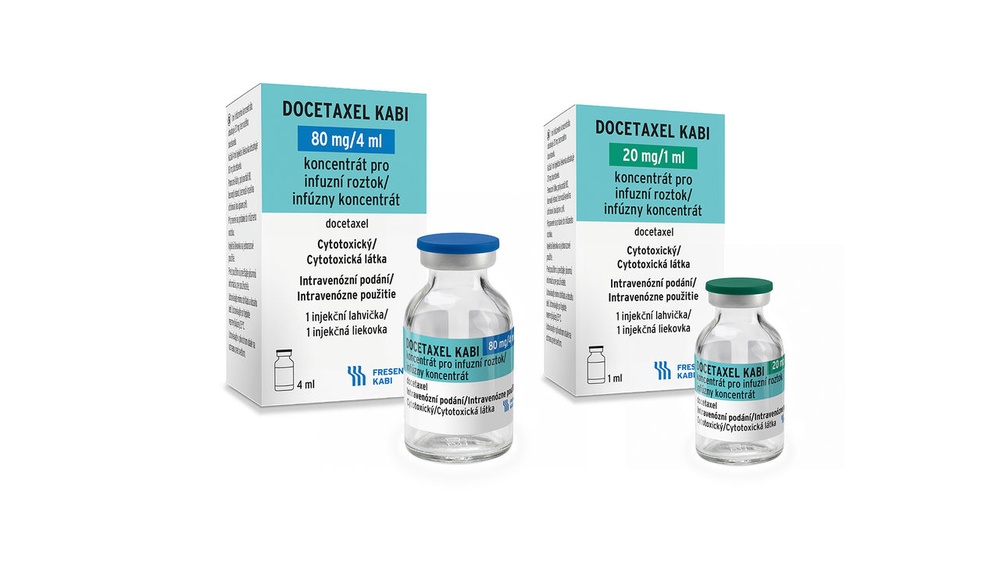
- Kraj rejestracji
- Postać farmaceutycznaConcentrate for infusion solution, 80 MG/4 ML
- Kod ATCL01CD02
- Substancja czynna
- Wymaga receptyTak
- Producent
- Te treści mają charakter wyłącznie informacyjny i nie zastępują konsultacji lekarskiej.
- Zamienniki DOKETAXEL KABIPostać farmaceutyczna: Concentrate for infusion solution, 20 MG/1 MLSubstancja czynna: docetaxelProducent: ACCORD HEALTHCARE, S.L.U.Wymaga receptyPostać farmaceutyczna: Concentrate for infusion solution, 20 MG/MLSubstancja czynna: docetaxelProducent: Eugia Pharma (Malta) LimitedWymaga receptyPostać farmaceutyczna: Concentrate for infusion solution, 20 MG/1MLSubstancja czynna: docetaxelProducent: HIKMA FARMACEUTICA (PORTUGAL) S.A.Wymaga recepty
Odpowiedniki DOKETAXEL KABI w innych krajach
Leki z tą samą substancją czynną dostępne w innych krajach.
Odpowiednik DOKETAXEL KABI w Hiszpania
Odpowiednik DOKETAXEL KABI w Polska
Odpowiednik DOKETAXEL KABI w Ukraina
Uzyskaj receptę na DOKETAXEL KABI online
Wypełnij 2-minutowy formularz
Opisz swoje objawy, historię choroby i lek, o który prosisz.
Wybierz lekarza lub pozwól nam przydzielić
Wybierz specjalistę lub dopasujemy Cię do najbliższego dostępnego lekarza.
Lekarz analizuje Twój przypadek
Zazwyczaj w ciągu 30 minut. Może zadawać dodatkowe pytania przez czat.
Odbierz w dowolnej aptece
Recepta elektroniczna wysłana na Twój e-mail — ważna w całej Polsce.
Często zadawane pytania
DOKETAXEL KABI wymaga recepty w Włochy. Możesz skonsultować się z lekarzem online, aby sprawdzić, czy ten lek może być odpowiedni w Twojej sytuacji.
Substancją czynną w DOKETAXEL KABI jest docetaxel. Informacja ta pomaga rozpoznać leki o tym samym składzie, ale pod różnymi nazwami handlowymi.
DOKETAXEL KABI jest produkowany przez FRESENIUS KABI DEUTSCHLAND GMBH. Nazwy handlowe i opakowania mogą się różnić w zależności od dystrybutora.
Lekarze, tacy jak Lekarze rodzinni, Psychiatrzy, Dermatolodzy, Kardiolodzy, Endokrynolodzy, Gastroenterolodzy, Pulmonolodzy, Nefrolodzy, Reumatolodzy, Hematolodzy, Zakaźnicy, Alergolodzy, Geriatrzy, Pediatrzy, Onkolodzy, mogą ocenić, czy stosowanie DOKETAXEL KABI jest odpowiednie w Twoim przypadku, w zależności od sytuacji klinicznej i lokalnych przepisów. Możesz umówić konsultację online, aby omówić objawy i możliwe dalsze kroki.
Polska posiada dobrze rozwiniętą infrastrukturę ochrony zdrowia w dużych miastach, takich jak Warszawa, Kraków, Wrocław i Gdańsk. Apteki są łatwo dostępne i działają zgodnie z obowiązującymi przepisami, zapewniając dostęp do leków na receptę.
Możesz kupić DOKETAXEL KABI w Warszawie, Krakowie, Wrocławiu lub Gdańsku w każdej aptece, posiadając ważną receptę.
Aby uzyskać receptę, możesz skorzystać z Oladoctor:
Inne leki zawierające tę samą substancję czynną (docetaxel) to m.in. DOKETAXEL AKKORD, DOKETAXEL AUROBINDO, DOKETAXEL IKMA. Mogą one różnić się nazwą handlową lub postacią, ale zawierają ten sam składnik terapeutyczny. Przed zmianą lub rozpoczęciem nowego leku skonsultuj się z lekarzem.
