



DEXAVISION 1 мг/мл Глазные капли, раствор

Рассмотрение рецепта онлайн
Врач рассмотрит ваш случай и примет решение о назначении рецепта, если это медицински оправдано.

Поговорите с врачом об этом лекарстве
Обсудите симптомы и возможные дальнейшие шаги на онлайн-консультации.



Инструкция по применению DEXAVISION
Содержание инструкции
Dexavision 1 mg/mL eye drops, solution
dexamethasone phosphate
Equivalent medicine
Read this leaflet carefully before you start using this medicine as it contains important
information for you.
- Keep this leaflet. You may need to read it again.
- If you have any questions, ask your doctor, pharmacist or nurse.
- This medicine has been prescribed for you only. Do not pass it on to others, even if their symptoms are the same as yours, as it could be harmful.
- If you get any side effects, even those not listed in this leaflet, tell your doctor, pharmacist or nurse. See section 4.
Contents of this leaflet
- 1. What Dexavision is and what it is used for
- 2. What you need to know before you use Dexavision
- 3. How to use Dexavision
- 4. Possible side effects
- 5. How to store Dexavision
- 6. Contents of the pack and other information
1. What is Dexavision and what is it used for
Dexavision contains dexamethasone, a corticosteroid used to stop inflammatory symptoms (such as
pain, heat, swelling and redness).
Dexavision is used for the treatment of eye inflammation.
If the eye is infected (red eye, discharge, tearing), you will be given another medicine to
use together with Dexavision. See paragraph 2.
Dexavision eye drops solution, is a sterile solution that does not contain preservatives.
2. What you need to know before using Dexavision
Do not use Dexavision
- if you are allergic to dexamethasone phosphate or any of the other ingredients of this medicine (listed in section 6),
- if you suffer from an eye infection for which you are not using any medicine,
- in the presence of damage to the surface of the eye (small perforations, ulcerations or lesions that have not healed properly),
- in the presence of known ocular hypertension induced by glucocorticoids (a family of corticosteroids),
Warnings and precautions
Talk to your doctor, pharmacist or nurse before using Dexavision.
- do not inject or swallow it.
- Avoid contact between the tip of the dispenser and the eye or eyelids.
- During the use of Dexavision, careful monitoring of the eye is necessary, and in particular:
- for children and the elderly. More frequent monitoring is recommended.
- if you have an eye infection. Use Dexavision only if you are using an anti-infective medicine.
- if you have a corneal ulcer, an open lesion on the surface of the eye sometimes accompanied by severe pain, tearing, strabismus or loss of vision. Do not use Dexavision unless inflammation is the main cause of delayed healing.
- if you suffer from high intraocular pressure. If you have previously reacted to ophthalmic treatment with steroids with an increase in intraocular pressure, you are at risk of developing it again if you use Dexavision.
- if you have glaucoma, a condition that can cause damage to the optic nerve and loss of vision.
- At the first signs of corneal calcification, the drug must be discontinued and the patient must be treated with preparations without phosphates.
- Children: do not use for long-term treatment without interruption.
- If you have a severe allergic conjunctivitis (redness, swelling, itching and tearing of the eye) that another medicine has not been able to treat, use Dexavision only for a short period.
- Diabetic: if you are diabetic, inform your ophthalmologist or optician.
- If you have a red eye without diagnosis, you should not use Dexavision.
- Contact lenses: you should not wear contact lenses during treatment with Dexavision.
If you have previously suffered from contact hypersensitivity to silver, you should not use this
medicine.
Tell your doctor if you experience weight gain and swelling in the trunk and face, as these are
generally the first manifestations of a syndrome called Cushing's syndrome. Suppression of the
adrenal function can develop after long-term or intensive treatment with
Dexavision. Tell your doctor before stopping treatment on your own. These risks are
particularly important in children and patients treated with medicines called ritonavir or cobicistat.
Other medicines and Dexavision
Tell your doctor or pharmacist if you are taking, have recently taken or might take any other
medicine.
In case of concomitant treatment with another medicine for the eye, space the administrations
by 15 minutes.
Concomitant use of an eye drop containing steroids and an eye drop containing beta-blockers (for
treating high eye pressure) can cause precipitation of calcium phosphate on the surface
of the eye.
Tell your doctor if you are taking ritonavir or cobicistat, as this may increase the amount of
dexamethasone in the blood.
Pregnancy and breastfeeding
If you are pregnant, suspect you are pregnant or are planning to become pregnant, or if you are
breastfeeding, ask your doctor or pharmacist for advice before using this medicine.
There is not enough information on the use of dexamethasone during pregnancy to know the
possible undesirable effects. For this reason, the use of Dexavision during pregnancy is not
recommended.
It is not known whether this medicine is present in breast milk. However, the dose of Dexavision is low.
Dexavision can be used during breastfeeding.
Driving and using machines
You may have blurred vision for a short period after using the eye drops. Wait until your vision
returns to normal before driving or using machines.
Dexavision contains phosphate buffer
This medicine contains 1.976 mg of phosphates in each mL of solution, equivalent to 7.450 mg of
disodium phosphate dodecahydrate.
If you have severe damage to the outermost transparent layer of the eye (the cornea), phosphates can
cause, in very rare cases, opaque spots on the cornea due to calcium accumulation during
treatment.
3. How to use Dexavision
Use this medicine following the doctor's instructions exactly. If you have any doubts, consult your
doctor or pharmacist.
The recommended dose is 1 drop 4 to 6 times a day in the affected eye. If your case is more
severe, you may be told to start with one drop every hour, and then switch to one drop every 4 hours
when a favorable response is observed. It is important to gradually reduce the
dosage in order to prevent the condition from worsening again.
Elderly
No dosage adjustment is required.
Use in children
Do not use this medicine for long-term treatment without interruption.
Method of administration
Ophthalmic use: this medicine is an eye drop that must be administered into the eye.
Do not allow the tip of the multi-dose container to touch the eye or the area around the eye. This
may cause injury to the eye. The eye drop solution may become contaminated with bacteria
that can cause infections and lead to serious eye damage, even loss of vision.
To avoid contamination of the multi-dose container, keep the tip of the multi-dose container
away from contact with any surface.
Before instilling the eye drops:
- Wash your hands before opening the bottle.
- Do not use this medicine if you notice that the tamper-evident seal on the neck of the bottle is broken before using it for the first time.
- When using it for the first time, before dispensing a drop into the eye, you must first practice using the dropper bottle by gently pressing it to dispense a drop into the air, away from the eye.
- When you feel confident that you can dispense one drop at a time, choose the position you find most comfortable for instilling the drops (you can sit, lie on your back, or stand in front of a mirror).
Instillation:
- 1. Hold the bottle directly under the cap and turn it to open the bottle. Do not touch anything with the tip of the bottle to avoid contaminating the solution.
- 2. Tilt your head back and hold the bottle above your eye.
- 3. Lower your lower eyelid and look upwards. Gently press the bottle in the center and let one drop fall into your eye. Please note that there may be a delay of a few seconds between pressing and the drop falling. Do not press too hard. If you are unsure how to administer the medicine, ask your doctor, pharmacist or nurse.
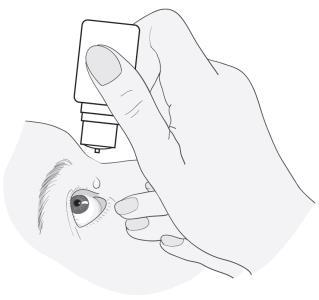
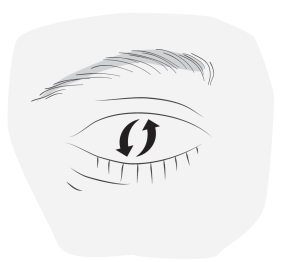
- 4. Blink several times so that the drop spreads over the eye.
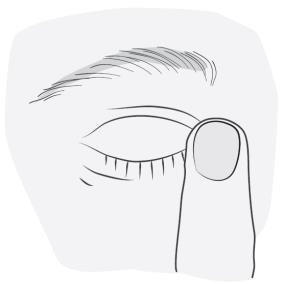
- 5. After using Dexavision, press a finger into the corner of your eye, on the side of your nose, for a few minutes. This will prevent the eye drops from entering the rest of your body.
- 6. Repeat steps 2-5 to dispense a drop into the other eye as well, if your doctor has told you to do so. Sometimes only one eye needs to be treated, and your doctor will tell you if this is the case and which eye needs treatment.
- 7. After use and before replacing the cap, the bottle must be shaken once, turned upside down, without touching the tip of the dropper, to remove any liquid residue on the tip. This is necessary to ensure the dispensing of subsequent drops.
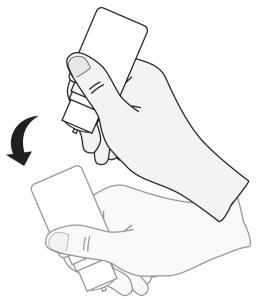
After using all the doses, there will be some residual Dexavision left in the bottle. This should not
worry you as an excess amount of Dexavision has been added and you will take the full amount of Dexavision
prescribed by your doctor. Do not try to use the excess amount of medicine
that remains in the bottle after you have completed the course of treatment.
Frequency of administration
4 to 6 times a day.
Duration of treatment
You should use the eye drops for a few days and for no more than 14 days.
If you use more Dexavision than you should
If you have instilled too much medicine into your eye and it hurts, rinse your eye
with sterile water.
Contact your doctor or pharmacist immediately.
If you forget to use Dexavision
Do not use a double dose to make up for a missed dose.
If you stop using Dexavision
Do not suddenly stop treatment with this medicine. Always consult your doctor if you are
thinking of stopping treatment.
If you have any doubts about using this medicine, ask your doctor, pharmacist or
nurse.
4. Possible side effects
Like all medicines, this medicine can cause side effects, although not everybody gets them.
Eye disorders:
Very common(may affect more than 1 in 10 people):
- increased intraocular pressure after 2 weeks of treatment. Common(may affect up to 1 in 10 people):
- discomfort, irritation, burning, stinging pain, itching and blurred vision after instillation. These are usually mild symptoms that do not last long.
Uncommon(may affect up to 1 in 100 people):
- signs of allergic reaction,
- delayed wound healing,
- clouding of the lens (cataract),
- infections,
- high eye pressure (glaucoma).
Very rare(may affect up to 1 in 10,000 people):
- inflammation of the surface of the eye causing redness, tearing and irritation (conjunctivitis),
- pupil dilation (mydriasis),
- swelling of the face (facial edema),
- drooping of the eyelid (ptosis),
- inflammation of the eye causing pain and redness (uveitis),
- calcium deposits on the surface of the eye (corneal calcification),
- inflammation of the surface of the eye causing blurred vision, dry eyes, light sensitivity, burning, tearing and a feeling of sand in the eye (crystalline keratopathy),
- changes in the thickness of the surface of the eye,
- swelling of the surface of the eye (corneal edema),
- ulcer on the surface of the eye causing pain, tearing, strabismus and loss of vision,
- small holes on the surface of the eye (corneal perforation).
General side effects:
Uncommon(may affect up to 1 in 100 people):
- if used frequently, the kidneys may not produce enough hormones (suppression of adrenal function). This can manifest as low blood sugar, dehydration, weight loss and confusion.
Frequency not known(the frequency cannot be estimated from the available data):
- hormonal problems: excessive growth of body hair (especially in women), weakness and muscle loss, formation of purple marks on the skin, increased blood pressure, irregular or missed periods, changes in protein and calcium levels in the body, cessation of growth in children and adolescents and swelling of the face and weight gain (‘Cushing’s syndrome’) (see section 2, “Warnings and precautions”). Reporting of side effectsIf you get any side effects, even those not listed in this leaflet, tell your doctor or pharmacist. You can also report side effects directly through the national reporting system at http://www.agenziafarmaco.gov.it/content/come-segnalare- una-sospetta-reazione-avversa. By reporting side effects you can help provide more
5. How to store Dexavision
Keep this medicine out of the sight and reach of children.
Do not use the eye drops for more than 28 days after first opening the bottle. Write the date of opening on the
space on the bottle label and on the carton.
Do not use this medicine after the expiry date which is stated on the carton and the bottle after
Expiry. The expiry date refers to the last day of that month.
This medicine does not require any particular precautions for storage.
Do not dispose of any medicine in wastewater or household waste. Ask your pharmacist how to
dispose of medicines you no longer use. This will help protect the environment.
6. Contents of the pack and other information
What Dexavision contains:
- The active ingredient is dexamethasone phosphate. Each millilitre of solution contains 1 mg of dexamethasone phosphate as dexamethasone sodium phosphate
- The other ingredients are disodium phosphate dodecahydrate, sodium chloride, disodium edetate, hydrochloric acid (for pH adjustment), sodium hydroxide (for pH adjustment), water for injections.
Description of the appearance of Dexavision and contents of the pack
Dexavision eye drops, solution is presented as 6 ml of a clear solution in an opaque white bottle
of 11 ml in LDPE with a white Novelia nozzle (HDPE and silicone) and a white HDPE cap.
Each pack contains 1 or 3 bottles.
Not all pack sizes may be marketed.
Marketing Authorisation Holder and Manufacturer
FB VISION S.r.l.
Via Piceno Aprutina, 47
- 63100 – Ascoli Piceno, Italy (IT)
Manufacturer
Pharmathen S.A.
6 Dervenakion
15351 Pallini Attiki
Greece
or
EXCELVISION
27 st. La Lombardière, Zl La Lombardière,
ANNONAY 07100
France
This medicinal product is authorised in the Member States of the European Economic Area
under the following designations:
Denmark Oratoria
Italy Dexavision
Cyprus Oratoria
Greece Oratoria
Poland Oratoria
Sweden Oratoria
Germany Oratoria 1 mg / ml Augentrofen, Lösung
France Oratoria
United Kingdom Eythalm

Не уверены, подходит ли вам это лекарство?
Обсудите симптомы и варианты лечения с врачом онлайн.

Уже начали прием и появились вопросы?
Обсудите свое состояние и дальнейшие шаги с врачом онлайн.
- Страна регистрации
- Форма выпускаEye drops, solution, 1 MG/ML
- Код АТХS03BA01
- Действующее вещество
- Отпускается по рецептуДа
- Производитель
- Информация на этой странице носит справочный характер и не является медицинской консультацией. Перед началом приема лекарства обязательно проконсультируйтесь с врачом.
Врачи онлайн по DEXAVISION
Обсудите применение DEXAVISION и возможные следующие шаги — по оценке врача.
Получите рецепт на DEXAVISION онлайн
Заполните форму за 2 минуты
Расскажите о симптомах, истории болезни и нужном препарате.
Выберите врача или мы назначим
Выберите специалиста или мы подберём ближайшего доступного врача.
Врач рассматривает ваш случай
Обычно в течение 30 минут. Может задать уточняющие вопросы в чате.
Получите в любой аптеке
Электронный рецепт отправляется на вашу почту — действителен по всей Польше.
Часто задаваемые вопросы
DEXAVISION требует рецепта в Италия. Вы можете уточнить у врача онлайн, подходит ли это лекарство для вашей ситуации.
Действующее вещество DEXAVISION — Дексаметазон. Эта информация помогает определить лекарства с тем же составом под другими торговыми названиями.
DEXAVISION производится компанией FB VISION SPA. Упаковка и торговое название могут отличаться в зависимости от дистрибьютора.
Врачи, включая Семейные врачи, Психиатры, Дерматологи, Кардиологи, Эндокринологи, Гастроэнтерологи, Пульмонологи, Нефрологи, Ревматологи, Гематологи, Инфекционисты, Аллергологи, Гериатры, Педиатры, Онкологи, могут оценить целесообразность применения DEXAVISION с учетом вашей ситуации и местных правил. Вы можете записаться на онлайн-консультацию, чтобы обсудить возможные варианты.
Польша имеет хорошо развитую систему здравоохранения в крупных городах, таких как Варшава, Краков, Вроцлав и Гданьск. Аптеки широко доступны и работают в соответствии с действующим законодательством, обеспечивая доступ к рецептурным препаратам.
Вы можете купить DEXAVISION в Варшаве, Кракове, Вроцлаве или Гданьске в любой аптеке при наличии действующего рецепта.
Чтобы получить рецепт, вы можете воспользоваться Oladoctor:
